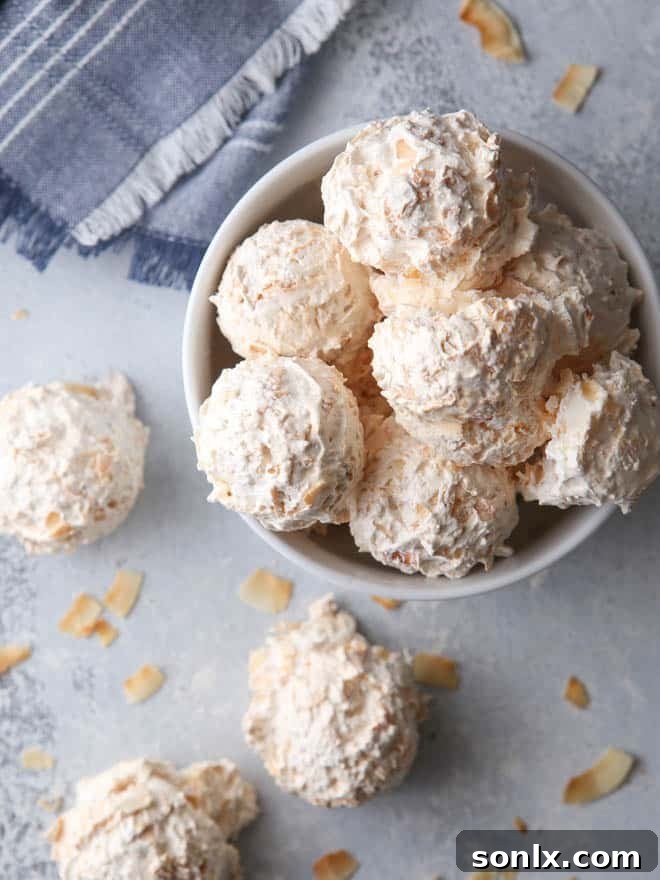
Irresistible Coconut Meringue Macaroons: A Symphony of Sweetness and Lightness
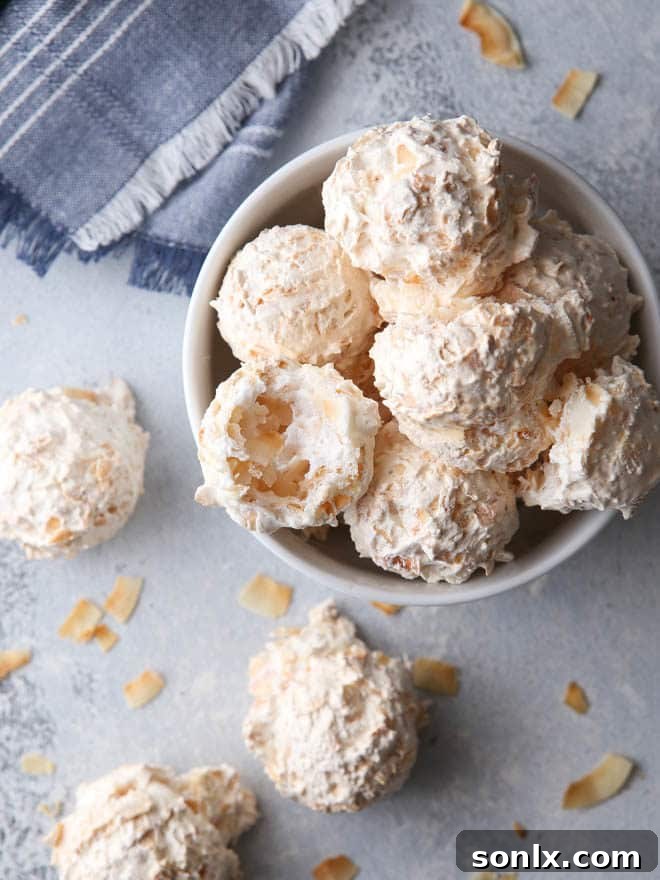
Imagine a confection that perfectly balances delicate airiness with rich, tropical sweetness. These delightful coconut meringue macaroons are precisely that – a heavenly fusion. Requiring just a few core ingredients, primarily whipped Italian meringue and toasted coconut, they transform simple elements into an extraordinary treat. If you’re searching for a dessert that impresses with its elegant simplicity and irresistible flavor, look no further than these charming, snowball-like delights.
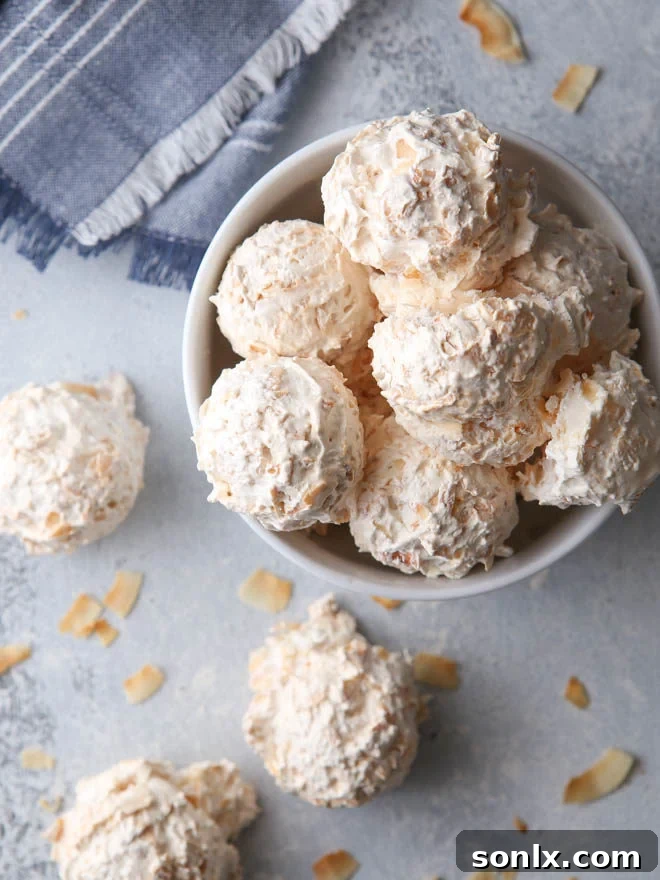
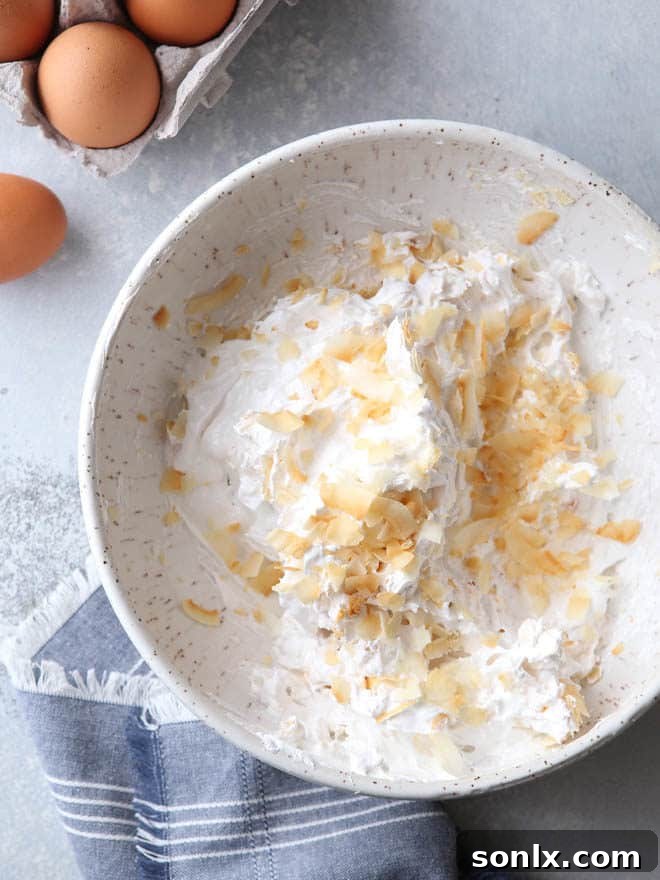
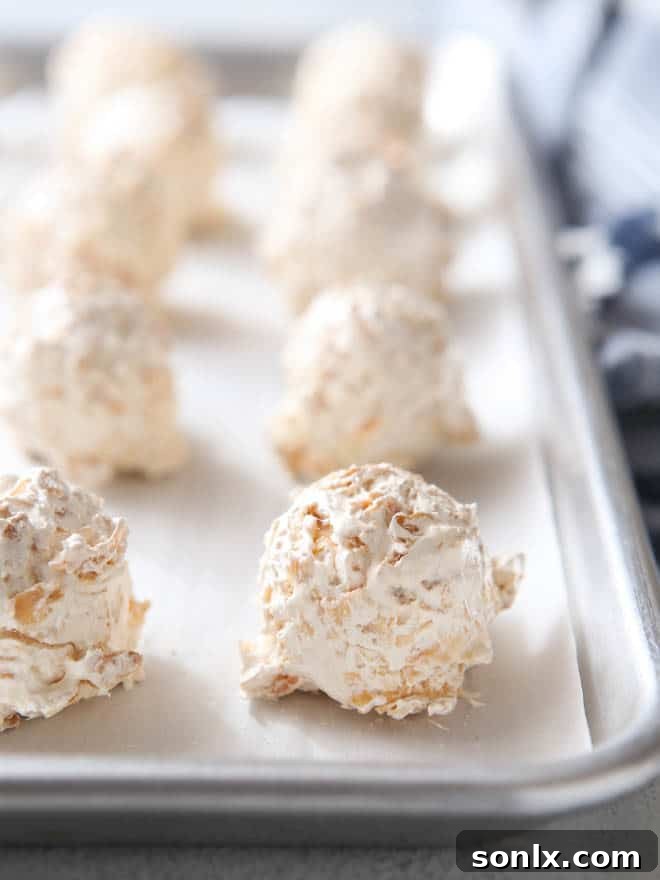
The journey to these exquisite macaroons begins with a foundation of Italian meringue. This superior meringue method involves pouring hot sugar syrup into whipping egg whites, creating a stable, glossy, and incredibly smooth base. To this ethereal cloud, we introduce an ample amount of perfectly toasted coconut, elevating the flavor profile from merely sweet to deeply aromatic and complex. The final steps are as straightforward as they come: scoop, bake until kissed with a golden hue, and then prepare to savor a truly unique “cookie” experience.
Often, appearances can be deceiving, and these coconut meringue macaroons are a testament to that. Their seemingly humble, unadorned look belies a depth of flavor and texture that captivates from the first bite. Having baked these countless times over the years, I find myself falling deeper in love with their inherent simplicity and the profound satisfaction they deliver. Each bite offers a harmonious blend of light, crisp meringue and wonderfully chewy, sweet coconut, creating a textural masterpiece that is both comforting and sophisticated.
The Art of Italian Meringue: Precision for Perfection
Making Italian meringue is often regarded as an advanced technique, but with careful attention to detail, it’s entirely achievable for any home baker. The critical element lies in timing and temperature control. You need to cook the sugar syrup precisely to 238 degrees Fahrenheit, commonly known as the “soft ball stage.” Most reliable candy thermometers will clearly mark this crucial temperature, making the process less daunting. Simultaneously, your egg whites must be whipped to elegant medium peaks, ready to receive the hot sugar syrup at the exact moment it reaches its peak temperature.
Achieving this synchronicity can feel like a delicate dance, but it becomes second nature with practice. If you notice your sugar cooking too quickly, you can slightly reduce the heat. Conversely, if your egg whites are whipping up faster than your sugar is heating, you can decrease the mixer speed or pause briefly. It’s about being attentive and making small adjustments on the fly to ensure both components are perfectly aligned. The stability and glossy texture of Italian meringue, once mastered, provide an unparalleled base for these coconut macaroons, contributing to their signature chewiness and ethereal lightness.
Why Italian Meringue is Ideal for Macaroons
While there are several types of meringue – French, Swiss, and Italian – the Italian method offers distinct advantages for these specific macaroons. French meringue, made by whipping raw egg whites with sugar, is the least stable and often too delicate. Swiss meringue involves gently heating egg whites and sugar over a double boiler before whipping, providing more stability than French but can still be less robust than Italian. Italian meringue, with its hot sugar syrup cooked to a precise temperature, denatures the egg proteins, creating an incredibly stable, dense, and glossy foam. This stability is crucial for holding the structure of the macaroons and preventing them from spreading excessively during baking.
The hot sugar also pasteurizes the egg whites, making the meringue safer to consume. This robustness translates into a macaroon that boasts a slightly crisp exterior and a delightfully chewy interior, perfectly complementing the texture of the toasted coconut. Furthermore, the Italian method yields a meringue that is less prone to weeping, ensuring your macaroons remain beautiful and delicious for longer. It’s the secret behind their ability to be both light as air and wonderfully substantial.
The Essential Role of Toasted Coconut
Coconut is undeniably the star flavor in these macaroons, and how it’s prepared makes all the difference. Using unsweetened coconut is paramount for controlling the overall sweetness of the dessert, allowing the nuanced flavors of both the coconut and meringue to shine through without being cloyingly sweet. But beyond that, toasting the coconut before incorporating it into the meringue is a non-negotiable step that elevates the entire experience.
Toasting coaxes out the natural oils and sugars in the coconut, intensifying its nutty, sweet, and tropical aromas. It transforms its texture from soft and somewhat bland to beautifully crisp and fragrant. The difference between untoasted and toasted coconut in this recipe is truly night and day. Spread your unsweetened coconut evenly on a baking sheet and keep a vigilant eye on it in the oven; it can go from perfectly golden to burnt in a matter of seconds. Stirring it frequently ensures even toasting. Whether you opt for finely shredded or wide flake coconut is a matter of personal preference, both will benefit immensely from this crucial toasting step, adding a depth of flavor that is simply irresistible.
Tips for Achieving Macaroon Mastery
- Room Temperature Egg Whites: Always use egg whites that are at room temperature. They whip up faster and achieve greater volume and stability than cold egg whites, which is vital for a robust Italian meringue.
- Spotless Equipment: Ensure your mixing bowl and whisk attachment are impeccably clean and free of any grease or fat. Even a tiny trace can prevent egg whites from whipping properly, resulting in a deflated meringue.
- Gentle Folding: Once the meringue has cooled and you’re ready to add the toasted coconut, fold it in gently. The goal is to incorporate the coconut without deflating the airy meringue you’ve worked so hard to create. Use a spatula and a cut-and-fold technique until just combined.
- Don’t Overbake: These macaroons are delicate. Bake them just until their edges or tops begin to turn a light golden brown. Overbaking can lead to a dry, brittle texture, losing that desired chewy quality. Keep a close watch on them, especially during the last few minutes.
- Cool Completely: Allow the macaroons to cool entirely on the baking sheet before attempting to move them. They will firm up as they cool, making them easier to handle and preventing breakage.
Serving Suggestions and Creative Variations
These coconut meringue macaroons are delightful on their own, perfect with a cup of coffee or tea. However, their simple elegance also makes them a fantastic canvas for creative enhancements. For an extra touch of indulgence, consider dipping the cooled macaroons in melted dark or milk chocolate. The slight bitterness of dark chocolate beautifully complements the sweet coconut and meringue.
You can also infuse the meringue with additional flavors. A splash of pure vanilla extract or a hint of almond extract can enhance the overall taste profile. For a brighter, more zesty twist, a tiny bit of lime or orange zest folded into the mixture with the coconut adds a refreshing aromatic note. Don’t be afraid to experiment with other additions like finely chopped nuts (pecans or macadamias would be excellent), or even a drizzle of caramel for a truly decadent treat. Whether enjoyed in their classic form or adorned with creative flourishes, these macaroons are sure to impress.
Storage and Shelf Life
Proper storage is key to maintaining the delightful texture and freshness of your coconut meringue macaroons. Once completely cooled, store them in an airtight container at room temperature. They will retain their best quality for up to 3-5 days. While they can last a bit longer, their characteristic chewiness and crispness are best enjoyed within this timeframe. Avoid refrigerating them, as the moisture in the fridge can soften the meringue and make them sticky.
If you’ve made a large batch or want to enjoy them over an extended period, these macaroons freeze surprisingly well. Place them in a single layer on a baking sheet and freeze until solid, then transfer them to a freezer-safe bag or container. They can be stored in the freezer for up to 1-2 months. When ready to enjoy, simply thaw them at room temperature for an hour or so. Freezing them makes them an ideal make-ahead dessert for entertaining or simply having a sweet treat on hand whenever a craving strikes.
Coconut Meringue Macaroons Recipe
Part light and airy meringue, part rich and coconutty macaroons, these treats are irresistible.
Average Rating: 5 out of 5 stars from 5 reviews
Servings: 12 large macaroons
Prep Time: 30 mins
Cook Time: 17 mins
Total Time: 47 mins
Ingredients
- 1 ¼ cup granulated sugar (250 grams)
- ¾ cup water (178 ml, 6 fl oz)
- 3 large egg whites, at room temperature
- 3 cups unsweetened coconut (8 oz, 227 grams)
Instructions
- Preheat oven to 325 degrees F. Line a sheet pan with parchment paper.
- Spread coconut evenly onto a large sheet pan. Toast in the oven until lightly golden brown, about 3-5 minutes. Stir as needed and watch carefully to make sure it doesn’t burn. Set aside to cool.
- Combine the sugar and water in a small saucepan over medium heat and stir until sugar is dissolved. Bring the mixture to a boil. Stop stirring and insert a candy thermometer.
- While the sugar mixture is cooking, place the egg whites in the bowl of a stand mixer fitted with a whisk attachment. When the sugar mixture reaches about 220 degrees F, begin to whip the egg whites. You want to time the eggs whites to be whipped to medium peaks at the same time the sugar mixture reaches 238 degrees F.
- When the sugar mixture reaches 238 degrees F, decrease the mixer speed to medium low and immediately pour the sugar into the whipped egg whites in a slow steady stream. Be careful not to hit the sides of the bowl or the whisk. Once all the sugar is incorporated, increase speed to high and beat until the mixture cools to room temperature.
- Fold in the unsweetened coconut by hand and scoop onto the prepared sheet pan. Bake until the meringues just begin to turn golden brown, about 12 minutes. Let cool on the sheet pan. Store in an airtight container at room temperature.
Notes
- You can use wide slice or finely shredded coconut for this recipe, per your preference.
- Use a small cookie scoop for small macaroons or a large cookie scoop for larger macaroons.
Nutrition Information (per serving)
- Calories: 225kcal
- Carbohydrates: 26g
- Protein: 2g
- Fat: 14g
- Saturated Fat: 12g
- Sodium: 21mg
- Potassium: 128mg
- Fiber: 3g
- Sugar: 22g
- Vitamin C: 1mg
- Calcium: 6mg
- Iron: 1mg
Recipe Details
- Cuisine: French
- Course: Dessert
- Author: Annalise Sandberg
In conclusion, these coconut meringue macaroons offer a delightful journey for the senses, from the careful crafting of the Italian meringue to the satisfying chew of the toasted coconut. Their simple appearance belies a rich textural and flavor experience that makes them truly unforgettable. Whether you are an experienced baker or new to the world of meringues, this recipe provides a rewarding challenge with a truly delicious outcome. Embrace the precision, enjoy the process, and savor every light, sweet, and wonderfully chewy bite of these remarkable treats. They are a testament to how three primary ingredients, transformed with a little care and technique, can create something truly magical in your kitchen.