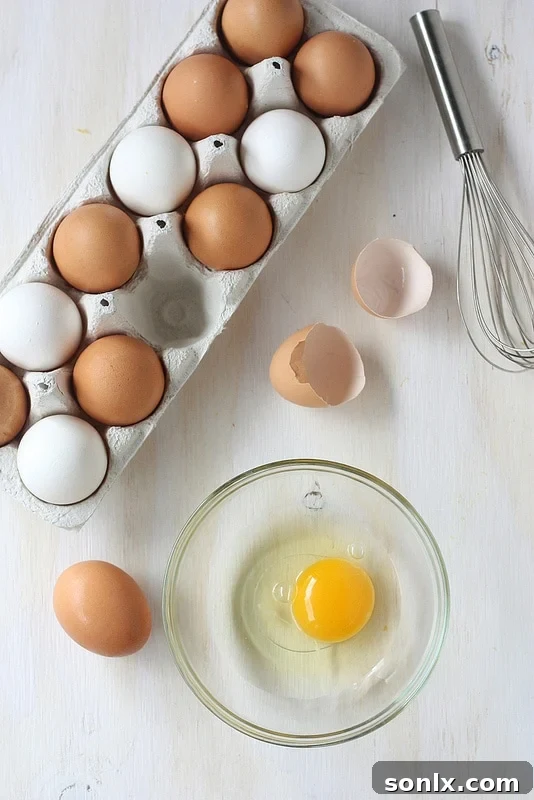
The Incredible Edible Egg: Unlocking Its Power in Baking
For centuries, the humble egg has been a cornerstone of kitchens worldwide, revered for its versatility and nutritional value. But nowhere is its power more evident than in the art and science of baking. From airy meringues and fluffy cakes to rich custards and golden pastries, eggs are an indispensable ingredient, often playing multiple critical roles simultaneously. As culinary legend Alton Brown aptly stated, “The egg is the most flexible and powerful culinary device on earth.” Indeed, it’s challenging to find a baking recipe that doesn’t rely on the unique properties of eggs to achieve its desired texture, structure, and flavor. This comprehensive guide will delve into the multifaceted functions of eggs in baking, offering insights and practical tips to elevate your culinary creations.
The Multifaceted Role of Eggs in Baking: Structure, Moisture, and Magic
Eggs are far more than just a liquid addition to your batter; they are a dynamic ingredient that contributes to nearly every aspect of a baked good’s final form. Understanding these roles is key to mastering baking and troubleshooting common issues.
1. Providing Structure and Leavening
One of the primary functions of eggs in baking is to provide structure. The proteins within eggs (both in the white and the yolk) are marvels of culinary engineering. When subjected to heat, these proteins denature and coagulate, creating a stable network that gives baked goods their form. Think of it as an invisible scaffolding that holds everything together. This structural integrity prevents cakes from crumbling and breads from collapsing.
Beyond structure, eggs are powerful leavening agents, particularly egg whites. When egg whites are whipped, their proteins unfold and trap tiny air bubbles, forming a stable foam. This foam, when incorporated into batters, expands during baking as the air heats up, causing the mixture to rise. This is the magic behind light and airy creations like soufflés, meringues, and angel food cakes. While egg whites are renowned for their foam-making abilities, egg yolks can also contribute to aeration, albeit to a lesser extent, when vigorously whisked.
2. Emulsification: The Great Unifier
Eggs act as natural emulsifiers, a crucial role in preventing separation between fats and liquids in a batter. The lecithin found in egg yolks is a phospholipid, a molecule with both water-attracting (hydrophilic) and fat-attracting (lipophilic) properties. This allows it to bridge the gap between oil and water, creating smooth, homogenous mixtures. This emulsifying power is vital for achieving the consistent texture found in rich custards, smooth batters, and creamy sauces. Without eggs, many of our favorite baked goods would likely be greasy and separated.
3. Binding and Thickening
As strong binding agents, eggs hold ingredients together, preventing baked goods from falling apart. This is especially important in recipes like meatloaves, casseroles, and certain cookies where a cohesive structure is desired. Their ability to coagulate when heated ensures that the final product maintains its shape.
Furthermore, eggs are excellent thickeners. When heated gently, the proteins in eggs thicken liquids, transforming them into luxurious custards, curds, and crème anglaise. The key here is gentle heat; too much heat too quickly can cause the proteins to curdle, resulting in an undesirable lumpy texture.
4. Contributing Moisture, Flavor, and Richness
Eggs also bring essential moisture to baked goods, contributing to a tender crumb and preventing dryness. Beyond moisture, both the yolk and the white impart their own subtle yet distinct flavors, enhancing the overall taste profile. Egg yolks, in particular, contribute richness and a velvety mouthfeel due to their fat content, making them indispensable in brioche, challah, and other enriched doughs.
5. Adding Color and Shine
Visually, eggs play a significant role. The yolks impart a beautiful golden hue to batters and doughs. When used as an egg wash brushed over pastries, breads, and pies before baking, they contribute to a desirable golden-brown crust and an appealing shine, thanks to the Maillard reaction. This caramelization on the surface adds to the sensory experience of a perfectly baked item.
Mastering Egg Temperature: A Critical Detail
Many recipes, especially those for delicate cakes and creamy batters, specifically call for eggs at room temperature. This isn’t just a fussy request; it’s a vital step for optimal results. When eggs are at room temperature:
- Easier Emulsification: The egg membranes and proteins are less viscous and more relaxed. This allows them to mix more easily and evenly with other ingredients, especially fats and liquids, leading to a smoother, more stable emulsion. Cold eggs can cause butter-based batters to curdle.
- Increased Volume: Room temperature egg whites whip up faster and achieve greater volume and stability than cold whites. This results in lighter, airier meringues and sponge cakes.
- Consistent Baking: Incorporating cold eggs into a batter can lower the overall temperature of the mixture, potentially affecting the chemistry of the leavening agents and leading to uneven baking.
The difference might not be noticeable in every single recipe, but in egg-heavy creations like angel food cakes, sponge cakes, and delicate custards, using room temperature eggs can make a profound difference in the final texture and rise. If you forget to take your eggs out in advance, a quick and effective trick is to place them in a bowl of warm (not hot!) water for about 5-10 minutes until they lose their chill.
Understanding Egg Freshness and Storage
The longevity and quality of an egg are significantly influenced by how it’s stored. Contrary to popular belief, how quickly an egg “ages” has more to do with its storage conditions than the exact time since it was laid. For optimal freshness and safety:
- Refrigeration is Key: Always store eggs in the coldest part of your refrigerator, preferably on an inside shelf rather than in the door. The temperature fluctuations in the door can cause eggs to deteriorate faster. Proper refrigeration slows bacterial growth and helps maintain the egg’s internal quality, extending its shelf life for several weeks.
- Aged Eggs vs. Fresh Eggs: As an egg ages, its white becomes thinner and more watery, and the yolk tends to flatten. While this change in appearance can be dramatic, it surprisingly has little impact on the egg’s core behavior during baking for most recipes. In fact, slightly older egg whites (a few days old) can sometimes whip to a greater volume than very fresh ones, making them preferred for meringues and soufflés. However, for recipes where the yolk’s structure is important, like poaching or frying, fresher eggs are superior.
- Testing for Freshness: If you’re unsure about an egg’s freshness, perform the simple “float test.” Gently place the egg in a bowl of water. A very fresh egg will sink and lie on its side. An older but still good egg will stand upright at the bottom. If the egg floats to the surface, it means a significant air cell has developed inside, indicating it’s past its prime and should be discarded.
Eggs essentially dry up before they truly “go bad” in a way that makes them unusable in baking, but proper storage ensures you’re always using the best quality for your culinary endeavors.
Decoding Egg Sizes and Weights for Baking Success
While many recipes, including those on Completely Delicious, typically call for “large eggs,” egg sizes can vary, and precise measurements are crucial in baking chemistry. Using the correct amount of egg is essential for consistent and predictable results. Here’s a breakdown of common large egg weights:
Standard Large Egg: Approximately 50 grams (1.75 ounces)
Large Egg Yolk: Approximately 20 grams (0.75 ounces)
Large Egg White: Approximately 30 grams (1 ounce)
Understanding these weights allows for flexibility in the kitchen. If a recipe calls for a specific number of large eggs but you only have a different size on hand (e.g., medium or extra-large), or if you need only yolks or whites, you can adjust by weight. Simply whisk a whole egg (or a few) together until combined, then measure out the precise amount needed using a kitchen scale. This method ensures accuracy, especially in delicate recipes where the liquid and protein balance is critical. For reference, here’s a general guide to other egg sizes:
- Small: 42 grams (1.5 ounces)
- Medium: 44 grams (1.75 ounces)
- Extra-Large: 64 grams (2.25 ounces)
- Jumbo: 71 grams (2.5 ounces)
By relying on weight rather than just counting eggs, you eliminate guesswork and ensure your baking consistently turns out perfectly every time.
Common Egg-Related Baking Challenges and Solutions
Even with a thorough understanding, egg-related issues can sometimes arise. Here are a few common challenges and how to address them:
- Meringues That Won’t Stiffen: This is often due to fat contamination (even a tiny bit of yolk or grease from your bowl/utensils) or using very fresh eggs. Ensure all equipment is spotlessly clean and dry, and consider using slightly older egg whites.
- Curdled Custards: Overheating is the culprit. Eggs coagulate quickly at high temperatures. Always cook custards over gentle heat, stirring constantly, and use a double boiler if necessary. Tempering eggs (slowly adding hot liquid to yolks) helps prevent curdling when combining.
- Dry or Dense Cakes: This can happen if too much egg is added (contributing excessive protein for structure without enough fat/moisture balance), or if the leavening properties of eggs weren’t fully utilized (e.g., insufficient whipping). Ensure accurate measurements and proper mixing techniques.
Conclusion: Embrace the Egg in Your Baking Journey
The egg truly lives up to its “incredible, edible” reputation, especially in the world of baking. Its ability to provide structure, emulsify, bind, thicken, add moisture, richness, and beautiful color makes it an unparalleled ingredient. By understanding the science behind these functions and mastering techniques like bringing eggs to room temperature, storing them correctly, and measuring by weight, you empower yourself to achieve consistent, delicious, and professional-quality baked goods every time.
So, the next time you reach for a carton of eggs, remember the powerful culinary magic held within each shell. What are your favorite recipes that showcase the versatility of eggs? Do you have any pressing egg questions or baking tips you’d like to share? We’d love to hear from you!
Check out these other Ingredient Spotlights from Completely Delicious:
How Flour is Used in Baking
How Butter and Fats are Used in Baking