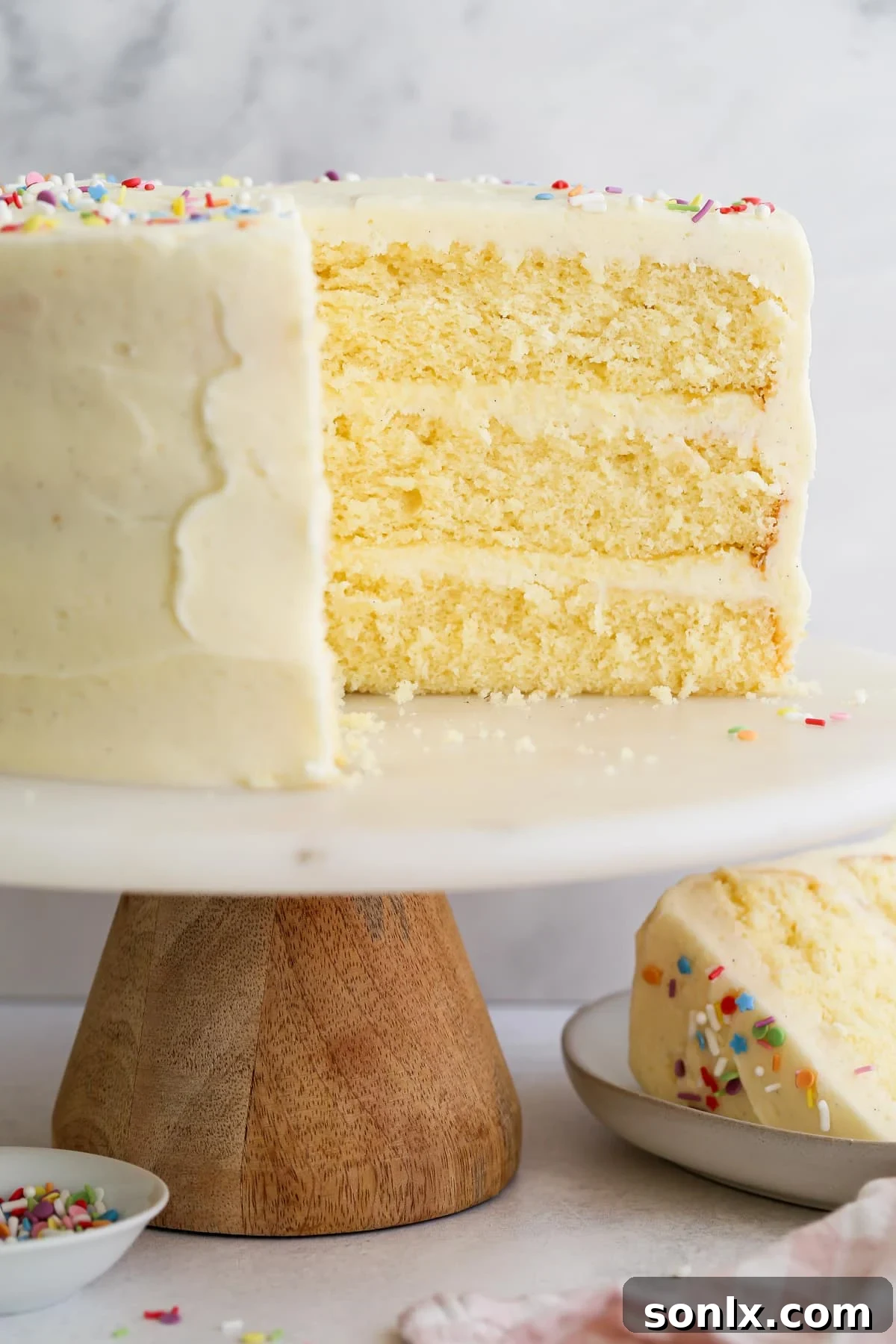
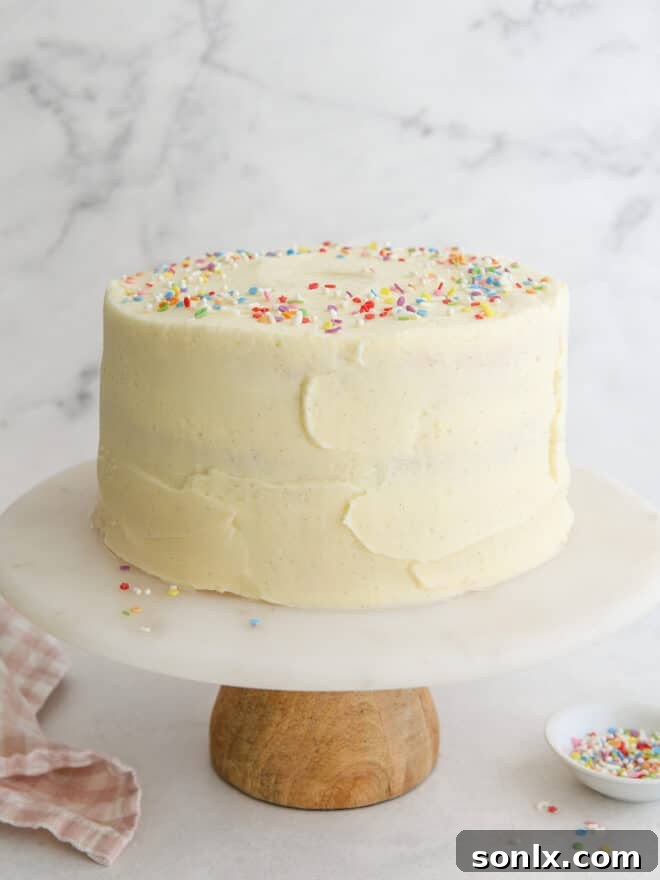
Welcome to the quintessential guide for baking the ultimate vanilla layer cake recipe. Imagine tender, impossibly buttery layers that practically melt in your mouth, perfectly complemented by a cloud of creamy vanilla buttercream frosting. This isn’t just any cake; it’s a testament to simple elegance and profound flavor. Designed to be moist, exquisitely fluffy, and surprisingly straightforward to bake, it stands as the perfect center-piece for any celebration, from intimate gatherings to grand festivities.
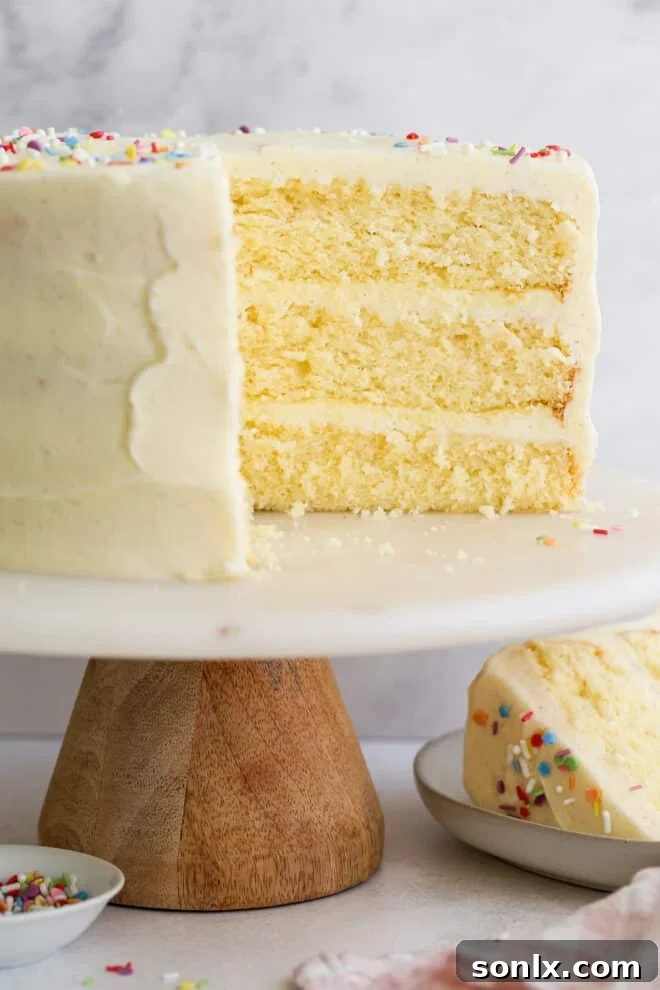
For those who, like me, harbor a deep affection for classic vanilla cake, you understand the undeniable allure of a truly perfect homemade creation. There’s a magic woven into its simplicity, a comfort in its familiar taste that elevates it beyond just a dessert. This meticulously crafted vanilla cake recipe doesn’t just meet expectations; it exceeds them, hitting all the right notes for an unforgettable baking and tasting experience.
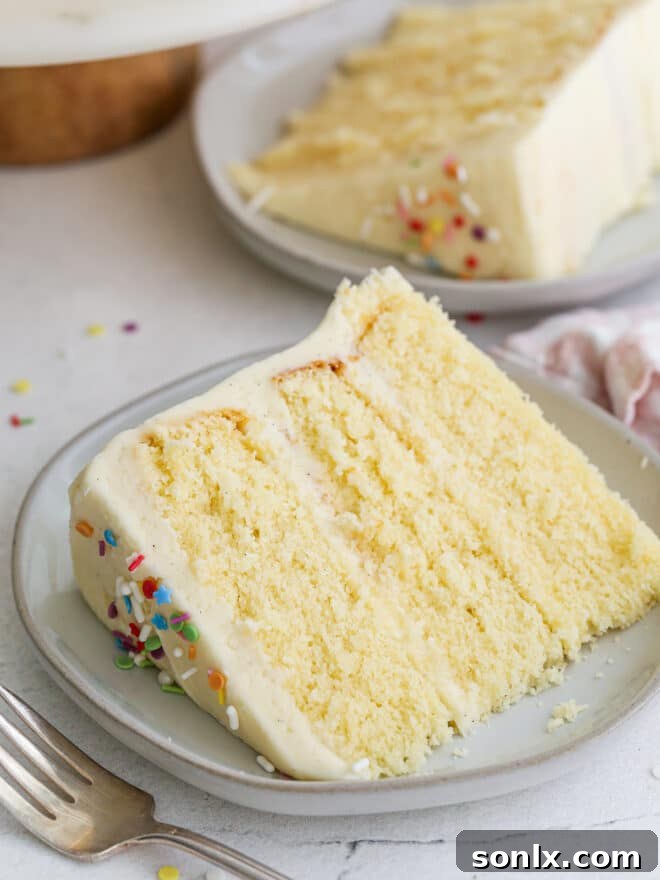
The secret to its unparalleled texture lies in the cake layers themselves, which achieve their remarkable softness and tenderness through a thoughtful combination of both butter and oil in the batter. This dual-fat approach ensures maximum moisture and a delicate crumb. Furthermore, we employ the sophisticated reverse creaming method, a technique renowned for preventing overmixing and promoting a fine, velvety texture. To crown this masterpiece, a classic vanilla buttercream frosting provides a truly dreamy and irresistibly creamy topping and filling. Its rich vanilla essence and smooth consistency are the ideal partners to the cake’s tender layers. Whether you choose to adorn it with a basic, understated elegance or dress it up with elaborate decorations for a momentous occasion, this cake is guaranteed to impress.
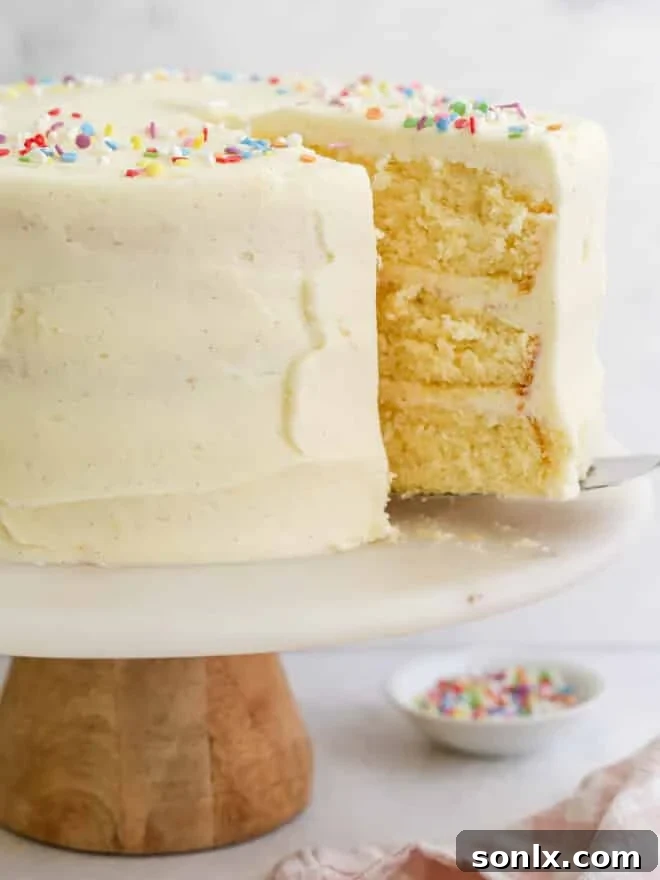
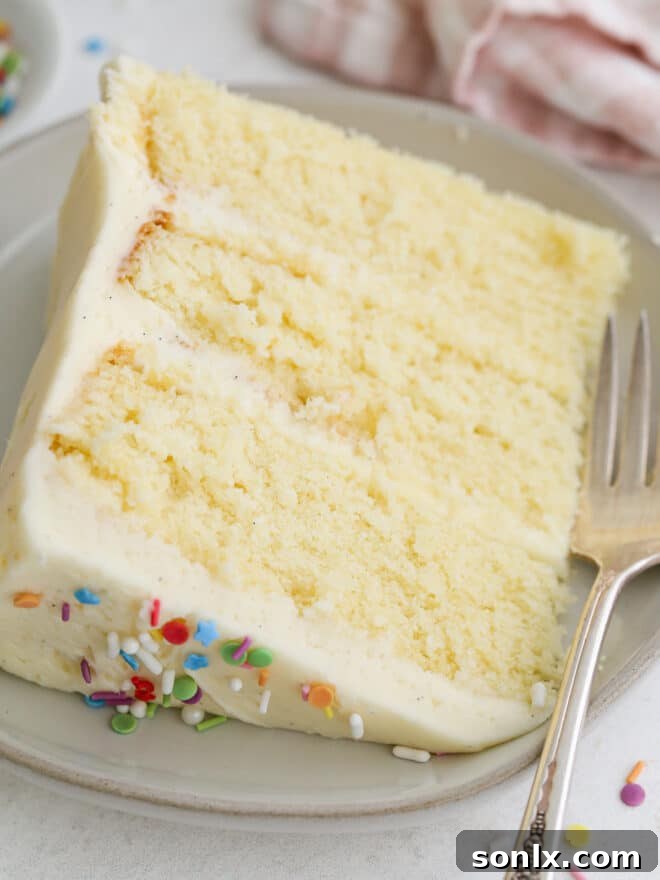
Table of Contents
- Why This is the Ultimate Vanilla Cake
- Essential Ingredients for Your Perfect Cake
- Step-by-Step Guide: How to Make This Vanilla Layer Cake
- Expert Tips for Baking & Assembling a Flawless Cake
- Additional Cake Resources & Tools
- Make-Ahead & Storage Options
- Prefer Cupcakes? Make Vanilla Cupcakes Instead
- Full Recipe Details
Why This is the Ultimate Vanilla Cake
This isn’t merely a cake; it’s an experience, a celebration of all things vanilla. Here’s why this particular recipe earns the distinguished title of the “ultimate” vanilla layer cake:
- Unmistakably Rich, Buttery Vanilla Flavor: From the first forkful to the last, the exquisite flavor of pure vanilla extract, enhanced by real butter, shines through. We use high-quality vanilla to ensure an authentic taste that’s both comforting and sophisticated, making every bite a delightful journey for your palate.
- Super Tender and Perfectly Moist Cake Layers: The combination of butter and oil in the batter works synergistically to create a cake that boasts an incredibly soft crumb and abundant moisture. Unlike cakes made with only butter, the addition of oil guarantees a moist texture that lasts longer, ensuring your cake remains fresh and delectable for days. The reverse creaming method further contributes to this superior texture by minimizing gluten development, resulting in a cake that’s light, airy, and truly tender.
- Ultra-Creamy and Perfectly Sweet Vanilla Buttercream: Our classic vanilla buttercream isn’t just a frosting; it’s a silken blanket of flavor. Crafted to be exceptionally creamy and balanced in sweetness, it provides the perfect counterpoint to the cake layers without being cloying. The richness of butter combined with powdered sugar and a touch of heavy cream creates a frosting that’s both easy to spread and a joy to eat.
- Versatile for Any Occasion or Celebration: This cake is your go-to recipe for any event imaginable. Its timeless appeal makes it suitable for birthday parties, anniversaries, holiday gatherings, or simply as a special treat to brighten an ordinary day. Its adaptable nature means you can customize decorations to fit any theme, making it a truly universal crowd-pleaser.
Essential Ingredients for Your Perfect Cake
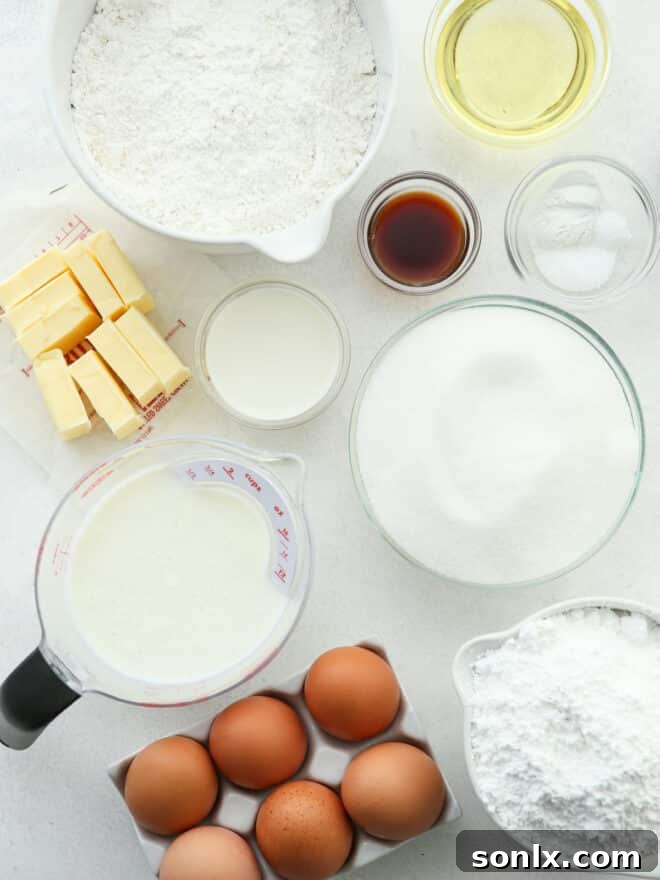
Crafting the perfect vanilla layer cake begins with selecting the right ingredients. Each component plays a vital role in achieving that sought-after tender texture and rich flavor. Here’s a breakdown of what you’ll need and why:
- Cake Flour: This is a non-negotiable for achieving the best, lightest texture in your cake. Cake flour has a lower protein content than all-purpose flour, which results in less gluten development and a more delicate, tender crumb. Fortunately, it’s readily available in most grocery stores.
- Salted Butter: Starting with good quality salted butter significantly boosts the overall flavor profile of your cake. The hint of salt provides a crucial balance, cutting through the sweetness and adding depth. Always ensure your butter is softened to room temperature for optimal creaming.
- Whole Eggs and Egg Yolks: This combination is key to adding incredible richness, moisture, and a beautiful golden hue to your cake. Whole eggs provide structure, while the extra egg yolks contribute to a luscious, tender texture and a more pronounced flavor.
- Buttermilk: Far more than just a liquid, buttermilk is a secret weapon in baking. Its acidity reacts with baking soda to create a soft, tender crumb. It also imparts a subtle tang that complements the vanilla, adding complexity to the flavor.
- Pure Vanilla Extract: When it comes to vanilla cake, the quality of your vanilla extract truly makes a difference. Invest in a pure, high-quality extract for the best flavor. For the frosting, if you want visible vanilla flecks and an even richer aroma, consider using vanilla bean paste.
- Vegetable Oil: The inclusion of a neutral-flavored cooking oil, such as canola or grapeseed oil, is essential for keeping the cake incredibly moist. Oil remains liquid at room temperature, unlike butter, ensuring a softer, more succulent cake that stays fresh longer.
- Granulated Sugar: Beyond sweetness, sugar contributes to the cake’s tenderness and moisture by attracting and retaining water. It also aids in browning the cake layers.
- Baking Powder, Baking Soda, and Salt: These leavening agents work in harmony to give the cake its lift and airy texture. Baking powder provides initial rise, while baking soda reacts with the acidic buttermilk for further expansion. Salt, as always, enhances all the flavors and balances the sweetness.
- Powdered Sugar: The foundation of our creamy buttercream, powdered sugar (confectioners’ sugar) dissolves easily, ensuring a smooth, lump-free frosting with a delightful sweetness.
- Heavy Cream: This ingredient is crucial for achieving an ultra-creamy, light, and fluffy vanilla buttercream. It helps create the perfect consistency for spreading and piping, making your frosting truly dreamy.
- Salt (for frosting): A small pinch of salt in the frosting is just as important as in the cake batter. It tempers the sweetness of the powdered sugar and enhances the rich butter and vanilla notes.
Step-by-Step Guide: How to Make This Vanilla Layer Cake
Baking this ultimate vanilla layer cake is a rewarding process, and following these steps will ensure a flawless result. We’ll guide you through the creation of the tender cake layers and the rich, creamy frosting, leading to a perfectly assembled masterpiece.
- Master the Reverse Creaming Method for the Cake Batter: Unlike traditional creaming, this method starts by beating the dry ingredients with butter and a portion of the buttermilk until light and creamy. This unique approach coats the flour particles with fat, inhibiting excessive gluten development. Subsequently, the remaining wet ingredients are gently mixed in. The outcome is an exceptionally fluffy cake with a fine, even crumb that is consistently moist and never dry.
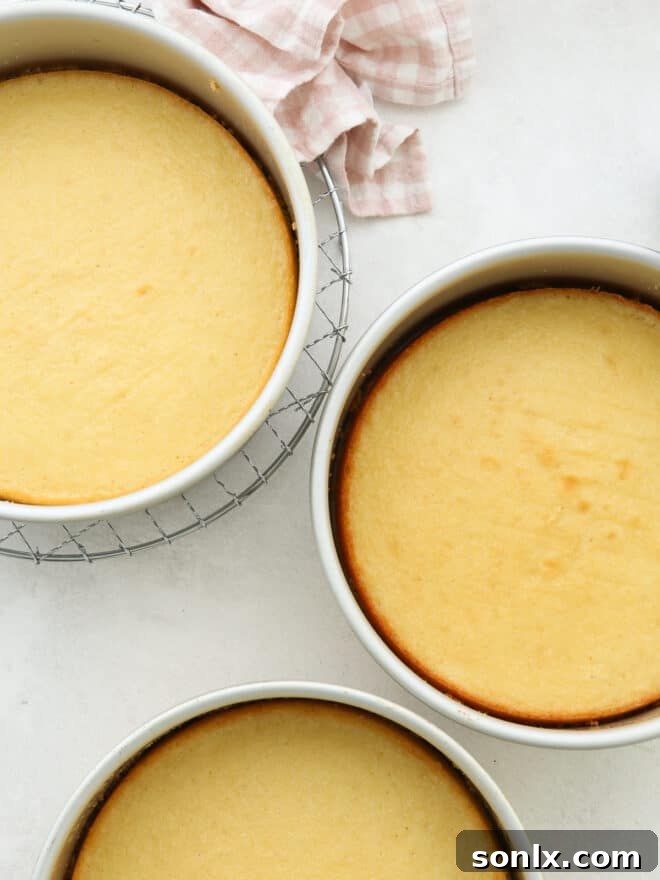
- Bake the Perfect Cake Layers: Once your batter is ready, divide it evenly among your prepped cake pans. This uniformity is crucial for ensuring that all layers bake at the same rate and come out of the oven perfectly level. Bake for approximately 30 minutes, or until a toothpick inserted into the center comes out clean and the tops are golden and spring back when gently touched. Allow them to cool completely before moving on.
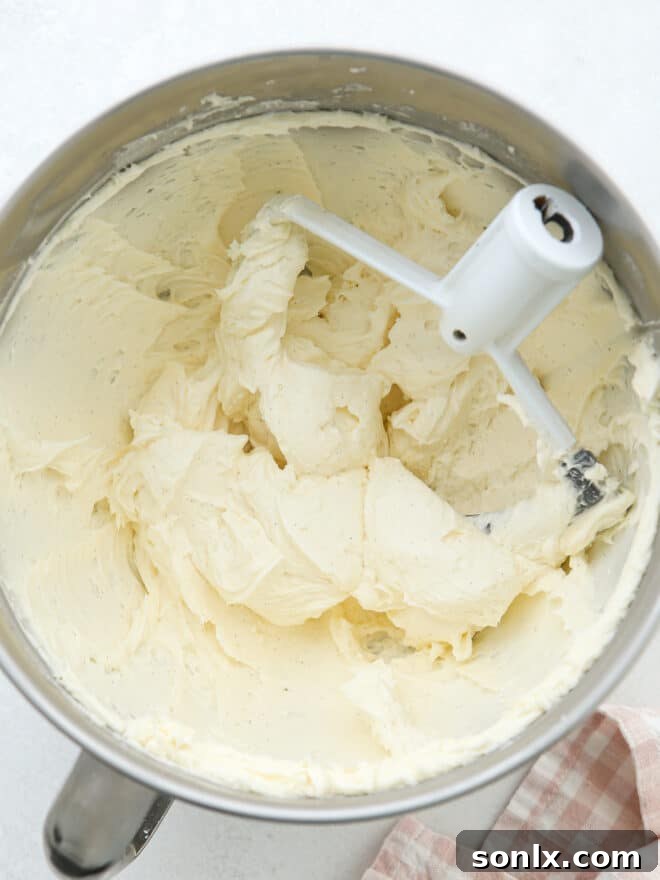
- Whip Up the Dreamy Vanilla Buttercream: While your cake layers are cooling, prepare the star of the show: the vanilla buttercream frosting. Using an electric mixer, combine softened butter, powdered sugar, pure vanilla extract (or vanilla bean paste for extra flavor), heavy cream, and a pinch of salt. Beat on medium-high speed until the mixture transforms into a thick, ultra-creamy, and wonderfully fluffy frosting. Remember to scrape down the sides of the bowl frequently to ensure a perfectly smooth consistency.
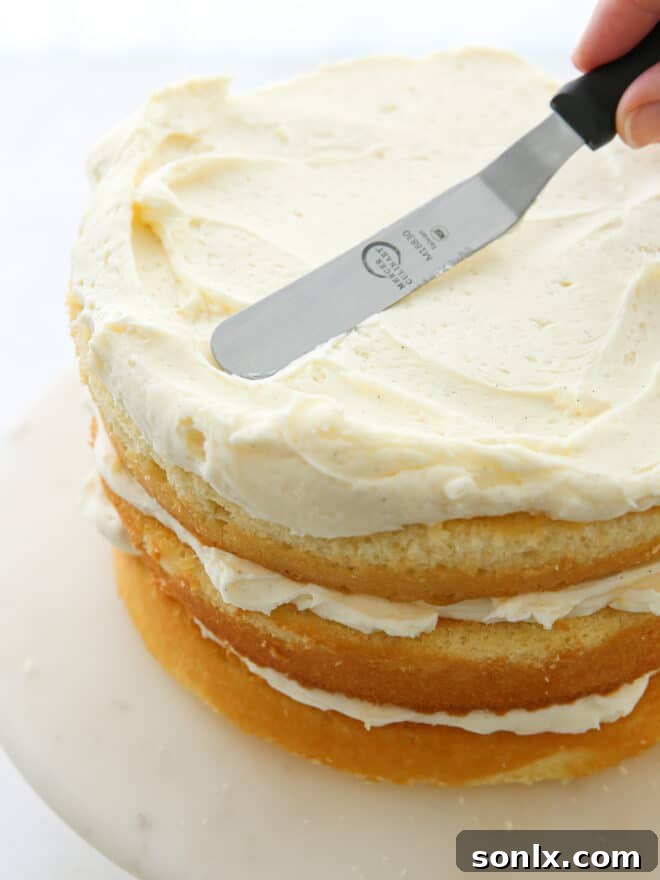
- Assemble Your Cake with Precision: Once the cake layers are thoroughly cooled, and if necessary, carefully trim any domed tops with a serrated knife to create flat surfaces. This step is essential for a stable and professional-looking cake. Place the first layer on your serving plate or cake stand, spread a generous amount of frosting evenly over it, then repeat with the remaining layers. Finally, use an offset spatula to apply a thin crumb coat to seal in any loose crumbs, followed by a final, thicker layer of frosting to cover the top and sides. Decorate to your heart’s content!
- Slice, Serve, and Savor Every Bite: Your magnificent vanilla layer cake is now ready to be enjoyed! You can serve it immediately to eager guests, or if preferred, it can be kept at room temperature for a few hours before serving. For the very best texture and flavor, plan to serve and enjoy this delicious creation within two days of assembly. Each slice promises a delightful combination of tender cake and creamy frosting, a truly perfect ending to any meal.
Expert Tips for Baking & Assembling a Flawless Cake
Achieving a truly perfect vanilla layer cake goes beyond just following the recipe; it involves a few key techniques and considerations. Here are some expert tips to ensure your cake turns out beautifully every time:
- Always Start with Room Temperature Dairy and Eggs: This is arguably one of the most critical tips for successful baking. Cold ingredients don’t emulsify properly, leading to a lumpy batter and a denser cake. Pull your butter, buttermilk, and eggs from the fridge at least 30-60 minutes before you plan to start baking. Room temperature ingredients blend more smoothly, creating a homogeneous batter that traps air efficiently, resulting in a cake with the best rise and an incredibly soft, uniform texture. For a deeper dive into why this matters, refer to resources on the importance of room temperature ingredients in baking.
- A Digital Kitchen Scale is Your Best Friend: For the most accurate and consistent results, especially in baking, a digital kitchen scale is invaluable. Measuring ingredients by weight rather than volume (cups) eliminates inconsistencies and ensures precision. Not only does it guarantee the exact amounts for your ingredients, but it also significantly reduces the number of dirty dishes. Additionally, a scale makes it incredibly simple to divide your cake batter equally among your pans, ensuring each layer bakes to the same size and thickness.
- Choose the Right Cake Pans: For this specific recipe, I highly recommend using 8-inch cake pans. You can opt for two pans for thicker layers or three pans for thinner, more elegant layers, depending on your desired aesthetic. While you can use two 9-inch pans, be aware that the cake layers will be noticeably thinner, and baking times might need slight adjustment. Always prepare your pans diligently by greasing, flouring, and lining the bottoms with parchment paper to prevent sticking.
- Don’t Overmix the Batter: After adding the wet ingredients to the dry, mix only until just combined. Overmixing develops the gluten in the flour, leading to a tough, dense cake. A few small lumps are perfectly fine; they will disappear during baking, and the cake will remain tender.
- Ensure Complete Cooling Before Frosting: Patience is a virtue when it comes to cake assembly. Attempting to frost warm cake layers will result in a messy, sliding disaster, as the frosting will melt and slide off. Always allow your cake layers to cool completely on a wire rack. For easier handling and trimming, you can even chill the cooled layers in the refrigerator for 20-30 minutes.
- Consider a Different Frosting, If Desired: While our classic vanilla buttercream is heavenly, if you find traditional American buttercream too sweet for your palate, there are excellent alternatives. I highly recommend trying a chantilly cream frosting, which is lighter and less sweet. Other options include Swiss or Italian meringue buttercreams for a silky, less sugary finish.
- Utilize Those Extra Egg Whites: This recipe calls for a combination of whole eggs and egg yolks, which means you might have some leftover egg whites. Don’t let them go to waste! Egg whites are incredibly versatile and can be used in a variety of delicious recipes such as light and airy coconut macaroons, elegant pavlova, a classic white cake, or a delicate angel food cake. Remember, egg whites can be stored in an airtight container in the fridge for up to one week or frozen for several months, ready to be thawed when inspiration strikes.
- Apply a Crumb Coat: For a professional-looking, smooth finish, always apply a thin layer of frosting first, known as a “crumb coat.” This traps any loose crumbs, preventing them from mixing into your final layer of frosting. Chill the cake briefly after the crumb coat, then apply your generous final layer.
Additional Cake Resources & Tools
To further enhance your baking journey and ensure you have all the necessary information and equipment, here are some invaluable resources:
- My Favorite Cake Tools: Discover the essential gadgets and equipment that will make your cake baking and decorating experience smoother and more enjoyable.
- How to Build and Assemble a Layer Cake: A comprehensive guide to constructing a beautiful and stable layer cake, from leveling to frosting techniques.
Make-Ahead & Storage Options
Planning ahead can significantly reduce stress on the day of your celebration. This vanilla layer cake is wonderfully adaptable for make-ahead preparation, allowing you to enjoy your event without last-minute baking rushes.
Prep cake layers in advance: You can bake the cake layers up to 2 days ahead of time. Once completely cooled, wrap each layer tightly in plastic wrap and store them in the refrigerator. For longer storage, cake layers can be double-wrapped in plastic wrap and then aluminum foil and frozen for up to 3 months. When you’re ready to assemble, thaw frozen cakes overnight in the refrigerator, still wrapped, to maintain moisture. Assembling the cake layers while they are cold from the fridge can also make them easier to handle and less prone to crumbling. For even more detailed guidance, see my comprehensive tutorial on how to properly store cake layers.
Prepare the frosting in advance: The vanilla buttercream is also excellent for make-ahead preparation. It can be stored at room temperature for several days (in a cool environment), in the refrigerator for 1-2 weeks, or even in the freezer for several months. Before using, allow refrigerated or frozen frosting to come to room temperature. For the best results, beat the frosting again with an electric mixer until it’s light, fluffy, and smooth, adding a tablespoon or two of heavy cream if needed to achieve the desired creamy consistency.
Freeze the assembled layer cake: Yes, you can even prepare and freeze the entire assembled and frosted cake! To do this, place the frosted cake uncovered in the freezer for 1-2 hours, or until the icing is firm to the touch. Once firm, tightly wrap the cake in multiple layers of plastic wrap, followed by a final layer of aluminum foil. This meticulous wrapping prevents freezer burn and protects the cake’s delicate flavor and texture. Frozen assembled cakes can be stored for up to 1-2 months. To thaw, simply transfer the wrapped cake to the refrigerator overnight. Unwrap it only after it has fully thawed to prevent condensation from forming on the frosting.
Prefer Cupcakes? Make Vanilla Cupcakes Instead
If you’re craving individual portions or prefer the ease of cupcakes, this vanilla flavor profile translates beautifully. Instead of adapting this layer cake recipe, I highly recommend trying my dedicated Very Vanilla Cupcakes recipe. It’s specifically formulated to yield a perfect batch of 18 delightful cupcakes. You can frost them with either the Chantilly Cream Frosting as instructed in that recipe, or use the rich Whipped Vanilla Buttercream Frosting featured here on this layer cake for a wonderfully indulgent treat.
Full Recipe Details
Vanilla Layer Cake
Ingredients
For the vanilla cake:
- 3 cups (375 grams) cake flour
- 2 cups (400 grams) granulated sugar
- 2 ½ teaspoons baking powder
- 1 teaspoon salt
- ¼ teaspoon baking soda
- ¾ cup (170 grams) salted butter, softened to room temperature
- ¼ cup (56 grams) vegetable oil (or other neutral-flavored oil)
- 1 ¼ cups (300 grams) buttermilk, at room temperature, divided
- 2 large whole eggs, at room temperature
- 4 large egg yolks, at room temperature
- 2 teaspoons pure vanilla extract
For the vanilla frosting:
- 5 ½ cups (630 grams) powdered sugar
- 1 ½ cups (340 grams) butter, softened at room temperature
- 6 tablespoons (85 grams) half and half or heavy cream
- 2 teaspoons vanilla extract, or vanilla bean paste
- ¼ teaspoon salt
Equipment
Instructions
To make the cake:
- Preheat oven to 350°F (175°C). Grease two or three 8 or 9-inch cake pans with nonstick baking spray or butter and flour, and line the bottoms with parchment paper.
- In the bowl of a stand mixer fitted with a paddle attachment, combine the cake flour, sugar, baking powder, salt, and baking soda. Add the softened butter, vegetable oil, and 1 cup of the buttermilk. Mix on low speed until the dry ingredients are moistened, then increase the speed to medium-high and beat until the mixture is light and creamy, about 4 minutes total. Stop and scrape the bowl down at least once to ensure everything is well combined.
- In a separate bowl or liquid measuring cup, whisk together the large whole eggs, egg yolks, the remaining ¼ cup of buttermilk, and the pure vanilla extract until just combined.
- With the mixer on low speed, gradually add the egg mixture to the main batter in 3 additions. Mix only until each addition is just incorporated, scraping the bowl down between each addition to ensure a smooth, homogeneous batter. Be careful not to overmix.
- Divide the batter equally between the prepared pans. Aim for approximately 1lb 8 oz (680 grams) of batter in each pan for even layers. Bake for 32-35 minutes, or until the tops are golden and slightly domed. To check for doneness, gently press the center of the cake with your finger; it should spring back. A wooden skewer or toothpick inserted into the center should come out clean. Let the cake layers cool in their pans for 5 minutes before inverting them onto a wire rack to cool completely.
To make the frosting:
- In the bowl of an electric mixer fitted with a paddle attachment, combine the powdered sugar, softened butter, heavy cream (or half and half), vanilla extract (or vanilla bean paste), and salt. Beat on medium-high speed until all ingredients are combined and the frosting is incredibly creamy, light, and fluffy. This process can take 3-5 minutes. You will need to stop and scrape down the sides and bottom of the bowl a few times to ensure the frosting is smooth and uniform. If the frosting is too thick, add a bit more cream, a teaspoon at a time, until you reach your desired consistency.
To assemble cake:
- Once the cake layers are completely cooled (chilling them slightly can make slicing easier), carefully remove any domed tops with a serrated knife to create flat surfaces.
- Place one cake layer on your chosen serving plate or cake stand. Spread 1-2 cups of the vanilla buttercream frosting evenly over this layer (adjusting the amount based on whether you are using two or three cake layers). Repeat this process with the remaining cake layers. Once all layers are stacked, cover the top and sides of the cake with the remaining frosting, smoothing it out with an offset spatula. Decorate as you wish!
- Serve the cake immediately for optimal freshness, or store as desired. While delicious right away, the cake will be at its absolute best within 2 days of assembly.
Notes
- Prep cake layers in advance: Baked and cooled cake layers can be wrapped tightly in plastic wrap and stored in the fridge for up to 2 days, or double-wrapped and frozen for up to 3 months. Assemble while cold from the fridge, or thaw frozen cakes overnight in the fridge (still wrapped) before use. See my tutorial on how to store cake layers for more detailed info.
- Prep the frosting in advance: Frosting can be stored at room temperature for several days, in the fridge for 1-2 weeks, or in the freezer for several months. For best results, beat the frosting until smooth before using, adding a bit more cream if needed to get the right texture.
Calories: 627kcal
Carbohydrates: 85g
Protein: 5g
Fat: 31g
Saturated Fat: 19g
Polyunsaturated Fat: 2g
Monounsaturated Fat: 8g
Trans Fat: 1g
Cholesterol: 146mg
Sodium: 437mg
Potassium: 140mg
Fiber: 1g
Sugar: 67g
Vitamin A: 1006IU
Vitamin C: 0.03mg
Calcium: 73mg
Iron: 1mg