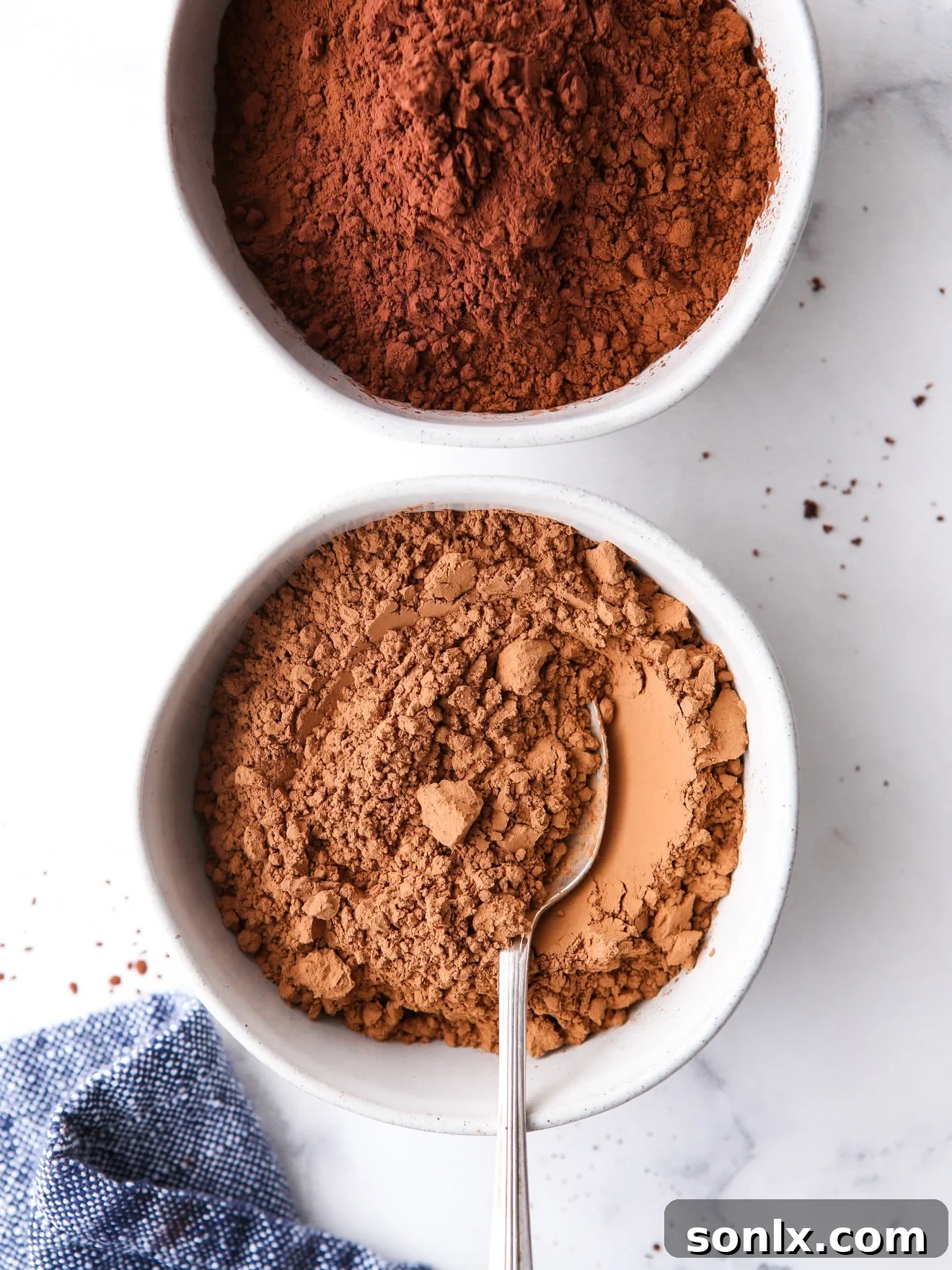
Delving into the world of chocolate, few ingredients are as foundational and yet as misunderstood as cocoa powder. From deep, dark cakes to vibrant red velvet creations, the type of cocoa powder you choose can dramatically alter the outcome of your recipe. But what precisely is the difference between natural unsweetened cocoa powder and Dutch-process cocoa powder? And does it truly matter which one you grab from your pantry? Let’s uncover the secrets to perfect chocolate baking!
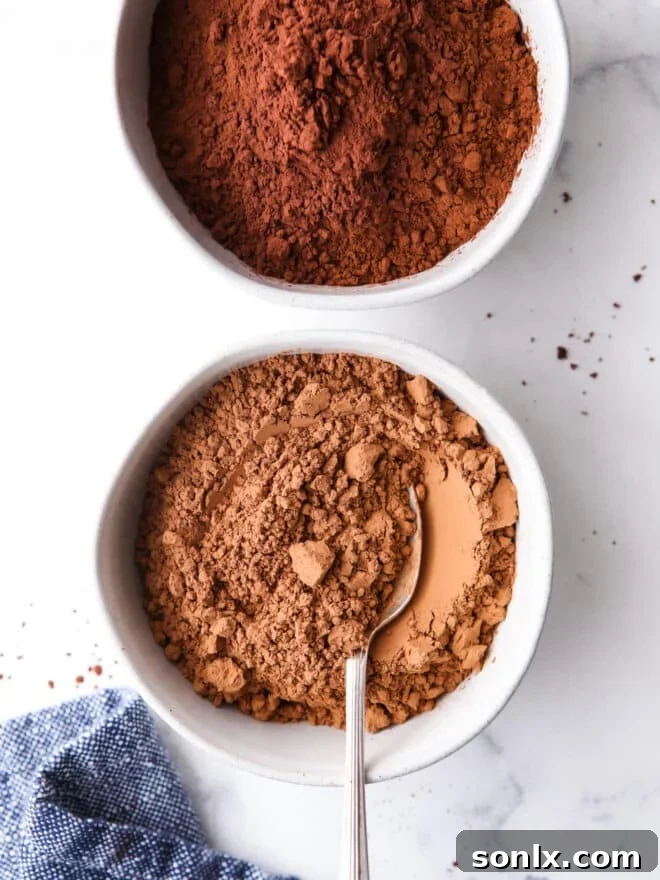
You might have noticed baking recipes specifically calling for “natural cocoa,” “unsweetened cocoa,” or “Dutch-process cocoa.” These terms aren’t just interchangeable suggestions; they point to fundamental differences in how cocoa powder is processed and, consequently, how it behaves in your baked goods. Understanding these distinctions is key to achieving the desired flavor, color, and texture in your chocolate creations. In this comprehensive guide, we’ll break down the two main types of cocoa powder, explore their unique characteristics, and explain exactly when and how to use each for optimal results.
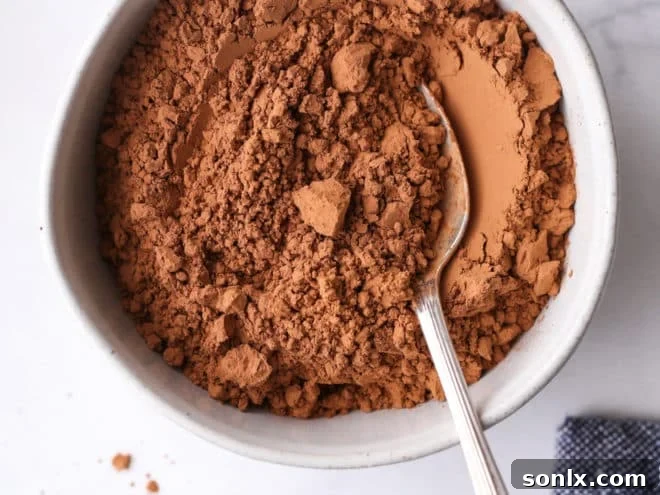
What is Cocoa Powder? The Essence of Chocolate
Before we dive into the specific types, let’s understand what cocoa powder truly is. Cocoa powder is one of the most concentrated forms of chocolate flavor available, stripped of much of its fat. The journey begins with cacao beans, which are fermented, roasted, and then ground into a thick paste known as cocoa liquor. This liquor contains both cocoa solids and cocoa butter. To create cocoa powder, the majority of the cocoa butter (the fat component) is pressed out, leaving behind a dry cake of cocoa solids. These solids are then pulverized into the fine powder we know and love. Essentially, cocoa powder is the pure, unsweetened essence of chocolate, devoid of added sugars, milk, or significant fat content, making it a versatile ingredient for both sweet and savory applications.
There are primarily two distinct kinds of cocoa powder available on the market: natural unsweetened and Dutch-process. While countless brands offer variations in flavor intensity, color depth, and price points, nearly all cocoa powders fall into one of these two categories or are a blend of both. Understanding these core types is paramount for any aspiring or seasoned baker.
Natural Unsweetened Cocoa Powder: Bright and Acidic
Natural unsweetened cocoa powder is, as its name suggests, cocoa in its purest and most straightforward form after the cocoa butter has been removed. It undergoes minimal processing beyond the initial roasting and grinding of the cocoa solids. This lack of additional treatment means it retains its inherent acidity, making it a crucial ingredient in recipes that rely on specific chemical reactions for leavening.
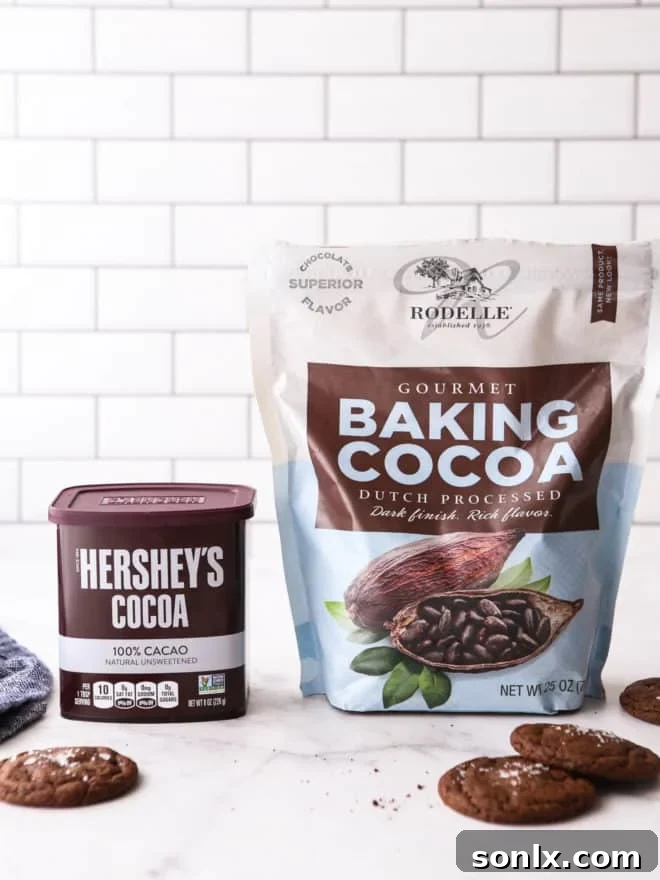
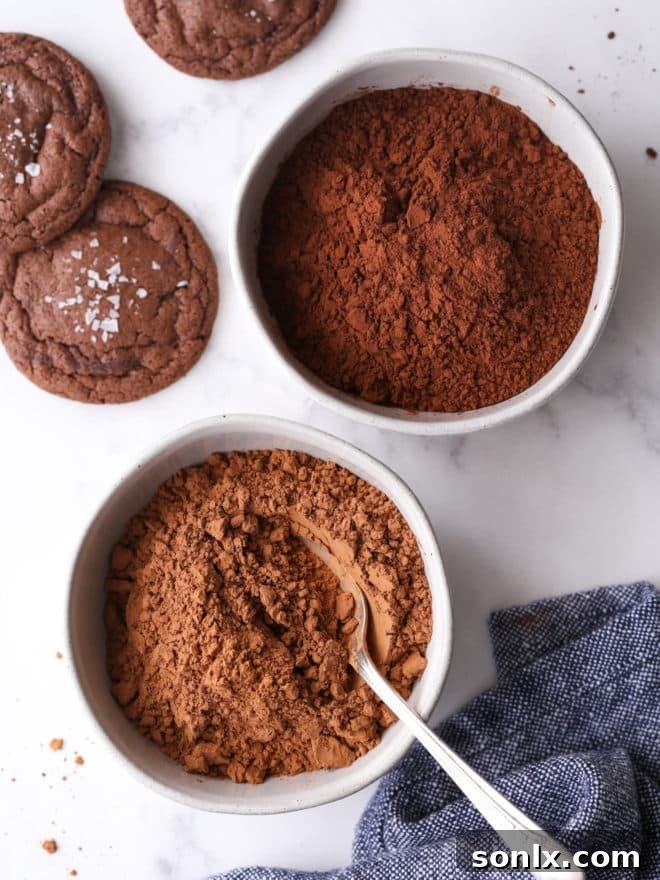
Visually, natural cocoa powder typically has a lighter, reddish-brown hue. Its flavor profile is often described as robust, intensely chocolaty, and slightly fruity or even bitter, with noticeable acidic notes. This brighter, more assertive flavor is what gives certain chocolate desserts their characteristic taste. Common brands found in most grocery stores, such as Hershey’s Unsweetened Cocoa and Ghirardelli Unsweetened Cocoa, are excellent examples of natural cocoa powder. When a recipe simply calls for “unsweetened cocoa powder” without further specification, it generally refers to this natural variety.
Dutch-Process Cocoa Powder: Smooth and Mellow
In contrast, Dutch-process cocoa powder, sometimes labeled “alkalized” or “European style,” undergoes an additional step during processing. This method, pioneered by Dutch chemist Coenraad Johannes van Houten in the 19th century, involves treating the cocoa solids with an alkaline solution, typically potassium carbonate. This alkalization process neutralizes the natural acidity of the cocoa powder.
The result is a cocoa powder with a significantly different character. Dutch-process cocoa is notably milder in flavor, often described as smoother, less bitter, and more earthy or mellow, with deep, complex chocolate notes. The alkalization also darkens the color of the cocoa, yielding a richer, almost black appearance in baked goods, which is why it’s favored for recipes like “blackout” cakes or popular sandwich cookies. Brands like Guittard, Rodelle, and often Hershey’s Special Dark (which is a blend, but largely Dutch-processed) are examples of this type. This treatment affects not only the taste and color but also its interaction with leavening agents, which is a critical point for bakers.

The Crucial Role of Leavening: Why Your Choice Matters
Most of the time, yes, the kind of cocoa powder you use matters a great deal in baking. The visual comparison above starkly illustrates this point: two batches of cookies, identical in every way except for the cocoa powder used. The cookies on the left, made with natural cocoa powder as the recipe intended, rose beautifully. The batch on the right, using Dutch-process cocoa powder, remained stubbornly flat. This dramatic difference isn’t merely aesthetic; it’s a direct result of the chemical interaction between cocoa powder and leavening agents.
Natural Cocoa Powder and Baking Soda
Natural unsweetened cocoa powder is acidic, with a pH ranging from 5.0 to 6.0. This acidity is essential when a recipe calls for baking soda. Baking soda (sodium bicarbonate) is an alkaline compound that requires an acid to activate. When baking soda combines with an acid and a liquid, it produces carbon dioxide gas, which creates bubbles and causes batters to rise. In recipes that rely on baking soda as the primary leavening agent, natural cocoa powder provides the necessary acid for this reaction to occur, ensuring your cakes, cookies, and quick breads achieve a light and airy texture.
Dutch-Process Cocoa Powder and Baking Powder
Dutch-process cocoa powder, having been neutralized by an alkaline solution, has a higher pH, typically between 6.8 and 7.8, making it far less acidic. Therefore, it cannot react with baking soda to produce leavening. If a recipe calls for natural cocoa powder and baking soda, and you substitute Dutch-process cocoa, your baked goods will likely be dense and flat, as demonstrated by the cookies above. Instead, Dutch-process cocoa powder is best paired with baking powder. Baking powder is a complete leavening agent, as it contains both an acid and a base (baking soda), along with a starch filler. It only requires moisture and/or heat to activate and create lift. If a recipe uses baking powder, or a combination of baking powder with a small amount of baking soda (where the baking powder provides most of the lift), then Dutch-process cocoa can often be used successfully, or even natural cocoa, as the leavening mechanism isn’t dependent on the cocoa’s acidity.
Recipes Without Leavening
For recipes that contain no chemical leavening agents at all, such as chocolate sauces, puddings, custards, ice creams, or even hot chocolate, the choice between natural and Dutch-process cocoa powder is less about scientific reaction and more about desired flavor and color. In these instances, you can use either type of cocoa powder based on your preference. Natural cocoa will impart a sharper, more intense chocolate flavor, while Dutch-process cocoa will offer a smoother, mellower taste and a darker appearance. Feel free to experiment and use what you have on hand or what best suits the flavor profile you’re aiming for.
Flavor and Color: Beyond Leavening
Beyond their interaction with leavening agents, natural and Dutch-process cocoa powders significantly impact the sensory experience of your final product. Natural cocoa, with its inherent acidity, often contributes a complex, sometimes brighter, chocolate flavor that can have subtle fruity undertones. It’s the go-to for recipes like classic chocolate cakes, brownies, and red velvet cakes, where its reddish hue is also a desirable characteristic.
Dutch-process cocoa, on the other hand, offers a smoother, less bitter, and often deeper chocolate flavor. Its alkalization process mellows out some of the harsher notes, resulting in a more rounded and less acidic taste. This makes it perfect for rich, dark chocolate desserts, “blackout” brownies, or any recipe where you want an intensely dark color and a sophisticated, almost earthy chocolate profile. Think of commercial cookies like Oreos – their distinctive dark color and smooth chocolate flavor are often achieved using Dutch-process cocoa.
Tips for Storing Cocoa Powder
To ensure your cocoa powder remains fresh and potent, proper storage is essential. Both natural and Dutch-process cocoa powders should be stored in an airtight container in a cool, dark, and dry place, away from direct sunlight and heat. This helps prevent moisture absorption and preserves their delicate flavors. While cocoa powder doesn’t typically “go bad” in the same way fresh food does, it can lose its potency and flavor over time, usually after about 1-2 years. Check for any off smells or clumping, which could indicate it’s past its prime.
My Favorite Cocoa Powder and Personal Insights
When it comes to my own baking, the cocoa powder I reach for most frequently is Hershey’s Special Dark Cocoa. While labeled as “Special Dark,” it is a blend that leans heavily towards Dutch-process cocoa. I appreciate it for several reasons: it’s widely available in almost every grocery store, it’s very affordable, and I genuinely enjoy its rich, dark flavor profile. Interestingly, in my experience, I’ve found that Hershey’s Special Dark doesn’t seem to be as heavily alkalized as some other pure Dutch-process cocoa powders. This slight difference often allows me to use it in recipes that originally called for natural cocoa, such as my soft and chewy chocolate cookies, without needing to make significant adjustments to the leavening agents.
However, if a recipe explicitly relies on the strong acidity of natural cocoa powder (e.g., a recipe with a substantial amount of baking soda and no baking powder), I will either blend Hershey’s Special Dark with Hershey’s Unsweetened Cocoa (a natural cocoa) or opt for the natural variety altogether to ensure the proper rise and texture. While it may not be considered the “fanciest” or most gourmet cocoa powder on the market, for everyday baking, I find its consistency and excellent chocolate flavor to be unbeatable. Understanding these subtle differences empowers you to experiment with various brands and types, allowing you to discover your personal preferences and achieve perfect chocolate results every time!
Want to Dig a Little Deeper?
This article provides a comprehensive overview of cocoa powders and the fascinating science behind their use in baking. For those eager to deepen their understanding, I highly recommend exploring the following authoritative sources. They were invaluable in the research and writing of this post, offering even more intricate details and perspectives on this essential ingredient.
- The ABCs of Cocoa from King Arthur Baking
- What’s the Difference Between Dutch Process and Natural Cocoa Powder? from Serious Eats
- What is Cocoa Powder from The Spruce Eats