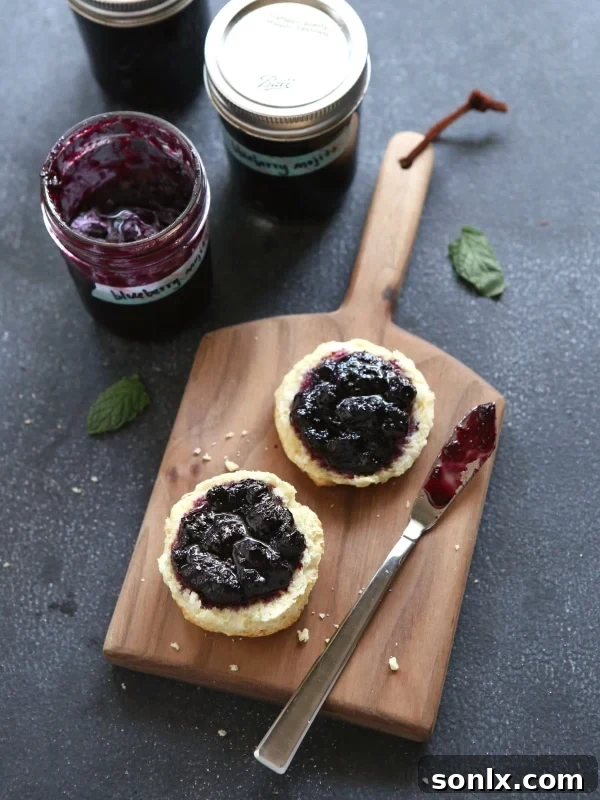
Welcome to the delightful world of homemade preserves, where classic flavors meet innovative twists! Today, we’re diving into a recipe that promises to transform your culinary experience: Blueberry Mojito Jam. This isn’t just any blueberry jam; it’s a vibrant, refreshing summer sensation infused with the zesty brightness of lime and the cool, aromatic kiss of fresh mint. Imagine the rich, sweet burst of sun-ripened blueberries perfectly balanced by a lively citrus tang and an invigorating hint of mint – it’s like a summer cocktail captured in a jar, ready to brighten any day.
Making homemade jam is an age-old tradition, a labor of love that yields incredibly rewarding results. While traditional blueberry jam is undeniably delicious on its own, this mojito-inspired version elevates it to an entirely new level. The addition of lime and mint creates a sophisticated flavor profile that is both familiar and excitingly unexpected. It’s the perfect way to capture the essence of summer and enjoy it long after the season fades.
Beyond its exquisite taste, crafting this jam at home allows you to control the ingredients, ensuring a wholesome, preservative-free spread. Whether you’re an experienced canner or a novice looking to try something new, this recipe is designed to be accessible and enjoyable, guiding you through each step to create a truly exceptional preserve. Get ready to fill your pantry with jars of this vibrant, irresistible Blueberry Mojito Jam – they won’t last long!
The Irresistible Appeal of Blueberry Mojito Jam
Blueberry jam already holds a special place in many hearts, conjuring memories of warm mornings and comforting breakfasts. Its sweet, fruity notes are a timeless classic. But what happens when you introduce the vibrant, zesty notes of lime and the cool, aromatic essence of fresh mint? You get a culinary masterpiece that transcends the ordinary. This Blueberry Mojito Jam is a celebration of summer flavors, offering a refreshing twist that awakens the palate and adds an exciting dimension to your favorite dishes.
The inspiration for this unique concoction often comes from a desire to experiment and bring new life to beloved recipes. This particular variation, born from exploring canning magazines, promises a jam that is fresh, bright, and genuinely surprising. It’s an experience in every spoonful – the sweetness of the blueberries hits first, followed by the tartness of lime, and finally, a lingering coolness from the mint, creating a harmonious blend that is utterly captivating.
Crafting Jam Without Commercial Pectin: A Natural Approach
Many jam recipes traditionally rely on commercial pectin to achieve the desired gelled consistency. While effective, the truth is that pectin is a naturally occurring polysaccharide found in the cell walls of fruits. This means that, for most fruits, additional pectin isn’t strictly necessary. Embracing a no-pectin method allows the natural flavors of the fruit to shine through more intensely, resulting in a purer, more authentic tasting jam. The process might take a little longer as you wait for the fruit’s natural pectin to work its magic and for the jam to reduce, but the superior flavor and texture of the final product are well worth the extra patience.
Understanding the pectin content of various fruits is key when opting for a no-pectin approach. Some fruits are naturally high in pectin, making them ideal candidates for gelling on their own. These include apples, cranberries, plums, and lemons. Their high pectin levels mean they will set more readily without added help.
Conversely, fruits like apricots, cherries, peaches, pears, rhubarb, and most berries (including blueberries) have a lower pectin content. While it’s certainly possible to make jam with these fruits without commercial pectin, it may require a longer cooking time to achieve a thicker consistency, as the fruit needs to break down more and the liquid needs to evaporate sufficiently. For these lower-pectin fruits, you might also consider combining them with a high-pectin fruit (such as lemon juice, which is used in this mojito jam recipe!) to aid in gelling, or simply accept a softer set, which many jam enthusiasts prefer.
Achieving the Perfect Set: Testing the Jelly Point
One of the most crucial steps in jam making, especially without added pectin, is determining when your jam has reached its “jelly point” – the precise moment it will set correctly upon cooling. Overcooking can lead to a stiff, overly firm jam, while undercooking results in a runny, syrupy preserve. There are several reliable methods to test for the jelly point, ensuring your jam achieves the ideal consistency:
- The Cold Plate Test: Place a small ceramic plate in the freezer before you start cooking. When you suspect your jam is ready, remove the plate, spoon a small amount of hot jam onto it, and return it to the freezer for one minute. Remove the plate and push the jam with your fingertip. If the surface wrinkles, the jam is ready. If it’s still very liquid, continue cooking and retest.
- The Spoon/Sheeting Test: Dip a cold metal spoon into the boiling jam, scoop a small amount, and lift it horizontally, allowing the jam to drip off. If the jam is not ready, it will run off the spoon in individual drops. As it approaches the jelly point, the drops will merge and fall off in a sheet, or “sheet” off the spoon, indicating it’s ready.
- The Temperature Test: Using a candy thermometer, cook the jam until it reaches 220°F (104°C) at sea level. This temperature indicates that enough water has evaporated and the sugar-to-pectin ratio is optimal for gelling. Adjust this temperature for higher altitudes (subtract 2°F for every 1,000 feet above sea level).
Each method offers a slightly different way to confirm readiness, and often, using a combination of tests provides the most confidence. For more detailed visual guidance on these techniques, you can refer to resources like this informative cheat sheet on testing the jelling point. Remember, a slightly softer set is often preferred for jams used as toppings for pancakes or ice cream, or even as an ingredient in cocktails, offering a luscious, pourable texture.
Canning and Storage Essentials for Homemade Jam
Once your delicious Blueberry Mojito Jam has reached the perfect consistency, proper canning and storage are essential to ensure its safety, quality, and longevity. Water bath canning is a simple and effective method for preserving high-acid foods like jam, creating an airtight seal that prevents spoilage.
Sterilizing Jars and Lids
Before you even begin making your jam, sterilize your canning jars and lids. This eliminates any bacteria, yeasts, or molds that could cause spoilage. You can sterilize jars by immersing them in boiling water for at least 10 minutes, or by running them through a hot cycle in your dishwasher. Lids typically only need to be simmered in hot (not boiling) water to soften the sealing compound, making them ready for a secure seal. Keep jars hot until ready to fill to prevent thermal shock and cracking when the hot jam is added.
The Water Bath Canning Process
- Fill Jars: Carefully ladle the hot jam into the hot, sterilized jars, leaving about ¼ inch of headspace (the space between the top of the jam and the rim of the jar).
- Remove Air Bubbles: Use a non-metallic utensil (like a plastic chopstick or rubber spatula) to remove any trapped air bubbles by running it around the inside of the jar. Add more jam if necessary to maintain headspace.
- Clean Rims: Wipe the rims of the jars clean with a damp cloth. Any residue can prevent a proper seal.
- Apply Lids and Rings: Center a clean, hot lid on each jar, then screw on the band (ring) until it’s finger-tight. Do not overtighten, as air needs to escape during processing.
- Process in Water Bath: Place the filled jars onto a rack in a large canning pot or stockpot. Ensure there is at least 1 inch of water covering the tops of the jars. Bring the water to a rolling boil and process for 10 minutes (adjusting for altitude; for example, 15 minutes for elevations over 5,000 feet).
- Cool and Check Seals: Carefully remove the jars from the water bath and place them on a towel-lined counter, leaving space between them to cool undisturbed for 12-24 hours. As they cool, you should hear a “ping” sound as the lids seal and concave. After cooling, check the seals by pressing down on the center of each lid. If it doesn’t flex, the jar is sealed.
Storing Your Preserves
Store properly sealed jars in a cool, dark, dry place, such as a pantry or basement. Avoid direct sunlight or extreme temperature fluctuations. Under optimal conditions, homemade jam can be stored for up to 1 year. Once a jar is opened, refrigerate it and consume within 2-3 weeks for the best quality. If a lid does not seal, refrigerate that jar immediately and consume it within a few weeks, treating it like fresh jam.
Serving Suggestions: Creative Ways to Enjoy Your Mojito Jam
The versatility of Blueberry Mojito Jam extends far beyond a simple toast topper. Its unique blend of sweet blueberries, tangy lime, and refreshing mint makes it an exciting ingredient in a variety of culinary applications.
- Classic Spreads: The most obvious and beloved use is slathered generously on warm toast, fluffy pancakes, golden waffles, or flaky biscuits for a truly gourmet breakfast experience.
- Dessert Topping: Drizzle it over vanilla bean ice cream, spoonfuls of Greek yogurt, or creamy panna cotta. It also makes a fantastic filling for thumbprint cookies, tarts, or layered cakes.
- Savory Pairings: Don’t limit this jam to sweet dishes! Its vibrant flavor can beautifully complement savory elements. Try pairing it with a cheese board, alongside goat cheese or a sharp cheddar. It can also be incorporated into glazes for poultry or pork, adding a surprising fruity-herbal note.
- Beverage Enhancer: As the name suggests, this jam is a natural fit for cocktails. Stir a spoonful into a glass of sparkling water or lemonade for a refreshing non-alcoholic drink. For adults, it makes an exquisite addition to a classic mojito (replacing simple syrup), margaritas, or even a gin and tonic for a fruity, herbaceous twist.
- Baking Ingredient: Incorporate it into muffin batters, scone recipes, or even a filling for homemade pastries for an unexpected burst of flavor.
Whether you prefer a looser, syrupy jam or a firmer set, this Blueberry Mojito Jam adapts beautifully to your preference. Its bright and lively character makes it a perfect accompaniment to almost anything, ensuring that these jars won’t linger in your pantry for long.
Recipe: Blueberry Mojito Jam
Rating: 4.67 out of 5 stars based on 3 reviews
Blueberry jam with a refreshing twist of lime and mint.
Servings: 3 half-pint jars
Prep Time: 10 mins
Cook Time: 30 mins
Process Time: 10 mins
Total Time: 50 mins
Ingredients
- 2 lbs fresh blueberries (900 grams)
- 2 ½ cups granulated sugar (500 grams)
- Zest of 3 limes
- ¼ cup fresh lime juice (60 ml, from 2-3 limes)
- 4 sprigs fresh mint, bundled together with cotton string
Instructions
- In a large heavy-bottom pot, combine the blueberries, sugar, lime zest, and lime juice. Set over medium heat. Bring to a boil, stirring occasionally to dissolve sugar.
- Add the bundle of mint to the jam. Let jam simmer until thickened and reduced, about 30-45 minutes. Stir frequently and skim foam from the surface as it cooks.
- Test the jelling point by using a cool spoon to scoop up some of the jam. Tip the spoon so that it runs back into the pot. If it all runs off, it needs more time. If it forms drops that hang before falling into the pot, then it is ready. [See this cheat sheet for more information on how to tell if your jam is done].
- Remove the mint bundle and discard (see Note below). Ladle jam into sterilized jars. Top with a lid and screw on with a ring. Process jars in a water bath for 10 minutes (15 minutes for 5,000+ ft elevation). Remove from water bath and let cool.
- Check that lids have sealed by pressing down into the center of each one. It should not move. Store jam in a cool, dry place like a pantry and consume within 1 year.
Notes
Mint Infusion: Depending on how large or potent your mint sprigs are, you may not need to let them simmer in the jam during the entire cooking time. Periodically taste-test the jam. When the jam has a mint flavor to your liking, remove the mint sprigs to prevent the flavor from becoming overpowering.
Nutrition Information (approximate per serving)
Calories: 822kcal, Carbohydrates: 212g, Protein: 2g, Fat: 1g, Saturated Fat: 1g, Sodium: 5mg, Potassium: 256mg, Fiber: 7g, Sugar: 197g, Vitamin A: 163IU, Vitamin C: 35mg, Calcium: 18mg, Iron: 1mg
Cuisine: American | Course: Side Dish | Author: Annalise Sandberg
Frequently Asked Questions About Jam Making
Q: Can I use frozen blueberries for this recipe?
A: Yes, absolutely! Frozen blueberries work just as well as fresh ones. You may find they release more liquid initially, so the cooking time might be slightly longer to achieve the desired consistency. There’s no need to thaw them beforehand; simply add them directly to the pot.
Q: What if my jam doesn’t set?
A: Don’t despair! If your jam hasn’t set after cooling for 24 hours, it means it didn’t reach the jelly point. You can often re-cook jam. Pour the jam back into a large pot, bring it back to a boil, and simmer for an additional 5-10 minutes, testing for the jelly point again. If it still doesn’t set, you can enjoy it as a delicious syrup or sauce! Adding a tablespoon of lemon juice or a little commercial pectin (if you decide to use it) during the re-cook can help.
Q: How long does homemade jam last?
A: Properly processed and sealed homemade jam can last up to one year in a cool, dark pantry. Once opened, it should be refrigerated and consumed within 2-3 weeks for the best flavor and quality.
Q: Can I reduce the amount of sugar in the recipe?
A: Sugar plays a crucial role in jam making, not only for sweetness but also for preservation and gelling. Reducing sugar significantly can affect the jam’s texture, shelf life, and ability to set without added pectin. If you wish to reduce sugar, you might need to use a low-sugar pectin product designed for such recipes, or be prepared for a softer, more sauce-like consistency and a shorter shelf life (requiring refrigeration).
Q: Is water bath canning safe?
A: Yes, water bath canning is a safe and reliable method for preserving high-acid foods like most fruits, jams, jellies, and pickles. The acidity of the food, combined with the heat processing, destroys harmful bacteria and creates a vacuum seal. Always follow tested recipes and proper canning procedures to ensure safety.
Embrace the Summer in a Jar
Making your own Blueberry Mojito Jam is more than just a recipe; it’s an experience. It’s the joy of working with fresh, vibrant ingredients, the satisfaction of transforming them into something truly special, and the pleasure of sharing homemade goodness with loved ones. Each jar you create is a testament to your culinary creativity and a little piece of summer preserved for enjoyment throughout the year.
Whether you spread it on your morning toast, swirl it into yogurt, or mix it into a festive cocktail, this jam promises a burst of sunshine and refreshment. So, gather your ingredients, embrace the process, and prepare to be enchanted by the irresistible flavors of this unique blueberry, lime, and mint creation. Happy jamming!