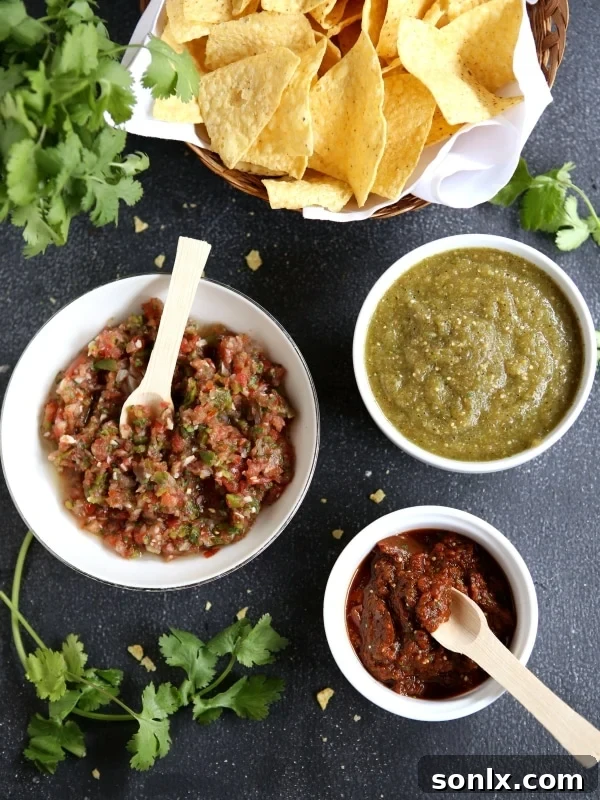
Salsa isn’t just a condiment; it’s the vibrant heart of Mexican cuisine, a symphony of fresh ingredients that awakens the palate with every bite. From the bustling street food stalls to the most refined dining tables, authentic Mexican salsa is an indispensable companion, offering a spectrum of flavors from subtly tangy to intensely fiery. This guide will walk you through the secrets of crafting incredible homemade salsas, drawing inspiration from invaluable lessons learned in Mexico. Prepare to elevate your culinary skills and discover recipes for three of my absolute favorite creations: a zesty spicy salsa verde, a robust chunky tomato and roasted poblano salsa, and a uniquely deep toasted guajillo-ancho salsa.
An Immersive Culinary Journey: The Little Mexican Cooking School Experience
My quest for authentic Mexican flavors led me and my mother-in-law to the sun-drenched shores of the Riviera Maya. While the pristine beaches beckoned, we made the conscious decision to dedicate a day to an enriching cultural experience at The Little Mexican Cooking School in the charming town of Puerto Morelos. It was a delightful deviation from our typical vacation itinerary, proving to be one of the most memorable and rewarding experiences of our entire trip. We stepped into a world brimming with aromatic spices and the promise of culinary discovery, eager to unlock the secrets behind truly exceptional Mexican dishes.
Under the expert guidance of Chef Alfonso, our day began with a fascinating immersion into the universe of chili peppers. He introduced us to an astonishing array of chilis, both fresh and dried, explaining their distinct characteristics, heat levels, and flavor profiles. We learned how each chili contributes its unique essence to a salsa, creating an unlimited variety of authentic Mexican flavors. Chef Alfonso’s passion was contagious, and his deep knowledge transformed our understanding of these foundational ingredients. He then seamlessly transitioned from theory to practice, demonstrating how to combine these diverse chilis with other fresh ingredients to compose a myriad of incredible salsas.
The highlight of the class was undoubtedly the hands-on experience. Each participant had the opportunity to craft their own salsa from scratch, selecting ingredients and adjusting ratios to suit individual tastes. Chef Alfonso moved amongst us, offering personalized tips and encouragement, helping us navigate the nuanced world of chili peppers. It was more than just cooking; it was a deeply sensory journey, as he urged us to smell, touch, and truly connect with the ingredients we were transforming. This personalized approach truly made the art of salsa making accessible and incredibly rewarding.
The Four Pillars of Perfect Salsa: Chef Alfonso’s Simple Guidelines
Chef Alfonso demystified the art of salsa creation by breaking it down into four straightforward, yet fundamental, guidelines. These principles allow for endless creativity while ensuring an authentic and delicious outcome every time. Forget rigid recipes; with these guidelines, you’ll be able to improvise and create salsas that perfectly match your preferences.
1. Choose Your Combination of Ingredients Wisely
The journey to a perfect salsa begins with a thoughtful selection of ingredients. Before you even start chopping, ask yourself: What kind of flavor profile am I aiming for? Do I prefer something bright and tangy, smoky and rich, or intensely spicy? What color should my salsa be? And how much heat can I handle? These questions will guide your choices and help you build a salsa tailored to your desires.
Most traditional Mexican salsas lay their foundation with fresh tomatoes or vibrant tomatillos. Tomatoes, especially ripe Roma varieties, offer a sweet, earthy base, while tomatillos provide a characteristic tartness and bright green hue. From there, the magic truly begins with chili peppers. The array of chilis is vast and exciting:
- Fresh Chilis: Jalapeños provide a moderate, grassy heat; serranos offer a sharper, more intense spice; and habaneros bring a fruity, fiery kick.
- Dried Chilis: These are culinary treasures, offering complex smoky, fruity, or earthy notes not found in their fresh counterparts. Look for guajillos (mild, fruity, tangy), anchos (mild, smoky, sweet, reminiscent of raisins), pasillas (medium heat, earthy, slightly fruity), and moritas (smoked jalapeños, similar to chipotles but fruitier). If you’ve never cooked with dried chilis, now is the time to experiment! They can be found whole at any good Mexican market or in the international aisle of larger grocery stores. Rehydrating them in hot water before cooking unlocks their full potential.
Beyond the core, don’t forget the essential aromatics and herbs. Onions (white or red) and garlic are almost universally present, adding depth and pungency. Fresh cilantro is a staple, lending a bright, citrusy, herbaceous note that is synonymous with Mexican cuisine. You might also consider epazote for a distinct, slightly anise-like flavor, or a squeeze of fresh lime juice for an extra burst of acidity. Remember, sometimes the simplest salsas, made with just a few perfectly balanced ingredients, can be the most mind-blowing. The salsa I created in class had only four ingredients, and its pure, intense flavor was truly unforgettable.
2. Cook Your Ingredients Individually for Optimal Flavor
This step is crucial for achieving a layered, complex flavor profile in your salsa. While it might seem tempting to toss everything into a pan together, cooking ingredients individually allows each one to develop its unique character without blending or dulling prematurely. Cut your chosen ingredients into large chunks or leave them whole; this makes preparation easier, as they will all be mashed or blended later anyway.
The preferred method for many authentic salsas is to dry-roast or char the ingredients. Sauté all your whole or large-chunk ingredients (including the chilis, onions, garlic, tomatoes, and tomatillos) individually over medium heat in a non-stick pan or on a comal (a flat griddle). Crucially, do this *without oil*. Oil can subtly change the flavor and prevent the ingredients from achieving that desirable roasted, slightly charred depth that defines many Mexican salsas.
- Why cook individually? Each ingredient has a different cooking time and requires specific conditions to reach its peak flavor. Onions caramelize slowly, chilis toast quickly, and tomatoes soften and develop sweetness. Cooking them separately ensures that each element contributes its best to the final blend.
-
Alternative Methods:
- Roasting: For a deeper, smoky flavor, roast tomatoes, tomatillos, onions, garlic, and even chilis on a baking sheet under a broiler or in a hot oven until they are softened and slightly charred.
- Charring on a Flame: For a truly authentic smoky flavor, especially for chilis like poblanos or even jalapeños, place them directly over the open flame of a gas burner or on a hot grill until the skin is blackened and blistered.
- Boiling: Some salsas, particularly specific salsa verdes, call for boiling tomatillos and fresh chilis until tender, resulting in a brighter, less smoky flavor.
Of course, culinary exploration is about personal preference. You are absolutely free to leave your ingredients raw for a fresh, vibrant pico de gallo style salsa. Or, perhaps you’d prefer a hybrid approach: charring some elements for smokiness while keeping others raw for brightness. The choice is yours, and experimenting is highly encouraged!
3. Mash or Blend Your Salsa to Desired Consistency
Once your ingredients are cooked to perfection (or left raw, if that’s your preference), it’s time to bring them together. The method you choose for combining and processing your ingredients will significantly impact the final texture and even the flavor of your salsa.
In Chef Alfonso’s class, we embraced the traditional method: building our salsas with a mortar and pestle, or “molcajete.” This ancient tool, crafted from volcanic rock, is more than just a kitchen utensil; it’s a piece of Mexican culinary heritage. Using a molcajete is admittedly a labor of love, requiring a good amount of “elbow grease” and time. However, it’s an experience I believe every aspiring salsa maker should try at least once. The slow, deliberate grinding process not only connects you more intimately with the ingredients but also creates a uniquely rustic texture and helps release deeper flavors that blending might miss. The gentle bruising of ingredients in a molcajete yields a more integrated and nuanced flavor profile.
For those times when you’re short on time or simply prefer a smoother consistency, a modern food processor or blender is an invaluable tool. These appliances offer speed and efficiency, allowing you to whip up a batch of salsa in minutes.
- Smooth Salsa: If you desire a silky, pourable salsa, blend all your ingredients until completely smooth. This is often preferred for dipping or as a sauce for enchiladas.
- Chunky Salsa: For a more robust, “pico de gallo” style salsa perfect for topping tacos or grilled meats, pulse the ingredients in short bursts. This allows you to control the texture, leaving delightful chunks of tomato, onion, and chili.
The choice between mashing and blending, and between smooth and chunky, is entirely up to your personal preference and the intended use of your salsa.
4. Taste and Adjust: The Final Touch of a Master Chef
This final step is perhaps the most crucial for transforming a good salsa into a great one. Once your ingredients are combined and processed, it’s time to truly engage your senses. Add a pinch of salt and a dash of pepper, then take a generous taste. Don’t be shy – a good salsa demands bold flavors.
As you taste, critically evaluate the balance of flavors. Ask yourself:
- Is it spicy enough for your liking? If not, consider adding a finely minced fresh chili, a pinch of dried chili powder, or even a few drops of a smoky hot sauce.
- Does it need more acidity to brighten the flavors? A squeeze of fresh lime juice can work wonders.
- Is it too acidic or too spicy? A tiny pinch of sugar or a spoonful of honey can help balance the heat and acidity without making it sweet.
- Does it lack depth? More salt is often the answer. Salt enhances all other flavors, so don’t be afraid to season adequately.
- Could it benefit from more herbaceous notes? A handful of freshly chopped cilantro or a few sprigs of other herbs can lift the entire profile.
- Is the texture right? If it’s too thick, you can add a tablespoon or two of water. If it’s too watery, you might gently simmer it down or add more substantial ingredients.
Adjusting is an iterative process. Add small amounts, taste again, and repeat until the salsa sings on your palate. This step empowers you to make the salsa truly your own, ensuring it perfectly suits your taste preferences.
Your Homemade Salsa Awaits!
And that’s it! The final, glorious step: grab a generous handful of crispy tortilla chips, or whatever your favorite vehicle may be, and *dig in*! There’s nothing quite like the satisfaction of enjoying a vibrant, flavorful salsa crafted with your own hands.
Having mastered the foundational techniques, you’re now ready to explore a world of flavors. Below, you’ll find three fantastic salsa recipes. The Spicy Salsa Verde is a true gem, directly from Chef Alfonso’s repertoire, embodying the bright, tangy flavors of Mexico. The other two, the Chunky Tomato and Roasted Poblano Salsa and the Toasted Guajillo-Ancho Salsa, are my own creations, inspired by the profound lessons I absorbed during my Mexican culinary adventure. Each offers a distinct flavor profile, promising to add excitement to your next meal or gathering.
How to Make Homemade Salsa: Three Authentic Recipes
Servings: 1½ cups of each salsa
Prep Time: 20 mins
Cook Time: 20 mins
Total Time: 40 mins
Discover three fantastic recipes to make authentic Mexican salsa at home, including a spicy salsa verde, a chunky roasted poblano salsa, and a rich guajillo-ancho salsa.
Pin Recipe
Leave a Review
Ingredients
Spicy Salsa Verde:
- 1 small white onion, sliced into large chunks
- 2 garlic cloves
- 1 jalapeno chili
- 1 lb tomatillos, sliced in half
- 1 tablespoon honey
- Salt, to taste
Chunky Tomato and Roasted Poblano Salsa:
- 1 poblano pepper
- 1 lb tomatoes, quartered and seeds removed
- 2 cloves garlic
- ¼ cup cilantro
- Salt and pepper to taste
Toasted Guajillo-Ancho Salsa:
- 1 guajillo pepper
- 1 ancho pepper
- ½ lb tomatillos, halved
- ½ lb tomatoes, quartered and seeds removed
- 2 tablespoon cilantro
- 1 tablespoon honey
- Salt to taste
Instructions
Spicy Salsa Verde:
- In a non-stick pan over medium heat, cook the onions until tender and caramelized, about 7 minutes. Remove from the pan and set aside. Cook the garlic and whole jalapeno in the pan until browned, about 5 minutes. Remove from the pan and set aside. Cook the tomatillos until tender, about 7-10 minutes, allowing them to soften and blister.
- Remove the stem and seeds from the jalapeno (or leave some seeds for extra heat). Puree all of the cooked ingredients in a blender or food processor until smooth. Add honey and salt to taste, adjusting as needed for a perfect balance of sweet, tangy, and spicy.
Chunky Tomato and Roasted Poblano Salsa:
- To roast the poblano pepper: Place the pepper directly on the flame of a gas stove burner or on a hot grill, turning occasionally, until the skin is completely blackened and blistered on all sides. Immediately transfer the hot pepper to a closed plastic bag or a bowl covered tightly with plastic wrap. Let it steam for at least 15 minutes; this helps loosen the skin. Once cooled, remove the pepper from the bag and use your hands to rub and peel away the charred skin. Avoid rinsing under water, as this washes away flavor. Remove the stem and seeds, then cut the roasted poblano flesh into large chunks.
- Place the poblano chunks in a food processor along with the quartered tomatoes (seeds removed), garlic, fresh cilantro, salt, and pepper. Pulse in short bursts until the tomatoes and poblanos are reduced to small, chunky pieces, ensuring some texture remains. Taste and add more salt or pepper if necessary, adjusting to your preference.
Toasted Guajillo-Ancho Salsa:
- In a non-stick pan over medium heat, toast the dried guajillo and ancho peppers. Press them flat with tongs, toasting each side for about 1 minute until fragrant and slightly pliable (be careful not to burn them, as this will make them bitter). Remove from the pan and set aside. Cook the halved tomatillos in the same pan until tender and slightly browned, about 7-10 minutes. Remove from the pan and set aside. Cook the quartered tomatoes until tender, about 5-7 minutes; use tongs to pick out any loose tomato skins.
- Once the toasted peppers have cooled slightly, give them a rough chop, removing the stems and seeds if desired (leaving some seeds can add more heat). Add all cooked ingredients (toasted peppers, tomatillos, tomatoes) to a food processor along with the fresh cilantro and honey. Blend until smooth. Season generously with salt to taste, adjusting until the deep, smoky, and subtly sweet flavors are perfectly balanced.
Cuisine: Mexican
Course: Appetizer, Condiment
Author: Annalise Sandberg
Have you tried this recipe? I’d love to hear about it! Leave a rating and review below, or take a photo and tag it on Instagram @completelydelicious with #completelydelicious.