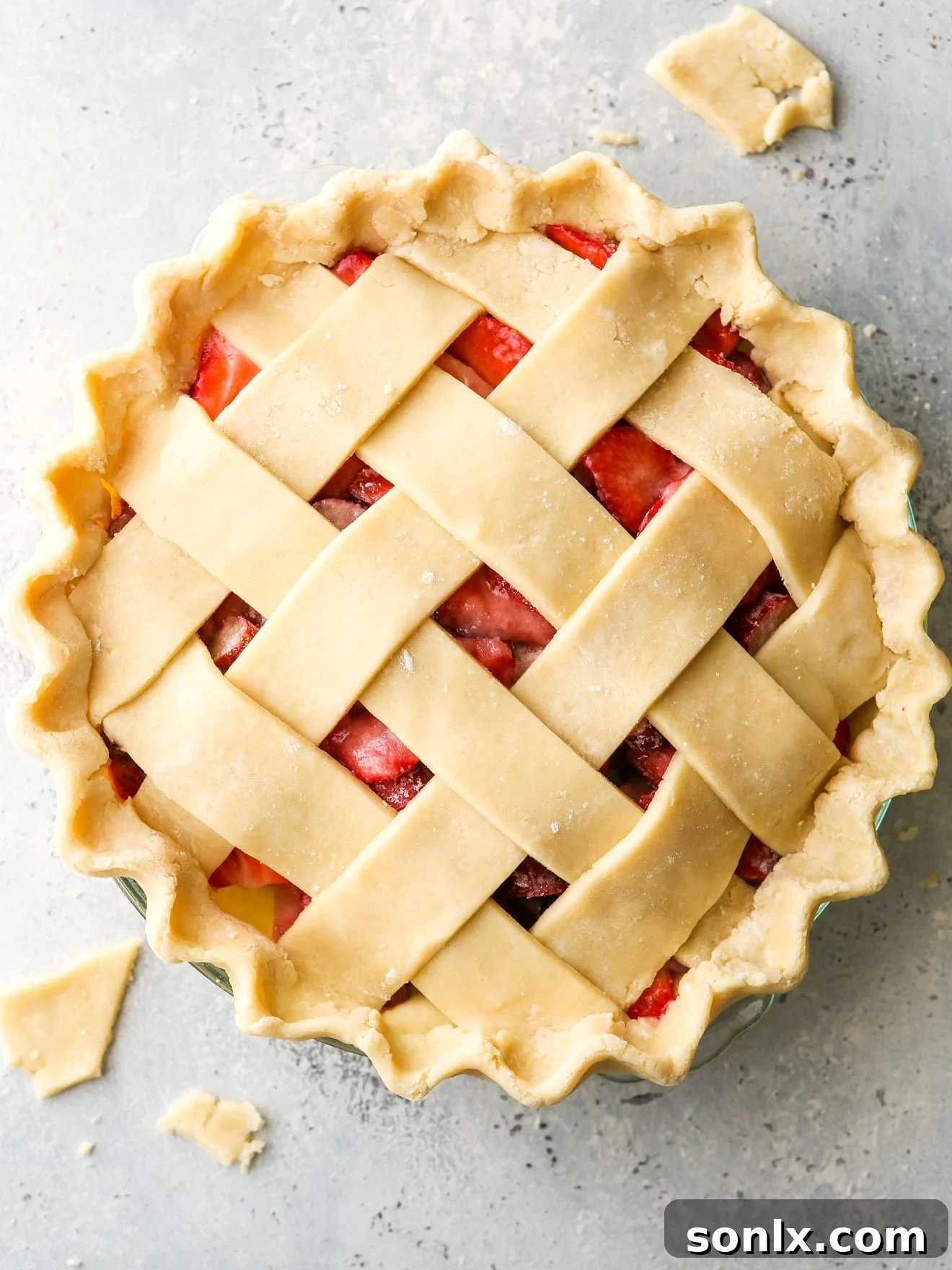
There’s something truly special about a homemade pie, and when it’s crowned with a beautiful lattice crust, it transforms into an undeniable showstopper. This elegant top crust, with its intricate woven pattern, often looks much more complicated to create than it actually is. Many home bakers find the idea of crafting a lattice intimidating, but we’re here to demystify the process and guide you through every step. Prepare to impress your family and friends with a stunning, professionally-finished pie that tastes as incredible as it looks!
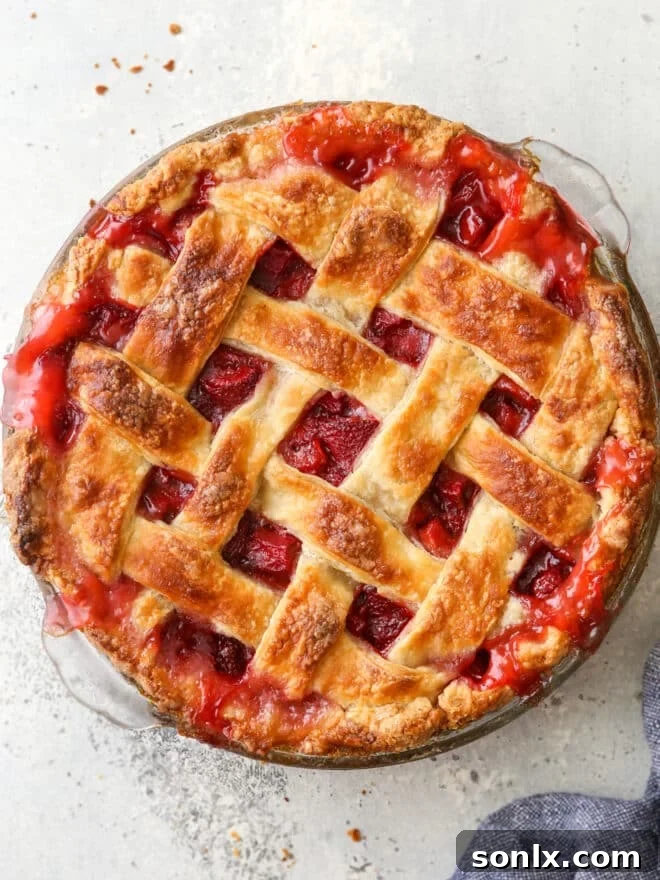
A pie adorned with a hand-woven lattice crust isn’t just a dessert; it’s a piece of edible art. The delicate crisscross pattern not only adds a touch of rustic charm and sophistication but also serves a practical purpose, allowing steam to escape during baking, resulting in a perfectly cooked filling and a crisp, golden crust. If you’ve always dreamt of baking a lattice-topped pie but have been hesitant to try, this comprehensive guide will equip you with all the knowledge and confidence you need to succeed. We’ll break down the technique into simple, manageable steps, ensuring that even novice bakers can achieve a flawless lattice every time.
What Exactly is a Lattice Pie Crust?
At its heart, a lattice pie crust is a decorative pastry topping created by interweaving thin strips of pie dough over a filled pie before baking. Instead of a solid top crust, which covers the entire filling, a lattice design leaves intentional gaps, forming a beautiful crisscross or basket-weave pattern. This method transforms a simple pie into a visually captivating dessert, making it a favorite for holidays, gatherings, and special occasions.
Beyond its undeniable aesthetic appeal, the lattice crust serves several functional purposes. The open design allows steam to vent from the pie’s filling as it bakes. This is crucial, especially for fruit pies, as it prevents the crust from becoming soggy and ensures the filling sets properly without boiling over. The exposed filling also caramelizes slightly and adds to the pie’s overall flavor profile and texture. While the result is stunning, the actual weaving process is surprisingly straightforward and can be mastered with a little patience and the right technique, which we will meticulously outline in this tutorial.
Why Choose a Lattice Pie Crust for Your Next Bake?
While a classic solid pie crust has its own charm, opting for a lattice top offers a myriad of benefits that elevate your pie-making experience:
- Unmatched Visual Appeal: A lattice crust instantly transforms a humble pie into a centerpiece. The intricate woven pattern is aesthetically pleasing and demonstrates a higher level of baking skill, making your dessert truly stand out. It’s a conversation starter and a testament to the care put into your baking.
- Perfectly Vented Fillings: Unlike a solid crust, the open design of a lattice allows steam to escape freely from the pie filling during baking. This prevents the top crust from puffing up, cracking, or becoming soggy. It also ensures that fruit fillings cook down and thicken beautifully, without creating excessive pressure inside the pie.
- Crispier Crust Texture: With more surface area exposed to the oven’s heat, the individual strips of dough in a lattice crust tend to bake up crispier and flakier than a solid top. This provides a delightful textural contrast to the soft, luscious filling beneath.
- Enhanced Browning: The lattice design promotes even browning across the entire top of the pie. The strips achieve a beautiful golden hue, and any exposed filling can caramelize slightly, adding depth of flavor and visual richness.
- Customization and Creativity: While the classic crisscross is popular, the lattice technique offers endless possibilities for creativity. You can vary the width of your strips, use different weaving patterns, or even incorporate small cut-outs to personalize your pie, making each creation unique.
Embracing the lattice technique is a step towards becoming a more confident and celebrated baker, adding a touch of elegance to any occasion.
Essential Tools and Ingredients for Your Lattice Pie Crust
Before diving into the weaving process, gathering your supplies will ensure a smooth and enjoyable baking experience. A lattice crust can adorn any double-crust pie, whether it’s a sweet fruit pie or a savory pot pie, giving it a gourmet touch. Here’s a comprehensive list of what you’ll need to create your masterpiece:
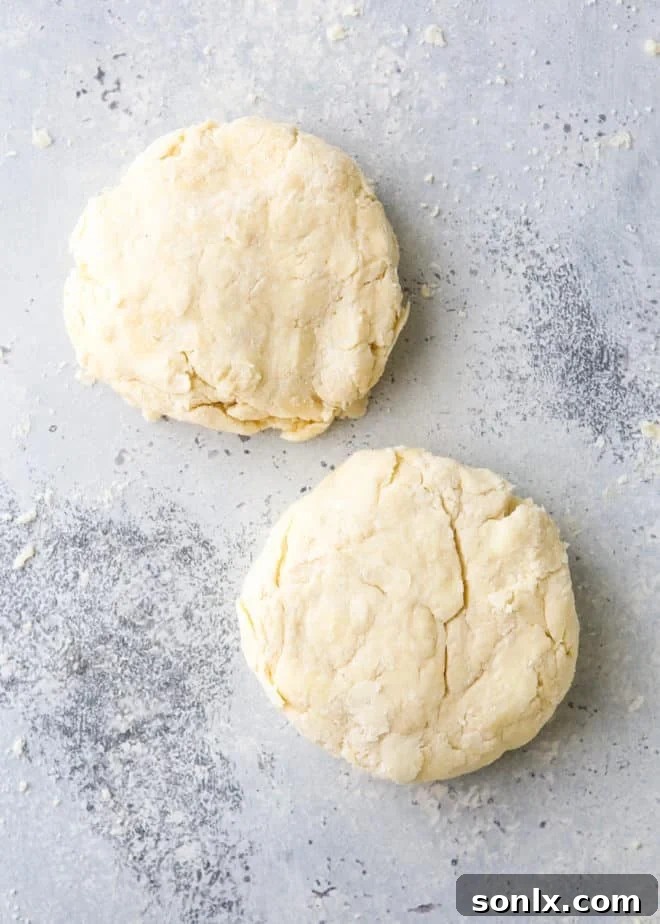
- Pie Crust Dough: This is the foundation of your lattice. While store-bought pie crusts offer convenience, a homemade flaky butter pie crust is highly recommended. Homemade dough generally tastes superior, handles better during rolling and weaving, and yields a far more tender and flavorful result. Ensure you have enough dough for both the bottom crust and the lattice top (typically two discs of dough).
- All-Purpose Flour: Essential for dusting your work surface and rolling pin. This prevents the delicate pie dough from sticking, allowing you to roll and cut strips cleanly without tearing. Don’t be shy with flour, but also remember to brush off excess before baking.
- Rolling Pin: A fundamental tool for achieving an evenly thick pie crust. Whether you prefer a French-style, tapered pin or a traditional American rolling pin with handles, choose one that feels comfortable and allows for consistent pressure.
- Ruler (Optional but Recommended): While not strictly necessary, a ruler helps immensely in cutting uniform strips of dough. Uniformity is key to a visually appealing and structurally sound lattice, ensuring even baking and a consistent pattern.
- Cutting Tool: You’ll need a sharp tool to create clean, straight strips. Options include:
- Pizza Cutter: Excellent for speed and cutting long, straight lines efficiently.
- Pastry Wheel (Fluted or Straight): A fluted pastry wheel can add an extra decorative touch to the edges of your strips, giving your lattice an even more refined look.
- Sharp Knife: A chef’s knife or paring knife can be used, but ensure it’s very sharp to avoid dragging or tearing the dough.
- Large Egg: For preparing an egg wash. This magical mixture is vital for giving your lattice crust that beautiful, golden-brown sheen and professional finish.
- Pastry Brush: Used to evenly apply the egg wash over your finished lattice. A good quality pastry brush ensures a smooth, streak-free application.
Having these tools ready will streamline your pie-making process and contribute significantly to the success of your lattice crust.
The Art of Creating a Perfect Lattice Pie Crust: Step-by-Step Guide
Preparation is Key: Setting Up for Success
Crafting a beautiful lattice pie crust is a rewarding process that begins with careful preparation. Follow these steps meticulously, and you’ll be weaving like a pro in no time.
-
Ensure Your Pie Dough is Adequately Chilled.
This foundational step is non-negotiable for a successful lattice. After preparing your pie dough (whether homemade or store-bought), it absolutely must rest in the refrigerator for a minimum of 2 hours, or ideally overnight. This chilling period serves two critical purposes: First, it allows the gluten in the flour to relax, preventing the dough from shrinking excessively when baked. Second, it firms up the butter or shortening in the dough, making it much easier to handle, roll out, and cut into strips without becoming sticky or tearing. Cold dough is your best friend when working with delicate pastry, ensuring sharp cuts and a sturdy weave.
-
Prepare the Pie’s Base and Filling.
While your second disc of dough is chilling for the lattice, prepare the rest of your pie. Roll out one disc of chilled pie crust dough on a lightly floured surface to your desired thickness and transfer it carefully into your pie baking dish. Trim and crimp the edges of this bottom crust if your recipe requires it. Then, proceed to prepare your chosen pie filling according to your recipe’s specific instructions and pour it evenly into the prepared bottom crust. The lattice top is always the very last component to be added before baking, so ensure your filling is ready and waiting.

-
Roll Out the Dough for Your Lattice Strips.
Retrieve your second disc of chilled pie dough from the refrigerator. On a clean, lightly floured work surface, use your rolling pin to roll out the dough to an even thickness of about ¼-inch. Dust your surface and rolling pin with flour as needed to prevent any sticking, but avoid excessive flour which can dry out the dough. You have two main approaches for rolling:
- Circular Method: Roll the dough into a large circle, approximately 12 inches in diameter, ensuring it’s slightly larger than your pie dish. This works well if you plan to use diagonal strips or want maximum length.
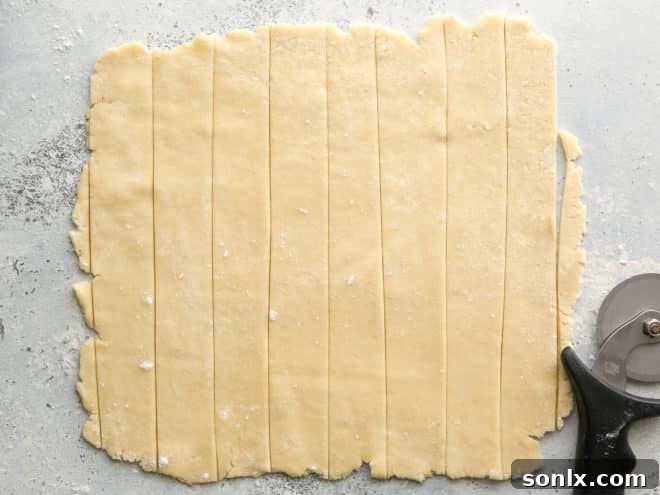
- Rough Rectangle Method (Preferred for Ease): As pictured, rolling the dough into a rough rectangle often makes cutting uniform strips much easier and minimizes waste, especially for a traditional crisscross pattern. Focus on achieving an even thickness across the entire sheet of dough.
-
Cut Your Dough into Even Lattice Strips.
Precision here will greatly enhance the final appearance of your lattice. Using a pizza cutter, pastry wheel, or a sharp knife (and a ruler for best results), cut your rolled-out dough into strips.
- Strip Width: Aim for strips that are generally 1 to 2 inches wide. The choice depends on the look you desire – thicker strips (e.g., 1.5-2 inches) create a more robust, rustic lattice and are often easier to handle, while thinner strips (e.g., 1 inch) create a more delicate and intricate pattern. In the accompanying photos, 8 strips of 1.5-inch width were used.
- Quantity: You will typically need between 8 to 12 strips, depending on the size of your pie and the chosen strip width. It’s always better to have a few extra strips than not enough.
Carefully transfer these strips to a baking sheet lined with parchment paper, or directly to your work surface. If your kitchen is warm, you might want to briefly chill the cut strips for 5-10 minutes to make them firmer and easier to weave.
The Weaving Process: Bringing Your Lattice to Life
Now for the most exciting part – the weaving! This is where your pie truly begins to take its stunning form. Work quickly and keep your dough cold to prevent stickiness and tearing.
-
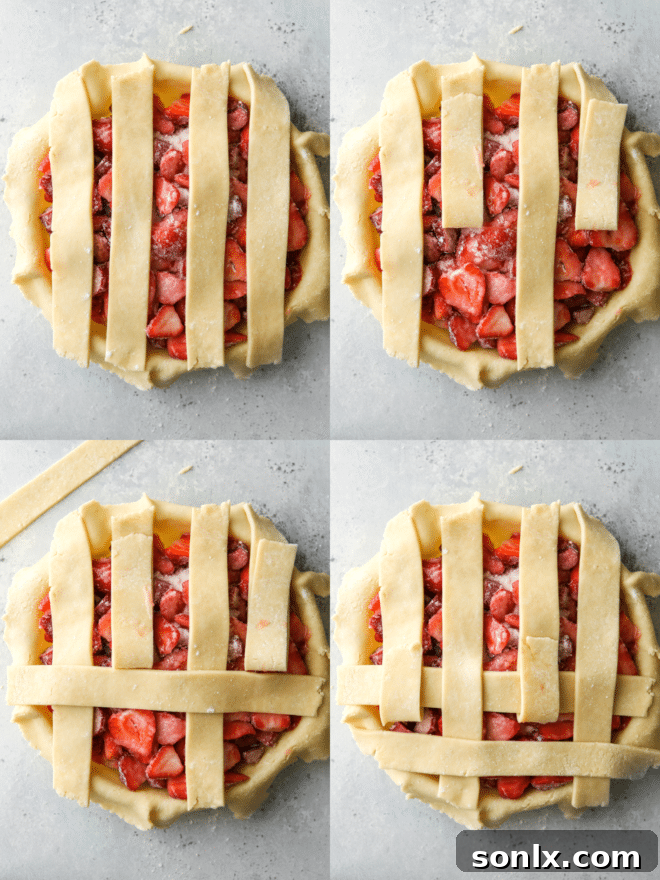
Lay Down the First Set of Vertical Strips.
Carefully transfer about half of your cut pie dough strips onto the top of your pie, laying them vertically and parallel to each other. Arrange them evenly, leaving consistent gaps between each strip. Place your longest strips towards the center of the pie, where the diameter is widest, and slightly shorter ones towards the edges. Do not press them down yet; they need to be movable for the weaving process.
-
Begin the Weave: First Horizontal Strip.
Take one of your remaining strips (a horizontal one). Starting from one side of the pie (e.g., the top), gently fold back every other vertical strip to about halfway across the pie. Now, lay your first horizontal strip over the unfolded vertical strips and underneath the folded-back vertical strips. Position this horizontal strip close to the top edge of the pie, ensuring it’s straight. Once positioned, unfold the vertical strips back down over the new horizontal strip, creating your first interwoven line.
-
Continue the Weave: Second Horizontal Strip.
Move down to the next section where you want to place your second horizontal strip. This time, you will fold back the opposite set of vertical strips. If you folded back strips 1, 3, 5 in the previous step, now fold back strips 2, 4, 6 halfway. Lay your second horizontal strip across the pie, parallel to the first, underneath the folded strips and over the flat ones. Ensure it’s evenly spaced from the first horizontal strip. Unfold the vertical strips back into place.
-
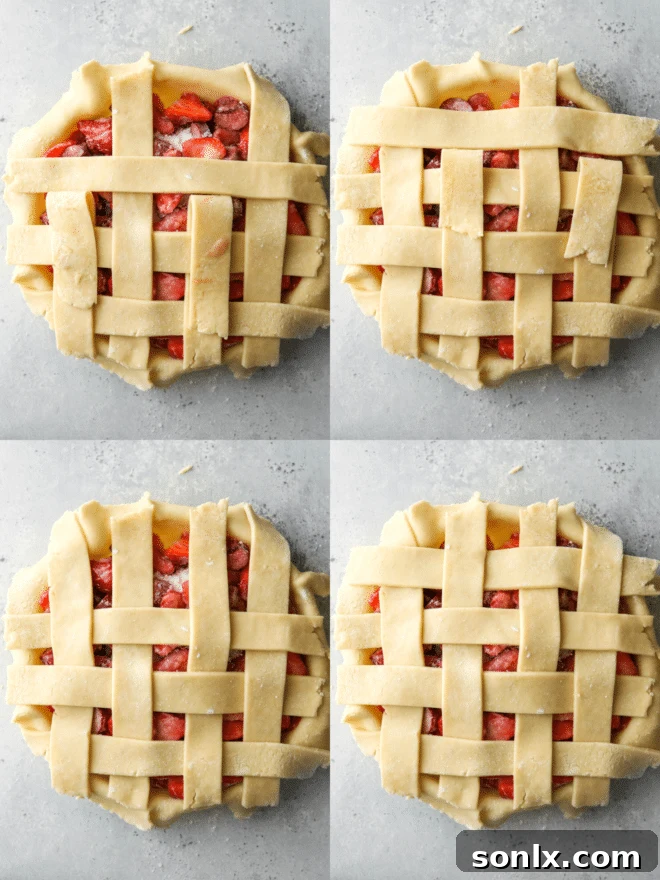
Repeat and Complete the Weave on the Other Side.
Continue this alternating pattern for the remaining horizontal strips. For each new horizontal strip, you will fold back the opposite set of vertical strips from the previous horizontal strip.
- Fold every other vertical strip back to the center (the same set you folded in step 6). Lay down another horizontal strip.
- Lay the vertical strips back down flat.
- Now, fold the opposite every other vertical strip back (the same set you folded in step 7). Place your final horizontal strip.
- Lay all vertical strips flat.
If you have more than 8 strips, the process remains the same – simply continue alternating which vertical strips you fold back to weave in each subsequent horizontal strip. The goal is to create a tight, even basket-weave pattern across the entire surface of the pie. Don’t worry if it’s not absolutely perfect; the rustic charm is part of the appeal!
Congratulations, your intricate lattice weave is now complete!
The Final Flourishes: Trimming, Crimping, and Baking
With the weaving complete, just a few more steps will transform your lattice into a masterpiece ready for the oven.
-
Trim Excess Dough and Seal the Edges.
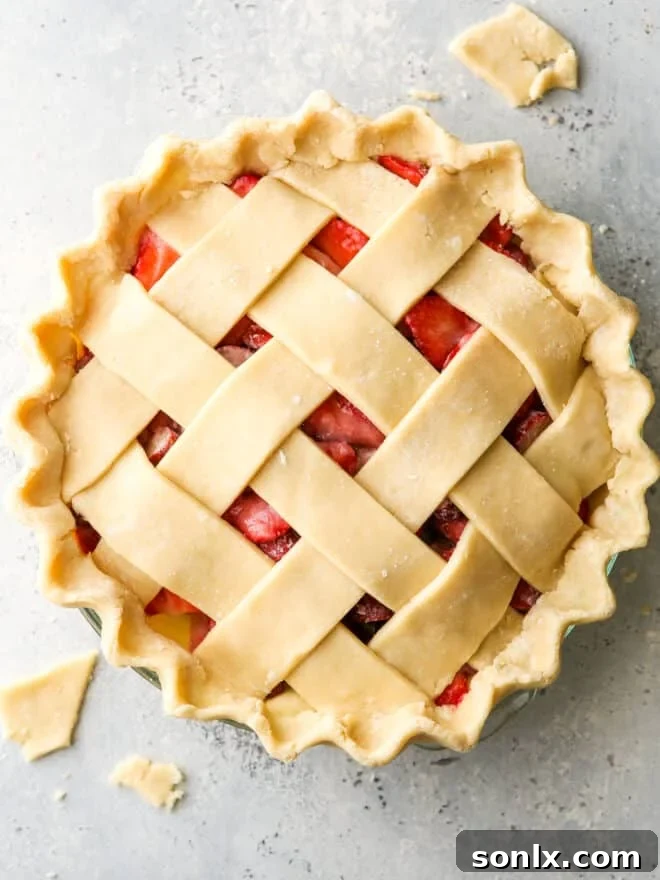
Once your lattice is fully woven, you’ll likely have some dough strips overhanging the edges of your pie dish. Using a sharp knife or your pizza cutter, carefully trim all overhanging pie crust to about a 1-inch overhang around the circumference of the pie. A little longer is fine, as you’ll be tucking it in. Now, gently fold the bottom pie crust and the lattice strips together, tucking them underneath themselves and pressing them firmly against the rim of the pie dish. This creates a secure seal, preventing the filling from leaking and creating a neat, sturdy edge for your pie.
-
Crimp the Edges for a Beautiful Finish.
With the edges sealed, it’s time to add a decorative crimp. This not only looks professional but also helps to further secure the top and bottom crusts.
- Classic Crimp: The most common method involves using one thumb to press the dough into the index finger and thumb of your other hand, forming a series of triangular or wavy indentations around the entire circumference of the pie.
- Fork Crimp: For a simpler look, you can press the tines of a fork around the edge of the dough, creating a neat, ridged pattern.
Whichever method you choose, ensure the crimping is firm enough to hold its shape during baking.
-
Apply an Egg Wash for Golden Perfection.
Do not skip this crucial step! In a small bowl, whisk together one large egg with one tablespoon of cold water until well combined. Using your pastry brush, gently and evenly brush this egg wash over all the exposed pie dough strips of your lattice and the crimped edges. The egg wash is responsible for that gorgeous, glossy, golden-brown finish that makes a pie look truly appetizing. Without it, your crust will likely bake to a dull, pale color.
- Optional Extra Sparkle: For an added touch of sweetness and crunch, sprinkle a small amount of coarse sugar (like turbinado or demerara sugar) over the egg-washed lattice before baking. This creates a beautiful sparkle and a delightful textural contrast.
-
Bake Your Masterpiece.
Place your prepared lattice-topped pie into a preheated oven, following your specific pie recipe’s instructions for temperature and baking time. Generally, pies with fruit fillings are baked until the crust is a rich golden brown, and the fruit filling in the center is visibly bubbling, indicating it’s thoroughly cooked and thickened. If you notice the edges of your crust browning too quickly, you can loosely tent the pie with aluminum foil during the last portion of baking to prevent over-browning. Once baked, allow the pie to cool completely on a wire rack before slicing and serving, allowing the filling to set properly.
Troubleshooting Common Lattice Pie Crust Challenges
Even with careful planning, sometimes things don’t go exactly as planned. Here are some solutions to common issues you might encounter while making your lattice pie crust:
- Dough is Too Sticky to Handle: This usually means your dough isn’t cold enough, or your kitchen is too warm. Pop the dough (or cut strips) back into the refrigerator for 10-15 minutes. Lightly flour your hands and work surface. Work quickly to keep the dough from warming up too much.
- Strips Tear During Weaving: This can happen if the dough is too warm, rolled too thin, or if you’re pulling too hard. Chill the dough again. If a strip tears, gently pinch it back together or, if it’s a clean break, you can sometimes camouflage it by aligning the break under a perpendicular strip. For future attempts, consider rolling the dough slightly thicker.
- Uneven Strip Widths: While rustic charm is lovely, very uneven strips can look messy. This is where a ruler and a sharp pizza cutter truly shine. Take your time during the cutting stage. Slight imperfections can often be hidden by the crimped edge.
- Lattice Shrinks During Baking: This is a sign of overworked dough or insufficient chilling. Always allow your dough to rest and chill thoroughly. Avoid overworking the dough during mixing and rolling, as this develops gluten too much, leading to shrinkage.
- Edges Brown Too Quickly: If the crimped edges of your pie are getting too dark before the rest of the pie is cooked, loosely cover the edges with a strip of aluminum foil (a pie shield is even better) for the remainder of the baking time.
Beyond the Basic Weave: Creative Lattice Pie Crust Variations
Once you’ve mastered the classic crisscross lattice, don’t hesitate to experiment with different techniques to personalize your pies and further enhance their visual appeal:
- Varying Strip Widths: Instead of uniformly sized strips, try alternating thick and thin strips for a more dynamic and intriguing pattern.
- Diagonal Weave: For a slightly different look, lay your initial vertical strips at a diagonal angle across the pie, and then weave in the horizontal strips also diagonally, creating a diamond pattern.
- Twisted Strips: Before weaving, gently twist each dough strip a few times. This adds a beautiful, rope-like texture to your lattice.
- Braided Strips: For an advanced technique, braid three thin dough strips together to form a thicker, decorative strip, then use these braided ropes in your lattice pattern.
- Decorative Cutouts: Use small cookie cutters (like mini leaves, stars, or hearts) to create cutouts from extra dough. You can place these cutouts within the lattice openings or along the crimped edge for extra flair.
Each variation allows you to add your unique touch, making every pie you bake a truly bespoke creation.
Pair Your Lattice Crust with These Delicious Pie Recipes
The beauty of a lattice pie crust is its incredible versatility. It complements a wide array of fillings, enhancing both their presentation and baking process. Any double-crust pie can be elevated with this elegant topping. Here are some fantastic pie recipes that would be absolutely gorgeous with your newly mastered lattice crust:
- Strawberry Rhubarb Pie (the very pie pictured in this tutorial, showcasing a perfect example!)
- Black and Blueberry Pie
- Sweet Cherry Pie
- Cranberry Blueberry Pie
These fruit-based pies benefit immensely from the steam-venting capabilities of a lattice crust, ensuring a perfectly cooked and set filling every time.
Conclusion: Embrace the Art of Lattice Pie Making
Creating a lattice pie crust might initially seem like a daunting task, but as you’ve seen, it’s a highly achievable skill that dramatically elevates your baking. With a little practice, patience, and attention to detail, you’ll be able to consistently produce pies that are not only delicious but also visually spectacular. The satisfaction of pulling a perfectly golden, intricately woven pie from the oven is unparalleled, and the appreciative smiles from those who enjoy your creation will be your ultimate reward. So, don’t hesitate to grab your rolling pin and pie dough – your next stunning homemade pie is just a weave away!
This tutorial was originally published June 2015. Photos and instructions have been updated and improved.
How to Make a Lattice Pie Crust

Servings: 12 servings
Prep Time: 20 mins
Chill Time: 2 hrs
Creating a lattice crust for a pie may seem tricky, but this guide offers detailed instructions for doing it just right.
Ingredients
- 1 pie dough (enough for a double-crust pie)
- Flour, for dusting
- 1 large egg + 1 tablespoon water, for egg wash
Equipment
- Rolling pin
- Pizza cutter (or pastry wheel or sharp knife)
- Pastry brush, for egg wash
- Ruler (optional)
Instructions
- Prepare pie dough. It should rest in the fridge for at least 2 hours to firm up and relax the gluten before using.
- Roll out the bottom pie crust on a floured surface and transfer to your pie baking dish. Prepare the filling according to your recipe’s instructions.
- Use a rolling pin to roll out the second pie crust to about ¼-inch thick, dusting your work surface with flour as needed. Roll it into a circle (about 12 inches) or a rough rectangle.
- Use a pizza cutter, pastry wheel, or sharp knife to cut the dough into 8-10 strips, about 1-2 inches wide. Thicker strips are easier to handle and hold their shape better.
- Lay half of the strips vertically and evenly spaced on top of your filled pie, placing longer strips in the center.
- To begin weaving, fold back every other vertical strip halfway across the pie. Lay one horizontal strip across the pie, resting it on the unfolded vertical strips and underneath the folded ones. Unfold the vertical strips back over the new horizontal strip.
- For the next horizontal strip, fold back the opposite set of vertical strips (those that were flat in the previous step). Lay the second horizontal strip across, ensuring even spacing, and then unfold the vertical strips.
- Repeat the weaving process for the remaining horizontal strips, alternating which set of vertical strips you fold back with each new horizontal strip, until the entire top is woven.
- Trim any overhanging pie dough to about 1 inch. Fold the bottom pie crust and the lattice strips together, tucking them underneath into the pie dish to create a sealed edge.
- Crimp the edges of the pie as desired. You can use your thumb and index finger or the tines of a fork to create a decorative edge and seal the crusts together.
- Combine 1 egg with 1 tablespoon of water to create an egg wash. Brush this mixture evenly over the entire lattice crust and crimped edges for a beautiful golden shine. (Optionally, sprinkle with coarse sugar for extra sparkle.)
- Bake your pie according to your specific recipe’s instructions, typically until the crust is golden brown and the filling is bubbling in the center. Allow to cool completely before serving.
Cuisine: American
Course: Dessert
Author: Annalise Sandberg