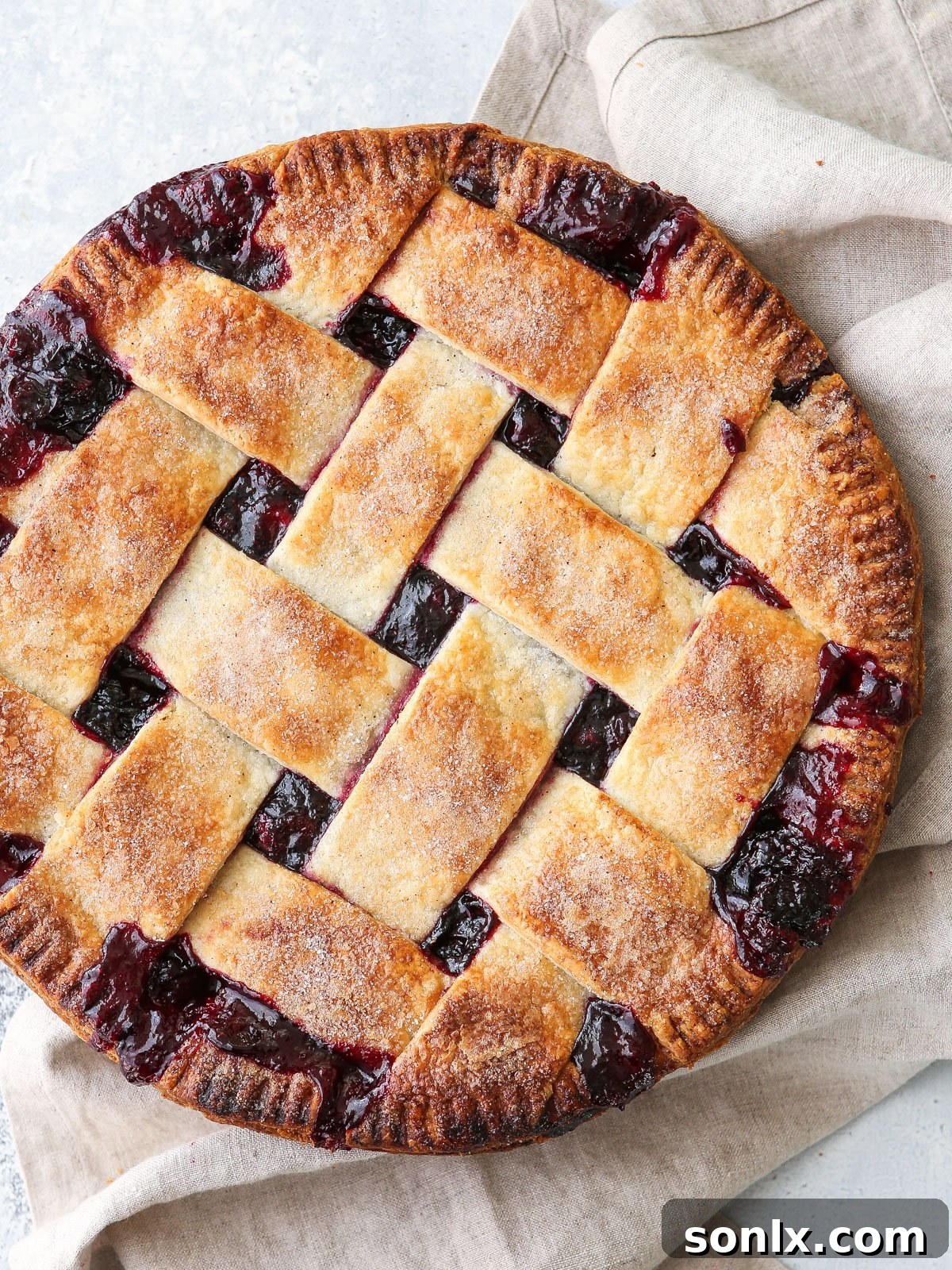
Welcome, fellow bakers! Are you ready to create the most incredible, melt-in-your-mouth, flaky all-butter pie crust you’ve ever tasted? This isn’t just any recipe; it’s my tried-and-true, practically impossible-to-mess-up method that will transform your pie-making experience. If you’ve been searching for the definitive guide to achieving a perfect pie crust that even beginners can master, you’ve found it!
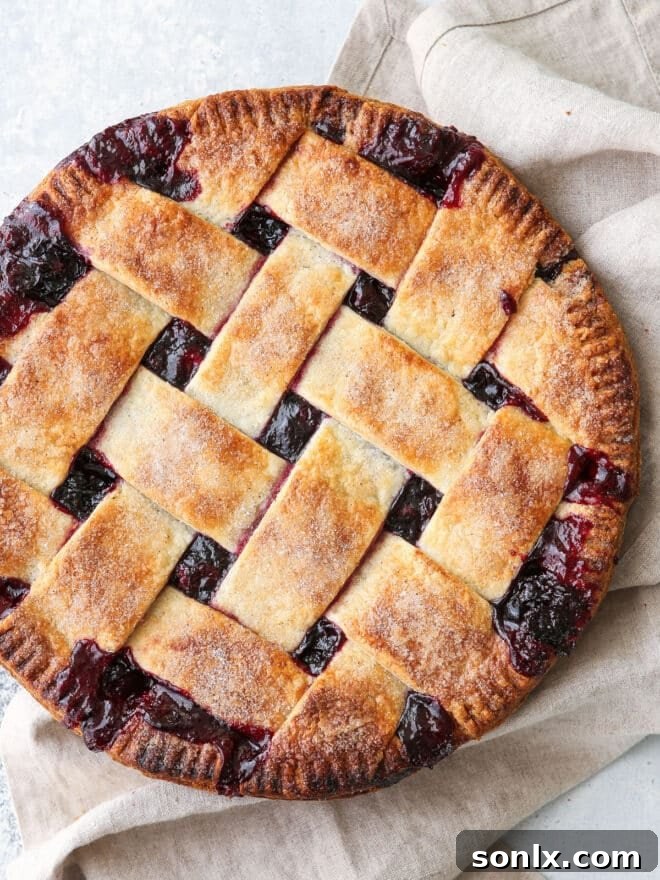
For over a decade, this has been my signature pie crust, made countless times for every kind of pie imaginable – from sweet fruit tarts to savory pot pies. While there are countless recipes and opinions on what makes the “best” pie crust, this particular method has consistently delivered a crust that never disappoints. It’s not just exceptionally flaky and tender; it boasts a rich, buttery flavor that stands proudly on its own, making it the perfect foundation for any filling. Prepare for a culinary match made in heaven!
Many home bakers find the idea of making homemade pie crust intimidating, but I promise this comprehensive tutorial will demystify the process and build your confidence. You’ll discover the simple secrets to creating a crust that’s both beautiful and delicious, making you a pie-baking maestro in no time.
“I’ve always had a hard time getting a flaky pie crust, and this recipe is now my go-to. Delicious!!!” — from reader Marisa
“Ever since I found your sheeting technique several years ago, I’ve made all my crusts this way. I’ve used it for sweet/dessert pies, chicken pot pies, hand pies, and my favorite…pie crust cookies. The crust comes out so flaky and tender every time. Thanks so much!” — from reader KDub
Table of Contents
- Essential Ingredients for the Perfect Pie Crust
- Step-by-Step Guide to Crafting Homemade Pie Dough
- Step 1— Combine Dry Ingredients and Integrate Cold Butter
- Step 2— Flatten and Distribute Butter for Ultimate Flakiness
- Step 3— Gradually Add Ice Water to Form the Dough
- Step 4— Form Dough Disks and Chill for Optimal Texture
- Expert Tips for Rolling Out Your Pie Crust
- Achieve Pie Perfection: Crucial Tips for Success
- Delectable Pies to Make with This Crust
- The Ultimate Flaky Pie Crust Recipe Card
Essential Ingredients for the Perfect Pie Crust
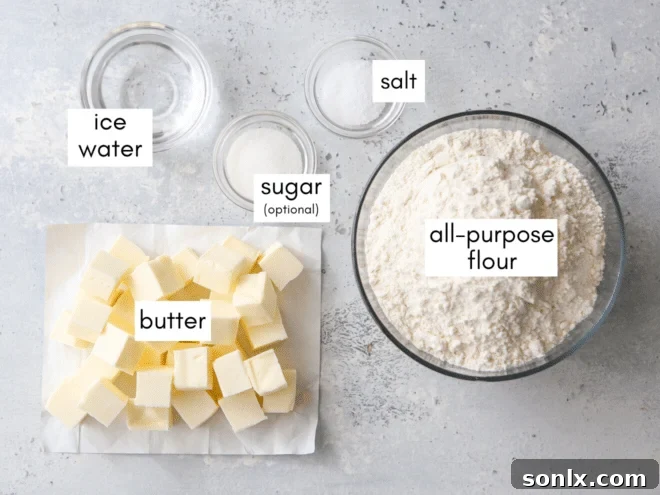
Let’s begin by gathering the simple building blocks for an extraordinary butter pie crust. You only need 4-5 basic ingredients to create a masterpiece:
- All-purpose flour: The structural backbone of our crust. Using all-purpose flour provides the right balance of gluten development for a tender, yet pliable dough.
- Cold unsalted butter: This is the star of our flaky show! Keeping butter very cold is crucial as it creates distinct pockets that will steam and separate into layers during baking. Unsalted butter allows you to control the overall saltiness of your crust.
- Granulated sugar (optional): A small amount of sugar contributes to browning and adds a subtle sweetness, making it ideal for dessert pies. For savory applications, you can omit it entirely.
- Coarse salt: Essential for enhancing flavor and balancing the richness of the butter. Don’t skip it!
- Ice cold water: Just like the butter, cold water helps keep the dough temperature low, preventing the butter from melting prematurely and ensuring those desirable flaky layers.
Elevate your pie crust’s flavor profile! My personal favorite twist on this classic recipe involves using buttermilk instead of water. Buttermilk introduces a wonderful tangy depth and an extra touch of tenderness to the flaky layers. It’s a game-changer, especially for fruit pies! Click here to explore my buttermilk pie crust variation.
Baking Tip: What Causes Flaky Layers in a Pie Crust?
The magic behind flaky pie crust lies in the interaction between solid butter and flour. When you incorporate cold butter into the dough, you want to leave small, distinct chunks of butter rather than fully blending it. As you roll out the dough, these butter chunks flatten into thin sheets within the flour mixture.
During baking, the solid butter sheets rapidly melt and release steam. This steam becomes trapped between the layers of dough, forcing them to separate and puff up, creating those characteristic, airy, and incredibly tender flaky layers we all crave. Keeping your ingredients, especially the butter, as cold as possible throughout the process is paramount to preserving these distinct butter pockets and maximizing flakiness.
Step-by-Step Guide to Crafting Homemade Pie Dough
There are several popular methods for making pie dough, each with its advantages:
- Using a pastry blender: This is perhaps the most traditional approach. A pastry blender efficiently cuts cold butter into dry ingredients, creating small, pea-sized pieces. It’s a reliable method that gives you good control over the butter size.
- With a food processor: For speed and minimal effort, a food processor is an excellent tool. It quickly pulses the butter into the flour, but care must be taken not to overprocess, which can lead to a tough crust. See my food processor pie crust tutorial here.
- By rolling out the butter into the dry ingredients: This is the innovative method I’m excited to share with you today. While it might seem a little unconventional, this technique is a guaranteed way to achieve an incredibly flaky pie crust. It adds about 5-10 extra minutes to the prep time compared to other methods, but the superior texture it yields is absolutely worth the minor additional effort. This method intentionally creates larger, thinner sheets of butter within the dough, which translates to monumental flakiness.
Step 1— Combine Dry Ingredients and Integrate Cold Butter
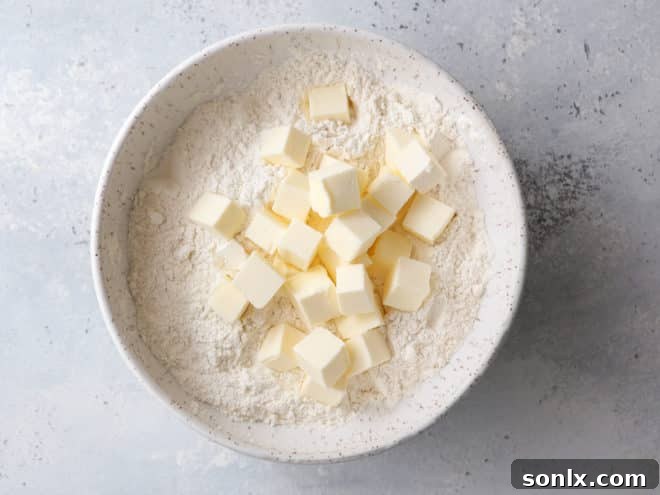
In a large mixing bowl, combine your all-purpose flour, coarse salt, and granulated sugar (if using for a sweet pie). Whisk them together thoroughly to ensure even distribution. Next, add your very cold, cubed unsalted butter directly into the dry mixture. Toss the butter cubes gently with your hands or a spoon until each piece is fully coated in flour. This flour coating helps prevent the butter from clumping together and ensures it can be evenly distributed later.
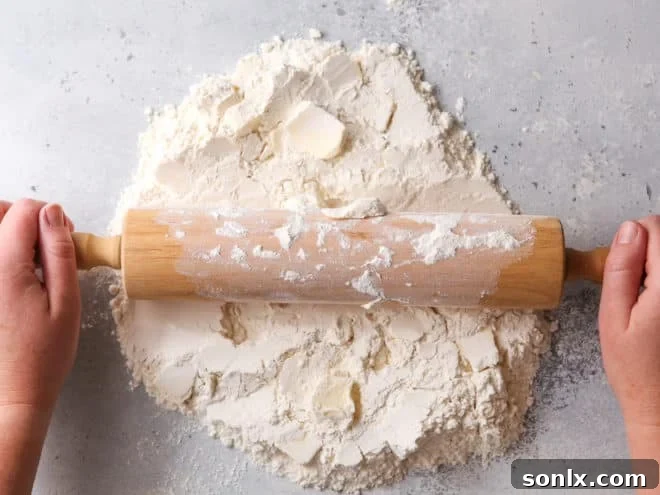
Step 2— Flatten and Distribute Butter for Ultimate Flakiness
Carefully dump the entire flour and butter mixture out onto a clean, lightly floured work surface. Now, for the key to extreme flakiness: use a sturdy rolling pin to flatten the cold butter cubes directly into the dry ingredients. Roll firmly from the center outwards, pressing the butter into thin sheets. As you roll, the butter will smear and combine with the flour, forming irregular, thin flakes and ribbons. This process can get a bit messy, but it’s precisely what we want!
A bench scraper is an invaluable tool here. Use it to periodically scrape the butter and flour mixture off your rolling pin and to gather the scattered ingredients back into a cohesive pile on your work surface. Continue rolling and gathering until all of the butter has been flattened and integrated into the dry ingredients. The goal is to see visible, thin sheets and large flakes of butter throughout the mixture, rather than tiny crumbs. If you notice any exceptionally long ribbons of butter, use your bench scraper to break them up slightly to ensure better distribution.
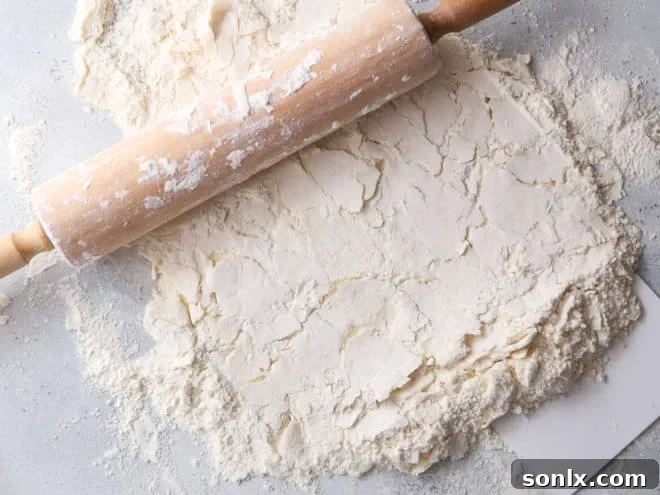
Step 3— Gradually Add Ice Water to Form the Dough
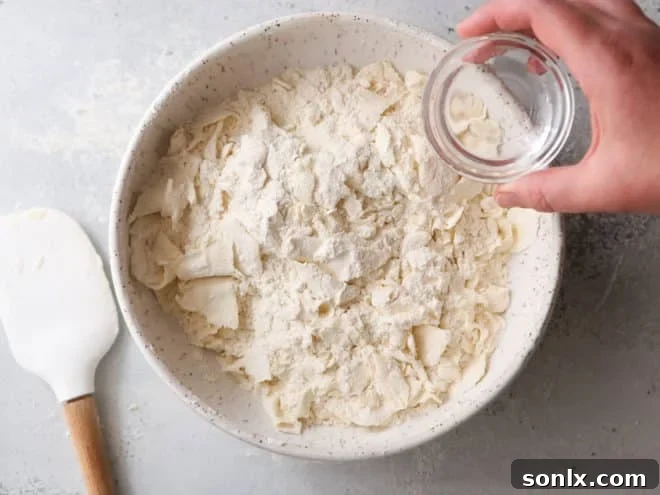
Once your butter is perfectly “sheeted” into the flour, gather the mixture and return it to your mixing bowl. If your kitchen is warm or the dough feels like it’s softening, place the bowl in the freezer for about 5-10 minutes to re-chill everything. This step is crucial for maintaining the integrity of the butter layers.
Next, make a well in the center of the mixture and add approximately 2-3 tablespoons of ice-cold water (or buttermilk, if you’re using that variation). Begin to mix the dough with a large spoon, then switch to your hands. The goal is to bring the mixture together into a cohesive ball without overworking it. If the mixture still feels too dry and crumbly, add more cold water, one tablespoon at a time, mixing after each addition. The amount of water needed can vary due to humidity and flour type, so listen to your dough. I typically find myself adding anywhere from ¼ cup to ½ cup of water in total, but it’s best to add slowly and incrementally. Be careful not to add too much water, as this can lead to a sticky dough that results in a tough, less flaky crust.
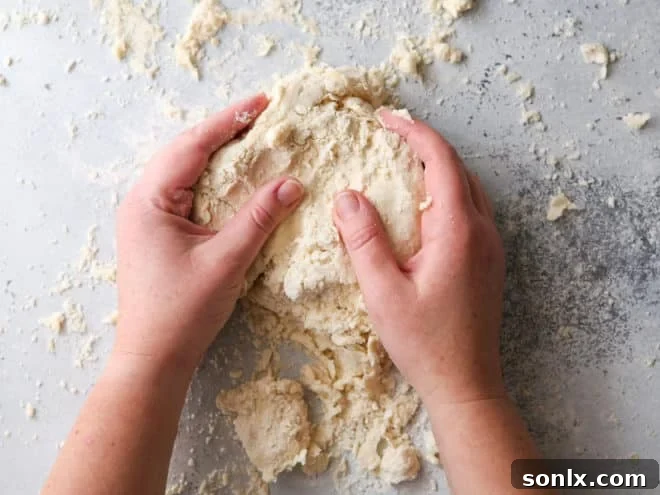
Step 4— Form Dough Disks and Chill for Optimal Texture
The dough should come together in a shaggy ball, with a few loose crumbs still perfectly acceptable. If it’s too crumbly to hold together, add another tablespoon of water. I find it easiest to turn the mixture out onto a clean work surface at this stage to gently bring the dough together with my hands. You don’t want to over-knead the dough, but a little gentle handling and shaping are fine to ensure it forms a cohesive mass.
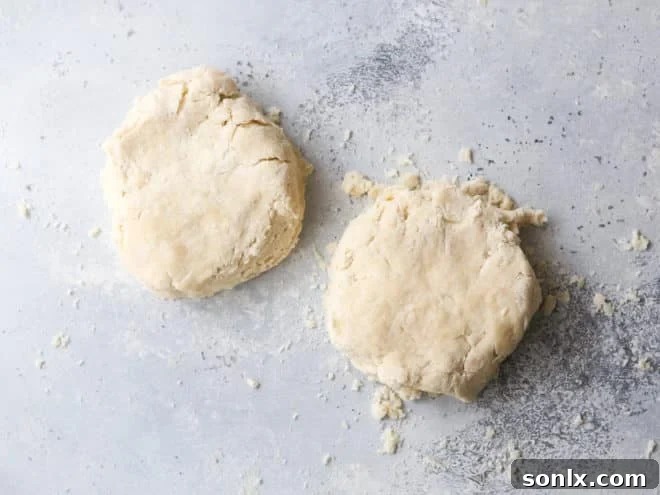
Divide the dough into two equal halves. Gently flatten each half into a round disk, about an inch thick. This shape will make it easier to roll out later. Tightly wrap each disk individually in plastic wrap, ensuring no air can get to the dough. Now, the most important step for developing tenderness and ease of handling: refrigerate the dough for a minimum of 2 hours. Ideally, aim for 4 hours or even overnight. This chilling period allows the gluten to relax, the butter to firm up completely, and the moisture to evenly hydrate the flour, resulting in a much more tender and manageable crust. Once chilled, your dough is ready to be transformed into a magnificent pie!
Expert Tips for Rolling Out Your Pie Crust
Rolling out pie dough can sometimes feel tricky, but with these tips, you’ll achieve a perfect circle every time:
- Allow the dough to temper slightly: After chilling, remove a dough disk from the fridge and let it rest at room temperature for about 5-10 minutes. This allows the butter to soften just enough to prevent cracking when you start rolling, without becoming too warm. Lightly flour your work surface and the top of the dough.
- Start from the center: Place your rolling pin in the center of the dough disk and roll outwards, applying even pressure. Rotate the dough a quarter turn after every few rolls. This helps ensure an even thickness and prevents the dough from sticking to your surface.
- Keep it moving and floured: Periodically lift the dough to ensure it’s not sticking to the counter. Add a light dusting of flour underneath and on top as needed. Too much flour can make the crust tough, so use it sparingly.
- Aim for an even thickness and shape: Continue rolling until the dough is about ⅛ inch thick and roughly 12-13 inches in diameter (for a standard 9-inch pie plate). Don’t worry if it’s not a perfect circle initially; you can gently nudge and reshape the edges with your hands. If the dough cracks, simply pinch it back together.
- Transfer with ease: To transfer the rolled-out crust to your pie plate, gently roll it around your rolling pin. Position the rolling pin over the pie plate and unroll the dough, letting it drape into the pan. Adjust as needed, gently easing it into the corners without stretching, then trim and crimp the edges according to your pie recipe.
Achieve Pie Perfection: Crucial Tips for Success!
- The bigger the butter chunks, the flakier your pie will be: This is a golden rule! Don’t be afraid to leave larger, visible pieces of butter (think dime to quarter size) throughout your dough. These larger butter pockets are what create those dramatic, airy, and distinct flaky layers when they steam in the oven. Resist the urge to blend the butter too finely.
- Always keep ingredients and dough cold: The temperature of your butter and water is perhaps the most critical factor for flakiness. Cold butter means it won’t fully mix with the flour, thus forming those crucial distinct layers. Start with butter straight from the fridge and ice-cold water. If your dough becomes warm and sticky during preparation, pop it back into the freezer for 10-15 minutes to chill before continuing. And always chill the finished dough for at least 2 hours before rolling it out.
- This recipe yields a double crust; cut in half for a single crust: This recipe makes enough dough for one 9-inch double-crust pie (top and bottom crust) or two single-crust pies. If you only need one crust, simply halve all the ingredient quantities. Alternatively, you can make the full recipe, wrap the second disk of dough tightly, and freeze it for future use – a fantastic time-saver!
- Use an egg wash for a beautiful golden finish: For a professional-looking, shiny, and golden-brown crust, brush the top of your pie with a simple egg wash before baking. A common egg wash ratio is one large egg whisked with one tablespoon of water or milk. This not only adds visual appeal but also helps protect the crust from over-browning too quickly.
- Pie crust storage best practices: Unbaked pie crust dough is incredibly versatile for meal prepping. Wrapped tightly in plastic wrap (and ideally in an airtight bag), it will keep beautifully in the refrigerator for up to 5 days. For longer storage, double-wrap the dough disks in plastic wrap and then aluminum foil, and freeze for up to 2 months. When ready to use, thaw frozen dough overnight in the refrigerator before proceeding with rolling and baking.
- Make pie crust ahead of time for stress-free baking: One of my favorite baking hacks is to prepare pie crusts in advance. For example, during busy holiday seasons like Thanksgiving, I often make my pie crusts 1-2 weeks beforehand. This significantly reduces stress and allows me to focus on the fillings and other dishes on the big day.
See also for more pie-making mastery:
- My Favorite Pie Tools and Must-Haves
- Most Common Pie Mistakes and How to Fix Them
- How to Make Pie Crust in a Food Processor (Speedy Method)
- How to Blind Bake Pie Crust for Crispy Fillings
- How to Make a Beautiful Lattice Pie Crust
Delectable Pies to Make with This Crust
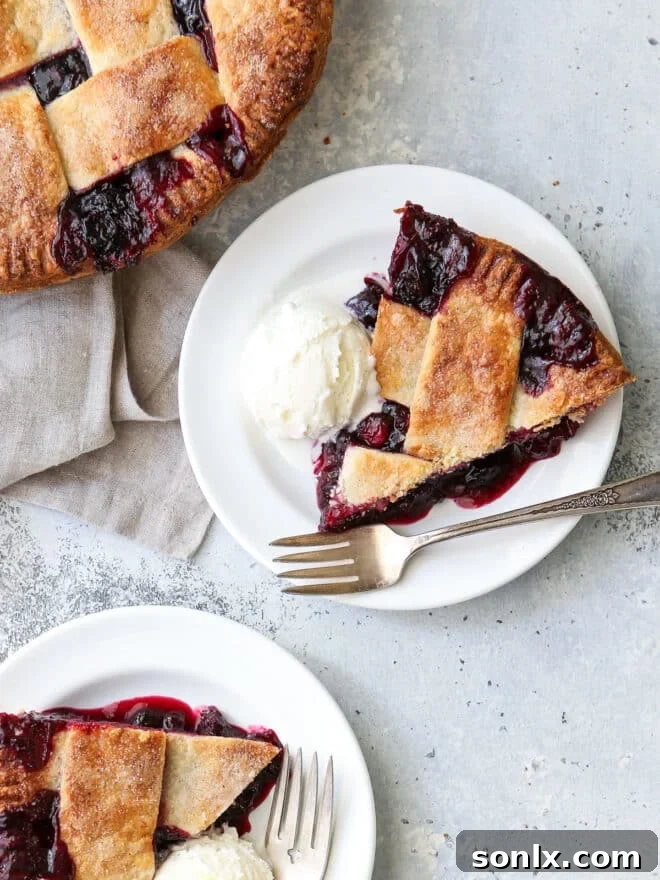
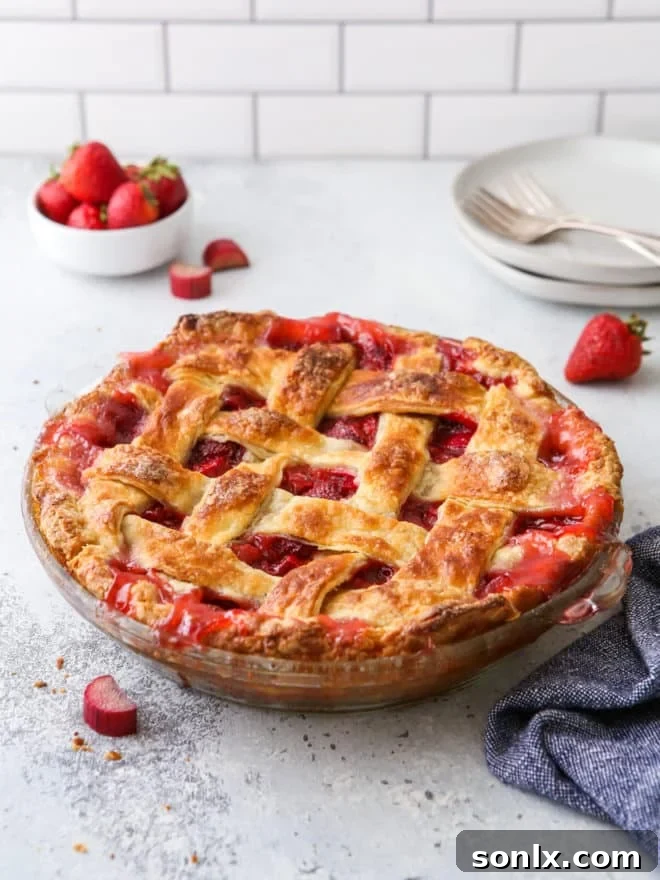
This versatile, flaky pie crust is the perfect partner for an endless variety of pie fillings. Here are some of my personal favorites that truly shine with this buttery base:
The Ultimate Flaky Pie Crust Recipe Card

Rating: 4.73 out of 5 stars (based on 29 reviews)
The Best Flaky Pie Crust
Servings: 10 servings (yields enough for one double-crust 9-inch pie)
Prep Time: 30 minutes
Chill Time: 2 hours (minimum)
Total Time: 2 hours 30 minutes
This all-butter pie crust is not just incredibly flaky and tender; it’s also packed with a delicious buttery flavor all on its own, making it the perfect foundation for any sweet or savory pie.
Pin Recipe
Leave a Review
Ingredients
- 2 ½ cups (300 grams) all-purpose flour
- 1 tablespoon granulated sugar (optional, for sweet/dessert pies)
- 1 teaspoon coarse salt
- 1 cup (226 grams) unsalted butter, very cold and cut into ½-inch cubes
- ¼-½ cup (56-113 grams) ice cold water, as needed (see Notes for variations)
Equipment
Instructions
-
In a large bowl, whisk together the flour, sugar (if using), and salt until well combined. Add the very cold, cubed butter and toss until each piece is coated in flour.
-
Dump the entire mixture out onto a clean, lightly floured work surface. Use a rolling pin to flatten the butter cubes into thin sheets, effectively incorporating them into the flour. Use a bench scraper periodically to gather the mixture back into a pile and to clean your rolling pin as needed. Continue this process until all of the butter is flattened and integrated into the flour. The mixture should appear very flaky with visible sheets of butter.
-
Gather the mixture and return it to the bowl. If the mixture feels warm, place it in the freezer for about 10 minutes to re-chill the butter.
-
Remove from the freezer. Make a well in the center and add ¼ cup of ice-cold water. Using a large spoon and then your hands, gently mix and knead the dough until it just comes together into a ball. If the mixture is still too dry or crumbly, add additional water one tablespoon at a time, until the dough can be formed. I typically find I need slightly more than ¼ cup, but the exact amount can vary. It’s okay if a few dry bits remain; the dough should hold together without being sticky.
-
Divide the dough in half and gently flatten each half into a round disk. Tightly wrap each disk in plastic wrap and chill in the refrigerator for at least 1 hour (2+ hours is highly recommended) and up to 5 days. This chilling period is crucial for flavor and texture development.
-
To freeze pie crust dough for later use, double-wrap each disk tightly in plastic wrap, then wrap again in aluminum foil. Store in the freezer for up to 2 months. Thaw frozen dough overnight in the refrigerator before using.
Video Tutorial
Notes
- This recipe yields enough dough for one standard 9-inch double-crust pie. If you only need a single crust, you can easily cut the recipe in half.
- For a delightful flavor variation, try my buttermilk pie crust recipe, which you can find here. It’s especially wonderful for fruit pies! If you use buttermilk instead of water, note that you will likely need closer to ½ cup of liquid.
- If you’re pressed for time and need a quicker method, check out my tutorial on how to make pie crust using a food processor here.
Nutrition Information (per serving)
Calories: 281 kcal, Carbohydrates: 25g, Protein: 3g, Fat: 19g, Saturated Fat: 12g, Cholesterol: 49mg, Sodium: 236mg, Potassium: 39mg, Fiber: 1g, Sugar: 1g, Vitamin A: 567IU, Calcium: 10mg, Iron: 1mg
Cuisine: American
Course: Dessert (can also be used for savory applications)
Author: Annalise Sandberg

Have you tried this recipe?
I’d love to hear about it! Leave a rating and review below, or take a photo and tag it on Instagram @completelydelicious with #completelydelicious.