Mastering Homemade Pasta: A Simple, Hand-Rolled Recipe (No Machine Needed!)
Imagine a culinary experience where every strand of pasta is a testament to fresh flavor and perfect texture. Forget the dried, store-bought alternatives; we’re talking about real, authentic homemade pasta that elevates any meal. And the best part? You don’t need a single piece of fancy equipment or a costly pasta machine to achieve this culinary magic. This comprehensive guide will show you how to create exquisite, hand-rolled pasta from scratch, using only basic ingredients and the warmth of your hands. Get ready to transform your kitchen into a traditional Italian “laboratorio”!
Why Embark on the Journey of Hand-Rolled Pasta?
If you’ve ever savored freshly made pasta, you know it exists in a league of its own. It’s not merely a different product; it’s an entirely different sensation. The texture is tender yet resilient, the flavor rich and nuanced, and it possesses an incredible ability to absorb and complement your chosen sauce. The difference between fresh and dried pasta is akin to comparing a garden-fresh tomato to a canned one – both have their place, but one offers an undeniable vibrancy. Many home cooks are intimidated by the idea of making pasta from scratch, believing it requires specialized tools or extensive skill. This couldn’t be further from the truth. Making pasta by hand is a wonderfully meditative process, connecting you to generations of culinary tradition and rewarding you with an unmatched dining experience.
The Simple Philosophy: Back to Basics
Our philosophy for this recipe is pure simplicity: back to basics. We bypass complicated machinery, demonstrating that the most essential tools are your own two hands, a rolling pin, and a sharp knife. This approach not only makes pasta accessible to everyone but also fosters a deeper appreciation for the craft. You’ll gain an intuitive understanding of dough consistency and texture, skills that are invaluable in any kitchen. Embrace the imperfections; each unique noodle is a testament to your effort and a delightful personal touch.
The Essential Ingredients: Simplicity at Its Best
The beauty of homemade pasta lies in its minimalist ingredient list. You only need a few pantry staples to create something truly extraordinary. For this recipe, we’ll focus on the classic combination:
- All-Purpose Flour: While some recipes call for specialized pasta flour (like ’00’ flour) or semolina, good quality all-purpose flour works perfectly for hand-rolled pasta, yielding a tender yet firm noodle. The protein content in all-purpose flour provides enough gluten for elasticity without making it too tough to roll by hand.
- Large Eggs: Eggs are the lifeblood of fresh pasta, contributing to its rich color, flavor, and texture. They bind the flour, create elasticity, and give the pasta its characteristic chewiness. Always use fresh, large eggs for the best results.
- Coarse Salt: A pinch of salt enhances the flavor of the dough itself, but more importantly, generously salting your boiling water is crucial for well-seasoned pasta.
- Water (as needed): While eggs provide most of the liquid, a tablespoon or two of water might be necessary to bring the dough together, especially if your eggs are smaller or your climate is very dry. Add it cautiously, a teaspoon at a time.
These humble ingredients, when combined with care and technique, transform into something truly remarkable. It’s a testament to how often the simplest things are the most profound in cooking.
Step-by-Step Guide to Hand-Rolled Pasta
1. Creating the Dough: The Foundation of Flavor
The process begins with combining your core ingredients. While a food processor or stand mixer can certainly aid in dough preparation, the tactile experience of mixing by hand on a clean surface is incredibly rewarding. Start by mounding your flour on a clean countertop or a large wooden board. Create a sizable well in the center of the flour, much like a volcano crater. Crack your eggs into this well, add the salt, and then drizzle in 1-2 tablespoons of water. Using a fork, gently whisk the eggs, salt, and water together within the well. Gradually, begin to incorporate small amounts of flour from the inner edges of the well into the liquid mixture. Continue this process, drawing more flour into the liquid until a shaggy, cohesive dough starts to form. At this point, set aside your fork and use your hands to gather the dough, gently kneading it. The dough should be firm but pliable, not sticky. If it feels too dry, add a tiny bit more water (half a teaspoon at a time). If it’s too sticky, incorporate a small amount of extra flour. Knead the dough for about 8-10 minutes until it’s smooth, elastic, and springs back slightly when pressed. This vigorous kneading develops the gluten, which is essential for strong, chewy pasta.
2. The Crucial Rest: Letting Gluten Relax
Once your dough ball is smooth and elastic, it’s time for a critical step: resting. Divide the dough into four equal pieces. This makes it more manageable for rolling. Wrap each piece tightly in plastic wrap or cover them with an inverted bowl to prevent drying. Allow the dough to rest at room temperature for at least one hour, or even up to two hours. This resting period is vital because it allows the gluten, which you just developed through kneading, to relax. Relaxed gluten makes the dough much easier to roll out thinly without it snapping back excessively, resulting in a more tender pasta.
3. Rolling It Thin: The Art of Transparency
This is where the ‘hand-rolled’ aspect truly comes into play. Take one portion of rested dough and lightly flour your clean work surface and your rolling pin. Begin rolling the dough, working from the center outwards, rotating the dough frequently to maintain an even thickness and shape. The goal is to roll the dough as thinly as humanly possible. Think transparent! You want to be able to almost see your hand through the sheet of dough. This requires patience and consistent effort. Don’t be afraid to use a good amount of flour to prevent sticking, but brush off any excess as you go. If the dough starts to resist and spring back, cover it with plastic wrap and let it rest for another 5-10 minutes before continuing. This extra rest can work wonders. A bench scraper can be useful for lifting and moving the dough without tearing it. The thinner you roll, the more delicate and delicious your pasta will be.
4. Cutting Your Noodles: Classic Strands or Creative Shapes
Once you’ve achieved your desired thinness, it’s time to cut the pasta. For classic noodles, you have a few options:
- Knife: Lightly flour the entire surface of your rolled dough. Gently fold the dough lengthwise a few times, or roll it loosely into a log. Using a sharp knife, slice the dough into ¼-inch wide strips for fettuccine, or thinner for tagliolini, or wider for pappardelle. Carefully unfurl the cut strands.
- Rolling Slicer (Pizza Cutter): A pizza cutter can also be used for quick, straight cuts.
- Beyond Strands: Don’t limit yourself to simple noodles! This fresh dough is perfect for making filled pastas like ravioli or tortellini. You can also cut it into squares for lasagna, or even hand-shape orecchiette. The possibilities are endless once you have a good sheet of dough.
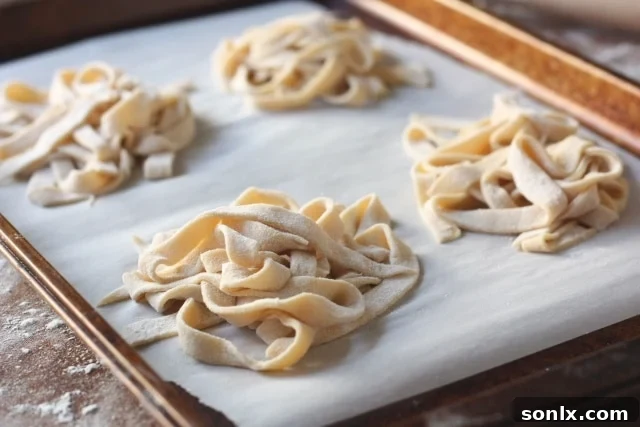
After cutting, gently toss the pasta with a little extra flour to prevent sticking. Gather the strands into small nests and let them rest on a floured baking sheet or a clean kitchen towel for about 20-30 minutes. This allows them to dry slightly, which helps maintain their shape and prevents them from clumping during cooking.
5. Cooking and Serving: The Grand Finale
Your beautiful homemade noodles are now ready for their moment in the spotlight. Bring a large pot of water to a rolling boil. It’s crucial to season your pasta water generously with salt – it should taste like the sea. This is the only chance you have to season the pasta itself from the inside out. Add your fresh pasta to the boiling water. Because fresh pasta cooks much faster than dried pasta, it will only need a few minutes, typically 2-4 minutes, depending on its thickness and your desired al dente preference. Cook until tender but still with a slight bite. Immediately drain the pasta, reserving a little of the starchy pasta water. Toss the hot pasta with your favorite sauce. The reserved pasta water can be used to loosen the sauce and help it cling to the noodles. This particular batch, tossed in a creamy mushroom and pea sauce, made for a delightful weeknight meal, elevated by the exquisite texture and flavor of the homemade pasta.
Homemade Pasta Recipe
Handmade Pasta
Servings: 4 servings
Prep Time: 15 mins
Cook Time: 5 mins
Rest Time: 1 hr 20 mins
Total Time: 1 hr 40 mins
You don’t need fancy equipment to make homemade pasta. This recipe is made completely by hand!
Ingredients
- 3 cups all-purpose flour (372 grams)
- 4 large eggs
- 1 teaspoon coarse salt (4 grams)
- 2-3 tablespoons water
Instructions
- In a large bowl, combine the flour and salt. Dump out onto a clean surface into a mound and create a large well in the middle. Put the eggs and water into the well. Using a fork, slowly start stirring the edges of the flour into the eggs. Continue to stir the flour together with the eggs until a dough begins to form and you can gather it into a ball, using your hands if necessary.
- After the dough is shaped into a ball, cut it into 4 equal pieces. Cover with plastic wrap and let rest for one hour.
- Working with each piece separately, roll out on a floured surface until very thin. You want the dough to be as thin as possible, almost so that you can see through it. Use additional flour and a bench scraper to ensure the dough doesn’t stick to the surface.
- Cut the dough into ¼ inch strips. Using floured hands, gather strips of pasta into a nest and let rest for about 20 minutes to dry out. Cook in generously salted boiling water for 4-5 minutes. Serve as desired.
Notes
Recipe adapted from The Gourmet Cookbook.
Nutrition Facts (per serving)
Calories: 404kcal, Carbohydrates: 72g, Protein: 15g, Fat: 5g, Saturated Fat: 2g, Cholesterol: 164mg, Sodium: 646mg, Potassium: 161mg, Fiber: 3g, Sugar: 1g, Vitamin A: 238IU, Calcium: 39mg, Iron: 5mg
Cuisine: Italian
Course: Main Course
Author: Annalise Sandberg
Tips for Success and Troubleshooting Common Issues
- Dough Too Sticky? If your dough is too wet and sticky after initial mixing, sprinkle in a small amount of extra flour (a teaspoon at a time) and knead it in until the desired consistency is reached.
- Dough Too Dry? Conversely, if your dough feels too stiff and crumbly, add water sparingly (half a teaspoon at a time) until it becomes pliable.
- Keeping Dough Moist: Always keep portions of dough you’re not actively working with covered with plastic wrap or a damp cloth to prevent them from drying out, which makes them difficult to roll.
- Flour for Rolling: Use flour generously on your work surface and rolling pin during the rolling phase, but remember to brush off any excess flour from the pasta sheets before cutting to avoid a pasty texture when cooked.
- Storage of Fresh Pasta: If not cooking immediately, fresh pasta can be dried completely (usually overnight, loosely covered, turning occasionally) and stored in an airtight container at room temperature for up to a few weeks. Alternatively, fresh pasta can be frozen for up to a month. To freeze, arrange nests of pasta on a floured baking sheet and freeze until solid, then transfer to a freezer bag. Cook directly from frozen, adding an extra minute or two to the cooking time.
Elevate Your Meals with Homemade Pasta
Learning to make pasta by hand is more than just acquiring a new recipe; it’s about embracing a culinary art form. The satisfaction of transforming simple ingredients into a beautiful, delicious meal is truly unparalleled. Whether you serve it with a classic marinara, a vibrant pesto, a rich Bolognese, or a simple garlic and olive oil sauce, your hand-rolled pasta will undoubtedly be the star of the show. So, if you’re still pondering dinner plans, I wholeheartedly encourage you to give this handmade pasta recipe a try. You might just discover a new favorite kitchen endeavor and a newfound appreciation for the simple pleasures of honest, homemade food. Enjoy the process, savor the flavors, and share the love that goes into every single noodle.