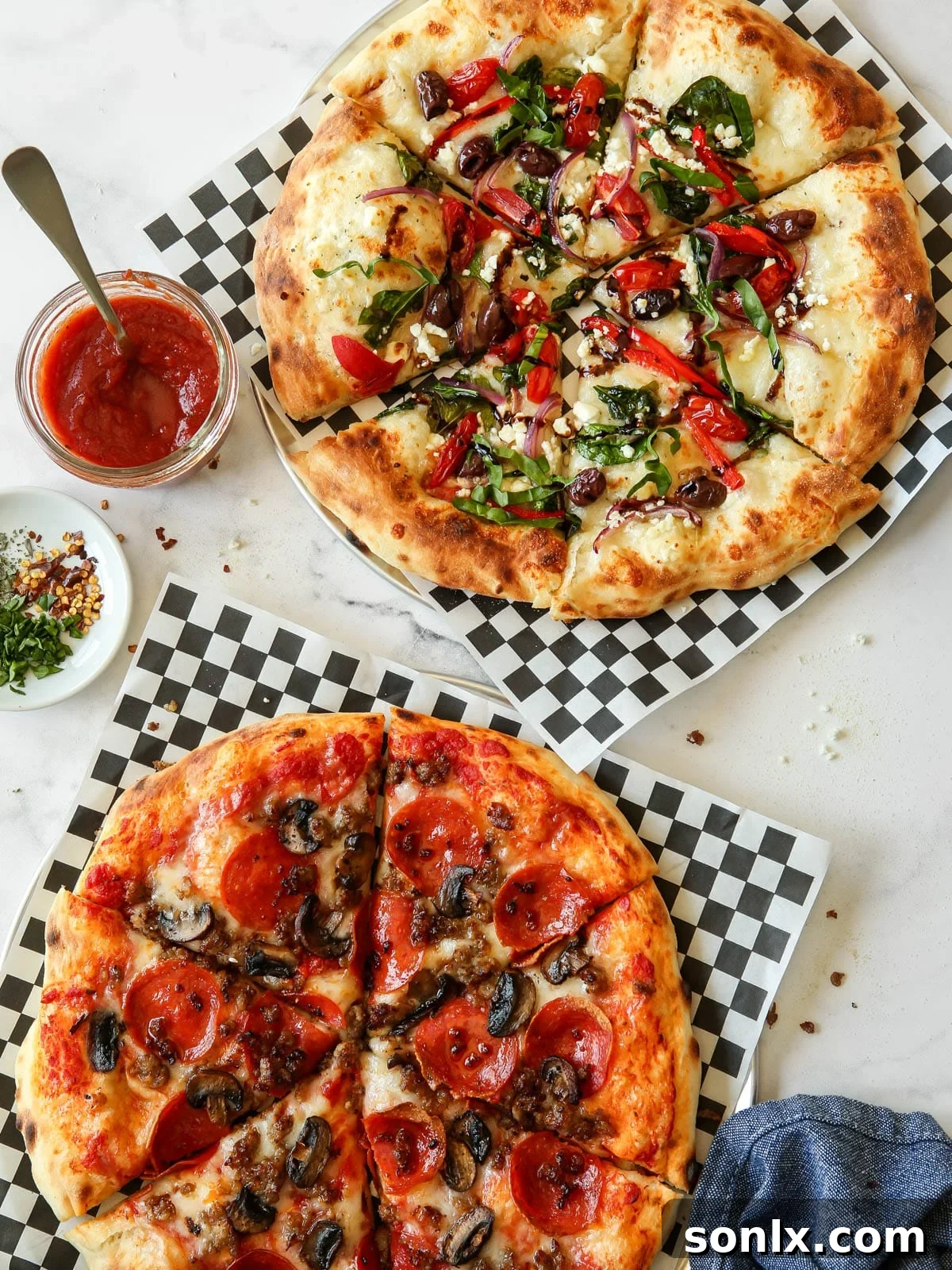
Master homemade pizza with this ultimate guide! Learn the essentials of pizza dough, shaping the crust, choosing toppings, cooking methods, and the tools you need to make impressive, delicious pizzas at home.
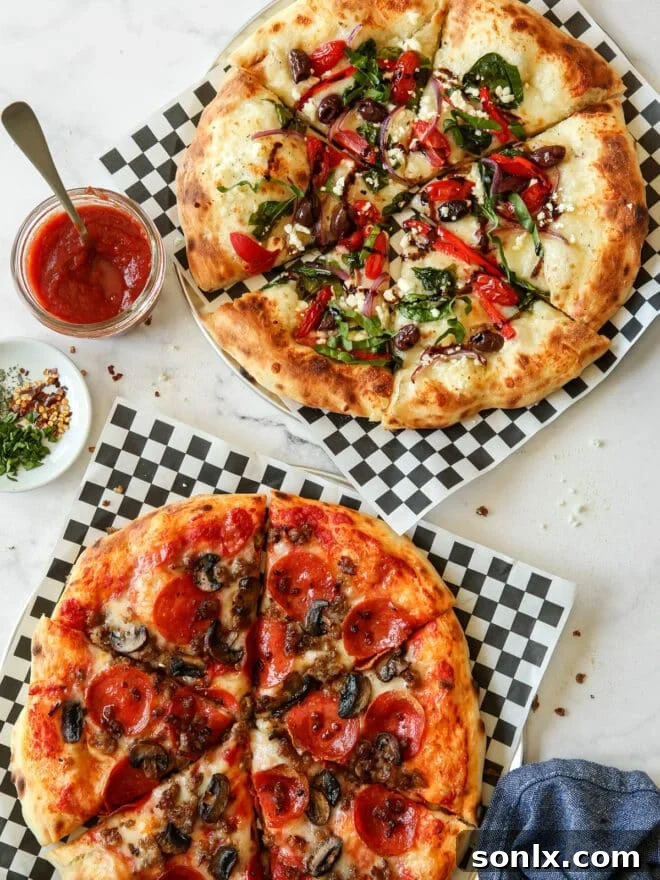
We’ve had weekly Pizza Nights in our house for more than a decade. Doing the math, I’ve made nearly 1,000 pizzas. I’m not a professionally trained pizzaiolo—just a home cook who’s spent a lot of time practicing and refining techniques to make reliably great pizzas for family and friends.
I began baking pizza on a sheet pan in a conventional oven, upgraded to a pizza steel, tried a small propane pizza oven outdoors, and eventually built a wood-fired brick oven in my backyard. I’ve made pizza every which way, and I’m sharing what I’ve learned so you can make excellent pizza no matter your kitchen setup.
New to making pizza from scratch? You’ve got this. No special gear or prior experience is required. I’ll walk you through each step and show how to keep things simple or level up if you want.
How to make homemade pizza
Here’s what this guide covers (use the headings to jump to what you need):
- Ways to cook pizza at home
- Essential pizza tools
- Pizza dough basics
- How to shape pizza crust
- Build your perfect pizza
- Serving and storage tips
- My pizza recipes
Ways to cook pizza at home
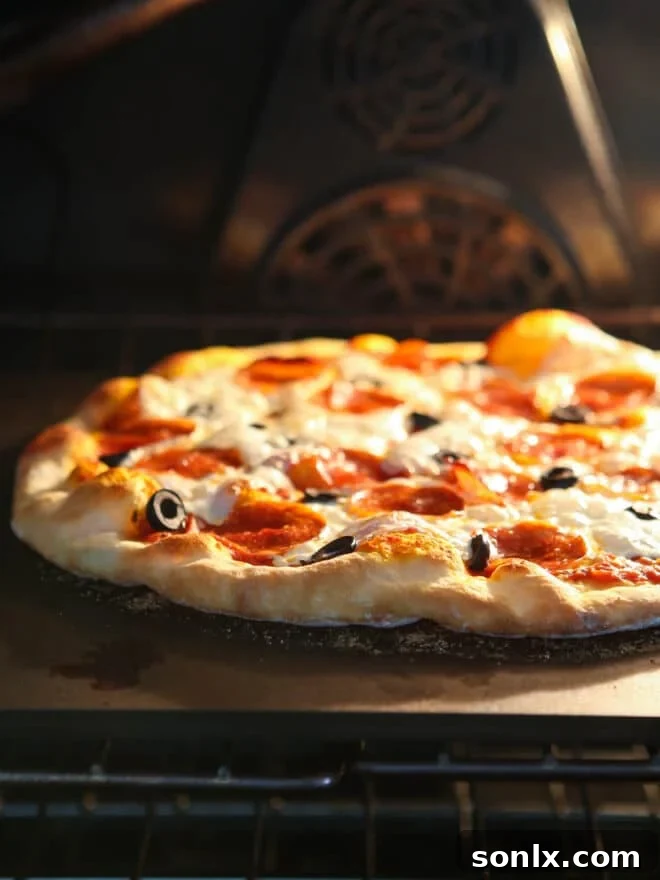
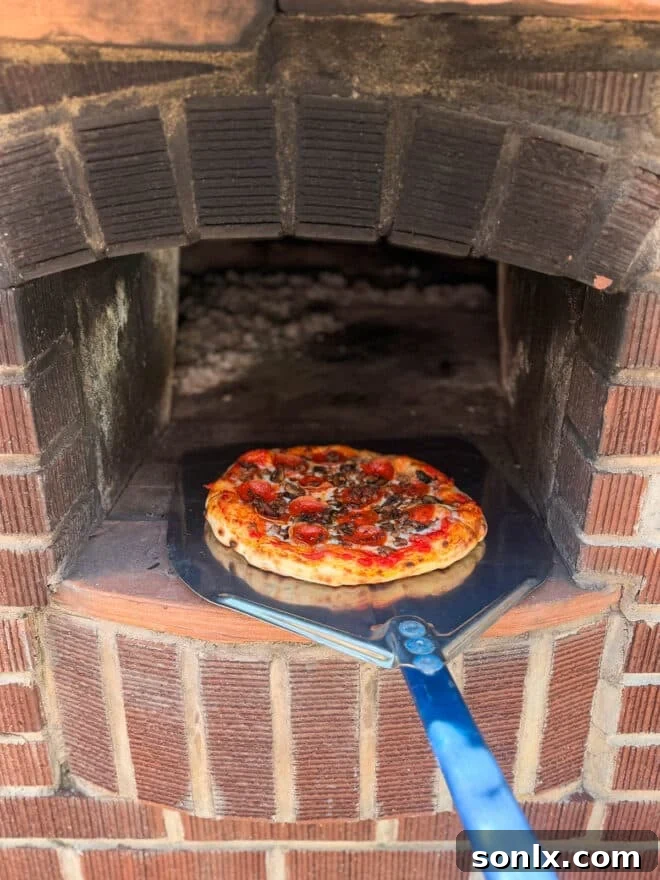
You can make pizza in a home oven or in an outdoor pizza oven. Each method has advantages; both can produce excellent results depending on technique and ingredients.
Your home oven is a great place to start
- No specialized equipment required, and it’s easier to learn basic techniques.
- Use a sheet pan, pizza pan, cast iron skillet, pizza stone, or pizza steel to vary texture and crust style.
- Temperatures of 450–500°F are ideal for thinner, crispier crusts in a conventional oven.
- You can make truly delicious pizza with simple tools and good technique.
Level up with an outdoor pizza oven
- Requires more learning and a bigger investment but opens up new possibilities.
- Options range from small countertop units to large built-in ovens; fuels include wood, gas, or electricity.
- Temperatures of 700–900°F create puffy, airy crusts with lightly charred edges—closer to restaurant-style pizza.
- When you master the oven, you can achieve very high-quality results.
If you’re getting started: Use your home oven with a pizza steel or stone for the best, most consistent results from an ordinary oven.
Essential pizza tools
A full list of specialized tools exists, but here’s a practical, compact list to get you started:
- For mixing and shaping dough: A mixing bowl is sufficient; a dough whisk and bench scraper are handy for efficiency and cleaner handling.
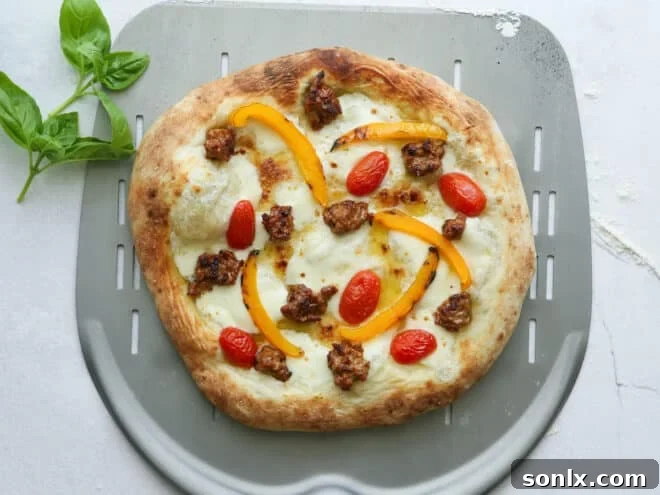
- For baking: A pizza stone or steel transfers heat efficiently in a home oven. A pizza peel helps slide pizzas in and out safely.
- For serving: A quality pizza wheel makes slicing simple. Serving trays and liners add a neat presentation if you want to impress.
- Nice-to-have extras: A kitchen scale for accurate measurements, a digital thermometer for checking oven or dough temperature, and, if you’re ready to invest, a portable outdoor pizza oven can be transformative.
Pizza dough basics
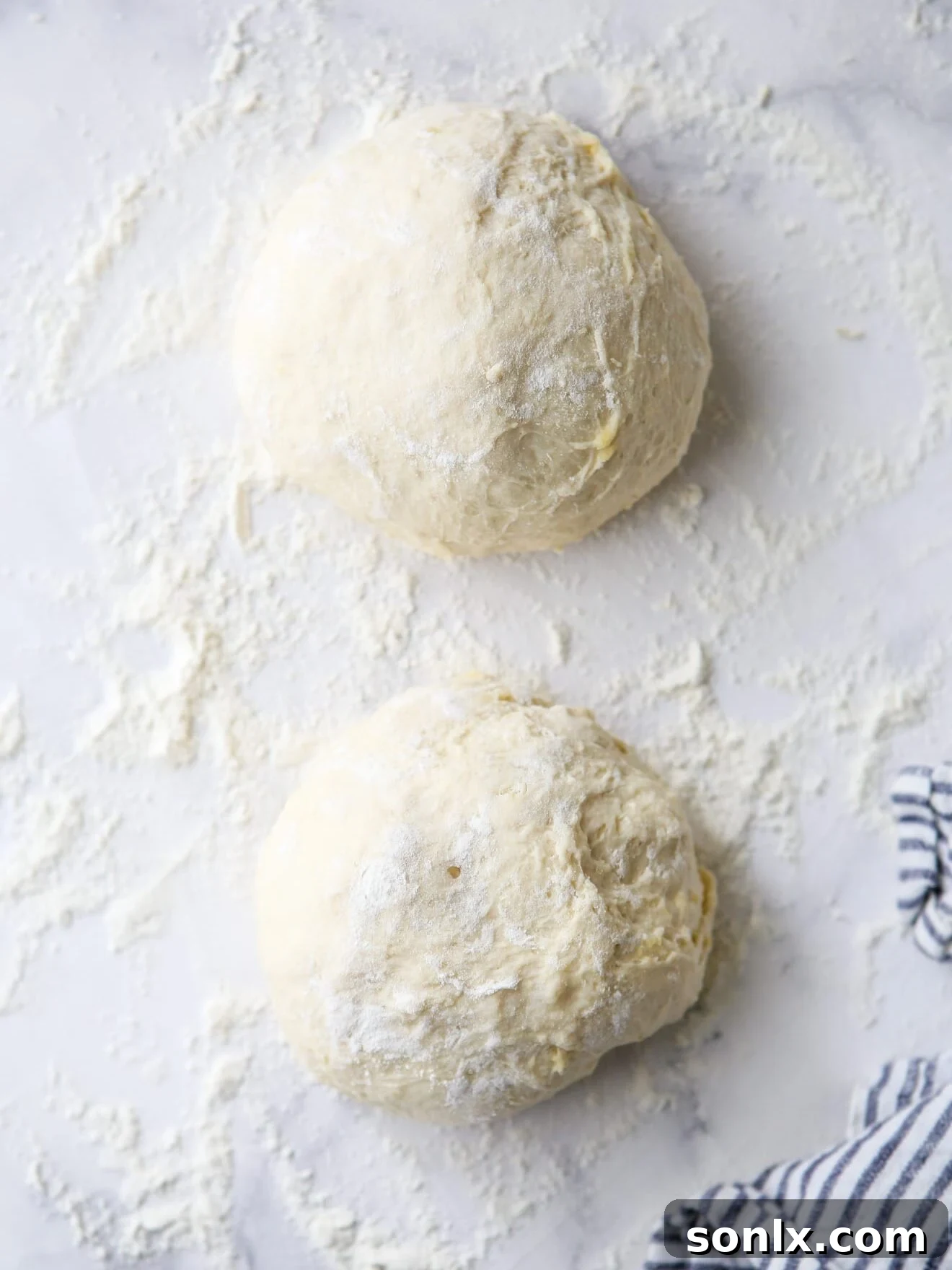
Great pizza begins with great dough. The essential ingredients are flour, yeast, salt, olive oil, and water. A small amount of honey or sugar can feed the yeast and tenderize the crust, and optional seasonings like garlic powder or dried herbs add flavor.
Key factors that influence dough texture and flavor:
- Flour type: All-purpose flour works well. Finely milled “00” flour performs especially well at high temperatures and can improve texture in hot ovens.
- Hydration (water-to-flour ratio): Lower hydration suits pan or sheet-pan styles; higher hydration yields lighter, airier crusts favored for high-heat ovens.
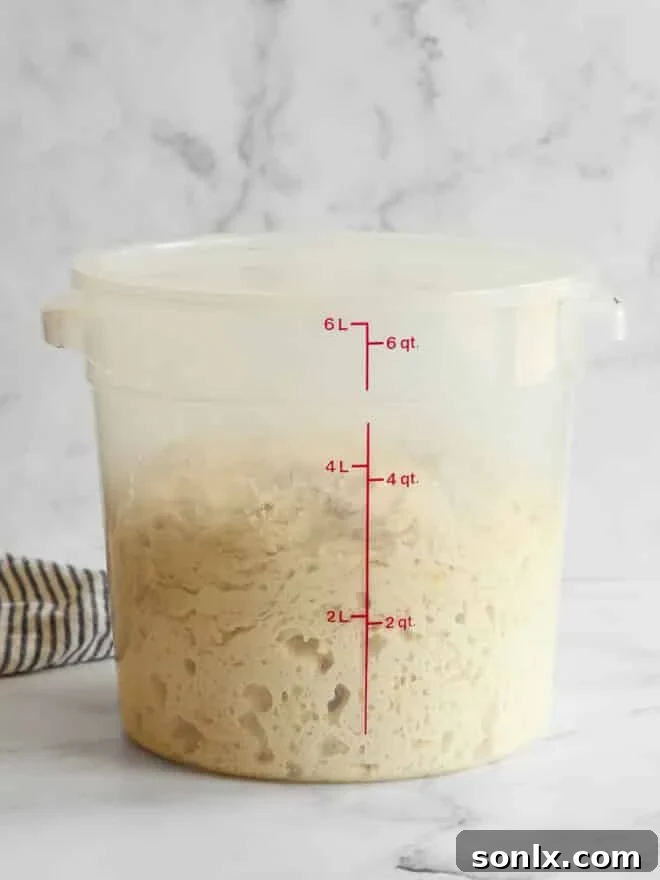
- Fermentation time: Longer, slower rises—like an overnight rest in the refrigerator—develop better flavor and texture as enzymes and yeast work more slowly.
Which dough recipe to use? A basic homemade dough recipe is reliable for oven baking, while a no-knead, higher-hydration dough creates a bubblier, chewier crust that works well across different cooking methods.
Building your perfect pizza
With tools ready and dough prepared, you’re set to assemble pizza. The next sections cover shaping the crust, selecting sauces and cheeses, choosing toppings, and finishing touches.
How to shape pizza crust
If you’re new to shaping dough: A rolling pin is an easy way to get started and works well for many styles.
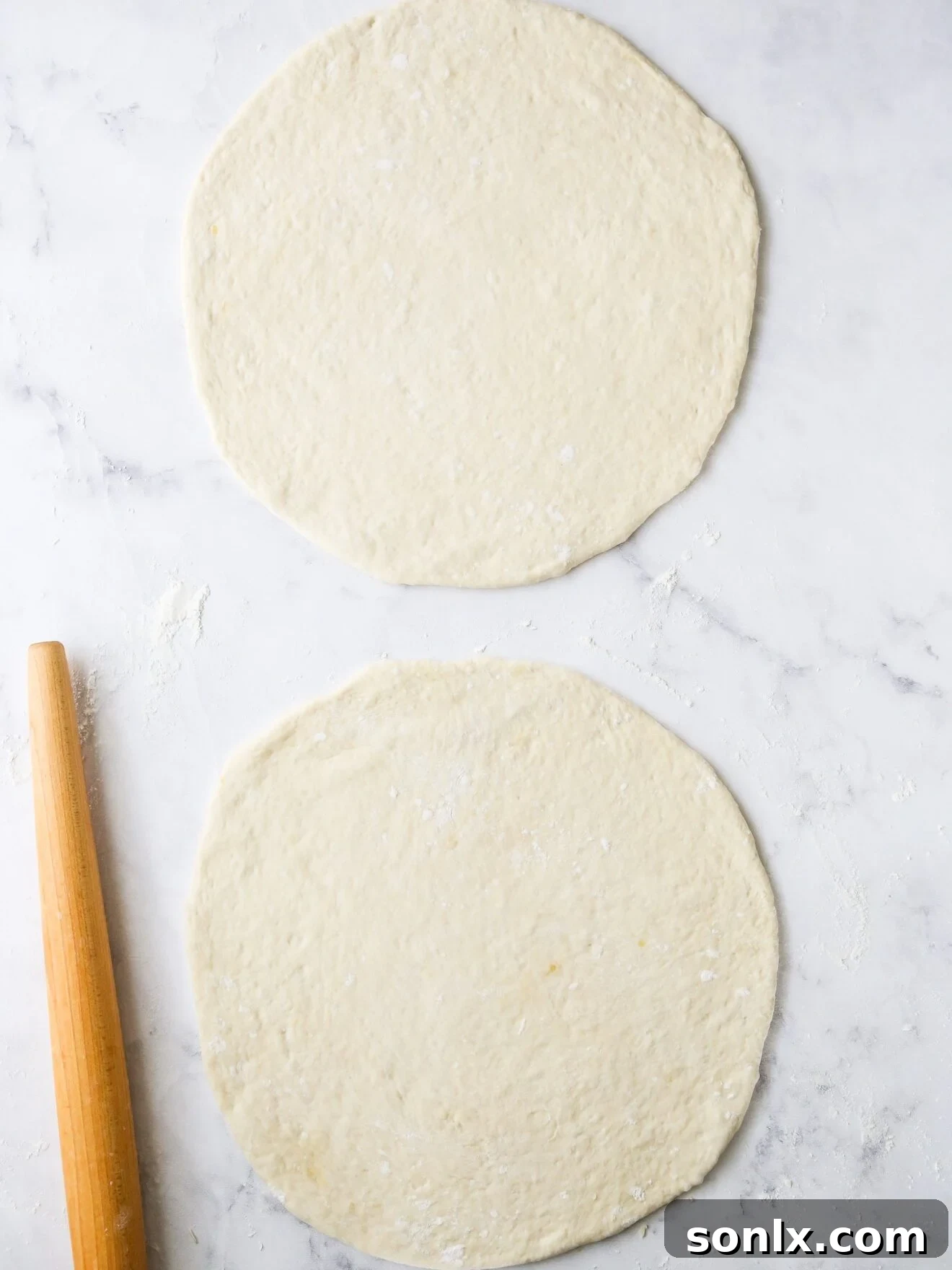
To stretch by hand:
- Press from the center outward with your fingertips on a lightly floured surface to gently flatten the dough.
- Stretch with your knuckles, draping the dough over your hands and letting gravity help form an even round.
Many home cooks use a combination: start on the counter with fingertips, then lift and finish stretching with knuckles for an airy edge.
Extra tips for shaping dough
- If the dough resists, let it rest 5–10 minutes so the gluten relaxes before continuing.
- Leave a slightly thicker rim to form the crust edge.
- Handle gently to avoid tears and keep air pockets intact.
- Keep shaped dough on a well-floured surface or semolina-dusted counter so it slides easily, or place it on parchment for the easiest transfer in and out of a home oven (avoid parchment in ovens over 500°F).
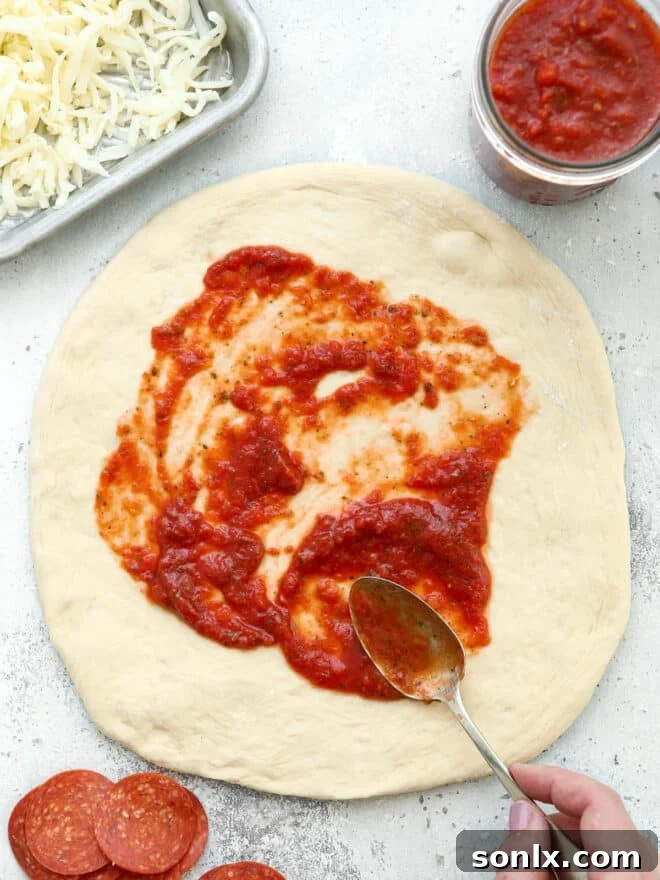
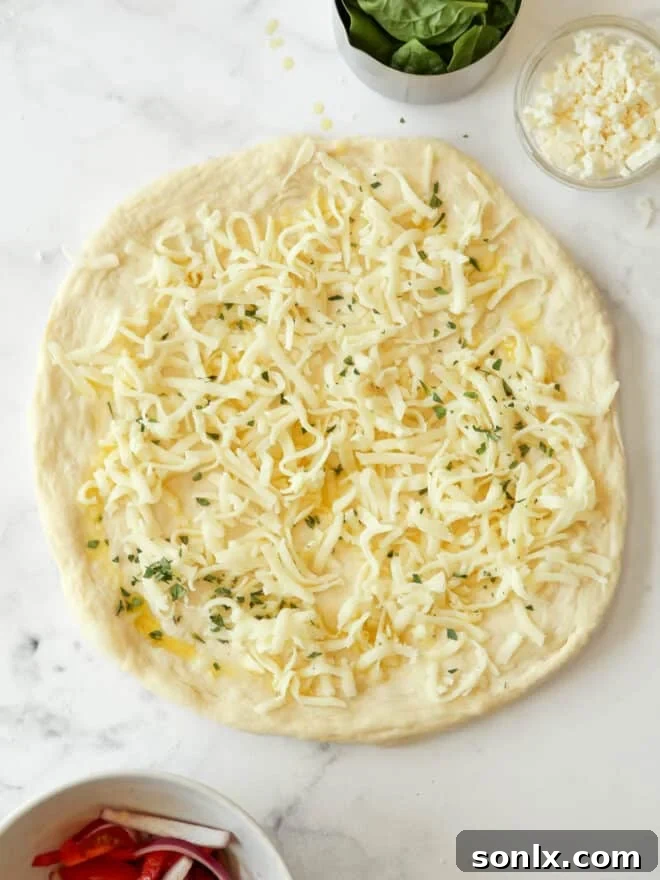
Add sauce and cheese
- Store-bought sauce works fine, but a simple homemade pizza sauce brings brighter flavor.
- Olive oil, pesto, white sauce, or BBQ sauce are great alternatives to tomato sauce for different styles.
- Whole-milk, low-moisture mozzarella shredded from a block melts evenly and adds good flavor without excess moisture—my go-to for most pies.
- Fresh mozzarella can be used in moderation; it adds creaminess but extra moisture, so use sparingly.
- Secondary cheeses—Parmesan, feta, gorgonzola, or fontina—add depth when combined with mozzarella.

Choose your pizza toppings
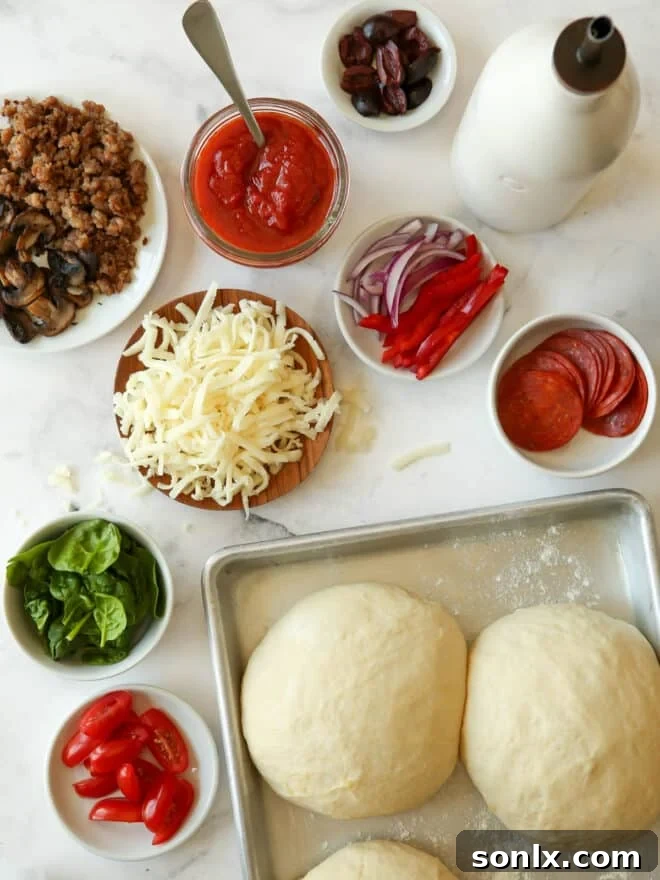
Toppings are the fun part. Build pizzas based on flavor combinations you enjoy, but avoid overloading the pie. Too many toppings weigh the crust down and make the pizza soggy. Aim for about 3–5 toppings and roughly 1 cup total for a 12-inch pizza.
- Meats: Pepperoni, cooked sausage, ham, Canadian bacon, prosciutto, bacon.
- Vegetables: Onions, mushrooms, peppers, tomatoes, olives, corn, zucchini, jalapeños, garlic.
- Herbs and greens: Basil, arugula, spinach, chives, rosemary.
Pro tip: Because pizza cooks quickly, use meat that’s already cooked or cured, and consider pre-cooking vegetables like mushrooms or dense vegetables for the best texture and flavor.
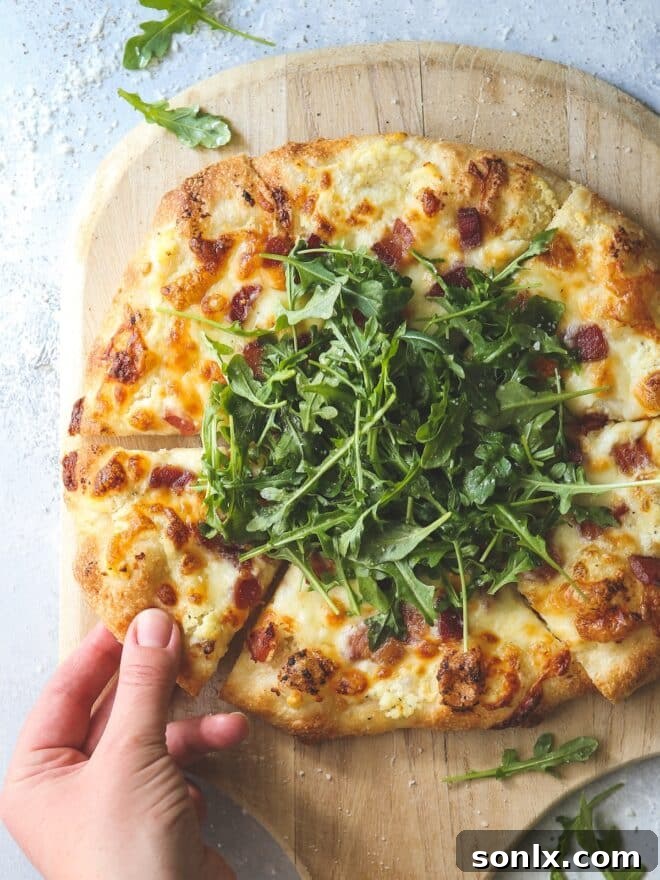
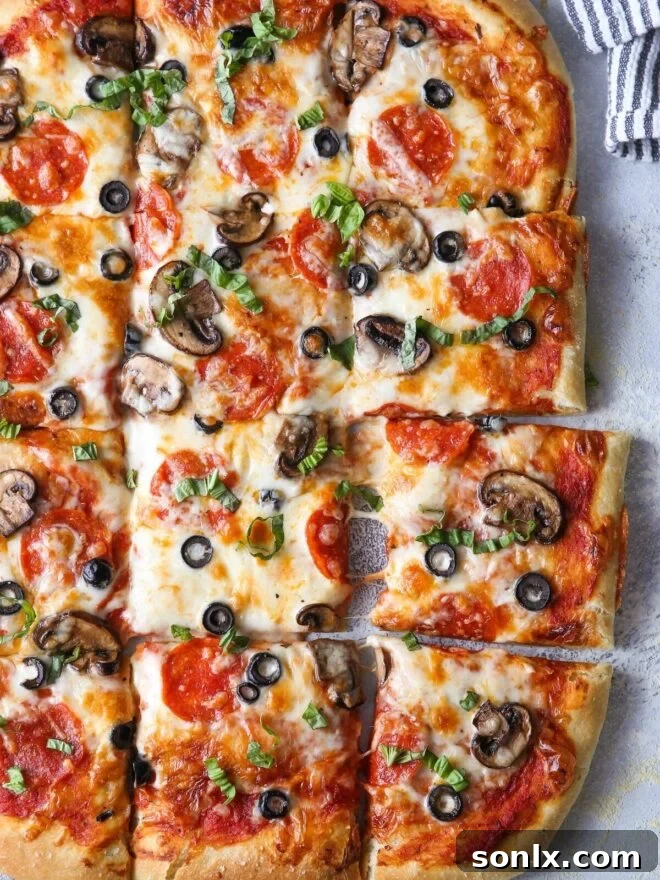
Top your pizza with a finisher
A final garnish after baking adds brightness and contrast. Popular finishing touches include:
- Fresh herbs or greens like basil or arugula
- A drizzle of good olive oil
- Balsamic glaze or honey/hot honey for sweet-savory balance
- Flaky finishing salt and freshly cracked black pepper
- Spoonfuls of burrata or ricotta for creaminess

Pizza serving and storage tips
- Serve pizza immediately for the best texture and flavor, ideally within 15 minutes of baking.
- If you must hold pizza briefly, keep it in a warm oven on the racks (not covered) to avoid sogginess, and serve as soon as possible.
- Store leftovers in an airtight container in the refrigerator for up to five days.
- To reheat, pop slices in an air fryer for a few minutes or microwave briefly to take the chill off and then crisp the bottom in a hot cast-iron skillet for 1–2 minutes.
My pizza recipes
- Sheet Pan Pizza
- Zucchini Corn Pizza
- White Pizza with Bacon and Arugula
- Italian Sausage Pizza with Peppers, Tomatoes and Basil
- Raspberry Brie Dessert Pizza