
Ultimate Kitchen Sink Cookies: A Sweet and Salty Masterpiece
Prepare to fall in love with these extraordinary kitchen sink cookies, a delightful symphony of flavors and textures. Each bite is an adventure, crammed full of sweet and salty treasures: crunchy pretzels, crisp potato chips, hearty oats, classic graham crackers, rich semi-sweet chocolate, creamy butterscotch, and a subtle hint of ground coffee. These cookies are truly unique, boasting perfectly chewy centers contrasted by irresistibly crisp edges, making them an instant favorite for any dessert enthusiast.

This recipe is a lovingly crafted homage to Christina Tosi’s legendary Milk Bar Compost Cookies. Having baked her original creation many times, I can attest to their incredible deliciousness. However, Tosi’s recipe often calls for a few specialized ingredients that can be challenging to source for the average home baker, and it involves a few extra steps that, while rewarding, aren’t always practical for a quick baking session. My goal was to capture that same magical balance of flavors and textures in a more accessible and streamlined way.
And so, after much experimentation and pure passion, I’ve developed this adaptation. These kitchen sink cookies are incredibly close to the original concept, perhaps even daring to claim a spot as equally delicious. They embody the spirit of “everything but the kitchen sink,” bringing together an eclectic mix of pantry staples into a harmonious and unforgettable cookie experience.
The Irresistible Appeal: What Makes These Kitchen Sink Cookies Truly Stand Out?
What sets these kitchen sink cookies apart from your average treat is a combination of ingenious technique and an adventurous spirit for mix-ins. The texture is a masterclass in contrasts: delightfully crisp on the outside, giving way to an incredibly soft and chewy interior. This coveted texture is primarily achieved through a specific mixing method.
Unlike many cookie recipes that suggest minimal creaming, here we beat the butter, sugars, and eggs together for a longer duration than traditional recipes. This extended beating process is key; it meticulously incorporates a significant amount of air bubbles into the mixture, resulting in a lighter, more aerated dough. During baking, these air pockets expand, contributing to that desired light and crispy exterior, while the dense, flavorful core remains wonderfully chewy.
But beyond the technique, the true magic lies in the symphony of mix-ins. While semi-sweet chocolate chips, pretzels, oats, and potato chips are common, even expected, additions in many “kitchen sink” cookie variations, this recipe elevates the experience with a few delightful surprises. The inclusion of crushed graham crackers adds a subtle, honey-kissed sweetness and a pleasant crumbly texture. Ground coffee, a seemingly unusual ingredient, doesn’t make the cookies taste like coffee; instead, it deepens the chocolate flavor, adds an intriguing earthy note, and contributes a unique, subtle crunch. And let’s not forget the butterscotch chips, which introduce a rich, caramel-like sweetness that beautifully complements the savory elements. Together, these ingredients create a flavor profile that is both complex and incredibly satisfying.
Indeed, these cookies are not just a name; they truly are filled with “everything but the kitchen sink,” offering a sensational blend of sweet, salty, and unexpected delights in every single bite!
Gather Your Treasures: Essential Ingredients for Your Kitchen Sink Cookies
Ready to embark on this delightful baking journey? Here’s a comprehensive list of everything you’ll need to create these spectacular kitchen sink cookies. While the recipe is fantastic as written, feel free to explore your creativity with some suggested ingredient swaps (details on those further down the page!). The full, detailed recipe card is conveniently located at the bottom of this article.
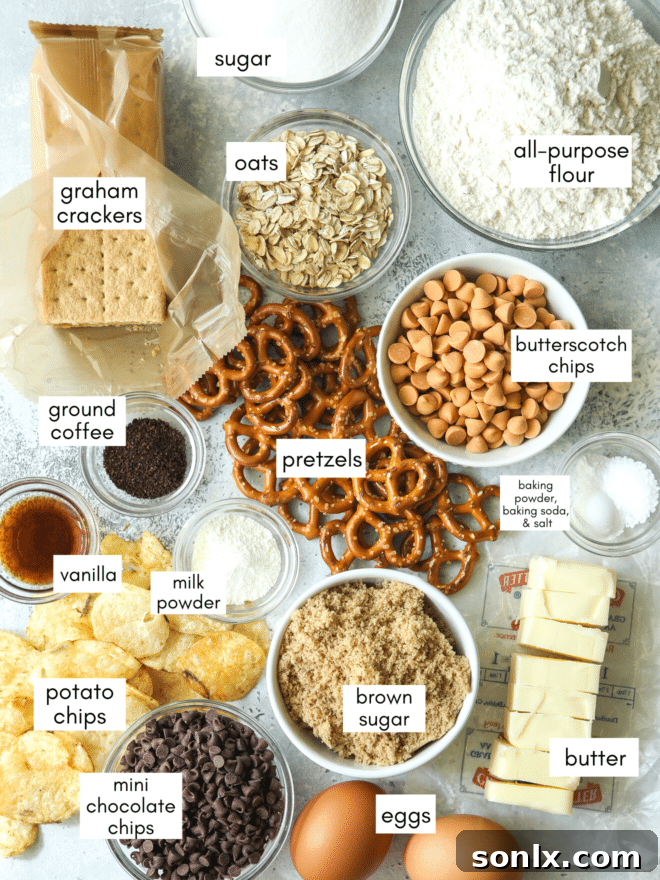
One of the most appealing aspects of this recipe is its straightforward nature. Despite the seemingly extensive list of components, these are essentially drop cookies, elevated with a unique array of additions. They are not overly complicated, making them accessible even for novice bakers. However, a little preparation goes a long way to ensure a smooth and enjoyable baking process.
I highly recommend reading through the entire recipe from start to finish before you begin. Understanding each step and anticipating what comes next can prevent last-minute rushes. Furthermore, given the variety of ingredients involved, embracing a bit of “mise-en-place” is incredibly beneficial. This French culinary term simply means “everything in its place” – gathering and precisely measuring all your ingredients before you start mixing. This simple practice will make the entire baking experience more efficient, enjoyable, and ultimately, more successful. Having all your dry ingredients sifted, wet ingredients at room temperature, and mix-ins prepped and ready will set you up for baking perfection.
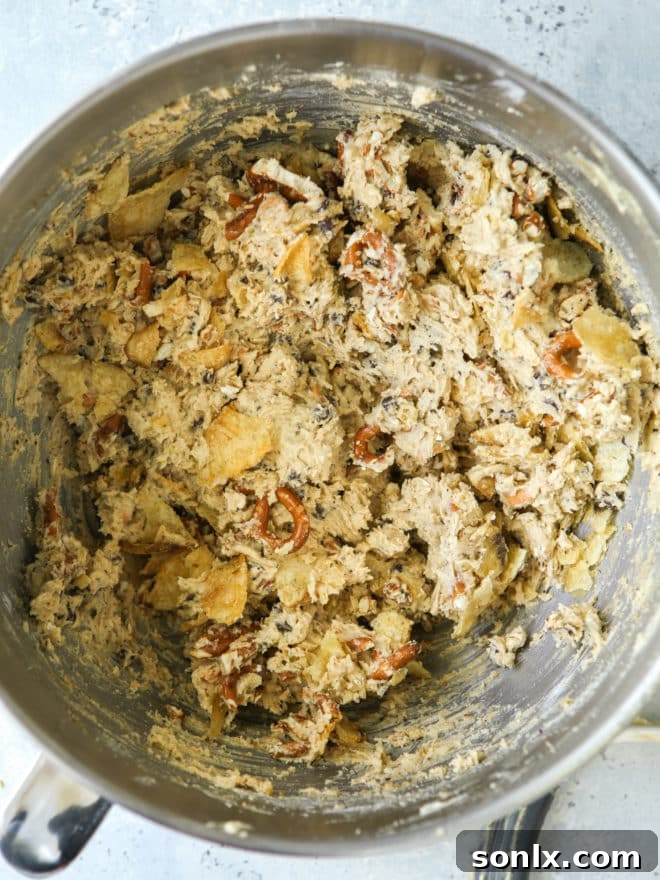
Crafting Perfection: A Step-by-Step Guide to Making Kitchen Sink Cookies
Follow these simple steps to create your own batch of these truly unforgettable kitchen sink cookies. Attention to detail, especially in the initial mixing stages, will ensure the perfect balance of crisp and chewy textures.
- Cream Butter and Sugars: Begin by creaming together your softened butter, granulated sugar, and brown sugar. Use an electric mixer or a stand mixer fitted with a paddle attachment on medium-high speed. Beat this mixture for 2-3 minutes, until it transforms into a pale, light, and fluffy consistency. This crucial step incorporates air, contributing to the cookies’ final texture.
- Integrate Eggs and Vanilla: Add the eggs one at a time, mixing briefly after each addition until just combined. Follow with the vanilla extract. After adding all wet ingredients, increase the mixer speed to medium-high and beat for a generous 6-7 minutes. The batter should become noticeably light, aerated, and frothy. Remember to pause once or twice during this period to scrape down the sides and bottom of the bowl with a spatula, ensuring everything is thoroughly mixed.
- Combine Dry Ingredients: In a separate bowl, whisk together your all-purpose flour, milk powder, baking powder, baking soda, and salt until well combined. Gradually add this dry mixture to the wet ingredients in the mixer all at once. Mix on low speed only until the dry ingredients are *just* incorporated into the wet, being careful not to overmix, which can lead to tough cookies.
- Add Smaller Mix-Ins: Now for the fun part! In another bowl, gently combine the crushed graham cracker crumbs, old-fashioned rolled oats, coffee grounds, mini semi-sweet chocolate chips, and butterscotch chips. Add this entire mixture to the cookie dough in the mixer and mix on low speed until these smaller components are evenly distributed throughout the dough.
- Fold in Potato Chips and Pretzels: Finally, add the larger, more delicate mix-ins: the mini pretzels and potato chips. Mix for only a few short seconds on the lowest speed necessary to incorporate them into the dough. The goal is to distribute them without completely pulverizing the potato chips and pretzels, preserving their distinct crunch.
- Chill the Dough: Using a large cookie scoop (a 3-tablespoon, #20 size is ideal), portion the cookie dough onto a baking sheet lined with parchment paper. If you like, gently press a few extra mix-ins onto the top of each dough ball for an aesthetically pleasing finish. Cover the sheet pan tightly with plastic wrap and chill in the refrigerator for at least 1 hour, or for up to several days. Chilling is essential for flavor development and preventing excessive spreading during baking.
- Bake to Golden Perfection: When ready to bake, preheat your oven to 375°F (190°C). Place the chilled cookie dough rounds about 4 inches apart on a baking sheet lined with fresh parchment paper. Bake for approximately 10-12 minutes, or until the edges are golden brown and crisp, but the centers still look slightly soft.
- Cool and Savor: Once baked, remove the cookies from the oven. If any cookies have spread unevenly or appear misshapen (which can happen with so many chunky mix-ins), gently use a spatula to push their edges back into a neat round shape while they are still hot and pliable. Allow the cookies to cool on the baking sheet for at least 5 minutes to finish setting up and firming. Then, you can enjoy them warm, or transfer them to a wire rack to cool completely. For an extra touch of gourmet flair, consider sprinkling them with a pinch of coarse or flaky sea salt immediately after they come out of the oven.

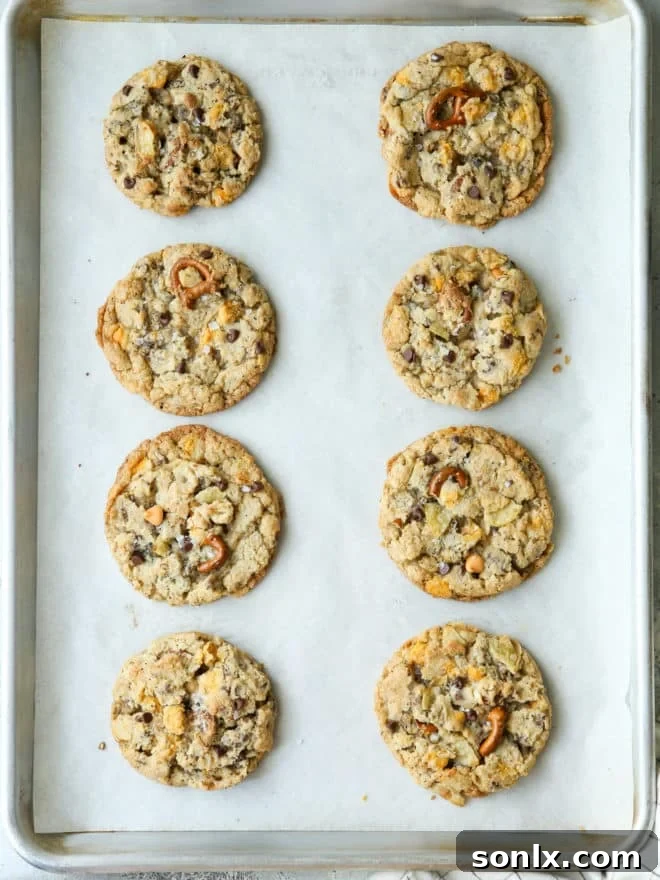
Frequently Asked Questions About Kitchen Sink Cookies
While these cookies are a celebration of variety, some substitutions are more successful than others. I truly believe the unique combination of chocolate chips, butterscotch chips, pretzels, and potato chips forms the foundation of their signature flavor. Therefore, I don’t recommend making too many drastic substitutions or omissions among these core elements, as the overall balance and distinct “kitchen sink” character might be lost. However, if you’re looking to experiment with some larger mix-ins or add your own personal touch, here are a few ingredient substitution ideas that generally work well: consider adding toffee bits for extra crunch and chewiness, chopped nuts like walnuts or pecans for a rich, earthy flavor, shredded coconut for a tropical twist, white chocolate chips for a different kind of sweetness, larger chocolate chunks, chopped candy bars, or dried fruits such as cherries or cranberries for a fruity tang. A crucial note: try not to exceed a total of 3 cups of mix-ins, as too many additions can make the dough difficult to handle and prevent proper baking.
Yes, you absolutely do! I understand it might seem like an unusual addition, and many people are surprised by it. However, the ground coffee in this recipe doesn’t impart a strong, overt coffee flavor to the cookies. Instead, it serves a few key purposes: it enhances and deepens the flavor of the chocolate, adding a sophisticated undertone; it provides an unusual but wonderfully pleasing fine crunch throughout the cookie; and it contributes a subtle, earthy richness that balances the sweetness. You can use any type of regular, unused coffee grounds you prefer, but avoid instant coffee, as its texture and flavor profile are quite different. If, despite these benefits, you’re truly averse to the idea or don’t have coffee grounds on hand, you can certainly omit them completely without negatively impacting the structural integrity of the cookie.
Milk powder, often also referred to as instant milk (they are indeed the same product), is a secret weapon in many professional baking recipes, and for good reason. Its inclusion in this recipe serves to significantly enhance both the flavor and texture of the cookies. It contributes a rich, almost caramelized depth of flavor that a plain liquid milk cannot, and it plays a vital role in improving the texture, making these cookies exceptionally soft and wonderfully chewy. You can typically find milk powder in the baking aisle of most well-stocked grocery stores. While I haven’t personally tested this specific recipe without milk powder, I anticipate that omitting it would likely result in a noticeable difference in both the depth of flavor and the desired soft and chewy texture. For the best results, I strongly recommend including it.
Absolutely, yes! Chilling this cookie dough is not an optional step; it is an absolute must for success. This dough absolutely requires a minimum of 1 hour of chilling before it goes into the oven. Without sufficient chilling, the butter in the dough will be too soft, causing the cookies to spread excessively during baking. This will result in thin, flat, and greasy cookies that melt all over your sheet pan instead of holding their shape and developing those coveted chewy centers and crisp edges. The chilling period allows the butter to firm up, the flavors to meld, and the dough to become more stable, ensuring perfect cookies every time.
Due to their unique combination of crisp and chewy textures and the array of mix-ins, these kitchen sink cookies tend to lose their optimal texture faster than some other types of cookies, like a standard chocolate chip cookie. For the absolute best flavor and texture experience, I highly recommend enjoying them within 1-2 days of baking. To keep them as fresh as possible, store them at room temperature in an airtight container. This will help maintain their chewiness and prevent the crisp components from becoming too soft. If you find they’ve lost a bit of their crispness, a quick 5-10 minute refresh in a warm oven (around 300°F/150°C) can often revive them beautifully.
Yes, this cookie dough freezes exceptionally well, making it perfect for meal prepping your desserts or having fresh-baked cookies on demand! You can store the unbaked cookie dough in a couple of ways: portioned dough balls can be kept in an airtight container in the refrigerator for up to a week. For longer storage, you can freeze the dough. To do this, portion the dough balls as described in the recipe, then place them on a baking sheet and freeze for about 30 minutes until firm. Once firm, transfer the frozen dough balls to a plastic freezer bag or another airtight freezer-safe container. They will keep well in the freezer for a month or even longer. When you’re ready to bake, simply place the frozen dough balls on your prepared baking sheet while your oven preheats; they will thaw slightly and be ready for baking in no time, often without needing significant adjustment to baking time.
It’s a common occurrence with “kitchen sink” style cookies! Because these treats are so generously packed with a diverse range of delicious, bulky mix-ins – from crunchy pretzels to irregular potato chips – some dough balls will naturally be more densely packed than others. This uneven distribution or concentration of mix-ins can sometimes prevent the cookies from spreading out perfectly evenly as they bake, leading to lumpy or misshapen results. Don’t worry, this doesn’t mean your cookies are ruined! Half of my batches often turn out perfectly round, as pictured in this post, while others require a little post-bake intervention. The trick is to reshape them immediately. As soon as the cookies come out of the hot oven, while they are still very warm and pliable, simply use the back of a spatula or a round cookie cutter (slightly larger than your cookie) to gently push the edges back into a neat, round shape. This needs to be done quickly before the cookies set and cool.
Excessive spreading is a common cookie culprit, and it’s usually linked to the temperature of your butter or dough. The most frequent reason is that the butter you used was too warm when you started. It’s crucial to begin with butter that is softened to room temperature – meaning it’s pliable but still cool to the touch. Your finger should leave a slight indent when pressed into it, but it should not be soft enough to easily press all the way through, nor should it look at all greasy or melted. Overly soft or melted butter will lead to immediate spreading in the oven. Additionally, always make sure to place your chilled cookie dough balls onto a cool baking sheet. If your baking sheet is still warm from a previous batch of cookies, it will cause the butter in the dough to melt prematurely, leading to widespread cookies.
If your cookies didn’t spread and ended up dry and crumbly, the most likely culprit is incorrect flour measurement. Flour is a foundational ingredient, and its precise quantity significantly impacts the final texture of your cookies. It’s incredibly easy to accidentally add too much flour, especially if scooping directly from the bag. All of my recipes, including this one, are meticulously tested using the “spoon and level” method. This involves lightly spooning the flour into your measuring cup until it overflows, then leveling off the excess with the back of a straight edge (like a knife). For the most accurate results, especially with baking, using a kitchen scale to measure your flour by weight (195 grams in this case) is always the most reliable method. If you measure flour differently (e.g., packing it tightly into the cup), you’re almost certainly adding more flour than intended, which alters the crucial ingredient ratios and leads to dense, dry cookies that won’t spread correctly.

Explore More Delightful Cookie Recipes
If you’ve enjoyed the adventurous spirit of these Kitchen Sink Cookies, you might be interested in exploring other creative and delicious cookie recipes. Here are some more unique ideas to inspire your next baking project:
- Rice Krispie Treat Chocolate Chip Cookies: A playful twist on a classic, combining crispy rice cereal with gooey chocolate chips.
- Chocolate Marshmallow Cookies: Rich chocolate cookies topped with fluffy marshmallows, perfect for s’mores lovers.
- Monster Cookies: A colossal cookie packed with oats, peanut butter, chocolate chips, and M&M’s.
- Caramel Stuffed Chocolate Chip Cookies: Classic chocolate chip cookies with a decadent, molten caramel center.
Enhance Your Baking with Essential Tools
Having the right tools can make all the difference in your baking endeavors, especially when tackling a recipe with so many wonderful components like these Kitchen Sink Cookies. Investing in quality baking equipment not only makes the process smoother but also contributes to more consistent and professional-looking results. Here are some highly recommended tools that will help you master this recipe and many others:
- Large Cookie Scoop (3 Tablespoon size #20): Essential for perfectly portioned and uniformly sized cookies. Uniformity ensures even baking and a beautiful presentation.
- Stand Mixer with Paddle Attachment: While an electric hand mixer works, a stand mixer is invaluable for the extended creaming and beating required in this recipe, allowing for hands-free operation and superior aeration.
- High-Quality Baking Sheets: Sturdy, light-colored aluminum baking sheets promote even heat distribution, preventing burnt bottoms and ensuring cookies bake evenly.
- Parchment Paper: A baker’s best friend. Prevents sticking, makes cleanup a breeze, and helps cookies bake more consistently.
- Silicone Spatulas: Ideal for scraping down bowls and gently folding in delicate mix-ins without overmixing.

Kitchen Sink Cookies
Pin Recipe
Leave a Review
Ingredients
- 10 tablespoons unsalted butter , softened to room temperature (140 grams)
- ½ cup light or dark brown sugar (107 grams)
- 1 cup granulated sugar (200 grams)
- 2 large eggs
- 1 teaspoon vanilla extract
- 1 ½ cup all-purpose flour (195 grams)
- 1 tablespoon milk powder/instant milk
- ½ teaspoon baking powder
- ¼ teaspoon baking soda
- 1 teaspoon fine sea salt
- ⅓ cup crushed graham crackers (50 grams, about 5 graham cracker squares)
- ⅓ cup old-fashioned rolled oats (30 grams)
- 2 teaspoons fine coffee grounds (see Note)
- ½ cup mini semi-sweet chocolate chips (90 grams)
- ½ cup butterscotch chips (85 grams)
- 1 cup mini pretzels , broken into smaller pieces (40 grams)
- 2 cups potato chips (70 grams, preferably thicker, kettle-style)
- Coarse or flaky salt , for sprinkling (optional, for a gourmet finish)
Instructions
-
In the bowl of an electric mixer or stand mixer fitted with a paddle attachment, cream together the softened butter, granulated sugar, and brown sugar on medium-high speed for 2-3 minutes until the mixture is visibly pale and fluffy. This aeration is key for texture.
-
Add the large eggs one at a time, mixing briefly after each addition until just incorporated. Stir in the vanilla extract. Increase the mixer speed to medium-high and beat for an extended 6-7 minutes. The batter should become light, voluminous, and frothy. Be sure to pause once or twice to scrape down the sides and bottom of the bowl thoroughly to ensure even mixing.
-
In a separate medium bowl, whisk together the all-purpose flour, milk powder, baking powder, baking soda, and salt. Add this entire dry mixture to the wet ingredients in the mixer at once. Mix on low speed until the dry ingredients are just incorporated into a cohesive dough. Avoid overmixing.
-
In another separate bowl, combine the crushed graham cracker crumbs, old-fashioned rolled oats, fine coffee grounds, mini semi-sweet chocolate chips, and butterscotch chips. Add this entire blend to the cookie dough and mix on low speed until these smaller mix-ins are evenly distributed throughout the dough.
-
Gently add the mini pretzels and potato chips to the dough. Mix for only a few brief seconds on the lowest speed to incorporate them, being careful not to break up the potato chips too much, aiming to preserve their texture as much as possible.
-
Using a large cookie scoop (3 tablespoon size #20), portion the cookie dough onto a baking sheet lined with parchment paper, spacing them evenly. If desired, gently press a few extra mix-ins onto the top of each dough round for enhanced visual appeal. Cover the sheet pan with plastic wrap and chill the dough in the refrigerator for a minimum of 1 hour, and up to several days, for optimal flavor and texture.
-
Preheat your oven to 375°F (190°C). Place the chilled cookie dough balls about 4 inches apart on a fresh baking sheet lined with parchment paper. Bake for approximately 10-12 minutes, or until the edges are golden brown and set, while the centers still appear slightly soft.
-
Upon removing the cookies from the oven, if any have baked up misshapen (which is common due to the abundance of mix-ins), use a spatula to gently push the warm, pliable edges back into a perfectly round shape. This must be done immediately after they come out of the oven, before they cool and set. If desired, sprinkle with coarse or flaky salt for a final touch.
-
Allow the cookies to cool on the hot baking sheet for at least 5 minutes. This crucial resting period allows them to finish setting up and firming. Afterwards, enjoy them warm for a gooey treat, or transfer them to a wire rack to cool completely for a crispier edge.
Notes
Helpful Notes and Tips for Perfect Kitchen Sink Cookies
- Butter Choice: You can use either salted or unsalted butter, depending on your preference. If using salted butter, you may want to slightly reduce the added salt in the recipe to avoid an overly salty taste.
- Making Graham Cracker Crumbs: To easily create graham cracker crumbs, place the graham cracker squares in a resealable plastic bag. Use a rolling pin or the bottom of a heavy pan to crush them. Don’t worry if some crumbs are larger than others; varying sizes add to the texture.
- Coffee Grounds Selection: For the ground coffee, use any regular, unused coffee grounds you like. Avoid instant coffee, as its composition and flavor are not suitable for this recipe. If you’re not a fan of the subtle coffee note or don’t have grounds, feel free to omit them entirely; the cookies will still be delicious.
- Potato Chip Recommendation: Thicker, kettle-style potato chips are highly preferred for this recipe. Their sturdiness helps them hold up better during mixing and baking, contributing a more satisfying crunch. Do not break them up before adding them to the cookie dough; they will naturally break down slightly during the mixing process.
- Cookie Scoop Size: If you don’t own a #20 large cookie scoop (which holds about 3 tablespoons), a ¼ cup measuring scoop can be used as an alternative. It’s important for these cookies to be on the larger side to accommodate all the wonderful, bulky mix-ins and to achieve the desired thick, chewy texture.
- Storage and Freshness: These cookies are undeniably at their absolute best on the day they are baked, with peak crispness and chewiness. However, they will remain delicious for several days when stored at room temperature in an airtight container. Their unique texture tends to soften over time.
- Refrigerating Dough: The prepared cookie dough can be stored, covered, in the fridge for up to 1 week. This makes it convenient to bake fresh cookies whenever a craving strikes, or to prepare ahead for an event.
- Freezing Cookie Dough: To freeze cookie dough, portion the dough into balls and place them on a baking sheet. Freeze for about 30 minutes until they are solid. Then, transfer the frozen dough balls to an airtight freezer bag or container. They can be stored in the freezer for a month or even longer. When ready to bake, place the frozen dough balls on a prepared baking sheet and allow them to thaw slightly while your oven preheats.
This delightful recipe is adapted from Momofuku Milk Bar: a Cookbook by the innovative Christina Tosi.