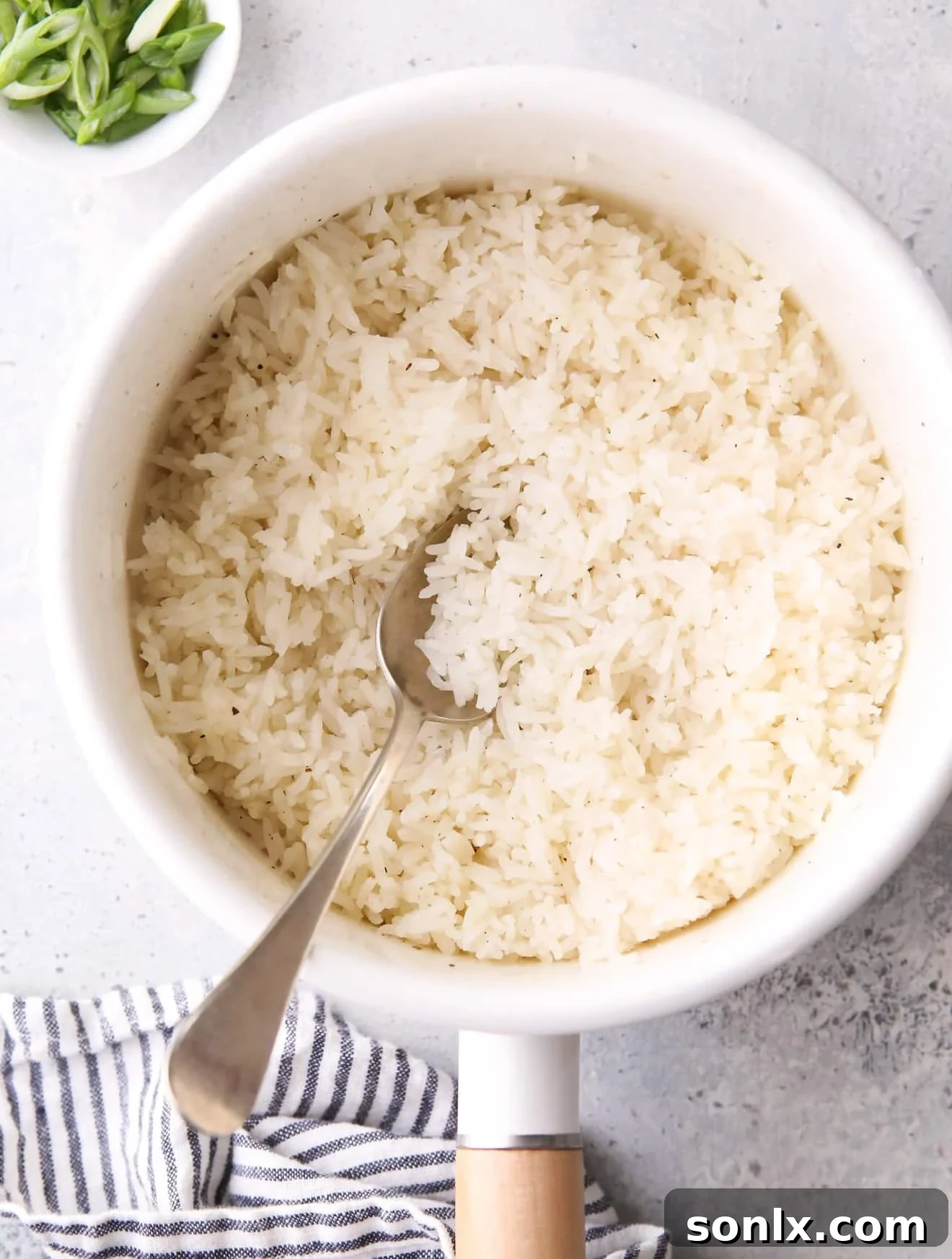
Imagine never having to scrape burnt rice from the bottom of a pot again. Envision perfectly distinct, light, and fluffy grains every single time. This isn’t a dream – it’s an achievable reality with my foolproof method for creating the best steamed white rice right on your stovetop. Say goodbye to sticky, clumpy, or undercooked rice and hello to a side dish that elevates any meal.
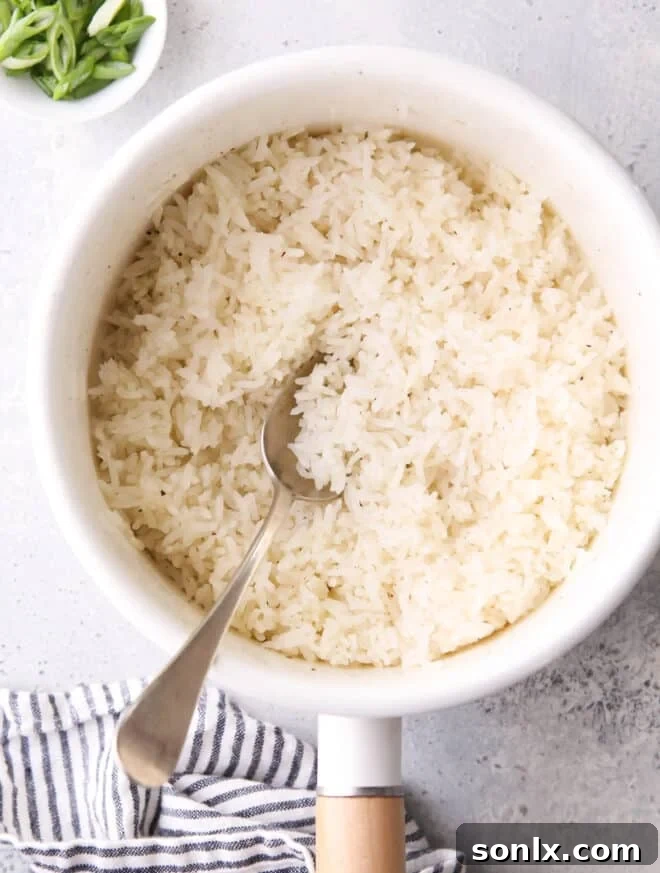
Among my various kitchen skills, mastering white rice on the stovetop is one I take particular pride in. It might sound simple, but achieving that ideal texture and flavor consistently is a genuine art. The good news? It’s an art you can easily learn, and I’m here to share the secrets I’ve cultivated over years of cooking. In fact, I can confidently say I haven’t burned a pot of rice in what feels like forever.
Forget about investing in expensive kitchen gadgets like rice cookers or Instant Pots. While convenient, they often mask the fundamental techniques that truly make rice shine. All you truly need for this recipe is a sturdy saucepan with a tight-fitting lid, your trusty stovetop, and a simple timer. This method doesn’t just produce moist and fluffy rice; by incorporating a touch of olive oil, salt, and pepper, it infuses each grain with a subtle, delicious flavor that stands perfectly on its own. This humble side dish will transform from a mere accompaniment into a star component of your meal.
For those eager to explore more flavorful rice options, be sure to also check out my classic rice pilaf recipe, a delightful alternative brimming with even more aromatic herbs and spices. But first, let’s master the foundational skill of perfect steamed white rice.
Essential Ingredients for Fluffy Stovetop Rice
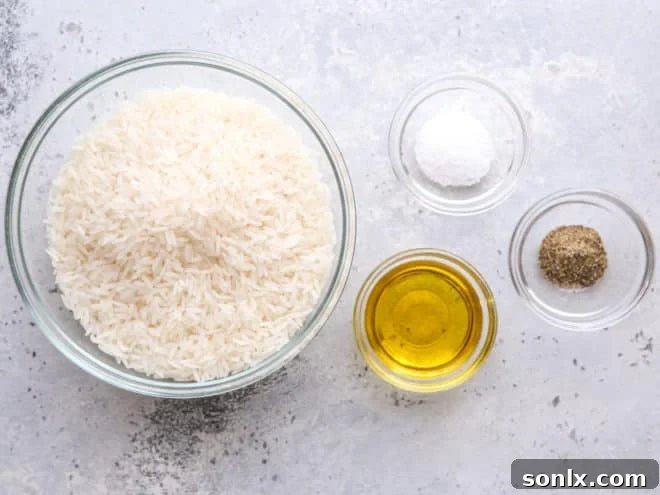
Creating exquisite steamed rice begins with selecting the right ingredients. The beauty of this recipe lies in its simplicity, requiring just a few staple items to yield truly spectacular results. Here’s what you’ll need to gather:
- **Long-Grained White Rice:** The type of rice is crucial for the texture we’re aiming for. I highly recommend using long-grained varieties such as Jasmine or Basmati. These types are known for their aromatic qualities and for cooking up light and separate, rather than sticky.
- **High-Quality Olive Oil:** A small amount of olive oil is key to toasting the rice, which helps to develop a nutty flavor and ensures the grains remain distinct and don’t clump together. It also adds a wonderful subtle richness.
- **Salt and Freshly Ground Pepper:** Seasoning your rice from the very beginning is essential for deep flavor. Coarse salt helps to bring out the natural taste of the rice, while a touch of pepper adds a nuanced warmth.
- **Water:** The most fundamental ingredient, but often overlooked in terms of quality and ratio. Using the correct water-to-rice ratio is paramount for achieving the perfect texture.
Understanding Different Rice Varieties: Can This Method Be Adapted?
A common question among home cooks is whether this versatile stovetop method works for all types of rice. While this recipe is specifically optimized for long-grained white rice like Jasmine or Basmati, it’s important to understand why different rice varieties require different cooking approaches. Rice, in all its global forms, varies significantly in starch content, grain length, and husking, all of which impact how it absorbs water and cooks.
Let’s consider other popular types:
* **Brown Rice:** Unlike white rice, brown rice retains its bran and germ layers, making it a whole grain. These layers are fibrous and require more water and a longer cooking time—often 40-50 minutes—to soften adequately. Its texture is chewier and its flavor nuttier. This recipe’s 2:1 ratio and 15-minute cook time would likely leave brown rice significantly undercooked.
* **Wild Rice:** Botanically, wild rice isn’t true rice but rather the grain of an aquatic grass. It has a robust, earthy flavor and a chewy texture. It demands even more water and a much longer cooking time (up to 60 minutes or more), often needing soaking beforehand. This method is not suitable for wild rice.
* **Short-Grained Rice (e.g., Sushi Rice, Arborio, Valencia):** These varieties are typically higher in starch (amylopectin), which gives them their characteristic stickiness or creamy texture. Sushi rice is designed to clump together for easy shaping, while Arborio rice releases its starches to create the creamy consistency of risotto. Using this method for short-grain rice would likely result in a very sticky, possibly gummy, outcome rather than light and fluffy. The water ratio and cooking technique are fundamentally different, often involving rinsing extensively and then cooking to achieve specific stickiness or creaminess levels.
* **Medium-Grained Rice:** Falls between long-grain and short-grain in terms of starch content and length. It can be slightly sticky but still relatively separate. While closer to long-grain, adjustments to water and time would still be needed for optimal results.
* **Parboiled Rice (Converted Rice):** This rice has been partially boiled in its husk, which forces nutrients from the bran into the grain. It cooks up firmer and more separate than regular white rice, often requiring a similar water ratio but sometimes slightly longer cooking.
I have only rigorously tested this particular recipe using long-grained white rice (Jasmine and Basmati are household favorites for their delightful aroma and texture). While the general principles of stovetop cooking—toasting, simmering, and resting—are broadly applicable, the specific amounts of water and cooking times are finely tuned for long-grain white rice. Attempting to use this exact recipe for other varieties may lead to varied, and potentially disappointing, results. For different rice types, I highly recommend seeking out recipes specifically developed for them to ensure the best outcome.
How to Make Perfectly Fluffy Steamed White Rice on the Stovetop
Achieving perfectly steamed rice might seem intimidating, but with this step-by-step guide, you’ll master it in no time. Precision and patience are your best friends here. Let’s get cooking!
1. Toast the Rice in Olive Oil
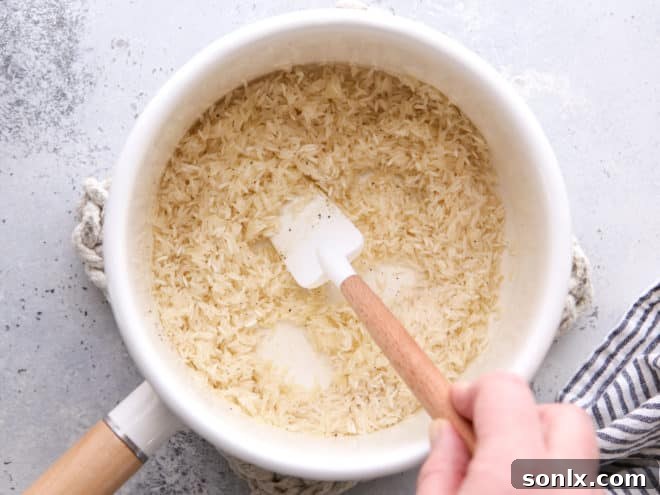
Start by heating 1 tablespoon of olive oil in a heavy-bottomed saucepan over medium heat for about one minute. A heavy-bottomed pot is crucial as it distributes heat more evenly, preventing scorching. Once the oil is shimmering slightly, add 1 cup of your chosen long-grained white rice (Jasmine or Basmati work wonderfully), along with ½ teaspoon of coarse salt and ¼ teaspoon of ground black pepper. Stir the mixture continuously for approximately 30 seconds. During this initial toasting phase, you’ll observe the rice grains becoming evenly coated in the oil, and some will begin to turn translucent around the edges. This step is vital for developing flavor and helping the grains cook up separate and fluffy rather than sticky.
Expert Tip for Enhanced Flavor: If you desire a deeper, more pronounced nutty flavor, continue toasting the rice in the olive oil for an additional 1 to 2 minutes. Watch closely, stirring frequently, until some of the rice grains take on a very light golden-brown hue. Be incredibly mindful during this stage, as rice can burn quickly, which would impart an undesirable bitterness. A subtle toast is all you need for that extra layer of deliciousness.
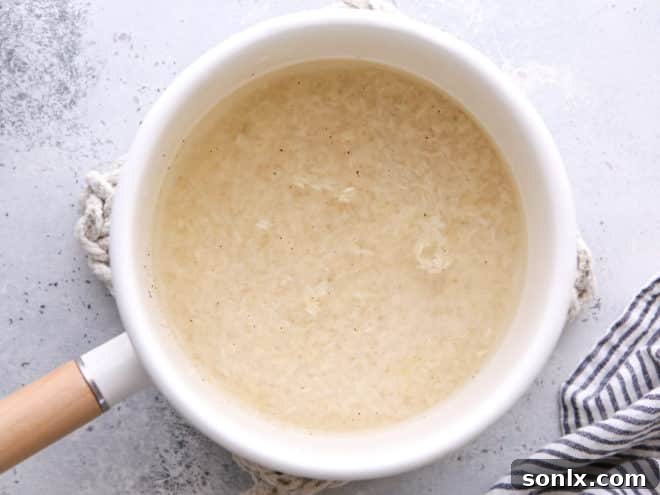
2. Add Water and Bring to a Vigorous Boil
The golden rule for perfectly cooked long-grain white rice is a 2:1 water to rice ratio. For 1 cup of rice, you will add 2 cups of water to the saucepan. After adding the water, increase the heat to medium-high. Stir briefly to ensure everything is combined, then bring the mixture to a rapid, rolling boil. This means you should see large bubbles breaking the surface consistently. It’s important to reach this stage quickly and evenly before reducing the heat.
Measurement Accuracy Tip: I’ve discovered through countless batches that using the *exact same measuring cup* for both the dry rice and the water yields the most consistent and successful results. While dry and liquid measuring cups are theoretically designed to hold equivalent volumes, slight variations in their design or how they’re filled can subtly impact the crucial water-to-rice ratio. Using one cup ensures proportionality, leading to perfectly cooked rice every time.
3. Cover and Simmer for 15 Minutes
As soon as the rice mixture reaches a vigorous boil, immediately reduce the heat to its lowest setting. It’s critical that the heat is truly low enough to allow for gentle simmering, preventing the water from evaporating too quickly or the rice from sticking to the bottom. Promptly cover the saucepan with a tight-fitting lid. This lid is your best friend, trapping all the precious steam needed to cook the rice thoroughly. Set a timer for exactly 15 minutes. This is not a step to eyeball; using a timer ensures precision. Resist the urge to lift the lid at any point during this simmering period, as releasing the steam will disrupt the cooking process.
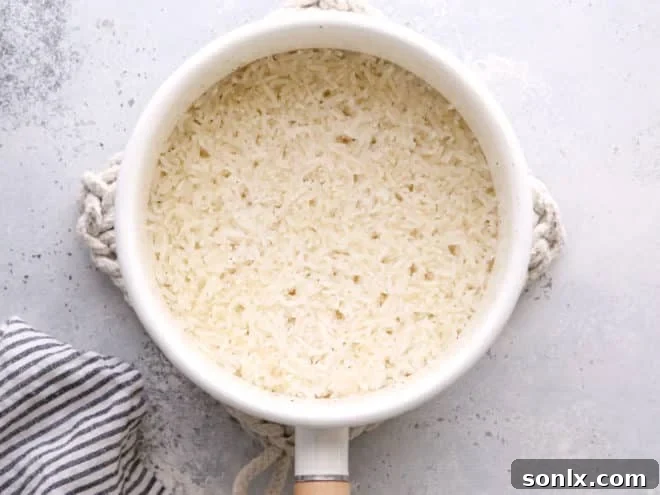
4. Turn Off Heat and Allow to Rest for 5 Minutes (or More)
Once your 15-minute timer signals the end of the simmering phase, immediately turn off the stove. Crucially, leave the covered saucepan exactly where it is on the burner. And again, no peeking! This resting period is just as vital as the cooking time itself. There is still an abundance of residual heat and steam trapped within the pot, which will continue to gently cook the rice to perfection without any risk of overcooking or burning the bottom. This resting phase allows the steam to redistribute evenly, ensuring every grain is tender and fluffy. Let the rice sit undisturbed for at least 5 minutes. You can even let it rest for longer, up to 15-20 minutes, if you’re not ready to serve immediately. The longer rest often results in even fluffier rice.
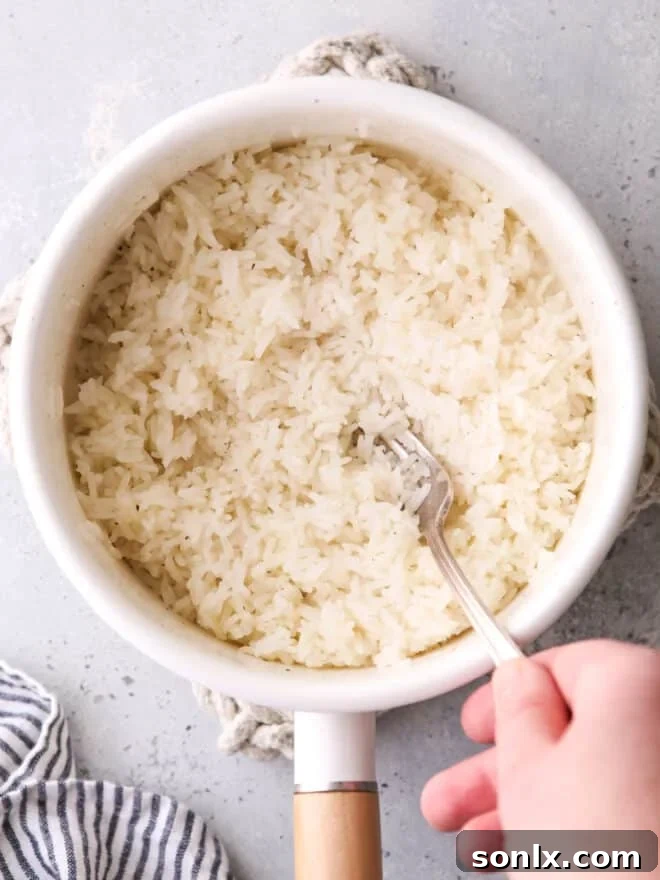
5. Fluff with a Fork and Serve Immediately
After the resting period, carefully remove the lid. You’ll be greeted by perfectly cooked rice. Using a fork (rather than a spoon, which can mash the grains), gently fluff the rice from the bottom up. This separates the individual grains, releasing any remaining steam and creating that signature light and airy texture. Marvel at how light, fluffy, and perfectly moist each grain is. It’s now ready to be served hot and enjoyed alongside your favorite dishes.
Troubleshooting Common Rice Problems
Even with a foolproof method, sometimes things can go slightly awry. Here’s a quick guide to diagnose and fix common rice issues:
- Sticky or Gummy Rice: This usually means there was too much water, or you lifted the lid too often during cooking, preventing proper steam retention. Rinsing your rice thoroughly before cooking also helps remove excess starch that causes stickiness.
- Hard or Undercooked Rice: The opposite problem! This often points to not enough water, the heat being too low during simmering, or a lid that wasn’t tight-fitting, allowing steam to escape.
- Burnt Bottom: If the bottom of your rice is scorched, the heat was likely too high during the simmering phase, or there wasn’t enough water to begin with. Ensure your heat is truly at the lowest setting once covered.
- Dry Rice: This is typically due to insufficient water or steam escaping from a loose lid. The rice needs that trapped moisture to cook thoroughly.
Tips for Stovetop Rice Success
- Rinse Your Rice: While not included in the original recipe steps, many cooks find that rinsing white rice under cold running water until the water runs clear helps remove excess starch, resulting in fluffier, less sticky grains.
- Use a Heavy-Bottomed Pot: This ensures even heat distribution and reduces the chance of burning.
- Don’t Peek! Resist the temptation to lift the lid during simmering and resting. The trapped steam is essential for even cooking.
- Trust Your Timer: Precision is key. Set a timer for both the simmering and resting phases.
- Fluff with a Fork: A fork gently separates the grains without mashing them, preserving that light and airy texture.
- Adjust for Quantity: If doubling or halving the recipe, remember to maintain the 2:1 water-to-rice ratio. You might also need a larger or smaller saucepan accordingly.
Storage and Reheating Cooked Rice
Properly storing and reheating cooked rice is important for both taste and food safety. Cooked rice should be cooled and refrigerated as quickly as possible, ideally within one hour of cooking. This prevents the growth of bacteria.
- Storage: Transfer leftover rice to an airtight container and store it in the refrigerator for up to 3-4 days.
- Reheating:
- **Microwave:** Place the rice in a microwave-safe bowl. Add a tablespoon or two of water (per cup of rice) and cover the bowl tightly with a microwave-safe lid or plastic wrap, leaving a small vent. Heat on high for 1-2 minutes per cup, or until heated through, stirring halfway. The added water helps re-steam the rice, keeping it moist.
- **Stovetop:** For larger quantities, place the rice in a saucepan with a splash of water (about 1-2 tablespoons per cup of rice). Cover and heat over low-medium heat, stirring occasionally, until heated through.
Perfect Steamed Rice: The Ideal Companion for These Meals
This light and fluffy steamed rice is incredibly versatile, serving as the perfect absorbent base for a wide array of main dishes. Its neutral yet subtly flavored profile allows it to complement bold sauces and rich proteins beautifully. Here are some delicious main dishes that pair exceptionally well with this perfectly steamed rice, allowing it to soak up all their wonderful flavors:
- Slow Cooker Rosemary Balsamic Pork Roast: The tender pork and rich, savory sauce will find their ideal match in the fluffy rice.
- Simplest Lemon-Herb Roasted Salmon: The clean, bright flavors of salmon and herbs are beautifully grounded by a bed of simple white rice.
- Easy Skillet Chicken with Herb Butter Sauce: Let the rice absorb every drop of that delectable herb butter sauce for a truly satisfying meal.
- Beef and Broccoli Stir Fry: A classic pairing where the rice perfectly soaks up the savory stir-fry sauce, balancing the textures and flavors.

Perfect Steamed Rice
Servings: 4 servings
Cook Time: 15 mins
Rest Time: 5 mins
Total Time: 20 mins
Never burn a pot of rice again! Here’s my foolproof method for perfectly light and fluffy steamed white rice on the stovetop.
Ingredients
- 1 tablespoon olive oil
- 1 cup long-grained white rice (I prefer Jasmine or Basmati)
- 2 cups water
- ½ teaspoon coarse salt
- ¼ teaspoon ground black pepper
Instructions
- Heat olive oil in a saucepan over medium heat for about a minute. Add rice, salt, and pepper.
- Stir the mixture for about 30 seconds, until the rice is evenly coated in the oil and some of the rice grains appear to turn translucent.
- Add the water to the saucepan, increase heat to medium-high, and bring the mixture to a rapid boil.
- As soon as the mixture boils, reduce heat to low and cover the saucepan with a tight-fitting lid. Set a timer for 15 minutes. Do not open the lid.
- When the timer is done, turn the stove off but leave the saucepan as it is, still covered. Do not open the lid. Let it sit for at least 5 minutes, or until you are ready to serve.
- Before serving, fluff gently with a fork to separate the grains.
Nutrition Information (per serving, approximate):
Calories: 200kcal, Carbohydrates: 37g, Protein: 3g, Fat: 4g, Saturated Fat: 1g, Sodium: 293mg, Potassium: 53mg, Fiber: 1g, Sugar: 1g, Calcium: 13mg, Iron: 1mg
Cuisine: Mediterranean
Course: Side Dish
Author: Annalise Sandberg
With this comprehensive guide and recipe, you are now equipped to conquer the seemingly simple yet often challenging task of cooking perfect white rice on the stovetop. The subtle toasting, precise water ratio, careful simmering, and essential resting period all contribute to a truly light, fluffy, and flavorful result that will impress. No more burned bottoms or gummy messes – just consistently beautiful rice that serves as the ideal foundation for countless meals. Give this method a try, and you’ll quickly discover why it’s become a trusted favorite in my kitchen.