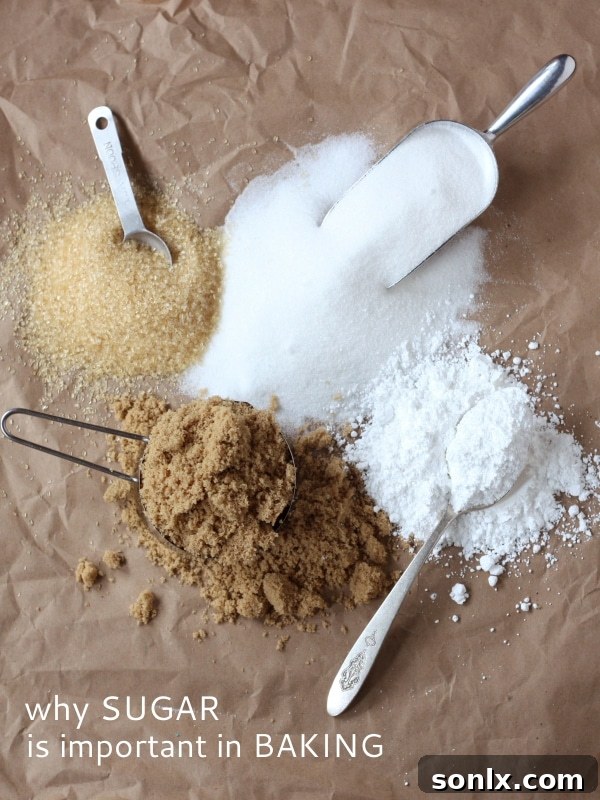
Welcome to the fascinating world of baking, where science and art beautifully intertwine! The deeper your understanding of key ingredients, the more consistently delightful your culinary creations will be. Today, we’re putting the spotlight on sugar – an ingredient often misunderstood as merely a sweetener. We’ll delve into the multifaceted roles sugar plays in your baked goods, explore its various forms, and discuss how to master its use for perfect results every time.
Table of Contents
- Sugar: Beyond Sweetness – Unlocking Its Vital Roles in Baking
- Exploring Different Types of Sugars and Their Baking Applications
- Liquid Sweeteners in Baking: Beyond Granular Sweetness
- Navigating Sugar Alternatives and Substitutes in Baking
- Optimal Storage for Your Sugars: Ensuring Freshness and Longevity
- Mastering Sugar Measurement: Precision for Perfect Bakes
Sugar: Beyond Sweetness – Unlocking Its Vital Roles in Baking
While sugar is undeniably the primary source of sweetness in countless recipes, its contribution to baked goods extends far beyond taste. It’s a fundamental ingredient that influences texture, structure, moisture, color, and even shelf life. Understanding these complex interactions is key to becoming a truly proficient baker. Let’s explore the critical functions of sugar:
- Tenderizing: The Soft Touch
Sugar plays a crucial role in creating a tender crumb. It achieves this by interfering with gluten development, the protein network that gives structure to baked goods. By binding with water, sugar reduces the amount available for gluten formation, resulting in a softer, more delicate texture. This is particularly important in cakes and cookies where a tender, melt-in-your-mouth quality is desired. Without sufficient sugar, these items can become tough or chewy. - Preservation: Extending Freshness
Sugar acts as a natural preservative, significantly extending the shelf life of baked goods. It’s a humectant, meaning it attracts and binds moisture, making it less available for microbial growth. This moisture-binding property inhibits the growth of bacteria and molds, keeping your treats fresher for longer. This is why many jams, jellies, and candied fruits rely heavily on sugar for their preservation. - Leavening: The Rise and Shine
Believe it or not, sugar contributes to the leavening process, helping your baked goods rise. In methods like the creaming method, sugar crystals cut into solid fats (like butter), creating tiny air pockets. During baking, these air pockets expand, contributing to a light and airy texture. Sugar also stabilizes aerated structures, such as those found in meringues and soufflés, by forming a stable network around whipped egg whites, allowing them to hold their volume. - Flavor & Color: The Golden Hue and Deep Taste
Sugar is essential for developing both complex flavors and desirable colors through two primary chemical reactions:- Caramelization: When sugar is heated to high temperatures (above 320°F or 160°C), it breaks down and undergoes a series of complex reactions, resulting in a golden-brown color and rich, nutty, and slightly bitter flavors. This process is responsible for the delicious crusts on many baked goods.
- Maillard Reaction: This is a non-enzymatic browning reaction between amino acids and reducing sugars, occurring at lower temperatures than caramelization. It contributes to the savory-sweet complexity and golden-brown crust of bread, cookies, and other baked goods.
- Yeast Food: Fueling Fermentation
In yeast-leavened products like bread, sugar serves as vital food for the yeast. Yeast consumes sugar and converts it into carbon dioxide and alcohol through fermentation. The carbon dioxide gas gets trapped in the dough, causing it to rise and creating the characteristic airy texture of bread. Without sugar, yeast cannot properly activate, and your dough will struggle to rise. - Texture and Mouthfeel: From Chewy to Crispy
Beyond tenderizing, sugar profoundly impacts the final texture and mouthfeel of baked goods. It contributes to the chewiness of cookies, the crispness of biscotti, and the moistness of cakes. Different types of sugar and their concentration can dramatically alter whether a product is soft, chewy, crispy, or dense, providing a satisfying tactile experience as you eat.
Given this extensive list of crucial functions, it becomes clear why sugar is far more than just a simple sweetener. In an era where many are mindful of sugar consumption, completely eliminating it from baking is rarely a straightforward task. Its removal requires a comprehensive understanding of its roles and often calls for significant recipe reformulation, as most baked goods wouldn’t be the same without its unique properties.
Exploring Different Types of Sugars and Their Baking Applications
The world of sugar is diverse, with each type possessing unique characteristics that make it suitable for different baking applications. Sugars can be found naturally in fruits and milk, or they can be refined from sources like sugar cane and sugar beets. Understanding these distinctions helps you choose the right sugar for the desired outcome in your recipes.
- Turbinado Sugar
Often considered the closest to raw sugar commercially available, turbinado sugar is only partially refined. It retains a light brown color, distinct coarse crystals, and a subtle caramel flavor due to residual molasses. Its large crystals make it excellent for sprinkling on top of muffins, scones, or pies to add a glittering crunch and a rustic appearance. It doesn’t dissolve as readily as granulated sugar, making it less ideal for smooth batters but perfect for textural toppings. - Granulated Sugar (White Sugar)
This is the workhorse of the kitchen and the most commonly used sugar in baking. It consists of uniformly sized, fine white crystals. Its neutral flavor allows other ingredients to shine, and its crystalline structure is essential for creaming with fats to incorporate air. Granulated sugar provides crispness to cookies, structure to cakes, and contributes significantly to browning and flavor development through caramelization. - Superfine Sugar (Caster Sugar)
Also known as caster sugar, superfine sugar is essentially granulated sugar ground into much smaller crystals. This finer texture allows it to dissolve more quickly and evenly into batters and meringues, resulting in a smoother consistency and finer crumb. It’s particularly favored for delicate cakes, custards, mousses, and meringues where a smooth, stable foam is desired. You can easily make your own by pulsing granulated sugar in a food processor for a few seconds. - Powdered Sugar (Confectioner’s Sugar)
Powdered sugar, or confectioner’s sugar, is granulated sugar that has been finely ground into a powder. To prevent clumping and absorb moisture, a small amount of cornstarch (typically 3-5%) is usually added. Its incredibly fine texture makes it ideal for dusting baked goods, preparing smooth frostings, glazes, and icings, where a grainy texture would be undesirable. It dissolves quickly and creates a silky mouthfeel. - Brown Sugar (Light and Dark)
Brown sugar is granulated sugar to which molasses has been intentionally added back. The amount of molasses determines whether it’s light brown sugar or dark brown sugar, with dark brown sugar containing more molasses and therefore having a stronger, more intense caramel flavor and darker color. Brown sugar is notable for its high moisture content, which contributes to a chewy texture in cookies and cakes, and keeps baked goods moist for longer. Its distinctive flavor is a must-have for oatmeal cookies, gingerbread, and spiced desserts. Due to its moisture, it tends to clump and harden if exposed to air, so proper storage in an airtight container is crucial.
Liquid Sweeteners in Baking: Beyond Granular Sweetness
While often categorized separately from “sugar,” liquid sweeteners are an integral part of many baked goods and desserts. They offer unique flavor profiles, textures, and moisture contributions that granular sugars cannot replicate. Their liquid form also means they interact differently with other ingredients, often requiring adjustments to a recipe’s overall liquid content.
- Corn Syrup (Light and Dark)
Derived from corn kernels, corn syrup is a thick, viscous liquid available in light and dark varieties. Light corn syrup is clear and has a mild sweetness, making it versatile for many applications. Dark corn syrup contains refiners’ syrup (a type of molasses) for a richer color and flavor. Corn syrup is a common ingredient in candies, fudges, and glazes because it helps prevent sugar crystallization, resulting in a smoother, chewier texture. It also adds moisture and can help keep baked goods tender. - Molasses
Molasses is a thick, dark syrup that is a byproduct of the sugar refining process. Unsulfured molasses, often preferred in baking, is made from pure cane syrup and has a milder, sweeter flavor. Sulfured molasses has a stronger, slightly bitter taste due to the addition of sulfur dioxide during processing. Molasses is a humectant, contributing significant moisture to baked goods, and imparts a distinct, robust flavor and dark color, making it essential for traditional gingerbread, baked beans, and certain rye breads. - Honey
Produced by honeybees from flower nectar, honey is a natural sweetener with a complex and distinct flavor that can vary greatly depending on the floral source, season, and age. It is sweeter than granulated sugar and contains both fructose and glucose. Honey is a powerful humectant, meaning it draws and holds moisture, contributing to a very moist and dense texture in baked goods. Its slight acidity can also interact with leavening agents. Honey tends to brown more quickly than sugar due to its fructose content, so baking temperatures or times may need adjustment. - Maple Syrup
Maple syrup is made by boiling down the sap of sugar maple trees until it reaches a concentrated, syrupy consistency. It is graded based on color, flavor intensity, and density. Its unique, earthy, and sweet flavor makes it a prized ingredient in pancakes, waffles, and specific dessert recipes. Like honey, maple syrup contributes moisture to baked goods and can affect browning, though generally less intensely than honey. Its distinct flavor should always be considered when substituting. - Agave Nectar (Agave Syrup)
Obtained from the agave plant, this liquid sweetener is primarily fructose, making it sweeter than granulated sugar. It has a neutral flavor and a thinner consistency than honey or maple syrup. Agave nectar dissolves well and is often used in cold preparations or recipes where a subtle sweetness is desired without a strong flavor imprint. In baking, its high fructose content can lead to faster browning, similar to honey, and its liquid volume requires careful adjustment of other liquids in the recipe.
Navigating Sugar Alternatives and Substitutes in Baking
With increasing health consciousness, many bakers are exploring alternatives to refined table sugar. However, substituting sugar in baking is a nuanced process because sugar contributes far more than just sweetness. It provides bulk, moisture, texture, and aids in browning and structure, making a simple 1:1 swap often challenging and sometimes impossible without compromising the final product.
When considering sugar alternatives, it’s generally best to start with recipes specifically developed for that substitute. Adapting existing recipes that call for granulated sugar requires a deep understanding of how each alternative behaves and may involve some trial and error. Fortunately, many talented bakers have already done this work, so a quick online search for “sugar-free [recipe name]” or “baking with [alternative name]” can provide a valuable starting point.
Here’s a closer look at common sugar alternatives and how to approach them:
Natural Liquid Alternatives: Honey, Agave Nectar, and Maple Syrup
As discussed previously, these are popular choices for replacing granulated sugar due to their natural origins and unique flavors. They are generally sweeter than sugar, so you’ll typically use less. However, their liquid nature means you must reduce other liquids in the recipe to maintain the proper balance of wet-to-dry ingredients. For every cup of liquid sweetener used, reduce other liquids by about 1/4 cup. Additionally, their distinct flavors and tendency to brown more quickly (especially honey and agave) must be taken into account to avoid overpowering other flavors or resulting in an overly dark crust.
Direct Granulated Sugar Replacements: Raw or Turbinado Sugar
If your goal is simply to use a less refined option, substituting raw or turbinado sugar for granulated sugar is often a straightforward 1:1 exchange. However, be mindful that turbinado sugar contains more moisture and has a subtle molasses flavor. Depending on the recipe, this extra moisture might necessitate minor adjustments to dry ingredients, and its caramel notes will subtly alter the flavor profile of your baked goods.
Modern Naturally-Derived Sweeteners: Stevia, Coconut Sugar, Monk Fruit, and Sugar Alcohols
The last decade has seen a surge in the popularity of various naturally-derived sweeteners. These options come with their own set of characteristics and require careful consideration in baking:
- Stevia and Monk Fruit: These are high-intensity sweeteners, meaning they are many times sweeter than sugar and are used in very small quantities. They provide sweetness without the calories or carbohydrate impact. However, they do not offer the bulk, moisture, or browning capabilities of sugar, making them difficult to substitute directly in traditional recipes. They are best used in recipes specifically formulated for them or in combination with other bulk-providing ingredients.
- Coconut Sugar: Made from the sap of coconut palm, this sugar has a caramel-like flavor similar to brown sugar and can often be substituted 1:1 for granulated sugar in many recipes. It has a slightly lower glycemic index than regular sugar and offers some minerals. However, it functions very similarly to brown sugar in terms of moisture and browning, so keep its distinct flavor in mind.
- Sugar Alcohols (Erythritol, Xylitol, Sorbitol, Maltitol): These are carbohydrates with a chemical structure that resembles both sugar and alcohol, but they don’t contain ethanol. They provide sweetness with fewer calories and don’t significantly raise blood sugar levels. Erythritol and Xylitol are common in baking. Erythritol has about 70% the sweetness of sugar and doesn’t have a strong aftertaste, but it can create a “cooling” sensation in the mouth. Xylitol is nearly as sweet as sugar but is toxic to dogs. Sugar alcohols provide some bulk but often don’t brown like sugar, nor do they provide the same texture or moisture. Overconsumption can also lead to digestive discomfort. Again, look for recipes designed specifically for these.
Note: This is not an exhaustive list of all granulated sugar substitutes and sugar-free sweeteners. The world of alternative sweeteners is constantly evolving, with new options and research emerging regularly. I am not a registered dietitian or a food scientist, but a passionate baker eager to learn and share insights. Always consult reliable baking resources and experts when experimenting with substitutes, especially for health-related concerns. If you have experience or insights to add, please share in the comments!
Optimal Storage for Your Sugars: Ensuring Freshness and Longevity
One of sugar’s most remarkable qualities is its natural preservative property, which means that if stored correctly, it can last indefinitely without expiring or degrading in taste quality. This longevity is due to sugar’s humectant nature, which binds available moisture, preventing microbial growth and spoilage. Proper storage is essential to maintain its texture and usability, ensuring your sugar is always ready when inspiration strikes.
Always store all types of sugar in a cool, dry place, away from direct sunlight and heat sources. The most critical factor for optimal storage is an airtight container.
- White Sugars (Granulated, Superfine, Powdered): These sugars are highly susceptible to moisture. If exposed to humidity or moisture in the air, they will absorb it and harden into solid clumps. An airtight container prevents this absorption, keeping the crystals free-flowing and easy to measure.
- Brown Sugar: In contrast to white sugar, brown sugar is known for its high moisture content, which gives it its soft, pliable texture. If exposed to air, it will quickly dry out and become rock-hard. To prevent this, store brown sugar in an airtight container. Many bakers also include a small piece of terra cotta, a slice of apple, or a piece of bread in the container to help maintain its softness and prevent hardening. If your brown sugar has already hardened, these methods can often help revive it.
Keeping sugar sealed in airtight containers also serves two other important purposes: it prevents the sugar from absorbing strong odors from other pantry items (as sugar is highly absorbent), and it keeps pests and vermin away, ensuring your sugar remains clean and safe for consumption.
Mastering Sugar Measurement: Precision for Perfect Bakes
In baking, precision is paramount, and measuring sugar accurately is no exception. Inaccurate measurements can significantly alter the texture, sweetness, and overall success of your baked goods. Different types of sugar require different measurement techniques to ensure consistency.
- Measuring Granulated and Powdered Sugar: For these dry, free-flowing sugars, the standard method is the “spoon and level” technique. Gently spoon the sugar into a dry measuring cup until it’s overflowing. Do not pack it down or tap the cup, as this can compress the sugar and lead to an over-measurement. Then, use the straight edge of a knife or a flat spatula to level off the excess sugar, ensuring a precise amount.
- Measuring Brown Sugar: Brown sugar’s moist, clumping nature requires a different approach. It should be “packed” into a dry measuring cup. Use your fingers or the back of a spoon to press the brown sugar firmly into the cup, eliminating any air pockets, until it holds the shape of the cup when inverted. Then, level off the top with a straight edge. This packing ensures that you are measuring a consistent density of brown sugar, which is crucial for its contribution to moisture and chewiness in recipes.
For the most accurate measuring (which invariably produces the best and most consistent results!), the gold standard is to use a kitchen scale. Measuring ingredients by weight eliminates variables like how tightly you pack a cup, humidity affecting density, or inconsistencies between different measuring cup sets. This precision is especially critical in delicate recipes where slight deviations can have a significant impact on the final product. Learn more about why you should measure ingredients by weight here.
For your convenience, here are common weight conversions for sugar:
1 cup granulated sugar = 200 grams
1 cup brown sugar = 213 grams
1 cup powdered sugar = 113 grams
Understanding the science behind sugar and mastering its various forms and applications will undoubtedly elevate your baking skills. From providing essential structure and moisture to contributing beautiful browning and complex flavors, sugar is a truly indispensable ingredient in the baker’s pantry. Armed with this knowledge, you can approach recipes with confidence, experiment wisely, and consistently create delicious treats that delight the senses.