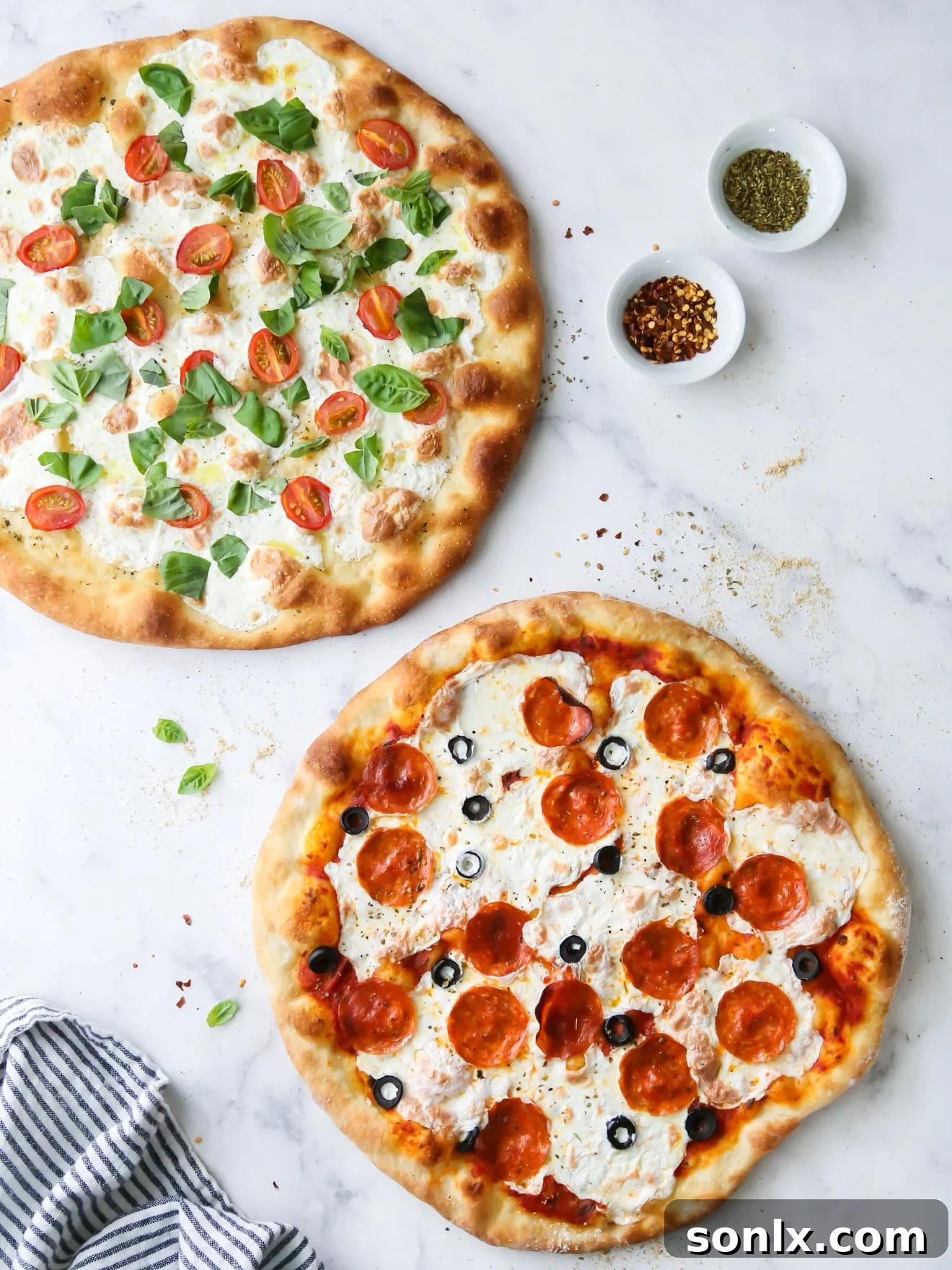
Transform your ordinary weeknights into extraordinary culinary adventures with this incredibly simple yet utterly delicious no-knead pizza dough! Say goodbye to greasy takeout and hello to the aroma of freshly baked pizza wafting through your home. Not only will I walk you through crafting the perfect effortless dough, but I’ll also share my tried-and-true secrets for achieving pizzeria-quality results right in your own kitchen oven. Get ready to elevate your homemade pizza game to a whole new level of ease and flavor.
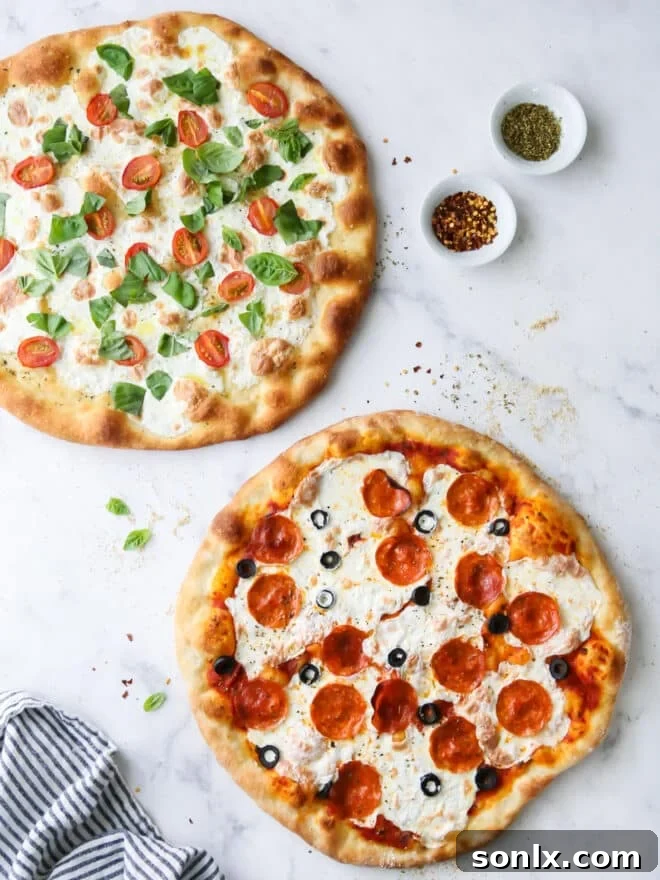
This exceptional recipe is proudly sponsored by Red Star Yeast, a brand synonymous with quality and reliability in home baking.
For years, Friday night has been synonymous with ‘Pizza Night’ in our household, a cherished tradition that brings everyone together. While my traditional basic pizza dough recipe once held a special place in our hearts, I’ve recently discovered the unparalleled simplicity and superb results of this no-knead pizza dough, and honestly, there’s no turning back. This isn’t just a recipe; it’s a revelation that promises to simplify your baking routine without compromising on taste or texture.
What makes this no-knead pizza dough recipe truly remarkable is its minimal effort requirement. It calls for just five staple ingredients and demands less than five minutes of active mixing time. After a brief initial preparation, it patiently rests on your countertop, developing incredible flavor and structure until you’re ready to transform it into culinary magic. The resulting crust boasts a wonderfully chewy texture and a deep, satisfying flavor, serving as the perfect foundation for any of your beloved pizza topping combinations. Get ready to experience homemade pizza with unprecedented ease!
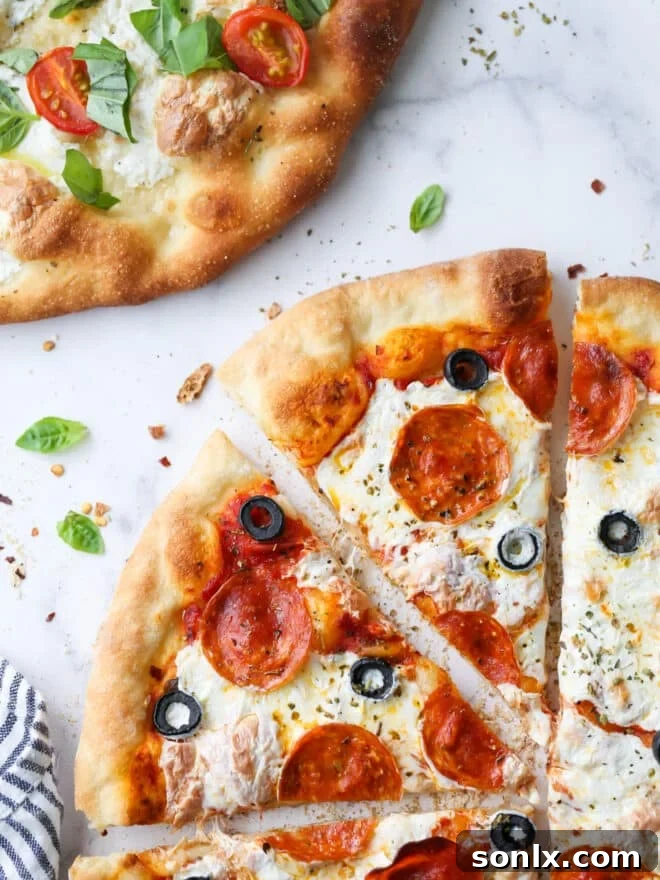
Why Embrace Pizza Night as a Home Tradition?
The allure of a homemade pizza night extends far beyond just enjoying a meal; it’s about creating memories, fostering creativity, and savoring superior taste. Here’s why adopting this delightful ritual will become your new favorite:
- Homemade Triumphs Over Takeout: While grabbing a pizza from your favorite local spot is always an option, there’s an undeniable satisfaction and superior flavor that comes from a freshly baked, homemade pizza. You control the quality of ingredients, the amount of cheese, and the perfect balance of toppings, leading to a much healthier and more satisfying meal.
- Effortless and Foolproof Dough: The beauty of this particular no-knead pizza dough recipe lies in its incredible simplicity and reliability. If the thought of baking with yeast has ever seemed daunting, fear not! This recipe is designed to be forgiving and straightforward, ensuring beautiful results even for novice bakers. It truly demystifies the yeast-baking process, making it accessible to everyone.
- A Rapid Learning Curve: You might think mastering pizza at home takes years, but with a few essential tips and a reliable dough recipe like this one, you’ll be amazed at how quickly you become adept. Each pizza night is an opportunity to refine your skills, experiment, and gain confidence. Before you know it, you’ll be tossing dough and creating masterpieces like a seasoned pizzaiolo.
- Unleash Your Inner Chef with Endless Fun: Homemade pizza is not just food; it’s an experience. It encourages culinary creativity, allowing for endless experimentation with diverse topping combinations. From classic pepperoni to gourmet vegetarian options, no two pizza nights ever have to be the same, keeping meals exciting and engaging for the whole family. It’s a fantastic way to involve kids in the kitchen and customize meals to everyone’s preferences.
Have I managed to convince you yet? I certainly hope so! Let’s gather our ingredients and embark on this delicious baking journey together.
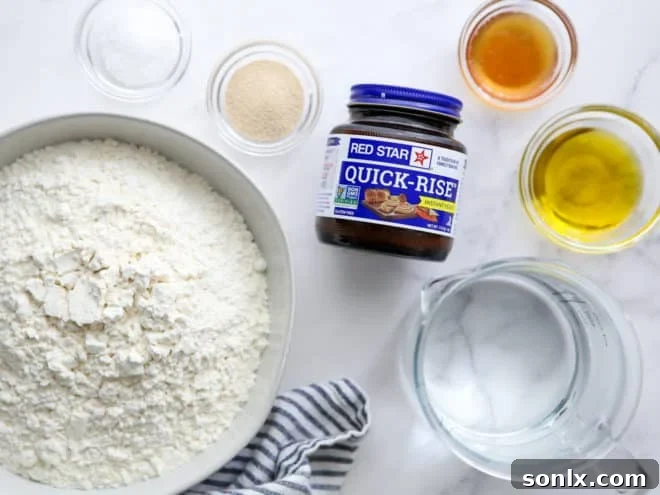
Essential Ingredients for Your No-Knead Pizza Dough
This recipe is perfectly proportioned to yield enough dough for two generous 14-inch pizzas, making it ideal for family dinners or entertaining friends. Here’s a breakdown of the few simple ingredients you’ll need to begin your homemade pizza adventure:
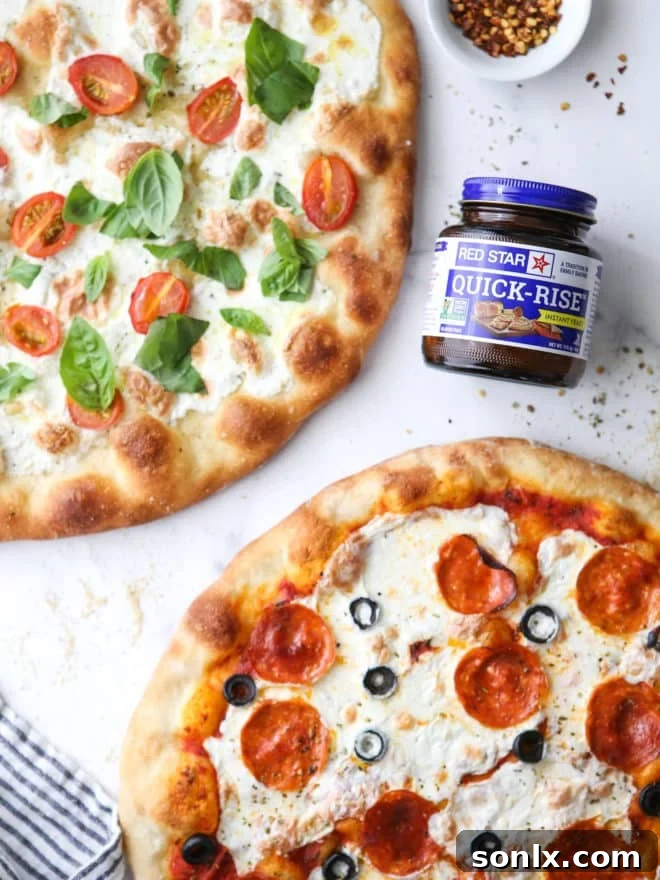
- Red Star Quick-Rise Instant Yeast: The star of our show, this instant yeast is crucial for a quick rise time and consistent results. Its fine granules don’t require proofing, making the process even simpler.
- Warm Water: The perfect temperature water is key to activating the yeast. It should be warm to the touch, but not hot enough to kill the yeast.
- Olive Oil: A good quality olive oil adds richness, flavor, and helps achieve that desirable golden crust and tender crumb.
- Honey: Just a touch of honey not only provides a subtle sweetness that complements the savory toppings but also aids in yeast activation and promotes beautiful browning of the crust.
- Coarse Salt: Essential for enhancing the overall flavor of the dough, salt also plays a role in regulating yeast activity and strengthening the gluten structure.
- All-Purpose Flour: The backbone of our dough, all-purpose flour provides the necessary structure and chewiness. While other flours can be used, all-purpose is wonderfully versatile for this recipe.
- Your Favorite Pizza Toppings: This is where the real fun begins! Think sauces, cheeses, meats, and vegetables – customize to your heart’s content.
The Advantage of Baking with Red Star Yeast
While this versatile recipe can indeed accommodate active-dry yeast, my personal preference, and strong recommendation, is to use instant yeast, specifically Red Star Quick-Rise Instant Yeast. The primary reason for this choice is its incredible efficiency in significantly reducing the dough’s rise time. Many traditional no-knead recipes typically call for an extended fermentation period, often overnight. However, with Red Star Quick-Rise Instant Yeast, you can prepare and use this pizza dough in as little as an hour, meaning your homemade pizza night can come to fruition much, much sooner!
Beyond its speed and reliability in pizza dough and a myriad of other bread recipes, Red Star Yeast distinguishes itself through its commitment to empowering and educating home bakers. They are more than just a product; they are a resource. I highly encourage you to explore Red Star’s comprehensive Yeast and Baking Lessons section on their website. There, you’ll discover a wealth of invaluable information, expert tips for utilizing their products, and detailed guidance covering every single step of the bread baking process. It’s an indispensable tool for anyone looking to refine their baking skills.
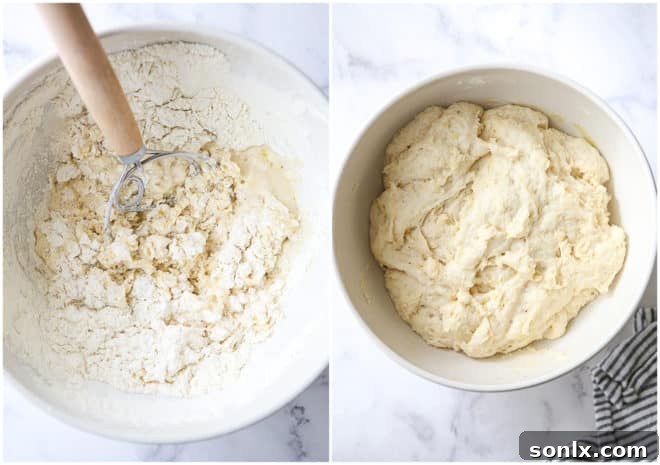
Crafting Your Easy No-Knead Pizza Dough: A Simple Guide
The beauty of this recipe truly lies in its simplicity. You’ll be amazed at how little effort is required to produce such a fantastic dough. Here’s a step-by-step breakdown of the incredibly easy process:
- Effortless Mixing of All Ingredients: Begin by adding all the specified ingredients—warm water, instant yeast, salt, honey, olive oil, and all-purpose flour—into a large mixing bowl. Using a sturdy spoon or a specialized dough whisk, mix everything together until just combined. The mixture will appear quite thick and “shaggy,” meaning it will be rough and slightly uneven with no smooth, uniform texture. This is exactly what you’re looking for; resist the urge to overmix! The minimal mixing is what defines the “no-knead” method and allows time to do the work.
- The Essential Rise: Once your ingredients are mixed, cover the bowl loosely with plastic wrap or a clean kitchen towel. Allow the dough to rest and rise at room temperature for a period of 1 to 3 hours. I personally find that a 2-hour rise time yields the best balance of flavor and texture. However, thanks to the efficiency of instant yeast, you can certainly use the dough sooner if time is a constraint, or let it go a bit longer if your schedule requires. This dough is incredibly forgiving, adapting well to varying rise times without compromising quality. The longer rise will generally result in a deeper, more complex flavor profile.
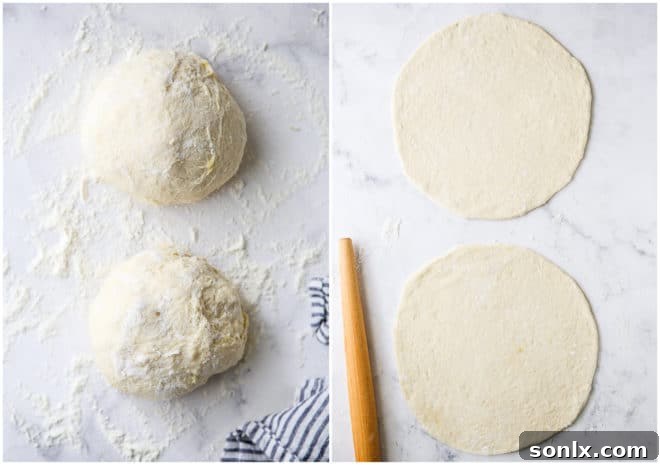
- Portioning and Gentle Shaping: After the dough has risen beautifully, gently turn it out onto a lightly floured countertop. Divide the dough into two equal halves, as this recipe is designed for two 14-inch pizzas. With floured hands, quickly and gently shape each half into a loose ball. The goal here is not to knead but to gather the dough into a manageable shape. If you need a visual guide for effective shaping techniques, this helpful video provides an excellent demonstration.
- Rolling Out Your Crust: Liberally flour your countertop and the top of your dough ball as needed to prevent sticking. Then, using a rolling pin, carefully roll out one dough ball into a round approximately 12 inches in diameter. If you prefer a thinner, crispier crust, aim for a slightly larger 14-inch diameter. Don’t stress about achieving a perfectly uniform circle; rustic shapes often add to the charm of homemade pizza! If the dough resists rolling and springs back significantly, let it rest for 5 to 10 minutes. This allows the gluten to relax, making it much easier to roll out without resistance.
With your perfect no-knead pizza dough now prepared and ready, we can move on to the most exciting part: adorning it with your favorite toppings and baking it to golden perfection!
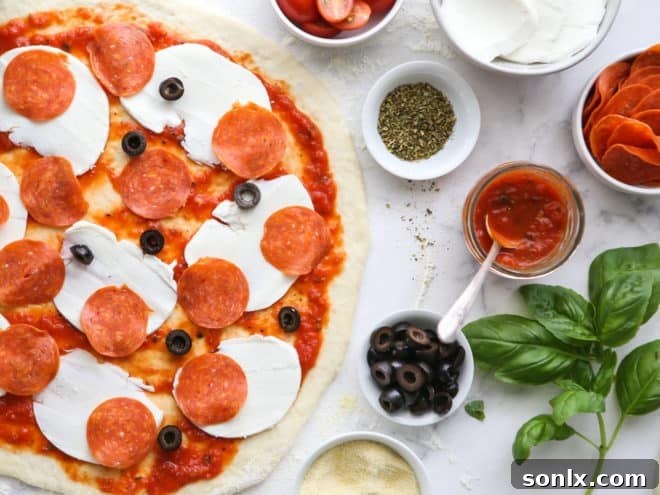
Personalize Your Pie: Adding Your Favorite Pizza Toppings
The true joy of homemade pizza lies in the freedom to customize every single aspect, especially the toppings! Feel free to let your culinary imagination run wild, but here are a few classic suggestions and practical tips to inspire your creations:
- Sauce Selections: The base of your flavor profile begins with the sauce. Classic red marinara sauce is always a winner, but don’t limit yourself! Creamy white sauces, rich pesto, or even a simple drizzle of high-quality olive oil can provide a delightful alternative. For ultimate convenience without sacrificing flavor, I often opt for a trusted store-bought sauce.
- Cheesy Goodness: You can truly use almost any cheese you adore on your pizza, but for a classic, melty experience, mozzarella is typically our go-to. Whether you prefer the creamy texture of sliced fresh mozzarella or the even melt of shredded brick mozzarella, both work wonderfully, though they do yield slightly different results. For added depth and complexity, consider incorporating accent cheeses like grated Parmesan, tangy feta, or creamy goat cheese, either in addition to or as a substitute for mozzarella.
- Vegetable Varieties: When it comes to vegetable toppings, the possibilities are virtually limitless! The key to success is to slice your veggies thinly to ensure they cook quickly and evenly during the short baking time. For items like onions, mushrooms, or bell peppers, consider pre-cooking them slightly. Sautéing them beforehand will not only remove excess moisture (preventing a soggy crust) but also deepen their flavor, creating a delicious caramelized richness.
- Meat Lover’s Options: For those who crave a heartier pizza, a variety of meats can be added. Popular choices include classic pepperoni, savory ham, crispy bacon, Italian sausage, or seasoned ground turkey or beef. A crucial tip for meat toppings: all raw meats, such as sausage or ground beef, should be cooked and drained beforehand. The intense heat and short baking time of pizza won’t be sufficient to cook raw meats thoroughly, and pre-cooking also prevents your crust from becoming greasy.
- Fresh Greens & Herbs: Delicate leafy greens and fresh herbs, such as peppery arugula, fragrant basil, or tender cilantro, are best added after the pizza has finished baking. The residual heat will gently warm them, preserving their vibrant color and fresh flavor. Spinach, however, is versatile and can be added either before or after baking, depending on your preferred texture.
A Crucial Tip for Toppings: While it’s tempting to load up your pizza with a bounty of ingredients, remember that “less is more” for optimal results. Overloading your crust with too many toppings will weigh it down, making it challenging to transfer to the oven and preventing it from rising and baking properly. An overcrowded pizza also creates excess steam, which can lead to a soggy crust. As a general rule, in addition to your sauce and cheese, I recommend adding no more than 3 additional toppings to ensure a perfectly cooked and balanced pizza.
Alright, with your perfectly topped pizzas now assembled, they are ready for their grand entrance into the oven. It’s time to bake!
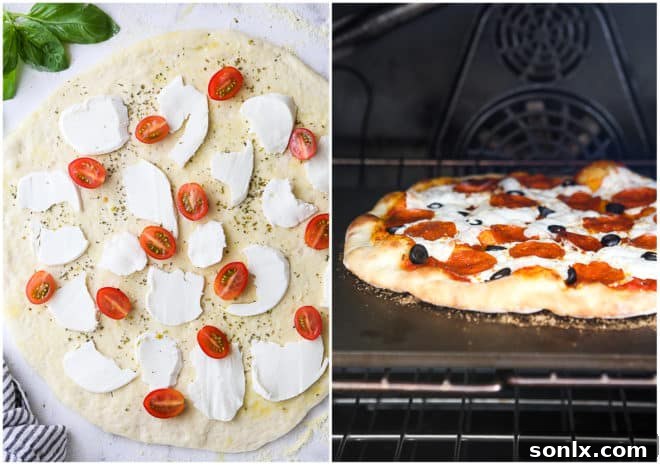
Mastering the Art of Baking Pizza in Your Home Oven
After countless experiments and years dedicated to perfecting homemade pizza in a standard kitchen oven, I’ve distilled the process into a few essential, game-changing recommendations that will help you achieve a truly professional-quality crust every time:
- Strategic Oven Rack Placement: Position your top oven rack approximately 6 inches from the very top heating element of your oven. This strategic placement ensures your pizza is closer to the intense heat source, which is vital for achieving rapid cooking, excellent oven spring, and that coveted golden-brown, slightly charred crust that’s characteristic of authentic pizzeria pies.
- High-Temperature Baking is Key: To mimic the extreme heat of a commercial pizza oven, I consistently bake my pizzas at the highest possible temperature your oven can reach, typically 500°F (260°C). This high temperature is crucial. It causes the trapped gases within the dough to expand incredibly quickly, resulting in a remarkably light, airy, and fluffy crust with a crisp exterior. Don’t be afraid to crank up the heat!
- Extended Preheat Time for Maximum Heat Retention: Beyond simply reaching the set temperature, an extended preheat is absolutely essential. I recommend preheating your oven for at least 30 minutes, and ideally 45-60 minutes, after it signals it has reached 500°F. This prolonged preheating ensures that not only the air inside the oven but also the oven walls and your pizza stone or steel are thoroughly saturated with heat, creating a more consistent and powerful baking environment.
- Invest in a Pizza Stone or Pizza Steel: This is arguably the most impactful tip for home pizza making. When your pizza is placed directly onto a preheated pizza stone or a pizza steel, the dough immediately begins cooking from the bottom up. This direct, intense heat transfer is precisely what happens in a traditional brick pizza oven, resulting in a crispier bottom crust and preventing sogginess. Your pizza will cook significantly faster, often in just about 8 minutes, yielding a crust that is both light and fluffy on the inside, and perfectly golden and crisp on the outside. Remember to preheat your stone or steel inside the oven for the entire duration of your preheat time to ensure it’s scorching hot.
- The Broiler Finish for Extra Browning: If you desire even more browning and a slight char on your cheese and crust, consider utilizing your oven’s broiler function. For the final minute or two of cooking, carefully switch the oven to broiler mode. Keep a very close eye on it, as broilers can brown very quickly, ensuring you don’t burn your beautiful pizza!
Advanced Tips & Expert Advice for Your Homemade Pizza Journey
Beyond the core steps, these insights will help you fine-tune your pizza-making process and troubleshoot common challenges, ensuring every pizza you make is a masterpiece:
- Convenient Dough Storage: One of the fantastic advantages of this no-knead pizza dough is its excellent make-ahead potential. After its initial rise, the dough can be stored in the refrigerator, tightly covered, for up to a week. This flexibility is perfect for meal planning, allowing you to prepare the dough well in advance or save half for a spontaneous pizza night later in the week. Always remember to let chilled dough come to room temperature for about 30-60 minutes before attempting to roll it out; cold dough will be stiff and difficult to work with.
- Choosing Your Baking Surface: Stone vs. Steel: For years, I relied on a reliable ceramic pizza stone, which consistently produced great pizza. It’s a fantastic starting point for anyone serious about elevating their crust. However, I recently upgraded to a pizza steel, and the difference is truly astonishing. A pizza steel offers even superior heat conductivity, resulting in an incredibly crispy and perfectly cooked crust, even better than a stone. While a steel is generally more expensive and significantly heavier (making it a bit challenging to move around in the oven), both are excellent investments for the serious home pizzaiolo. The links provided are to the exact products I personally own and recommend.
- Sheet Pan as an Alternative: If you’re not quite ready to invest in a pizza stone or steel, don’t let that deter you! You can still make delicious pizza using an inverted sturdy sheet pan. Simply place the sheet pan in the oven during the entire preheating phase, just as you would with a stone or steel, to ensure it gets piping hot. While it won’t replicate the exact results of a stone or steel, it will still yield a vastly superior crust compared to baking on a cold tray. Alternatively, consider making my popular sheet pan pizza recipe, designed specifically for this method.
- Effortless Pizza Transfer: Transferring a fully assembled pizza from your countertop to a blazing hot oven can be a nerve-wracking moment. To ensure a smooth transition, always start with a generously floured countertop. Add your toppings just before baking to minimize the time the dough sits weighted down on the surface, which can cause it to stick. For an extra layer of non-stick protection, a light sprinkling of cornmeal in addition to flour creates a fantastic barrier between the dough and your counter or pizza peel.
- The Indispensable Pizza Peel: A pizza peel is an invaluable tool for safely and easily transferring your prepped pizza into the hot oven. While a wooden pizza peel is a classic choice, I personally find a metal pizza peel to be more efficient. Its thinner edge slides more smoothly under the pizza, reducing the risk of tearing or sticking.
- Parchment Paper for Beginners: If you don’t own a pizza peel, or if you’re particularly apprehensive about pizzas sticking to the counter, an excellent starting strategy is to assemble and bake your pizza directly on a sheet of parchment paper. While the crust might not achieve the same level of crispness or golden-brown finish as direct contact with a hot stone/steel, it completely eliminates sticking worries, making it a stress-free entry point into homemade pizza.
- Oven Temperature Flexibility: If your home oven doesn’t reach the ideal 500°F (260°C), simply use its highest possible setting. The most important thing is to get your oven and baking surface as hot as they can possibly be.
- Summer Grilling Alternative: During the warmer months, to avoid heating up the house with the oven, we frequently opt to make our pizza on the grill. This method imparts a unique smoky flavor and yields a fantastic crispy crust. For a comprehensive guide on this technique, be sure to see my complete guide on How to Grill Pizza.
Essential Pizza Tools & Accessories
Equip yourself for effortless pizza making with these recommended tools:
These are general links, replace with actual product links if you have them:
- Pizza Stone or Steel for crispy crusts.
- Pizza Peel for easy transfer.
- Dough Whisk for simple mixing.
- Rolling Pin for shaping the dough.
- Large Mixing Bowl for dough preparation.
- Measuring Cups and Spoons for accurate ingredient measurement.

Effortless No-Knead Pizza Dough
Pin Recipe
Leave a Review
Ingredients
- 1 ¼ cup (270 grams) warm water
- 2 ¼ teaspoons (7 grams) Red Star Quick Rise Instant Yeast
- 2 teaspoons (10 grams) salt
- 1 tablespoons (20 grams) honey
- 2 tablespoons (17 grams) olive oil
- 3 ¼ cup (390 grams) all-purpose flour
- Additional flour or cornmeal , for dusting
- Pizza toppings , as desired
Instructions
-
Add warm water, instant yeast, salt, honey, olive oil, and all-purpose flour to a large bowl. Mix thoroughly with a spoon or dough whisk until a thick, shaggy dough forms. Do not overmix.
-
Cover the bowl and let the dough rise at room temperature for 1-3 hours. A 2-hour rise is ideal for balanced flavor and texture.
-
Gently divide the risen dough in half. With lightly floured hands, gently shape each half into a loose ball without kneading.
-
On a generously floured countertop, roll out each dough ball into a round, approximately 12 inches wide for a standard crust, or 14 inches for a thinner crust. If the dough resists, let it rest for 5 minutes before trying again.
-
Add your desired toppings to the rolled-out dough. Bake in a preheated 500°F (260°C) oven, preferably on a pizza stone or steel, for about 8 minutes, or until the crust is golden brown and the cheese is bubbly and melted.
-
Carefully remove the pizza from the oven, slice, and serve immediately for the best experience.
Video
Notes
Helpful Notes
- This recipe is perfectly scaled to make two delicious 14-inch pizzas.
- For convenient meal prep, this no-knead pizza dough can be made ahead of time. After its initial rise, store the dough, tightly covered, in the refrigerator for up to one week. Remember to let the chilled dough return to room temperature before rolling it out for baking.
- Please note that the nutritional information provided is for the pizza crust only and does not include toppings.
Disclosure: This recipe was developed in partnership with Red Star Yeast. All opinions expressed are genuinely my own. Thank you for supporting partnerships with brands I truly believe in and regularly use.
Be sure to visit Red Star Yeast on their official website, and follow them across their social media channels for more baking inspiration and tips: Instagram, Twitter, Facebook, Pinterest, and YouTube.