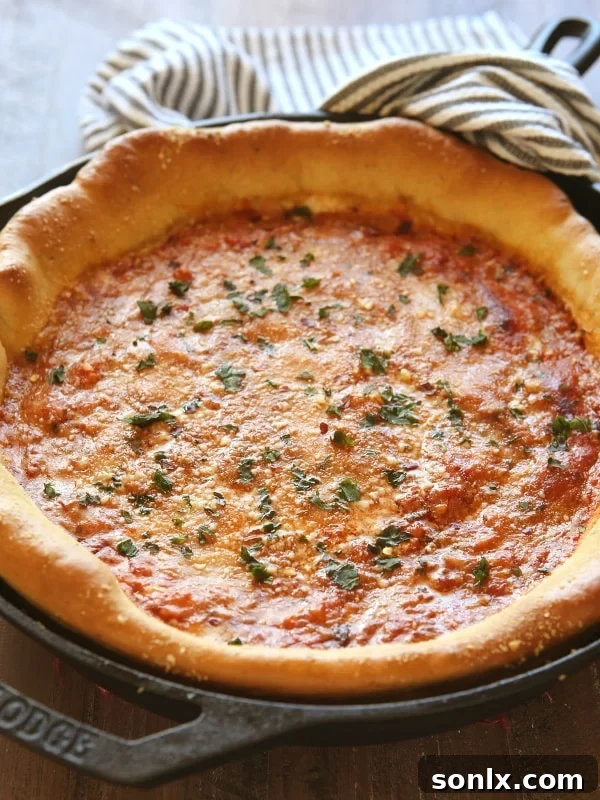
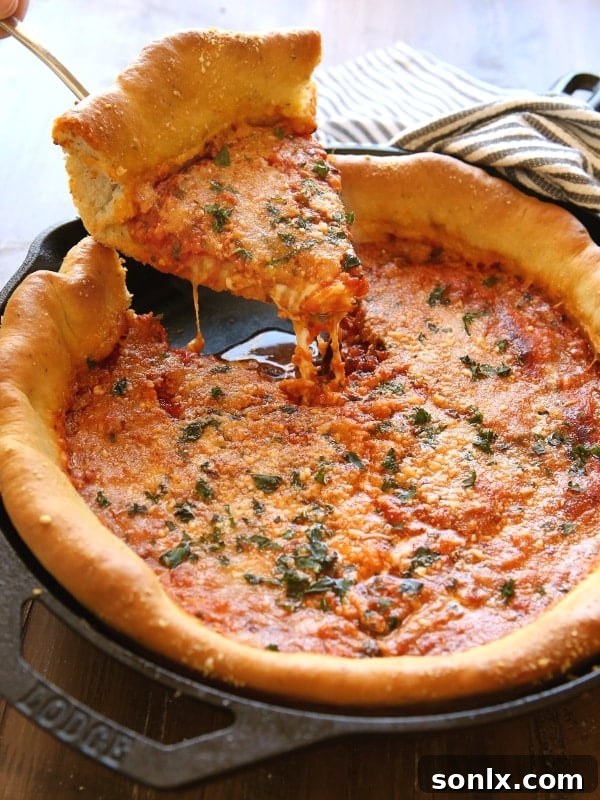
Indulge in the ultimate comfort food with this magnificent deep dish skillet pizza. Imagine thick, golden-brown slices boasting a perfectly crisp crust, generously filled with a luscious blend of melted mozzarella, savory pepperoni, and a rich, vibrant marinara sauce, all baked to perfection in a trusty cast iron skillet. This isn’t just pizza; it’s an experience – a hearty, satisfying meal that brings joy with every cheesy, saucy bite.
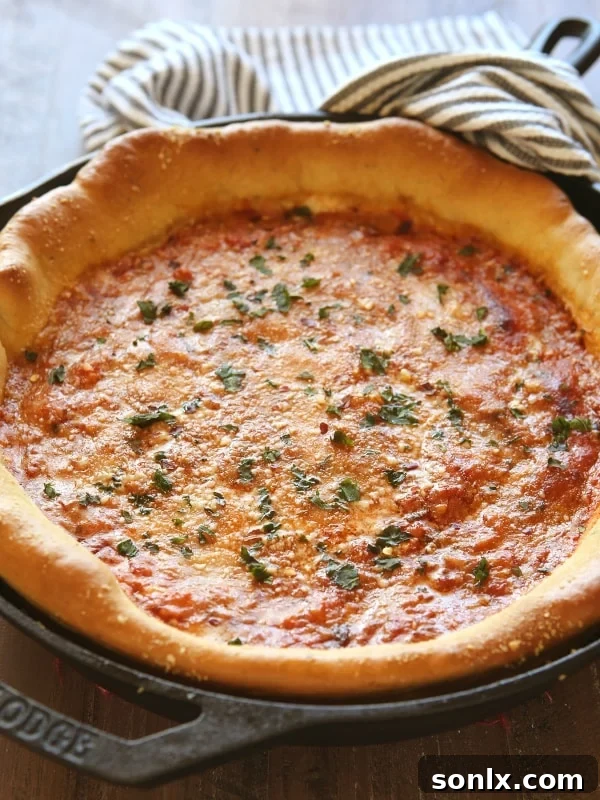
My love affair with pizza runs deep. Honestly, who can resist its charm? I confess, I could probably enjoy it for breakfast, lunch, and dinner, and that’s only a slight exaggeration. Pizza night is a sacred tradition in our household, a weekly ritual we eagerly anticipate. Yet, despite my profound adoration for all things pizza, I had never before ventured into the glorious realm of deep dish. This recipe marks my inaugural journey, and oh, what a revelation it has been! I’ve truly been missing out, because this deep dish skillet pizza was absolutely divine.
The Allure of Skillet Deep Dish Pizza
Creating this deep dish marvel in a cast iron skillet is surprisingly no more complicated than preparing a traditional homemade pizza. It still boils down to a simple, delicious homemade crust and your favorite toppings. However, the magic truly unfolds in the way it’s all brought together. The cast iron skillet is the secret weapon here, providing an unparalleled crispy crust and even heat distribution that transforms a simple pizza into a spectacular deep dish sensation. The hefty pan retains heat beautifully, ensuring your crust cooks through perfectly while the generous layers of cheese and sauce melt into gooey submission.
This recipe starts with a robust and flavorful homemade pizza dough. While you can certainly use a store-bought dough for convenience, crafting your own ensures the freshest taste and a truly satisfying texture. The dough is then pressed into a large cast iron skillet – a versatile piece of cookware that delivers exceptional results. If you don’t have a cast iron skillet, any oven-proof skillet or even a springform cake pan could work in a pinch, though the cast iron adds a unique depth of flavor and crispiness that is hard to replicate.
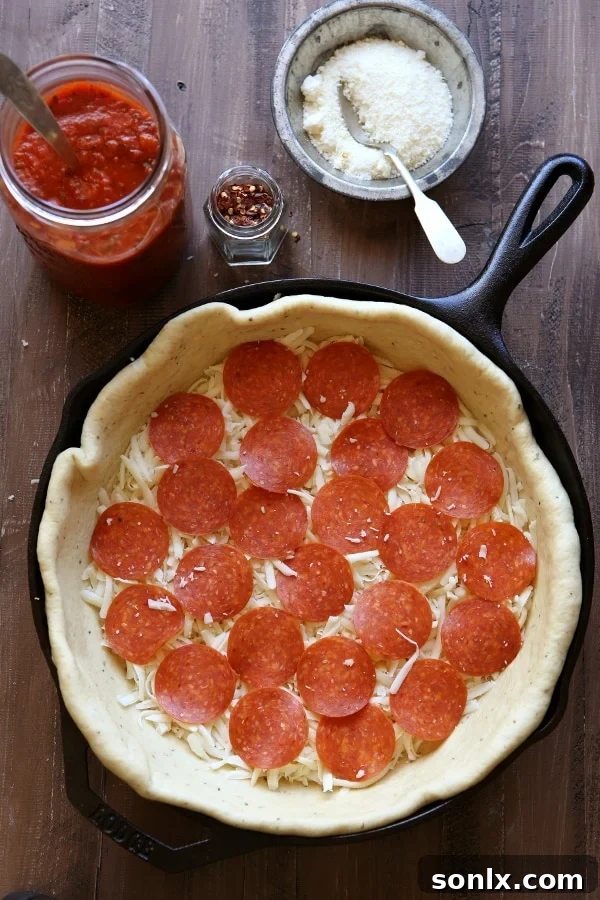
What truly sets deep dish pizza apart, especially this skillet version, is the ingenious “reverse layering” technique. Unlike traditional pizzas where sauce goes first, here we start by laying down a generous bed of cheese directly onto the crust. This creates a protective barrier, preventing the crust from becoming soggy and ensuring that every bite is bursting with rich, melted cheese. After the cheese, you add your chosen toppings, allowing them to nestle perfectly within the layers. Finally, the vibrant marinara or pizza sauce is spread over the toppings, ensuring they cook beautifully beneath a flavorful blanket of sauce.
The result is a thick, luxuriously gooey, and wonderfully messy pizza that practically demands to be eaten with a fork. Forget dainty slices; this is a pizza designed for serious indulgence. Each mouthful is a symphony of flavors and textures – the crunchy crust, the stretchy cheese, the savory toppings, and the tangy sauce. I promise you, this is a deep dish pizza experience you will savor and undoubtedly want to recreate time and time again.

★
★
★
★
Deep Dish Skillet Pizza
8
servings
30 minutes
30 minutes
1 hour
2 hours
Pin Recipe
Leave a Review
Ingredients
For the pizza dough:
-
3 ½-4
cups
all-purpose flour
(420-480 grams) -
2 ¼
teaspoon
active-dry yeast
(1 envelope) -
1
teaspoon
coarse salt -
1
teaspoon
dried herbs
, optional -
1
teaspoon
garlic powder
, optional -
1
cup
water
(250 ml) -
⅓
cup
olive oil
(80 ml)
To assemble the pizza:
-
8
oz
shredded mozzarella cheese
(227 grams) -
½
cup
sliced pepperoni
, or other toppings (35 grams) -
2
cups
marinara sauce
(490 grams) -
½
cup
grated Parmesan cheese
(50 grams) -
Olive oil
, for brushing -
Fresh basil
, optional -
Red pepper flakes
, optional
Instructions
To make the pizza dough:
-
In the bowl of a stand mixer fitted with a dough hook (or in a large bowl if mixing and kneading by hand), combine 2 cups of the flour, yeast, salt, herbs, and garlic.
-
Heat the water and olive oil in a small saucepan until steaming. Remove from heat and let sit for 5 minutes, or until temperature is between 120-130°F (49-54°C). This temperature is crucial for activating the yeast without killing it.
-
Slowly add the warm water and oil mixture to the dry ingredients, mixing on low speed. Use a spatula to scrape down the sides of the bowl as needed to ensure all ingredients are well combined.
-
With the mixer on medium-low, gradually add the remaining flour a ¼ cup at a time, allowing each addition to fully incorporate before adding more. Continue adding flour until the dough pulls away from the sides of the bowl and is slightly sticky to the touch, but doesn’t leave residue on your hands. Avoid adding too much flour, as this can result in a dry, tough crust.
-
Knead the dough with a dough hook or by hand until it becomes smooth, elastic, and springy, typically 5-8 minutes. This develops the gluten, giving your crust its characteristic chewiness.
-
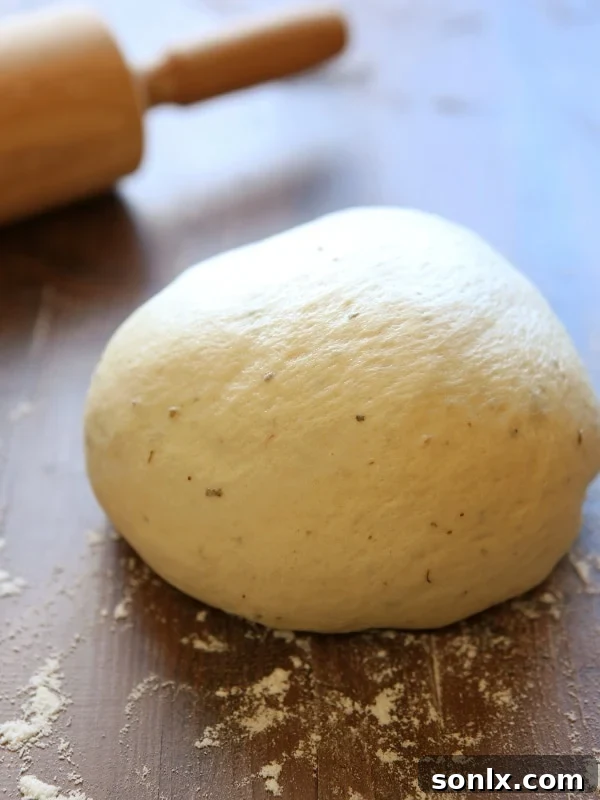
Shape the dough into a smooth ball and place it in a lightly greased bowl, turning once to coat. Cover the bowl tightly with plastic wrap or a damp kitchen towel. Place it in a warm, draft-free spot and let it rise until it has doubled in size, which usually takes about 1 hour. A warm oven (turned off) or a sunny spot on your counter are great places for rising.
To assemble the pizza:
-
Preheat your oven to 450°F (232°C). This high temperature is essential for achieving a perfectly crispy crust and thoroughly cooked deep dish pizza.
-
Once the dough has risen, gently push down on the center to release the gases. Transfer it to a lightly floured clean surface and knead it by hand a few times to reshape. Let the dough rest for a few minutes; this relaxes the gluten, making it easier to roll out. Then, roll out the dough into a large circle, big enough to line the bottom and sides of a large 11-inch (28 cm) cast iron skillet. Carefully transfer the rolled dough into the prepared skillet, pressing it firmly against the bottom and up the sides.
-
Begin the “reverse layering.” First, cover the bottom of the crust generously with the shredded mozzarella cheese. This foundational layer creates that signature gooeyness. Next, evenly distribute the sliced pepperoni or your other desired toppings over the cheese. Finally, spread the marinara or pizza sauce evenly on top of the toppings, making sure to cover them completely. Finish by sprinkling grated Parmesan cheese over the sauce for an extra layer of flavor.
-
Brush any exposed crust around the edges with a light coating of olive oil. This helps the crust achieve a beautiful golden-brown color and a wonderfully crispy texture. Bake the pizza in the preheated oven for 35-40 minutes, or until the crust is deeply golden brown, the cheese is bubbly and caramelized, and the sauce is hot.
-
Once baked, carefully remove the skillet from the oven. It’s crucial to let the deep dish pizza stand for about 15 minutes before slicing and serving. This resting period allows the cheese and sauce to set slightly, making for cleaner slices and preventing all the delicious fillings from oozing out immediately. Then, slice into generous wedges and serve hot. Garnish with fresh basil or a sprinkle of red pepper flakes, if desired, to elevate the flavors.
Notes
Tips for the Perfect Deep Dish Skillet Pizza
- Topping Variations: Feel free to customize your deep dish pizza with whatever toppings you love! Classic additions like cooked sausage, sliced peppers, black olives, onions, or sautéed mushrooms work wonderfully. Pre-cook any meats or dense vegetables to ensure they are tender and flavorful by the time the pizza finishes baking.
- Cheese Choices: While mozzarella is traditional, experiment with other cheeses. A blend of provolone, fontina, or even a touch of smoked gouda can add incredible depth and flavor to your deep dish.
- Marinara Sauce: A high-quality marinara sauce is key. You can use your favorite jarred sauce, or try making a simple homemade marinara for an extra fresh taste.
- Preventing a Soggy Bottom: The reverse layering method helps immensely. For an even crispier bottom crust, some cooks like to preheat their cast iron skillet in the oven before adding the dough, but be extremely careful as the pan will be scorching hot.
- Serving Suggestion: This rich pizza pairs wonderfully with a light side salad dressed with a vinaigrette to cut through the richness.
- Leftovers: Leftover deep dish pizza reheats beautifully in the oven. Place slices on a baking sheet and heat at 300°F (150°C) until warmed through and the cheese is re-melted.
Calories:
453
kcal
,
Carbohydrates:
48
g
,
Protein:
18
g
,
Fat:
21
g
,
Saturated Fat:
7
g
,
Cholesterol:
35
mg
,
Sodium:
1014
mg
,
Potassium:
347
mg
,
Fiber:
3
g
,
Sugar:
3
g
,
Vitamin A:
511
IU
,
Vitamin C:
4
mg
,
Calcium:
233
mg
,
Iron:
4
mg
American
Main Course
Annalise Sandberg
Have you tried this recipe?
I’d love to hear about it! Leave a rating and review below, or take a photo and tag it on Instagram @completelydelicious with #completelydelicious.
Suggested tools for this recipe:
Lodge Cast Iron Skillet,
KitchenAid Stand Mixer,
OXO Good Grips Silicone Spatula,
Norpro Grip-EZ Pastry Slicer
Why Cast Iron Skillet Pizza is a Game Changer
Using a cast iron skillet for your deep dish pizza is more than just a convenient choice; it’s a strategic culinary decision that elevates the entire dish. Cast iron’s exceptional heat retention and even heat distribution are unmatched. This means your pizza crust will cook thoroughly and develop a beautifully crispy, golden-brown exterior, creating a delightful contrast with the soft, chewy interior. The skillet’s high sides are also perfect for containing all those generous layers of cheese, sauce, and toppings that define a true deep dish experience, preventing overflow and ensuring a thick, satisfying slice every time.
Furthermore, cooking in cast iron imparts a unique flavor profile to your pizza. Over time, properly seasoned cast iron develops a natural non-stick surface and imbues food with a subtle richness. This contributes to the rustic, hearty taste that makes deep dish skillet pizza so incredibly comforting. The robust nature of the skillet also means you can transition it directly from stovetop (if you choose to pre-sear the crust) to oven, simplifying the cooking process and potentially adding another layer of crispiness to the bottom.
Mastering the Homemade Pizza Dough
The foundation of any great pizza is its dough, and this deep dish recipe is no exception. While store-bought options are available, investing a little time in making your own dough truly makes a difference. The process of kneading, watching it rise, and then transforming it into a perfect crust is immensely rewarding. The recipe calls for active-dry yeast, which requires warm water to activate. The temperature range of 120-130°F (49-54°C) is crucial; too cold, and the yeast won’t activate; too hot, and it will die, resulting in a dense, flat crust. Don’t be afraid to use a kitchen thermometer to ensure accuracy.
When adding the flour, do so gradually. Different flours and humidity levels can affect how much liquid the dough absorbs. The goal is a dough that is sticky but manageable – it should clear the sides of the mixing bowl but still feel tacky. Over-flouring can lead to a dry, tough crust, which is the antithesis of a perfect pizza. Kneading develops the gluten, creating the elasticity and chewiness characteristic of a good pizza crust. Whether by hand or with a stand mixer, aim for a smooth, pliable dough that springs back slightly when poked.
The rising period allows the yeast to work its magic, fermenting the sugars in the flour and producing carbon dioxide, which creates those airy pockets in the dough. A warm, draft-free environment is ideal for rising. Once doubled, the dough is ready to be gently deflated and shaped. This dough is incredibly versatile and can be used for other pizza creations if you find yourself with extra.
The Art of Deep Dish Assembly
The assembly of a deep dish pizza is where its unique character truly shines. The reverse layering method is not merely a quirk; it serves a vital purpose. By placing the cheese directly on the dough, you create a barrier that protects the crust from becoming saturated and soggy by the sauce. This ensures a crisp base even with the thick layers of toppings and sauce. The mozzarella, known for its incredible melt and stretch, forms the perfect gooey foundation.
Next, your chosen toppings are layered over the cheese. This allows them to cook thoroughly and meld with the cheese and sauce as the pizza bakes. For pepperoni, its fat renders and crisps slightly, infusing the surrounding cheese with its savory flavor. If using other toppings like sausage or vegetables, ensure they are pre-cooked or chopped finely enough to cook through within the baking time. Finally, the marinara sauce is spread generously over the toppings. This creates a vibrant, flavorful blanket that steams the toppings to perfection and ensures the top of the pizza doesn’t dry out. A sprinkle of Parmesan cheese adds a salty, umami finish.
Baking to Perfection and Serving
The high oven temperature of 450°F (232°C) is crucial for this deep dish. It ensures that the crust gets intensely hot quickly, leading to that coveted crispness, while the interior cooks through evenly. Brushing the exposed crust with olive oil not only aids in browning but also adds flavor and a beautiful sheen. Keep an eye on your pizza during the last 10-15 minutes of baking. Oven temperatures can vary, and you want a deep golden-brown crust and a bubbly, slightly caramelized cheese and sauce top.
One of the most important steps in serving deep dish pizza is patience. Allowing the pizza to rest for 15 minutes after it comes out of the oven is non-negotiable. This brief cooling period allows the molten cheese and hot sauce to set, preventing a catastrophic cascade of ingredients when you slice into it. The internal temperature will also stabilize, making for a more enjoyable eating experience. Serve generous wedges with a fork, embracing the delightful messiness that is inherent to deep dish pizza. A garnish of fresh basil adds a fragrant, herbaceous note, while red pepper flakes provide a gentle kick for those who enjoy a bit of heat.
This Deep Dish Skillet Pizza is more than just a recipe; it’s an invitation to create a hearty, memorable meal right in your own kitchen. Whether you’re a long-time deep dish enthusiast or a curious newcomer, this skillet version offers all the satisfaction with a simplified, enjoyable process. Get ready to impress your taste buds and your loved ones with this truly delicious and comforting homemade pizza!