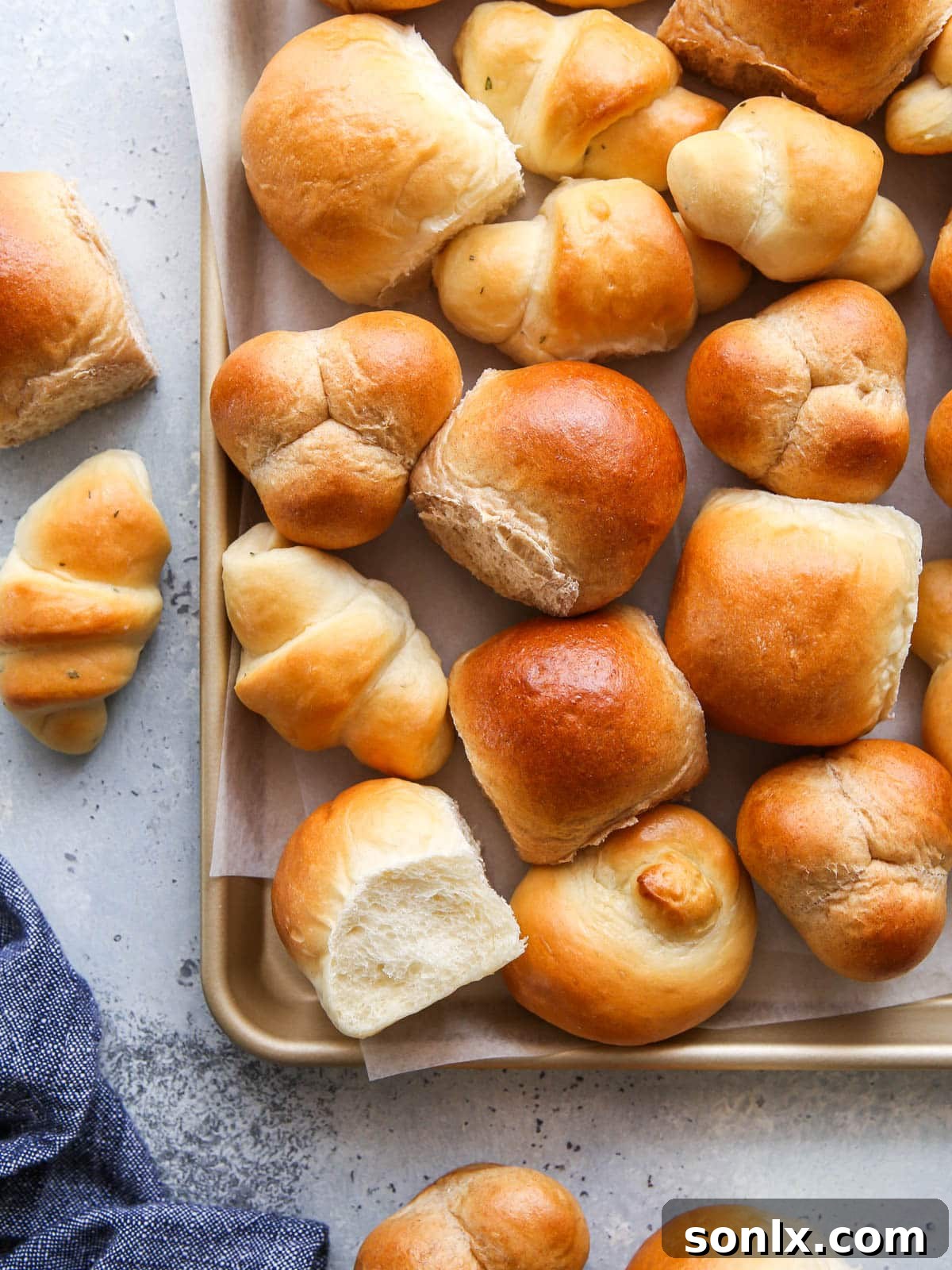
Welcome to your definitive guide to baking the most exquisite, melt-in-your-mouth homemade dinner rolls! Imagine a single, foundational recipe that empowers you to create an endless array of soft, buttery, and utterly irresistible rolls, perfect for any meal or occasion. This isn’t just a recipe; it’s a culinary journey designed to transform even the most hesitant baker into a confident master of the dinner roll.
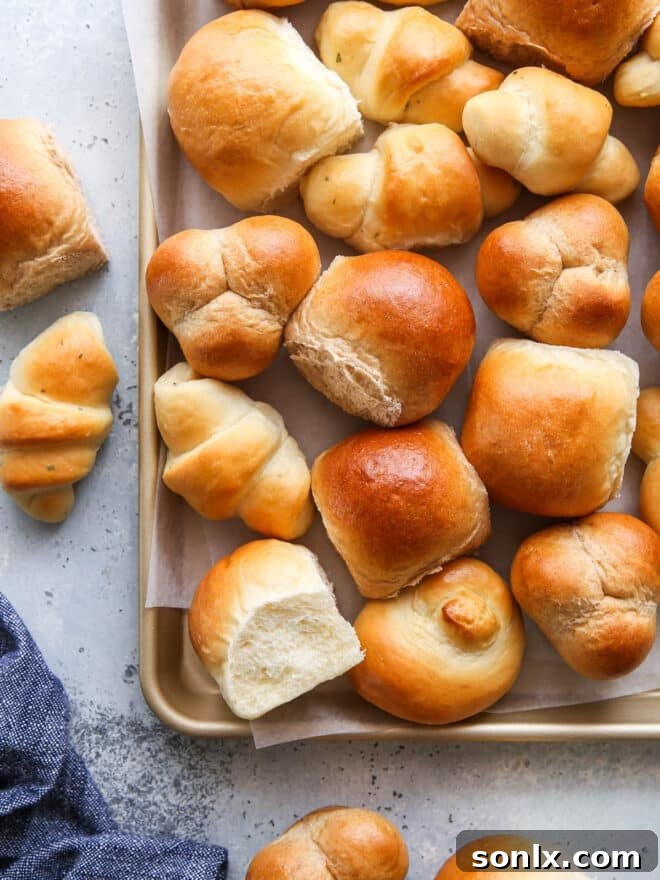
Baking homemade rolls might seem daunting, but this tutorial strips away the complexity, revealing a process that’s far easier and more rewarding than you’d expect. With just seven basic ingredients and a comprehensive, step-by-step approach, you’ll gain all the knowledge and tips needed to bake a perfect batch every single time. We’ll demystify the art of yeast baking, ensuring your rolls rise beautifully, achieve that desirable golden crust, and boast an incredibly tender crumb.
What makes this recipe truly stand out is its incredible versatility. Beyond the classic soft white dinner roll, you’ll discover how to effortlessly transform the dough into delightful variations. Crave the nutty warmth of honey-whole wheat? Or perhaps the elegant twist of crescent rolls, the charming appeal of cloverleafs, or even savory garlic and herb knots? This guide covers it all, providing a foundational recipe that adapts to your preferences, allowing you to customize flavors and shapes to suit any palate or special event. So, tie on your apron, gather your ingredients, and let’s embark on this delicious baking adventure together!
Table of Contents
- One Base Recipe, Endless Options: Your Gateway to Versatility
- The Essential Ingredients (and Why They Matter)
- Mastering the Dough: A Step-by-Step Guide
- Creative Shaping for Every Occasion
- A Symphony of Flavors: Exciting Dinner Roll Variations
- Planning Ahead: Make-Ahead & Freezing Tips
- Baking & Serving Your Perfect Rolls
- Frequently Asked Questions About Dinner Rolls
- Get the Full Recipe
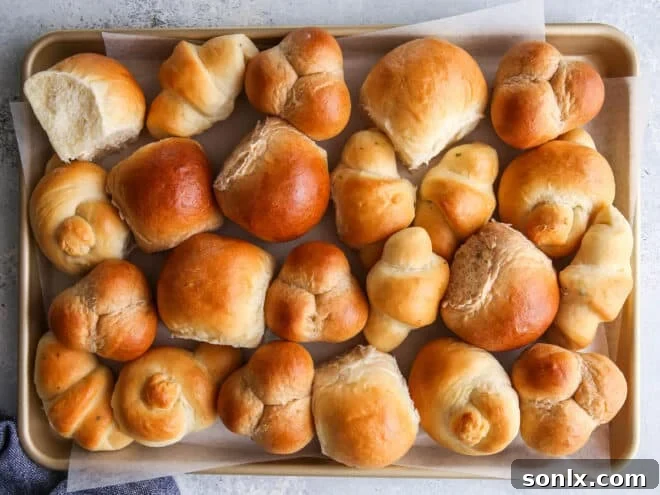
One Base Recipe, Endless Options: Your Gateway to Versatility
The true magic of this dinner roll recipe lies in its remarkable adaptability. It’s more than just a single set of instructions; it’s a foundational blueprint that opens up a world of possibilities for customizing your rolls. Once you master this incredibly forgiving base dough, you’ll realize the options are truly limitless, allowing you to tailor your rolls to any meal, mood, or holiday celebration.
We’ll begin by perfecting the classic soft white dinner roll, guiding you through each crucial step to ensure a light, fluffy, and tender result. From there, we’ll dive into the exciting realm of customization. You’ll learn how to effortlessly create diverse shapes, transforming simple rounds into elegant crescents, charming cloverleafs, or rustic knots. But the fun doesn’t stop there! We’ll then explore a spectrum of delicious flavor variations, from wholesome honey wheat to aromatic garlic and herb, savory cheddar, and the bold crunch of “everything spice” rolls. This versatility means you can make a different batch every time and always impress your family and friends with your baking prowess!
The Essential Ingredients (and Why They Matter)
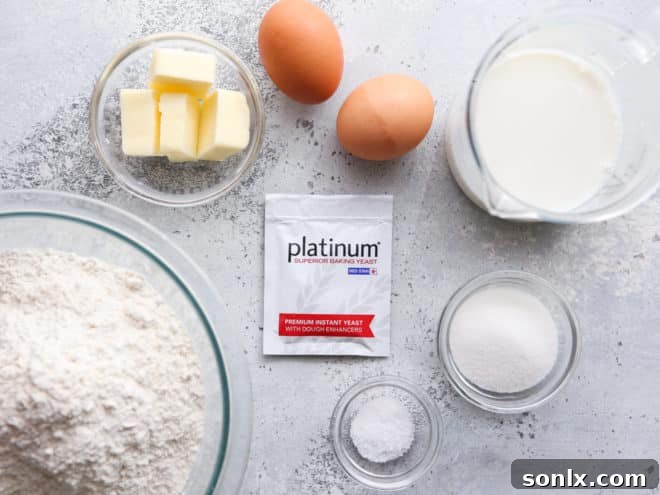
Creating truly exceptional dinner rolls starts with understanding the role each ingredient plays. This recipe calls for just seven simple items, but their careful selection and combination are key to achieving that signature soft, buttery texture and rich flavor. Here’s a closer look at what you’ll need and why:
- Bread Flour: While all-purpose flour works in a pinch, bread flour is the secret to the highest rise and most desirable chewiness. Its higher protein content develops stronger gluten, leading to light, airy, and incredibly tender rolls.
- Yeast: The magic behind any great risen bread! We recommend active-dry yeast or instant yeast. Active-dry typically requires proofing, while instant yeast can often be mixed directly with dry ingredients, saving a step. Ensure your yeast is fresh for optimal rising power.
- Milk: Using milk instead of water is crucial for adding richness, tenderness, and a beautiful golden color to your rolls. The fats and sugars in milk contribute to a softer crumb and more complex flavor.
- Butter: Abundant butter is non-negotiable for truly soft, buttery rolls. It adds incredible flavor, helps keep the rolls moist, and prevents them from drying out quickly. Use unsalted butter to control the overall salt content.
- Eggs: Eggs serve multiple purposes: they add richness, provide structure, contribute to a lovely golden hue, and increase the dough’s elasticity, resulting in a more tender and flavorful crumb.
- Granulated Sugar: This isn’t just for sweetness; sugar feeds the yeast, encouraging a robust rise and contributing to the rolls’ tender texture and browning. A small amount makes a big difference.
- Salt: Essential for balancing the flavors and controlling yeast activity. Don’t skip it! Salt enhances the natural sweetness and richness of the other ingredients, making your rolls taste truly complete.
- Optional Add-ins/Substitutions: For flavor variations, you’ll incorporate additional ingredients. Keep reading for exciting ideas to customize your rolls!
Mastering the Dough: A Step-by-Step Guide
Preparing the dough is the heart of this recipe. Whether you prefer the convenience of a stand mixer or the tactile satisfaction of kneading by hand, these steps will guide you to a perfectly soft and elastic dough.
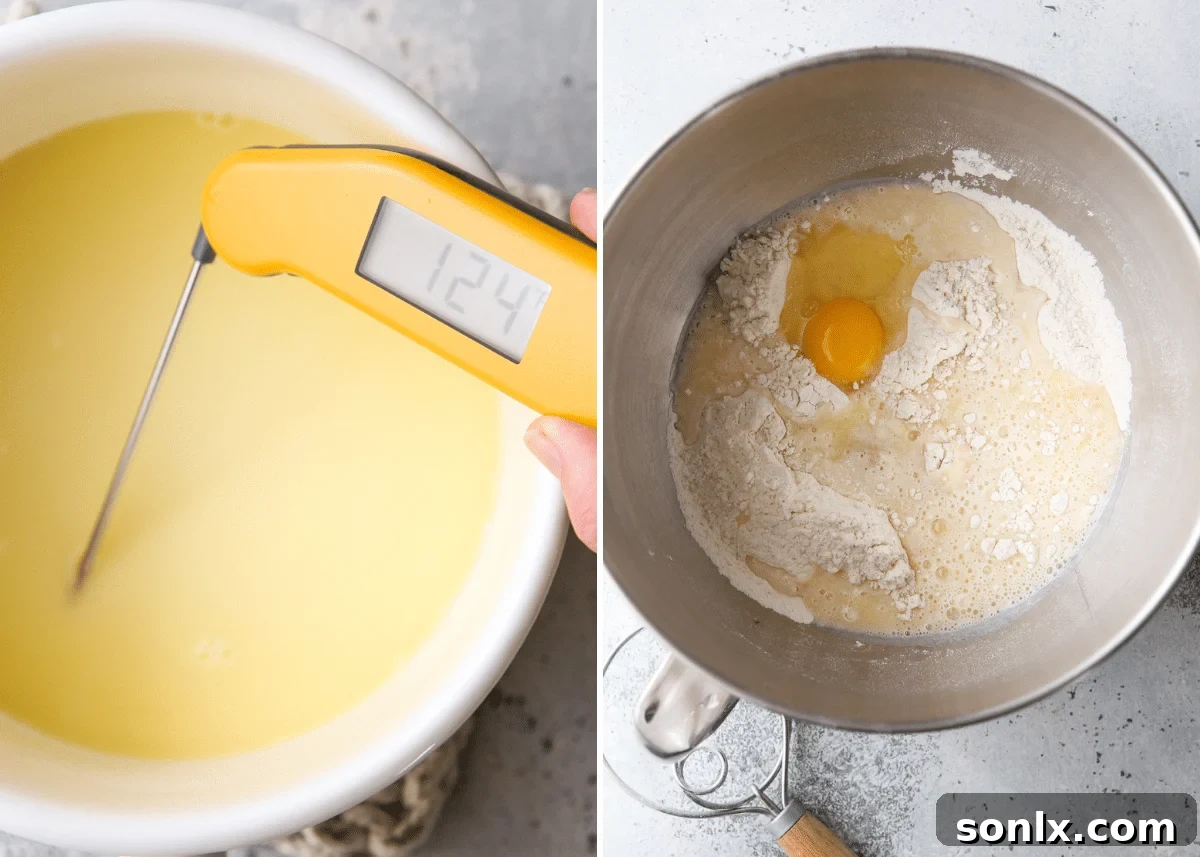
- Gently Heat Butter and Milk: In a small saucepan, melt the butter over medium-low heat. Once melted, add the milk and warm the mixture until it reaches a temperature of 120-130°F (49-54°C). This warmth activates the yeast, but be extremely careful not to overheat it (above 140°F or 60°C), as excessively hot liquid will kill the yeast, preventing your dough from rising. A digital thermometer is your best friend here, or test it by touch – it should feel comfortably warm, not hot.

- Create a Wet Dough Base: In the bowl of your stand mixer (fitted with a dough hook) or a large mixing bowl, combine 2½ cups of the bread flour, active-dry or instant yeast, granulated sugar, and salt. Whisk them together thoroughly. Next, pour in the warm milk mixture and crack in the eggs. Mix on low speed with the dough hook, or use a sturdy dough whisk or spoon, until all the ingredients are just combined. At this stage, the dough will be quite wet and sticky, which is exactly what we want.
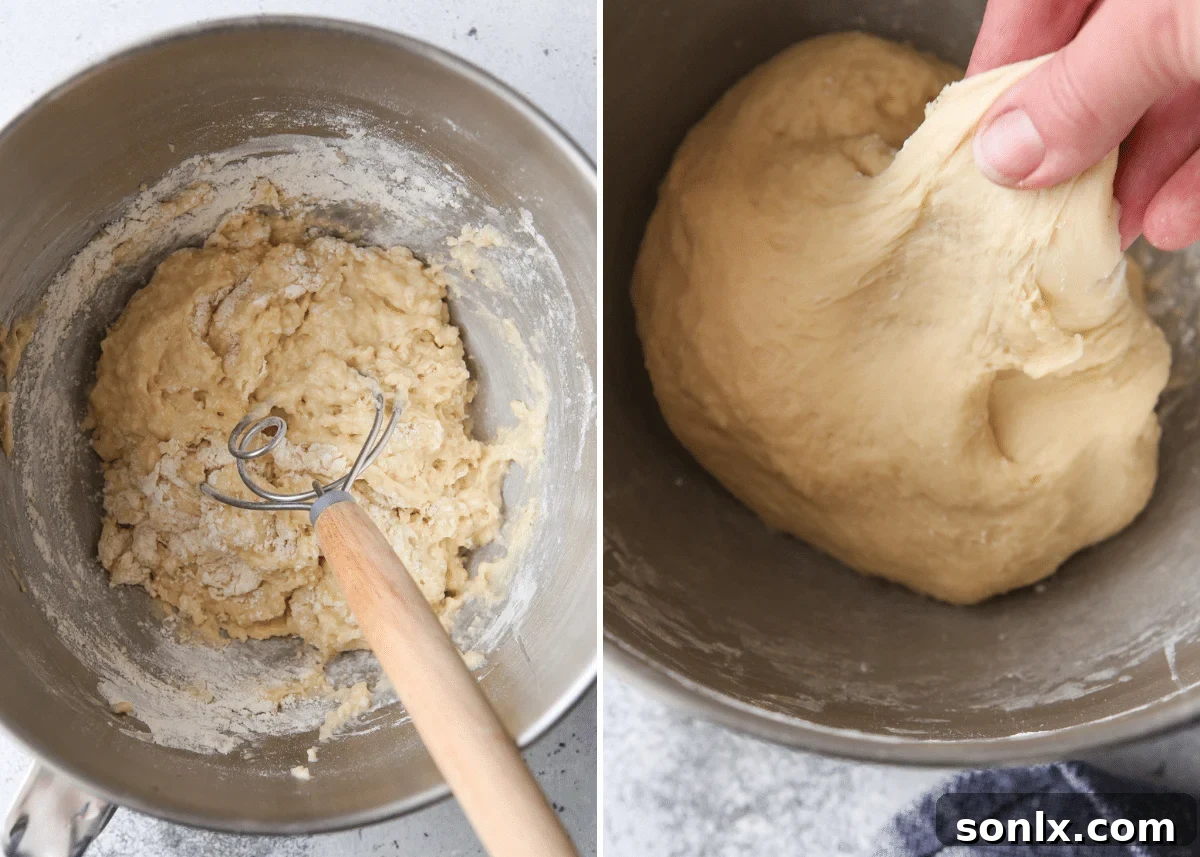
- Gradually Add Remaining Flour During Kneading: Continue mixing (or kneading by hand), adding the remaining bread flour gradually, about 2 tablespoons at a time. Allow each addition of flour to be fully incorporated into the dough before adding more. Stop adding flour when the dough mostly pulls away from the sides of the bowl and feels tacky, but not overly sticky, to the touch. The exact amount of flour needed can vary based on humidity and flour type, so trust your instincts and the dough’s texture. Resist the urge to add too much flour, as this can result in dry, tough rolls.
- Knead Until Smooth and Elastic: Continue to knead the dough (for about 5-7 minutes in a stand mixer on medium-low speed, or 8-10 minutes by hand) until it becomes beautifully smooth, elastic, and soft. To test if it’s properly kneaded, perform the “windowpane test”: pinch off a small piece of dough and gently stretch it. If you can stretch it thin enough to see light through it without tearing, your dough is ready.
- First Rise: Proofing to Perfection: Lightly grease a large bowl with a little oil or non-stick spray. Place the kneaded dough in the bowl, turning it once to coat the entire surface. Cover the bowl tightly with plastic wrap or a clean kitchen towel and place it in a warm, draft-free spot. Allow the dough to rise until it has roughly doubled in size. This typically takes about 1 hour for active-dry yeast, or slightly less (around 30-40 minutes) if you’re using instant yeast. A warm environment is key for a successful rise.
Baking Tip: How to Help Your Dough Rise Faster
- Oven Method (Warm, then Off): Heat your oven to its lowest setting (usually around 170°F/75°C) for just 2-3 minutes, then turn it completely off. Place the covered dough on the center rack and close the oven door. The residual warmth will create a perfect proofing chamber.
- Microwave Method: Heat 1 cup of water in your microwave on high for 2 minutes. Remove the hot water (it creates a steamy, warm environment). Immediately place your covered dough into the microwave and close the door. Do NOT turn the microwave on with the dough inside.
- Other Warm Spots: Get creative! Dough can rise successfully on top of a running dryer, near a sunny window, or even on a chair positioned over a heater vent. Just ensure the spot isn’t *too* hot, which can kill the yeast or over-proof the dough too quickly.
Creative Shaping for Every Occasion
Once your dough has completed its first rise and is beautifully puffed, it’s time for the fun part: shaping! While the timeless appeal of a classic round dinner roll is undeniable, experimenting with different shapes can add a touch of elegance and variety to your bread basket. Each shape offers a unique aesthetic and can enhance the dining experience.
Pro Tip for Uniformity: For professional-looking, consistently sized rolls, a kitchen scale is invaluable. After gently punching down your risen dough to release the air, weigh the entire mass. Then, divide that total weight by the number of rolls you plan to make (e.g., 12 for this recipe). Use the scale to portion each piece of dough to the exact same weight before shaping. This ensures even baking and a beautiful presentation.
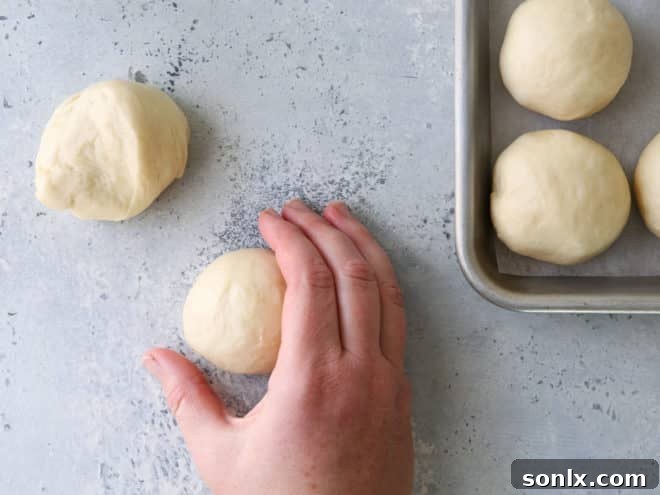
- Traditional Round Rolls: The most classic and often the easiest. Lightly flour your work surface and use your hands to cup and roll each portion of dough into a smooth, tight ball. The tension created on the surface will help them rise beautifully. Watch this quick video for a visual guide!
- Elegant Crescent Rolls: For a more refined look, divide the dough in half instead of 12 individual portions. Roll each half into a large circle, about ½ inch thick. Using a pizza cutter or sharp knife, cut each circle into 6 triangular pieces (like pizza slices). Starting from the wider end, roll each triangle tightly towards the point, gently curving the ends to form a crescent shape.
- Charming Cloverleaf Rolls: These delightful rolls are perfect for special occasions. Divide each of your 12 dough portions into three smaller, equal pieces. Roll each of these smaller pieces into tiny, smooth rounds. Place three of these mini-rounds into each cup of a greased muffin tin. As they rise and bake, they’ll merge to create a charming three-leaf clover effect.
- Rustic Knotted Rolls: For a unique and visually interesting roll, stretch each dough portion into a rope approximately 6-8 inches long. Tie the rope into a simple knot, tucking the ends underneath for a neat finish. These knots bake up beautifully, offering a slightly denser texture in the folds.
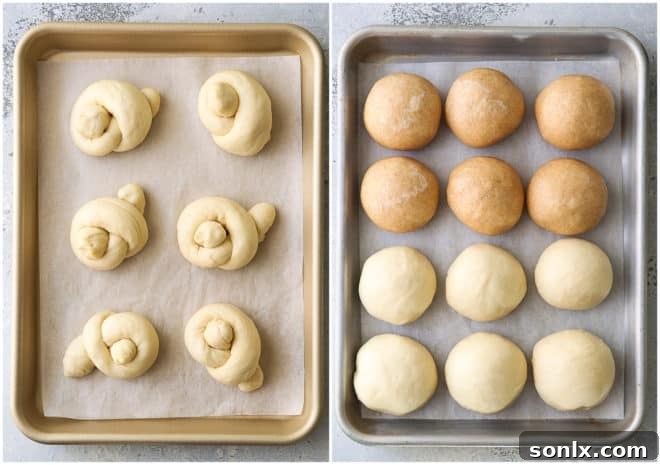
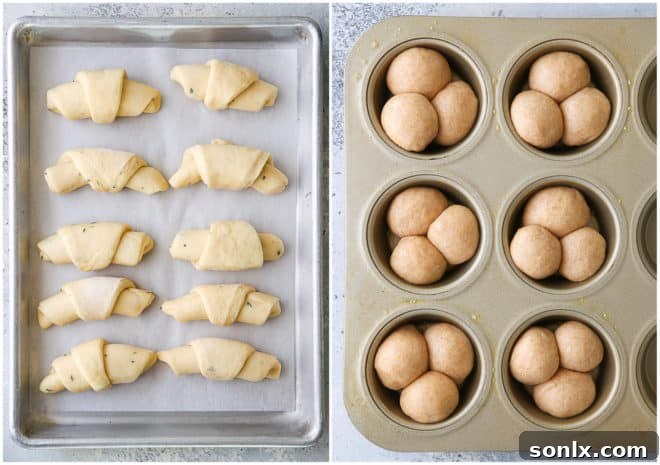
For even more detailed, step-by-step instructions and photos on various shaping techniques, refer to my comprehensive tutorial on How to Shape Dinner Rolls. You’ll find visual guides that make perfecting each shape simple and fun.
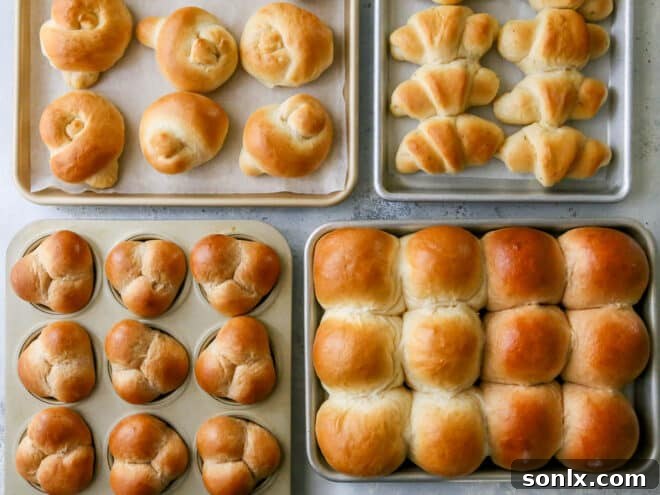
Baking & Serving Your Perfect Rolls
Once your rolls are beautifully shaped, arrange them on a baking pan lined with parchment paper, leaving a little space between each roll for expansion. Cover them loosely with plastic wrap (lightly greased with non-stick spray to prevent sticking) and allow them to undergo a second rise in a warm spot for approximately 30-45 minutes, or until they look visibly puffed and feel light. This second rise is crucial for an airy, tender crumb.
Just before baking, gently brush the tops of the risen rolls with an egg wash (typically one large egg whisked with a tablespoon of water or milk). This simple step is the secret to achieving that coveted golden-brown crust and beautiful sheen. Preheat your oven to 350°F (175°C) and bake the rolls for about 18-22 minutes, or until they are deeply golden brown on top and cooked through. If you have an instant-read thermometer, the internal temperature should reach around 190-200°F (88-93°C).
The best part? Enjoying these homemade dinner rolls, fresh from the oven! Their soft, buttery goodness makes them the perfect accompaniment to virtually any meal, any time of year. Serve them alongside hearty soups, savory roasts, comforting pasta dishes, or a simple weeknight salad. They are truly versatile and elevate any dining experience. Naturally, these exceptional rolls are an absolute must-have for special holiday gatherings like Thanksgiving, Christmas, and Easter, where they’ll undoubtedly be the star of the bread basket.
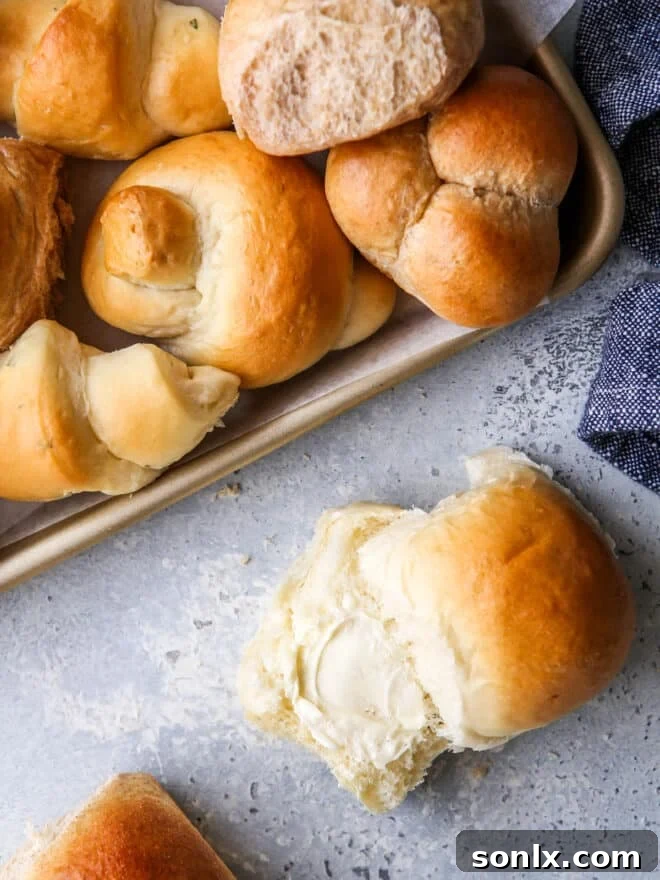
A Symphony of Flavors: Exciting Dinner Roll Variations
Once you’ve mastered the basic dough, the real fun begins with customizing the flavors. This base recipe is incredibly receptive to a wide range of delicious additions, allowing you to create rolls perfectly suited to any meal or craving. Here are some popular and incredibly tasty variations to try:
Honey Whole Wheat Rolls: For a wholesome and slightly sweeter twist, substitute 1½ cups of the bread flour with whole wheat flour. Replace the granulated sugar with ¼ cup of honey, adding it to the milk and butter mixture as it warms. This creates a denser, more nutritious roll with a subtle honey aroma that pairs wonderfully with savory dishes.
Garlic and Herb Rolls: Infuse your rolls with aromatic flavors by adding 2 cloves of finely minced garlic to the milk and butter as they warm. Once you’ve combined the wet and dry ingredients, stir in 1 tablespoon of fresh herbs (such as rosemary, thyme, or basil) or 1 teaspoon of dried herbs with the dry ingredients. These rolls are fantastic with Italian meals or roasted meats.
Cheddar Rolls: For a cheesy delight, incorporate 2 cups of shredded sharp cheddar cheese into the dough after the initial mixing of wet and dry ingredients, but before you begin adding the additional flour. The cheese melts into savory pockets, making these rolls perfect for chili, soups, or as a standalone snack.
“Everything” Spice Rolls: Bring the popular bagel flavor to your dinner rolls! Add 1 tablespoon of “everything bagel” seasoning (typically a blend of sesame seeds, poppy seeds, dried garlic, dried onion, and salt) to the dry ingredients before mixing. For an extra punch of flavor and visual appeal, sprinkle additional seasoning over the shaped rolls just before baking.
Looking for even more inspiration? Explore these other delightful roll recipes:
- Sweet Potato Rolls with Whipped Honey Butter
- Easy No-Knead Fairy Crescent Rolls
- Potato Dinner Rolls
Planning Ahead: Make-Ahead & Freezing Tips
One of the greatest advantages of this dinner roll recipe is its flexibility for making ahead, which is a lifesaver for busy schedules or holiday meal prep. You can prepare these rolls days or even weeks in advance, ensuring fresh-baked goodness with minimal effort on the day you plan to serve them.
- Overnight Cold Proof (Bulk Dough or Shaped Rolls):
- Bulk Dough: After the first rise, gently punch down the dough, then place it in a lightly oiled bowl, cover it tightly with plastic wrap, and refrigerate for up to 12 hours. The next morning, allow the dough to come to room temperature for about 30-60 minutes, then portion, shape into rolls, allow them to rise, and bake as usual.
- Shaped Rolls: Shape your rolls as desired and arrange them in your baking pan. Cover the pan tightly with plastic wrap and refrigerate for up to 12 hours. The next day, remove the pan from the fridge and let the rolls sit at room temperature for 1 to 1½ hours, or until visibly puffed and light, before baking.
- Freeze Shaped (Unbaked) Rolls for Longer Storage: This method is fantastic for preparing far in advance.
- Shape the rolls and place them on a parchment-lined baking sheet, ensuring they aren’t touching. Cover with plastic wrap and freeze for about 1 hour, or until firm.
- Once frozen solid, transfer the rolls to a heavy-duty freezer-safe ziplock bag or airtight container. They can be stored in the freezer for up to 2 months.
- When you’re ready to bake, arrange the frozen rolls in your prepared baking pan. Thaw them at room temperature for several hours (4-6 hours, depending on room temperature), allowing them to rise until doubled in size before baking as directed.
- Freeze Baked Rolls for Quick Reheating: If you prefer to have fully baked rolls ready to go, this is your method.
- Bake the rolls as normal, then allow them to cool completely on a wire rack.
- Once cool, wrap the rolls tightly in aluminum foil, then place them in a freezer-safe ziplock bag. Store in the freezer for up to 1 month.
- To serve, remove the foil-wrapped rolls from the bag and warm them in a 350°F (175°C) oven for 20-25 minutes, or until thoroughly heated through and soft.
Frequently Asked Questions About Dinner Rolls
Baking can sometimes bring up questions, especially when working with yeast. Here are answers to some common inquiries about making dinner rolls:
- Why didn’t my dough rise? The most common reasons are inactive yeast (check the expiration date!) or water/milk that was too hot (killing the yeast) or too cold (slowing it down too much). Ensure your liquid temperature is within the 105-115°F range for active dry yeast or 120-130°F for instant yeast when added to dry ingredients.
- Can I use all-purpose flour instead of bread flour? Yes, you can. While bread flour yields a slightly chewier and higher-rising roll due to its higher protein content, all-purpose flour will still produce delicious, soft dinner rolls. The texture might be a little less chewy but still wonderful.
- How do I know if I’ve kneaded the dough enough? The dough should be smooth, elastic, and pass the “windowpane test” – you should be able to stretch a small piece of dough thin enough to see light through it without it tearing. If it’s sticky and tearing easily, it needs more kneading.
- My rolls are dense and not fluffy. What went wrong? This often happens if too much flour was added, resulting in a stiff dough. Over-kneading can also lead to a tough texture. Ensure you’re adding just enough flour until the dough is tacky, not dry, and stop kneading once it’s smooth and elastic. Insufficient rise time can also contribute to density.
- How do I store leftover dinner rolls? Store completely cooled rolls in an airtight container at room temperature for up to 2-3 days. For longer storage, refer to the freezing methods above. Reheat briefly in the microwave or oven for best results.
Get the Full Recipe

The Ultimate Dinner Roll Recipe
Cook Time: 20 mins
Rise Time: 1 hr 30 mins
Total Time: 2 hrs 10 mins
Just one versatile recipe is all you need to make amazing homemade dinner rolls, with a variety of delicious flavor combinations and shapes.
Pin Recipe
Leave a Review
Ingredients
- ¼ cup (56 grams) unsalted butter
- ¾ cup (170 grams) milk
- 3-3 ½ cups (360-420 grams) bread flour (exact amount varies)
- 2 ¼ teaspoons (7 grams) Active-dry yeast, or instant yeast
- 2 tablespoons (25 grams) granulated sugar
- 1 teaspoon salt
- 2 large eggs
- 1 large egg, beaten with 2 tablespoons water, for egg wash
Equipment
Instructions
Make the dough:
- In a small saucepan, melt the butter over medium-low heat. Add the milk and warm for a minute more, or until temperature is 120-130°F (Be careful it’s not too hot, over 140°F, or you will kill the yeast).
- In the bowl of a stand mixer fitted with a dough hook (or in a large bowl if planning to mix by hand), combine 2½ cups of the flour, the yeast, sugar, and salt. Add the warm milk mixture, followed by the eggs, mixing on low speed until incorporated, or use a dough whisk.
- Add the remaining bread flour 2 tablespoons at a time while mixing on medium-low speed until dough almost clears the bowl and is tacky to the touch (It’s okay if some dough sticks to your fingers). You may not need all of the remaining flour, or you may need more than is called for. Knead until smooth and elastic, about 5-7 minutes more.
Rise & shape:
- Cover with plastic wrap and put in a warm place and allow to rise until doubled, about 1 hour (30 minutes if using instant yeast).
- Punch down dough and let rest for a few minutes. Divide dough into 12 equal pieces and shape into balls or desired shape (see Notes).
- Place shaped rolls in a 9×13-inch pan or quarter sheet pan lined with parchment paper. Spray some plastic wrap with non-stick cooking spray and place over the shaped buns/rolls. Return to a warm place and continue to rise for an additional 30 minutes until doubled.
Bake:
- When ready to bake, preheat oven to 350°F. Brush rolls with egg wash. Bake until golden brown, about 20 minutes. Serve warm from the oven or allow to cool.
- These rolls are at their absolute best when served fresh the day they’re baked, but will keep in an airtight container for several days.
Video
Notes
- Flavor variations:
- Honey Whole Wheat Rolls— replace 1½ cups of bread flour with whole wheat flour, substitute granulated sugar for ¼ cup honey, and heat with milk and butter.
- Herb Rolls— add 1 tablespoon fresh (or 1 teaspoon dried) herbs like rosemary, thyme, or a combination to the dry ingredients.
- Cheddar Rolls— stir in 2 cups shredded cheddar cheese to the dough once it has been initially mixed, before adding additional flour.
- Garlic Rolls— add 2 cloves of minced garlic to the butter and milk as they heat.
- “Everything” Spice Rolls— add 1 tablespoon everything bagel seasoning to the dry ingredients. Additional spice may be sprinkled over the rolls before baking.
- To form these dinner rolls into other shapes, see my full tutorial on How to Shape Dinner Rolls.
- Check out 4 ways to prepare rolls in advance (including overnight and freezing instructions).
- A note about flour in this recipe: Bread flour is preferred for its superior ability to produce soft, fluffy rolls, but all-purpose will work in a pinch too. The exact amount you’ll need may vary, which is why a range is given.
Nutrition Information (per roll, approximate):
Calories: 258kcal, Carbohydrates: 39g, Protein: 9g, Fat: 7g, Saturated Fat: 4g, Trans Fat: 1g, Cholesterol: 73mg, Sodium: 467mg, Potassium: 113mg, Fiber: 2g, Sugar: 4g, Vitamin A: 234IU, Vitamin C: 1mg, Calcium: 28mg, Iron: 1mg
Have you tried this recipe?
I’d love to hear about it! Leave a rating and review below, or take a photo and tag it on Instagram @completelydelicious with #completelydelicious.
Disclosure: This recipe was originally developed in 2021 in partnership with Red Star Yeast. All opinions are my own, as always. Thank you for supporting partnerships with brands I believe in.