
Welcome to the ultimate guide for baking the most exquisite Lemon Meringue Pie you’ll ever create! This isn’t just any recipe; it’s a perfected rendition featuring a sumptuously buttery, flaky pie crust, a lusciously silky and vibrantly zesty lemon filling, and a towering, cloud-like toasted meringue topping. What makes this recipe truly stand out are the thoughtful updates and refinements designed to simplify the process, ensuring a flawless, show-stopping dessert every single time.

Growing up, the appearance of a Lemon Meringue Pie always signaled a special occasion, gracing our Thanksgiving and Christmas tables with its sunny disposition and delightful tang. Despite my love for baking, the intricate reputation of this classic dessert always kept me from attempting it myself. It was a beloved staple, but one always made by seasoned hands, never mine.
That changed when I decided it was time to conquer this culinary challenge. I delved into my mom’s cherished recipe – a classic from Betty Crocker – and immediately felt a sense of apprehension. The traditional method seemed overly complicated and somewhat antiquated, prone to common pitfalls like a weepy meringue or a soggy bottom crust. I instinctively knew there had to be a more intuitive, more reliable approach. After countless kitchen experiments, rigorous testing, and meticulous adjustments, I’m thrilled to share that this lemon meringue pie recipe is truly perfect! It captures all the nostalgic charm of those old-fashioned recipes, yet it’s been expertly re-engineered for modern bakers, making it easier, more stable, and utterly delicious. Prepare to create a pie that’s not just good, but simply unforgettable, elevating a beloved classic to an even higher standard.
Table of Contents
- A New & Improved Recipe: Why This One Shines
- Essential Ingredients for Your Lemon Meringue Masterpiece
- Lemon Meringue Pie: Step-by-Step Perfection
- Planning Ahead: Make-Ahead Instructions
- Expert Tips & Frequently Asked Questions
- Explore More Zesty Lemon Recipes
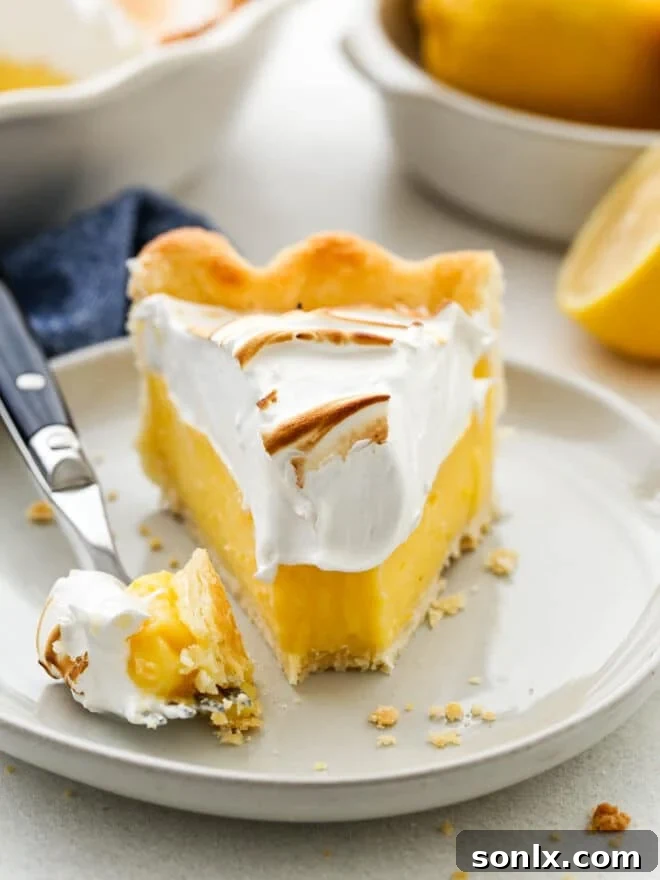
A New & Improved Recipe: Why This One Shines
For many bakers, lemon meringue pie is notoriously high-maintenance, often leading to frustration rather than celebration. Issues like watery meringue, a soggy crust, or a filling that doesn’t set properly can deter even experienced home cooks. But fear not! I’ve meticulously addressed these common challenges, transforming this complex dessert into an accessible and enjoyable baking experience. My refined recipe tackles the most prevalent issue—a weepy meringue—and introduces several other clever adjustments to make the entire process more straightforward and foolproof.
Here’s an in-depth look at why this is truly the best lemon meringue pie recipe you’ll find, designed for maximum enjoyment and minimal stress:
- Starts with a Completely Baked Pie Crust: One of the secrets to a perfect lemon meringue pie is preventing a dreaded soggy bottom. Our recipe begins by fully blind-baking the pie crust until it’s beautifully golden and crisp. This crucial step ensures that your crust retains its delightful texture throughout, as the assembled pie won’t return to the oven (unless you opt for a quick broiler toast for the meringue). This foundation guarantees a sturdy, flaky base that perfectly complements the creamy filling.
- Effortless Filling with No Egg Tempering Required: Traditional lemon fillings often demand the delicate art of tempering eggs, a step that can intimidate many bakers. My updated method eliminates this fuss entirely. We simply cook the filling ingredients together, and to guarantee an exquisitely silky-smooth texture, we pass the warm mixture through a fine-mesh strainer. This ingenious step catches any tiny bits of cooked egg, ensuring a uniformly luscious and velvety lemon custard without the need for painstaking tempering.
- Upgraded to Stable Swiss Meringue: Forget the instability of French meringue! This recipe utilizes the superior Swiss meringue technique. By gently cooking the egg whites and sugar over a double boiler until they reach a safe 160°F, the sugar fully dissolves, and the proteins are partially cooked. This creates an incredibly stable, marshmallow-like meringue that holds its shape beautifully and is highly resistant to weeping over time. The result is a glossy, resilient topping that stays pristine longer, making your pie a visual and culinary triumph.
- Serve Immediately or Make Ahead with Ease: Flexibility is key for busy bakers. Once you’ve assembled this magnificent pie and lightly toasted its fluffy meringue, there’s no mandatory extended chilling or additional baking time required. You can proudly slice and serve it right away, delighting your guests with its fresh flavors and textures. Alternatively, if you’re planning ahead, simply refrigerate the finished pie, and it will remain utterly delicious for later enjoyment, offering unparalleled convenience without compromising quality.
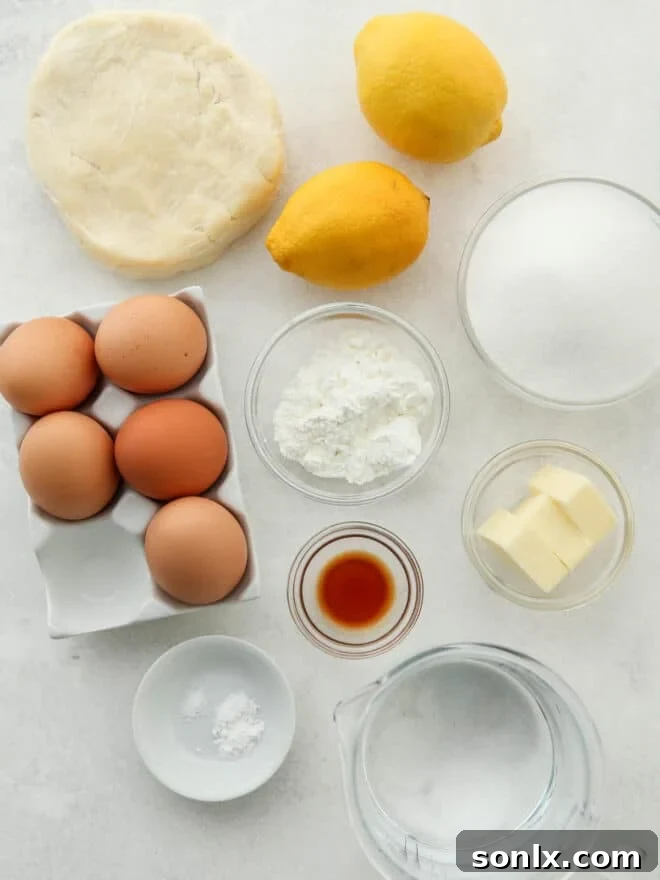
Essential Ingredients for Your Lemon Meringue Masterpiece
Crafting the perfect Lemon Meringue Pie begins with selecting the right ingredients. Each component plays a vital role in achieving that harmonious balance of flavors and textures that defines this classic dessert. Here’s a closer look at what you’ll need and why quality matters:
- A Single Homemade Pie Crust: While store-bought options exist, a homemade crust truly elevates this pie. It provides that irresistible buttery, flaky foundation that contrasts beautifully with the smooth filling. Use your tried-and-true favorite recipe, or consider my recipe for a buttermilk pie crust for an extra tender result.
- Fresh Lemons (Absolutely Non-Negotiable!): This is the star of the show! Bottled lemon juice simply won’t deliver the bright, vibrant, and complex zesty flavor that fresh lemons provide. You’ll need both the finely grated zest (where most of the aromatic lemon oils reside) and freshly squeezed juice to achieve that signature tangy punch. Invest in good quality, unwaxed lemons for the best flavor.
- Large Eggs: We’ll need a total of 5 large eggs for this recipe, skillfully separated. The yolks are essential for creating a rich, creamy, and custardy lemon filling, lending body and a beautiful golden hue. The whites are, of course, the foundation for our light, airy, and stable Swiss meringue topping. Proper egg separation is key here, as even a trace of yolk can prevent your meringue from whipping up correctly.
- Butter: High-quality salted butter is incorporated into the hot lemon filling, melting in to add a luxurious richness, a subtle salty counterpoint to the sweetness, and a lovely glossy finish. It enhances the overall mouthfeel and flavor depth.
- Cornstarch: This acts as our primary thickening agent for the lemon filling. It creates a stable, smooth, and sliceable custard, giving the pie its structural integrity. It’s crucial for achieving the desired consistency without making the filling gummy.
- Granulated Sugar: Sugar provides essential sweetness to balance the tartness of the lemons in the filling and is a critical component in building the structure and stability of the Swiss meringue.
- Cream of Tartar: This acidic salt is a secret weapon for meringue! Added to the egg whites, it helps stabilize them, creating stronger, more resilient foam, preventing the meringue from collapsing or weeping as it sits. It also contributes to a whiter, glossier meringue.
- Salt: A small pinch of salt in both the filling and the meringue (though optional in meringue for some) enhances all the other flavors, making them pop and preventing the dessert from tasting flat or overly sweet.
- Vanilla Extract: A touch of pure vanilla extract is added to the finished meringue, providing a lovely aromatic depth that beautifully complements the lemon without overpowering it.
baking tip:How to Separate Eggs Like a Pro
Achieving a perfect meringue hinges on meticulously separated egg whites, free from any yolk contamination. Even the tiniest speck of fat from the yolk can prevent egg whites from whipping up into stiff, voluminous peaks. While there are several techniques, this method consistently yields the best results for me:
- Prepare Your Stations: Gather three small, impeccably clean bowls. One will be your initial separating bowl, one for the yolks, and one for the whites. This three-bowl system is a failsafe against accidental yolk breakage.
- The Gentle Crack: Crack an egg over the first bowl. Carefully pour the egg into your cupped fingers, allowing the whites to gently slip through the gaps into the bowl below. The yolk should remain perfectly intact in your hand.
- The Transfer: Once the white has separated, carefully transfer the intact yolk to its designated “yolk” bowl (#2). Pour the pure egg white from the separating bowl (#1) into the “whites” bowl (#3).
- Contamination Check: If, at any point, even a minuscule amount of egg yolk falls into the egg white, you must discard that white and start over with a fresh egg in a clean bowl if you intend to use the whites for meringue. It’s truly that critical for stable meringue!
Storing Leftovers: Any unused egg yolks or whites can be stored separately in airtight containers in the refrigerator for a few days. Yolks are great for custards, ice cream, or enriching pasta sauces, while whites can be used in omelets, frittatas, or other meringue-based desserts.
Lemon Meringue Pie: Step-by-Step Perfection
Follow these detailed steps to construct a lemon meringue pie that is as delightful to behold as it is to eat. Each stage is crucial for ensuring the perfect texture, flavor, and stability of your finished masterpiece.
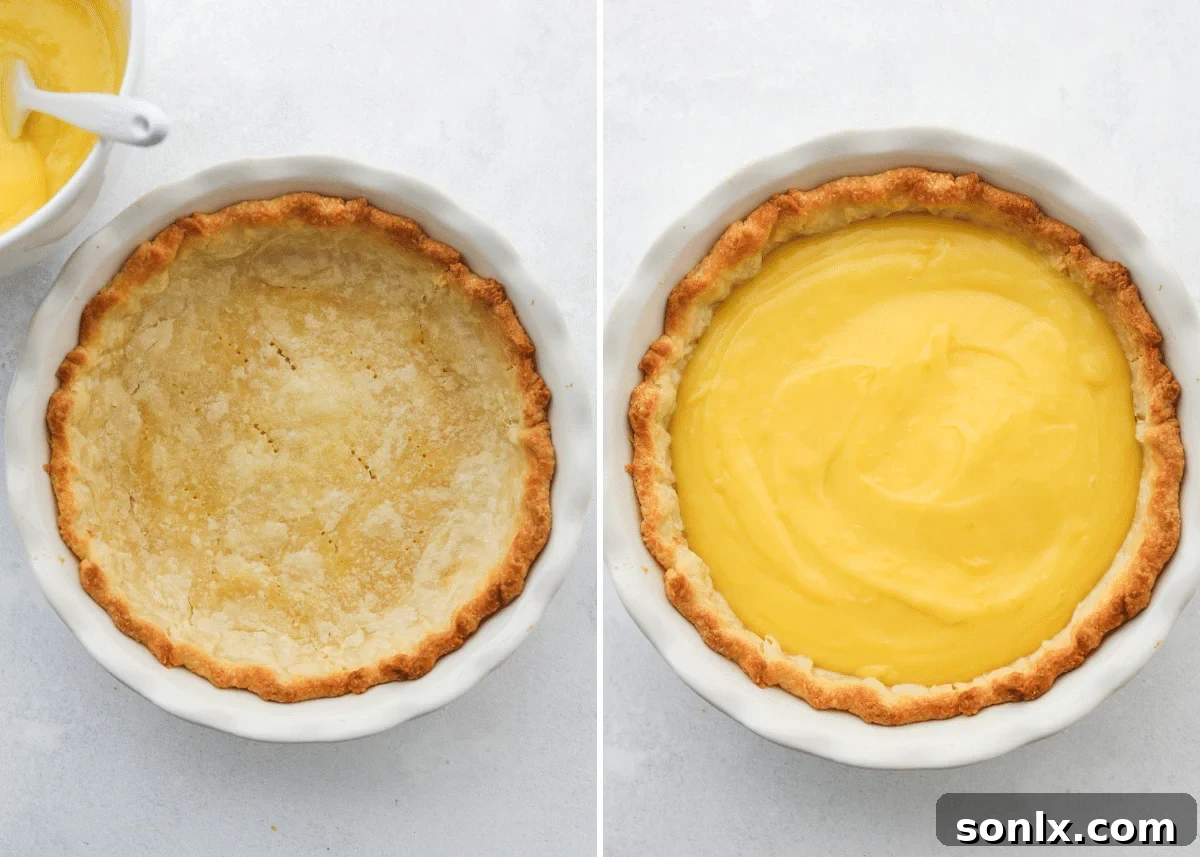
- “Blind Bake” the Pie Crust to Golden Perfection: This foundational step is critical for preventing a soggy bottom and achieving a beautifully crisp crust. Since the assembled pie will not return to the oven (beyond an optional quick toast for the meringue), the crust must be fully baked beforehand. Prepare your homemade pie crust, carefully fit it into your pie dish, trim, and crimp the edges. Prick the bottom with a fork, then line it with parchment paper or greased foil and fill completely with pie weights (dried beans or rice work perfectly). Bake at a high temperature until the edges are lightly golden and the bottom appears dry. Remove the weights and continue baking for a few more minutes to ensure the crust is fully cooked through. For an in-depth guide and expert tips on how to blind bake pie crust flawlessly, see my detailed instructions here.

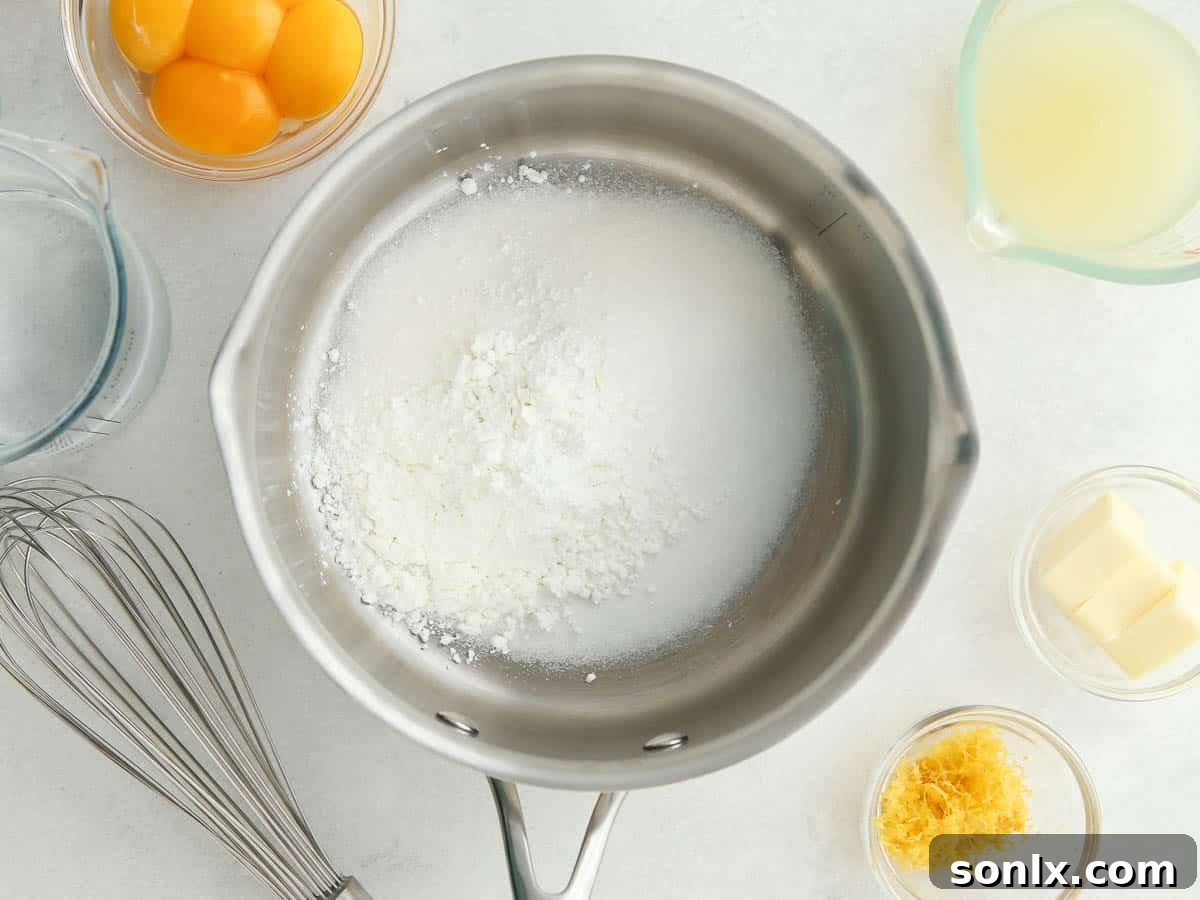
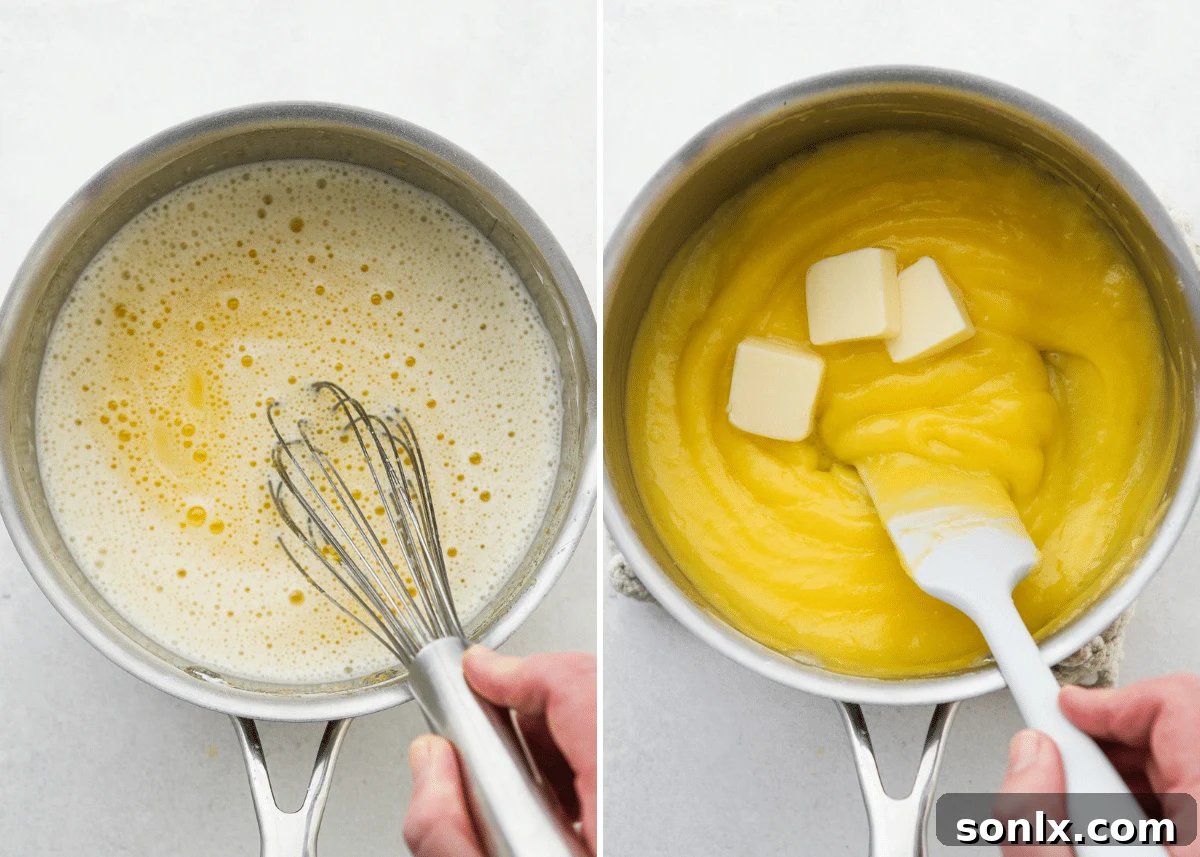
- Craft the Silky Lemon Filling: In a saucepan, whisk together granulated sugar, cornstarch, and water until smooth. Then, vigorously whisk in the large egg yolks until the mixture is uniform and lump-free. Place the saucepan over medium-high heat, stirring constantly with a whisk to prevent scorching, until the mixture comes to a full boil. Once boiling, reduce the heat to medium and switch to a heat-proof spatula, continuously scraping the sides and bottom of the pan. Simmer for about 5 minutes, and you’ll notice it will thicken abruptly at first, then smooth out beautifully as you stir. Remove the pan from the heat and stir in the salted butter until it’s fully melted and incorporated, adding a luxurious sheen and richness. Immediately pour the hot filling through a fine-mesh strainer into a clean bowl, pressing it with your spatula to ensure every bit of smooth, silky filling passes through while catching any potential cooked egg bits. Finally, whisk in the fresh lemon zest and freshly squeezed lemon juice. (Remember, the acid in lemon juice can inhibit cornstarch from thickening properly if added too early, so we incorporate it at the very end to ensure optimal thickening and maximum fresh flavor.)
- Chill to Perfection: Once your lemon filling is perfectly smooth and tangy, spread it evenly into the cooled, blind-baked pie crust. Ensure the surface is level for a beautiful presentation. Immediately transfer the pie to the refrigerator and allow it to chill for at least 4 hours. Ideally, chilling it overnight allows the filling to set completely and firm up, ensuring clean, elegant slices when served. This crucial chilling period also allows the flavors to meld and deepen.
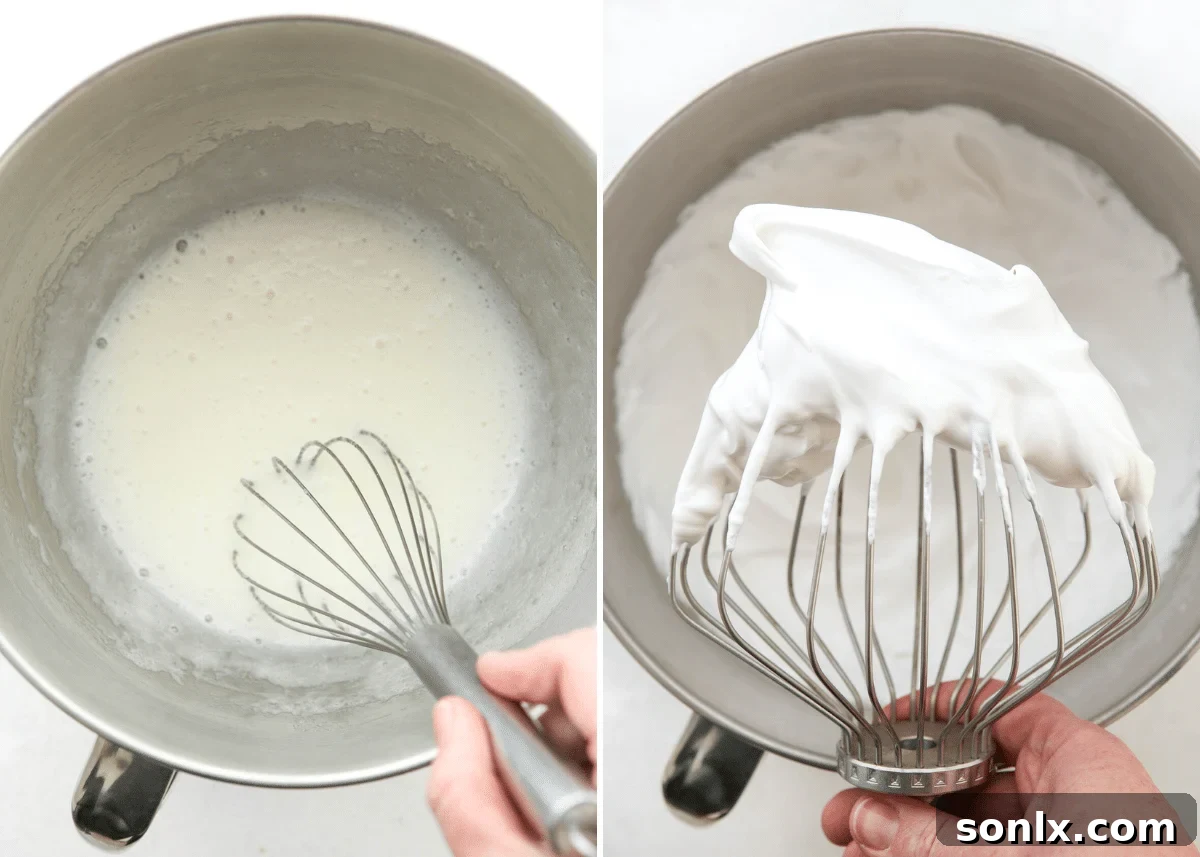
- Whip Up the Fluffy Swiss Meringue Topping: (Plan to make this the day you intend to serve the pie for the freshest, most stable results.) In the heat-proof bowl of your stand mixer, combine the granulated sugar, large egg whites, cream of tartar, and a pinch of salt. Set this bowl over a small saucepan of simmering water, ensuring the bottom of the bowl does not touch the water. Whisk the mixture constantly until it reaches 160°F on an instant-read thermometer and all the sugar granules have completely dissolved (you can test this by rubbing a small amount between your fingers—it should feel perfectly smooth). This process typically takes about 8-10 minutes. Once heated, remove the bowl from the heat and transfer it to your stand mixer. Using the whisk attachment, beat the mixture on medium-high speed. As it begins to thicken, gradually add the vanilla extract. Continue beating until the meringue forms very stiff, glossy peaks. This means when you lift the whisk attachment, the meringue holds its shape firmly and stands straight up without curling or flopping over. This stable meringue is the hallmark of the Swiss method.
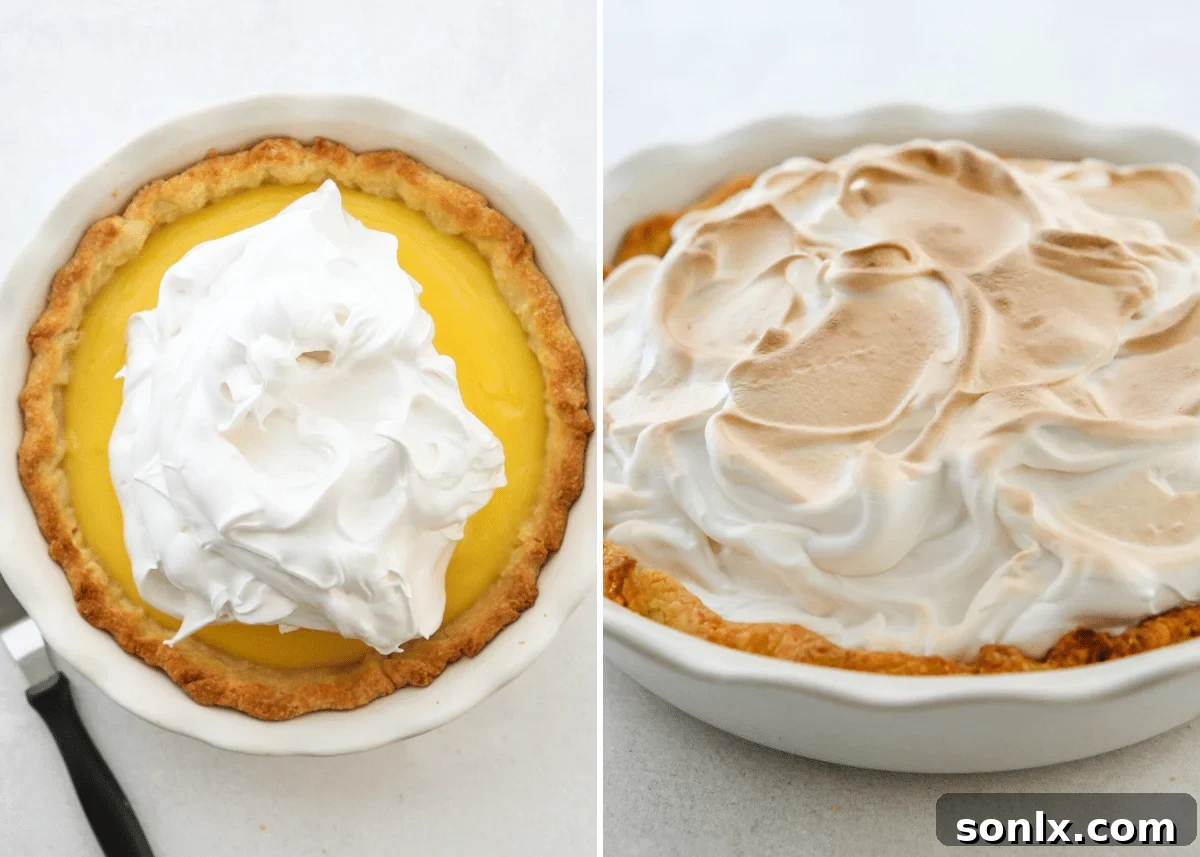
- Toast the Meringue to Golden Perfection: Once your lemon filling is thoroughly chilled and your Swiss meringue is whipped to stiff peaks, it’s time to assemble. Generously dollop the fluffy meringue over the top of the chilled lemon pie. Using the back of a spoon or an offset spatula, spread it all the way to the edges of the crust, creating a “seal” that helps prevent weeping. Create beautiful swirls and peaks on the surface for an appealing rustic or elegant look. To achieve that signature golden-brown finish, toast the meringue lightly with a kitchen torch for precise browning. Alternatively, you can place the pie under a preheated broiler for 1-3 minutes. If using the broiler, keep a very close eye on it, rotating the pie frequently to ensure even toasting and prevent any burning, as it can brown very quickly!
- Serve Immediately or Enjoy Later: Your magnificent Lemon Meringue Pie is now ready to be enjoyed! Feel free to slice and serve it right away, marveling at the beautiful layers and contrasting textures. If you’ve prepared it ahead of time or have leftovers, return the pie to the refrigerator. While this pie remains delicious for several days, I highly recommend serving it within 6 hours of assembly and toasting for the absolute freshest taste and best meringue texture.

Planning Ahead: Make-Ahead Instructions
One of the beauties of this improved lemon meringue pie recipe is its flexibility for advance preparation. Whether you’re looking to break up the baking process over several days to ease your workload (a brilliant strategy!) or simply want to know how long the finished pie will maintain its peak freshness, these make-ahead instructions have you covered.
- Pie Crust Dough: You can prepare your pie crust dough well in advance. Wrapped tightly in plastic wrap, it will keep beautifully in the refrigerator for up to 3 days. For longer storage, freeze the dough for up to 2 months. Remember to thaw it overnight in the fridge before you plan to roll it out and bake.
- Baked Pie Crust (Blind-Baked Shell): Once you’ve blind-baked your pie crust, you can store the empty shell. Allow it to cool completely, then cover it securely with plastic wrap or foil. It will stay fresh and crisp at room temperature for up to 2 days, making it perfect for preparing the day before assembly.
- Filled Pie (Without Meringue): The lemon filling can be prepared and poured into the baked crust, then chilled. For the best quality and setting, this partially assembled pie (without the meringue topping) can be stored in the refrigerator for up to 24 hours. Cover it gently with plastic wrap, ensuring the wrap doesn’t touch the filling directly if possible, to prevent condensation.
- Fully Assembled Lemon Meringue Pie: A completely finished pie, with the meringue toasted, will keep well in the refrigerator for several days. However, for optimal freshness, the most stable meringue, and the best overall flavor and texture, it is truly at its peak within 24 hours of assembly. I personally recommend serving it within 6 hours of topping and toasting for the most impressive results.
Expert Tips & Frequently Asked Questions
Even with an improved recipe, a few insider tips and answers to common questions can make your lemon meringue pie experience even more successful. Here’s what you need to know:
- Why Fresh Lemons are Non-Negotiable: This cannot be stressed enough – you must use fresh lemons for this recipe. Do not be tempted to save time by using bottled lemon juice. The concentrated, one-dimensional flavor of bottled juice simply doesn’t compare to the bright, complex, and aromatic notes of fresh lemon zest and juice. When you taste the refreshing, perfectly tart, and lively lemon filling, you’ll understand why this small effort is absolutely worth it!
- Understanding “Stiff Peaks” for Meringue: “Stiff peaks” is a crucial term in meringue making. It means that when you lift the whisk attachment (or beater) from the meringue, the meringue that clings to it stands straight up without bending, curling, or flopping over. It should hold a firm, well-defined peak. If it’s soft and droops, keep beating!
- The Best Way to Toast Meringue: While not strictly necessary, purchasing a kitchen torch is highly recommended for achieving the prettiest, most professional-looking toasted meringue. A torch allows for precise control over where the flame goes, creating beautiful browning on the peaks without burning the rest. Toasting under the broiler in your oven also works perfectly fine. If using the broiler, ensure your oven rack is positioned far enough away from the heat source and watch the pie *constantly*. Meringue can go from perfectly golden to burnt in mere seconds. If your meringue isn’t domed towards the center, the broiler might only toast the very top, so aim for even distribution.
- Preventing Weeping Meringue: A weepy meringue is a common frustration, but it’s largely preventable with this Swiss meringue method. The key steps are:
- Whip to Stiff Peaks: Ensure your meringue is beaten to truly stiff peaks as described above. A stable structure is your best defense.
- Hot to Hot: Ideally, spread the warm Swiss meringue over a cold, but not ice-cold, filling. Some prefer the filling to be room temperature, but cold works fine here.
- Seal the Edges: Be sure to spread the meringue all the way to the very edges of the pie crust, effectively “sealing” the lemon filling beneath it. This acts as a barrier, preventing moisture from escaping and forming beads of sugar syrup (weeping) on the surface.
Following these steps, your meringue should hold firm and beautiful for at least 24 hours, if not longer.
- Have Another Question? Baking is a journey, and questions are always welcome! If you encounter any challenges or have further inquiries not covered here, please don’t hesitate to ask below in the comments section. I’ll do my best to provide helpful answers and guidance.
Explore More Zesty Lemon Recipes
If you’ve fallen in love with the vibrant flavor of fresh lemon in this pie, you’re in for a treat! We have a delightful collection of other lemon-infused recipes that are sure to brighten your day and tantalize your taste buds. From refreshing desserts to versatile ingredients, there’s always more to explore in the world of citrus baking:
- Bright and Tangy Lemon Bars
- Mastering Homemade Lemon Curd
- Irresistible Lemon Coconut Cake

Lemon Meringue Pie
Pin Recipe
Leave a Review
Ingredients
For the Pie:
- 1 single homemade pie crust (for a 9-inch pie)
- 1 cup (200 grams) granulated sugar
- ¼ cup (28 grams) cornstarch
- 1 ¼ cup (283 grams) cold water
- 5 large egg yolks
- 3 tablespoons (42 grams) salted butter
- 1 tablespoon fresh lemon zest
- ½ cup (112 grams) freshly squeezed lemon juice (from 2-3 large lemons)
For the Meringue Topping:
- 1 cup (200 grams) granulated sugar
- 5 large egg whites
- ¼ teaspoon cream of tartar
- Pinch of salt
- 1 teaspoon vanilla extract
Equipment
Instructions
Prepare Pie Crust:
-
Roll out your single homemade pie crust dough to a large 13-inch (approximately) circle on a lightly floured surface. Carefully transfer it to a 9-inch pie dish. Trim any excess dough, leaving about a ½-inch overhang, then crimp the edges decoratively. Use a fork to dock (prick) the bottom of the crust all over to prevent bubbling. Place the pie dish in the freezer for 30 minutes to firm up the butter, which helps prevent shrinkage. Meanwhile, preheat your oven to 425°F (220°C).
-
Line the frozen pie crust with parchment paper or greased aluminum foil, ensuring it covers the edges. Fill completely with pie weights (dried beans or rice are excellent substitutes) all the way to the top of the crimped edges. Bake for 20 minutes. Carefully remove the foil and pie weights, then return the crust to the oven and bake for an additional 5-10 minutes, or until the bottom looks dried out and the edges are lightly golden brown. If any part of the crust puffs up, gently press it back down with the back of a spoon while it’s still hot.
-
Allow the baked pie crust to cool completely on a wire rack while you prepare the lemon filling. Alternatively, you can prepare the crust up to 2 days in advance; once cooled, store it covered with plastic wrap at room temperature.
Prepare Lemon Filling:
-
In a medium saucepan, combine 1 cup (200 grams) granulated sugar and ¼ cup (28 grams) cornstarch. Whisk them together until thoroughly combined. Gradually stir in 1 ¼ cup (283 grams) cold water until smooth, then whisk in the 5 large egg yolks very well until the mixture is uniform and completely smooth. Place the saucepan over medium-high heat.
-
Stir the mixture constantly with a whisk to prevent lumps and sticking, especially as it heats. Bring it to a full boil. Once it reaches a boil, reduce the heat to medium and switch to stirring with a heat-proof spatula, making sure to scrape all sides and the bottom of the pan thoroughly. Continue to simmer for about 5 minutes, or until the filling becomes very thick. The mixture may thicken abruptly and unevenly at first, but keep stirring; it will come together into a smooth, glossy consistency.
-
Remove the saucepan from the heat and immediately stir in the 3 tablespoons (42 grams) salted butter until it is completely melted and incorporated, giving the filling a beautiful sheen. Pour the hot lemon filling through a fine-mesh strainer into a clean bowl, using your spatula to press it through and scrape off any bits from the bottom of the strainer. This ensures an impeccably smooth filling. Finally, whisk in the 1 tablespoon fresh lemon zest and ½ cup (112 grams) freshly squeezed lemon juice.
-
Pour the warm lemon filling immediately into your cooled, blind-baked pie crust. Smooth the top with a spatula. Place the pie in the fridge and chill for at least 4 hours to allow it to set completely. Chilling overnight is even better for firm, clean slices. You can prepare the filled pie up to 2 days before serving, but wait to add the meringue.
Make Meringue Topping:
-
(For the freshest and most stable results, prepare the meringue on the same day you plan to serve the pie.) In the clean, dry bowl of a stand mixer, combine 1 cup (200 grams) granulated sugar, 5 large egg whites, ¼ teaspoon cream of tartar, and a Pinch of salt. Set the bowl over a small pot of simmering water (creating a double boiler), ensuring the bottom of the bowl does not touch the water.
-
Cook the egg white mixture, whisking frequently, until it reaches 160°F (71°C) on an instant-read thermometer. Also, rub a small amount between your fingers to ensure no sugar granules can be felt; this means the sugar is fully dissolved. This process typically takes about 8-10 minutes.
-
Carefully transfer the bowl from the double boiler to your stand mixer. Attach the whisk attachment and beat on medium-high speed. While the mixer is running, gradually add the 1 teaspoon vanilla extract. Continue to beat until the meringue reaches very stiff, glossy peaks. This signifies that the meringue is stable and ready to hold its shape.
-
Generously spread the whipped meringue over the top of the thoroughly chilled lemon pie. Be sure to spread it all the way to the edges of the crust, creating a seal to help prevent weeping, and then swirl it beautifully with a spoon or offset spatula to create dramatic peaks and valleys. Toast the meringue lightly using a kitchen blow torch for precise browning, or place the pie under a preheated broiler for 1-3 minutes until golden brown. Watch it extremely closely to prevent burning, as it browns very quickly!
-
Serve the pie immediately after toasting for the most impressive presentation and texture, or chill it in the fridge if not serving right away. For the freshest results and best meringue stability, I recommend serving within 6 hours.
Notes
- The Art of Egg Separation: It’s easiest to separate eggs when they are cold, straight from the fridge. Once separated, allow the whites to come to room temperature before making meringue, as they will whip up to a greater volume. As emphasized, there cannot be a trace of egg yolk in the egg whites for the meringue to whip up successfully. If a yolk breaks and contaminates the whites, it’s best to discard that portion and try again with fresh eggs. For more detailed tips and techniques on how to separate eggs flawlessly, refer to our comprehensive guide.
- Preventing a Soggy Crust: The key to a perfectly crisp crust is thorough blind baking. Make sure to bake the crust until it’s not just lightly colored, but truly looks dry and cooked through, especially on the bottom. Using pie weights and freezing the crust before baking are essential steps.
- Achieving a Silky Filling: The fine-mesh strainer is your best friend here! Don’t skip this step, as it ensures any tiny bits of cooked egg that might have formed are removed, leaving you with an exquisitely smooth, velvety lemon custard.
- Lemon Juice Timing: Always add fresh lemon juice to the filling *after* it has thickened and been removed from the heat. The acidity in lemon juice can interfere with the cornstarch’s thickening power if added too early in the cooking process.