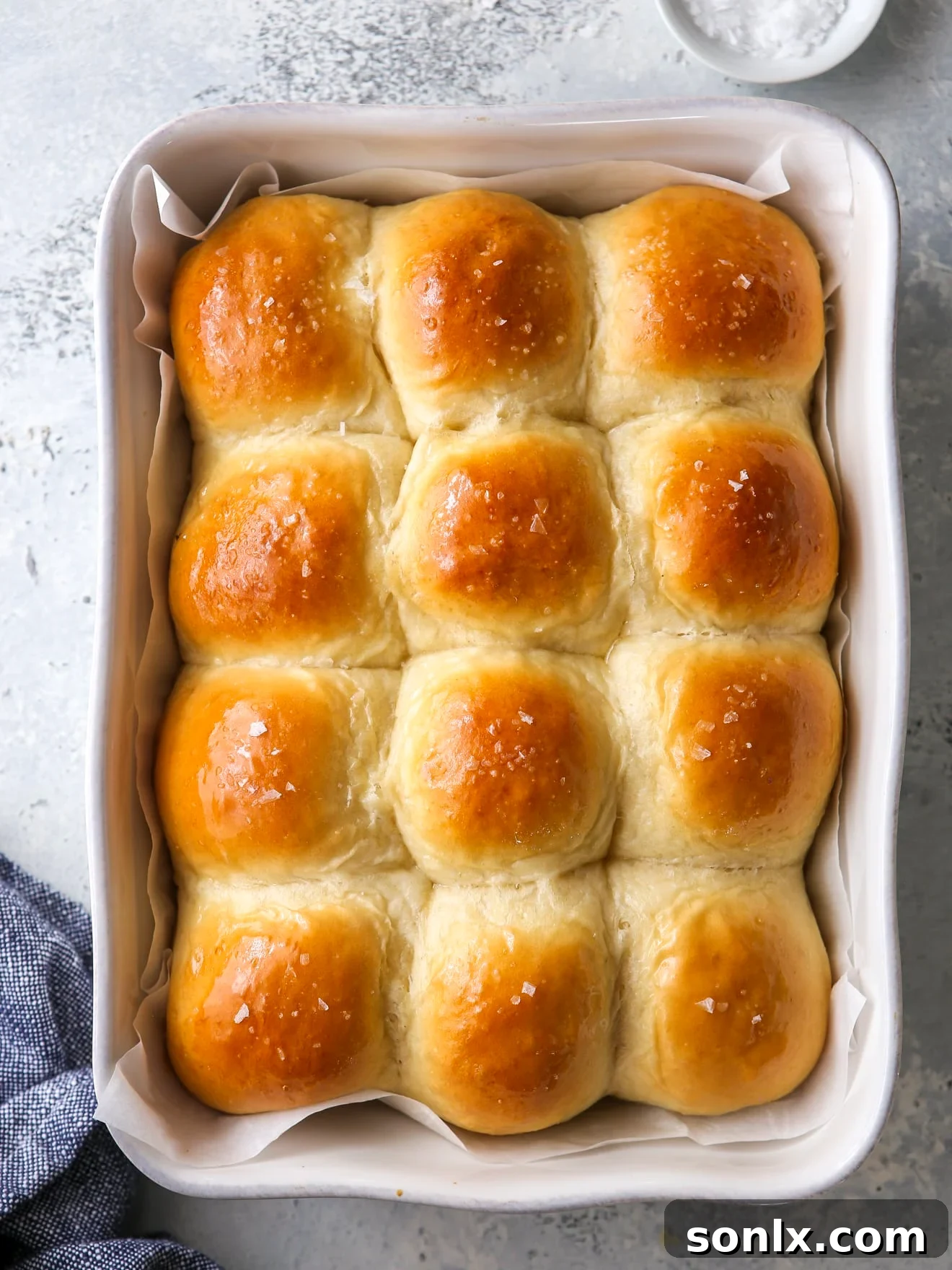
Welcome to the ultimate guide for creating the most delectable, melt-in-your-mouth Soft White Dinner Rolls! These tender, buttery rolls are more than just a side dish; they’re a timeless comfort food, perfect for elevating any meal, from a casual family dinner to a grand holiday feast. Imagine biting into a warm, fluffy roll, its delicate crust giving way to a soft, airy interior, enhanced by a hint of sweetness and rich butter. This classic recipe, remarkably simple with just seven core ingredients, is designed for everyone, from seasoned bakers to enthusiastic beginners eager to master the art of yeast baking.
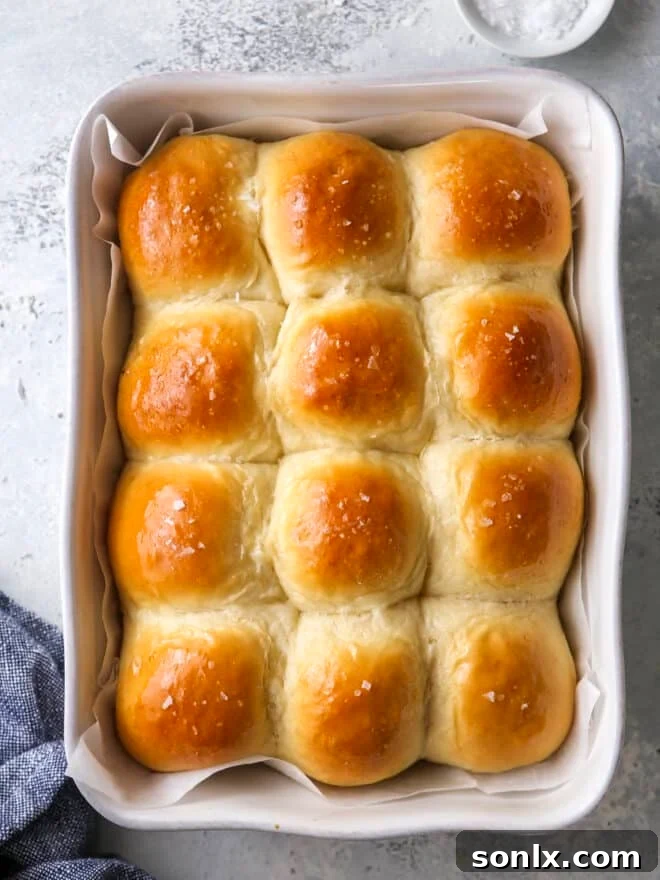
Years ago, when I first started my culinary journey and this website, these soft white dinner rolls were the very first yeast recipe I truly perfected. Their foolproof nature quickly made them a beloved staple in our home, proving just how accessible delicious homemade bread can be. There’s a special magic that happens when you bring a basket of freshly baked rolls to the table – a comforting aroma fills the air, and faces light up with anticipation. Whether it’s a hearty soup night, a bustling large family gathering, or a cherished holiday meal, these rolls are an essential addition, guaranteeing smiles and satisfaction with every bite. Their unparalleled softness and rich, buttery flavor make them simply irresistible.
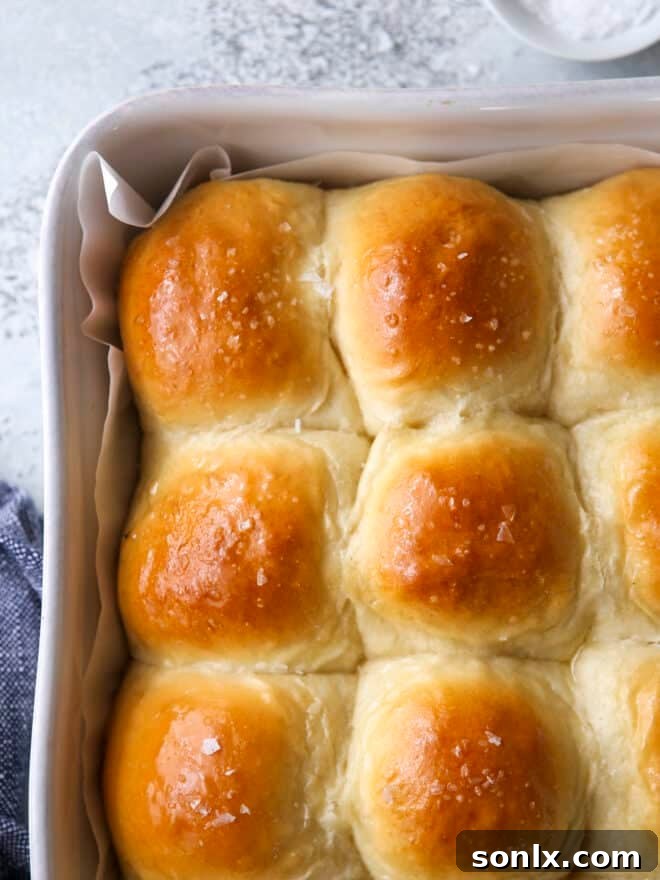
For an extra touch of indulgence, serve these homemade beauties with a generous dollop of salted butter, allowing it to melt into the warm crevices. Alternatively, for a touch of elegance and added flavor, brush the rolls with a sweet honey butter glaze and sprinkle a pinch of flaky sea salt immediately after they emerge golden from the oven. This simple flourish elevates their appeal, turning these easy dinner rolls into the undeniable star of your next culinary presentation. Get ready to impress your family and friends with these classic, comforting, and utterly delicious soft white dinner rolls!
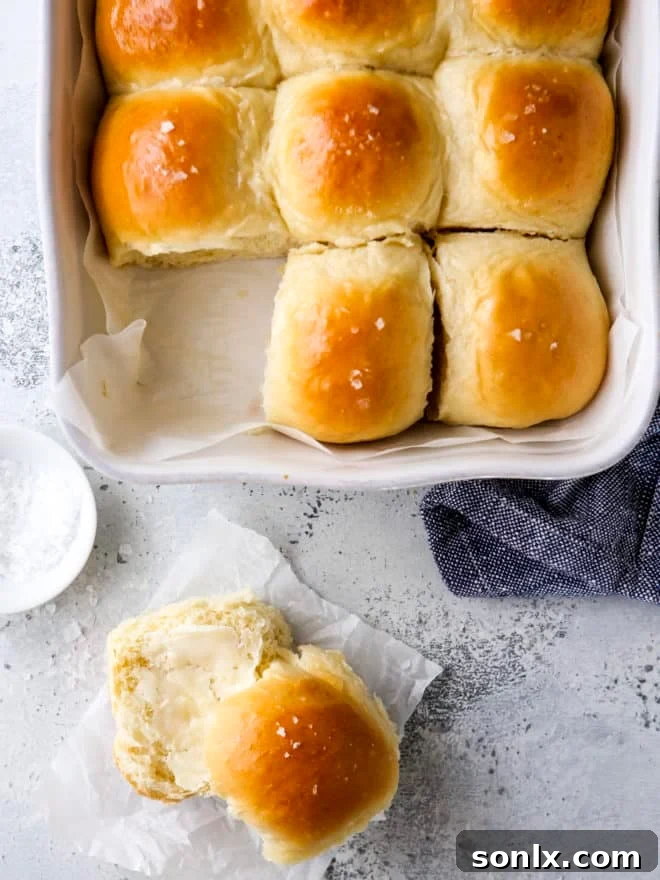
Table of Contents
- Essential Ingredients for Fluffy Dinner Rolls
- Step-by-Step Guide to Making Soft White Dinner Rolls
- Mastering the Art of Shaping Perfect Rolls
- Your First Yeast Recipe: A Beginner’s Guide
- Frequently Asked Questions About Dinner Rolls
- Explore More Delicious Roll Recipes
- Get the Full Recipe Card
“This is the best white roll recipe that I have ever made! Fluffy, soft, and delicious! Thank you!” — reader Shanna-Lee
Essential Ingredients for Fluffy Dinner Rolls
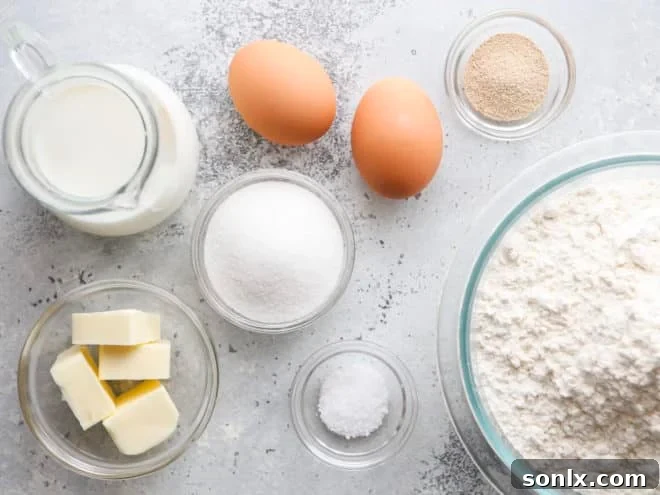
Crafting perfect homemade dinner rolls starts with a handful of high-quality, readily available ingredients. Each component plays a crucial role in achieving that coveted soft, tender, and flavorful result. Here’s a detailed look at what you’ll need:
- Bread Flour: For the ultimate rise and a wonderfully soft, chewy texture, bread flour is highly recommended. Its higher protein content develops more gluten, which gives the rolls their structure and elasticity. However, don’t fret if you only have all-purpose flour; it will still yield delicious results, albeit with a slightly less chewy crumb.
- Active-Dry Yeast: This is the magical ingredient that makes your rolls light and airy. Active-dry yeast needs to be activated, typically with warm liquid, but with this recipe’s “dry blend method,” it’s combined directly with other dry ingredients. If you’re looking for a quicker rise time, feel free to substitute with instant or quick-rise yeast.
- Butter: Unsalted butter contributes significantly to the rich flavor and tender texture of these rolls. It helps create a soft crumb and adds a luxurious mouthfeel. Ensure it’s melted before incorporating it into the liquids.
- Milk: Whole milk or 2% milk is preferred for this recipe. The fat and sugars in milk contribute to a richer flavor, a softer crust, and help the rolls brown beautifully. It also provides the necessary liquid for activating the yeast and hydrating the flour.
- Eggs: Eggs are a powerhouse ingredient in this recipe, providing richness, moisture, and contributing to the rolls’ tender crumb and golden hue. They help bind the dough and add structure.
- Granulated Sugar: Sugar is more than just a sweetener here. It acts as food for the yeast, helping it activate and produce carbon dioxide, which makes the dough rise. It also balances the flavors and contributes to the golden-brown crust.
- Salt: A crucial flavor enhancer, salt also plays an important role in controlling yeast activity and strengthening the gluten structure in the dough. Don’t skip it!
- Honey (Optional): While optional, a touch of honey in the glaze adds a delightful layer of sweetness and a beautiful sheen to the baked rolls. It perfectly complements the buttery flavor.
Step-by-Step Guide to Making Soft White Dinner Rolls
Baking homemade yeast rolls might seem intimidating at first, but this recipe breaks it down into simple, manageable steps. Follow these instructions carefully, and you’ll be rewarded with perfectly soft and fluffy dinner rolls every time.
- Warm Liquids with Care: Begin by melting the unsalted butter in a small saucepan over medium heat. Once melted, add the milk and continue heating for about one minute more. The ideal temperature for activating yeast is between 120°-130°F (49°-54°C). If you have a thermometer, this is the perfect time to use it to ensure accuracy. Be vigilant, as temperatures above 140°F (60°C) will kill the yeast, preventing your dough from rising properly. The mixture should be very warm but not steaming.
- Combine Dry Ingredients, Liquids, and Eggs: In a large mixing bowl or the bowl of a stand mixer fitted with a dough hook, combine 2 cups of the bread flour, granulated sugar, salt, and active-dry yeast. There’s no need to proof the yeast in warm water first for this recipe! Pour in the warm milk and butter mixture, followed by the eggs. Stir all the ingredients together with a spoon or a dough whisk until they are just incorporated and no dry spots of flour remain.
- Gradually Add Flour and Knead the Dough: Begin gradually adding the remaining flour, about ¼ cup at a time, allowing the dough hook (or your hands, if kneading manually) to work it in after each addition. Continue this process until the dough starts to pull away cleanly from the sides of the bowl. The dough should still be slightly tacky to the touch but manageable – you should be able to touch it without it sticking excessively to your hands. Over-flouring can lead to dry, tough rolls, so be mindful not to add too much. Once the flour is incorporated, continue kneading for a few more minutes until the dough becomes smooth, elastic, and springy. This develops the gluten, which is essential for a soft and chewy texture.
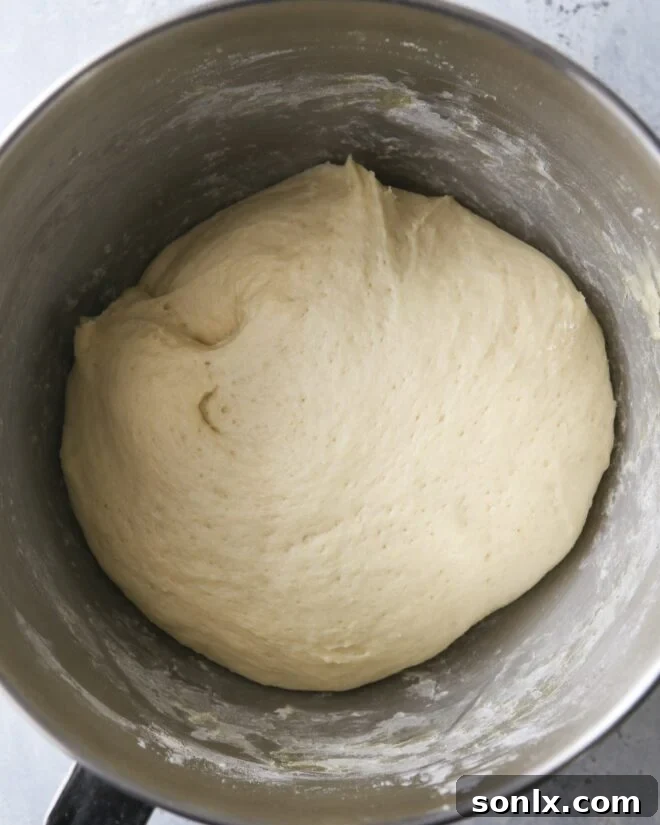
- First Rise (Bulk Fermentation): Gently shape the kneaded dough into a ball and place it back into the clean mixing bowl. Cover the bowl tightly with plastic wrap or a clean kitchen towel to prevent it from drying out. Find a warm, draft-free spot in your kitchen (an oven with just the light on, or near a sunny window, works well) and let the dough rise until it has visibly doubled in size. This process typically takes about 1 hour, but rising times can vary depending on your kitchen’s temperature and humidity.
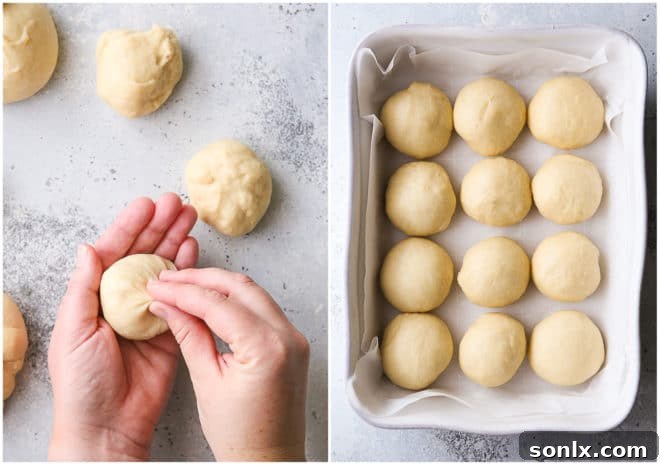
- Portion and Shape the Rolls: Once the dough has doubled, gently punch it down to release the air. Transfer the dough to a lightly floured surface. To ensure evenly sized rolls, divide the dough into 12 equal pieces. A kitchen scale is incredibly helpful here: weigh the total dough, divide that number by 12, and then weigh each piece to match. If you don’t have a scale, you can roughly divide the dough in half, then half again, and then each quarter into thirds to yield 12 pieces. Shape each piece into a smooth, round roll using the technique described in the “How to Shape Rolls” section below. Arrange the shaped rolls in a greased 9×13-inch baking dish, leaving a small space between them.
- Second Rise (Proofing): Cover the baking dish with plastic wrap or a clean towel once more. Allow the rolls to rise again in a warm place for approximately 30-45 minutes, or until they look noticeably puffy and have nearly doubled in size. You can test if they’re ready by gently pressing one with your finger; if the indentation remains, they’re perfectly proofed. While the rolls are undergoing their second rise, preheat your oven to 350°F (175°C).
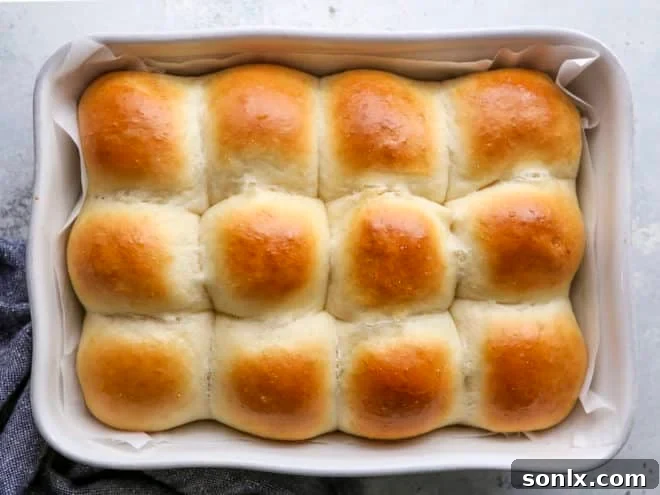
- Bake to Golden Perfection: For beautifully shiny, bright golden-brown tops, whisk together one large egg with one tablespoon of water to create an egg wash. Lightly brush this mixture over the top of each roll before baking. (Rolls baked without an egg wash will have a duller, albeit still delicious, brown crust.) Place the baking dish into the preheated oven and bake for 25-30 minutes, or until the rolls are gloriously golden brown and cooked through.
- Glaze with Honey Butter (Optional): While the rolls are still hot from the oven, prepare the optional honey butter glaze. Simply melt 1½ tablespoons of unsalted butter with 1 teaspoon of honey. Brush this warm, sweet glaze generously over the tops of the freshly baked rolls. If desired, sprinkle with flaky sea salt for an extra burst of flavor and a beautiful contrasting texture.
- Serve and Enjoy: These rolls are truly at their peak when served warm, fresh from the oven. While they are best enjoyed the day they are baked, any leftovers can be stored in an airtight container at room temperature for several days, remaining wonderfully soft and delicious.
Mastering the Art of Shaping Perfect Rolls
Achieving uniformly shaped, beautiful dinner rolls is simpler than you might think. Proper shaping not only makes your rolls visually appealing but also ensures even baking. Here’s how to shape them like a pro:
- Divide Dough Evenly: Precision here is key for consistent results. If you own a kitchen scale, use it to weigh your total dough, then divide that weight by 12 to get the ideal weight for each individual roll. Weighing each portion ensures every roll is the same size, leading to even baking and a professional look. If a scale isn’t available, you can still achieve reasonable uniformity by first dividing the dough in half, then dividing each half into two quarters, and finally dividing each quarter into three smaller, equal pieces, resulting in 12 rolls in total.
- Stretch and Pinch Technique: Once you have your individual dough portions, it’s time to create that smooth, rounded top. Place a piece of dough on a clean, lightly floured countertop. Using your fingers, gently pull and stretch the top surface of the dough downwards and around the sides, tucking it under the base. Continue this motion, gathering all the messy, seam-like bits at the very bottom of the dough ball, pinching them together firmly to seal. This technique creates surface tension on the top, ensuring a smooth, taut, and beautifully rounded top surface while keeping any imperfections hidden on the bottom. If you’re a visual learner, this helpful video demonstrates the technique starting at 0:57.
- Roll into a Perfect Ball: After pinching the seam at the bottom, gently cup the dough ball with your palm and roll it in a circular motion on your clean countertop, with the pinched end facing down. Apply light, even pressure. This motion further smooths out the top and sides, tightens the dough, and helps create a perfectly uniform, round shape. Arrange these beautifully shaped rolls in your greased baking dish, ready for their final rise.
Your First Yeast Recipe: A Beginner’s Guide
If you’re embarking on your first adventure into baking with yeast, you’ve chosen the perfect recipe! These soft white dinner rolls are incredibly forgiving and a fantastic starting point for any novice baker. Yeast doughs, especially for rolls, are resilient and often turn out beautifully even on your very first attempt. Still, a few fundamental tips can help ensure your success and build your confidence:
- Check Your Yeast’s Vitality: Yeast is a living organism, and its freshness is paramount. Always check the expiration date on your yeast package. Expired yeast will not activate properly, leading to flat, dense rolls. A simple test: combine a teaspoon of sugar with a packet of yeast and ¼ cup of warm (105-115°F) water. If it foams within 5-10 minutes, your yeast is active and ready to go!
- Measure Flour Accurately: This is one of the most common pitfalls in baking. Too much flour can result in a dry, dense, and heavy roll, lacking that desired light and fluffy texture. The best method for measuring flour is the “spoon and level” technique: lightly spoon the flour into your measuring cup until it overflows, then level it off with the back of a knife without packing it down. For even greater accuracy, especially in yeast baking, a kitchen scale is your best friend. Learn more about correctly measuring flour here.
- Understanding Rise Times (and Not Stressing Out): Yeast dough needs time to rise, and this process is essential for its texture. A good general guideline is to allow about 1 hour for the first rise (bulk fermentation) and approximately 30-45 minutes for the second rise (proofing) after shaping. However, remember that these are just estimates. The actual time can vary based on your kitchen’s temperature and humidity. Instead of rigidly sticking to the clock, learn to read the dough: the first rise is complete when the dough has visibly doubled in size, and the second rise is ready when a gentle poke with your finger leaves an indentation that slowly springs back. Don’t be afraid to let your dough take its time; patience is a baker’s best virtue! You can also find tips on how to help your dough rise faster if needed.
Baking Tip: Why does yeast dough need to rise?
Allowing yeast dough to “rise,” or rest, is a critical step that enables the yeast to perform its essential function. Yeast is a microscopic, single-celled organism that thrives on sugars present in flour. As it consumes these sugars, it undergoes a process called fermentation, releasing carbon dioxide gas as a byproduct. This gas becomes trapped within the elastic network of gluten that forms in the dough, causing the dough to expand and achieve its characteristic light, airy texture.
The first rise, known as bulk fermentation, occurs after the initial kneading. During this stage, the dough significantly increases in volume, characterized by larger gas bubbles, and develops much of its flavor. The subsequent rise, called proofing, happens after the dough has been punched down and shaped into individual rolls. This second rise serves to redistribute the yeast and gas bubbles, providing the yeast with fresh access to sugars and leading to a further increase in volume. Importantly, the second rise produces smaller, more uniform gas bubbles, which results in a finer, more tender crumb structure in the final baked bread or rolls.
To determine if your dough has risen sufficiently, gently press the dough with your finger. If the indentation created by your finger remains visible and doesn’t quickly bounce back, your dough has reached its optimal rise and is ready for the next step. If it springs back too quickly, it needs a little more time to fully develop.
Frequently Asked Questions About Dinner Rolls
Here are some common questions and helpful answers to ensure your soft white dinner rolls turn out perfectly every time.
Traditionally, active dry yeast is often dissolved in warm water with a pinch of sugar to “proof” it, ensuring it’s active before mixing with other ingredients. However, for this recipe, we utilize what’s known as the “dry blend method,” a technique recommended by experts like Red Star Yeast. If you are confident that your yeast is fresh and hasn’t expired, this preliminary step isn’t strictly necessary when making bread. The key is to combine all your dry ingredients with liquids heated to the correct temperature range (120-130°F, which is much warmer than just “warm water”). This warm liquid effectively rehydrates and activates the yeast directly within the dough mixture, saving you a bit of time without compromising the rise. It’s a convenient shortcut that works beautifully!
If your dinner rolls are coming out dense, tough, or heavy rather than light and fluffy, there are a few common culprits. The most frequent reason is adding too much flour to the dough. When dough is over-floured, it becomes stiff, making it difficult for the yeast to produce and trap gases, which are essential for a light texture. Remember, the dough should remain soft and slightly tacky to the touch, not dry or hard to handle. Another critical factor is insufficient rising time. Yeast needs enough time (and a warm environment) to ferment and create the carbon dioxide gas that makes the dough expand. If the dough doesn’t rise sufficiently during both the bulk fermentation and proofing stages, your rolls will be dense. Ensure your yeast is active and the liquids are at the correct temperature.
Making dinner rolls in advance is a fantastic way to streamline your meal prep, especially for busy mornings or holiday feasts. After shaping the rolls and placing them in their greased baking pan, cover the pan tightly with plastic wrap. You can then store them in the refrigerator for up to 18 hours (e.g., overnight). When you’re ready to bake, remove the pan from the fridge and let the rolls sit at room temperature for about 60-90 minutes. This allows them to come to temperature and get a bit puffy again, completing their final proof. Once they look nicely risen, bake them as directed. This method is perfect for brunch gatherings or freeing up oven space on Thanksgiving morning!
Absolutely! Dinner rolls freeze exceptionally well, making them ideal for meal planning or having fresh bread on hand whenever a craving strikes. Once your rolls are completely baked and cooled, place them in a heavy-duty freezer-safe ziplock bag or an airtight container. They can be stored in the freezer for about one month without losing quality. To serve, simply thaw the frozen rolls at room temperature for a few hours. If you prefer them warm, place the thawed rolls on a baking sheet, cover loosely with foil to prevent excessive browning, and warm them in a 350°F (175°C) oven for approximately 15-20 minutes until heated through. They’ll taste almost as good as fresh out of the oven!
Explore More Delicious Roll Recipes
Once you’ve mastered these classic soft white dinner rolls, you might be eager to expand your baking repertoire. Here are a few more delightful roll recipes to try, perfect for any occasion:
Get the Full Recipe Card

Soft White Dinner Rolls
Simple, soft, and delicious white dinner rolls are a great accompaniment to any meal! This yeast-risen white rolls recipe requires just 7 ingredients, and they’re easy enough for anyone to make.
Pin Recipe
Leave a Review
Ingredients
Main Dough:
- ¾ cup (170 grams) milk, whole or 2% preferred
- ¼ cup (56 grams) unsalted butter
- 3½ cups (438 grams) bread flour, see Notes
- ¼ cup (50 grams) granulated sugar
- 1 teaspoon salt
- 2 ¼ teaspoons (7 grams) active dry yeast (1 envelope)
- 2 large eggs
- 1 large egg + 1 tablespoon water, for egg wash (optional)
For the glaze (optional):
- 1 ½ tablespoons (20 grams) unsalted butter
- 1 teaspoon honey
- Flaky salt, for sprinkling
Equipment
Instructions
-
In a small saucepan over medium heat, melt the butter, then add the milk and heat for 1 minute more. The temperature should be very warm but not steaming. For best results, use a thermometer to ensure the temperature is between 120-130°F (49-54°C), as temperatures over 140°F (60°C) will kill the yeast.
-
Meanwhile, in a stand mixer fitted with a dough hook, combine 2 cups of the flour, sugar, salt, and yeast. Add the warm milk/butter mixture and the eggs, then stir with a spoon or dough whisk until just incorporated.
-
Gradually add the remaining flour, ¼ cup at a time, kneading after each addition. Continue until the dough starts to clear the sides of the bowl and is still tacky to the touch but no longer sticks to your hands. You may not need all 3½ cups of flour, or you might need a little more; the key is not to add excess flour, or your rolls will be tough and dry! If needed, knead the dough a few minutes more until it’s smooth and quite stretchy.
-
Shape the dough into a ball, cover the bowl with plastic wrap, and place it in a warm place to rise until doubled in size, which typically takes about one hour.
-
Gently punch down the dough to release the air. Divide the dough into 4 equal pieces, then divide each of those pieces into 3 smaller pieces, making 12 rolls in total (or use a kitchen scale to divide the dough equally). Shape each piece into a smooth round and place them in a greased 9×13-inch baking dish.
-
Cover the baking dish with plastic wrap or a clean towel and let the rolls rise again until an indentation remains when lightly pressed with your finger, which should take about 30-45 minutes more. While the rolls are rising, preheat your oven to 350°F (175°C).
-
For rolls with shiny, bright golden tops, prepare an egg wash by whisking together one large egg and 1 tablespoon of water. Lightly brush this mixture onto the tops of the rolls before baking. Rolls baked without an egg wash will have a duller brown appearance.
-
Bake the rolls for 25-30 minutes, or until they are beautifully golden brown and cooked through.
To make the glaze (optional):
-
Melt the unsalted butter and honey together in a small bowl or saucepan. Brush this warm glaze onto the tops of the rolls immediately after they come out of the oven. If desired, add a sprinkling of flaky salt for enhanced flavor and texture.
Notes
- You can also use instant yeast or quick-rise/rapid-rise yeast. If using these, decrease the rising time to about 30 minutes for the bulk (first) rise and about 20 minutes for the second rise.
- Bread flour is recommended for the best rise and a soft, chewy texture. However, if you only have all-purpose flour, you can certainly use it, and your rolls will still be delicious!
- To make this recipe ahead: After shaping the rolls and placing them in their baking pan, cover them tightly with plastic wrap. Store the pan in the refrigerator for up to 18 hours (e.g., overnight). Before baking, allow the rolls to come to room temperature and get a bit puffy (about 60-90 minutes) before proceeding with the baking instructions.
- Adapted from Red Star Yeast.
Nutrition Information (per roll, approximate):
- Calories: 204 kcal
- Carbohydrates: 29g
- Protein: 6g
- Fat: 7g
- Saturated Fat: 4g
- Cholesterol: 43mg
- Sodium: 213mg
- Potassium: 83mg
- Fiber: 1g
- Sugar: 6g
- Vitamin A: 226 IU
- Calcium: 27mg
- Iron: 1mg
Have you tried this recipe? We’d love to hear about it! Leave a rating and review below, or take a photo and tag it on Instagram @completelydelicious with #completelydelicious.
This recipe was originally published in November 2012 in partnership with Red Star Yeast.