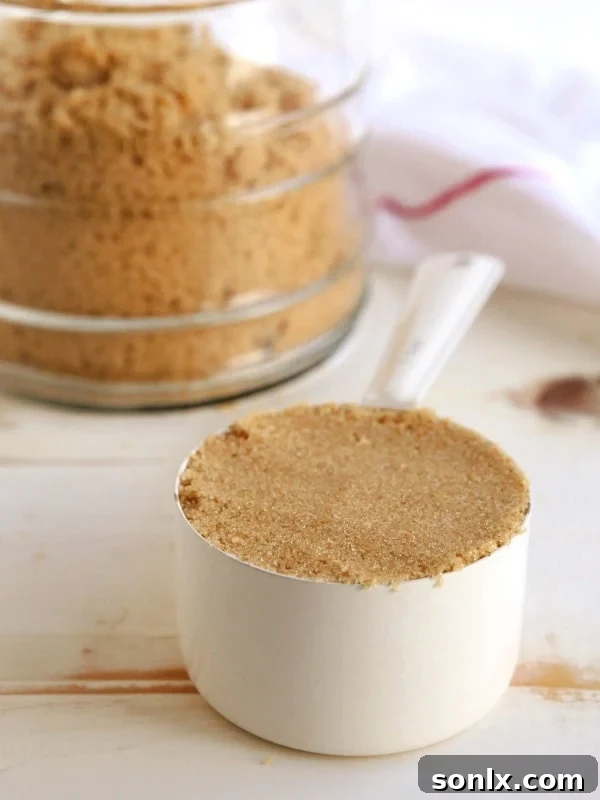
The Essential Guide to Packing Brown Sugar: Why It Matters for Perfect Baking
Every baker, from novice to seasoned pro, has likely encountered that specific instruction in a recipe: “1 cup brown sugar, packed” or “1 cup packed brown sugar.” For many, this simple phrase might seem like a mere detail, perhaps even an unnecessary one. However, overlooking this crucial step can significantly impact the outcome of your culinary creations. What exactly does “packed” mean, and why is it so incredibly important for achieving consistent, delicious results every time you bake? Let’s delve deep into the sweet science of brown sugar measurement and uncover the secrets to perfect texture and flavor.
Unraveling the Mystery: The Unique Nature of Brown Sugar
Unlike its granulated white counterpart, brown sugar possesses a distinct texture and composition. Its characteristic stickiness, moistness, and rich flavor come from the molasses content that coats each sugar crystal. Molasses, a byproduct of sugar refining, is hygroscopic, meaning it attracts and retains moisture. This property is precisely what gives brown sugar its soft, pliable texture and deep caramel notes. However, it’s also this very stickiness and moisture retention that makes precise measurement challenging without the correct technique.
When brown sugar is simply scooped into a measuring cup without compression, the sticky granules tend to clump together loosely, trapping numerous pockets of air within the cup. This creates an inaccurate measurement because a significant portion of the “volume” you’re measuring is actually just air, not sugar. If a recipe calls for a specific amount of brown sugar, it’s typically assuming you’ll be using the *actual* volume of sugar, not sugar diluted by an unknown quantity of trapped air. This inconsistency can throw off the delicate balance of ingredients in your recipe, leading to less-than-perfect results.
The Core Reason: Ensuring Unwavering Consistency in Your Baking
Achieving Predictable Results with Every Batch
Baking is often described as a delicate science, and for good reason. It relies on precise ratios and carefully balanced interactions between ingredients. Consistency in measurement is paramount to achieving predictable and repeatable results. When you pack brown sugar, you’re actively pressing out those air pockets, compacting the sugar granules, and ensuring that you’re getting a true, consistent volume of sugar every single time. This seemingly small step plays a monumental role in the texture, moisture, and sweetness of your baked goods.
Imagine baking a batch of your favorite chocolate chip cookies. If you loosely measure the brown sugar one day, resulting in less actual sugar, and then pack it properly the next, even if you use the “same” cup, the actual amount of sugar could vary significantly. This variation can lead to vastly different outcomes: one batch might be perfectly chewy and moist, while the other could turn out dry, crumbly, spread too much, or be overly sweet or not sweet enough because the sugar-to-flour or sugar-to-fat ratio was off. From the tender crumb of your cakes and muffins to the chewiness of your brownies and the rich caramelization of your sauces, the precise measurement of brown sugar plays a critical role in defining the final product.
The Science of Accurate Measurement: Volume vs. Weight
While packing brown sugar greatly improves the accuracy of volume measurements, it’s worth noting that for ultimate precision, especially in professional or highly technical baking, measuring by weight is often recommended. This is because even a perfectly packed cup of brown sugar can have slight variations in density depending on how firmly it was packed, the specific type of brown sugar (light vs. dark), or its current moisture content. A gram of brown sugar, however, is always a gram of brown sugar, regardless of its state or how it was packed.
For home bakers who primarily rely on volume measurements, consistently packing brown sugar is the closest you can get to guaranteeing accuracy without a kitchen scale. It minimizes the variables inherent in volume measuring and brings you closer to the intended recipe outcome. Many professional chefs and seasoned bakers advocate for the use of a kitchen scale for all dry ingredients, including brown sugar, to eliminate any potential inconsistencies that volume measuring can introduce. However, when a recipe specifies volume, and specifically “packed,” then mastering the art of packing it correctly is your best bet for culinary success and preventing common baking failures.
Mastering the Art: How to Properly Pack Brown Sugar
The technique for packing brown sugar is simple, yet crucial for consistent results. Even if a recipe doesn’t explicitly state “packed,” it’s a good practice to assume it should be packed unless otherwise specified (e.g., “loosely packed” or “heaping”). Here’s how to do it correctly and ensure your measurements are always on point:
- Choose the Right Measuring Cup: Always use dry measuring cups for dry ingredients like sugar. Liquid measuring cups have a spout and measurement lines typically below the rim, making them unsuitable for accurate dry measurements.
- Scoop with a Spoon: Instead of dipping your measuring cup directly into the brown sugar container, which can sometimes compact the sugar unevenly, use a separate spoon or scoop to transfer the brown sugar into your dry measuring cup. This helps to break up any large clumps initially and allows for more controlled filling.
- Press Gently but Firmly: Once you have a good amount of sugar in the cup, use the back of the spoon, your thumb, or even your knuckles to gently but firmly press the sugar down. You’ll feel it compacting and hear the air escaping as the granules are compressed. The goal is to create a solid mass without crushing the sugar crystals.
- Repeat and Fill: Continue scooping more brown sugar into the cup and pressing it down until the measuring cup is completely full and the sugar is densely packed throughout. Ensure there are no significant air pockets remaining.
- Level Off: The surface of the packed brown sugar should be perfectly flush with the rim of the measuring cup. Use a straight edge, such as the back of a knife or an offset spatula, to level off any excess sugar. This ensures you have the precise volume specified by the recipe. When you invert the measuring cup, the packed brown sugar should hold its shape like a sandcastle.
This meticulous method ensures that your measurement is dense, consistent, and accurately reflects the amount of sugar the recipe intends, laying the groundwork for baking perfection.
Troubleshooting Common Brown Sugar Woes: Rock-Hard Sugar & How to Soften It
One of the most frustrating things for a home baker is reaching for brown sugar only to find it has hardened into a solid, unyielding brick. This common problem occurs when the molasses-infused moisture, essential for brown sugar’s soft and pliable texture, evaporates due to exposure to air. While proper storage is the best preventative measure, softening rock-hard brown sugar is entirely possible, saving you from a trip to the grocery store mid-recipe.
Effective Methods to Restore Softness:
- The Microwave Method (for immediate use): This is the quickest solution when you need soft brown sugar right away.
- Place the hardened brown sugar in a microwave-safe bowl.
- Add a small piece of damp paper towel (ensure it’s damp, not dripping wet) on top of the sugar, or place a small microwave-safe bowl of water alongside it in the microwave. The steam is key.
- Microwave on high for 20-30 seconds. Check the sugar; if it’s not soft enough, gently break it up with a fork and microwave for another 10-15 seconds. Be careful not to overheat, as this can melt the sugar and create a sticky, hard mess upon cooling.
The steam from the damp paper towel or water bowl helps to quickly reintroduce moisture into the sugar crystals, making them pliable and easily packable again.
- The Bread/Apple Slice Method (for longer-term softening): This method takes a bit more time but is excellent for softening larger quantities or when you’re not in a rush.
- Place the hardened brown sugar in an airtight container or a large, heavy-duty zip-top bag.
- Add a slice of fresh bread, a few apple slices, or orange peels directly into the container with the sugar. These items naturally release moisture.
- Seal the container tightly and let it sit overnight, or for at least 8-12 hours.
The moisture from the bread, apple, or orange peel will be gradually absorbed by the sugar, softening it beautifully. Remember to remove the bread or fruit after the sugar has softened to prevent mold growth and ensure your brown sugar remains fresh.
- The Terra Cotta Disk Method (for sustained softness): This is a popular, reusable, and highly effective solution for keeping brown sugar soft over extended periods.
- Soak a brown sugar saver (a small terra cotta disk, often shaped like a bear) in water for 15-20 minutes.
- Place the damp disk directly into your container of brown sugar, nestling it into the sugar.
- Seal the container tightly. The porous terra cotta will slowly release its absorbed moisture, keeping the brown sugar soft, moist, and easily packable for weeks or even months.
Re-soak the disk every few weeks or whenever the sugar starts to feel firm again. This is a fantastic preventative measure as well.
Beyond the Basics: Understanding Different Types of Brown Sugar
While the packing technique applies universally to all brown sugar, it’s worth noting that there are two primary types commonly used in baking: light brown sugar and dark brown sugar. The main difference between them lies in their molasses content, which impacts their flavor profile and color.
- Light Brown Sugar: Contains approximately 3.5% molasses by weight. It has a milder flavor with subtle caramel notes and a lighter brown hue. This is the most commonly used type in general baking, suitable for a wide range of recipes, from cookies and cakes to glazes and toppings.
- Dark Brown Sugar: Contains about 6.5% molasses by weight. It boasts a richer, more robust molasses flavor and a deeper, darker color. It’s often preferred for recipes where a more pronounced caramel or molasses taste is desired, such as gingerbread, fruitcakes, BBQ sauces, or richer, chewier desserts.
Regardless of whether you’re using light or dark brown sugar, the fundamental principle remains the same: always pack it for accurate measurement. The higher molasses content in dark brown sugar makes it even stickier, and thus more prone to trapping air, necessitating the packing step just as much, if not more, than light brown sugar.
Storing Brown Sugar for Optimal Freshness and Packability
Preventing brown sugar from hardening in the first place is the most effective approach to ensuring it’s always ready for use. Proper storage is crucial for maintaining its soft, moist, and easily packable texture. The enemy of soft brown sugar is air exposure, which causes its precious molasses moisture to evaporate. Always store brown sugar in an airtight container. This could be:
- A sturdy plastic container with a tight-fitting lid.
- A glass jar with a rubber seal or a clamp-top lid.
- A heavy-duty, freezer-safe zip-top bag with all the air squeezed out before sealing.
The key is to create a barrier that prevents air from reaching the sugar. Additionally, you can incorporate one of the long-term softening methods mentioned above directly into your storage solution from the start (e.g., placing a pre-soaked terra cotta disk in the container with your fresh brown sugar). Storing it in a cool, dry place, away from direct sunlight or heat, will also help prolong its freshness.
The DIY Approach: Making Your Own Brown Sugar at Home
Did you know that if you ever find yourself unexpectedly out of brown sugar, or if you simply prefer the freshest possible ingredients, you can easily make your own at home? It’s a surprisingly simple process that requires just two ingredients: granulated white sugar and molasses. This can be a lifesaver in a pinch and also allows you the flexibility to customize the intensity of the molasses flavor to suit your specific recipe or preference.
To make your own brown sugar, simply combine 1 cup of granulated white sugar with 1 tablespoon of molasses for light brown sugar, or 2 tablespoons of molasses for dark brown sugar. Mix them thoroughly. The best way to achieve a uniform consistency is to combine them in a food processor, pulsing for a few minutes until the molasses is evenly distributed and the sugar takes on a consistent brown color and a moist, sandy texture. If you don’t have a food processor, vigorous mixing with a sturdy spoon or a stand mixer with a paddle attachment will also work. Voila! Instant brown sugar, fresh and ready to be packed and used in your favorite recipes. (Learn more about the different types of sugar and how to make your own brown sugar).
Final Thoughts: Elevate Your Baking with Precision
The seemingly small act of packing brown sugar is, in fact, a cornerstone of successful baking. It’s a simple, yet profound, technique that minimizes variables, ensures accuracy, and ultimately leads to more consistent, predictable, and undeniably delicious results in the kitchen. By understanding the unique properties of brown sugar, applying this fundamental measurement technique, and mastering proper storage and softening methods, you empower yourself to bake with greater confidence, precision, and joy.
So, the next time a recipe calls for brown sugar, remember the “packed” instruction. Embrace it, master it, and watch as your baked goods consistently achieve that perfect texture, moistness, and flavor you’ve always desired. This simple step can truly be the difference between a good baked good and a truly exceptional one. Happy baking!