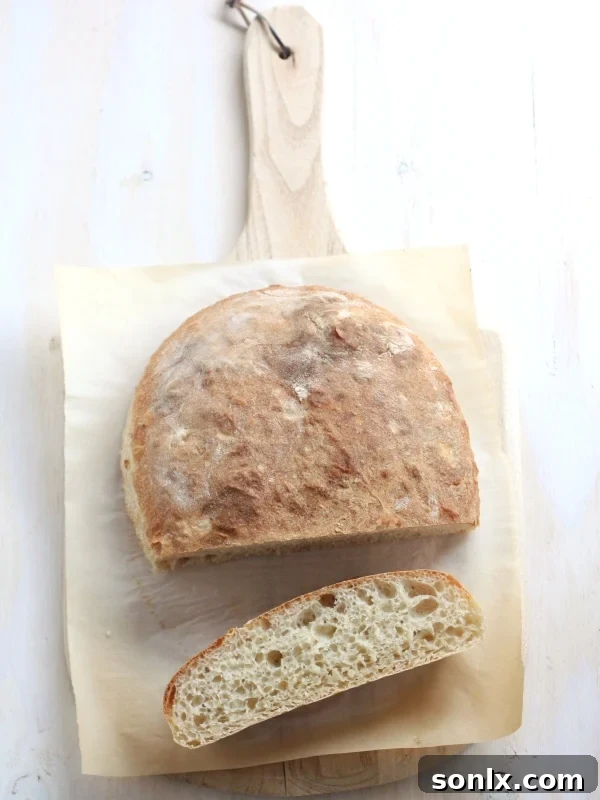
Mastering the Art of Homemade Roasted Garlic Ciabatta Bread: A Chewy, Flavorful Delight
Dive into the exquisite world of homemade artisan bread with this incredible recipe for Roasted Garlic Ciabatta. Renowned for its signature chewy texture, rustic crust, and wonderfully porous interior, ciabatta bread is a versatile staple perfect for elevating any meal. This particular rendition introduces a sublime twist: the subtle yet profound flavor of roasted garlic, transforming a classic into an unforgettable culinary experience. Imagine slicing into a warm loaf, the aroma of fresh bread mingled with sweet, caramelized garlic filling your kitchen – it’s pure bliss.
Whether you’re crafting the ultimate sandwich, eager to mop up the last drops of a rich pasta sauce, or simply seeking a delightful accompaniment to a hearty soup, this garlicky ciabatta rises to the occasion. Its robust structure and airy crumb make it an ideal canvas for countless culinary creations, from sophisticated bruschetta to simple slices generously slathered with butter.

My Journey with Yeast: From Fear to Flourishing
For many years, the idea of baking with yeast filled me with a sense of trepidation. The meticulous measurements, the precise temperatures, the enigmatic nature of rising dough – it all felt like a high-stakes science experiment rather than a joyful kitchen endeavor. However, thanks to my ongoing partnership with Red Star Yeast, my perspective has completely shifted. Over the past few years, this collaboration has allowed me to embark on an incredible bread-baking journey, transforming what was once a daunting task into a source of immense satisfaction and confidence.
What used to intimidate me to no end, I now approach with a calm assurance, feeling as though I could almost mix a dough in my sleep. This dramatic improvement speaks volumes about the power of consistent practice and reliable ingredients. Each loaf baked, each recipe explored, has chipped away at my initial apprehension, building a solid foundation of understanding and skill. That being said, the world of bread baking is vast and endlessly fascinating, and I know there’s still a wealth of knowledge to acquire and countless more recipes waiting to be discovered and mastered. My journey is far from over, and that’s what makes it so exciting.
So, when Red Star Yeast presented the opportunity to develop a unique ciabatta bread recipe, I didn’t hesitate for a moment. It was a perfect chance to not only deepen my bread-baking expertise but also to stretch my creative boundaries even further, diving into a specific type of bread that promised both challenge and immense reward. Crafting a ciabatta recipe from scratch was an exciting prospect, allowing me to truly explore the nuances of this distinctive Italian loaf.

The Unexpected History of Ciabatta: A Modern Classic
As I delved into the history and characteristics of ciabatta, I was genuinely surprised by what I uncovered. Many assume this rustic, traditional-looking bread has roots stretching back centuries, an ancient staple of Italian cuisine. Yet, my research revealed a fascinating truth: ciabatta was actually invented relatively recently, in 1982. Coincidentally, that’s the same year I was born, adding a personal connection to this delicious discovery!
While bread itself has been a cornerstone of human sustenance for millennia, it’s incredibly reassuring and inspiring to know that culinary innovation continues to thrive, even in seemingly timeless traditions. Ciabatta is a testament to the idea that new classics can emerge, capturing the hearts and palates of bread lovers worldwide within just a few decades.
Ciabatta, which literally translates to “slipper” in Italian, is aptly named for its distinctive broad, flat shape. Beyond its appearance, it’s instantly recognizable by its wonderfully chewy texture and its defining characteristic: a strikingly open, holey interior, often referred to as a “porous crumb.” These large, irregular air pockets are not flaws but rather hallmarks of a perfectly executed ciabatta, signifying a well-developed gluten structure and proper fermentation.
It has quickly become one of my absolute favorite breads for sandwiches, panini, or simply torn and dipped in olive oil. Despite my long-standing appreciation for it, this particular baking project marked the very first time I had ever attempted to bake ciabatta myself. And the result? Absolutely perfect. It exceeded all my expectations, confirming that some challenges are truly worth the effort.
The Magic of Roasted Garlic in Ciabatta
What truly sets this specific ciabatta recipe apart is the inclusion of roasted garlic. Unlike raw garlic, which can be pungent and overpowering, roasting transforms the cloves into soft, sweet, and nutty morsels. When these caramelized pockets of flavor are gently folded into the ciabatta dough, they practically melt, infusing every bite with a subtle yet unmistakably delicious depth.
The roasted garlic isn’t overtly dominant; instead, it offers a gentle, aromatic whisper that enhances the bread’s natural flavors without stealing the show. It’s definitely there, a scrumptious background note that elevates the entire experience, making each slice more complex and satisfying. This delicate infusion makes the bread not just a vehicle for other ingredients but a star in its own right, perfect for enjoying plain or as the foundation for gourmet creations.

Embracing the Ciabatta Challenge: Essential Baking Notes
While mastering ciabatta may not be excessively difficult, it certainly demands a bit more dedicated attention and patience compared to simpler yeast breads. The unique characteristics that make it so beloved—its open crumb and chewy texture—are achieved through specific techniques and a high-hydration dough that requires thoughtful handling. Don’t be deterred; the reward of a perfectly baked ciabatta is well worth the effort!
Here are some crucial notes and tips to guide you through the process, ensuring your Roasted Garlic Ciabatta turns out perfectly every time:
A Few Recipe Notes for Ciabatta Success:
- The Biga (Overnight Starter): Success with ciabatta begins the night before you plan to bake, with the creation of a *biga* or starter. This pre-ferment is absolutely essential for developing the characteristic deep flavor and open, airy texture of ciabatta. Allowing the biga to sit overnight gives the yeast ample time to ferment, producing complex flavors and a strong gluten structure. By the next day, your biga should have transformed into a soupy consistency with an active, bubbly surface, indicating it’s ready to bring your main dough to life. This step is non-negotiable for achieving authentic ciabatta.
- High-Hydration Dough: Ciabatta dough is exceptionally wet—almost more like a thick batter than a traditional bread dough. This high hydration is key to its open crumb. Because of its liquidity, this dough cannot be effectively kneaded by hand. A stand mixer fitted with a dough hook is your best friend here, providing the necessary power and leverage to develop the gluten without making a sticky mess of your hands. Attempting to hand-knead this dough would be an exercise in frustration.
- Vigorous Kneading in the Mixer: Due to its high water content, ciabatta dough needs to be kneaded at a higher speed than typical bread doughs. This aggressive mixing helps to build the gluten network that will trap air and create those desirable large holes. Keep a close eye on your stand mixer during this stage; the dough will be lively, and you’ll want to ensure your mixer remains stable on the counter! The dough will start very wet but will eventually come together, clearing the sides of the bowl and taking on a glossy, smooth appearance. Don’t worry if it “pools” at the bottom when the mixer stops—that’s perfectly normal for this type of dough.
- Gentle Handling is Key: Once the dough has risen and you begin to work with it by hand, remember to be as gentle as possible. The goal is to preserve all those beautiful air bubbles that have formed beneath the surface during fermentation. These bubbles are the foundation of ciabatta’s signature open crumb, so treat the dough with care to avoid deflating it. Use generously floured hands and avoid excessive pressing or squeezing.
- Customize Your Flavor: Not a fan of garlic? No problem! This recipe is incredibly versatile. Feel free to omit the roasted garlic entirely for a classic, unadulterated ciabatta experience. Alternatively, you could experiment with other additions like fresh rosemary, sun-dried tomatoes, or olives for different flavor profiles.
- Seeking Yeast Baking Guidance? If you’re new to the world of yeast breads or simply looking to brush up on your skills, I highly recommend exploring the resources offered by Red Star Yeast. Their website features an incredibly helpful section dedicated to Lessons in Yeast & Baking. It’s packed with fantastic tips, tutorials, and common troubleshooting advice that can make a huge difference in your baking success.

Roasted Garlic Ciabatta Bread
2 loaves
20 mins
50 mins
9 hrs 30 mins
10 hrs 40 mins
Pin Recipe
Leave a Review
Ingredients
Overnight starter (Biga):
- ½ cup water (118 ml)
- ½ teaspoon Red Star Active Dry Yeast
- ¾ cup bread flour (90 grams)
Bread:
- 1 head of garlic
- 2 cups water (475 ml)
- 1 teaspoon Red Star Active Dry Yeast
- Starter, from above
- 4 cups bread flour (480 grams)
- 2 teaspoons salt
- 1 teaspoon granulated sugar
Instructions
To make the starter:
-
Dissolve the yeast in the water. Add the bread flour and stir to make a wet dough. Cover with plastic wrap and let sit at room temperature for at least 8 hours and up to 15 hours. The next day the starter should be soupy with a bubbly surface.
To make the bread:
-
Preheat oven to 350°F. Wrap the garlic in foil and bake for about 30 minutes until fragrant and very soft. Let cool completely, then slip garlic cloves out of their skins and roughly chop.
-
In the bowl of a stand mixer fitted with a dough hook, dissolve the yeast in the water. Add all of the prepared starter and use a dough whisk or spatula to break it up into the water. It doesn’t need to completely dissolve, just distribute.
-
Add the bread flour, salt, sugar, and the roughly chopped roasted garlic. Knead the dough with the mixer on medium speed for about 12-15 minutes. Initially, the dough will be very wet and sticky, but as it develops, it will thicken somewhat, begin to clear the sides of the bowl, and turn glossy and smooth. When you turn off the mixer, it will likely pool at the bottom of the bowl, and that consistency is correct.
-
Cover the bowl tightly with plastic wrap and let the dough rise in a warm, draft-free place until it has tripled in volume, which typically takes about 1 ½ hours, depending on your kitchen’s temperature.
-
With generously floured hands (this dough is very sticky!), gently scoop the risen dough out of the bowl onto a well-floured surface. Divide the dough into two equal portions. Working very gently and re-flouring your hands as necessary to prevent sticking, carefully shape each portion into an oblong loaf. Place each shaped loaf onto a separate sheet pan lined with parchment paper.
-
Let the shaped loaves rise, uncovered, until they have doubled in size, which usually takes about 45 minutes. During this second rise, preheat your oven to a high temperature of 475°F (245°C).
-
Bake the ciabatta loaves for 20-25 minutes, or until they achieve a beautiful golden-brown crust and sound hollow when tapped on the bottom. Allow the bread to cool slightly on a wire rack before serving warm or at room temperature. Store any leftover ciabatta in an airtight container at room temperature for up to 3 days to maintain its freshness.
Nutrition Information (per serving, based on 2 loaves):
Calories: 1111kcal, Carbohydrates: 222g, Protein: 39g, Fat: 6g, Saturated Fat: 1g, Sodium: 2352mg, Potassium: 383mg, Fiber: 10g, Sugar: 3g, Vitamin C: 1mg, Calcium: 52mg, Iron: 3mg
Have you tried this recipe?
I’d love to hear about it! Leave a rating and review below, or take a photo and tag it on Instagram @completelydelicious with #completelydelicious.
Disclosure: This recipe was developed in partnership with Red Star Yeast. All opinions expressed are my own, as always. Thank you for supporting partnerships with brands and products I genuinely believe in and use in my own kitchen.
For more baking inspiration and helpful resources, be sure to visit Red Star Yeast on their website, and follow them across their social media channels for updates, tips, and new recipes: Twitter, Facebook, Pinterest, and Google+. Happy baking!