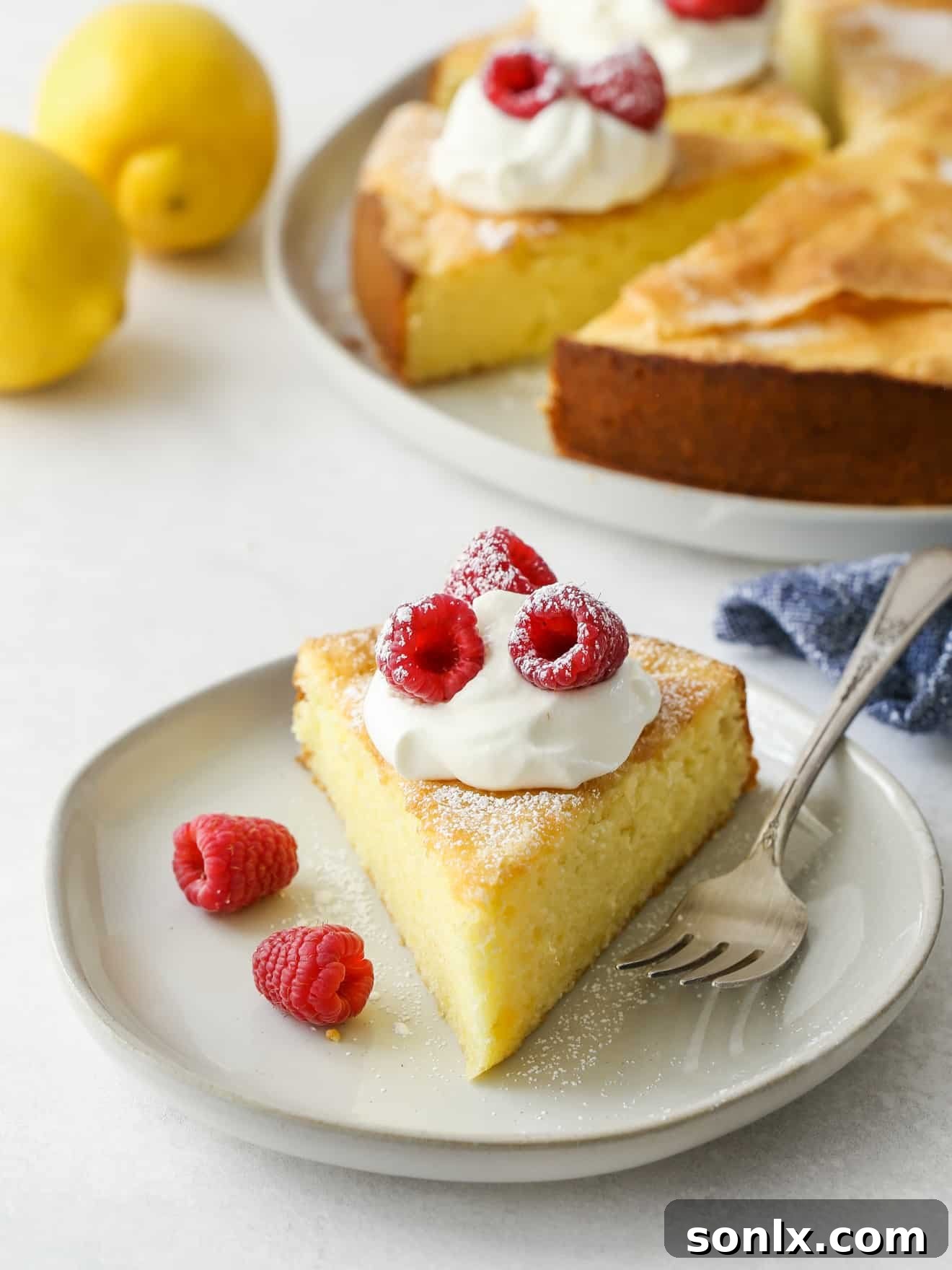
Experience the sheer delight of a truly remarkable dessert with this incredibly light and tender Lemon Olive Oil Cake. Requiring just a handful of basic ingredients, this flavorful creation effortlessly balances simplicity with sophistication, making it perfect for both an everyday treat and a show-stopping centerpiece at your next dinner party. Its unique moistness and bright, zesty character promise a memorable culinary experience for every palate, transforming ordinary moments into extraordinary ones with every bite.
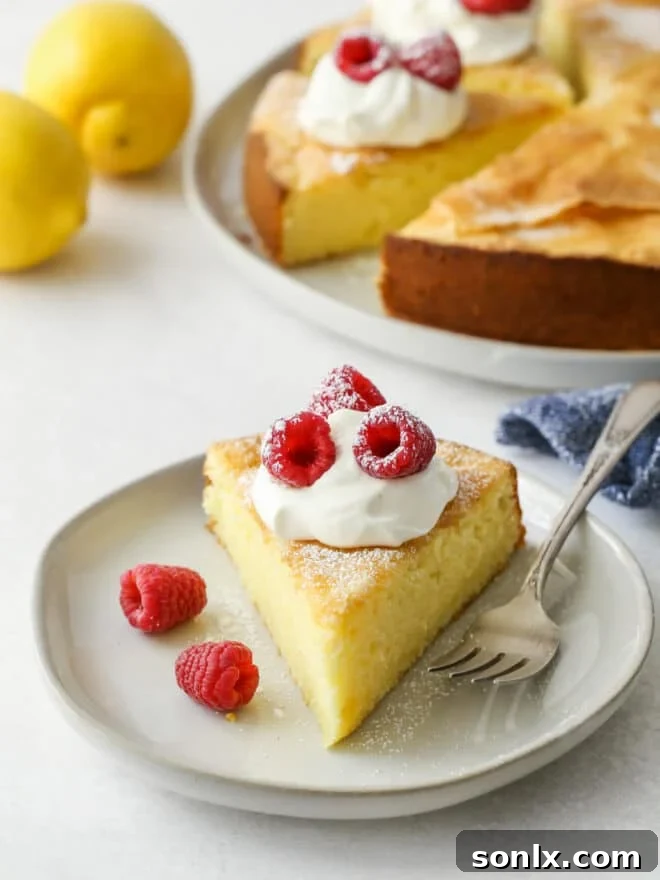
In the vast world of baking, some recipes capture your heart and become instant classics in your kitchen. This simply dreamy lemon olive oil cake is precisely one of those. My journey with this exquisite cake began over a decade ago when I was searching for an impressive, yet easy-to-prepare and not-too-heavy dessert for a dinner party. Little did I know, this recipe would quickly evolve from a simple party idea into a beloved staple, baked repeatedly to the joy of family and friends alike. Its enduring appeal lies in its straightforward preparation and irresistibly delicate flavor, proving that some culinary discoveries are truly timeless. The harmonious blend of zesty lemon and the subtle richness of olive oil creates a cake that is both refreshing and deeply satisfying, unlike any other.
Table of Contents
- Why This Lemon Olive Oil Cake is a Must-Try
- The Magic of Olive Oil in Baking
- Essential Ingredients for Your Lemon Olive Oil Cake
- Step-by-Step Guide to Baking Perfection
- Expert Baking Tips for Success
- Frequently Asked Questions (FAQs)
- Serving and Storage Suggestions
- Explore More Lemon Recipes
Why This Lemon Olive Oil Cake is a Must-Try
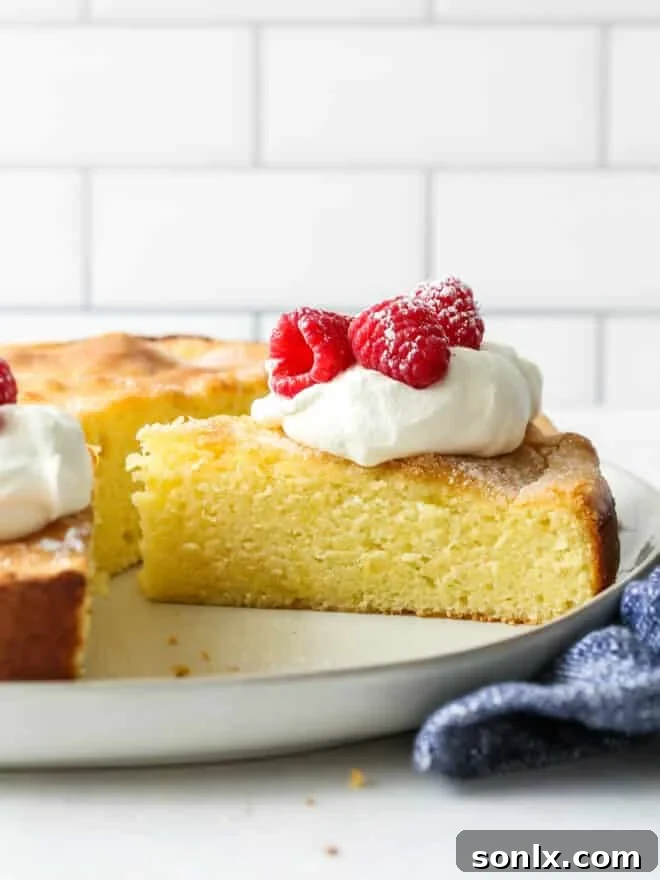
This Lemon Olive Oil Cake stands out as a true culinary gem, offering a symphony of textures and flavors that will captivate anyone who tries it. Its remarkable tenderness and moist crumb are complemented by a bright, refreshing lemon flavor that is both invigorating and comforting. The secret to its elevated character lies in the careful incorporation of quality olive oil, which imparts a subtle, fruity complexity that transforms the cake from merely good to truly exceptional. Depending on the quality and type of olive oil used, you might detect delicate notes ranging from peppery to buttery, adding a depth that butter alone cannot achieve. This distinctive olive oil essence enhances the lemon, creating a harmonious and sophisticated flavor profile that is truly unique and memorable.
Despite its sophisticated taste, this recipe is surprisingly approachable for bakers of all skill levels. While it involves a few distinct steps, such as separating eggs and carefully folding ingredients, the process is incredibly forgiving and yields consistently stunning results. This was one of the first recipes I truly mastered, and it quickly became a go-to for its reliability and delicious outcome. The clear, step-by-step instructions ensure that even novice bakers can achieve a perfectly light and tender cake without feeling overwhelmed. It’s a fantastic recipe to build confidence in the kitchen and impress without excessive effort.
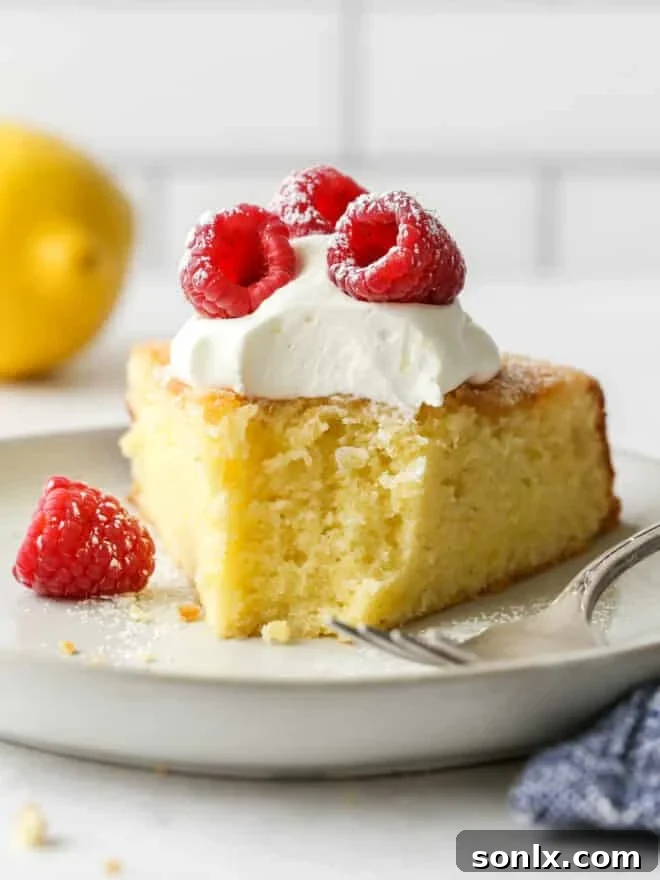
One of the greatest virtues of this lemon olive oil cake is its incredible versatility. It shines beautifully on its own, showcasing its natural flavors without any embellishments. A simple dusting of powdered sugar is often all it needs. However, for those who appreciate a touch of extravagance, it serves as a perfect canvas for various accompaniments. My personal favorite way to enjoy it is with a dollop of sweetened whipped cream and a generous scattering of fresh, seasonal berries, which enhance its brightness and add a delightful textural contrast. Whether served plain, adorned with fresh fruit, or paired with a light citrus glaze, this cake promises a delightful dessert experience that is both simple and elegant, making it suitable for any occasion, from casual brunches to formal dinner parties.
The Magic of Olive Oil in Baking
The inclusion of olive oil might seem unconventional to some in baking, but it’s precisely what elevates this cake to a whole new level. Unlike butter, which can sometimes make cakes dense and heavy, olive oil contributes to an exceptionally light and moist crumb. It creates a finer, more tender texture that literally melts in your mouth, distinguishing it from traditional butter-based cakes. This liquid fat also helps keep the cake moist for longer, ensuring its delightful texture persists for days after baking.
Beyond texture, olive oil introduces a nuanced flavor profile that pairs wonderfully with citrus. A good quality extra-virgin olive oil will impart subtle fruity, grassy, or even peppery notes, adding a sophisticated depth to the bright lemon zest and juice. This delicate interplay of flavors results in a cake that feels fresh, vibrant, and uniquely Mediterranean. The olive oil doesn’t just provide moisture; it layers in a complexity that enhances the overall taste, creating a more dynamic and intriguing dessert. Furthermore, olive oil is a healthier fat compared to many alternatives, offering monounsaturated fatty acids that contribute to a more wholesome dessert option without compromising on taste or indulgence.
Essential Ingredients for Your Lemon Olive Oil Cake
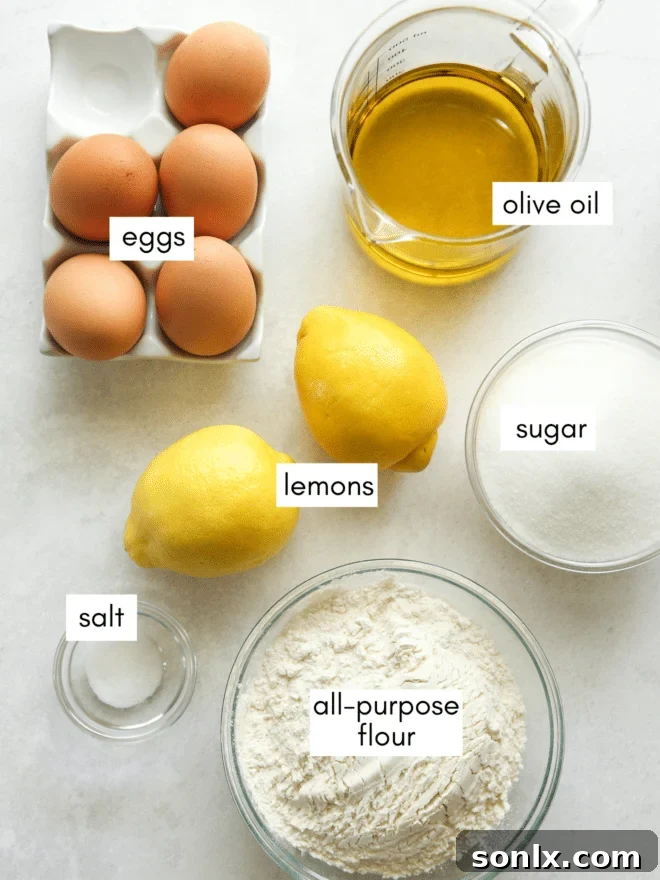
Crafting this delightful cake begins with selecting high-quality ingredients. Each component plays a crucial role in achieving the perfect balance of flavor and texture, ensuring a truly exceptional baking experience:
- Large Eggs (separated): The separation of yolks and whites is a cornerstone of this recipe. Egg yolks contribute richness, moisture, and a lovely golden hue to the batter. Meanwhile, the whipped egg whites are folded in to create the cake’s signature airy, light, and tender structure. For the best results, ensure your eggs are at room temperature, as this facilitates easier separation and allows the whites to whip up to their maximum volume.
- Granulated Sugar: This recipe utilizes granulated sugar in two distinct stages. A portion is creamed with the egg yolks, providing essential sweetness and helping to create a thick, pale base. The remaining sugar is gradually added to the egg whites as they whip, stabilizing the meringue and creating those soft, glossy peaks that are crucial for the cake’s lift and delicate texture.
- Quality Extra-Virgin Olive Oil: This is arguably the most vital ingredient. Do not compromise on quality here; choose an olive oil with a flavor profile you genuinely enjoy, perhaps one you’d use for salad dressings or dipping bread. A high-quality extra-virgin olive oil will impart a subtle, fruity depth and a delicate aroma that beautifully enhances the lemon, rather than overpowering it, contributing significantly to the cake’s moistness and unique character.
- Fresh Lemon Juice and Zest: Absolutely indispensable for that vibrant, tangy, and refreshing lemon flavor that defines this cake. Always use fresh lemons for both the juice and the zest, as bottled alternatives simply cannot replicate the brightness and aromatic intensity. The zest, in particular, holds most of the lemon’s essential oils, providing an intense burst of flavor that permeates throughout the cake.
- All-Purpose Flour: This forms the primary structural foundation of the cake. Sifting the flour before incorporating it into the wet ingredients is highly recommended. This simple step helps to aerate the flour, prevents lumps, and contributes to a finer, lighter crumb in the finished cake.
- Salt: A small but mighty ingredient, a pinch of salt is essential. It performs the critical task of balancing the sweetness of the sugar and enhancing all the other flavors in the cake, bringing out the very best in both the lemon and the olive oil and ensuring a well-rounded taste.
Step-by-Step Guide to Baking Perfection
Follow these detailed instructions to create a flawless Lemon Olive Oil Cake that will impress everyone. Precision in each step ensures the light and tender crumb this cake is famous for.
- Prepare Your Pan and Oven: Begin by preheating your oven to 350°F (175°C). This ensures the oven is at the correct temperature when the cake goes in, promoting even baking. Lightly grease a 9-inch springform pan with non-stick cooking spray, ensuring all surfaces are covered. Then, cut a circle of parchment paper to fit the bottom of the pan perfectly, place it in, and grease the parchment as well. This crucial step prevents sticking and ensures easy, clean removal of the delicate cake later.
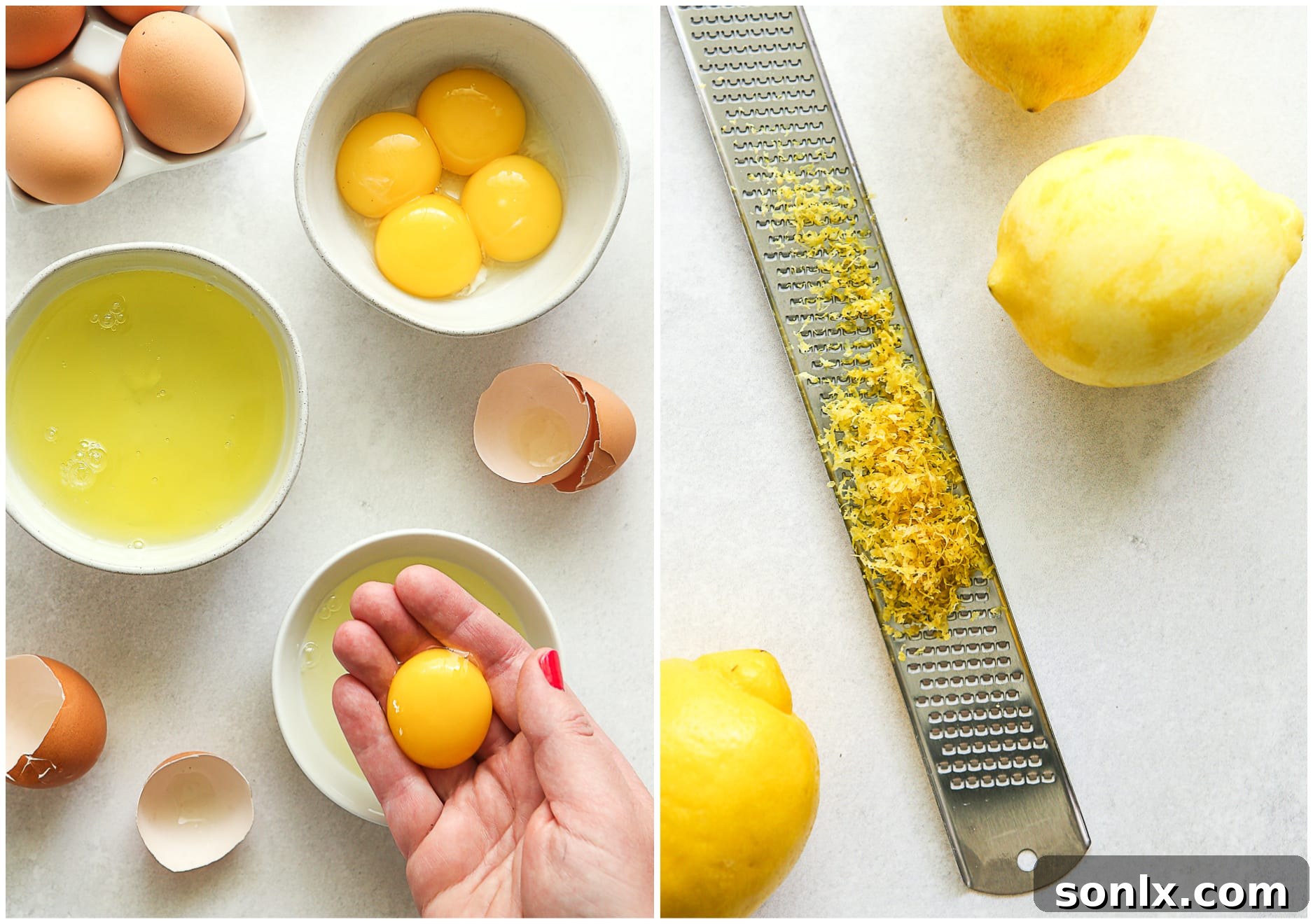
- Separate Eggs with Care: This recipe calls for 5 large eggs, with yolks and whites beaten separately to maximize the cake’s light texture. Carefully separate each egg into individual bowls, ensuring absolutely no trace of yolk mixes with the whites. Even a tiny amount of fat from the yolk can hinder the whites from whipping properly. Room temperature eggs separate more easily and their whites whip up to a greater volume and more stable peaks.
- Zest and Juice Your Lemon: Using a fine grater or microplane, zest the entire peel of one fresh lemon. Be meticulous to only get the bright yellow part, avoiding the bitter white pith beneath. After zesting, slice the lemon in half and squeeze out approximately 2 tablespoons of fresh juice. This fresh zest and juice are paramount for the cake’s vibrant flavor.
- Beat Egg Yolks and Incorporate Olive Oil: In a large mixing bowl (preferably the bowl of a stand mixer fitted with a whisk attachment), beat the egg yolks with ½ cup of the granulated sugar until the mixture becomes pale in color and thick in consistency. It should fall in a thick ribbon when lifted with the whisk. Gradually, with the mixer still running on low speed, slowly stream in the combined olive oil and lemon juice. Don’t be alarmed if the mixture appears slightly curdled at this stage; it’s completely normal and will smooth out as other ingredients are added.

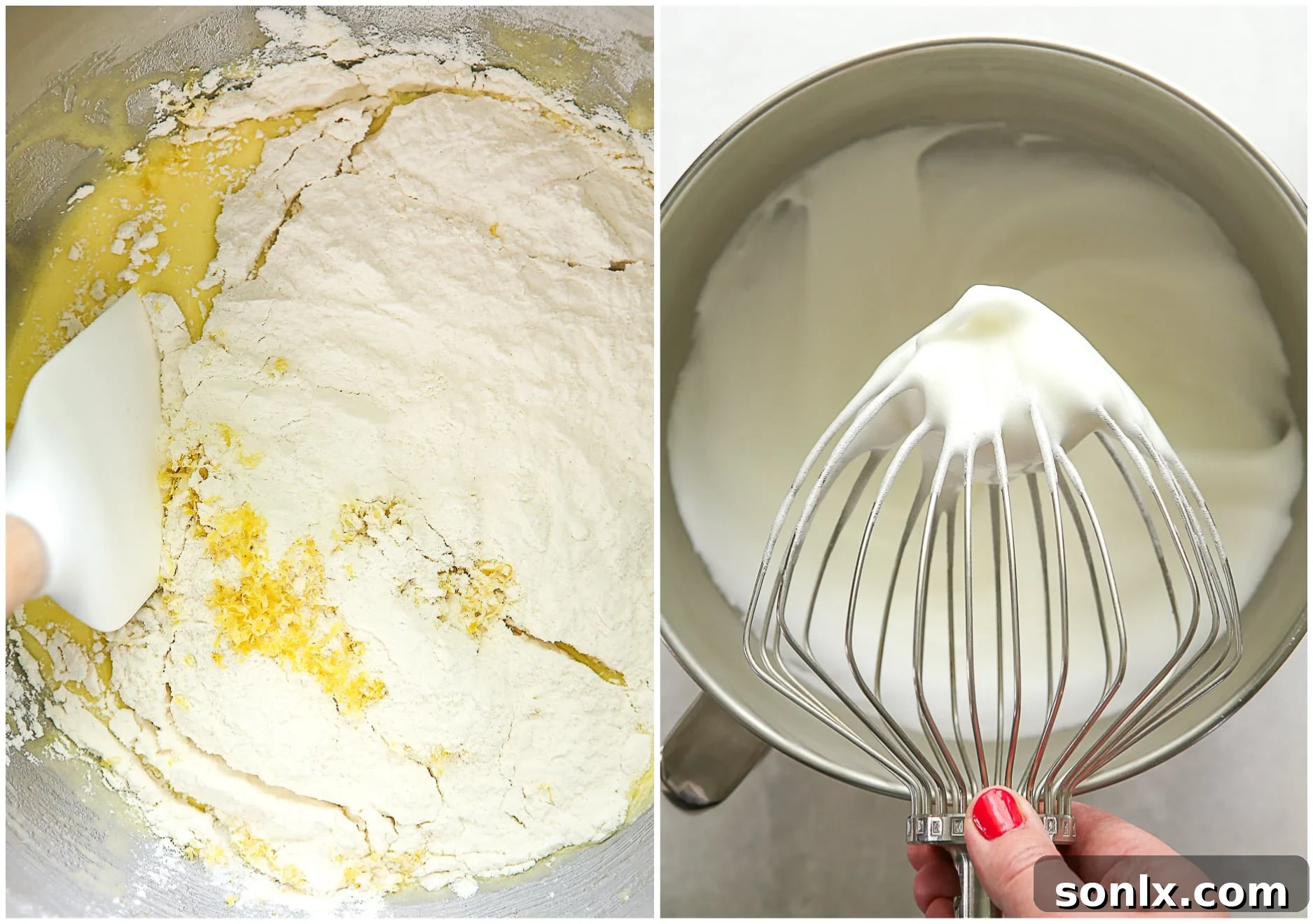
- Gently Fold in Dry Ingredients: To the egg yolk-olive oil mixture, add the all-purpose flour, salt, and half of the lemon zest (remember to reserve the other half for the topping). Use a flexible spatula to gently fold these dry ingredients into the wet mixture until they are just combined. Mix only until no streaks of flour remain. Overmixing at this stage can overdevelop the gluten in the flour, which can lead to a tough and less tender cake.
- Whip Egg Whites to Soft Peaks: Transfer the prepared batter to a separate large bowl and set aside. It’s crucial to thoroughly clean your mixing bowl and whisk attachment now. Any residual fat from the previous mixture will prevent the egg whites from whipping properly. Add the egg whites to the meticulously clean bowl and use the whisk attachment to whip them on medium-high speed until they become foamy. Gradually, slowly sprinkle in ¼ cup of the remaining granulated sugar and continue beating until soft, glossy peaks form. The peaks should hold their shape when the whisk is lifted but still be slightly soft at the tip, not dry and stiff.
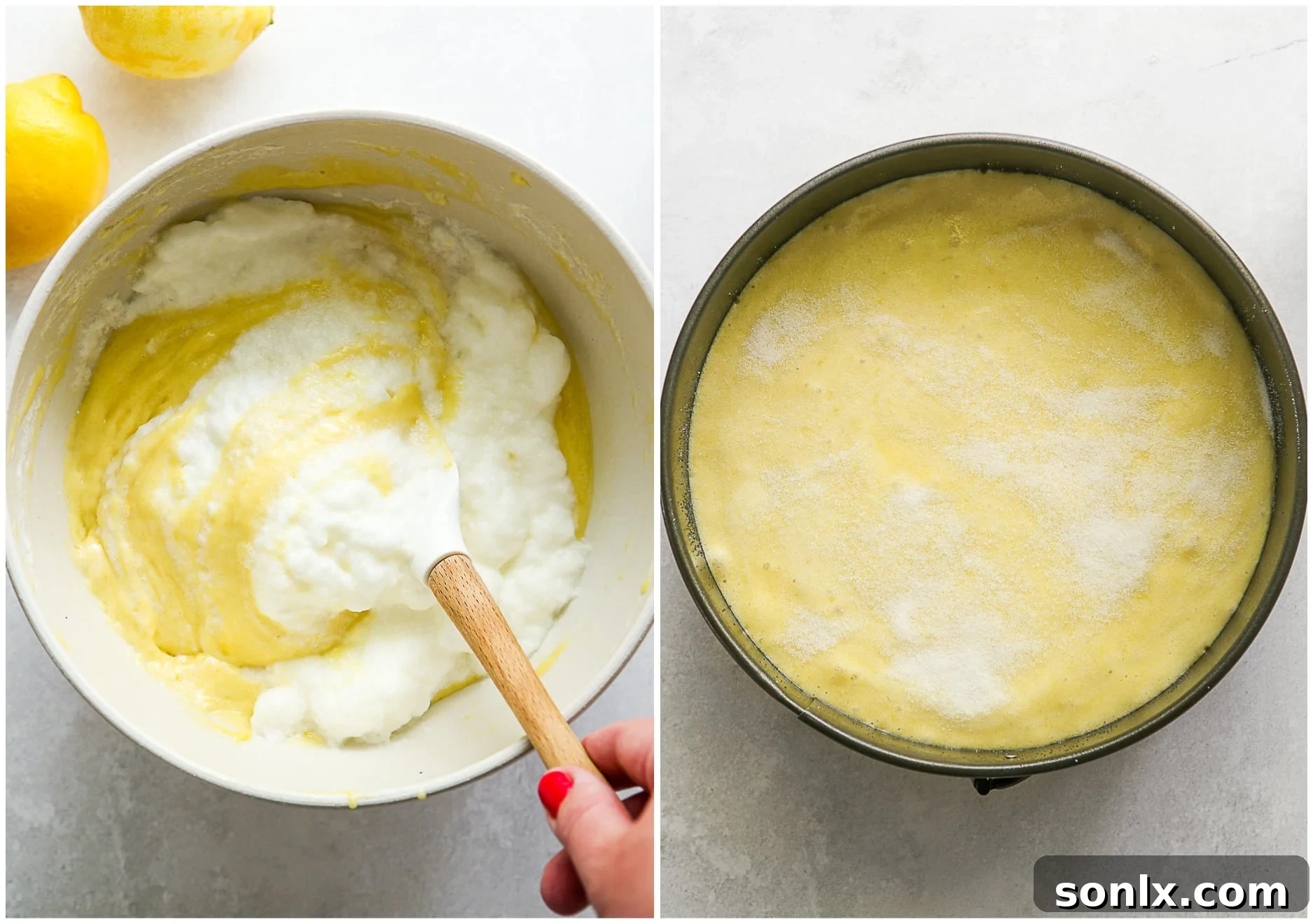
- Carefully Fold Whites into Batter: This is a critical step for the cake’s light texture. Gently fold the whipped egg whites into the olive oil batter in two additions. Use a large spatula and a light, deliberate hand, using a “cut down, sweep across, and lift up” motion to incorporate the whites. The goal is to fold just until the whites are fully incorporated and no streaks remain, being extremely careful not to overmix or deflate the batter. This preserves the air that gives the cake its signature lightness.
- Bake to Golden Perfection: Gently spread the prepared cake batter evenly into the greased 9-inch springform pan. Sprinkle the top with the remaining 2 tablespoons of sugar and the rest of the lemon zest. This creates a beautiful, slightly crispy, and aromatic crust. Bake for 30-35 minutes, or until the cake turns golden brown on top and a wooden skewer or toothpick inserted into the exact center comes out clean, indicating it’s fully cooked through.
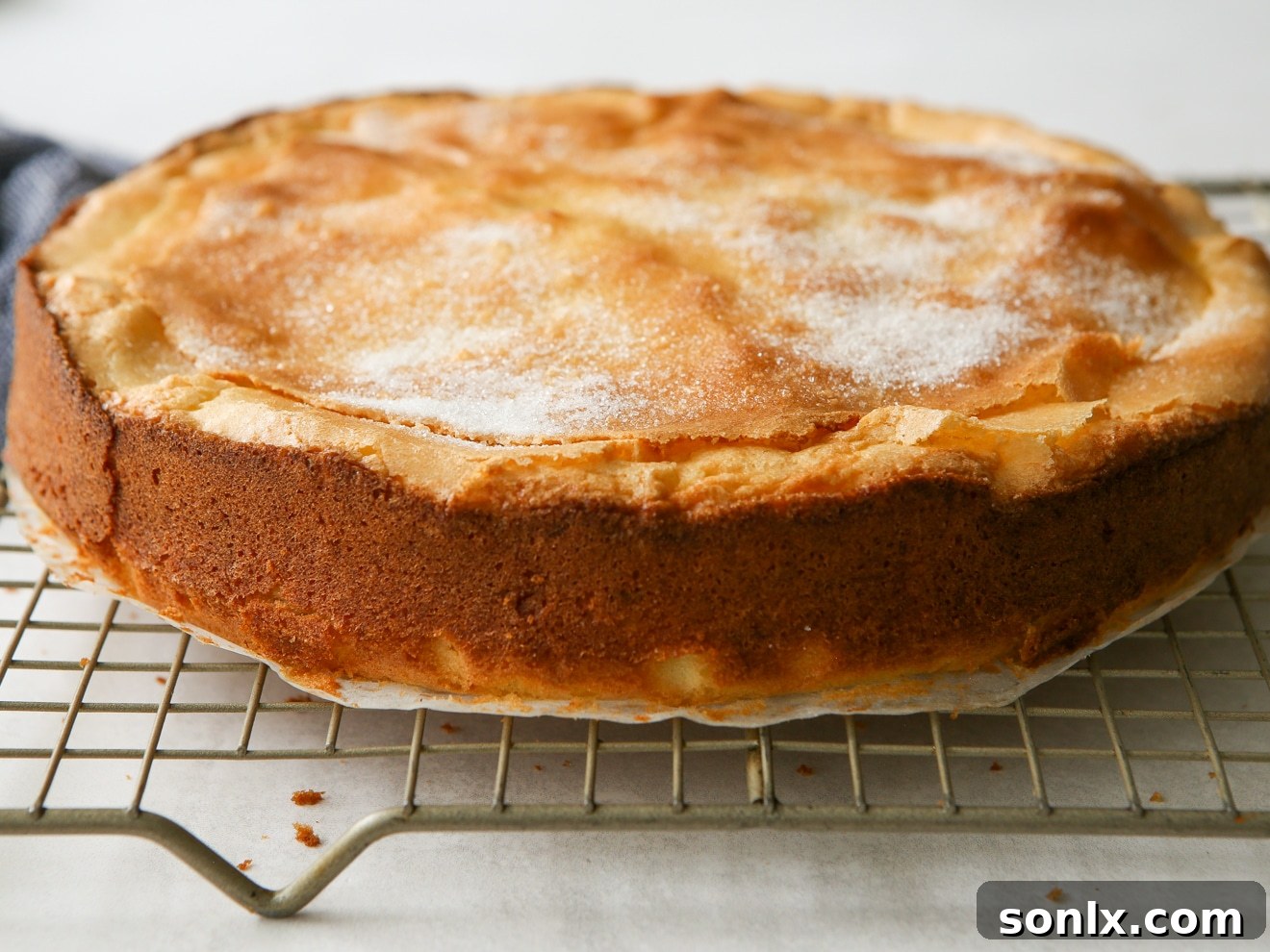
- Cool and Serve: Once baked, remove the cake from the oven and allow it to cool in the pan for about 10 minutes. This resting period allows the cake to set slightly before handling. Then, carefully release and remove the sides of the springform pan. Transfer the cake to a wire rack to cool completely. While it’s delightful served slightly warm, allowing it to cool fully will set its delicate structure and make it easier to slice. Dust with powdered sugar, and serve as desired with fresh berries and sweetened whipped cream for an elegant and refreshing touch.
Expert Baking Tips for Success
Achieving a perfect lemon olive oil cake is simple with a few insider tips. These pointers will help you master the technique and ensure a consistently delicious outcome every time.
Baking Tip: How to Perfectly Separate Eggs
Proper egg separation is absolutely crucial for this recipe, especially when whipping egg whites for volume and structure. Even a tiny speck of egg yolk can prevent egg whites from thickening properly due to the fat content. This method is foolproof for achieving pristine whites every single time:
- Gather Your Bowls: Before you begin, have three small, clean bowls ready. One will be used for cracking the egg, one specifically for collecting the yolks, and the third for the whites. This three-bowl method minimizes the risk of contaminating a batch of whites if a yolk accidentally breaks.
- Crack and Separate: Crack an egg gently over the first bowl. Carefully pour the egg into your cupped fingers, allowing the egg white to slip through into the bowl. The yolk should remain safely in your hand.
- Transfer to Designated Bowls: Once the white has completely separated, carefully place the intact yolk into its designated bowl and pour the white into its designated bowl. If, at any point, a yolk breaks and falls into the egg white you intend to whip, it’s best to discard that white and start fresh with a new egg for whipping. However, the contaminated white can still be used for other purposes where whipping isn’t required.
Remember, while egg yolks and whites are generally easier to separate when they are cold, egg whites whip best and achieve maximum volume at room temperature. For optimal results, separate your eggs when they are cold from the refrigerator, then let the whites sit out for about 30 minutes to reach room temperature before whipping them. Leftover egg yolks or whites not used right away can be stored in airtight containers in the fridge for a few days for other culinary uses.
- Room Temperature Ingredients are Key: This is a golden rule in baking. For eggs, separating them when cold is easier, but for whipping whites to maximum volume and for proper emulsion of the yolk mixture, allow them to come to room temperature for about 30 minutes. This ensures better incorporation of ingredients, a smoother batter, and optimal rise. Similarly, ensure any other dairy components, if you choose to add them, are also at room temperature.
- Cleanliness is Paramount for Egg Whites: As detailed above, any trace of fat – whether from a stray speck of egg yolk or residual grease in your mixing bowl and whisk attachment – will critically prevent egg whites from whipping into stiff, stable peaks. Always ensure your equipment is meticulously clean, completely dry, and free of any oily residue before attempting to whip the whites. If you have two sets of mixing bowls and whisks, using separate ones for yolks and whites is an excellent safeguard against contamination.
- Master the Art of Folding: The technique of gently folding ingredients is absolutely crucial for maintaining the airy texture created by the whipped egg whites. Use a large, flexible spatula and employ a “cut down through the center, sweep across the bottom, and lift up” motion, gently rotating the bowl as you go. This technique incorporates ingredients without deflating the delicate batter, ensuring a light and tender final cake. Avoid aggressive stirring or whisking once the whites are in.
- Prevent Sticking with Parchment Paper: If you’re nervous about your cake sticking to the pan, especially in a springform pan which can sometimes have minor leaks, an extra layer of parchment paper on the bottom is a simple yet incredibly effective solution. Cut a perfect circle to fit the base of the pan and lightly grease it before adding the batter. This guarantees easy release and a pristine cake.
- Storing Your Cake: This lemon olive oil cake retains its moisture beautifully thanks to the olive oil. To keep it fresh and delicious, store it in an airtight container at room temperature for up to 5 days. This prevents it from drying out and maintains its lovely texture.
- Freezing for Future Enjoyment: This cake also freezes exceptionally well, making it perfect for meal prep or enjoying a slice later. Wrap individual slices or the entire cooled cake tightly in a double layer of plastic wrap, and then an additional layer of aluminum foil, to prevent freezer burn. It can be stored in the freezer for 1-2 months. When ready to enjoy, simply thaw at room temperature for several hours or overnight before serving.
- Don’t Overmix the Batter: After adding the flour, mix only until the dry ingredients are just combined and no streaks of flour are visible. Overmixing develops gluten in the flour, which can lead to a tough, rubbery, and chewy cake rather than the desired light and tender one. This also applies when folding in egg whites – stop as soon as they are incorporated.
- Utilize Fresh Lemon Zest: The zest contains aromatic oils that provide a much more intense and complex lemon flavor than juice alone. Don’t skip this crucial step, and ensure you’re only zesting the bright yellow part of the peel, avoiding the bitter white pith which can negatively impact the flavor.
Frequently Asked Questions (FAQs)
For the most outstanding flavor, I highly recommend using a high-quality extra-virgin olive oil for this lemon cake recipe. Think of an olive oil you’d happily use for dipping bread or drizzling over a fresh salad – its nuanced, fruity notes will truly shine through in this cake, adding a wonderful complexity and depth that butter cannot provide. While a milder olive oil will still contribute to a moist texture, it won’t offer the same delightful boost of flavor that sets this cake apart. The right olive oil is a game-changer!
While not strictly mandatory, I strongly prefer baking this cake in a 9-inch springform pan. The removable sides allow for effortless demolding without having to invert the cake, which beautifully preserves its delicate structure and that irresistible crispy sugar topping. If a springform pan isn’t available, you can use a regular 9-inch round cake pan. Just be sure to let it cool for about 10 minutes, run a thin knife around the edges to loosen it, and then very carefully invert it onto your hand before placing it right-side up on a serving plate. Be extra gentle to avoid damaging the top.
Absolutely! This recipe is wonderfully versatile and adapts beautifully to other citrus fruits, allowing for exciting flavor variations. Feel free to experiment with lime, orange, or even grapefruit. Each will impart its own unique, delicious flavor profile to the cake. For instance, orange would give a sweeter, milder citrus note, while lime would offer a sharper, more aromatic zest. Just ensure you use fresh juice and zest for the best results.
To check for doneness, the most reliable method is to insert a wooden skewer or a clean toothpick into the very center of the cake. If it comes out clean with no wet batter clinging to it, your cake is ready. Additionally, the edges of the cake should be visibly golden brown and slightly pulled away from the sides of the pan. The cake should also feel springy to the touch in the center. Avoid opening the oven door too frequently during baking, especially in the first 20 minutes, as this can cause the cake to sink.
The most common reason for egg whites failing to whip properly is the presence of fat. Even a tiny speck of egg yolk or residual grease from an unclean mixing bowl or whisk can prevent them from aerating and reaching stiff peaks. Always ensure your bowl and whisk are immaculately clean, completely dry, and free of any oily residue. Another factor is temperature: cold egg whites are much harder to whip to full volume, so ensure they are at room temperature before you begin whipping.
Serving and Storage Suggestions
This versatile Lemon Olive Oil Cake can be enjoyed in various ways and stores remarkably well, making it a convenient dessert for any occasion.
- Serving: While truly delightful on its own, a simple dusting of powdered sugar makes for an elegant presentation. For an extra special treat, serve it with a generous dollop of freshly whipped cream and a scattering of fresh berries (such as raspberries, blueberries, or sliced strawberries). The tartness of the berries beautifully complements the cake’s sweetness and lemon flavor. A light lemon glaze, made from powdered sugar and a little fresh lemon juice, can also be drizzled over the cooled cake for an added tangy sweetness.
- Storage: To maintain its wonderful moistness and fresh flavor, keep the cooled cake in an airtight container at room temperature for up to 5 days. This prevents it from drying out and allows the flavors to meld beautifully. Avoid refrigerating unless absolutely necessary, as it can sometimes alter the texture of cakes.
- Freezing: For longer storage, this cake freezes beautifully, making it perfect for enjoying a slice whenever a craving strikes. Wrap individual slices or the entire cooled cake tightly in a double layer of plastic wrap, and then an additional layer of aluminum foil, to prevent freezer burn and protect its delicate texture. It can be stored in the freezer for 1-2 months. When ready to enjoy, simply thaw at room temperature for several hours or overnight before serving.
Explore More Lemon Recipes
If you’ve fallen in love with the vibrant, zesty taste of lemon in this cake, you’ll be thrilled to discover other lemon-infused delights from our collection. Lemon is a remarkably versatile ingredient that brings a burst of freshness to a variety of baked goods. Explore these equally delicious recipes to satisfy your citrus cravings:
Lemon Olive Oil Cake Recipe
A light, tender, and intensely flavorful lemon olive oil cake that is both simple to make and elegant enough for any occasion. This recipe celebrates the vibrant zest of lemon perfectly complemented by the subtle, fruity notes of quality extra-virgin olive oil, resulting in a beautifully moist and aromatic dessert.
Servings: 10 slices
Prep Time: 20 minutes
Cook Time: 30 minutes
Total Time: 50 minutes
Cuisine: Mediterranean
Course: Dessert
Author: Annalise Sandberg
Ingredients
- 5 large eggs, separated (at room temperature)
- ¾ cup (175 grams) granulated sugar, plus 2 tablespoons, divided
- ¾ cup (177 ml) quality extra-virgin olive oil
- 2 tablespoons fresh lemon juice (from about 1 lemon)
- 1 cup (120 grams) all-purpose flour
- ¼ teaspoon salt
- Zest of 1 lemon (finely grated)
- Optional for serving: Freshly whipped cream, powdered sugar, and fresh berries
Instructions
- Preheat your oven to 350°F (175°C). Prepare a 9-inch springform pan by lightly greasing it with non-stick cooking spray. Line the bottom with a circle of parchment paper and grease the parchment paper as well.
- In a large mixing bowl (or the bowl of a stand mixer), beat the egg yolks with ½ cup of the granulated sugar until the mixture is pale yellow and thick, forming a ribbon when lifted.
- Gradually, while the mixer is running on low speed, slowly add the combined olive oil and lemon juice to the yolk mixture. The mixture might appear slightly curdled at this point, which is normal.
- Add the all-purpose flour, salt, and half of the lemon zest to the wet mixture. Using a spatula, gently fold these ingredients until they are just combined. Avoid overmixing to prevent a tough cake.
- Transfer the batter to a separate bowl. Thoroughly clean your mixing bowl and whisk attachment to remove any residual fat or batter, as this is crucial for whipping egg whites.
- Add the egg whites to the clean mixing bowl. Whip them on medium-high speed until they become foamy. Gradually add the remaining ¼ cup of granulated sugar and continue to beat until soft, glossy peaks form.
- Gently fold the whipped egg whites into the olive oil batter in two additions, using a light hand to preserve the air. Fold until just incorporated, being careful not to overmix.
- Pour the batter evenly into the prepared springform pan. Sprinkle the top with the remaining 2 tablespoons of sugar and the rest of the lemon zest.
- Bake for 30-35 minutes, or until the cake is golden brown and a wooden skewer inserted into the center comes out clean.
- Allow the cake to cool in the pan for 10 minutes before carefully removing the sides of the springform pan. Transfer the cake to a wire rack to cool completely. Serve as desired, perhaps dusted with powdered sugar and accompanied by whipped cream and fresh berries.
Notes
- The flavor intensity from the olive oil will vary depending on its quality. A high-quality extra-virgin olive oil will impart a more pronounced, complex flavor. Use a milder olive oil if a more subtle taste is desired.
- This recipe yields one standard 9-inch round cake, suitable for approximately 10 servings.
- This recipe is adapted from classic Italian olive oil cake traditions, drawing inspiration from various culinary sources including recipes popularized by Gourmet Magazine and Epicurious.
Nutrition Information (per slice, estimated)
Calories: 283 kcal
Carbohydrates: 25 g
Protein: 4 g
Fat: 19 g
Saturated Fat: 3 g
Cholesterol: 98 mg
Sodium: 25 mg
Potassium: 43 mg
Fiber: 1 g
Sugar: 15 g
Vitamin A: 130 IU
Vitamin C: 1 mg
Calcium: 13 mg
Iron: 1 mg
Have you tried this recipe? We’d love to hear about your experience! Please consider leaving a rating and review below. You can also share a photo of your creation on Instagram and tag @completelydelicious with #completelydelicious.
Note: This recipe was originally published in March 2011 and has since been lovingly updated and expanded for enhanced clarity, improved baking success, and to include additional helpful tips and information.