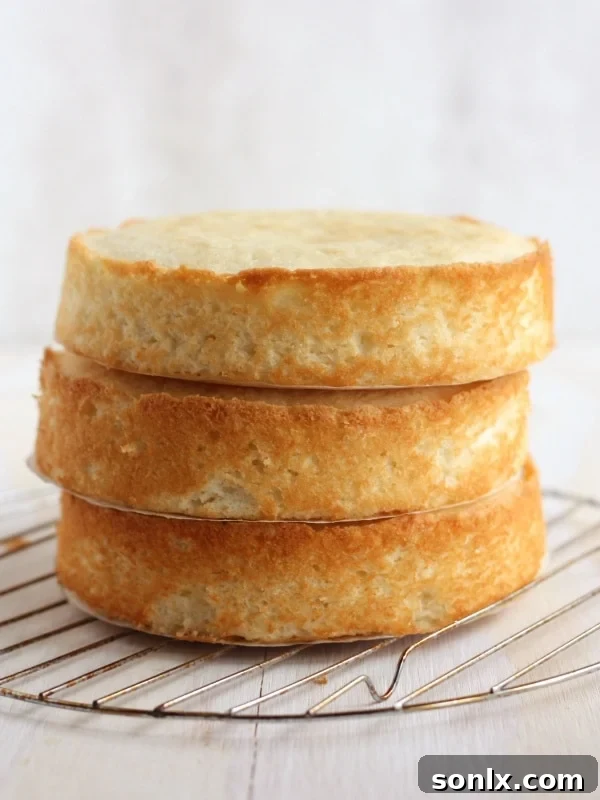
Tired of endlessly trimming and leveling your cakes, only to lose precious deliciousness in the process? Frustrated with domed tops that make stacking a wobbly nightmare? Imagine pulling perfectly flat, beautifully even cake layers straight from the oven every single time – no special tools, no wasted cake, just professional-looking results. Achieving bakery-quality, level cakes is simpler than you think, and it doesn’t require expensive gadgets or a pastry chef’s secret stash. We’re about to unlock the incredibly easy, yet often overlooked, techniques that will transform your cake baking forever, leaving you with flawlessly flat foundations for all your stunning layered creations.
Baking a cake should be a joy, not a source of frustration. The common struggle of leveling cakes, trying to achieve that elusive perfect evenness without a specialized cake leveler, often leads to unnecessary waste. While those delicious cake trimmings are tempting snacks, they also represent lost cake volume and height for your final masterpiece. Fuller, taller, and impeccably level cakes are the goal for any home baker aspiring to create show-stopping desserts. Get ready to discover a game-changing secret trick that guarantees flat cake layers right out of the pan, allowing you to build magnificent layer cakes with ease and confidence.
Table of Contents
- No special equipment needed!
- How to bake flat, even cake layers
- Divide batter evenly between cake pans
- Reduce the baking temperature
- Bake in the middle rack only
- FAQs
- A few favorite cake recipes
- More cake tips
Achieve Flat Cake Layers: No Special Equipment Needed!
Many baking guides often recommend using specialized tools like cake strips to achieve cakes with perfectly flat tops and no unsightly domes. While these can certainly be effective, they are an additional item to purchase, store, and maintain. For those who prefer a minimalist approach in the kitchen, or simply want to avoid accumulating single-use gadgets, there’s excellent news: you absolutely do not need cake strips to achieve stunningly level cake layers.
This method focuses on leveraging fundamental baking principles and oven mechanics to produce the same flawless results without requiring any separate, single-purpose tools. If you already own and love cake strips, feel free to continue using them – they definitely have their place! However, for everyone else, prepare to be amazed at how easily you can get consistently flat, beautiful cake layers using just your existing bakeware and a few smart adjustments to your baking process. Say goodbye to cluttered drawers and hello to simplified, superior baking.
The Simple Secret to Baking Flat, Even Cake Layers Every Time
Achieving perfectly flat cake layers doesn’t require advanced skills or complex techniques. In fact, it boils down to just three fundamental adjustments you can easily incorporate into your regular baking routine. These steps work synergistically to create a consistent baking environment that promotes an even rise, eliminating the dreaded dome. Let’s delve into each simple, yet highly effective, step:
- Divide your cake batter evenly between your prepared cake pans.
- Reduce your oven’s baking temperature.
- Bake your cakes on the middle oven rack only.
Precisely Divide Batter Evenly Between Cake Pans
The foundation of any perfectly flat and even cake layer begins before your pans even touch the oven: ensuring an equal amount of batter in each pan. This seemingly small detail plays a critical role in how your cakes bake and rise. If one pan has significantly more batter than another, it will inevitably bake differently, leading to uneven heights, textures, and likely a domed appearance on the fuller layer. Precision here means a uniform bake across all your layers.
The most accurate and efficient way to achieve this is by using a digital kitchen scale. Simply place one prepared cake pan on the scale, zero it out, and pour in your batter. Note the weight, then repeat the process with the remaining pans, ensuring each contains the exact same amount of batter. This method removes all guesswork, guaranteeing consistent layers that stack beautifully. It’s a small investment that yields professional results and reduces baking stress.
If you don’t have a kitchen scale, don’t worry! You can still achieve good results with a bit more effort. First, find the total volume of your cake batter by pouring it into a large measuring cup or bowl. Then, divide that total volume by the number of cake pans you’re using. For example, if you have 6 cups of batter and are using two pans, aim for 3 cups in each. While this volumetric method can be less precise than weighing and might dirty an extra dish, it’s a perfectly viable alternative. Just ensure you’re as accurate as possible to minimize discrepancies in your cake layers.
Optimize Your Bake: Reduce the Baking Temperature
The temperature at which your cake bakes is perhaps the most crucial factor in preventing those frustrating domes. When a cake bakes at too high a temperature, the outside edges and top set rapidly, forming a crust, while the center continues to rise and expand. This forces the center upwards, creating the classic domed effect. To counteract this, we need to slow down the baking process, allowing the entire cake to rise and set more uniformly.
Most cake recipes call for a baking temperature of 350°F (175°C). To achieve a perfectly flat-topped cake, simply reduce this temperature by 25 degrees Fahrenheit, baking at 325°F (160°C) instead. This slight reduction in heat allows the leavening agents (like baking powder and baking soda) to work more gently and consistently throughout the batter. The proteins and starches in the cake can set at a more controlled pace, resulting in an even structure and a level surface.
It’s important to note that reducing the oven temperature will naturally extend the baking time. As a general guideline, decreasing the temperature by 25°F typically requires an increase in baking time by approximately 1/2 of the original duration. For instance, if a recipe originally calls for baking at 350°F for 30 minutes, you would adjust this to baking at 325°F for 45 minutes (30 minutes + 15 minutes). This adjustment ensures the cake cooks thoroughly without over-browning or drying out.
Always keep a close eye on your cakes, especially towards the end of the adjusted baking time. I usually recommend taking a quick peek through the oven door (minimize opening it!) at the original baking time. Then, check every 5-7 minutes thereafter. You can test for doneness by gently tapping the center of the cake(s); if it springs back, it’s likely done. Another reliable method is inserting a wooden skewer or toothpick into the center; if it comes out with just a few moist crumbs attached (not wet batter), your cake is perfectly baked. Remember, cakes are delicate, so resist the urge to open the oven door frequently, as sudden temperature drops can cause them to fall.
Strategic Placement: Bake in the Middle Rack Only
The placement of your cake pans within the oven is another critical, yet often overlooked, factor in achieving even layers. Ovens typically have hot spots and cooler zones due to the location of heating elements and air circulation patterns. The middle rack is universally considered the “sweet spot” because it provides the most consistent and even heat distribution, allowing your cakes to bake uniformly from top to bottom and side to side.
Trying to bake multiple cake layers on different racks simultaneously often leads to inconsistent results. Cakes placed on the top rack might brown too quickly or become overly dry, while those on the bottom rack might undercook or brown excessively on the bottom. Furthermore, heat circulation can be restricted, leading to lopsided cakes or uneven rises. To ensure optimal baking conditions and perfectly level layers, always bake your cakes on a single rack positioned in the absolute middle of your oven.
What if your recipe calls for more than two cake layers? Or perhaps your oven isn’t wide enough to accommodate multiple pans side-by-side on one rack? The solution is simple: bake your cakes in batches. If I’m baking more than two cake layers, I will place the first two together on the middle rack, ensuring they have adequate space around them for proper heat circulation. Once those layers are baked and removed from the oven, I’ll then bake any subsequent layers, repeating the process with fresh, unbaked batter. This ensures each batch receives the consistent, even heat needed for a perfect rise, guaranteeing all your layers are equally flat and beautiful.
Frequently Asked Questions About Baking Flat Cake Layers
While a kitchen scale is the gold standard for precision and convenience, it’s certainly not a strict requirement. You can still achieve excellent results without one! The key is still to ensure equal distribution of batter. To do this, measure the total volume of your batter using a large liquid measuring cup. Then, simply divide that total volume by the number of cake pans you’re using. For example, if you have 4 cups of batter for two pans, aim for 2 cups in each. Using a consistent ladle or scoop for each pan can also help maintain accuracy, even if it’s not as exact as weighing.
Yes, reducing the oven temperature to 325°F (160°C) definitely slows down the baking process, but the patience is absolutely worth it! This slower, gentler bake allows the heat to penetrate the cake batter more gradually and evenly. Instead of the edges setting quickly and forcing the center to dome, the entire cake rises uniformly. This results in a consistently flat top and a more tender, even crumb throughout. Once you’ve baked cakes this way a few times, you’ll develop a natural intuition for doneness, and the slightly longer bake time will feel completely routine for the superior results you’ll achieve.
Determining doneness without opening the oven door too often is crucial. First, look through the oven window: the cake should appear set, no longer jiggly in the center, and the top should look golden brown and dry. Once it looks close, quickly and carefully open the oven door. Gently press the center of the cake with a clean fingertip; if it springs back, it’s done. Another reliable method is to insert a wooden skewer or toothpick into the center; if it comes out clean or with only a few moist crumbs, your cake is ready. Be cautious not to test too early, as pressing an unset cake can cause it to collapse. If it doesn’t spring back or the skewer is wet, close the oven door quickly and continue baking for a few more minutes before re-testing.
Absolutely, you can still bake your cakes at 350°F (175°C) or any temperature your recipe specifically calls for. The primary difference you’ll notice is that while the cake layers will likely be evenly thick overall, they will almost certainly develop a noticeable dome on top. This is the natural result of the faster baking process at a higher temperature. If you choose this method, you’ll need to allow the cakes to cool completely, then use a serrated knife (like a bread knife) to carefully slice off the domed top to create a flat, level surface for stacking. This is a common practice, but it does mean a bit of trimming and, for some, a little wasted cake.
These principles of even batter distribution, reduced baking temperature, and middle rack placement are highly effective for most standard cake recipes, especially those for layer cakes like vanilla, chocolate, red velvet, and yellow cakes. They are designed to create a more controlled baking environment conducive to an even rise. While extremely delicate or specialty cakes might have unique requirements, the general rule holds true. Always remember to consider your specific oven’s quirks too – an oven thermometer is a baker’s best friend for ensuring accuracy!
Whip Up Your Favorite Cakes with Flawless Layers
Now that you’re armed with the essential techniques to bake perfectly flat cake layers, you’re ready to tackle any layer cake recipe with newfound confidence! Building tall, impressive, and stable cakes has never been easier. Here are a few of my go-to cake recipes that will truly shine when made with these perfectly level layers:
Elevate Your Baking: More Essential Cake Tips
Mastering flat cake layers is a fantastic step, but the journey to perfect cakes doesn’t stop there! Explore these additional resources to further refine your cake baking and decorating skills, ensuring every cake you make is a masterpiece from start to finish. From flawless release to beautiful finishes, these tips will guide you.
- Preventing Cake Stickiness: How to Keep Cake from Sticking to the Pan
- Pro Baker’s Guide: How to Store and Freeze Cake Layers Effectively
- Achieve Bakery Perfection: How to Frost a Layer Cake Like a Pro
By consistently applying these straightforward techniques, you’ll discover that baking beautiful, even cake layers is not just achievable, but surprisingly simple. Say goodbye to the frustrations of trimming and leveling, and hello to a world of perfectly stacked, professionally finished cakes!