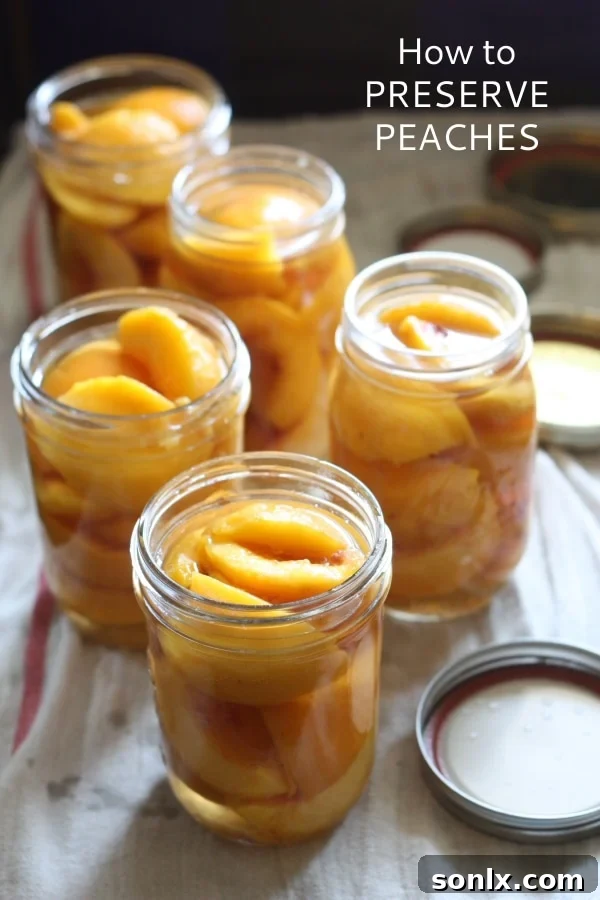
Unlock the secret to enjoying the succulent taste of summer all year long with this ultimate guide to canning peaches. Imagine opening a jar of perfectly preserved, sweet peaches in the depths of winter, bringing a burst of sunshine to your table. Learning how to can and preserve fresh summer peaches using a simple water bath canner is not only incredibly rewarding but also surprisingly straightforward. This comprehensive, step-by-step tutorial will walk you through the entire process, requiring just a few key ingredients and basic tools.
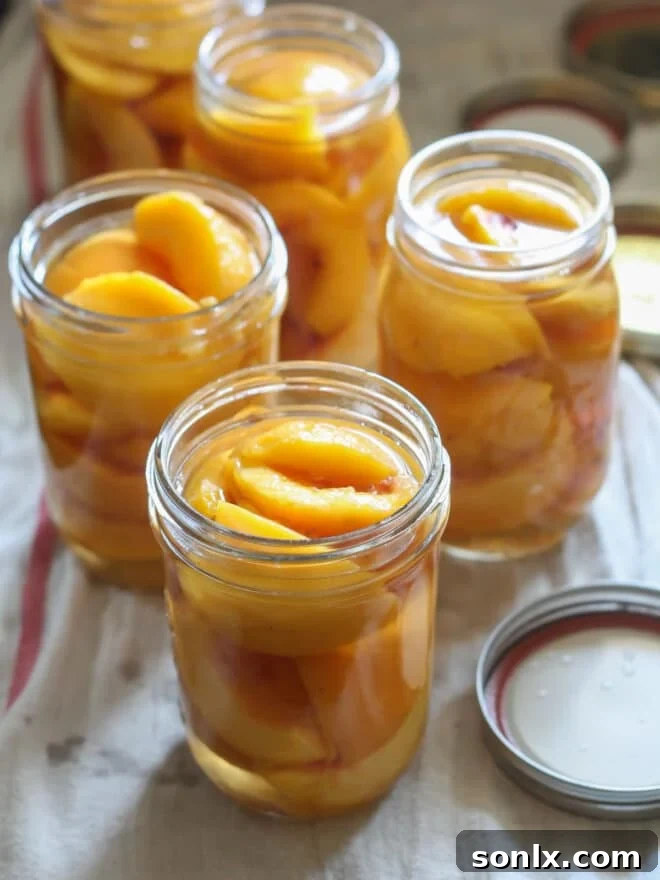
For many, homemade canned peaches evoke a profound sense of nostalgia. Growing up, canned peaches were a cherished staple in my family home. I have vivid, fond memories of my mother dedicating entire autumn weekends to “putting up” peaches. Back then, the kitchen seemed to transform into a buzzing hub of activity, leading me to assume that the process must be incredibly complex and difficult. However, I’ve since discovered that my childhood perception was far from the truth. Is it a bit messy and certainly time-consuming? Absolutely! But difficult? Not in the slightest.
The incredible reward of seasonal fruit, ready to be enjoyed any day of the year, is a small price to pay for the effort. There’s truly nothing quite like the experience of cracking open a jar of homemade summer peaches in the chilly embrace of January, their vibrant color and sweet aroma instantly brightening the day. It’s a taste of sunshine, preserved with care and ready to uplift any meal or snack.
In this detailed guide, I am going to walk you through the entire peach canning process, ensuring every step is clear, easy to follow, and demystified. You’ll discover just how achievable home food preservation can be. If you have access to a bounty of fresh, ripe peaches and a generously sized pot, you’re already well on your way to success. So, clear a few hours from your schedule, gather your enthusiasm, and let’s embark on this delightful journey of preserving summer’s finest!
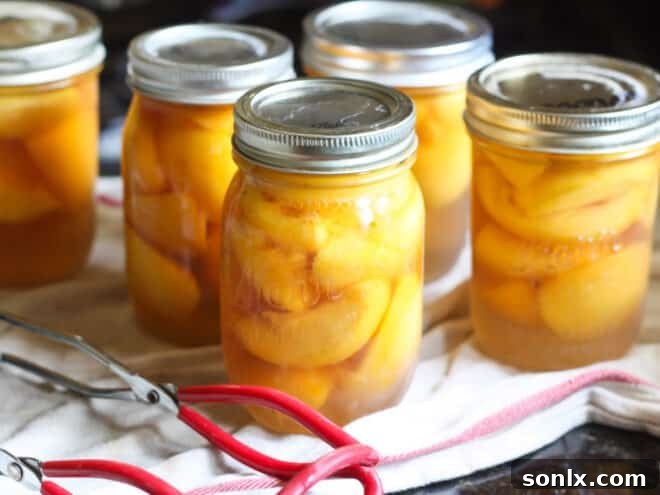
Table of Contents
- Essential Equipment for Canning Peaches
- Key Ingredients You’ll Need
- The Complete Guide to Canning Peaches
- Preparing Jars and Setting Up Your Water Bath Canner
- How to Properly Prep Fresh Peaches
- Crafting the Syrup and Filling the Jars
- Processing Your Canned Peaches for Safety
- Long-Term Storage for Canned Peaches
- More Delicious Canning Recipes
- Your Go-To Recipe for Canned Peaches
Essential Equipment for Canning Peaches
Before you begin your peach canning adventure, it’s crucial to have all the right tools ready. Having your equipment organized not only makes the process smoother but also ensures a safer and more efficient canning experience. While some items are absolute necessities, others are highly recommended for ease and safety.
- Pint jars, lids, and lid rings: Always start with clean, sterilized jars designed for canning. New lids are essential for creating a proper seal, while the rings secure the lids during processing.
- Jar lifter: This specialized tool is indispensable for safely lifting hot jars in and out of boiling water. Tongs can be an alternative, but a jar lifter provides a much more secure grip, preventing burns and accidental drops.
- Wide-mouth funnel: A canning funnel is incredibly helpful for cleanly filling jars with peaches and syrup, minimizing spills and keeping jar rims clean, which is vital for a good seal.
- Water bath canner or very large pot: A water bath canner is a large pot with a rack that keeps jars off the bottom. If you don’t have a dedicated canner, any very large stockpot with a lid that can accommodate your jars while allowing at least an inch of water above them will work. Ensure you have a trivet or rack to place at the bottom of the pot to prevent jars from touching the direct heat.
Key Ingredients You’ll Need
The beauty of canning peaches lies in the simplicity of its ingredients. With just a few high-quality components, you can create a preserved treat that tastes incredibly fresh and natural. Selecting the right peaches is paramount, as is understanding the role of each additional ingredient.
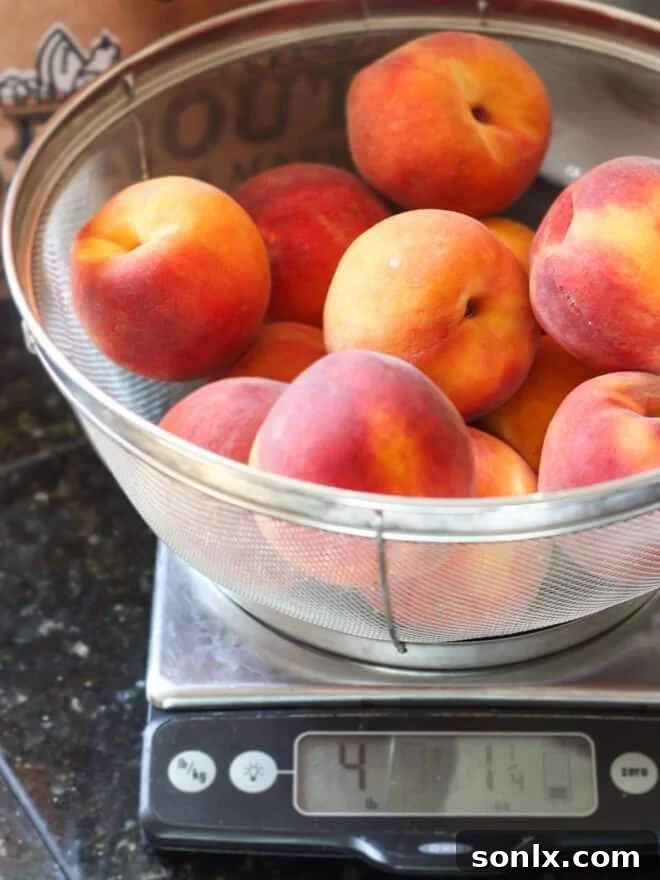
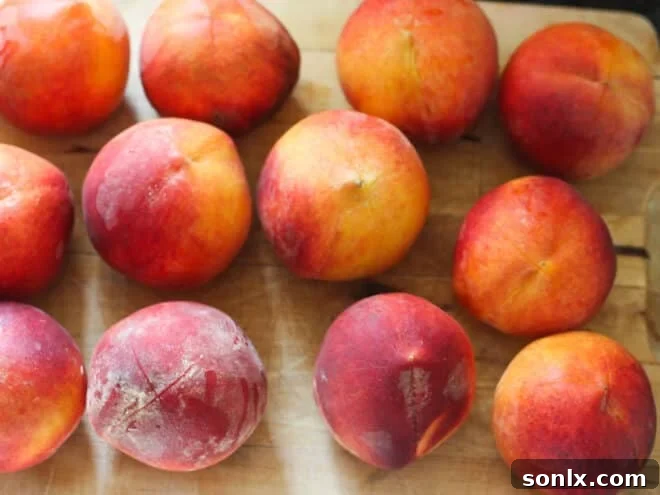
- Fresh ripe yellow peaches: The star of our recipe! When selecting peaches for canning, prioritize “freestone peaches.” These varieties are specifically bred so that their flesh easily separates from the pit, making preparation much simpler. Avoid “cling peaches,” where the pit adheres stubbornly to the fruit. Look for peaches that are ripe but still firm to the touch – they should have a sweet aroma. It’s important to note that white peaches are generally not recommended for home canning due to their lower natural acidity. This lower acidity can pose a food safety risk in water bath canning, as adequate acidity is crucial for preventing spoilage.
- Sugar: Sugar plays a dual role in canning peaches: it enhances flavor and contributes to the syrup’s preservation qualities. You’ll use it to create a sweet syrup in which the peaches will be packed. The amount of sugar can be adjusted to your preference, resulting in a light, medium, or heavy syrup. A lighter syrup lets the natural peach flavor shine, while a heavier syrup provides more sweetness and a slightly thicker consistency. For a healthier alternative or different flavor profile, you can also substitute honey (see recipe notes for details).
- Lemon juice: This is a critical ingredient, not just for flavor, but primarily for preventing oxidation and browning of the peaches as you prepare them. When peaches are exposed to air, enzymes cause them to turn brown, which doesn’t affect safety but can make them less visually appealing. Lemon juice’s acidity quickly neutralizes these enzymes. It also helps to ensure the overall acidity of the canned product, adding an extra layer of safety, especially if your peaches are naturally less acidic.
- Water: Used to create the sugar syrup that will surround and preserve your delicious peaches. Make sure to use clean, potable water.
The Complete Guide to Canning Peaches
This method for canning peaches has been rigorously tested and proven effective over many seasons. I have cross-referenced these instructions with the authoritative guidelines from the National Center for Home Food Preservation (NCHFP), ensuring that these steps for preserving peaches are both safe and accurate. Always refer to their website for the most current and detailed food preservation information.
Preparing Jars and Setting Up Your Water Bath Canner
Cleanliness and proper setup are the foundation of successful and safe canning.
- Gather everything you need: Before you even touch a peach, ensure your workspace is clean and organized. Have all your canning equipment (jars, lids, rings, jar lifter, funnel, water bath canner) within easy reach. This minimizes frantic searching once the process begins.
- Sterilize jars and lids: While modern canning guidelines often state that jars don’t strictly need to be sterilized if processed for 10 minutes or more in a boiling water bath, it’s still a good practice to start with hot jars to prevent thermal shock when adding hot peaches and syrup. Place clean canning jars (pint, quart, etc.) and new lids into your large pot or water bath canner. Fill the pot with water, ensuring jars are fully submerged, and bring it to a boil. Boil for a few minutes (e.g., 5-10 minutes for sterilization, or just keep them hot). Carefully transfer the hot jars and lids to a clean towel to drain, keeping them warm until ready to fill.
- Get water bath ready: Your water bath canner should already be hot from sterilizing the jars. Reduce the heat to a low simmer to keep the water warm and ready for processing. The goal is to avoid adding cold jars to hot water or vice-versa, which can cause jars to crack.
How to Properly Prep Fresh Peaches
Prepping peaches efficiently is key to preventing browning and ensuring easy peeling.
- Start with fresh, ripe peaches: Choose peaches that are ripe but still firm. They should yield slightly to gentle pressure and have a fragrant aroma. Avoid peaches that are rock hard (underripe) or overly soft and mushy (overripe), as these will not can well or maintain their texture.
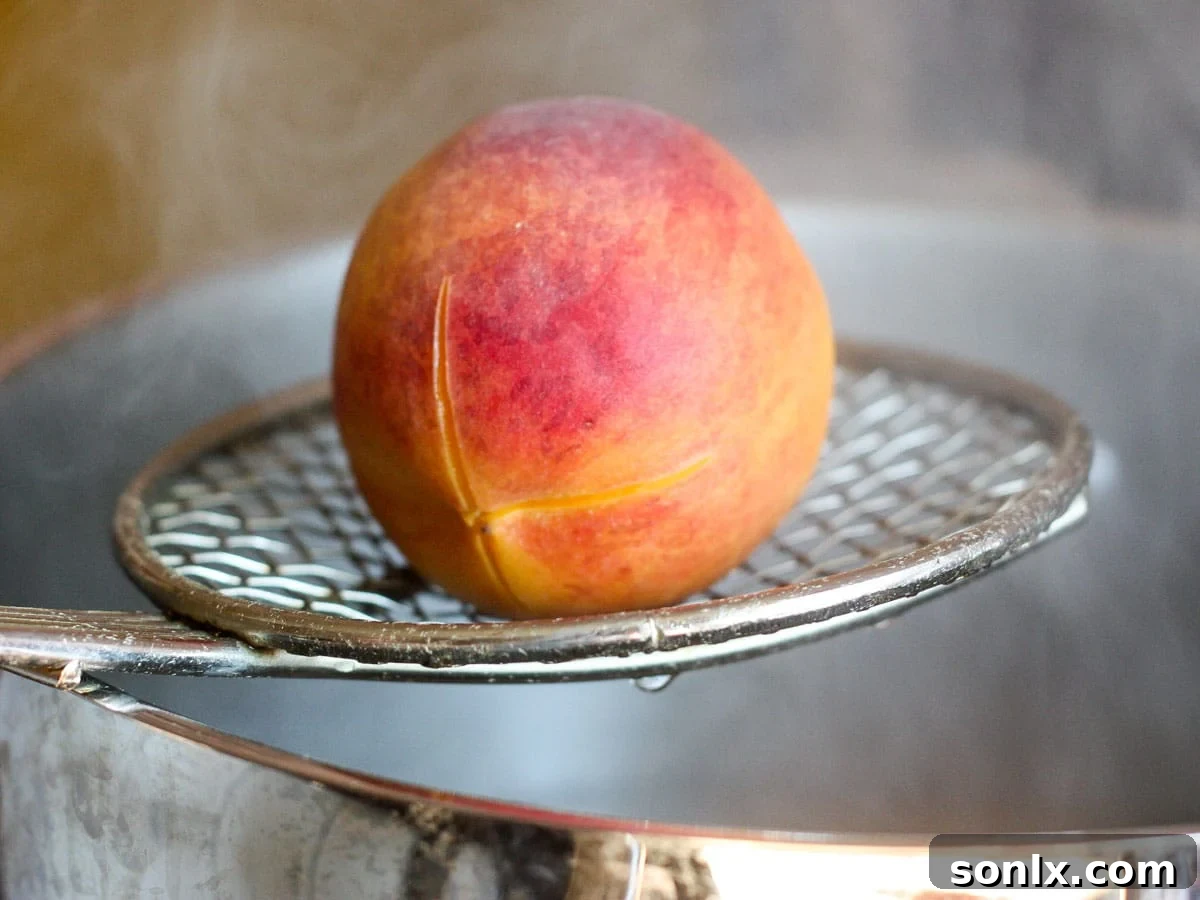
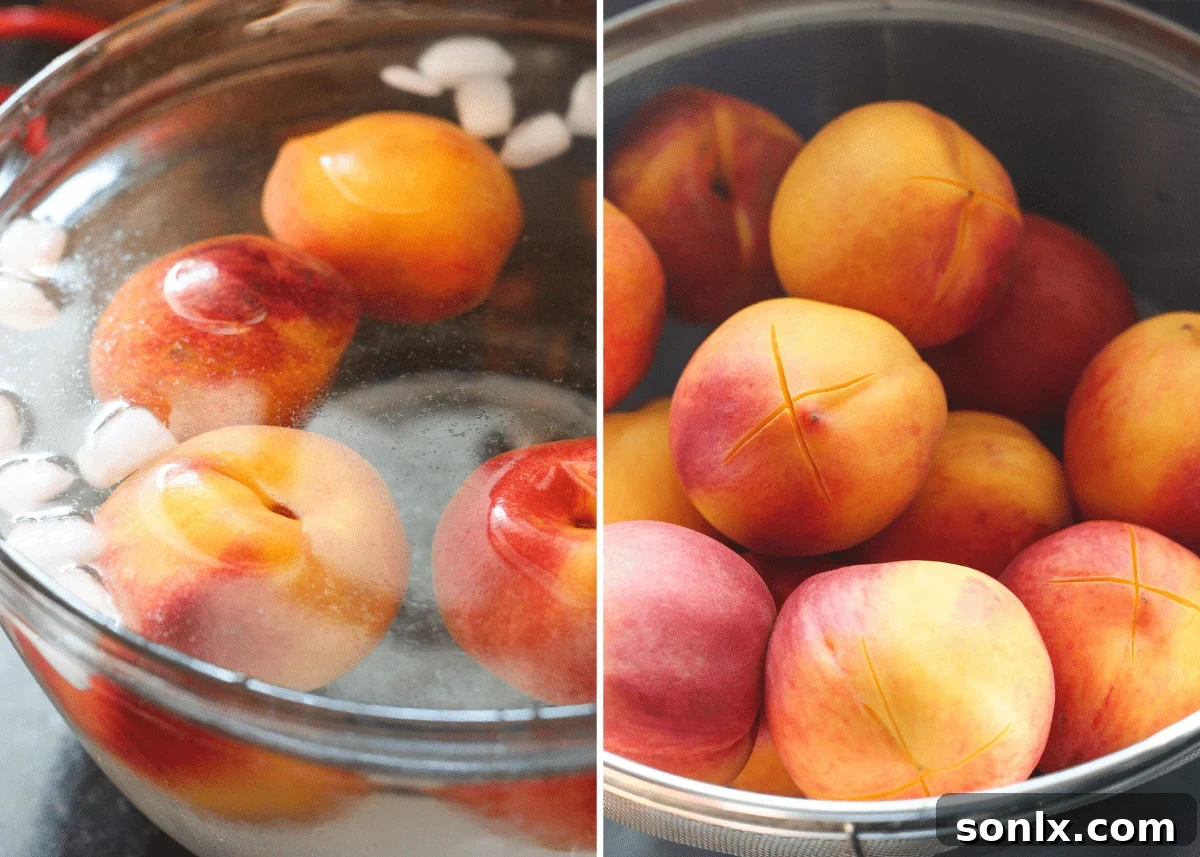
- Carve an X into the bottom of the peaches: Using a small paring knife, make a shallow “X” incision on the bottom of each peach. This cut should only penetrate the skin, not deep into the flesh. This simple step will significantly aid in the peeling process later on.
- Quickly blanch peaches in hot water: Prepare a large pot of boiling water. Carefully immerse a few peaches at a time into the vigorously boiling water. Allow them to blanch for precisely 30 seconds. This brief immersion cooks just the very outer layer of the peach and helps loosen the skin, making it slip off effortlessly. Be careful not to over-blanch, as this can cook the fruit too much.

- Immediately transfer to ice water: As soon as the 30 seconds are up, use a slotted spoon to promptly remove the blanched peaches and plunge them into a large bowl of ice water. This “ice bath” serves two crucial purposes: it immediately stops the cooking process, preserving the peach’s texture, and further helps in loosening the peels.
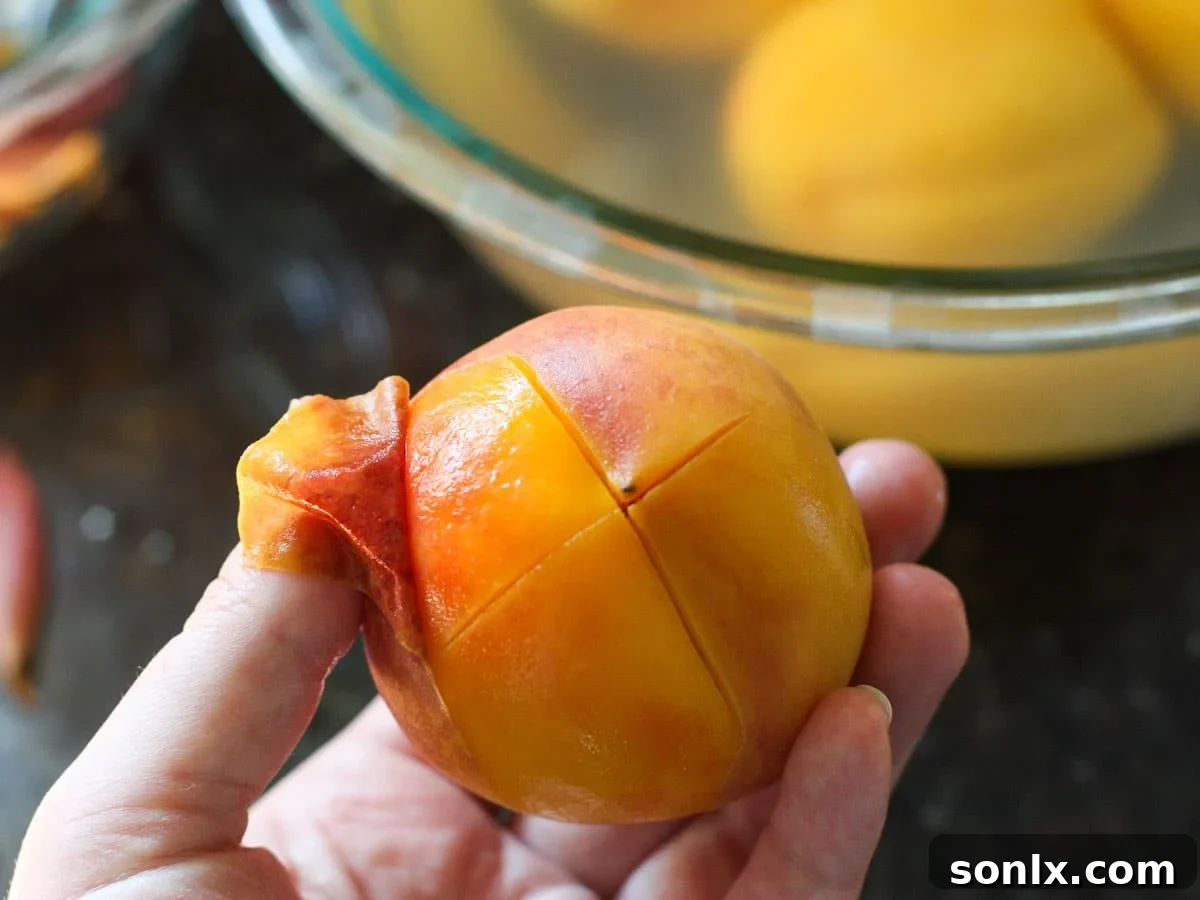
- Peel peaches: Once the peaches are cool enough to handle, retrieve them from the ice water. Start peeling from one of the corners created by the “X” incision. The skins should now slip off with minimal effort, often with just your fingers. For any stubborn spots, a small paring knife can be used gently.
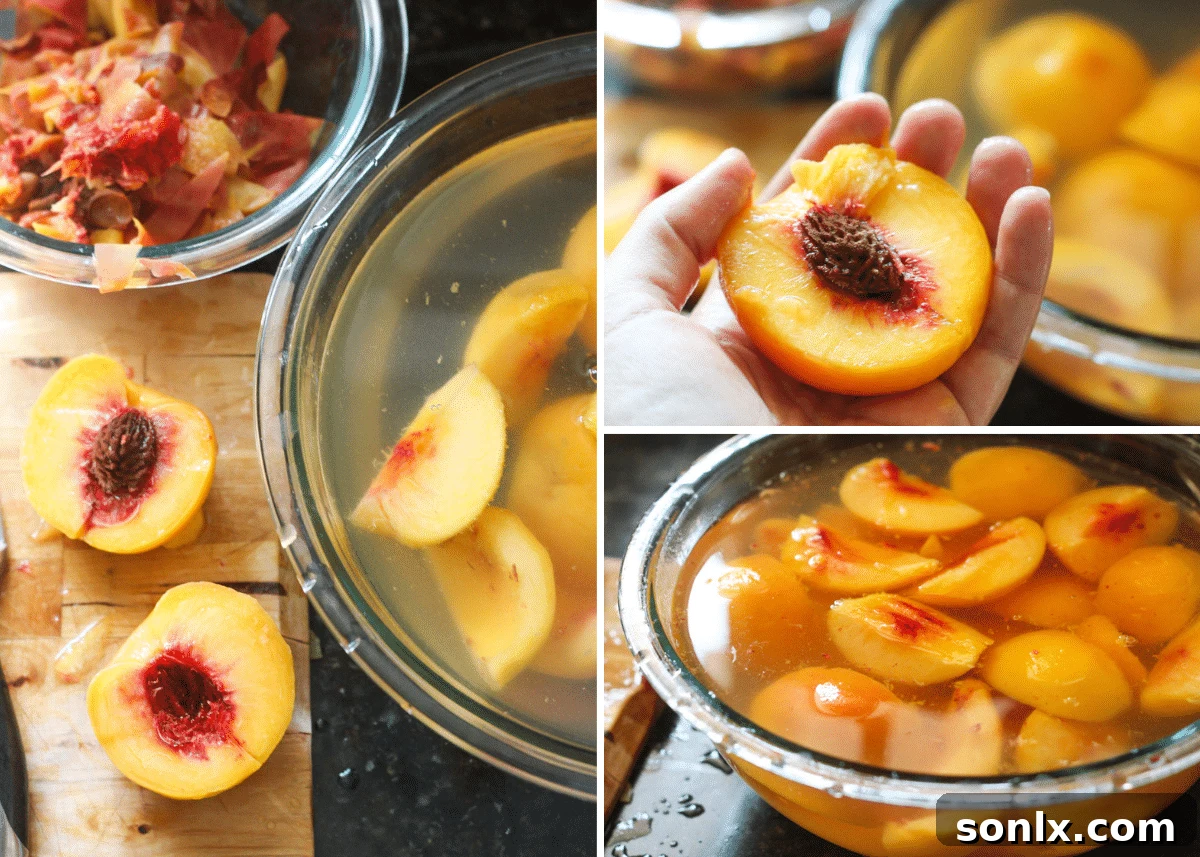
- Prevent peaches from browning: As soon as a peach is peeled, return it to a fresh bowl of cold water, this time adding a generous amount of lemon juice to the water. This acidic solution is vital for preventing the peaches from browning due to oxidation while you work through the remaining batch.
- Slice the peaches and remove pits: Once all peaches are peeled and in the lemon water, take them out one by one to slice. Cut the peaches in half, or into desired slices, and carefully remove the pits. Some peach varieties might have a reddish flesh around the pit cavity; if you wish to avoid any potential discoloration in your canned product over time, you can gently scrape out this red flesh with a spoon or knife. Always return the sliced peaches to the anti-browning lemon water solution if you are not actively working with them.
Crafting the Syrup and Filling the Jars
The syrup provides sweetness and helps preserve the peaches, while proper jar filling ensures safety.
- Make sugar syrup: In a large saucepan, combine water and your chosen amount of sugar. Heat over medium heat, stirring occasionally, until the sugar is completely dissolved. Once dissolved, reduce the heat to low to keep the syrup warm. Using warm syrup helps maintain the temperature of the peaches in the jars, which is important for even processing.
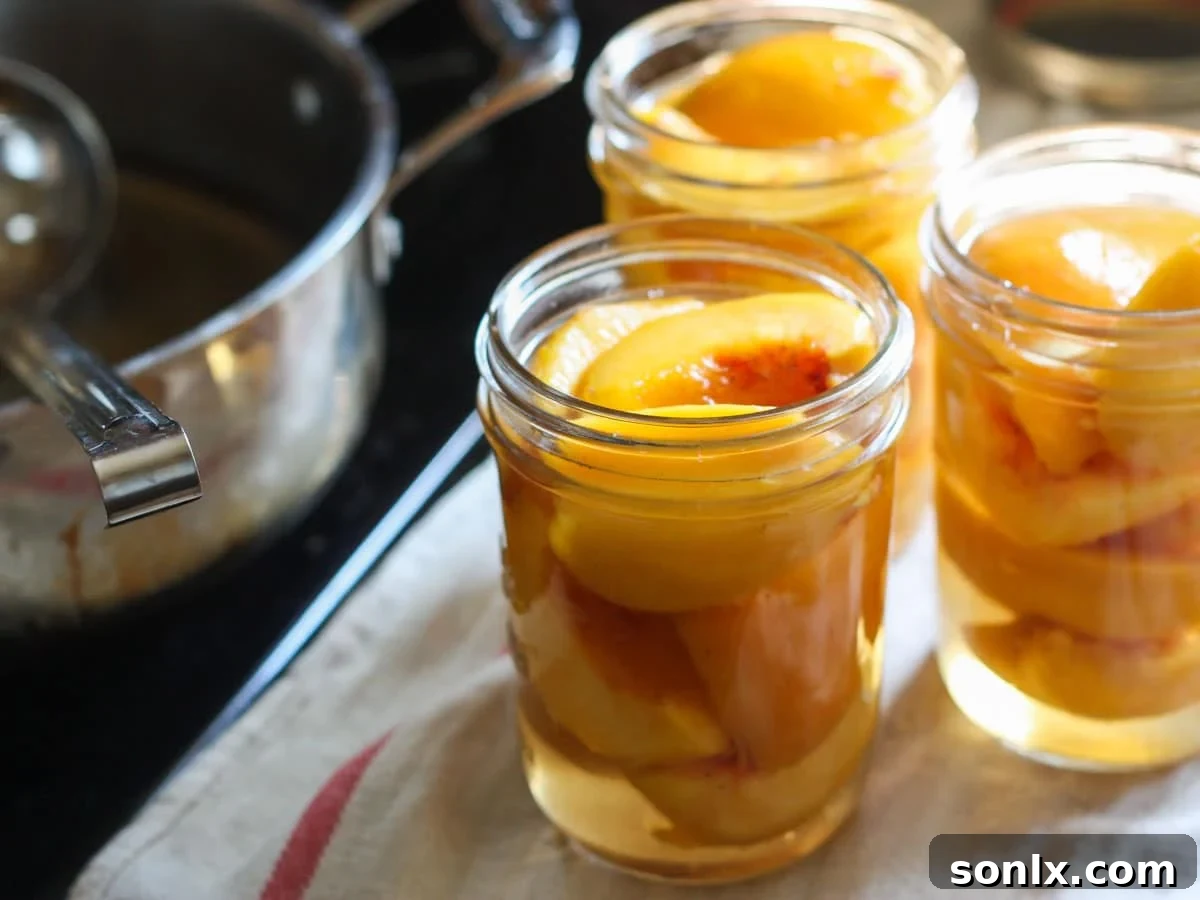
- Fill jars with peaches and syrup: Carefully pack the prepped peach slices into your sterilized jars. Try to pack them as tightly as possible without crushing the fruit, leaving enough room for the syrup. Once peaches are packed, gently pour the warm sugar syrup over the top, ensuring all peaches are submerged. It’s crucial to leave a 1/2-inch headspace from the rim of the jar to the top of the liquid. This space is necessary for proper sealing and to prevent the jars from overflowing during processing. After filling, gently tap the jars on your counter to release any trapped air bubbles. Use a clean utensil (like a plastic knife or de-bubbler) to run around the inside of the jar to dislodge more bubbles.
- Cover jars with lids and rings: Before placing lids, use a clean, damp cloth to wipe the rims of each jar thoroughly. Any residue (peach juice, syrup) on the rim can prevent a proper seal. Place a new, sterile lid on top of each jar, then screw on the lid rings finger-tight. Do not overtighten, as this can also interfere with the sealing process.
Processing Your Canned Peaches for Safety
Water bath processing is the final and most critical step for ensuring safe, shelf-stable canned peaches.
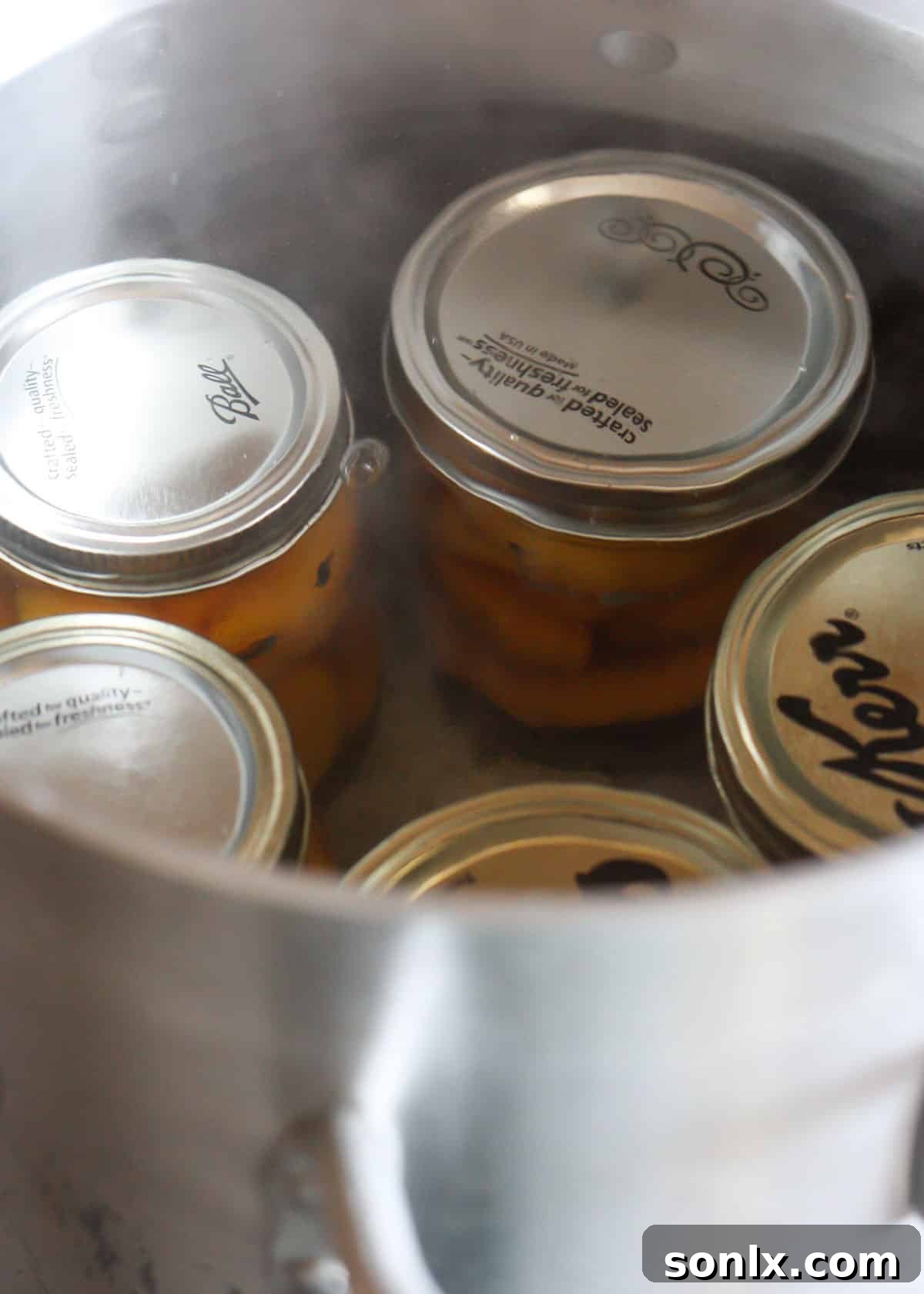
- Add jars to water bath and process: Using your jar lifter, carefully transfer the filled, lidded jars into the warm water bath canner. Ensure the water level completely covers the tops of the jars by at least 1-2 inches. If needed, add more boiling water. Bring the water in the canner to a full, rolling boil. Once boiling, start your timer. Process the jars in boiling water for 25 minutes. If you are canning at higher elevations, adjustments to processing time are required for safety (please refer to the recipe notes below or NCHFP guidelines for specific altitude adjustments). Maintain a consistent boil throughout the entire processing time.
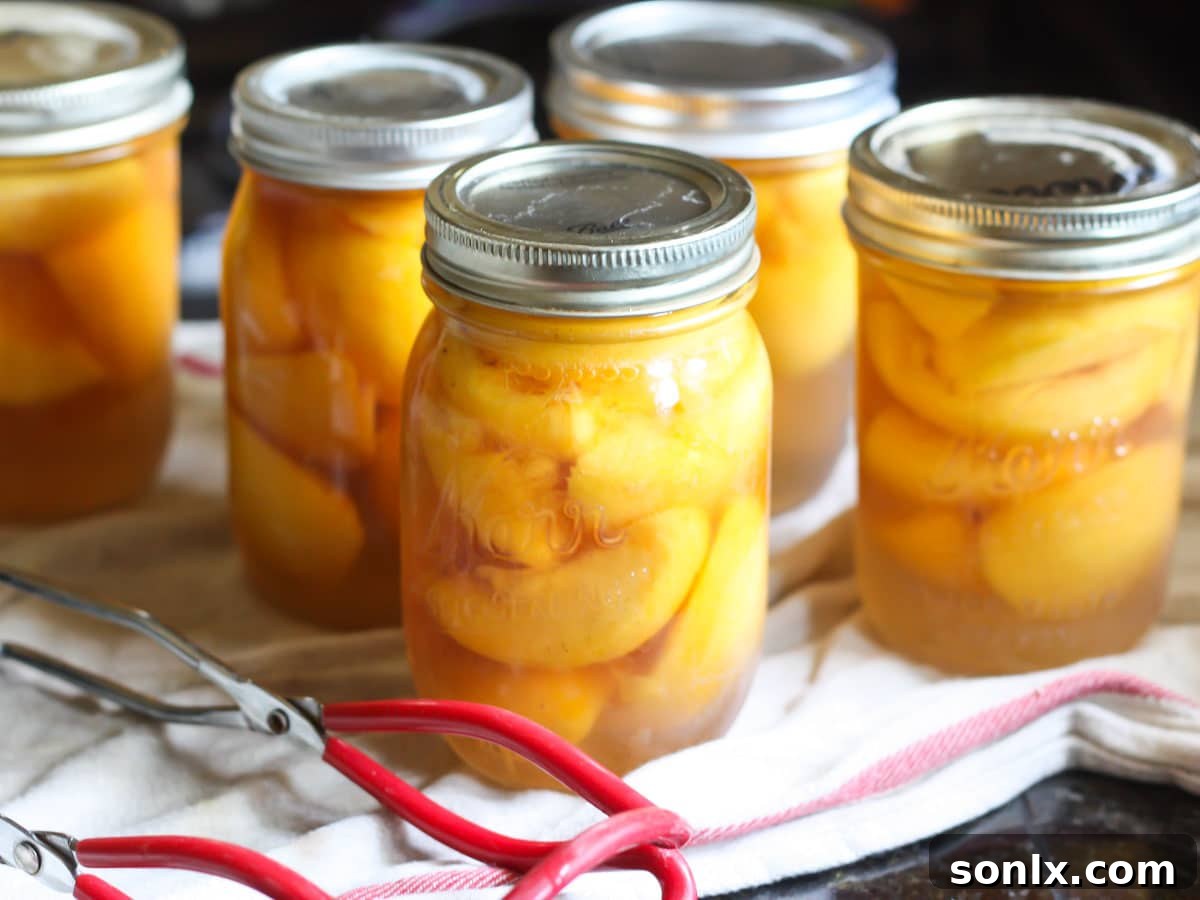
- Remove and cool: Once the processing time is complete, turn off the heat and carefully remove the canner lid. Allow the jars to rest in the hot water for 5 minutes before removing them. This helps prevent “siphoning” (liquid loss from jars). Using the jar lifter, gently lift the hot jars out of the water bath and place them upright on a clean towel or cooling rack on your counter. Ensure they are in a location away from drafts or significant temperature changes, which can cause seals to fail. Do not touch or tighten the rings during this cooling period. Allow the jars to cool undisturbed for 12 to 24 hours.
- Ensure lids are sealed: After the jars have completely cooled (usually after 12-24 hours), it’s time to check for proper seals. Remove the lid rings from each jar. Then, press down on the center of each lid. A properly sealed lid will be concave (curved inwards) and will *not* flex or pop back up when pressed. If a lid yields or pops up, the jar is not properly sealed. Unsealed jars should be immediately refrigerated and consumed within one week, or the contents can be reprocessed with a new lid (after checking the jar rim for flaws) within 24 hours using the full processing time.
- Store properly: Once you’ve confirmed a good seal on all jars, wipe them clean. You can store them with or without the rings. Storing without rings makes it easier to spot an unsealed jar later and prevents rust. Now, you can enjoy your fresh summer peaches all year long, knowing you’ve preserved them safely and deliciously!
Long-Term Storage for Canned Peaches
Proper storage is just as important as the canning process itself to ensure the longevity and quality of your preserved peaches.
Once your jars have cooled completely and you’ve confirmed they are properly sealed, they should be stored in a cool, clean, dark, and dry place. Ideal temperatures for storage are typically between 50°F (10°C) and 70°F (21°C). Avoid areas prone to extreme temperature fluctuations, such as near a furnace or in direct sunlight, as these conditions can degrade the quality of your canned goods and potentially compromise the seal.
How long will canned peaches last? If properly preserved, sealed, and stored according to these guidelines, your homemade canned peaches will be at their peak quality for up to 1-2 years. While they may remain safe to eat for longer periods, their flavor, texture, and nutritional value might gradually decline after this timeframe. It’s always best to consume them within the recommended period for the best culinary experience. Before consuming, always inspect your canned peaches. If you observe any signs of spoilage, such as mold growth, significant discoloration of the fruit (beyond slight darkening), an off-odor, bubbling, or if the jars show signs of leaking, bulging lids, or rust around the seal, your peaches have likely gone bad and must be discarded immediately without tasting.
More Delicious Canning Recipes
Canning is a fantastic way to extend the bounty of the harvest. If you enjoyed preserving peaches, you might love trying these other popular canning recipes:
Your Go-To Recipe for Canned Peaches
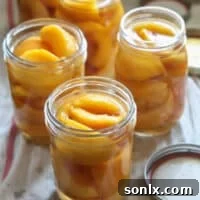
How to Can Peaches
Pin Recipe
Leave a Review
Ingredients
- 4 lbs (1.8 kg) peaches
- 1 tablespoon bottled lemon juice
- 1-2 cups (200-400 grams) granulated sugar (see Notes)
- 1 quart (950 ml) water
Equipment
Instructions
- Prepare jars, lids and rings by sterilizing for a few minutes over the stove in a water bath canner or pot filled with boiling water. Transfer jars, lids and rings to a towel to drain until ready to use. Keep water warm over low heat.
- With a paring knife, slice a shallow “x” into the bottom of each peach. Fill a large bowl with cold water and ice.
- Bring a large pot of water to a boil. Drop a few peaches into the boiling water for 30 seconds. Use a slotted spoon to remove the peaches from the water and immediately place them in the ice water. Repeat with the remaining peaches.
- Fill another large bowl (or reuse the bowl with ice water in it) with clean water and add the lemon juice.
- Starting with the corners of the “x” on the bottom of the peaches, use your fingers to peel the skin off. Place the peeled peaches in the lemon water to prevent them from browning.
- Slice the peaches and discard the pits. If desired, scrape the red flesh from the cavities (as it browns over time after canning). Return the peaches to the lemon water while you prepare the syrup.
- In a large saucepan, combine the quart of water and sugar over medium heat and stir to dissolve the sugar. Keep warm over low heat.
- Place the sliced peaches in sterilized jars, packing them fairly tightly. Pour the hot syrup over the peaches into the jars, leaving ½ inch head space. Wipe the tops of the jars clean and cover with lids and secure with rings.
- Use jar lifters or tongs to transfer jars carefully into the water bath canner or pot, making sure the water fully covers the jars. Bring water to a boil, process jars for 25 minutes, making sure the jars are completely covered with boiling water the entire time. (See Notes for adjustments required if you are above sea level.)
- Remove from the water bath and let cool completely. Check lids to see if the jars sealed correctly, they shouldn’t pop back up when pressed. Once cooled, store in a cool dry place and consume within a year for best results.
Notes
- This recipe can easily be scaled up as needed if you have more peaches you’d like to can! If needed, process in batches if all of the jars don’t fit in your water bath canner at the same time.
- The amount of sugar in this recipe can be adjusted per your preference. If you like a lighter syrup, use the smaller amount.
- In place of the sugar you can also use ½-1 cup honey in the syrup. Start with the lower amount and add more as needed, as honey has a stronger flavor.
- Processing time adjustments for higher altitude canning: 0-1,000ft—25 minutes. 1,001-3,000ft—30 minutes. 3,001-6,000ft—35 minutes. Above 6,000ft—40 minutes.
- Official safety canning information for peaches can be found on the National Center for Home Food Preservation website.
Nutrition Information (per serving):
- Calories: 451 kcal
- Carbohydrates: 115 g
- Protein: 3 g
- Fat: 1 g
- Saturated Fat: 1 g
- Sodium: 10 mg
- Potassium: 689 mg
- Fiber: 5 g
- Sugar: 110 g
- Vitamin A: 1183 IU
- Vitamin C: 24 mg
- Calcium: 27 mg
- Iron: 1 mg