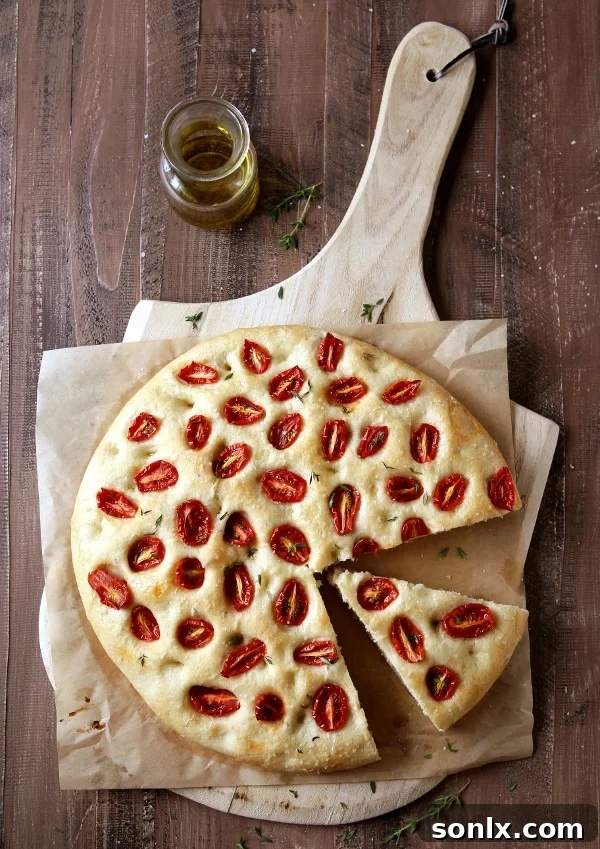
Irresistible Roasted Tomato Focaccia Bread with Fresh Thyme
Delight in a truly exceptional culinary experience with this homemade focaccia bread, boasting a wonderfully flavorful, satisfyingly chewy, and irresistibly soft interior. Each golden crust is beautifully adorned with sweet, concentrated oven-roasted tomatoes and fragrant fresh thyme, creating a symphony of textures and aromas that will transport your senses.
Embracing the Season: From Garden to Farmer’s Market
This past summer marked a unique turn in my usual routine; for the first time in many years, I didn’t cultivate a garden. Our significant relocation and the joyous arrival of a new family member meant my energy was directed elsewhere, making the thought of building a garden from scratch at our new home a daunting one. Initially, I felt a pang of regret, missing the therapeutic rhythm of planting, weeding, and harvesting. However, the absence of a personal plot didn’t turn out to be the culinary catastrophe I feared. Our vibrant local farmers market became my new haven, offering an abundance of fresh, high-quality produce, and with the added bonus of no weeding required!
Yet, despite the market’s bountiful offerings, I found myself longing for one specific garden luxury: the sheer, overwhelming generosity of my own tomato plants. This time last year, my backyard was a daily treasure trove, overflowing with cherry tomatoes that seemed to multiply overnight, enough to share with every neighbor and still have plenty left for endless summer dishes. There’s something uniquely satisfying about stepping out into your own garden and plucking sun-ripened tomatoes, still warm from the vine.
While I may be sourcing my tomatoes from the market rather than my own backyard this season, their irresistible allure remains undiminished. The rich, sweet flavor of peak-season tomatoes is simply non-negotiable for summer cooking. And so, despite the change in procurement, I am making the most of this fleeting season, transforming these ruby gems into something truly spectacular before they disappear until next year.
The Culinary Marriage: Focaccia, Roasted Tomatoes, and Thyme
This roasted tomato focaccia bread masterfully unites two of my absolute favorite gastronomic delights: the comforting embrace of freshly baked carbs and the intense, complex sweetness of oven-roasted tomatoes. The foundation of this recipe is a remarkably versatile and forgiving bread dough, which shares a comforting familiarity with my beloved rosemary parmesan focaccia from a few years prior. What sets this particular focaccia apart is the delicate infusion of fresh thyme directly into the dough, lending an herbaceous note that perfectly complements the tomatoes.
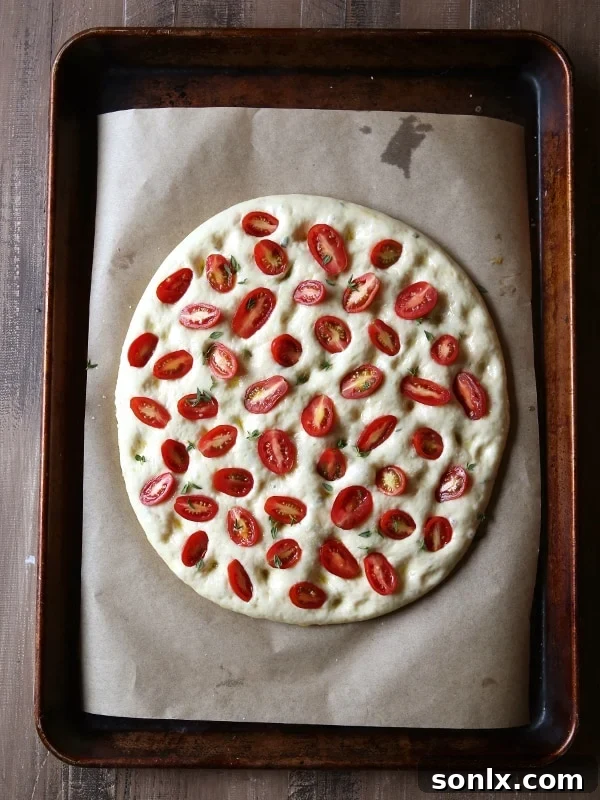
Before this golden masterpiece enters the oven, its surface is lovingly prepared. The dough is gently dimpled with fingertips, creating those signature craters that are so characteristic of focaccia and serve as perfect little reservoirs for olive oil. A generous brushing of high-quality olive oil then anoints the surface, followed by an artful scattering of halved fresh tomatoes, pressed gently into the dough. A final flourish of more fresh thyme and a sprinkle of coarse sea salt complete the tableau. As the focaccia bakes, a magical transformation occurs: the tomatoes soften, their natural sugars caramelize, and their flavors concentrate into intensely sweet, slightly tangy bursts of deliciousness that are utterly irresistible.
A Versatile Delight for Any Occasion
This roasted tomato focaccia bread isn’t just a recipe; it’s an invitation to savor the simple pleasures of home baking and seasonal ingredients. Its versatility knows no bounds. It excels as the perfect side dish, elevating any meal from a simple weeknight dinner to an elegant gathering. Sliced into generous portions, it makes for a supremely satisfying snack, perfect for an afternoon pick-me-up or a casual appetizer. Beyond that, it serves as the most incredible base for a truly great sandwich, with its sturdy yet soft texture providing an ideal foundation for your favorite fillings.
Whether you’re blessed with an abundant harvest of garden tomatoes or, like me, simply adore these vibrant fruits from the market, this focaccia recipe is an absolute must-try. Don’t let the season pass you by without experiencing the deep flavors and comforting warmth of this homemade bread. It’s a celebration of summer’s bounty, baked into a delightful, aromatic loaf.
baking tip:The Science of the Rise: Why Yeast Dough Needs to Rest
Understanding why yeast dough needs to “rise,” or rest, is fundamental to successful bread baking. This resting period isn’t just idle time; it’s a crucial stage where the yeast, a microscopic living organism, gets to work. Yeast’s primary function in bread making is fermentation, a process where it consumes the natural sugars present in flour and, in doing so, releases carbon dioxide gas and alcohol as byproducts. This gas is then trapped within the intricate network of gluten that forms as the dough is kneaded, causing the dough to expand and achieve its characteristic airy, voluminous texture.
The first rise, often referred to as “bulk fermentation,” is the initial and typically longest rise after the dough has been thoroughly kneaded. During this stage, the yeast is particularly active, producing a significant amount of carbon dioxide. This results in a substantial increase in dough volume, characterized by larger, more irregular gas bubbles. This bulk fermentation is vital for developing flavor and creating a tender crumb. Following this, the dough is “punched down” to release excess gas and redistribute the yeast. The second rise, known as “proofing,” occurs after the dough has been shaped. This shorter rise allows the yeast to continue fermenting, leading to a further increase in volume, but this time, with smaller, more evenly distributed gas bubbles. These finer bubbles contribute to a more refined texture in the final baked bread or rolls, giving them a delicate, uniform crumb.
To determine if your dough has risen sufficiently, a simple “poke test” is incredibly effective. Gently press a floured finger about half an inch into the dough. If the indentation remains visible and does not spring back, your dough has reached its optimal rise and is ready for the next step. If, however, the dough quickly bounces back, it indicates that it needs more time to complete its rise. Patience during these rising stages is key to achieving light, airy, and beautifully textured bread.
Roasted Tomato Focaccia Bread
Pin Recipe
Leave a Review
Ingredients
- 1 cup water (250 ml)
- 1 tablespoon olive oil
- 2 – 2 ½ cups bread flour (240-300 grams)
- 1 teaspoon coarse salt
- 1 tablespoon granulated sugar
- 1 packet Red Star Active-Dry Yeast (2 ¼ teaspoons)
- 1 tablespoon fresh thyme , divided
- 1 cup cherry or grape tomatoes , halved (150 grams)
- Additional olive oil , for brushing
- Coarse salt , for sprinkling
Instructions
-
Begin by gently heating the water and olive oil in a small saucepan over medium heat. Watch closely and remove from heat as soon as it begins to steam, indicating it’s warm but not boiling. Allow the mixture to cool for approximately 5 minutes, or until its temperature registers between 120-130°F (49-54°C). This temperature is crucial for activating the yeast without killing it.
-
In the spacious bowl of a stand mixer, fitted with the sturdy dough hook attachment, combine 1 cup of the bread flour, the coarse salt, granulated sugar, the entire packet of Red Star Active-Dry Yeast, and half of the fresh thyme leaves. Pour in the warm water and olive oil mixture. Mix on low speed until all the ingredients come together to form a wet, shaggy dough, making sure to scrape down the sides of the bowl with a spatula as needed to ensure everything is well incorporated.
-
Gradually add the remaining bread flour, a quarter cup at a time, while the mixer continues to run. Continue adding flour until the dough begins to pull away cleanly from the sides of the bowl. The ideal consistency is a dough that feels tacky to the touch but does not stick to your fingers when gently pressed. Please note that you might not need all 2 ½ cups of flour; the exact amount can vary based on humidity and flour type, so trust the feel of the dough.
-
Increase the mixer speed to medium-low and knead the dough for 5-7 minutes. The dough should transform into a smooth, elastic ball that is supple and resilient. Once kneaded, transfer the dough to a clean bowl that has been lightly greased with olive oil. Turn the dough once to ensure its top surface is also coated in oil, preventing it from drying out. Cover the bowl with plastic wrap or a clean kitchen towel and place it in a warm, draft-free spot. Allow the dough to rise until it has visibly doubled in size, which typically takes about 1 hour.
-
Once doubled, gently punch down the dough to release the accumulated air bubbles. Briefly knead it a few times on a lightly floured surface to ensure the air is evenly distributed. Transfer the dough to a large baking sheet (a half-sheet pan works perfectly) lined with parchment paper or lightly oiled. Using your hands, gently press and stretch the dough into a rough 14-inch circle or rectangle, achieving an even thickness. Cover it again and allow it to rise for an additional 15 minutes. After this second short rise, use your fingertips to create deep dimples across the entire surface of the dough, pressing all the way down to the baking sheet.
-
Preheat your oven to 375°F (190°C). Generously brush the dimpled dough with additional olive oil, ensuring it coats all the crevices. Carefully arrange the halved cherry or grape tomatoes over the surface, gently pressing them into the dough so they are securely nestled. Sprinkle the remaining fresh thyme and a heavy pinch of coarse salt over the tomatoes and dough. This final seasoning will enhance the flavors beautifully.
-
Bake the focaccia in the preheated oven for approximately 20-25 minutes, or until the crust is a beautiful golden brown and the tomatoes are soft and slightly caramelized. Keep an eye on it to prevent over-browning. Once baked, remove from the oven and transfer to a wire rack to cool slightly. Serve this incredible focaccia warm, straight from the oven, or at room temperature. Both are equally delicious.
-
While focaccia is undoubtedly at its peak freshness and flavor on the day it is baked, any leftovers will keep well for a few days. Store it wrapped tightly in plastic wrap or aluminum foil at room temperature to maintain its softness. To refresh, simply warm slices in a toaster oven or regular oven for a few minutes.
Partnerships and Resources
Disclosure: This delicious recipe for Roasted Tomato Focaccia Bread was meticulously developed in a wonderful partnership with Red Star Yeast. I am incredibly grateful for their collaboration and deeply appreciate you supporting the brands I genuinely love and believe in. These partnerships are essential in making Completely Delicious possible, allowing me to continue sharing high-quality recipes and culinary insights. Rest assured, all opinions expressed here are 100% my own, as always. Your trust means everything!
To stay updated with the latest from Red Star Yeast, I highly recommend connecting with them on their social media channels: follow them on Twitter for quick updates, like their page on Facebook for community engagement, explore their inspiring boards on Pinterest for visual delights, and join their circle on Google+. Beyond social media, be sure to visit their comprehensive official website. There, you’ll discover a treasure trove of additional recipes, invaluable bread baking tips and tricks, and a wealth of resources to help you master the art of baking with yeast. Happy baking!