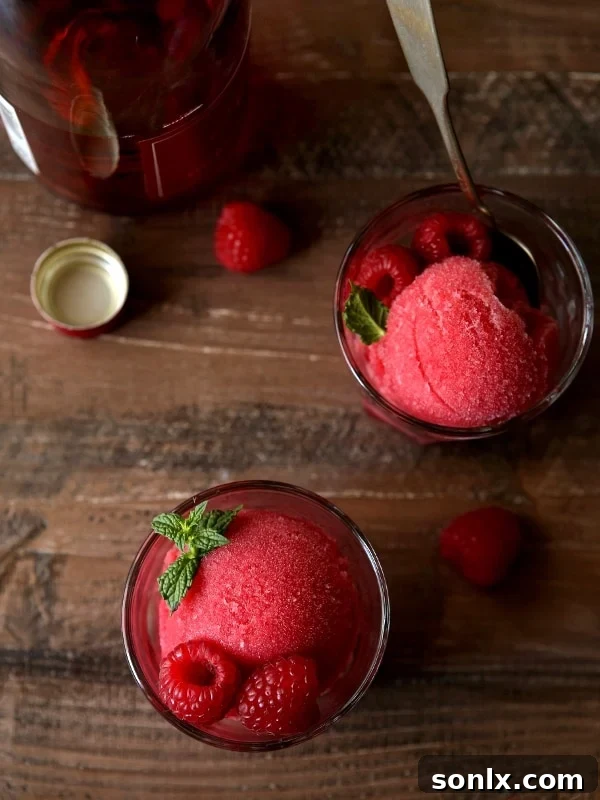
This light and refreshingly sophisticated sorbet, masterfully crafted with the vibrant flavors of fresh raspberries and the delicate notes of rosé wine, truly embodies the perfect grown-up frozen treat we all crave, especially as summer begins to wane. It’s a delightful concoction designed to elevate your warm-weather moments and provide a luxurious escape in every spoonful.
Embracing the Sweet Farewell to Summer with Raspberry Rosé Sorbet
It’s hard to believe that August has already arrived. The days, once stretching endlessly, now subtly hint at the changing seasons. Soon, the crisp air will usher in thoughts of cozy boots, comforting sweaters, and pumpkin spice lattes. While there’s a certain charm to autumn’s embrace, many of us find ourselves clinging to every last ray of summer sunshine, wishing these golden days would never end. We yearn to savor every beach trip, every al fresco dinner, and every moment of spontaneous joy that only summer can bring.
But since the seasons undeniably march on, there’s no better way to defy time and hold onto the essence of summer than by indulging in seasonal delights. For me, that means making a fresh batch of this exquisite Raspberry Rosé Sorbet every weekend until Labor Day. It’s not just a dessert; it’s a celebration of summer’s bounty, a chilled toast to lingering sunsets, and a reminder that even as the days shorten, the memories of warmth and sweetness can persist. This sorbet captures the very spirit of summer in a vibrant, elegant, and utterly delicious form, making it the ideal companion for those precious remaining weeks.
Why Raspberry Rosé Sorbet is Your Ultimate Summer Indulgence
What makes this Raspberry Rosé Sorbet truly special? It’s the harmonious marriage of sweet-tart raspberries with the crisp, fruity undertones of a dry rosé wine. This isn’t your average fruit sorbet; it’s an elevated experience designed for discerning palates. The rosé wine not only infuses the sorbet with a subtle, sophisticated flavor but also contributes to its wonderfully smooth, less icy texture due to its alcohol content. This means you get a scoopable, delightful consistency that melts beautifully on the tongue, releasing a burst of summery goodness.
Beyond its exquisite taste, this sorbet offers a refreshing respite from the summer heat. It’s light, palate-cleansing, and incredibly satisfying without being overly heavy. It serves as a perfect ending to a summer barbecue, a sophisticated dessert for an intimate gathering, or simply a private indulgence when you need a moment of tranquility. The vibrant color of the raspberries paired with the blush of rosé also makes for a visually stunning dessert, sure to impress any guest. This is truly an adult treat, offering a delicate balance of fruit, sweetness, and a hint of vinous charm.
The Art of Making Simple Sorbet: Ingredients and Process
Despite its elegant presentation and complex flavor profile, this raspberry rosé sorbet is remarkably simple to make, requiring just a few key ingredients: luscious raspberries, a good quality dry rosé wine, and a touch of granulated sugar. The magic happens through a straightforward process that transforms these humble components into a gourmet frozen delight. You begin by gently heating the rosé and sugar to create a simple syrup base, ensuring the sugar fully dissolves. This step is crucial for preventing a grainy texture in your final sorbet. Adding the raspberries to the warm mixture allows their juices and flavors to meld beautifully with the wine.
Once the mixture has cooled, it’s pureed until smooth and then strained. This straining step is essential for achieving that signature silky-smooth sorbet texture, free from any pesky raspberry seeds. The final, critical preparation step before churning is thorough chilling. A well-chilled base is the secret to preventing large ice crystals and ensuring a wonderfully creamy, scoopable sorbet. After a few hours in the fridge, your base is ready for the star player: the ice cream machine. Churning it transforms the liquid into a soft-serve consistency, which then firms up beautifully in the freezer. It’s a process that rewards patience with pure deliciousness.
Investing in a Home Ice Cream Maker: A Worthwhile Endeavor
If you don’t yet own an ice cream machine, this summer might just be the perfect time to make that investment. While it might seem like a niche appliance, a home ice cream maker opens up a world of culinary possibilities, allowing you to create an endless array of frozen yogurts, ice creams, and sorbets right in your own kitchen. The difference between homemade and store-bought frozen treats is truly remarkable – the freshness, the control over ingredients, and the ability to customize flavors make it an incredibly rewarding experience. For this raspberry rosé sorbet, an ice cream machine is instrumental in achieving the ideal smooth, airy texture that defines a perfect sorbet.
Consider the Conair Cuisinart ICE-21 1.5 Quart Frozen Yogurt-Ice Cream Maker, a popular and reliable choice for home use. It’s user-friendly, efficient, and consistently produces excellent results. The investment is totally worth it, and I promise you’ll find yourself reaching for it repeatedly, eager to experiment with new flavors and create refreshing desserts that will be the highlight of any occasion. Once you taste the quality of homemade sorbet, you’ll understand why it’s such a beloved kitchen tool.
This sorbet is truly at its best when served on warm summer nights, perhaps after a delightful dinner, once the little ones are tucked into bed. For an extra touch of decadence, consider pouring a little additional chilled rosé wine over the top just before serving. The wine not only enhances the existing flavors but also adds a beautiful sheen and an extra layer of adult sophistication. It’s the perfect way to unwind, celebrate the day, and savor a moment of grown-up pleasure.
Cheers to delicious summer nights and homemade delights!
Expert Tips: Storing Homemade Ice Cream and Sorbets for Optimal Freshness
- Choose the Right Container: Store your homemade sorbet (and ice cream!) in a sturdy, airtight container with minimal headspace. This prevents excess air from entering and forming ice crystals. Containers specifically designed for frozen desserts, like this one, are excellent choices as they often have a snug fit and durable construction.
- Avoid the Freezer Door: The temperature in the freezer door fluctuates significantly every time it’s opened and closed. These temperature swings cause your sorbet to repeatedly thaw and refreeze, which can lead to a grainy, icy texture. Always store your frozen treats in the coldest part of your freezer, typically towards the back.
- Use Plastic Wrap Barrier: Before sealing the container, press a piece of plastic wrap directly onto the surface of the sorbet. This creates an additional barrier against air and moisture, effectively preventing ice crystals from forming on top. This technique is particularly valuable as you consume the sorbet, increasing the air volume within the container.
- Enjoy Promptly for Best Quality: While homemade sorbets can last longer, they are truly at their peak flavor and texture within 1-3 days after being made. The freshness of the ingredients and the delicate structure of the sorbet are best appreciated when enjoyed quickly.

Raspberry Rosé Sorbet: A Refreshing Summer Treat
Pin Recipe
Leave a Review
Ingredients
- 2 cups dry rosé wine (500 ml), choose a good quality rosé you enjoy drinking
- ⅔ cup granulated sugar (133 grams), adjust to your preference based on raspberry sweetness
- 3 cups raspberries , fresh or frozen (360 grams), fresh is ideal but high-quality frozen works well
- Additional rosé wine , for serving (optional), for an extra boozy kick
Instructions
-
Combine the rosé wine and granulated sugar in a medium saucepan. Heat over medium-low heat, stirring constantly, until the sugar completely dissolves. Bring the mixture just to a gentle boil, then immediately remove it from the heat. Stir in the fresh or frozen raspberries. Allow the mixture to cool completely to room temperature. This crucial step infuses the wine with raspberry flavor while ensuring the mixture is cool enough for the next steps.
-
Once cooled, transfer the raspberry-rosé mixture to a blender or food processor. Purée until smooth. For a truly silky sorbet, especially if using fresh raspberries, press the puréed mixture through a fine-mesh strainer to remove any seeds or pulp. This step is optional but highly recommended for an ultra-smooth texture.
-
Chill the sorbet base thoroughly in the refrigerator. This usually takes about 2-3 hours, or even overnight for best results. The colder the mixture is before churning, the creamier and less icy your sorbet will be. A well-chilled base is key to preventing large ice crystals from forming.
-
Pour the thoroughly chilled sorbet base into your ice cream maker. Churn according to the manufacturer’s instructions. Churning times vary by machine, but it typically takes 20-30 minutes until the sorbet reaches a soft-serve consistency. At this stage, the sorbet will be quite soft.
-
Transfer the soft sorbet from the ice cream machine into a sturdy, airtight freezer-safe container. Press a piece of plastic wrap directly onto the surface of the sorbet to prevent ice crystals from forming, then secure the lid. Freeze for at least 2 hours, or until the sorbet is firm enough to scoop. For optimal texture and flavor, enjoy within 1-3 days.
Notes
**Serving Tip:** For an extra touch of sophistication, serve the sorbet in chilled glasses and pour a splash of additional dry rosé wine over each serving. Garnish with fresh raspberries or a mint sprig.
**Alcohol Content:** The alcohol in rosé wine lowers the freezing point, contributing to a softer, smoother sorbet texture. For a non-alcoholic version, you can substitute the rosé with non-alcoholic rosé, sparkling grape juice, or even a good quality cranberry or raspberry juice, though the flavor profile will shift slightly. Adjust sugar to taste if substituting.
**Sweetness Adjustment:** Taste the cooled sorbet base before chilling. If your raspberries are particularly tart, you might want to add a tablespoon or two more sugar. Remember, frozen desserts taste less sweet than their unfrozen counterparts.