Embarking on the journey of home canning is a delightful and rewarding experience, opening up a world of fresh flavors and self-sufficiency right in your kitchen. Imagine preserving the vibrant tastes of summer fruits and vegetables to enjoy throughout the colder months, or crafting homemade jams and pickles free from artificial additives. Canning is not just a method of food preservation; it’s a culinary art form that allows you to control the ingredients, reduce food waste, and even save money. Many aspiring canners feel intimidated by the process, envisioning complex equipment and endless hours in the kitchen. However, getting started is far simpler than you might think. With just a handful of essential tools, you can confidently begin transforming seasonal bounties into pantry staples. This comprehensive guide will introduce you to the fundamental canning tools that I personally rely on, ensuring your first foray into food preservation is both successful and enjoyable.
Before diving into the specifics, it’s important to understand that successful home canning hinges on a combination of proper technique, quality ingredients, and the right equipment. While there’s a vast array of specialized gadgets available on the market, the truth is you only need a core set of items to start preserving safely and efficiently. These foundational tools are not only budget-friendly but also versatile enough to handle a wide variety of canning projects, from sweet fruit preserves to savory pickled vegetables. By focusing on these essentials, you’ll build a strong foundation for your canning adventures without unnecessary clutter or expense.
The Indispensable Toolkit for Every Home Canner
My philosophy for home canning is centered around simplicity and functionality. Over the years, I’ve discovered that while fancy gadgets can be fun, they are rarely essential for producing delicious, safely preserved food. The following items form the backbone of my canning setup and are, in my experience, all you truly need to confidently begin preserving at home, in addition to standard kitchen utensils you likely already possess.
1. A Reliable Canning Resource Book
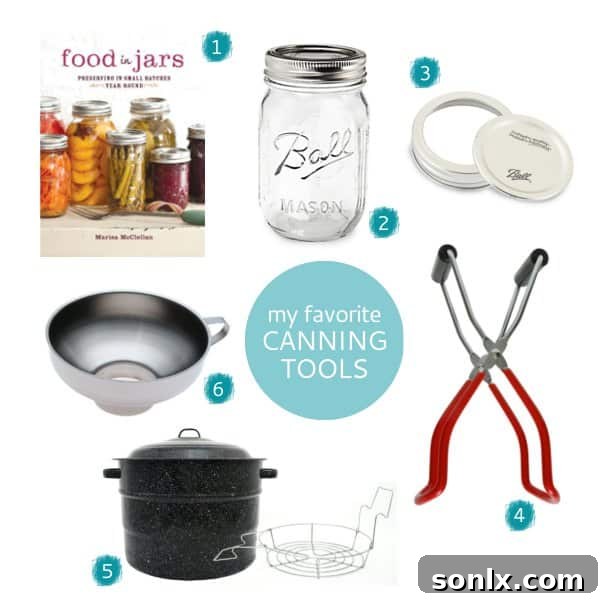
Recommended: Food in Jars: Preserving in Small Batches Year-Round by Marisa McClellan
Perhaps the most crucial “tool” for any aspiring canner isn’t a piece of equipment, but knowledge. A reputable canning resource book is an absolute must-have. It serves as your comprehensive guide to safe canning practices, tested recipes, and troubleshooting tips. Think of it as your culinary bible for preservation. Books like “Food in Jars” by Marisa McClellan are excellent starting points, renowned for their clear instructions and approachable recipes tailored for small batches, making them perfect for beginners. Such a book will cover everything from understanding acidity levels and processing times to proper sterilization techniques and the science behind safe food preservation. It will also provide a diverse range of recipes for jams, jellies, pickles, sauces, and more, ensuring you have plenty of inspiration for your canning projects. Always prioritize recipes from trusted sources to ensure the safety and quality of your preserved goods.
2. A Collection of Quality Canning Jars
Recommended: Standard Canning Jars
Canning jars are specifically designed to withstand the high temperatures of water bath canning and to create an airtight seal, making them indispensable. They come in various sizes, commonly half-pint, pint, and quart, and with either a regular or wide mouth opening. Your choice of jar size and mouth type will largely depend on what you plan to preserve. Half-pint jars are ideal for jams, jellies, and sauces intended for individual servings or gifts. Pint jars are incredibly versatile, perfect for pickles, salsas, fruit butters, and many savory items. Quart jars are excellent for larger quantities of fruits, pickled vegetables, or even tomato sauces. Wide-mouth jars are often preferred for chunkier items, making filling and cleaning easier, while regular-mouth jars are suitable for liquids and smaller pieces of food. I personally keep a diverse assortment of all sizes and mouth types on hand, ensuring I’m always prepared for any canning project. Always inspect jars for cracks or chips before use, as damaged jars can compromise the seal and safety of your food.
3. Essential Replacement Lids and Ring Bands
Recommended: Additional Lids and Rings
While new canning jars typically come with a set of lids and ring bands, it’s crucial to understand that only the ring bands are reusable. The flat metal lids, with their sealing compound, are designed for single-use only. For every batch of canning you undertake, you will need a fresh set of new, unused lids to ensure a proper and safe seal. The sealing compound on these lids is what creates the vacuum seal necessary for long-term preservation, and it degrades after one use. Therefore, stocking up on extra lids is a fundamental requirement for any serious home canner. Ring bands, on the other hand, can be reused countless times as long as they are free from rust or dents. Having extra bands on hand is also incredibly convenient, allowing you to prepare multiple batches or replace any that might become damaged over time. Always store unused lids and bands in a cool, dry place to maintain their integrity.
4. A Sturdy Jar Lifter
Recommended: Jar Lifter
Safety is paramount in home canning, and a jar lifter is perhaps the most important safety tool you’ll acquire. This specialized tong-like utensil is designed with rubber-coated grips that securely grasp hot, slippery jars from the boiling water of your canner. Attempting to lift hot jars with regular kitchen tongs or mitts is incredibly dangerous, risking severe burns and potentially dropping and breaking the jars, which could lead to injury or compromise your canned goods. A good jar lifter provides a firm, stable grip, allowing you to safely insert empty jars into the hot water for sterilization and, more importantly, to remove the freshly processed, piping-hot jars from the canner without tilting or spilling. Its ergonomic design ensures ease of use and minimizes the risk of accidents, making it an indispensable item for anyone serious about safe and efficient canning.
5. A Water-Bath Canner or Large Stock Pot
Recommended: Water-Bath Canner
For most beginner canning projects, especially those involving high-acid foods like fruits, jams, jellies, pickles, and tomatoes (with added acid), a water-bath canner is your primary processing vessel. This is essentially a very large pot, typically with a rack, designed to fully immerse your jars in boiling water. The rack prevents the jars from touching the bottom of the pot, ensuring even heat distribution and preventing breakage. If you don’t initially want to invest in a dedicated water-bath canner, a very large stock pot (one that is deep enough to cover your tallest jars by at least an inch of water) with a makeshift rack (like a folded kitchen towel or extra canning rings tied together) can serve as a temporary alternative. However, a dedicated canner offers optimal performance and safety. The boiling water process creates a vacuum seal in the jars, inhibiting the growth of spoilage microorganisms. Ensuring your canner is large enough to accommodate the desired number of jars while maintaining proper water levels is key to successful and safe preservation.
6. A Practical Jar Funnel
Recommended: Jar Funnel
While not strictly essential in the way a jar lifter is for safety, a jar funnel dramatically simplifies the canning process and significantly reduces mess. Designed with a wide mouth that fits snugly into the opening of your canning jars, this funnel allows you to efficiently scoop or pour your prepared jams, sauces, fruits, or vegetables into the jars without spillage. Minimizing mess isn’t just about cleanliness; it’s also about preventing food from getting onto the jar rims. Food residue on the rim can interfere with the sealing compound on the lid, preventing a proper vacuum seal and potentially leading to spoilage. A jar funnel ensures a clean transfer, helping you achieve a perfect seal every time. Made from heat-resistant plastic or stainless steel, it’s an inexpensive yet incredibly useful tool that streamlines your workflow and keeps your kitchen tidier during those busy canning sessions.
Beyond the Essentials: Standard Kitchen Tools and Getting Started
In addition to these specialized canning tools, you’ll naturally need a range of standard kitchen utensils you likely already own. These include large mixing bowls, measuring cups and spoons, ladles, spatulas, sharp knives, cutting boards, and basic pots for preparing your recipes. Having these readily available will ensure your canning process flows smoothly from start to finish.
Getting started with home canning can feel like a big step, but by focusing on high-acid foods suitable for water bath canning and carefully following tested recipes from your reliable canning resource, you’ll gain confidence quickly. Always pay close attention to details like proper headspace (the empty space between the food and the lid), removing air bubbles, and adhering strictly to recommended processing times. These practices are fundamental to ensuring the safety and quality of your preserved foods.
The Rewarding World of Home Preservation
The satisfaction that comes from opening a jar of homemade strawberry jam in the middle of winter, or serving your own pickled green beans at a family gathering, is truly unparalleled. Home canning offers a profound connection to your food, an opportunity to embrace seasonal eating, and a tangible way to reduce waste and contribute to a more sustainable lifestyle. It’s a skill that pays dividends not only in delicious food but also in personal fulfillment and self-reliance.
While the market is flooded with various canning gadgets and advanced pressure canners for low-acid foods, these six core tools are truly all you need to begin your journey into the wonderful world of water bath canning. Start with simple recipes, build your confidence, and soon you’ll be preserving an abundance of flavors for yourself, your family, and your friends. Happy canning!
Interested in learning more about canning? See my post on Home Canning Tips and Resources.
Disclosure: This post contains affiliate links. I make a small percentage of purchases made after following these links. As always, all opinions are my own.