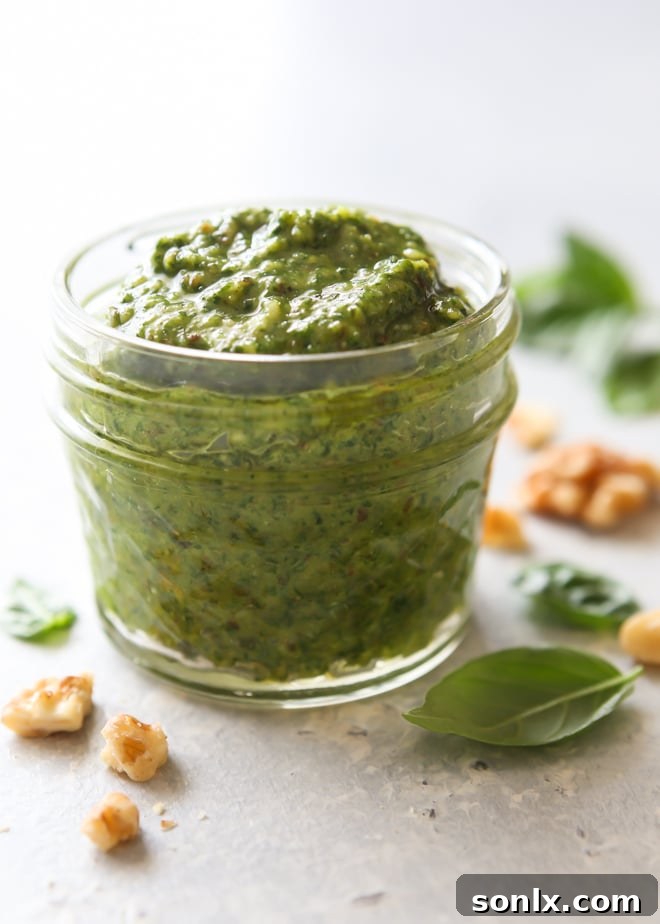
Unlock a world of vibrant flavor with this incredible homemade basil walnut pesto! More than just a simple sauce, this fresh and fragrant condiment is a culinary chameleon, ready to elevate an astounding array of dishes. From coating tender pasta and brushing onto succulent meats to drizzling over roasted vegetables and transforming everyday sandwiches, its versatility knows no bounds. If you’re looking for an easy way to infuse your meals with a burst of garden-fresh taste, you’ve found your new go-to recipe.
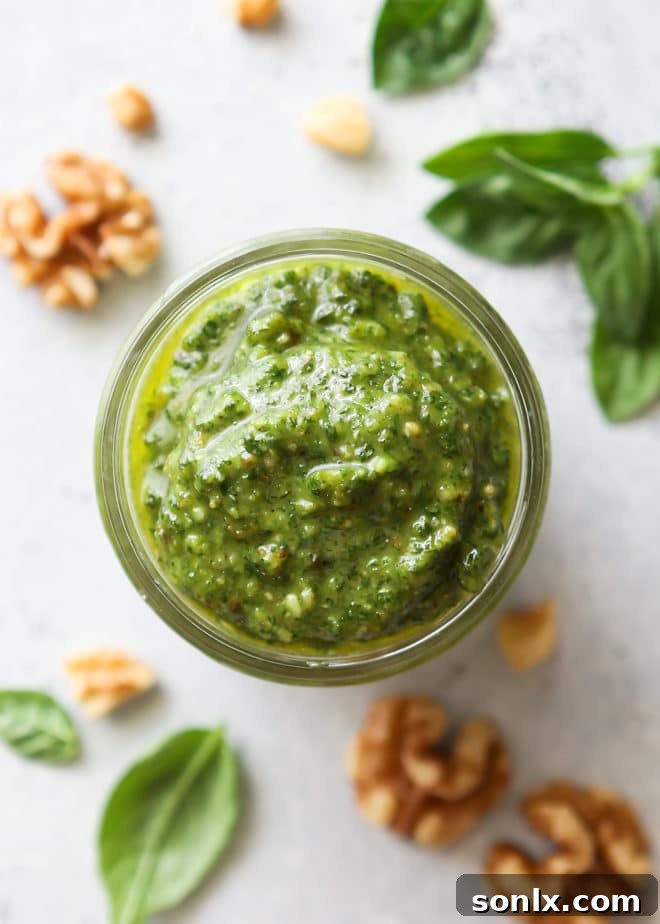
Homemade Basil Walnut Pesto: Your Ultimate Guide to Fresh Flavor
There’s a special kind of satisfaction that comes from creating something delicious from scratch, especially when it involves harnessing the bounty of your own garden. For many, summer is synonymous with lush, fragrant basil, and even for those of us who don’t boast a green thumb, a thriving basil plant is a source of immense pride. As the peak of summer gently transitions, and basil plants continue to flourish, making homemade pesto becomes the perfect way to capture that verdant essence and enjoy it all year long.
This basil walnut pesto recipe is more than just easy; it’s a testament to how a few high-quality ingredients can come together in mere minutes to produce something truly extraordinary. Forget store-bought versions laden with preservatives; this homemade pesto delivers unparalleled freshness, aroma, and a depth of flavor that can transform any meal from mundane to magnificent. It’s a culinary secret weapon, a vibrant green burst of summer that promises to revitalize your palate.
Why Make Your Own Basil Walnut Pesto? The Joys of Homemade
While convenience often steers us towards pre-made options, opting for homemade pesto offers a myriad of benefits that are simply unmatched. Here’s why you should embrace the delightful journey of making your own basil walnut pesto:
- Unrivaled Freshness: The most compelling reason is freshness. Homemade pesto, particularly when using recently harvested basil, boasts a vibrant, herbaceous aroma and taste that supermarket alternatives can’t replicate. You control the quality of every ingredient, ensuring peak flavor.
- Customizable Flavor Profile: Making pesto at home allows you to fine-tune the taste to your exact preference. Want more garlic? Less salt? A different nut? The power is in your hands to create a pesto that perfectly suits your palate.
- Cost-Effective: Fresh basil can be abundant and inexpensive, especially if you grow your own. Pine nuts, traditionally used in pesto, can be quite pricey. By opting for more affordable walnuts, homemade pesto becomes a far more budget-friendly option than buying gourmet jars.
- Avoids Unwanted Additives: Store-bought pestos often contain preservatives, artificial colors, or excessive amounts of oil or salt. When you make it yourself, you know exactly what goes into it, allowing you to avoid any ingredients you’d rather omit.
- Simple and Quick: Despite its gourmet reputation, pesto is incredibly simple and quick to prepare. With a food processor, it comes together in under 10 minutes, making it an ideal last-minute addition to any meal.
- A Sense of Accomplishment: There’s a genuine satisfaction that comes from serving a dish enhanced by a sauce you made yourself. It adds a personal touch and elevates the dining experience.
The Essential Ingredients for Perfect Pesto (and Their Flavorful Twists)
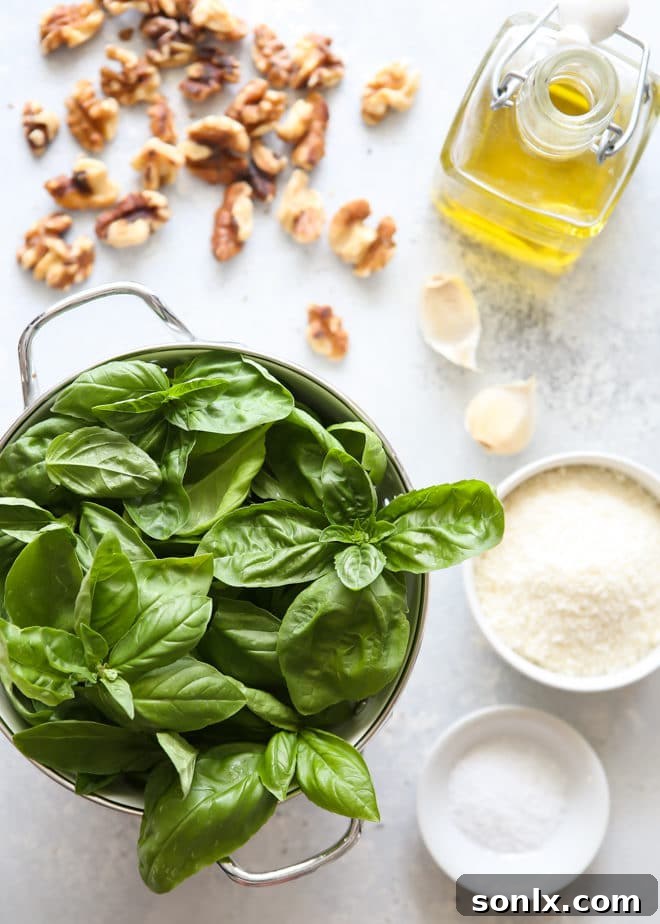
The beauty of pesto lies in its simplicity, relying on just a handful of core ingredients to deliver its distinctive flavor. However, each component plays a crucial role, and knowing your options can help you craft your perfect batch. Here’s a deeper look into the ingredients that make this basil walnut pesto sing:
1. Fresh Basil: The Aromatic Heart of Pesto
- Fresh basil— The cornerstone of traditional pesto, sweet Italian basil is renowned for its pungent, sweet, and peppery notes. For the most vibrant flavor, use basil that is freshly picked, ideally from your own garden or a local farmer’s market. While basil is the classic choice, don’t limit yourself! Experiment with other leafy greens and herbs like spinach for a milder flavor, kale for an earthy depth, arugula for a peppery kick, or even mint for a refreshing twist. A combination can also create a unique and delightful pesto.
2. Toasted Walnuts (or Your Nut of Choice): Adding Depth and Texture
- Toasted nuts— Traditionally, pesto features pine nuts. However, walnuts offer a fantastic, equally delicious, and significantly more economical alternative. Toasting the walnuts before adding them to the pesto is a crucial step that intensifies their nutty flavor and adds a beautiful depth, though you can skip this for a slightly different, raw nut profile. Other excellent options include pecans, almonds, hazelnuts, or cashews, each lending its own unique character to the final sauce.
3. Parmesan Cheese: The Salty, Umami Kick
- Parmesan cheese— Grated Parmesan cheese is preferred here because its fine texture blends seamlessly into the pesto, creating a smoother consistency compared to shaved or shredded varieties. A good quality Parmigiano-Reggiano will impart a rich, salty, and umami-packed flavor that is essential to classic pesto. If you’re looking for variations, Pecorino Romano offers a sharper, saltier bite, while Asiago provides a slightly milder, nutty flavor. For a dairy-free option, nutritional yeast can be used to mimic the cheesy flavor.
4. Garlic: The Pungent Punch
- Garlic— Fresh garlic cloves provide that essential pungent warmth and characteristic “kick” that rounds out the pesto’s flavor profile. The quantity is entirely up to personal preference, but starting with two medium-sized cloves generally strikes a perfect balance, offering robust flavor without overpowering the delicate basil. For a milder garlic taste, you can roast the garlic beforehand.
5. Salt: Enhancing Every Flavor
- Salt— Coarse sea salt or kosher salt is recommended, as its larger crystals provide a more even seasoning and help break down the ingredients in the food processor. Salt is vital for enhancing all the other flavors in the pesto, so remember to taste and adjust as needed. Different cheeses also contribute varying levels of saltiness, so always taste before adding too much.
6. High-Quality Olive Oil: The Binding Elixir
- Olive oil— A good quality extra virgin olive oil is paramount. Its fruity, sometimes peppery notes contribute significantly to the pesto’s overall flavor. Start with the recommended amount and gradually add more, a little at a time, until you achieve your desired consistency. Some prefer a thicker, chunkier pesto, while others opt for a smoother, more liquid sauce. Avoid cheap, flavorless oils, as they will detract from the freshness of your pesto.
Optional Additions to Elevate Your Pesto
While the classic ingredients form a perfect base, a few additions can further enhance your pesto:
- Lemon Juice— A squeeze of fresh lemon juice not only adds a bright, zesty note that cuts through the richness of the oil and cheese but also helps prevent the basil from oxidizing and turning brown, keeping your pesto vibrantly green.
- Red Pepper Flakes— For those who appreciate a touch of heat, a pinch of red pepper flakes can add a subtle warmth and complexity to the pesto.
- Nutritional Yeast— If you’re looking to make a dairy-free or vegan pesto, nutritional yeast can be an excellent substitute for Parmesan, providing a savory, cheesy flavor.
Crafting Your Homemade Basil Walnut Pesto: A Simple Process
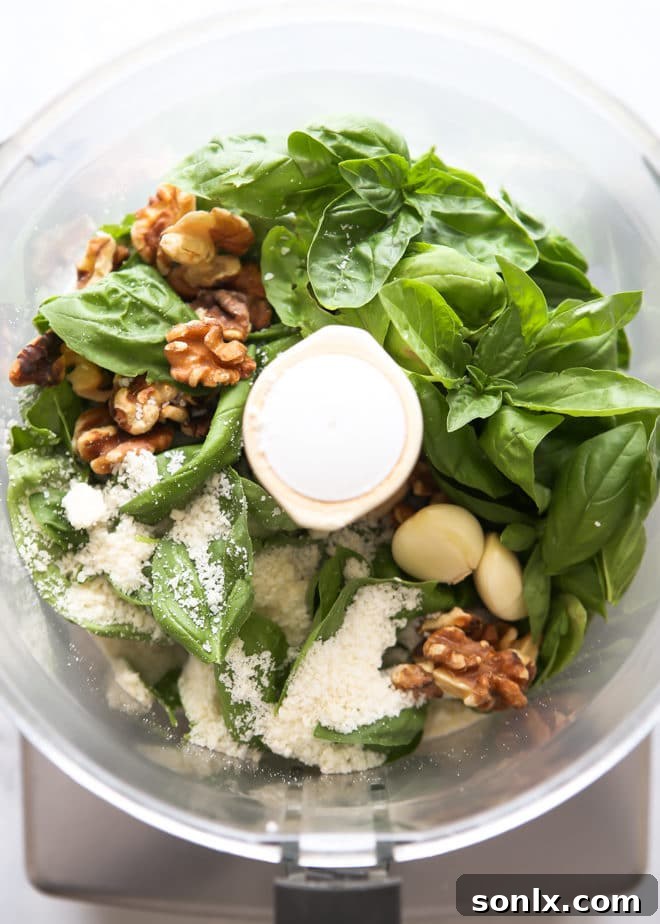
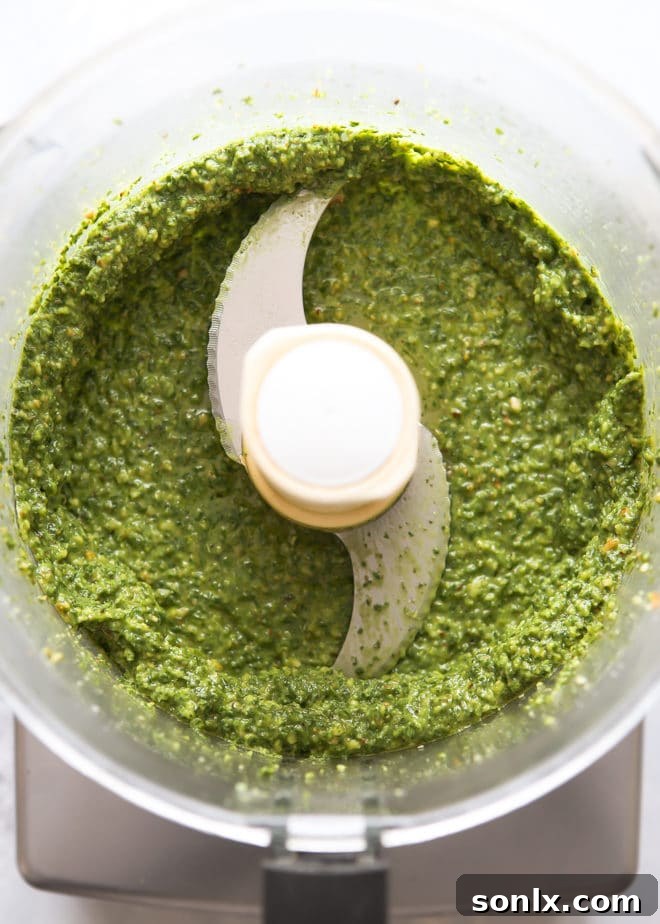
Making homemade pesto is incredibly straightforward, transforming a handful of fresh ingredients into a vibrant, aromatic sauce in mere minutes. The key is to use a food processor or a high-powered blender to achieve the perfect texture. Here’s a detailed look at the process:
- Prepare Your Ingredients: Ensure all your ingredients are ready. If you’re toasting the walnuts, do so lightly in a dry pan over medium heat for 3-5 minutes, or until fragrant, then let them cool slightly. Wash and thoroughly dry your basil leaves – excess water can make your pesto watery.
- The Initial Pulse: Place the basil leaves, toasted walnuts, grated Parmesan cheese, garlic cloves, and salt into the bowl of your food processor. Pulse several times using short bursts. You want the mixture to start breaking down and coming together, but it should still be quite chunky. This initial pulsing helps to evenly distribute the dry ingredients and prevents the basil from becoming bruised or overly puréed too early.
- Scraping Down: After the initial pulsing, stop the food processor and use a spatula to scrape down the sides of the bowl. This ensures all ingredients are incorporated and process evenly.
- Adding the Olive Oil: With the food processor or blender running on low speed, slowly drizzle in the ¼ cup of olive oil through the feed tube. The continuous motion while adding the oil helps create a smooth emulsion. Continue processing until the mixture is more cohesive and starts to form a thick paste. Scrape down the sides again.
- Achieving Desired Consistency: Now, assess the texture. If you prefer a thinner, smoother pesto, gradually add more olive oil, a tablespoon at a time, while the machine is running, until your pesto reaches the desired consistency. Some enjoy a rustic, chunky pesto, while others prefer a creamy, saucy texture. Taste the pesto and adjust the seasoning with more salt if needed.
Once your pesto is made, it’s ready to be used immediately to brighten up any dish or stored for future culinary adventures!
Unleashing the Versatility of Basil Walnut Pesto: Endless Culinary Uses
The true magic of homemade basil walnut pesto lies in its incredible versatility. Beyond its classic pairing with pasta, this vibrant sauce can transform an ordinary meal into something extraordinary. Here are just a few of the countless ways this vibrant pesto can elevate your dishes and infuse them with fresh, herbaceous flavor:
- Pasta Perfection— The most iconic use! Stir a generous dollop into warm, cooked pasta (linguine, fettuccine, penne) with a splash of reserved pasta water to create a quick, creamy, and intensely flavorful sauce. It’s also superb as a dressing for cold pasta salads, adding a burst of freshness. Don’t forget to toss it with gnocchi or tortellini for an instant gourmet meal.
- Magnificent Meats— Use pesto as a marinade or rub for seafood, poultry, pork, or beef before grilling, roasting, or pan-searing. It tenderizes the meat while imparting incredible flavor. Alternatively, swirl it into pan sauces or drizzle over cooked meats as a vibrant finishing sauce for an extra layer of taste.
- Vibrant Veggies— Elevate your vegetable dishes effortlessly. Toss your favorite veggies (broccoli, asparagus, zucchini, bell peppers) with pesto before roasting or grilling for a flavor boost. Drizzle it over steamed or sautéed vegetables just before serving. It’s also a fantastic addition to mashed potatoes, mashed cauliflower, or even a simple vegetable soup.
- Bountiful Breads & Spreads— Pesto makes an excellent dipper for crusty bread or focaccia. Spread it generously on toast for a quick snack, or use it as a flavorful base for bruschetta, topped with fresh tomatoes and mozzarella. It’s a game-changer when brushed onto pizza dough before baking, or mixed into garlic bread butter.
- Dynamic Dressings & Dips— Thin out your pesto with a little extra olive oil, a squeeze of lemon juice, and a touch of water to create a zesty salad dressing for green salads or grain bowls. Blend it into cream cheese or Greek yogurt for a savory dip perfect for crackers and crudités, or stir it into hummus for a Mediterranean twist.
- Everyday Condiment & Beyond— Spread pesto on sandwiches, wraps, and burgers for a gourmet upgrade. Mix it into scrambled eggs or an omelet for a delightful breakfast. Swirl a spoonful into warm soups or stews for an instant infusion of herbaceous goodness. You can even use it as a base for a flavorful compound butter.
With a batch of homemade basil walnut pesto in your fridge or freezer, you’re always just moments away from adding a touch of gourmet flair to any meal.
Maximizing Freshness: Expert Tips for Storing Your Pesto
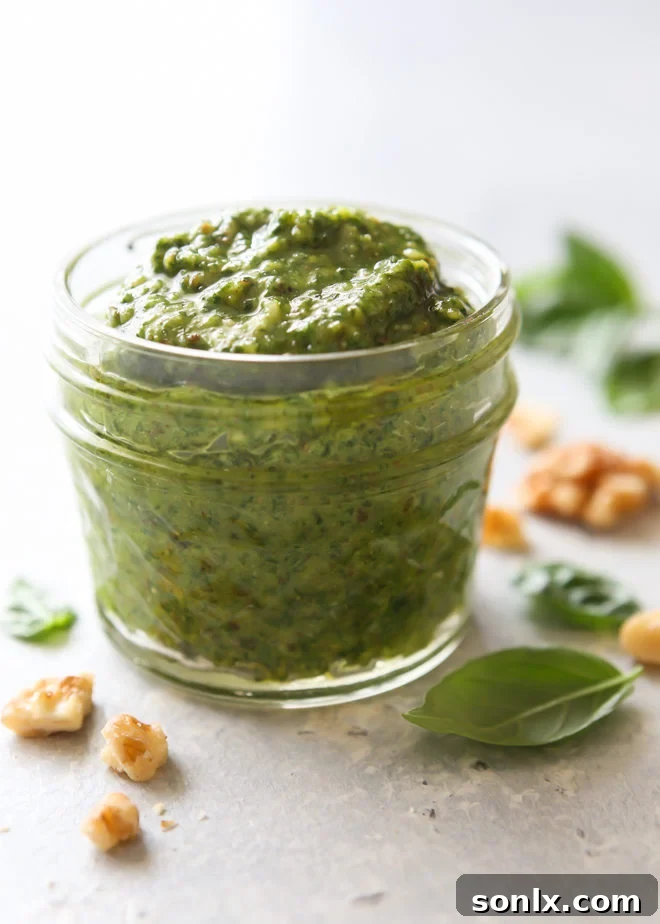
To ensure you can savor the taste of summer pesto long after the basil season ends, proper storage is key. Pesto, with its fresh ingredients, is susceptible to oxidation, which can cause it to lose its vibrant green color and some of its fresh flavor. Here’s how to keep your homemade pesto fresh and delicious:
- Refrigeration for Short-Term Enjoyment— If you plan to use your pesto within one to two weeks, storing it in the refrigerator is ideal. Transfer the pesto to an airtight container. To prevent oxidation (the browning that occurs when pesto is exposed to air), add a thin layer of olive oil on top of the pesto. This oil layer acts as a barrier, sealing out the air and preserving its beautiful green hue and fresh taste. Place a piece of plastic wrap directly on the surface of the pesto before sealing the container for an extra layer of protection.
- Freezing for Long-Term Preservation— Freezing is undoubtedly the best method for preserving pesto for several months, allowing you to enjoy a taste of summer throughout the year.
- Ice Cube Trays: This is a popular and convenient method. Spoon the pesto into ice cube trays. Once frozen solid (typically after 3-4 hours or overnight), pop out the pesto cubes and transfer them to a freezer-safe bag or container. This allows you to easily grab small portions as needed.
- Small Jars or Containers: You can also freeze pesto in small, freezer-safe jars or containers. Fill the container, leaving about an inch of headspace to allow for expansion. Top with a thin layer of olive oil and seal tightly.
- Labeling: Always label your frozen pesto with the date it was made. Frozen pesto can typically last for 6 months to a year without significant loss of flavor or quality.
- Thawing Tips: When ready to use, simply transfer the desired amount of frozen pesto to the refrigerator to thaw overnight, or add a frozen cube directly to warm pasta or hot dishes, allowing it to melt and incorporate.
Troubleshooting Common Pesto Issues
Even though pesto is relatively simple to make, you might encounter a few common issues. Here’s how to address them and ensure your homemade pesto is perfect every time:
- Pesto Turning Brown: This is a very common issue caused by oxidation, where the basil reacts with air.
- Prevention: Add a squeeze of fresh lemon juice (about 1-2 teaspoons per batch) to the pesto during processing. Lemon juice not only adds a bright flavor but also helps slow down oxidation.
- Storage: Always top your stored pesto with a thin layer of olive oil and/or place plastic wrap directly on the surface to create an airtight seal.
- Pesto Too Oily or Too Dry: The consistency of pesto is a matter of personal preference, but sometimes it can go awry.
- Too Oily: If your pesto is too runny or oily, you can try adding a few more basil leaves, a tablespoon of Parmesan, or even a few more nuts to absorb some of the excess oil and thicken it up. Process briefly until combined.
- Too Dry/Chunky: If it’s too thick or not coming together, simply add more olive oil, a tablespoon at a time, until you reach your desired consistency. You can also add a tiny splash of water (or pasta water if making for pasta) to loosen it up.
- Pesto Tastes Bitter: Bitterness in pesto can usually be attributed to a few factors.
- Over-processing: Over-processing the basil can bruise it and release bitter compounds. Use short pulses rather than continuously blending.
- Garlic Overload: Too much raw garlic can make pesto bitter and overpower other flavors. Adjust the amount of garlic to your taste. For a milder garlic flavor, you can briefly blanch the garlic cloves before adding them.
- Olive Oil Quality: Using a very strong, peppery, or slightly rancid olive oil can also contribute to bitterness. Ensure you are using a good quality, fresh extra virgin olive oil.
- Nut Issue: If your nuts are old or slightly rancid, they can also impart a bitter taste. Always use fresh nuts.
Tools for This Delicious Recipe
While a good food processor or high-powered blender is the star of the show for making pesto, a few other tools can make the process even smoother:
- Food Processor/Blender: Essential for quickly and efficiently blending all the ingredients into a smooth or chunky sauce. Choose one with a sturdy motor.
- Measuring Cups and Spoons: For accurately measuring basil, nuts, cheese, and liquids.
- Spatula: Crucial for scraping down the sides of the food processor bowl to ensure all ingredients are evenly incorporated.
- Airtight Containers/Ice Cube Trays: For proper storage in the refrigerator or freezer, helping to preserve freshness and prevent oxidation.
Basil Walnut Pesto: The Quintessential Homemade Sauce
Pin Recipe
Leave a Review
Ingredients
- 6 cups loosely packed fresh basil (145 grams)
- ½ cup toasted walnuts (56 grams), or nuts of choice
- ½ cup grated Parmesan cheese (50 grams)
- 2 cloves garlic
- ½ teaspoon salt
- ¼ – ½ cup olive oil (60-80 ml)
Instructions
-
Place basil, walnuts, Parmesan cheese, garlic, and salt in a food processor or high-powered blender and pulse several times until the ingredients start to come together but still appear chunky. Stop and scrape down the sides of the bowl with a spatula.
-
With the food processor/blender running on low, slowly add ¼ cup of olive oil through the feed tube. Continue to process until the mixture is more cohesive. Scrape sides down again to ensure everything is well combined.
-
Gradually add more olive oil, a tablespoon at a time, until your pesto reaches the desired consistency. Whether you prefer a thick, rustic pesto or a smoother, more saucy texture, adjust the oil accordingly.
-
Taste and adjust seasoning if needed. Your homemade pesto is now ready to use, or you can follow the storage tips provided above for longer enjoyment.
Nutrition Information
Calories: 2072kcal,
Carbohydrates: 16g,
Protein: 33g,
Fat: 215g,
Saturated Fat: 35g,
Cholesterol: 44mg,
Sodium: 1938mg,
Potassium: 745mg,
Fiber: 6g,
Sugar: 2g,
Vitamin A: 8029IU,
Vitamin C: 28mg,
Calcium: 878mg,
Iron: 8mg
Have you tried this recipe?I’d love to hear about it! Leave a rating and review below, or take a photo and tag it on Instagram @completelydelicious with #completelydelicious.