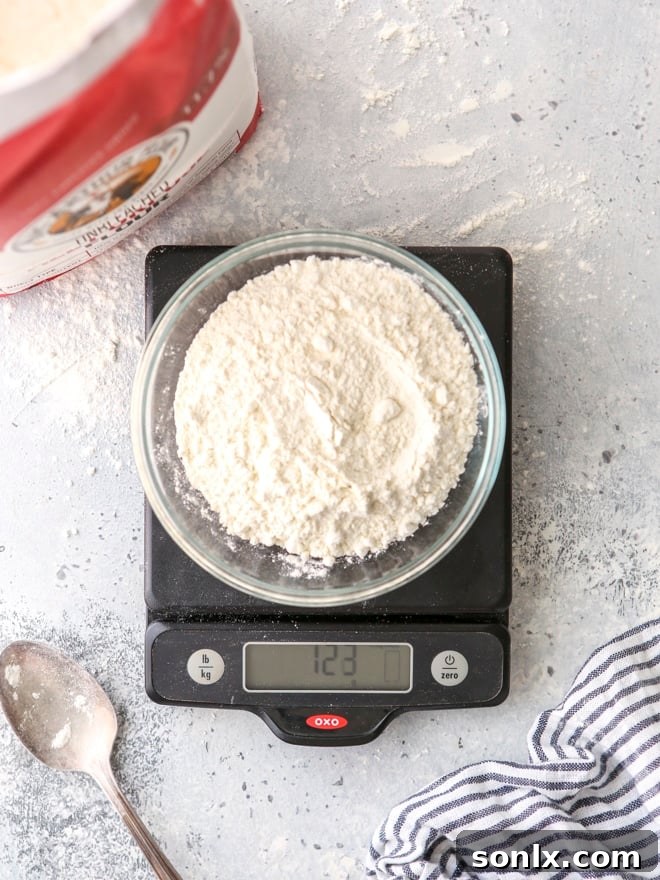
Unlock the secret to consistently perfect cookies, cakes, and breads: precise ingredient measurement. Forget the guesswork and common pitfalls of volume measuring. This comprehensive guide will delve into the critical difference between measuring by weight versus by volume and why a simple kitchen scale is your ultimate tool for baking success.
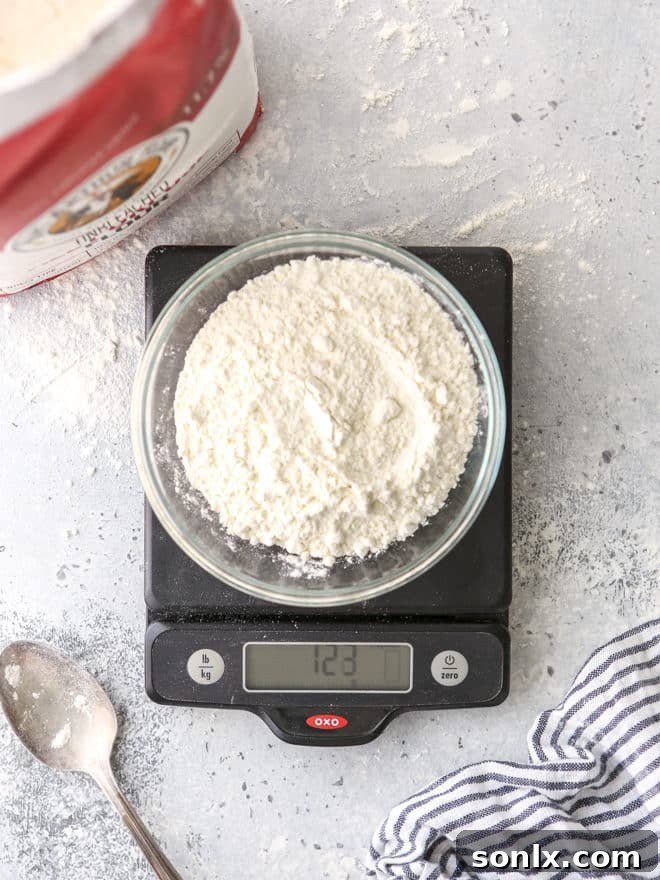
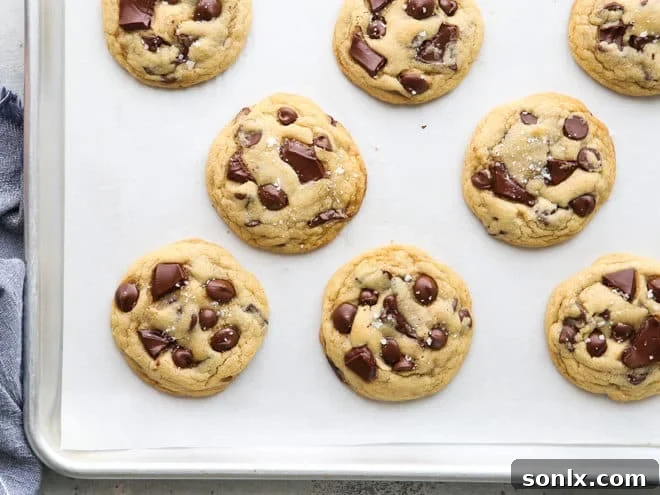
In the world of baking, precision isn’t just a suggestion; it’s the golden rule. The way you measure your ingredients can dramatically alter the outcome of your culinary creations, distinguishing between a triumphant dessert and a disappointing flop. Have you ever experienced the frustration of cookies that refuse to spread, possessing an unappetizingly cakey texture, or a cake that emerges from the oven dense and dry instead of wonderfully moist and fluffy? These common baking woes often trace back to a single culprit: inconsistent ingredient measurement.
This article will illuminate why meticulous accuracy and unwavering attention to detail are non-negotiable in the baking process. We’ll explore the best practices for measuring ingredients, providing you with the knowledge and tools to elevate your baking prowess. Spoiler alert: investing in a reliable kitchen scale is not merely a recommendation; it’s a fundamental step towards mastering the art of baking.
Table of Contents
- Why Precision Measurement is Paramount in Baking
- The Great Debate: Understanding Volume vs. Weight Measurement
- The Inconsistencies and Pitfalls of Measuring by Volume
- The Unrivaled Accuracy and Benefits of Measuring by Weight
- Embracing the Kitchen Scale: A Baker’s Best Friend
- Tips for Mastering Your Kitchen Scale
- Essential Baking Ingredient Weight Chart
- Make the Switch: Transform Your Baking Today!
Why Precision Measurement is Paramount in Baking
The adage “baking is a science” isn’t just a catchy phrase; it’s an undeniable truth. Unlike cooking, which often encourages creative improvisation and can be forgiving with ingredient quantities, baking demands a scientific approach. Every ingredient plays a precise role, contributing to the delicate balance of texture, structure, flavor, and appearance of the final product. Deviations from exact measurements can trigger a cascade of chemical reactions gone awry, leading to undesirable results.
Consider flour, the structural backbone of most baked goods. Too much flour, and your cake can become dry and crumbly, or your cookies stiff and dense. Too little, and they might spread excessively, lack structure, or be too delicate. Similarly, fats contribute tenderness and moisture, sugar sweetens, tenderizes, and aids in browning, and leavening agents (like baking soda and baking powder) are responsible for that airy, fluffy rise. A slight imbalance in any of these can throw the entire recipe off, leading to inconsistent results, wasted ingredients, and ultimately, disappointment. Achieving that perfect chewiness in a cookie or the ideal crumb in a cake relies heavily on the precise ratios of fats, sugars, and flours. This consistency is precisely why accurate measurement is not merely a good practice, but an essential one for any aspiring or seasoned baker.
The Great Debate: Understanding Volume vs. Weight Measurement
When it comes to quantifying ingredients in the kitchen, two primary methods dominate: measuring by volume and measuring by weight. While both aim to provide specific quantities, their inherent characteristics lead to vastly different levels of accuracy, which is a critical distinction in baking.
The Inconsistencies and Pitfalls of Measuring by Volume
Volume measurements, typically expressed in cups, tablespoons, and teaspoons, quantify ingredients based on the physical space they occupy. This method is deeply ingrained in many home kitchens, often being the first technique learned. However, despite its familiarity, volume measurement is inherently prone to inconsistency and significant inaccuracies, particularly in baking. Here’s why it can be a recipe for disaster:
- Variations in Measuring Tools: It might seem trivial, but measuring cups and spoons can vary slightly in actual capacity from brand to brand. A “cup” from one manufacturer might hold marginally more or less than another, creating discrepancies even before you begin.
- Ingredient Density and Settling: Dry ingredients like flour or sugar settle over time, becoming more compact. If you scoop directly from a settled bag, you’ll inevitably pack more into your measuring cup than intended. Conversely, fluffy ingredients can be under-measured if not packed properly (e.g., brown sugar).
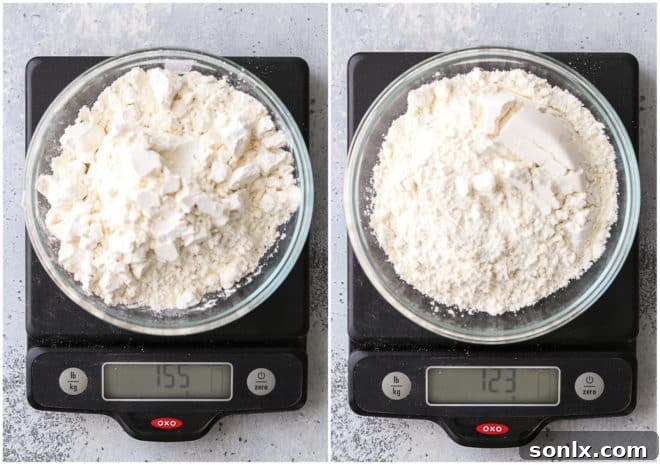
- Inconsistent Scooping Techniques: The way you scoop and level dry ingredients dramatically affects the amount. For example, a “scooped and leveled” cup of flour can weigh anywhere from 120 grams to 150 grams or even more, depending on how densely it’s packed into the cup. This seemingly small variation, up to 25% or more, can completely throw off the ingredient balance in a delicate recipe. Are you fluffing the flour before measuring? Are you leveling it with a straight edge or just eyeballing it? Each method yields a different amount.
- Air Pockets in Liquids: Even with liquids, measuring by volume can have minor inaccuracies due to meniscus (the curve of the liquid surface) and air bubbles, although these are generally less impactful than with dry ingredients.
- Sticky Ingredients: Measuring sticky ingredients like honey or peanut butter by volume is not only messy and difficult to get completely out of the cup, but it also leaves residual amounts that can subtly reduce the actual quantity added to your recipe.
These seemingly minor inconsistencies compound, leading to unpredictable results. A cookie batch might be too crumbly one day and too dense the next, or a cake might consistently lack the intended lightness and moisture. When a recipe calls for precise ratios, these variations can be detrimental.
The Unrivaled Accuracy and Benefits of Measuring by Weight
Weight measurements, expressed in grams or ounces, provide an unequivocal standard for ingredient quantity and necessitate the use of a kitchen scale. This method fundamentally eliminates the guesswork and minimizes the potential for error that plagues volume measurements, primarily because a gram of any substance always weighs exactly a gram, irrespective of its density, how it’s packed, or the type of measuring vessel used. Embracing a kitchen scale unlocks a multitude of advantages for the home baker:
- Unmatched Accuracy and Consistency: This is the paramount benefit. A gram of flour, whether it’s tightly packed or lightly spooned, will always register as 1 gram on your scale. This ensures that every time you bake a recipe, the exact same amount of each ingredient is incorporated, leading to consistent, predictable, and reliably delicious results.
- Eliminates Guesswork and Reduces Errors: No more wondering if you’ve scooped enough flour or if your cup is perfectly leveled. The scale gives you a definitive number, drastically reducing the chance of accidental over or under-measurement. It also prevents the common “Did I already add 2 cups or 3?” type of confusion.
- Simplifies Recipe Scaling: Halving or doubling a recipe becomes a breeze with weight measurements. Dividing 200 grams by two (100 grams) is far simpler and more accurate than trying to measure “half a cup” of a dry ingredient, especially if the original cup measurement was already prone to variability.
- Faster and More Efficient Process: Many bakers find using a scale quicker. You can often weigh multiple ingredients directly into your mixing bowl, simply taring the scale back to zero between each addition. This streamlined process saves time and reduces clutter.
- Significantly Less Cleanup: By weighing ingredients directly into your main mixing bowl, you circumvent the need to dirty multiple measuring cups and spoons. This is especially advantageous for sticky or oily ingredients like honey, molasses, or peanut butter, which typically cling to measuring cups and require extensive cleaning.
- Professional-Level Results: Professional bakeries and patisseries rely almost exclusively on weight measurements for their precision and consistency. By adopting a kitchen scale, you’re embracing a technique used by experts, bringing a higher degree of scientific accuracy to your home baking.
- Builds Baking Confidence: When your recipes consistently turn out beautifully, your confidence in the kitchen soars. A kitchen scale removes a major variable, allowing you to focus on technique and timing, rather than worrying about foundational ingredient quantities.
A note about recipes on this website: My commitment is to make delicious baking accessible to everyone, which is why all my baking recipes provide both volume (cup) and weight (gram) measurements. However, I wholeheartedly and emphatically encourage you to prioritize and utilize the gram measurements. This is precisely how I develop and refine my recipes, ensuring that they yield the most optimal results. Your success in the kitchen is my biggest goal, and using a scale is a powerful step towards achieving it.
You may observe that in most of my recipes, I continue to use teaspoon and tablespoon measurements for very small quantities, such as salt and leavening agents. This is largely a personal preference, as the impact of minor variations in these minute amounts is generally less critical compared to primary ingredients like flour or sugar.
Embracing the Kitchen Scale: A Baker’s Best Friend
If you’re still relying solely on measuring cups, it’s time to introduce your kitchen to its new best friend: a digital kitchen scale. Far from being an intimidating, professional-grade gadget, modern kitchen scales are remarkably affordable, user-friendly, and compact. They are the single most impactful investment you can make to elevate your baking results and consistency. You’ll quickly discover that a scale doesn’t complicate the baking process; it streamlines it, making it more accurate and enjoyable. The precision offered by a scale ensures that every ingredient, from a delicate pinch of yeast to a generous helping of flour, is accounted for with scientific accuracy, leading to consistently superior outcomes.
Tips for Mastering Your Kitchen Scale
Don’t let the idea of using a kitchen scale intimidate you. These indispensable tools are incredibly straightforward to operate and readily available at a very reasonable price. This digital kitchen scale is the exact model I use constantly in my own kitchen, chosen for its reliability and ease of use.
If you’re transitioning to weighing your baking ingredients, here are some essential tips to ensure a smooth and accurate experience:
- Always Zero (Tare) the Scale: This is arguably the most crucial function of your scale. Before adding any ingredient, place your empty mixing bowl or container onto the scale and press the “tare” or “zero” button. This resets the display to zero, effectively subtracting the weight of the container. After adding the first ingredient, zero the scale again before adding the next one, and so on. This allows you to add all ingredients directly into one bowl, reducing cleanup.
- Opt for Grams Over Ounces: While most digital scales offer both gram and ounce measurements, grams provide a significantly higher level of precision. A gram is a smaller unit, allowing for more granular and exact measurements, which is critical for delicate baking recipes. Many professional and online recipes will also list ingredients in grams for this very reason.
- Weigh Directly into Your Mixing Bowl: Embrace the efficiency! With the tare function, you can weigh each ingredient sequentially into your main mixing bowl. Start with the first ingredient, zero, add the second, zero, and continue until all wet and dry ingredients are in. This minimizes the number of dirty dishes.
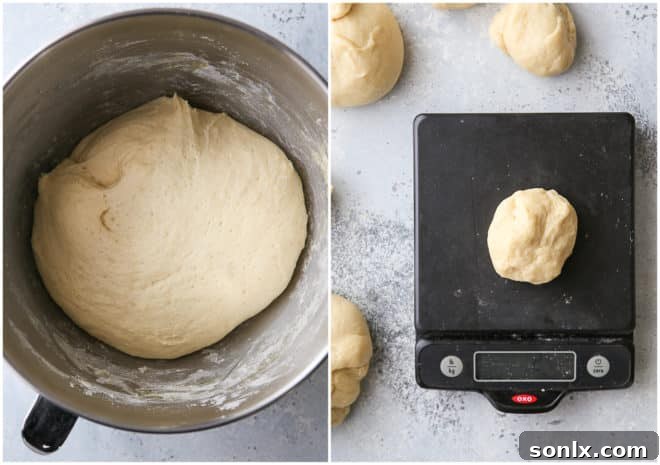
- Portion Dough or Batter for Even Baking: Beyond measuring initial ingredients, your kitchen scale is invaluable for portioning. For instance, if a cake recipe calls for splitting batter between two pans, place one pan on the scale, tare it, add half the batter, then repeat for the second pan. For dinner rolls, cookies, or muffins, weigh individual portions of dough or batter to ensure they are all the same size. This guarantees even baking, consistent texture, and a beautiful presentation across your entire batch.
- Place Your Scale on a Flat, Stable Surface: For accurate readings, ensure your scale is on a level, stable countertop, free from vibrations or drafts.
- Read Recipes Carefully: Always note whether a recipe specifies “cups” or “grams/ounces.” If a recipe provides both, always default to the weight measurement for best results.
Essential Baking Ingredient Weight Chart
Understanding the standard weight equivalents for common baking ingredients is a valuable asset, especially when encountering recipes that only provide volume measurements or for cross-referencing. While the most accurate approach is always to follow the specific weight listed in your chosen recipe, this chart represents widely accepted conversions used on this website and across many reliable baking resources. These are the approximate weights to volume for common baking staples, measured in grams for optimal precision:
- All-purpose flour: 1 cup = 125 grams (when spooned and leveled)
- Granulated sugar: 1 cup = 200 grams
- Brown sugar: 1 cup = 215 grams (when packed)
- Powdered sugar: 1 cup = 113 grams (when spooned and leveled)
- Unsalted Butter: 1 cup = 227 grams (or 2 sticks)
- Cocoa powder: 1 cup = 85 grams (when spooned and leveled)
- Buttermilk: 1 cup = 227 grams
- Milk: 1 cup = 227 grams
- Heavy cream: 1 cup = 227 grams
- Sour cream/yogurt: 1 cup = 227 grams
- Water: 1 cup = 227 grams
It’s important to reiterate that while this chart offers excellent guidance, slight variations can occur depending on the specific product (e.g., brand of flour) and how it’s handled. For the absolute best results, always prioritize the gram measurements provided directly within your recipe.
Make the Switch: Transform Your Baking Today!
If the concept of weighing ingredients is new to you, there’s no need to overhaul your entire baking routine overnight. Start small. For your next baking project, try weighing just the flour, sugar, and butter. These are often the most critical ingredients where precise measurement makes the biggest difference. As you become more comfortable, gradually incorporate more ingredients into your weighing regimen.
You’ll quickly discover that once the initial learning curve is overcome, measuring by weight simplifies the entire baking process. It streamlines your workflow, reduces mess, and most importantly, consistently delivers superior results. Many bakers who make the switch find they can never go back to volume measurements, so significant is the improvement in their baking consistency and quality. This simple change is a powerful upgrade to your kitchen habits, ensuring less frustration and more delicious outcomes.
By consciously adopting weight measurements into your baking routine, you are making a commitment to greater accuracy, unmatched consistency, and undeniably delicious results every single time you step into the kitchen. Elevate your baking from good to consistently great.
Do you have any questions, comments, or personal experiences you’d like to share regarding measuring ingredients? I’d absolutely love to hear from you! Please don’t hesitate to leave a comment below or feel free to send me an email anytime. Your insights and feedback are always welcome.
This article, rooted in foundational baking principles, was originally published in 2011. It draws directly from the very first, critical lesson I learned in culinary school about baking accuracy – a lesson that has profoundly shaped my approach to baking and one I’ve adhered to without looking back since.