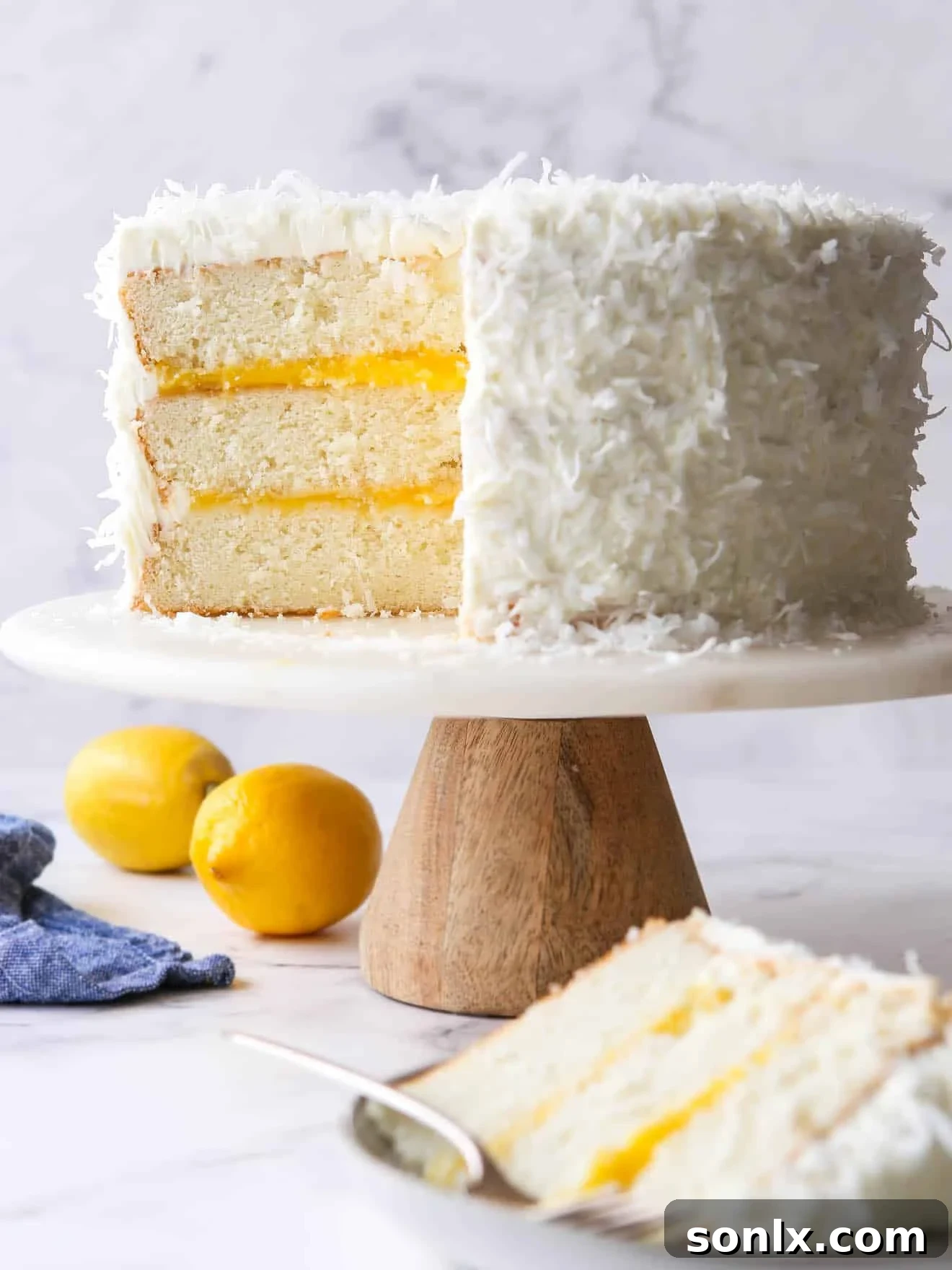
Prepare to be enchanted by this exquisite Lemon Coconut Cake – a truly delightful dessert that promises to become your new favorite. This masterpiece combines layers of incredibly tender, moist coconut cake, a vibrant, homemade zesty lemon curd filling, and a cloud-like, velvety Chantilly cream frosting. It’s a symphony of flavors and textures, perfect for any special occasion or simply to brighten your day.
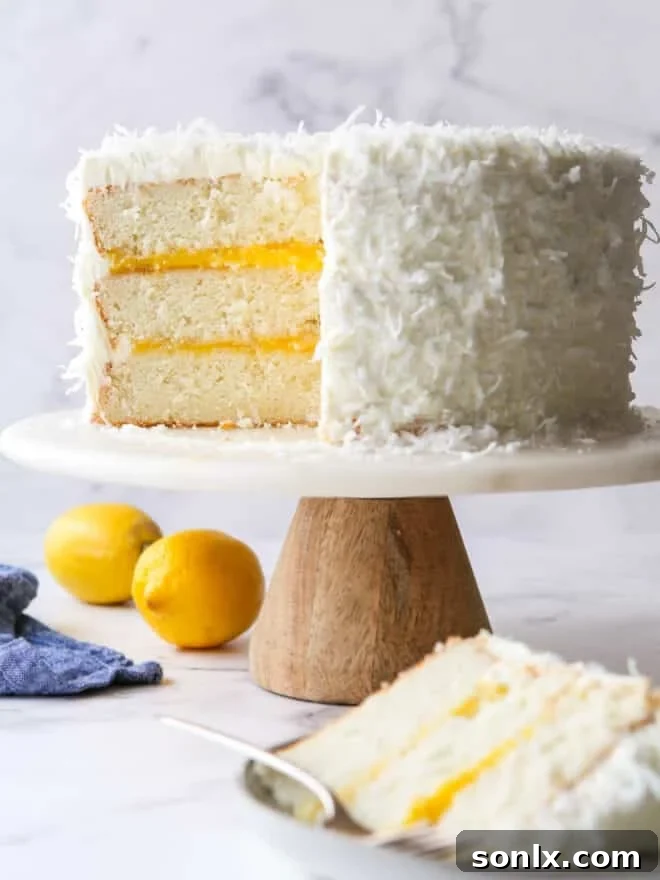
For too long, this exceptional cake has been a closely guarded secret in my kitchen, a combination I’ve perfected over many years. It started with my beloved Southern Coconut Cake, elevated by the bright tang of homemade lemon curd, and crowned with the delicate sweetness of Chantilly cream frosting. This trio always created the ultimate spring dessert. However, a recent comment on my coconut cake recipe — “Can I fill this cake with lemon curd instead?” — finally convinced me that this winning combination deserved its own official recipe. And so, here we are!
This Lemon Coconut Cake is more than just a dessert; it’s an experience. While it truly shines as a centerpiece for spring celebrations like Easter, its refreshing profile makes it a wonderful indulgence year-round. The balance between its airy lightness and rich, satisfying depth is simply remarkable. Each bite delivers a burst of fresh lemon zest perfectly harmonized with the sweet, tropical notes of coconut. It’s a vibrantly delicious treat that consistently earns rave reviews from everyone who tries it. Get ready to impress and delight with this truly unforgettable layer cake.
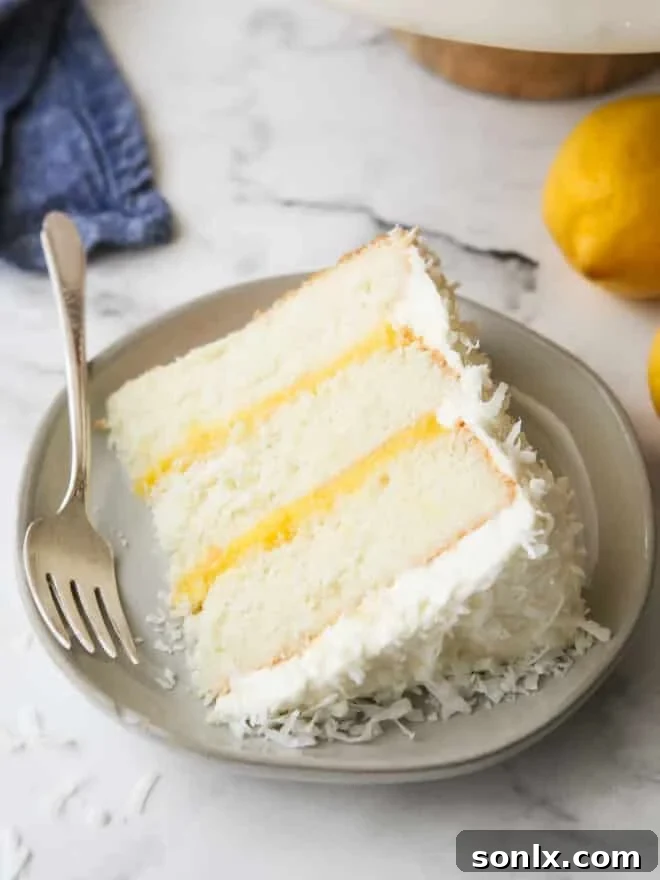
Table of Contents
- The Anatomy of This Delectable Cake
- Essential Ingredients for Your Lemon Coconut Creation
- Step-by-Step Guide: Crafting Your Lemon Coconut Cake
- Expert Tips for Baking Success
- Storage & Make-Ahead Strategies
- Explore More Coconut Cake Recipes
- Get the Full Lemon Coconut Cake Recipe
The Anatomy of This Delectable Cake
This magnificent layer cake is carefully constructed from four distinct, yet perfectly complementary, components:
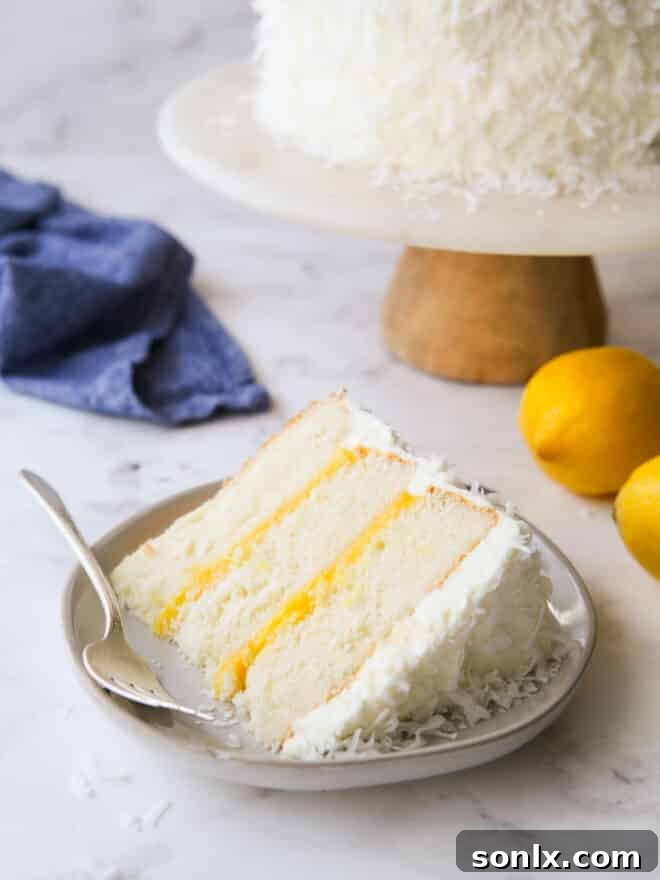
- The most light, airy, and truly tender coconut cake layers, baked to golden perfection and infused with a subtle tropical essence. These layers form the foundational structure and provide a delicate sweetness that balances the zestier elements.
- A vibrant and irresistibly bright lemon curd filling, bursting with authentic lemon flavor. This homemade curd is silky smooth and provides a tangy contrast, cutting through the sweetness of the cake and frosting with its fresh citrus notes.
- An unbelievably fluffy, subtly sweet, and wonderfully creamy Chantilly cream frosting. Unlike traditional buttercreams, this frosting is light and delicate, providing a luxurious mouthfeel without being overly rich or heavy, allowing the other flavors to shine.
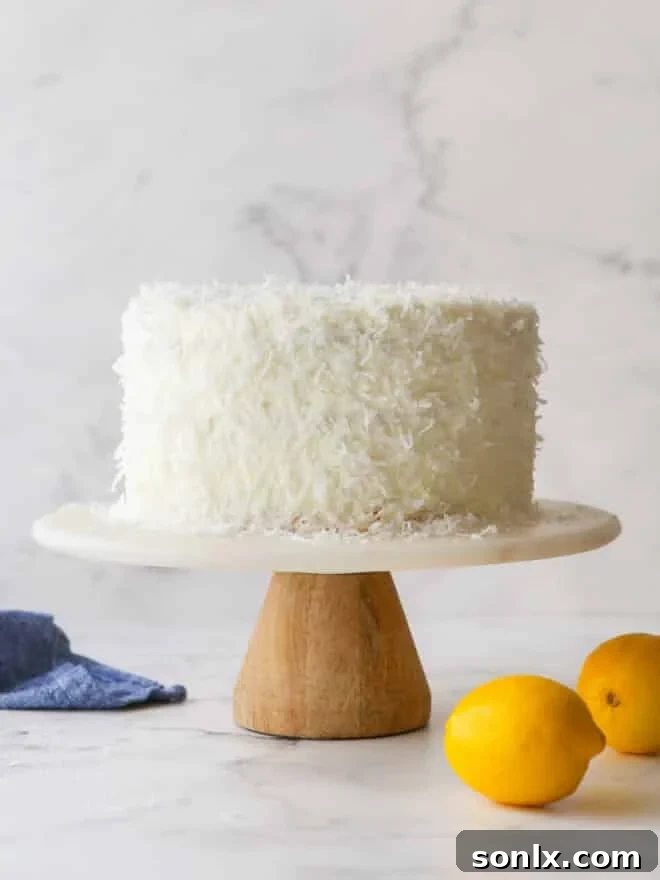
- A generous blanket of delicate sweetened shredded coconut, adorning the outside of the cake. This adds a beautiful texture, a pleasing chewiness, and an extra layer of coconut flavor that completes the tropical profile of the dessert.
What exactly is Chantilly cream frosting? Essentially, it’s a more sophisticated and stable version of sweetened whipped cream. Often, a touch of cream cheese is incorporated, not only to enhance its stability and prevent it from deflating but also to add a subtle tang and a wonderfully rich depth of flavor. It strikes a perfect balance, sitting delightfully between the richness of a classic cream cheese frosting and the airy lightness of pure whipped cream. The result is an incredibly ethereal, fluffy, and creamy frosting that is never too sweet or heavy, making it an ideal companion for this cake.
If you’ve ever found traditional buttercream or even standard cream cheese frosting to be too sweet, dense, or overpowering, then you are absolutely going to adore this Chantilly cream frosting. Its delicate nature allows the vibrant lemon and tropical coconut flavors of the cake to truly shine, making it the perfect crowning glory for this Lemon Coconut Cake.
Essential Ingredients for Your Lemon Coconut Creation
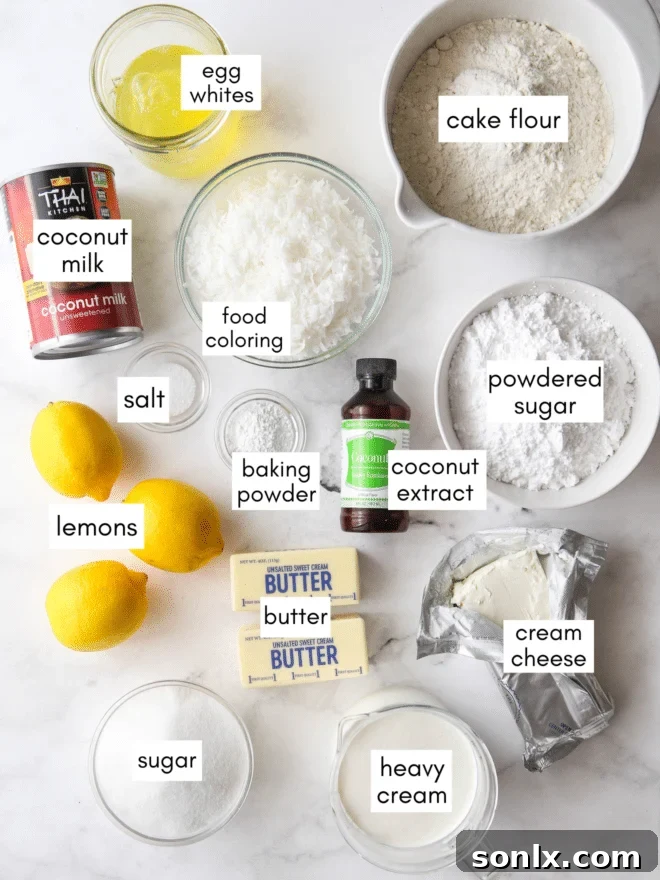
Baking Insight: The Undeniable Advantage of Cake Flour
When crafting a truly tender and delicate cake, the choice of flour plays a crucial role. Cake flour, with its notably higher starch content and lower protein percentage compared to all-purpose flour, is your secret weapon for achieving that coveted soft, velvety crumb. The proteins in all-purpose flour can, when overdeveloped by excessive mixing, lead to a tougher cake texture. Cake flour, however, minimizes this risk by coating the flour particles with less protein, effectively inhibiting gluten formation and ensuring a consistently soft and melt-in-your-mouth result.
While I highly recommend using cake flour as specified in the recipe for guaranteed success, don’t despair if you don’t have it on hand. A common substitution involves replacing each cup of cake flour with 3/4 cup plus 2 tablespoons of all-purpose flour combined with 2 tablespoons of cornstarch. This blend mimics the lower protein and higher starch profile of cake flour. Alternatively, you can simply use all-purpose flour cup for cup, though the final texture might not be quite as fine or tender. Rest assured, you’ll still end up with a wonderfully delicious cake, but for that ultimate bakery-quality crumb, cake flour is truly worth the effort.
Step-by-Step Guide: Crafting Your Lemon Coconut Cake
Creating a stunning layer cake like this Lemon Coconut Cake is an endeavor that requires a bit of time and patience, but the rewarding outcome is absolutely worth every minute spent. While the process involves multiple steps, anyone with basic baking skills can confidently tackle this recipe and achieve spectacular results. Prepare yourself for an incredibly satisfying baking journey, because this cake is truly special.
Now, let’s embark on the delightful process of baking this masterpiece!
- Prepare the Coconut Cake Batter: This recipe utilizes the “reverse creaming method,” a technique revered for producing exceptionally tender and moist cakes. In this method, the softened butter is first beaten with the dry ingredients (flour, sugar, baking powder, salt) until crumbly, ensuring the butter fully coats the flour particles. This coating acts as a barrier, significantly reducing gluten development when the liquid ingredients are added, resulting in an incredibly fine, velvety crumb. Only then are the liquid ingredients, including a special blend of egg whites and coconut milk, gradually incorporated. If this method is new to you, you can find more detailed information and guidance here.
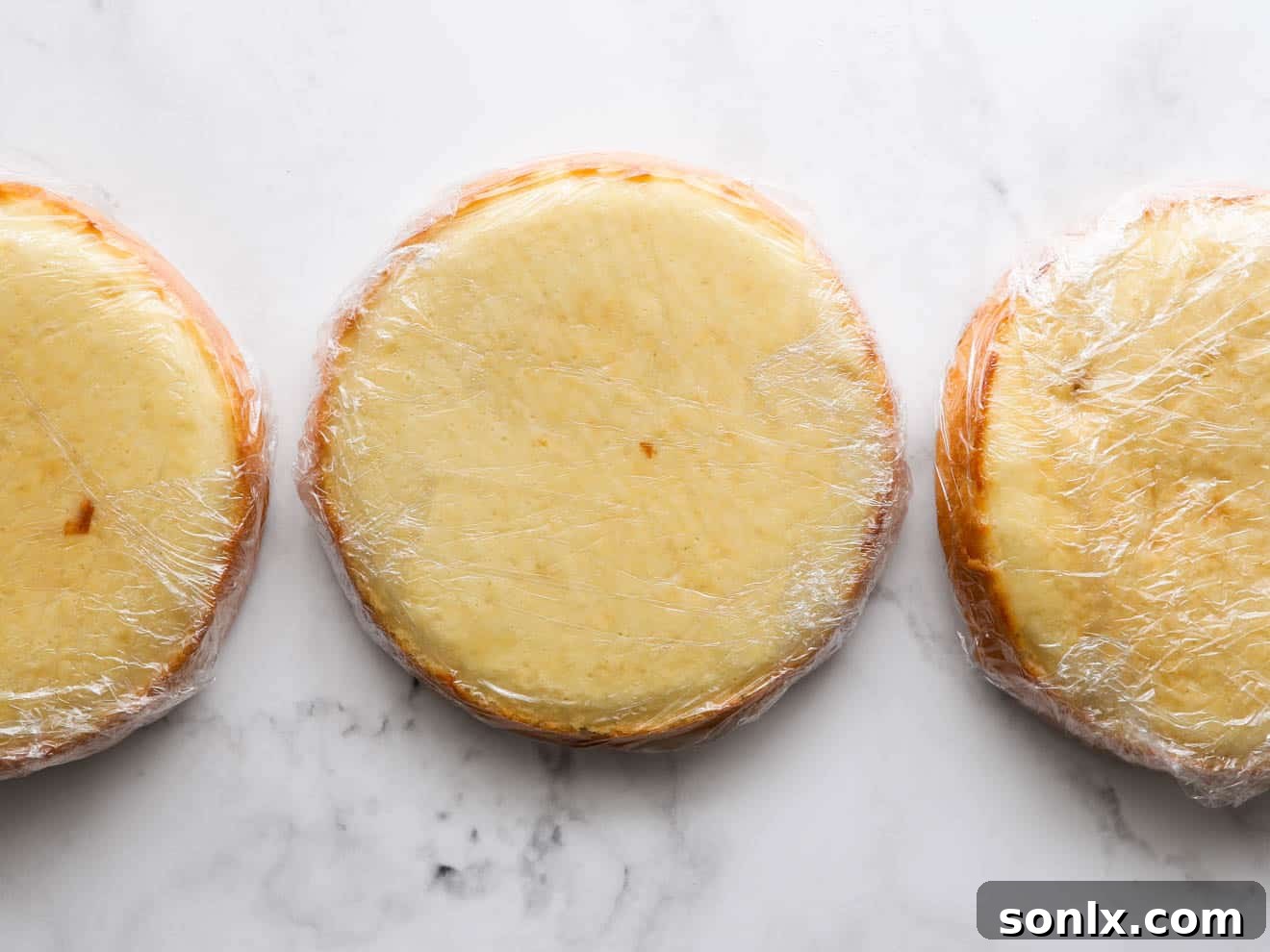
- Bake, then Chill Your Cake Layers: Proper pan preparation is key to preventing sticking. Ensure your cake pans are thoroughly greased and floured, and generously lined with parchment paper circles on the bottom. Divide the batter evenly and bake until the edges are beautifully golden and the center of the cake springs back gently when lightly touched. It’s crucial not to overbake, as this can lead to dry cake layers. Once baked, allow the cakes to cool in their pans for about 10 minutes before carefully inverting them onto wire racks to cool completely. For easier handling during assembly, particularly with such tender layers, it is highly recommended to wrap the cooled cake layers tightly in plastic wrap and chill them in the refrigerator for at least a few hours, or even overnight, to firm them up.

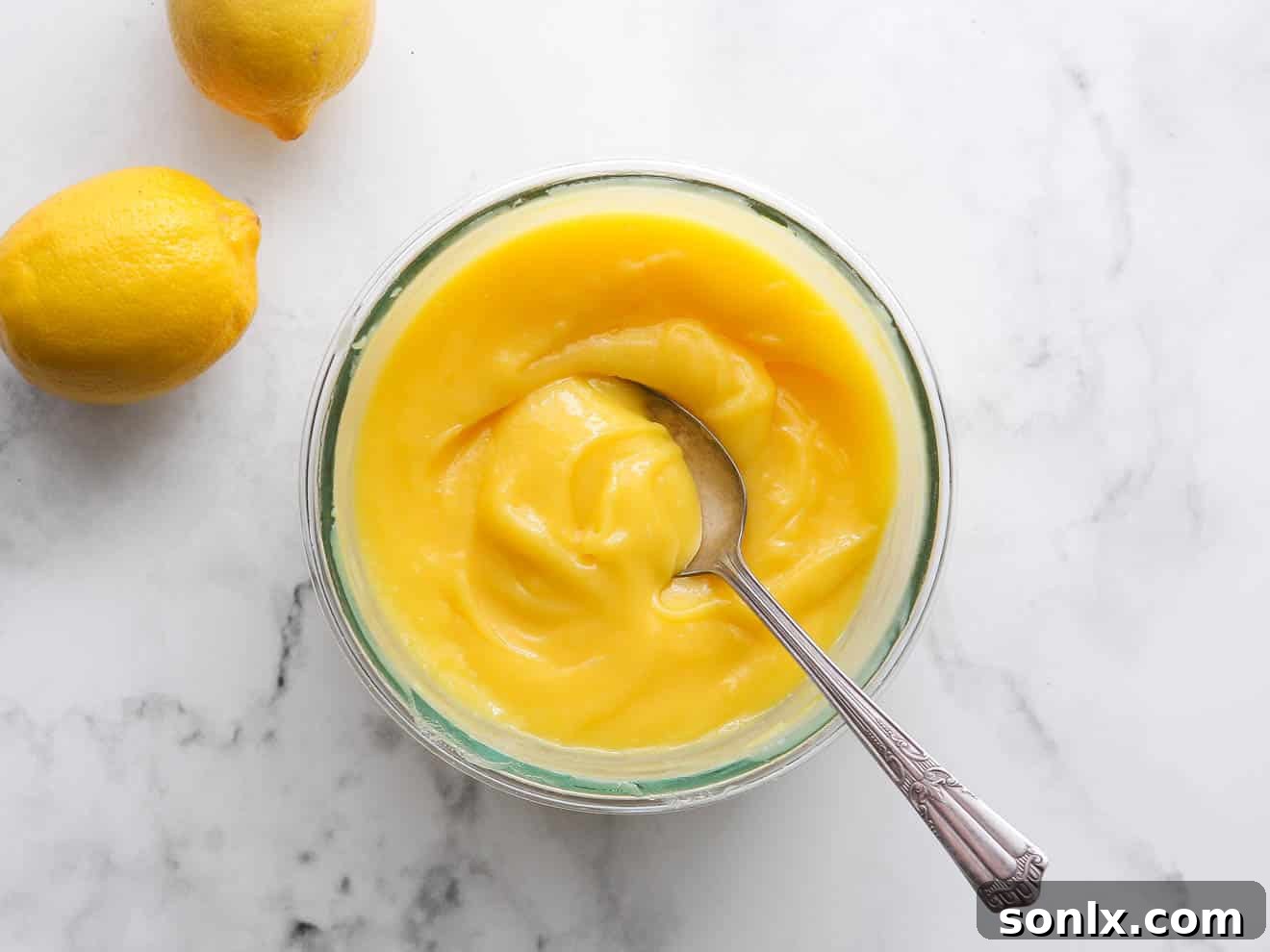
- Craft the Zesty Lemon Curd: Making homemade lemon curd is surprisingly simple and yields a far superior flavor to store-bought varieties. This bright, tangy filling comes together quickly on the stovetop with a few basic ingredients like fresh lemon juice, lemon zest, sugar, egg yolks, and butter. It’s essential to whisk continuously to prevent the eggs from scrambling and ensure a smooth, luscious consistency. For detailed, step-by-step instructions on achieving perfect lemon curd, refer to my comprehensive guide here. Since the lemon curd needs to be thoroughly chilled and set before assembling the cake, it’s an excellent component to prepare while your cake layers are baking or even a day or two in advance. It stores beautifully in the refrigerator for up to two weeks, making it a fantastic make-ahead element.
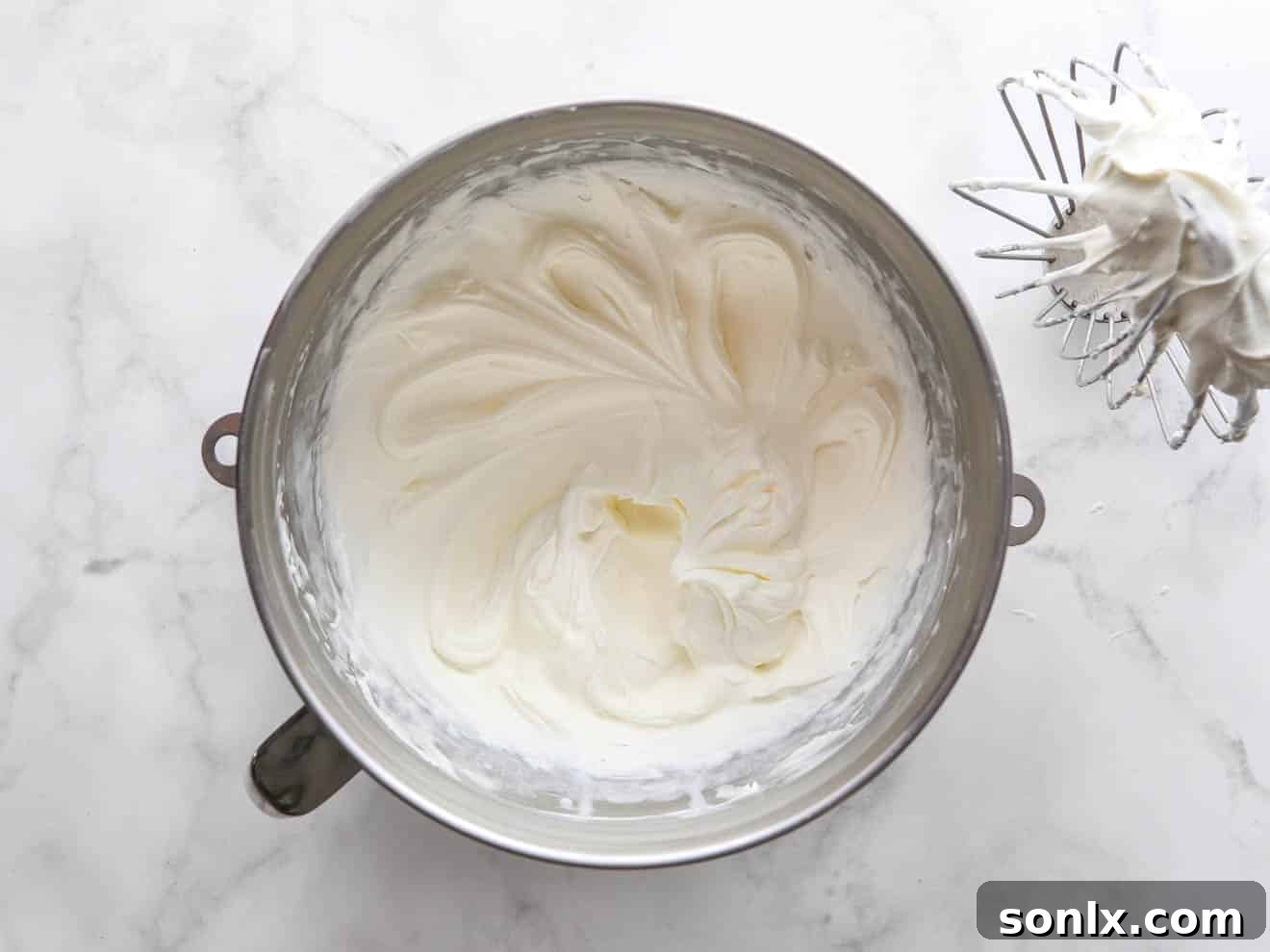
- Whip Up the Cloud-Like Chantilly Frosting: This light and fluffy frosting is a dream to work with. Begin by beating softened cream cheese with powdered sugar, a hint of coconut or vanilla extract, and a pinch of salt until the mixture is smooth and free of lumps. This initial step creates a thick, flavorful base. Next, gradually add cold heavy cream in several increments. The mixture might appear a bit lumpy or separated at first, so remember to stop and scrape down the sides of the bowl and the beater frequently. As more cream is added and whipping continues, the frosting will magically transform into a beautifully smooth, stable, and incredibly creamy consistency, holding soft to medium peaks.
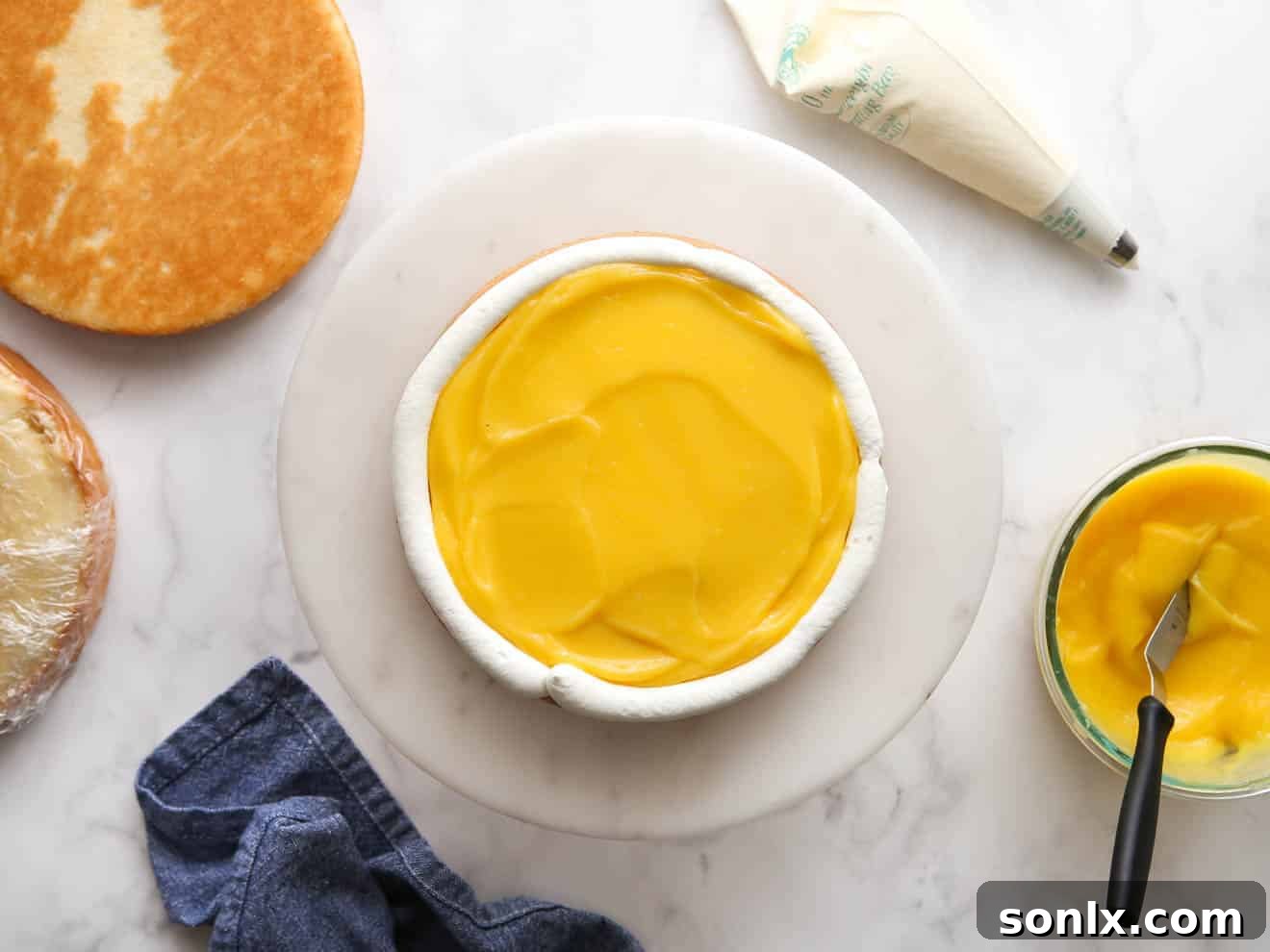
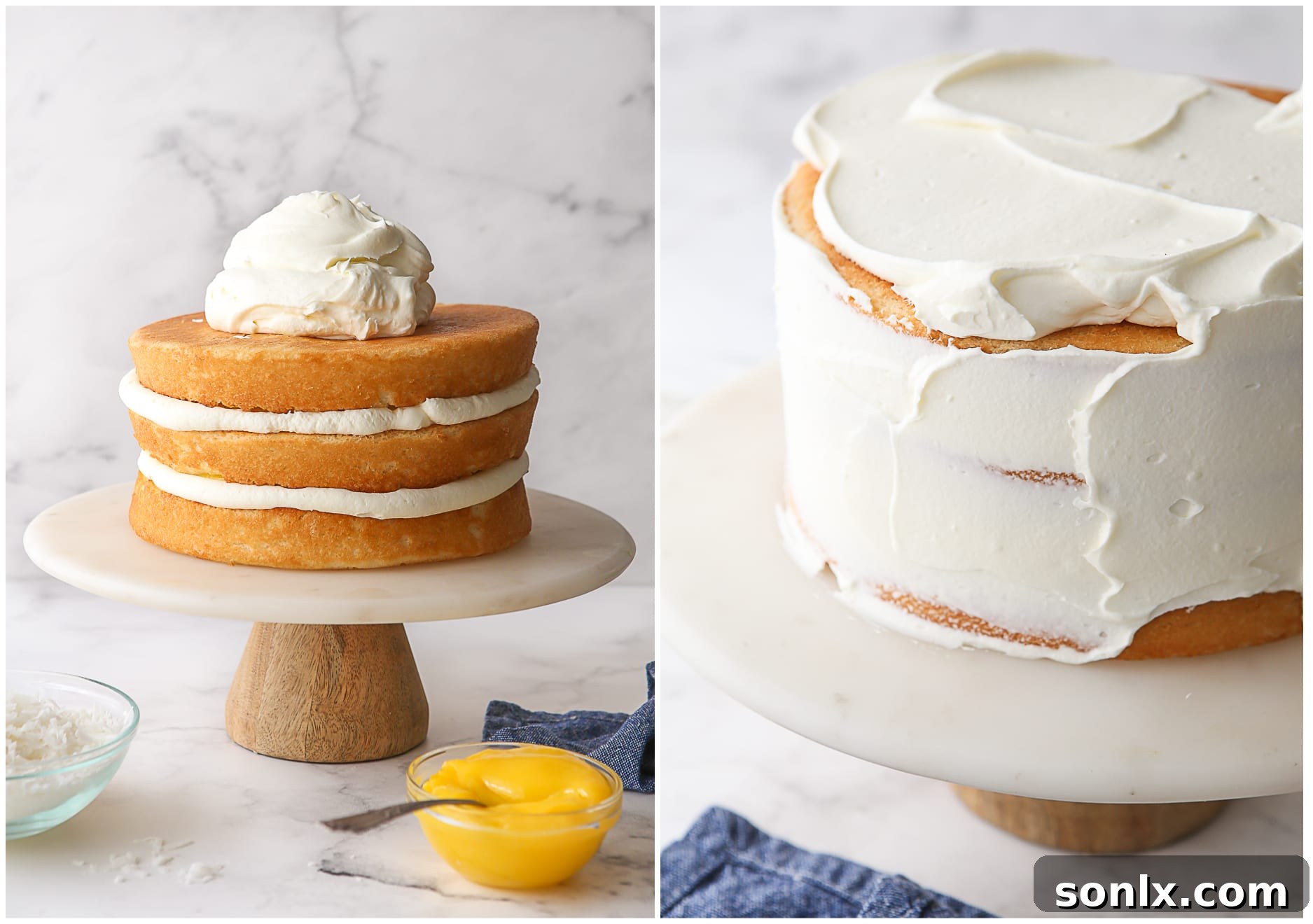
- Expertly Fill Your Cake Layers: Once all components are chilled and ready, it’s time for assembly. Place your first chilled cake layer on your chosen serving plate or cake stand. To prevent the luscious lemon curd from oozing out, pipe or spread a small but sturdy “dam” of Chantilly cream frosting around the very edge of the cake layer. This creates a secure border. Then, generously spoon a portion of the chilled lemon curd into the center, carefully spreading it into an even layer within the frosting dam. Repeat this process with the remaining cake layers and lemon curd, stacking them carefully to ensure an even, beautiful presentation.
- Frost and Adorn with Coconut: With your cake layers neatly stacked and filled, it’s time to lavish the entire cake with the remaining Chantilly cream frosting. Begin by frosting the top, then use an offset spatula or bench scraper to smoothly work the frosting down the sides, ensuring an even coat. For that quintessential tropical finish, take handfuls of sweetened shredded coconut and gently press them onto the sides of the cake, working your way around the entire circumference. Finally, sprinkle a generous amount of coconut over the top for a snowy, inviting appearance.
- Chill, Slice, and Savor: For the best serving experience and to allow the flavors to meld beautifully, transfer the assembled Lemon Coconut Cake to the refrigerator and chill it for at least 30 minutes before slicing. This firms up the frosting and curd, making for cleaner cuts and a more enjoyable texture. You can serve it directly from the fridge for a firmer bite, or let it sit at room temperature for a short while to slightly soften the frosting and enhance the flavors even further.
Expert Tips for Baking Success
- Layer Cake Assembly Mastery: If you’re new to the art of baking and assembling magnificent layer cakes, or simply seeking to refine your technique, I highly recommend consulting my comprehensive guide on how to build a layer cake. It provides invaluable tips and tricks that cover everything from leveling cakes to frosting smoothly, ensuring your Lemon Coconut Cake looks as incredible as it tastes.
- Selecting the Right Coconut Milk: This recipe specifically calls for one 13.5-ounce can of unsweetened, full-fat coconut milk. It’s crucial to distinguish this from other coconut products. Look for it in the baking aisle or, more commonly, with Asian foods in your grocery store. Do not substitute with coconut cream (which is much thicker and richer) or carton-style coconut milk beverage (which is much thinner and often sweetened), as these will not yield the same rich flavor and moist texture in your cake. If genuine canned coconut milk is unavailable in a pinch, you may use whole milk, but be sure to increase the coconut extract by an additional 1 teaspoon to boost the flavor.
- Choosing Your Cake Pans: You have flexibility when it comes to pan size; both 8-inch or 9-inch round cake pans will work beautifully. For reference, these are the 8-inch pans I personally use and love. Opting for 8-inch pans will result in a slightly taller cake with thicker, more dramatic layers, while 9-inch pans will produce a cake that is wider and a bit shorter.
- The Parchment Paper Imperative: Given the exceptionally tender nature of these coconut cake layers, lining your cake pans with parchment paper is non-negotiable. This simple step is the most reliable way to prevent sticking and ensure your delicate cake layers release cleanly and intact every single time. For a full rundown of best practices in preparing cake pans before baking, check out all my essential tips here.
- Embrace a Two-Day Baking Schedule: To minimize stress and maximize enjoyment, I wholeheartedly recommend approaching this Lemon Coconut Cake as a two-day baking project. On the first day, focus on baking the cake layers and preparing the lemon curd. Once completely cooled, wrap the cake layers tightly in plastic wrap and store them in the refrigerator along with your chilled homemade lemon curd. Chilled cake layers are significantly easier to handle, level, and frost, making the assembly process much smoother. For detailed guidance on storing cake layers, please refer to my tips for storing cake layers. On the second day, you can whip up the Chantilly cream frosting and proceed with the delightful task of assembling and decorating your magnificent cake.
- Toasted vs. Untoasted Coconut: My personal preference for this cake is to use un-toasted sweetened shredded coconut, as I find its bright white appearance aesthetically pleasing and its softer texture complements the cake’s tenderness. However, if you’re a fan of the richer, nuttier flavor and slightly crispier texture of toasted coconut, feel free to toast your coconut flakes. To do so, spread the coconut in a single layer on a baking sheet and bake in a preheated 350°F (175°C) oven for just 3-4 minutes, watching it very closely and stirring occasionally to prevent burning, as coconut can brown very quickly.
Storage & Make-Ahead Strategies
To preserve the pristine freshness and exquisite flavor of your Lemon Coconut Cake, any leftovers should be stored promptly in an airtight container in the refrigerator. The cake will maintain its delicious qualities for approximately 5 days. However, for optimal taste and texture, it truly shines within the first 1-2 days of assembly. I promise, though, it’s so irresistible it likely won’t last long!
If you’re planning far in advance, you can freeze the assembled cake, but it’s important to note that due to the cream cheese content in the Chantilly frosting, its texture might become slightly softer or less stable once thawed. For the best make-ahead approach, I recommend preparing the cake layers and the lemon curd separately. Individually wrap the cooled cake layers tightly in plastic wrap and freeze them for up to a month. The homemade lemon curd can be prepared up to two weeks in advance and stored in an airtight container in the refrigerator. When you’re ready to serve, thaw the frozen cake layers overnight in the refrigerator, make the Chantilly frosting fresh on the day of assembly, and then proceed to stack and decorate your cake. This method ensures the freshest possible taste and the best textural integrity for each component.
Explore More Coconut Cake Recipes
Get the Full Lemon Coconut Cake Recipe
Lemon Coconut Cake
Layers of moist and tender coconut cake filled with fresh homemade lemon curd and frosted with the fluffiest Chantilly frosting.
Servings: 12 servings
Prep Time: 30 mins
Cook Time: 40 mins
Total Time: 1 hr 10 mins
Pin Recipe
Leave a Review
Ingredients
For the Coconut Cake:
- 5 large egg whites
- 1 ½ cup (375 ml) canned unsweetened full-fat coconut milk, divided
- 1 tablespoon coconut flavoring or extract
- 3 cups (340 grams) cake flour
- 2 ⅓ cups (470 grams) granulated sugar
- 4 ½ teaspoons baking powder
- ½ teaspoon salt
- 1 cup (226 grams) unsalted butter, softened to room temperature
For the Lemon Curd Filling:
- ½ cup (113 grams) butter
- 1 cup (200 grams) granulated sugar
- 1 cup (224 grams) freshly squeezed lemon juice, about 3-4 lemons
- 3 lemons, zested
- 10 large egg yolks
For the Chantilly Frosting:
- 8 oz (226 grams) full-fat cream cheese, cubed and softened
- 1 cup (114 grams) powdered sugar
- 1 teaspoon coconut flavoring/extract or vanilla extract
- ¼ teaspoon salt
- 2 ½ cup (568 grams) heavy cream
- 1 ½ cups (128 grams) sweetened shredded coconut
Equipment
- Electric mixer
- 8-inch cake pans
- Offset spatula
Instructions
To make the cake:
- Preheat oven to 350°F (175°C). Thoroughly butter and flour three 8-inch or 9-inch cake pans, then line the bottoms with parchment paper. (Refer to Notes for pan size options.)
- In a small bowl, lightly whisk together the egg whites, ½ cup of the canned coconut milk, and the coconut flavoring until just combined. Set aside.
- In the bowl of a stand mixer fitted with a paddle attachment, combine the cake flour, granulated sugar, baking powder, and salt. Add the softened butter and the remaining 1 cup of coconut milk. Mix on low speed until all ingredients are moistened and just combined. Increase the speed to medium and beat for about 2 minutes, until the mixture is light and fluffy, scraping down the sides of the bowl as needed to ensure even mixing.
- With the mixer on low speed, gradually add the egg white mixture in 3 separate additions. Mix only long enough to fully incorporate each addition, scraping down the sides of the bowl between additions to maintain a smooth batter. Be careful not to overmix.
- Divide the prepared batter evenly among the lined cake pans. Bake for 35-40 minutes, or until a toothpick inserted into the center of a cake layer comes out clean. Avoid overbaking. Allow the cakes to cool in their pans for 10 minutes before carefully inverting them onto wire cooling racks to cool completely.
- Because these coconut cake layers are exceptionally soft and tender, it is highly recommended to wrap them individually in plastic wrap once completely cooled. Chill them in the refrigerator for several hours or overnight to firm them up, which will make them much easier to handle and assemble into a layer cake.
To make the lemon curd filling:
- In a medium saucepan, combine the butter, ½ cup of granulated sugar, the lemon zest, and the freshly squeezed lemon juice. Heat over medium heat, stirring occasionally, until the butter is melted and the mixture comes to a gentle simmer.
- In a separate heatproof bowl, vigorously whisk together the egg yolks with the remaining ½ cup of granulated sugar until light in color and smooth.
- Slowly temper the egg yolk mixture by gradually whisking about half of the hot lemon juice mixture into the egg yolks. Continue whisking constantly to prevent the eggs from cooking. Once combined, pour the tempered egg yolk mixture back into the saucepan with the remaining hot lemon juice mixture.
- Continue to cook the curd over medium heat, stirring constantly with a whisk or rubber spatula, until the mixture thickens significantly. It should be thick enough to coat the back of a spoon and for the whisk to leave a visible trail in the curd (approximately 5-8 minutes). Do not let it boil vigorously.
- Immediately remove the saucepan from the heat. Pour the hot lemon curd through a fine-mesh strainer set over a clean bowl. This step removes any bits of cooked egg or lemon zest, ensuring a perfectly smooth and silky curd.
- To prevent a skin from forming, place a piece of plastic wrap directly on the surface of the curd. Let it cool at room temperature for about 30 minutes, then transfer to the refrigerator to chill completely for 1-2 hours, or until fully set.
- Store the finished lemon curd in an airtight container in the fridge for up to 2 weeks. It can also be frozen for several months.
To make the Chantilly frosting:
- In the bowl of a stand mixer fitted with the whisk attachment, combine the softened full-fat cream cheese, powdered sugar, coconut or vanilla extract, and salt. Beat on medium-high speed for 3-4 minutes, stopping to scrape down the bowl and whisk as needed, until the mixture is completely smooth and creamy. It will be very thick at this stage.
- With the mixer on medium-low speed, gradually add the cold heavy cream in 3 separate additions, mixing until just combined after each addition. The mixture may look lumpy or separated initially. After all the cream has been added, scrape down the bowl thoroughly.
- Increase the mixer speed to medium-high and continue to beat for about 1 minute, or until the frosting becomes thick, light, and fluffy, holding medium peaks. Be careful not to overbeat, as this can cause the frosting to become grainy.
To assemble the cake:
- Place one chilled coconut cake layer onto your chosen serving plate or cake stand.
- Transfer a small amount of the Chantilly frosting to a piping bag (or use a spoon) and pipe a sturdy “dam” of frosting around the very edge of the first cake layer. This creates a barrier for the filling.
- Spoon a generous ½ cup of the chilled lemon curd onto the cake layer, carefully spreading it evenly within the frosting dam. (If using 9-inch cakes, you may need slightly more lemon curd for adequate coverage.)
- Carefully place the second chilled cake layer on top, aligning it evenly. Repeat the process by piping another frosting dam and filling the center with another ½ cup of lemon curd.
- Gently place the final chilled cake layer on top. Cover the entire cake with the remaining Chantilly frosting, starting with the top and then using an offset spatula to smooth the frosting down the sides. For a rustic look, you can swirl the frosting, or for a smoother finish, use a bench scraper.
- For the final touch, take handfuls of the sweetened shredded coconut and gently press it onto the sides of the cake. Sprinkle additional coconut generously over the top of the cake, ensuring full coverage for that beautiful, tropical appeal.
- Chill the assembled Lemon Coconut Cake in the refrigerator for at least 1 hour before serving. This allows the frosting and curd to set, making for clean slices and enhancing the cake’s overall structure and flavor marriage. You can serve it straight from the fridge for a firmer texture, or let it sit at room temperature for 15-20 minutes to slightly soften the frosting and bring out its full flavor potential.
Notes
- Coconut Milk Selection: This recipe is designed for a single 13.5-ounce can of unsweetened full-fat coconut milk. It’s important to use this specific type; avoid coconut cream or any coconut milk beverage sold in cartons, as their consistency and fat content are vastly different and will affect the cake’s texture.
- Coconut Flavoring Options: You can use almost any type of coconut flavoring. Standard coconut extract found in most grocery stores works well. Baking emulsions or oils can also be used; simply follow the manufacturer’s recommendations for quantity, as concentrations can vary.
- Cake Pan Versatility: The cake layers can be baked in either 8-inch or 9-inch pans. Using 8-inch pans will result in a taller cake with thicker layers, which looks impressive. If you use 8-inch pans, I strongly advise baking in three separate layers to prevent the batter from overflowing during baking. For 9-inch pans, you have the flexibility to bake either two or three layers, depending on your desired cake height.
- Patience is a Virtue (and a two-day project): For the most enjoyable and stress-free baking experience, consider breaking this recipe into a two-day project. Dedicate the first day to baking the cake layers and preparing the lemon curd. Once completely cooled, wrap the cake layers and chill them overnight with the curd. On the second day, you can prepare the frosting and assemble the cake. Chilled cake layers are significantly easier to work with, resulting in a cleaner, more professional-looking finished cake.
Nutrition Facts (per serving)
Calories: 878 kcal, Carbohydrates: 109g, Protein: 8g, Fat: 47g, Saturated Fat: 32g, Trans Fat: 1g, Cholesterol: 109mg, Sodium: 217mg, Potassium: 362mg, Fiber: 2g, Sugar: 83g, Vitamin A: 1255IU, Vitamin C: 1mg, Calcium: 116mg, Iron: 1mg
Cuisine: American
Course: Dessert
Author: Annalise Sandberg
Have you tried this recipe?
I’d love to hear about it! Leave a rating and review below, or take a photo and tag it on Instagram @completelydelicious with #completelydelicious.