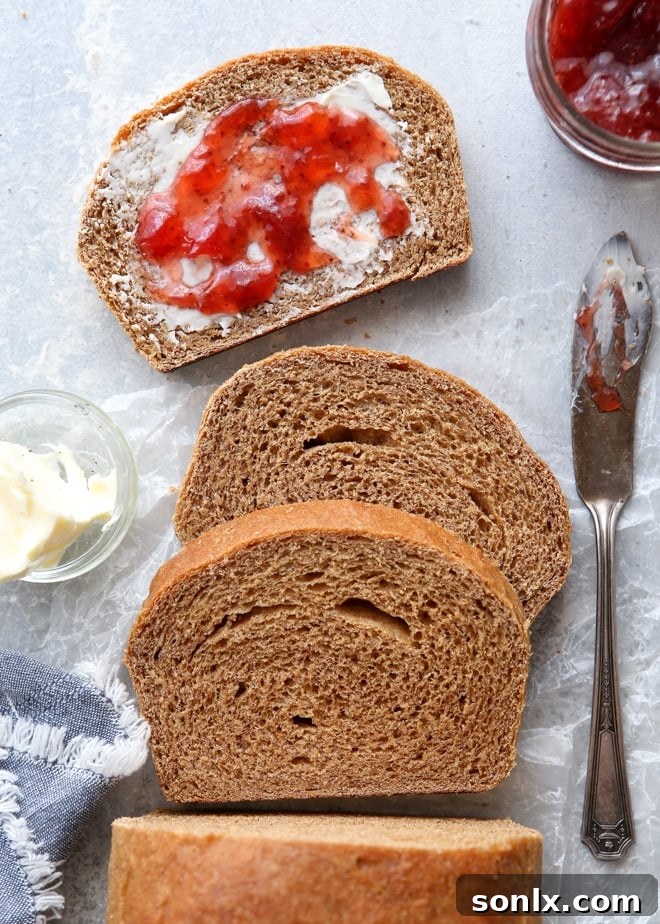
Discover the simple joy of baking with our ultimate guide to crafting a wholesome, delicious 100% whole wheat bread. This isn’t just any bread; it’s a testament to how five basic ingredients can transform into a remarkably nutty, chewy, and subtly sweet loaf that defies the common perception of whole wheat as dense or dry. Perfect for spreading with creamy butter or homemade jam, and robust enough to hold up as the star of your favorite sandwiches, this recipe is a true kitchen staple.
For those who find bread baking daunting, rest assured: this method is designed for success, regardless of your baking experience. We’ll walk you through each step, ensuring you achieve a light, fluffy, and flavorful loaf every time. Prepare to fill your home with the irresistible aroma of freshly baked bread and impress everyone with your newfound baking prowess!
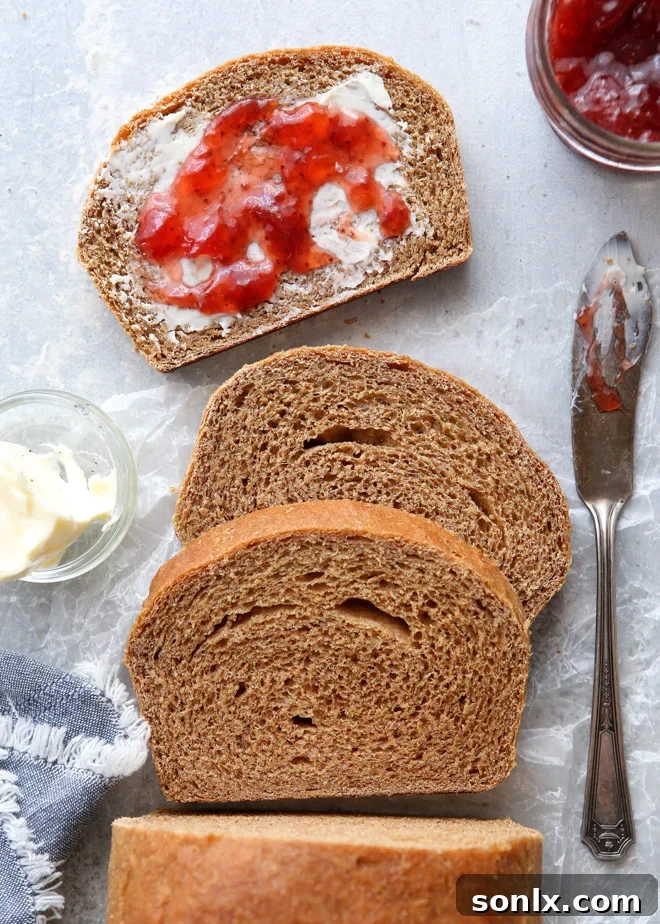
Table of Contents
- Mastering 100% Whole Wheat Bread: Why It Matters
- Essential Ingredients for Your Whole Wheat Loaf
- Step-by-Step Guide to Baking Perfect Whole Wheat Bread
- Pro Tips for a Faster Dough Rise
- Whole Wheat Bread Baking FAQs Answered
- How to Know When Your Bread is Perfectly Baked
- Expand Your Baking Repertoire: More Whole Wheat Recipes
- The Ultimate 100% Whole Wheat Bread Recipe
Mastering 100% Whole Wheat Bread: Why It Matters
The term “100% whole wheat” is more than just a label; it signifies a commitment to wholesome ingredients. In this recipe, it means we use no all-purpose or refined bread flour whatsoever. Many “whole wheat” bread recipes on the market or online often blend whole wheat flour with white flour to achieve a lighter texture and milder flavor. While this can be a good starting point for some, our recipe embraces the full character of whole wheat, proving that you don’t need to compromise on texture or taste to enjoy the full benefits of whole grains.
Contrary to popular belief, a loaf made with exclusively whole wheat flour doesn’t have to be dense or crumbly. Through careful ingredient selection and precise technique, this recipe yields a bread that is wonderfully soft, surprisingly fluffy, and packed with a rich, complex flavor that only whole grains can provide. Beyond its delightful taste and texture, opting for 100% whole wheat bread also means you’re choosing a more nutritious option. Whole grains retain all parts of the wheat kernel – the bran, germ, and endosperm – which are rich in fiber, vitamins, minerals, and antioxidants, contributing significantly to a healthier diet.
The key to achieving this perfect balance lies in understanding whole wheat flour’s unique properties. It absorbs more liquid and develops gluten differently than refined flours. By diligently following our instructions, adding flour gradually only as needed, and ensuring sufficient kneading to develop the gluten network, you will unlock the potential of 100% whole wheat flour. The result will be a beautifully soft, tender, and incredibly flavorful loaf that you’ll be proud to bake and share, knowing it’s as good for you as it is delicious.
Essential Ingredients for Your Whole Wheat Loaf
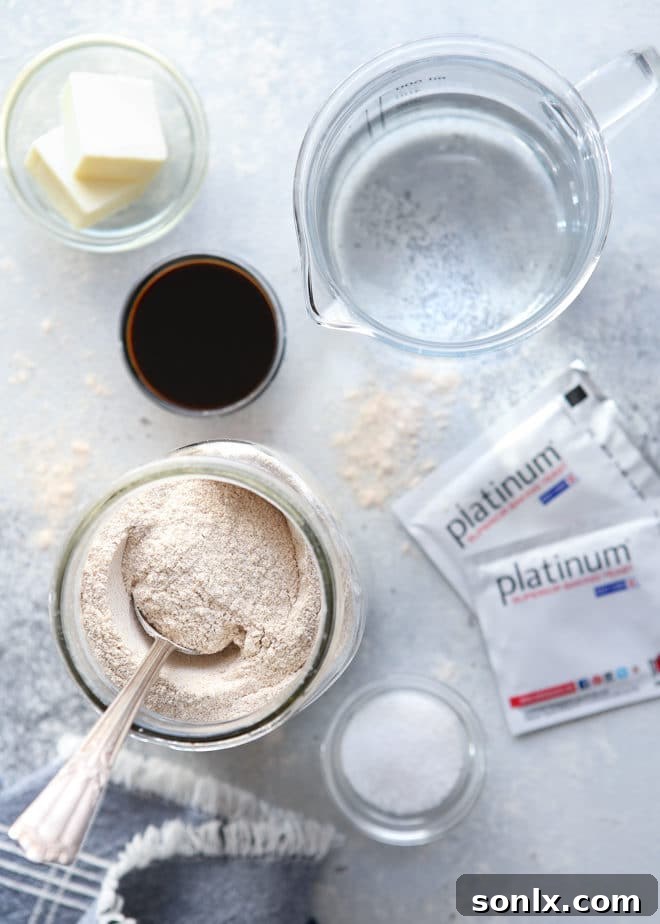
Crafting this exceptional 100% whole wheat bread requires just five core ingredients, each playing a crucial role in developing its signature flavor and texture. The beauty of this recipe lies in its simplicity and the quality of these foundational elements. (You’ll find the complete, detailed recipe with exact measurements at the end of this article).
- Whole Wheat Flour: This is the star of our show. Using 100% whole wheat flour ensures you get all the nutritional benefits and the distinct, earthy flavor. While any brand will work, the quality of your flour can impact the final loaf. Brands like King Arthur and Bob’s Red Mill are known for their consistency and are often recommended for their superior performance in whole grain baking.
- Butter: Essential for adding richness, tenderness, and a lovely golden crust. Melted butter disperses evenly through the dough, contributing to a soft crumb. If you prefer a dairy-free option or are simply out of butter, vegetable oil (such as canola or sunflower oil) makes an excellent substitute, providing similar moisture and texture.
- Molasses: This ingredient is a game-changer, infusing the bread with a dark, smoky, and subtly sweet complexity that pairs wonderfully with the whole wheat flavor. Molasses also provides food for the yeast, aiding in fermentation. For a milder, lighter-colored loaf with a different kind of sweetness, you can opt for honey or maple syrup. Each will give a unique character to your bread, so feel free to experiment to find your favorite.
- Active-Dry or Instant Yeast: The leavening agent that makes our bread rise, creating that airy, fluffy texture. Both active-dry and instant yeast work effectively in this recipe. Active-dry yeast often benefits from a brief activation period in warm liquid before mixing, while instant yeast can typically be mixed directly with the dry ingredients. Ensure your yeast is fresh and active for the best results.
- Salt: More than just a flavor enhancer, salt plays a vital role in regulating yeast activity and strengthening the gluten structure in the dough. It helps control the fermentation rate, preventing the dough from over-proofing too quickly, and ensures your bread has a well-rounded, balanced taste. Don’t skip it!
Step-by-Step Guide to Baking Perfect Whole Wheat Bread
Baking this 100% whole wheat bread is a rewarding experience, and with our detailed steps, you’ll achieve a perfect loaf. While you can certainly prepare this dough by hand, we highly recommend using a stand mixer fitted with a dough hook if available. A stand mixer simplifies the kneading process, prevents accidental over-flouring (a common pitfall that leads to dense bread), and ensures the dough is kneaded sufficiently to develop robust gluten, resulting in that wonderfully light and fluffy texture we’re aiming for.
- Prepare the Liquid Base: In a small saucepan, combine the water, melted butter, and molasses. Heat over medium heat until the butter is just fully melted and the ingredients are well integrated. The crucial step here is to let this mixture cool to a temperature between 120-130°F (49-54°C). This usually takes about 5 minutes. Using a thermometer is highly recommended, as liquids that are too hot will kill the yeast, while liquids that are too cool won’t activate it properly, both leading to a poor rise.
- Combine Dry Ingredients: In the bowl of your stand mixer (or a large mixing bowl if kneading by hand), add about 2 cups of the whole wheat flour, the salt, and the yeast. Give them a quick stir to combine them evenly.
- Form the Initial Dough: Pour the cooled liquid mixture into the dry ingredients in the mixer bowl. With the dough hook attached, mix on a low speed until all the ingredients are just moistened and a shaggy, wet dough forms. Scrape down the sides of the bowl to ensure everything is incorporated.
- Knead and Incorporate Remaining Flour: Continue kneading on low speed. Gradually add the remaining whole wheat flour, ¼ cup at a time. The goal is to achieve a dough that is firm but still slightly tacky to the touch. It should begin to pull away from the sides of the bowl, but not be completely dry or stiff. You might not need all 4 cups of flour; listen to your dough! Over-flouring is a common cause of dense bread, so add just enough until the dough reaches the right consistency. Continue to knead for another 2-4 minutes until the dough is smooth and elastic. To test for proper kneading, gently pull off a small piece of dough; it should stretch without tearing immediately (the “windowpane test” for gluten development).
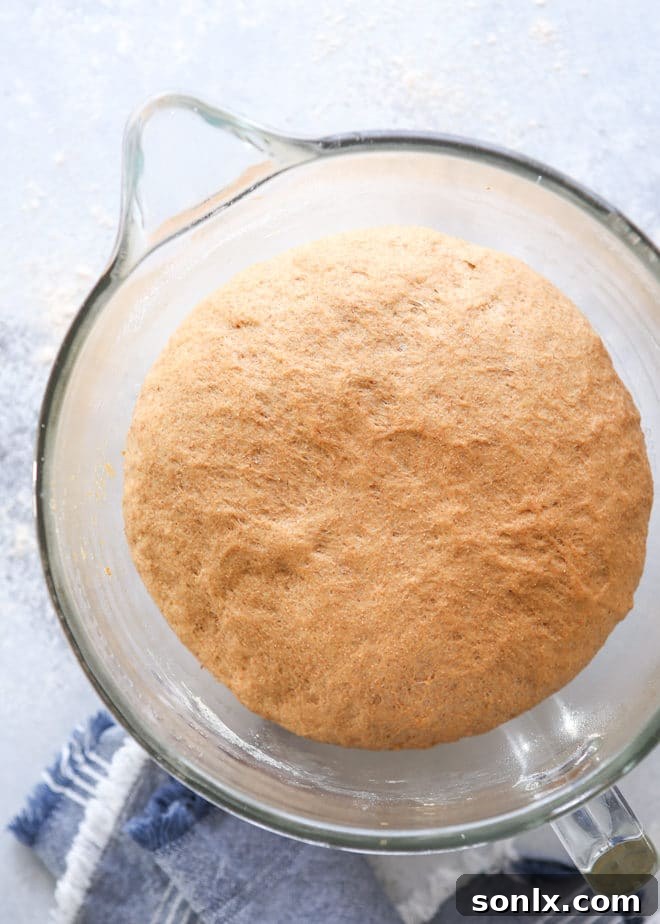
- First Rise (Proofing): Shape the dough into a smooth ball and place it in a lightly greased bowl, turning once to coat. Cover the bowl tightly with plastic wrap or a clean kitchen towel. Place the bowl in a warm, draft-free spot (see tips below for speeding up the rise). Let the dough rise until it has visibly doubled in size, which typically takes about 1 hour. This first rise allows the yeast to work its magic, developing flavor and texture.
- Shape the Loaf: Once doubled, gently “punch down” the dough to release the air. Transfer the dough to a lightly floured surface. Roll it out into a rough rectangular shape, approximately 10 inches wide and 12 inches long. Starting from one of the longer sides, tightly roll up the dough into a log. Pinch the seam closed and tuck the ends under to create a neat loaf shape. Carefully transfer the shaped dough, seam-side down, into a greased 9×5-inch loaf pan.
- Second Rise: Cover the loaf pan again with plastic wrap or a towel. Let it rise in a warm place for another 30 minutes, or until it has nearly doubled in size again and looks puffy. During this second rise, preheat your oven to 375°F (190°C).
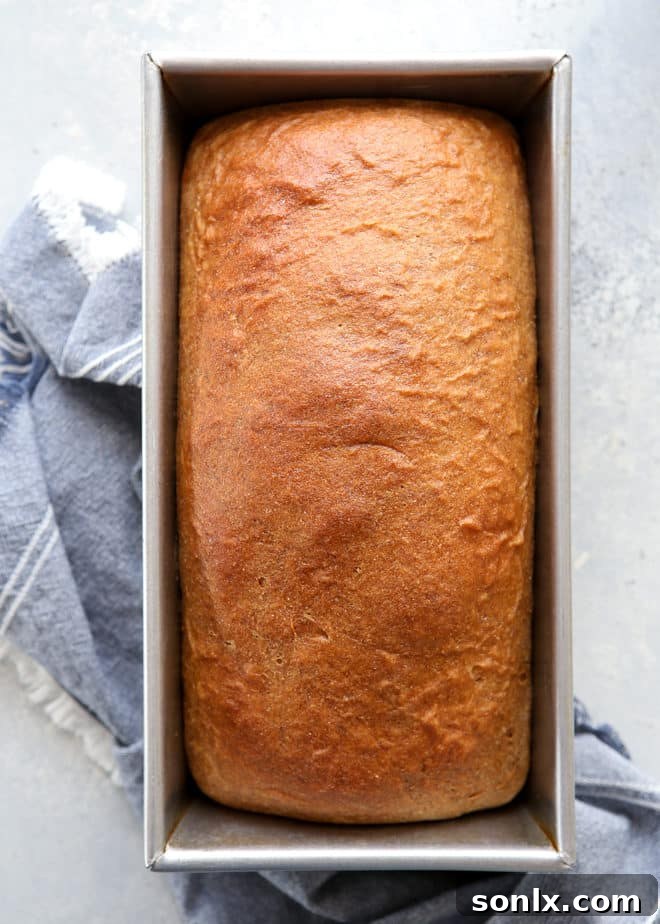
- Bake and Finish: Bake the loaf in the preheated oven for 30-40 minutes. The bread is done when the crust is a deep golden brown and, if tapped on the bottom, it sounds hollow. For an extra shiny, golden crust, brush the top lightly with a bit of melted butter immediately after it comes out of the oven.
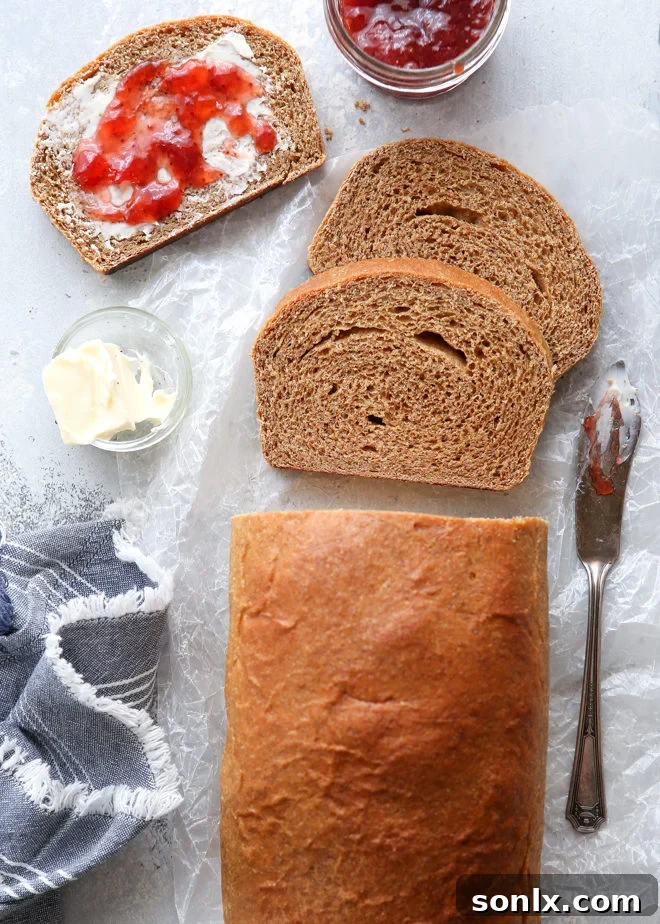
- Cool and Enjoy: Allow the loaf to cool in the pan for at least 10-15 minutes before attempting to remove it. Then, transfer it to a wire rack to cool completely. Slicing warm bread can be tempting, but cooling allows the internal structure to set properly, preventing a gummy texture. Once fully cooled, slice and savor your homemade 100% whole wheat bread!
Pro Tips for a Faster Dough Rise
Yeast activity is highly dependent on temperature. If your kitchen tends to be on the cooler side, especially during autumn and winter months, your dough might take longer to rise than the recipe suggests. Don’t worry, there are several simple tricks to create an ideal environment and help your dough proof more quickly and efficiently:
- Oven Method: Turn your oven to its lowest possible setting (usually around 150-200°F or 65-93°C) for just a few minutes, then immediately turn it off. Place your covered dough on the center rack and close the oven door. The residual warmth will create a perfect, cozy spot for your dough to rise. Make sure the oven isn’t too hot, as excessive heat can kill the yeast.
- Microwave Method: Heat 1 cup of water in your microwave for about 2 minutes, bringing it to a boil and filling the microwave with steam. Remove the hot water (carefully!), then place your covered dough into the microwave and close the door. The steam and warmth will create a humid, warm micro-environment that’s excellent for proofing dough. Do not turn on the microwave with the dough inside.
- Other Warm Spots: Get creative with other sources of gentle heat around your home. You can place your covered dough on top of a warm oven that’s currently in use (but not directly on a hot burner), near a running dryer machine, or even on a chair positioned safely over a heater vent. The goal is consistent, gentle warmth, not direct high heat, which can damage the yeast.
Whole Wheat Bread Baking FAQs Answered
While almost any brand of whole wheat flour will work well, some brands offer superior quality that can enhance your baking experience. The intensity of flavor and the coarseness of the grind can vary between brands. For reliable and consistently excellent results, I highly recommend using King Arthur or Bob’s Red Mill whole wheat flour. They are widely available and produce a fantastic texture and flavor in this recipe.
Kneading by hand is a wonderfully tactile experience and entirely achievable, though it requires a bit more physical effort than using a stand mixer. The basic technique involves folding, pushing, and turning the dough repeatedly on a lightly floured surface until it becomes smooth and elastic. You’ll develop strong arm muscles and a keen sense for the dough’s texture! For a comprehensive visual guide, many excellent online tutorials demonstrate effective hand-kneading techniques. Look for videos that show the “stretch and fold” method for optimal gluten development.
There are a couple of common culprits when dough fails to rise:
- Expired or Inactive Yeast: Yeast is a living organism, and it can expire or lose its potency over time. Always check the expiration date on your yeast package. To test its viability, add 1 packet (2 ¼ teaspoons) of yeast to ½ cup of warm water (105-115°F or 40-46°C) with 1 teaspoon of sugar. Let it sit for 5-10 minutes. If the mixture becomes foamy and visibly increases in volume, your yeast is active and good to go. If not, it’s time for a new batch.
- Incorrect Liquid Temperature: Yeast is sensitive to temperature. Liquids that are too hot (above 140°F or 60°C) will kill the yeast, rendering it inactive. Conversely, liquids that are too cold will not activate the yeast sufficiently, leading to a very slow or non-existent rise. Always use a thermometer to ensure your liquids are within the ideal range of 120-130°F (49-54°C) for whole wheat bread, as the heavier flour can absorb heat more quickly.
A dense loaf is a common frustration, often linked to one of these factors:
- Yeast Issues: Refer to the solutions above regarding expired or improperly activated yeast. If your yeast wasn’t active, your dough simply won’t rise properly.
- Too Much Flour: This is arguably the most frequent mistake. Adding excessive flour makes the dough stiff and heavy, hindering gluten development and preventing proper expansion during rising. When kneading, add just enough flour until the dough is firm but still slightly tacky to the touch. It should clear most of the sides of your mixer bowl but still feel a bit sticky without truly adhering to your fingers. Trust the feel of the dough over strict measurement, as flour absorption varies.
- Insufficient Rising Time: Dough needs ample time to rise and double in size during both the first and second proofing stages. Rushing this process results in underdeveloped gluten and less air in the final product. Ensure your dough is placed in a warm, draft-free environment (see our tips for faster rising) and given adequate time to proof fully. A properly risen dough is crucial for a light, airy texture.
Homemade bread, especially 100% whole wheat, is best enjoyed within 1-2 days of baking for the freshest flavor and softest texture. However, when stored correctly, it can remain delicious for 5-7 days. The key is proper storage to prevent it from going stale too quickly.
To maximize freshness, store your homemade 100% whole wheat bread at room temperature in an airtight container or bag. A plastic bag, plastic wrap, or a dedicated bread box are all excellent options. Avoid storing bread in the refrigerator, as the cooler temperatures actually accelerate the staling process, making your bread dry and hard much faster than if left on the counter. If you plan to keep it longer than 5-7 days, consider freezing it.
Baking Tip: How to Know When Bread is Fully Baked
Determining if your bread is perfectly baked all the way through can be a bit tricky, even if the crust looks golden. Here are the most reliable ways to test for doneness:
- Tap Test: Gently tap the bottom crust of the loaf. If it sounds hollow, it’s generally a good sign that the inside is cooked.
- Toothpick Test (Less Reliable for Bread): While common for cakes, a toothpick inserted into the center of bread might come out clean even if the interior is slightly underbaked or gummy. It’s a decent indicator, but not the most precise.
- Internal Temperature (Most Accurate): For the most precise results, use an instant-read thermometer. Insert it into the center of the loaf. Whole wheat bread is typically fully baked when it reaches an internal temperature of 190-200°F (88-93°C). This ensures a perfectly cooked interior without guesswork.
Expand Your Baking Repertoire: More Whole Wheat Recipes
If you’ve fallen in love with the wholesome goodness of 100% whole wheat bread, you’ll be delighted to explore more recipes that utilize this fantastic flour. Broaden your baking horizons with these other delicious whole wheat creations:
- Honey Whole Wheat and Oat Sandwich Bread: A wonderfully soft and flavorful loaf, perfect for everyday sandwiches, enriched with oats and a hint of honey.
- Rustic Multigrain Bread: For those who love extra texture and a robust flavor, this bread combines multiple grains for a truly hearty experience.
- Honey Whole Wheat Dinner Rolls: Light, fluffy, and slightly sweet, these rolls are the perfect accompaniment to any meal.
The Ultimate 100% Whole Wheat Bread Recipe

100% Whole Wheat Bread
Pin Recipe
Leave a Review
Ingredients
- 1 ½ cups (355 ml) water
- 2 tablespoons (28 grams) butter
- ¼ cup (60 ml) molasses
- About 4 cups (450 grams) whole wheat flour
- 2 teaspoons (8 grams) salt
- 2 ¼ teaspoon (7 grams) active dry yeast or instant/quick rise yeast
Instructions
-
In a small saucepan, gently heat the water, butter, and molasses over medium heat until the butter is completely melted. Remove from heat and allow the mixture to cool to an ideal temperature of 120-130°F (49-54°C), which typically takes about 5 minutes. Use a kitchen thermometer for accuracy to ensure optimal yeast activation.
-
In the bowl of a stand mixer fitted with a dough hook (or a large mixing bowl for hand-kneading), combine 2 cups of the whole wheat flour, the salt, and the active dry or instant yeast. Add the cooled liquid mixture to the dry ingredients and mix on low speed until all components are just moistened and a rough, shaggy dough forms.
-
Continue to mix on low speed, gradually adding the remaining whole wheat flour, ¼ cup at a time. The dough is ready when it becomes firm, mostly clears the sides of the bowl, but still retains a slight tackiness to the touch. You may not need all 4 cups of flour; adjust based on the dough’s consistency to avoid a dense loaf.
-
Increase the mixer speed slightly and continue to knead the dough for an additional 2-4 minutes. The dough should become smooth, elastic, and pass the “windowpane test” – meaning a small piece can be stretched thin enough to see light through it without tearing immediately. This indicates proper gluten development.
-
Transfer the dough to a lightly greased bowl, turning it once to coat all surfaces. Cover the bowl tightly with plastic wrap or a clean kitchen towel. Place it in a warm, draft-free spot and let it rise until it has visibly doubled in size, approximately 1 hour (if using instant yeast, this may be closer to 30 minutes). After the first rise, gently punch down the dough to release the accumulated gases and let it rest for 10 minutes.
-
On a lightly floured work surface, roll the dough into a rough rectangle, approximately 10 inches wide and 12 inches long. Carefully roll the dough up tightly into a log shape, pinching the seam closed to seal. Place the shaped dough, seam-side down, into a greased 9×5-inch loaf pan.
-
Cover the loaf pan once more with plastic wrap and allow it to rise again in a warm place until nearly doubled in size, about 30 minutes. While the dough is completing its second rise, preheat your oven to 375°F (190°C).
-
Bake the bread for 30-40 minutes, or until the loaf achieves a rich golden-brown crust and registers an internal temperature of 190-200°F (88-93°C) with an instant-read thermometer. For a glossy, extra-golden finish, you can brush the top lightly with melted butter immediately after removing it from the oven. Allow the loaf to cool in the pan for 10 minutes, then transfer it to a wire rack to cool completely before slicing. This helps the internal structure set properly.
Video
Notes
Recipe adapted from Red Star Yeast.