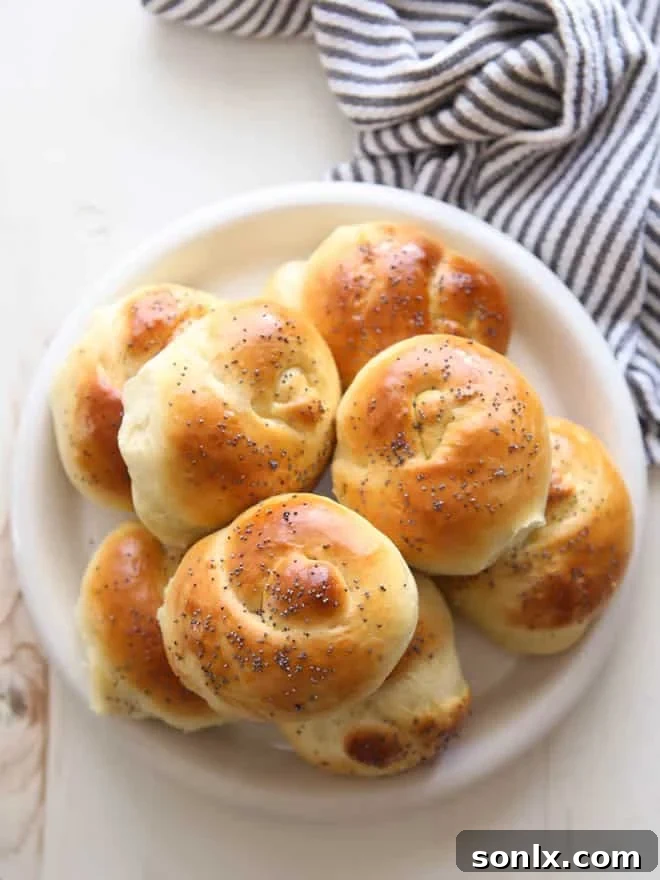
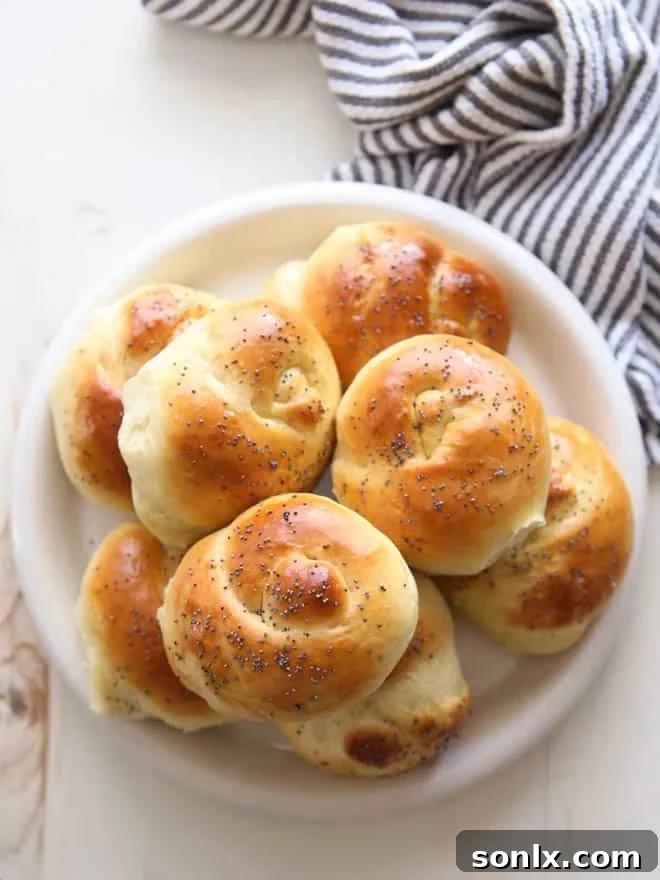
Soft and rich knotted dinner rolls are perfect for any occasion, bringing warmth and comfort to your table!
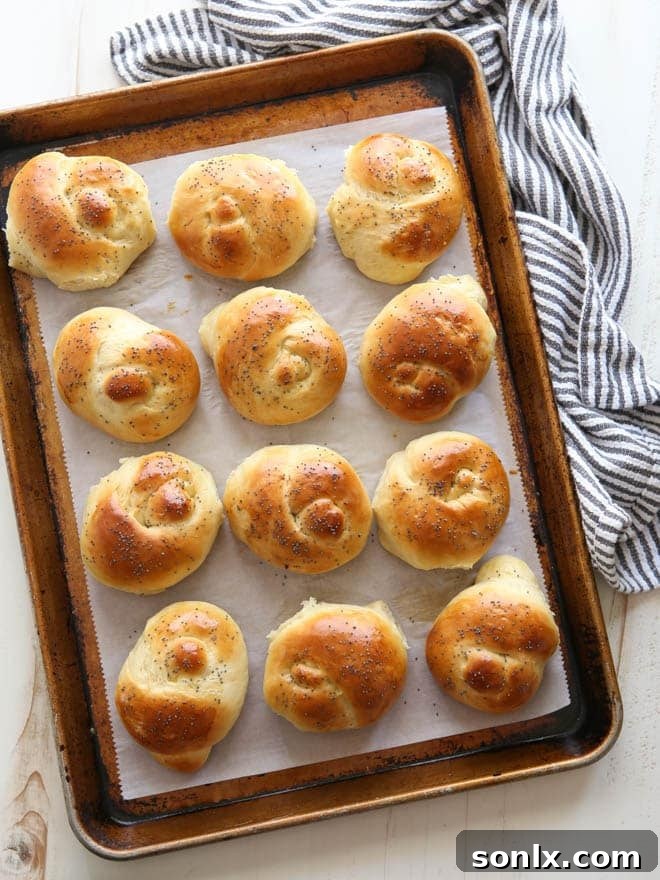
Irresistibly Soft & Rich Knotted Dinner Rolls: Your Guide to Perfect Homemade Bread
As the vibrant hues of spring begin to paint the landscape, ushering in longer days and a refreshing warmth, there’s a distinct sense of renewal in the air. This delightful season often culminates in cherished holidays like Easter, a time synonymous with family gatherings, the beauty of blooming gardens, and the joy of sharing delicious homemade meals. After the long, often cold and dark winter months, the sight of fresh buds on trees and a riot of flowers everywhere truly lifts the spirit. It’s a period of shedding heavy coats, embracing lighter spirits, and perhaps even welcoming the carefree days of flip-flop season!
This year, I am joyfully hosting a family Easter celebration at our home. While the affair will be relaxed and filled with laughter, you can be absolutely certain that a few special, time-honored recipes will grace our table. Among these cherished dishes are these exquisite knotted dinner rolls. This recipe first made its debut on my blog for Easter way back in 2010 and has remained an undisputed family favorite ever since. Their comforting aroma and melt-in-your-mouth texture have a unique way of transforming any meal into an unforgettable feast.
The Magic Behind the Rolls: Enriched Challah Dough
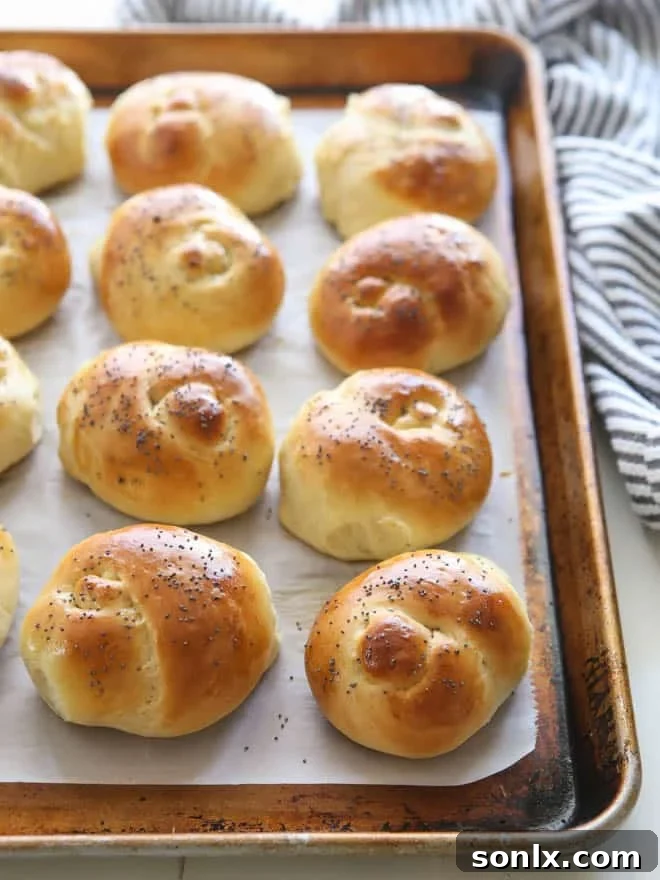
What gives these dinner rolls their unparalleled charm and distinctive flavor? They are lovingly crafted from a special variation of my popular braided egg bread (Challah) recipe. Instead of braiding, the dough is skillfully portioned and tied into elegant knots. The true secret to their exceptional quality lies in the nature of the dough itself: an enriched yeast dough. This means the dough contains a higher proportion of enriching ingredients like fat (butter) and sugar (honey) compared to typical lean yeast doughs. This rich composition is precisely what imbues these rolls with their characteristic softness, tenderness, and deeply satisfying flavor profile.
While my blog boasts a diverse collection of roll recipes, each offering its own unique appeal, these knotted challah-style rolls consistently rank among my absolute top choices. Despite their sophisticated appearance, they are surprisingly straightforward to make, requiring no more effort than many simpler roll recipes. Their charming knotted shape adds an impressive touch of artisanal elegance, making them ideal for any dining occasion – from casual weeknight dinners to festive holiday gatherings, or any special party you have on the horizon. They truly elevate the simplest of spreads.
Be sure to check back soon for more delightful Easter recipes I’ll be sharing over the coming weeks! Do you have any specific requests or beloved family recipes you’d like to see reimagined? I welcome your suggestions and look forward to hearing from you in the comments section below!
Essential Baking Tip: Understanding and Utilizing Bread Flour
For truly outstanding yeast breads, the type of flour you select plays a pivotal role. This recipe specifically calls for bread flour, and understanding why will significantly enhance your baking results. Bread flour distinguishes itself from all-purpose flour primarily through its higher protein content. This elevated protein level is absolutely fundamental for robust gluten development, which is the structural backbone of any superior yeast dough.
What exactly does more gluten mean for your rolls? It means a stronger, more elastic dough that is incredibly efficient at trapping and containing the carbon dioxide gases produced by the yeast during fermentation and baking. This superior gas retention is the secret to achieving a higher, more impressive rise in your baked goods. Beyond just vertical expansion, bread flour contributes significantly to the final texture. Rolls made with bread flour will boast a wonderfully chewy and elastic crumb, a characteristic that sets them apart from the denser or more crumbly texture often associated with lower-protein flours.
While I strongly advocate for using bread flour to achieve the authentic texture and rise of these knotted rolls, all-purpose flour can serve as a substitute if absolutely necessary. However, be prepared for a slightly different outcome: the rolls might not achieve the same height, and their texture may be less chewy and elastic. For the most authentic and truly remarkable knotted roll experience, investing in good quality bread flour is a decision that any dedicated baker will find immensely rewarding.
Knotted Dinner Rolls
Pin Recipe
Leave a Review
Ingredients
- 1 packet active dry yeast (2 1/4 teaspoons, about 7 grams)
- ½ cup warm water (125 ml, approximately 105-115°F or 40-46°C)
- ⅓ cup honey (115 grams)
- ¼ cup unsalted butter , melted and cooled (56 grams)
- 2 large eggs (at room temperature for best results)
- 3 – 3 ½ cups bread flour (360-420 grams, plus more for dusting)
- ¾ teaspoon salt (fine sea salt or table salt)
- 1 egg + 1 teaspoon water , beaten (for egg wash)
- Poppy seeds , for sprinkling (optional, or substitute with sesame seeds)
Instructions
-
1. Activate the Yeast: In a generously sized mixing bowl, or the bowl of your electric stand mixer, combine the warm water and the active dry yeast. It’s crucial that the water temperature is ideal – between 105-115°F (40-46°C) is perfect; water that’s too hot will unfortunately kill the yeast, while water that’s too cold won’t allow it to activate properly. Stir gently to combine the yeast and water, then let the mixture rest undisturbed for approximately 5 to 7 minutes. You’ll know your yeast is healthy and active when a distinct foamy layer appears on the surface, signifying that the yeast is alive and ready to leaven your delicious rolls.
-
2. Combine Wet and Dry Ingredients: Once your yeast mixture is foamy, add the honey, the melted and carefully cooled unsalted butter, and the two large eggs to the bowl. If you’re using a stand mixer, attach the dough hook. If you prefer to knead by hand, prepare a large, sturdy mixing bowl. Now, incorporate the initial 2½ cups of bread flour along with the salt. Begin mixing on a low speed until all the ingredients are just combined and start to form a wet, somewhat sticky dough. Gradually add the remaining bread flour, approximately ¼ cup at a time, ensuring each addition is fully incorporated before adding more. Your objective is a dough that remains wonderfully soft and pliable, but is no longer excessively sticky to the touch. The precise amount of flour can vary based on factors like ambient humidity and the specific brand of flour, so you might not need the full 3½ cups. An enriched dough like this will often remain quite soft and might not completely pull away from the sides of the bowl, which is perfectly normal.
-
3. Knead Until Smooth and Elastic: Increase the mixer speed to low-medium and continue to knead the dough for an additional 5 to 7 minutes. If you are kneading by hand, this process will take a bit longer, typically 8-10 minutes. During this stage, the dough will undergo a remarkable transformation, becoming smooth, supple, and noticeably elastic. A reliable indicator of proper kneading is the “windowpane test”: carefully pull off a small piece of dough and gently stretch it with your fingers. If you can stretch it thin enough to see light pass through without it tearing, your dough has developed sufficient gluten and is perfectly kneaded.
-
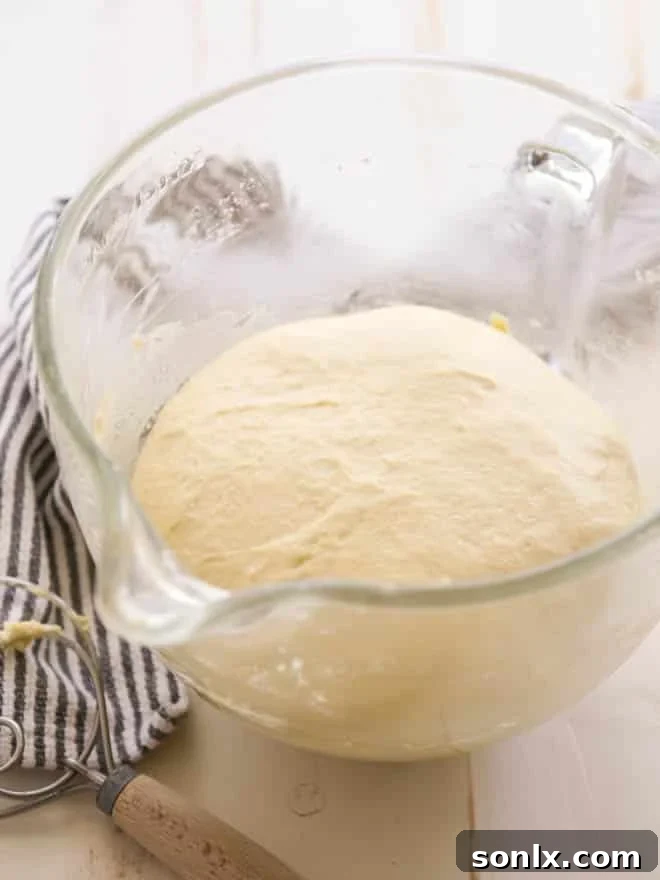
4. First Rise (Bulk Fermentation): Gently shape the thoroughly kneaded dough into a neat ball. Transfer it to a lightly greased bowl, ensuring that the entire surface of the dough is also lightly coated with oil (you can achieve this by flipping the dough once in the bowl). Cover the bowl securely with plastic wrap or a clean, damp kitchen towel to prevent the dough from drying out and forming a skin. Place the covered bowl in a warm, draft-free location in your kitchen. Allow the dough to rise until it has visibly doubled in size. This process typically takes about 1 hour, but the exact time can vary depending on the ambient temperature. This crucial first rise is essential for developing the deep flavors and characteristic tender texture of the rolls.
-
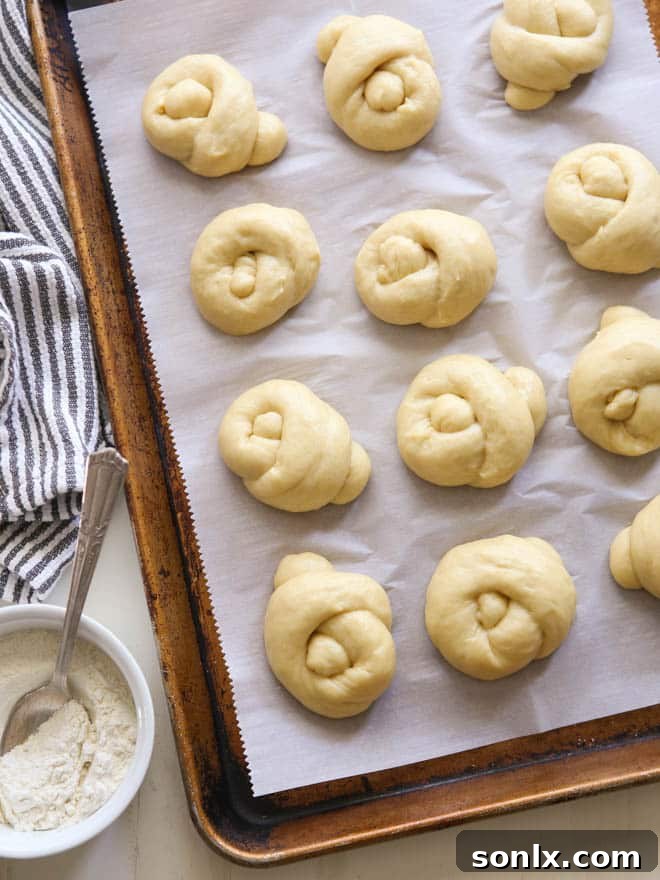
5. Shape the Rolls and Second Rise (Proofing): Once the dough has doubled in size, gently punch it down to release the accumulated gases. Turn the dough out onto a lightly floured surface and briefly gather it back into a cohesive ball. Now, divide the dough into 12 equal pieces. For maximum consistency in size and appearance, I highly recommend using a kitchen scale to portion each piece, aiming for approximately 60-70 grams per roll. Working with one piece of dough at a time, roll it out into a rope that is roughly 6 inches (15 cm) in length. Carefully tie this rope into a simple, elegant knot. Arrange the beautifully shaped knots on a large baking sheet that has been lined with parchment paper, ensuring there is ample space between each roll to allow for their second expansion. Loosely cover the rolls with greased plastic wrap (or a clean, damp kitchen towel) and let them rise in a warm spot for a second time. This stage, known as proofing, should continue until the rolls have nearly doubled in size again, which typically takes about 30-45 minutes. During this second rise, preheat your oven to 350°F (175°C).
-
6. Bake to Golden Perfection: Just before placing the rolls into the oven, gently brush the tops of the risen knots with the prepared egg wash (one beaten egg mixed with one teaspoon of water). This will give your rolls a stunning golden-brown crust and a beautiful sheen. If you desire, now is the time to sprinkle a generous amount of poppy seeds or sesame seeds over the top for an extra layer of texture and flavor. Carefully transfer the baking sheet to your preheated oven. Bake for approximately 15-17 minutes, or until the rolls have turned a magnificent golden brown on top and are thoroughly cooked through. For an accurate measure of doneness, an instant-read thermometer inserted into the center of a roll should register between 190-200°F (88-93°C).
-
7. Serve and Store: These delectable knotted dinner rolls are truly at their absolute best when served warm, straight from the oven. At this moment, their irresistible aroma and incredibly soft texture are at their peak, making them an unforgettable highlight of any meal. While they are undoubtedly most delicious on the day they are baked, any leftover rolls can be stored in an airtight container at room temperature for up to 3 days. To revive day-old rolls and bring back much of their original freshness, a quick warm-up in the microwave for 10-15 seconds, or a few minutes in a low oven (around 300°F/150°C), works wonders.
Frequently Asked Questions (FAQ) about Knotted Dinner Rolls
- Can I use all-purpose flour instead of bread flour for these rolls?
- While bread flour is highly recommended due to its higher protein content, which is key for developing strong gluten for a chewier texture and better rise, you can substitute all-purpose flour in a pinch. However, please be aware that the resulting rolls might be slightly less chewy and may not achieve the same impressive height or elasticity. You might also need to adjust the liquid amount slightly as all-purpose flour absorbs moisture differently.
- How can I ensure my yeast is active before starting the recipe?
- The best way to verify yeast activity is to combine it with warm water (ideally between 105-115°F or 40-46°C). If the water is too hot, it will kill the yeast; too cold, and it won’t activate. After mixing, let it sit for 5-7 minutes. If the mixture becomes visibly foamy on top, your yeast is alive, active, and ready to make your dough rise beautifully!
- What is the best way to tell if the dough has been kneaded sufficiently?
- A properly kneaded dough will feel smooth and elastic. A classic technique to check for sufficient kneading is the “windowpane test.” Pinch off a small piece of dough and gently stretch it with your fingers. If you can stretch it thin enough to see light shine through it without the dough tearing, it has developed enough gluten and is perfectly kneaded. If it tears easily, continue kneading for a few more minutes until it passes the test.
- Can the dough be prepared in advance?
- Absolutely! For added convenience and flavor development, you can prepare the dough and let it undergo its first rise in the refrigerator overnight, or for up to 24 hours. After forming the dough into a ball and placing it in a greased, covered bowl, simply refrigerate it. The cold temperature will significantly slow down the fermentation process, which actually enhances the flavor of the dough. The next day, remove the dough from the fridge, allow it to come to room temperature for about 30-60 minutes, then proceed with shaping and the second rise as directed in the recipe.
- What’s the best method for storing and reheating leftover knotted dinner rolls?
- Once your delicious rolls have completely cooled, store them in an airtight container at room temperature for up to 3 days to maintain their freshness. For longer storage, baked and cooled rolls can be frozen for up to 2-3 months. To enjoy them again, simply thaw the frozen rolls at room temperature. You can gently reheat them in the microwave for 10-15 seconds for individual rolls, or place them in a warm oven (around 300°F/150°C) for about 5-10 minutes to bring back their soft, fresh-baked quality.
- Are there any alternative toppings I can use instead of poppy seeds?
- Certainly! Sesame seeds are a fantastic and very common alternative, offering a lovely nutty flavor and attractive appearance. For a more savory profile, you could sprinkle them with everything bagel seasoning. Alternatively, if you prefer a classic, unadorned look, leaving them plain is always a beautiful option.
Concluding Thoughts: Bring the Joy of Homemade Bread to Your Table
These knotted dinner rolls are far more than just a simple side dish; they are a delightful centerpiece, a conversation starter, and a true testament to the rewarding effort of homemade baking. Each soft, flavorful bite speaks volumes of the care and tradition infused into their creation. Whether you are commemorating a special occasion like Easter, hosting an intimate family dinner, or simply seeking to elevate your everyday meals, these Challah-inspired rolls are guaranteed to impress and bring smiles to all who taste them. There’s an unparalleled sense of satisfaction that comes from baking bread from scratch, and this recipe, with its blend of simple elegance and profound deliciousness, offers that joy in abundance. So, roll up your sleeves, embrace the delightful process of yeast baking, and prepare to fill your home with the intoxicating aroma of freshly baked bread. Your family and friends will undoubtedly cherish the effort and the delicious result!