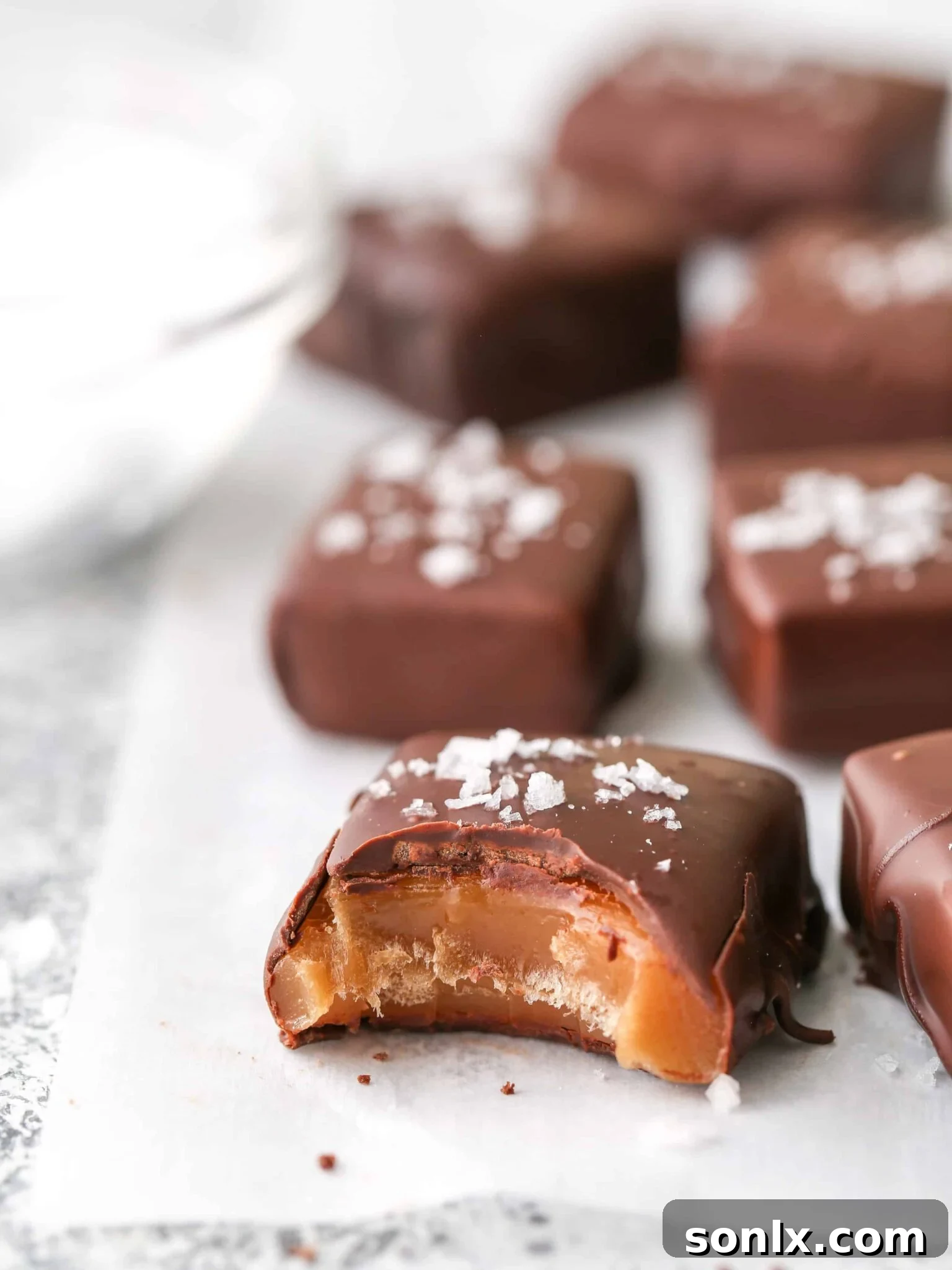
Indulge in the ultimate homemade treat: luscious, chewy caramels enveloped in rich chocolate and crowned with a delicate sprinkle of sea salt. This guide will reveal how surprisingly simple it is to create these luxurious confections right in your own kitchen, transforming humble ingredients into extraordinary delights. Prepare to impress with a dessert that tastes gourmet but is entirely approachable.
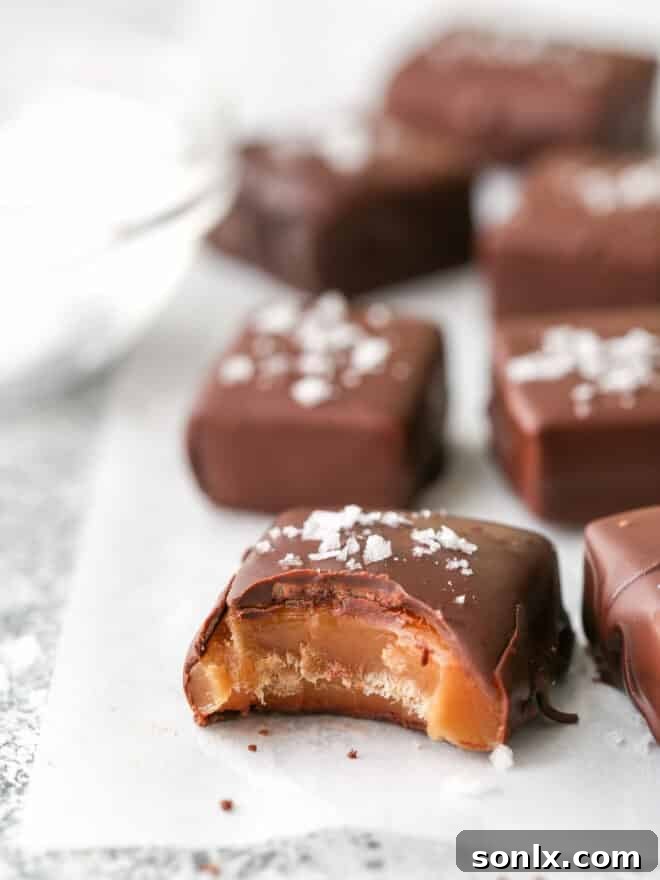
This recipe is proudly sponsored by Go Bold With Butter.
There’s something uniquely irresistible about a perfectly crafted caramel. For many, it’s a nostalgic candy that evokes fond memories, and for me, it’s a confection I simply cannot resist. While store-bought caramels offer a quick fix, nothing compares to the deep, complex flavors and melt-in-your-mouth texture of homemade versions. The good news? Crafting these delectable treats from scratch is far less intimidating than you might imagine.
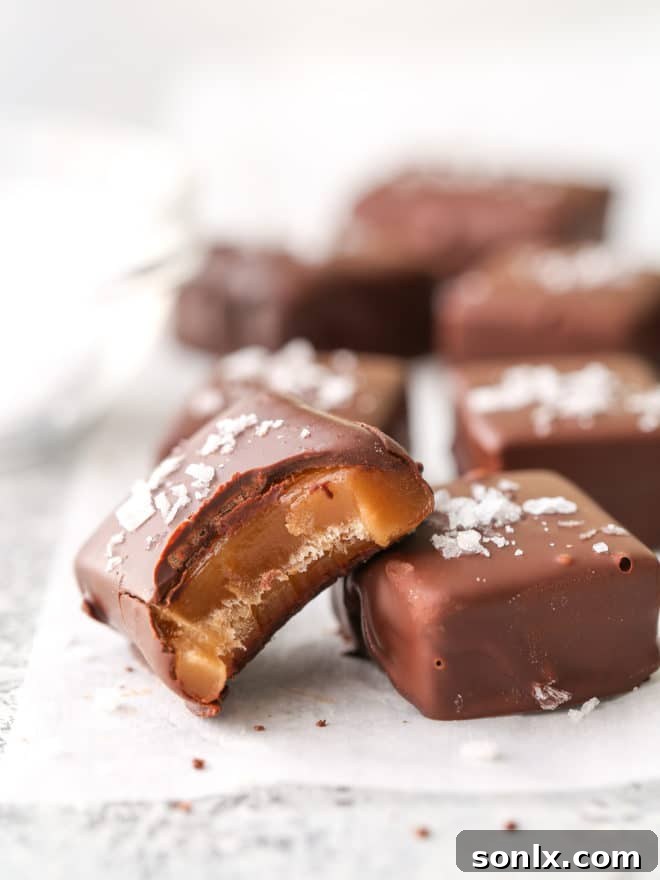
Our homemade caramels are a symphony of buttery richness and sublime chewiness. Each bite offers a blissful escape, as the smooth caramel literally melts away on your tongue. But why stop there? Elevate this classic candy by enrobing each piece in a decadent layer of bittersweet chocolate and finishing with a scattering of coarse sea salt. This magical combination of sweet and salty creates an unforgettable taste experience that will have everyone reaching for more. Whether you’re preparing a thoughtful homemade gift, seeking an exquisite addition to your holiday dessert spread, or simply treating yourself to a well-deserved indulgence, these chocolate-covered sea salt caramels are the perfect choice for any occasion.
Mastering the Art of Homemade Chocolate Covered Caramels
Embarking on your caramel-making journey is an exciting culinary adventure. While the process is straightforward, success hinges on meticulous preparation and a keen eye. Think of it as a science experiment where precision yields perfect results. Before you even think about turning on the stove, it is absolutely crucial to read through the entire recipe instructions. Familiarizing yourself with each step will help you anticipate potential challenges and ensure a smooth cooking process. Furthermore, gather all your ingredients and necessary equipment beforehand. This “mise en place” approach is vital in candy making, as timing is everything. Being fully prepared minimizes the risk of burning the caramel or overshooting your target temperature, greatly increasing your chances of creating perfectly soft and chewy caramels every single time.
Essential Ingredients for Unforgettable Homemade Caramels
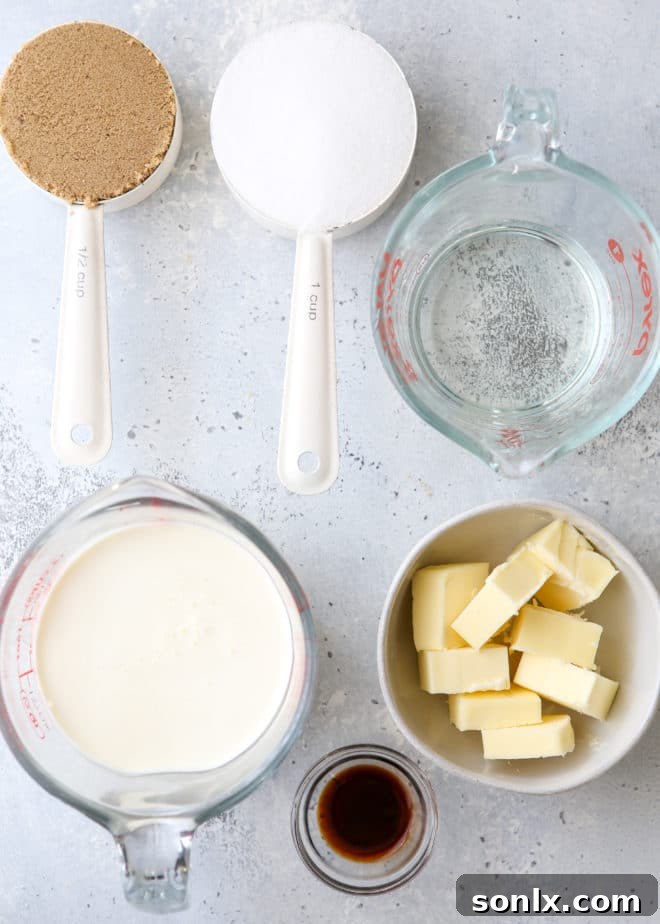
Creating truly exceptional caramel candy starts with the right ingredients. Each component plays a specific role in achieving that signature rich flavor and melt-in-your-mouth texture. Here’s a detailed look at what you’ll need to assemble:
- Salted Butter: Butter is the heart of any great caramel, imparting its signature richness and contributing significantly to the caramel’s smooth, luscious texture. I highly recommend using salted butter, as the subtle hint of salt beautifully balances the sweetness and deepens the overall flavor profile. If unsalted butter is all you have, don’t fret—simply add a pinch (about ¼ to ½ teaspoon) of fine sea salt to your mixture to achieve a similar effect.
- Heavy Cream: This dairy superstar is essential for creamy, tender caramels. It provides the necessary liquid for the sugar to dissolve and helps create that desirable soft chewiness. Using heavy cream (at least 36% milk fat) is non-negotiable for the best results; lighter creams or milk will not yield the same luxurious texture.
- Granulated Sugar: The primary sweetening agent, granulated sugar forms the foundational structure of the caramel. When cooked, its crystals transform into a molten, golden syrup, developing complex flavors as it caramelizes.
- Light or Dark Brown Sugar: Adding brown sugar introduces molasses notes, which contribute a deeper, more nuanced flavor and a slightly richer color to the caramels. Both light and dark brown sugars work well, with dark brown sugar providing a more intense molasses flavor.
- Light Corn Syrup: Do not be tempted to skip this ingredient! Light corn syrup is the secret weapon against crystallization. It’s an invert sugar that helps prevent the granulated sugar from recrystallizing, which would result in grainy, rather than smooth and chewy, caramels. It ensures a silky-smooth consistency, so embrace its role in achieving perfection.
- Pure Vanilla Extract: Added at the very end, vanilla extract infuses the warm caramel with its aromatic, sweet essence, enhancing all the other flavors. Use a good quality pure vanilla extract for the best taste.
Indispensable Equipment for Caramel Crafting
Just as important as your ingredients are the tools you use. Having the right equipment makes the process smoother, safer, and guarantees consistent results for your homemade caramels:
- Heavy-Bottom Saucepan: This is a non-negotiable item. A heavy-bottomed saucepan distributes heat evenly, preventing hot spots that can scorch the sugar and ruin your caramel. Opt for a pan with high sides, as the caramel mixture will bubble up and roughly double in volume as it cooks, requiring ample space to prevent boiling over.
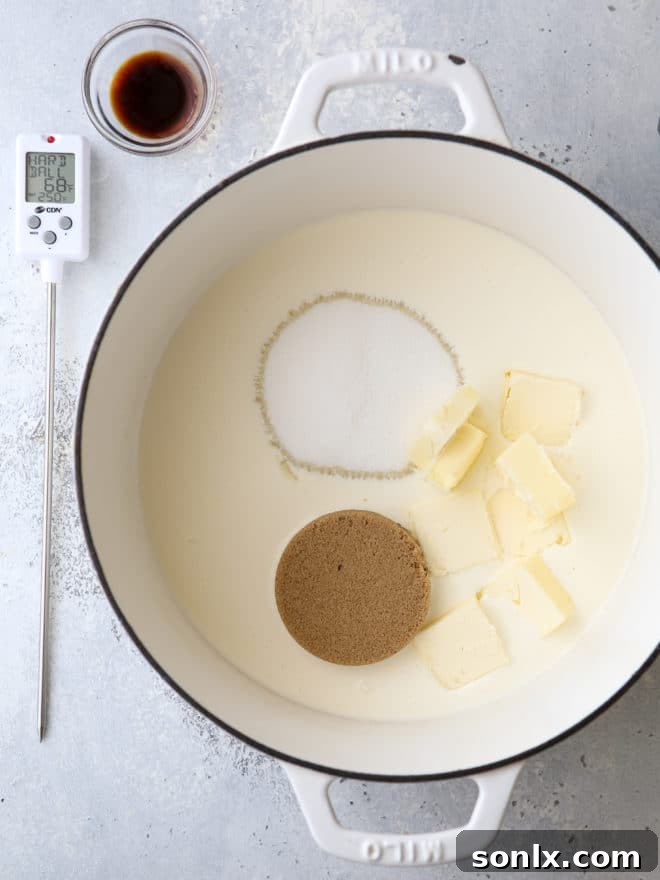
- Candy Thermometer: Your most crucial ally in caramel making. A reliable candy thermometer eliminates guesswork and ensures your caramel reaches the precise temperature for its desired texture. I highly recommend a digital thermometer for its accuracy and ease of reading. It’s the difference between perfectly chewy caramels and hard, brittle candy.
- Heat-Proof Spatula: Essential for stirring the hot caramel mixture. Choose a silicone spatula that can withstand high temperatures and effectively scrape down the sides of the pan to prevent sugar crystals from forming.
- 8 or 9-inch Square Baking Pan: This will be the mold for your caramels. Line it meticulously with parchment paper, ensuring an overhang on all sides. This parchment paper sling will allow you to easily lift the cooled caramel block out of the pan for clean slicing.
The Golden Touch: The Indispensable Role of Butter in Homemade Caramel
Butter isn’t just an ingredient in caramel; it’s a star player, a culinary architect that defines the candy’s character. It’s responsible for that unmistakable luscious flavor that makes homemade caramels so addictive, contributing a rich, creamy depth that simply cannot be replicated. Beyond flavor, butter profoundly influences the texture, helping to create the soft, supple chewiness and that luxurious melt-in-your-mouth sensation we all crave. It provides richness and a tender crumb, allowing the caramel to yield gently without sticking to your teeth.
While some traditional caramel recipes suggest adding butter and other dairy components (like milk or cream) towards the end, after the sugars have already caramelized, this particular recipe takes a different, more flavor-intensive approach. Here, all the core ingredients – including the butter, heavy cream, and both granulated and brown sugars (with the exception of vanilla) – are cooked together from the start. This co-cooking method is pivotal. As the mixture gently heats and transforms, the naturally occurring sugars within the butter and cream also undergo the caramelization process. This simultaneous caramelization of all dairy and sugar components results in a caramel with a significantly more complex, profound, and intensely delicious flavor profile. More caramelization, when done right, unequivocally translates to a more exquisite and unforgettable caramel experience.
The Thermometer Debate: Is a Candy Thermometer Truly Necessary?
When it comes to candy making, precision is paramount, and a digital candy thermometer is your best friend in achieving consistent results. It’s the easiest, most reliable way to ensure caramel success, removing all guesswork from the process. With a thermometer, you’ll know exactly when to remove the caramel from the heat, guaranteeing that your caramels turn out perfectly soft and chewy, never disappointingly hard or brittle. It acts as your guide, preventing common pitfalls and ensuring a professional-quality confection every time.
However, if you find yourself without a candy thermometer (though I highly recommend investing in one for any candy enthusiast), you can rely on the time-honored cold water test. This traditional method requires a little practice but can be surprisingly effective. To perform the test, simply drop a small teaspoon of the hot caramel mixture into a glass of very cold water. Allow it to cool for a few seconds, then use your fingers to carefully retrieve the caramel and roll it into a ball. If the caramel holds its shape but is still malleable and soft enough to chew, it has reached the ideal stage and is ready to be removed from the heat. If it’s too soft and dissolves, or too hard and shatters, continue cooking for a few more minutes, then repeat the test until the desired consistency is achieved.
Hitting the Sweet Spot: Ideal Caramel Cooking Temperatures
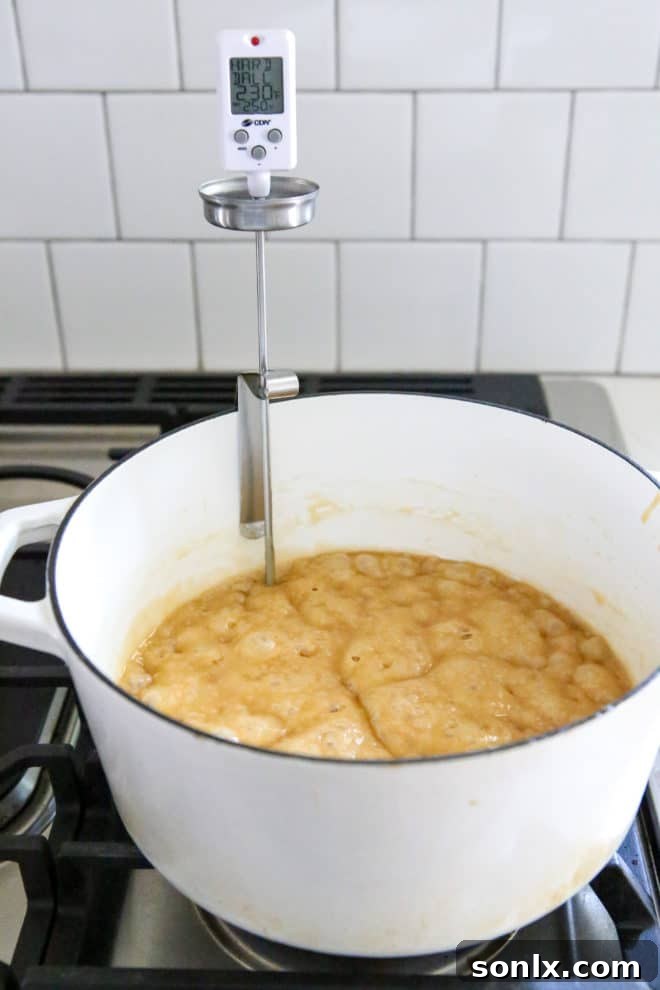
The cooking temperature is the single most critical factor determining your caramel’s final texture. For soft and deliciously chewy caramel candies, the sweet spot generally lies between 240-250°F (115-121°C). The exact temperature within this range will depend on your personal preference: aim for the lower end (around 240°F/115°C) for a super soft, almost melt-in-your-mouth caramel, or nudge it towards the higher end (250°F/121°C) for a slightly firmer, more substantial chew. Through extensive testing, I’ve found that approximately 245°F (118°C) consistently delivers the perfect balance of softness and chewiness for these chocolate-covered delights. This temperature will create a caramel that is pliable but still holds its shape beautifully after cooling.
It’s vital to remember that these temperature guidelines are calibrated for sea level. If you reside at a higher elevation, you’ll need to make precise adjustments to ensure your caramels set correctly. The boiling point of water decreases with increasing altitude, which means candy will reach its desired consistency at a lower temperature. Here are the adjusted target temperatures for various altitudes:
- 2,000 feet (approx. 610 meters): Target 238-244°F (114-118°C)
- 5,000 feet (approx. 1,524 meters): Target 232-238°F (111-114°C)
- 7,500 feet (approx. 2,286 meters): Target 227-233°F (108-112°C)
The caramel-making process is one that demands patience and gentle consistency. Expect the mixture to take anywhere from 35 to 45 minutes to gradually reach its target temperature. Resist the urge to rush it by cranking up the heat, as this will lead to uneven cooking and potential scorching. Maintain a consistent medium heat throughout the cooking time, and stir the mixture every few minutes with your heat-proof spatula. This regular stirring is crucial to prevent the bottom from burning and to ensure even caramelization. During the initial 20 minutes or so, you can be a bit more relaxed, perhaps even multitasking nearby. However, once the caramel is within 10-15°F of your desired final temperature, it’s time to become more vigilant. Stay close to the stove, stirring more frequently, and watch that thermometer like a hawk. This final stage is where the magic happens and where precision truly pays off.
Swift Action, Patient Cooling, and Precise Slicing
Once your caramel hits its precise target temperature, every second counts. Immediately remove the saucepan from the heat source. This abrupt halt prevents overcooking and ensures the perfect chewy texture. At this critical moment, swiftly stir in the pure vanilla extract. To optimize speed, ensure your vanilla is pre-measured and waiting in a small bowl right next to the stove, eliminating any delay. Without hesitation, pour the hot, fragrant caramel into your meticulously prepared parchment-lined baking pan. Caramel sets remarkably quickly as it cools, so you truly only have a few minutes from the moment it leaves the heat until it begins to firm up. Working with speed and confidence in this step is key to a smooth, even layer.
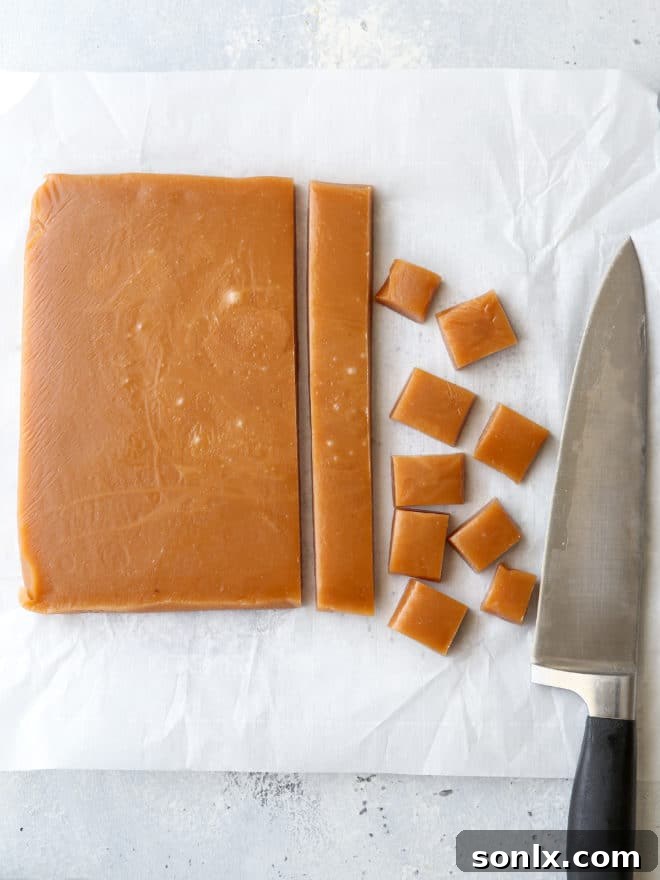
Allow the caramel to cool completely at room temperature, which typically takes about an hour. During this time, the caramel will firm up and develop its characteristic chewiness. If you’re short on time and need to accelerate the cooling process, you can carefully place the pan in the refrigerator for a few minutes. However, exercise caution: if the caramel chills for too long in the fridge, it will become excessively firm and challenging to slice cleanly. The goal is firm but still pliable. Once adequately cooled, use the parchment paper overhang as a sling to effortlessly lift the entire block of caramel out of the pan. Transfer it to a sturdy cutting board and, using a sharp, lightly oiled knife, slice it into uniform 1-inch pieces, or any size you prefer. The clean edges will speak to your meticulous craftsmanship.
The Grand Finale: How to Dip Caramels in Chocolate for an Irresistible Finish
After meticulously crafting your perfect homemade caramels, it’s time for the truly fun and most visually rewarding part: enrobing them in chocolate. While these caramels are utterly divine on their own (and frankly, I wouldn’t blame you if you skipped this step and devoured them plain!), a crisp chocolate coating and a sprinkle of flaky sea salt transform them into an elevated, gourmet confection. The exquisite sweet and salty combination is simply irresistible, adding a layer of sophisticated flavor and an appealing textural contrast that makes these treats genuinely special.
The dipping process is surprisingly simple and adds minimal effort for maximum impact:
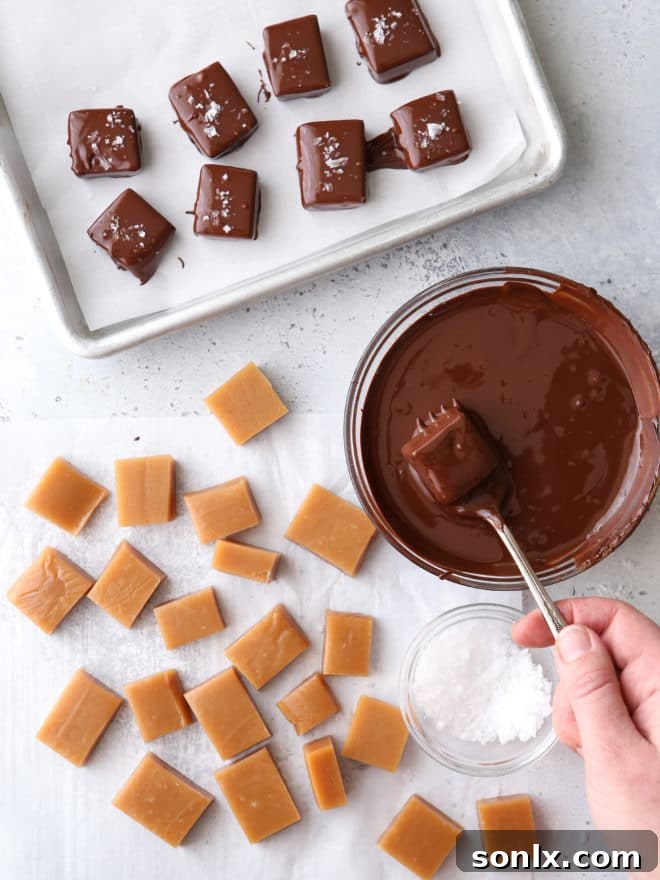
- Melt the Chocolate: Begin by melting your chosen chocolate – semi-sweet or bittersweet works beautifully to complement the sweet caramel. You can achieve this using a double boiler set over simmering water, stirring gently until smooth and glossy. Alternatively, for convenience, melt the chocolate in the microwave in 30-second intervals, stirring thoroughly after each burst to prevent burning, until fully melted and smooth.
- Prepare for Dipping: Once your chocolate is perfectly melted, ensure it’s warm enough to be fluid but not excessively hot. Have your cooled caramel pieces ready. Using a fork, gently drop one caramel into the melted chocolate, ensuring it’s completely submerged and coated on all sides.
- Remove Excess Chocolate: Lift the chocolate-covered caramel out of the bowl using the fork. Gently tap the fork against the edge of the bowl. This motion helps any excess chocolate drip back into the bowl, ensuring a thin, even coating that won’t overwhelm the caramel.
- Transfer and Sprinkle: Carefully ease the chocolate-covered caramel onto a baking sheet lined with parchment paper or wax paper. A toothpick or a second fork can assist in gently sliding the caramel off the dipping fork. Immediately, while the chocolate is still wet, sprinkle generously with coarse sea salt (my personal favorite for this is flaky sea salt, which offers a delightful crunch and visual appeal).
- Set and Store: Repeat the dipping process for all your caramels. Allow them to set at room temperature for approximately 20 minutes, or until the chocolate coating has fully cooled and hardened. Once set, store these delightful chocolate-covered caramels in an airtight container at room temperature. They will remain fresh and delicious for up to a few weeks, though it’s doubtful they’ll last that long! To prevent them from sticking together, you might want to place a sheet of parchment or wax paper between each row in the container.
Enjoy every single bite of these exquisite homemade chocolate-covered sea salt caramels!
Discover More Delectable Homemade Candy Recipes
If you’ve fallen in love with the art of candy making, why not explore other delightful confections? Expand your repertoire with these fantastic homemade candy recipes, perfect for gifting or simply indulging:
- Classic English Toffee
- Salted Caramel Nut Brittle
- Coffee Toffee
- Soft Caramel Corn
- Homemade Caramel Apples
Shop Essential Tools for This Recipe
To ensure your caramel-making process is as smooth and successful as possible, here are some highly recommended tools:
- Heavy-Bottom Stainless Steel Saucepan
- Digital Candy Thermometer
- Heat-Resistant Silicone Spatula
- 8×8 Inch Square Baking Pan
- Flaky Sea Salt

Chocolate Covered Caramels
Pin Recipe
Leave a Review
Ingredients
- 1 cup granulated sugar (200 grams)
- ½ cup light or dark brown sugar (105 grams)
- ½ cup light corn syrup
- 1 ½ cup heavy cream (325 ml)
- ½ cup salted butter (1 stick, 113 grams)
- 1 teaspoon pure vanilla extract
- 8 ounces semisweet or bittersweet chocolate , chopped or use chocolate chips
- 1 tablespoon flaky or coarse sea salt
Instructions
-
Line an 8 or 9 inch square baking pan with parchment paper and set next to stove.
-
In a medium heavy bottom saucepan, add granulated sugar, brown sugar, corn syrup, heavy cream and butter. Measure vanilla and set next to stove.
-
Set pan over medium heat and stir until sugar is dissolved and mixture is smooth.
-
Insert a candy thermometer and continue to cook mixture, stirring often, on medium heat to 240-250°F (see Notes), approximately 35 minutes.
-
As soon as caramel reaches temperature remove from heat and stir in the vanilla extract. Working quickly, pour caramel into the prepared pan.
-
Let caramel cool completely, about 1 hour at room temperature.
-
Use parchment paper to lift caramel out of the pan and transfer to a cutting board. Slice into 1 inch pieces (or as desired) with a sharp knife.
-
Melt chocolate in a heat proof bowl set over a bowl of simmering water, or in the microwave in 30 second bursts. Stir until smooth.
-
Drop caramels into melted chocolate and use a fork to remove it from the bowl of chocolate, letting excess chocolate drop back into the pan.
-
Place covered caramels on a pan lined with parchment paper or wax paper and sprinkle with some of the salt.
-
Let cool for 20 minutes until chocolate is set. Store in an airtight container at room temperature for up to a few weeks.
Notes
- I highly suggest reading through the post above for tips and helpful info for these caramels.
- Make the following adjustments if cooking above sea level: 2,000 feet— 238-244°F, 5,000 feet— 232-238°F, 7,500 feet— 227-233°F
Disclosure: This recipe was created in partnership with Go Bold With Butter. Thank you for supporting partnerships with brands I love and believe in, which make Completely Delicious possible. All opinions are always 100% my own. To learn more about Go Bold With Butter, you can visit their website here. You can also find them on facebook, instagram, and pinterest.