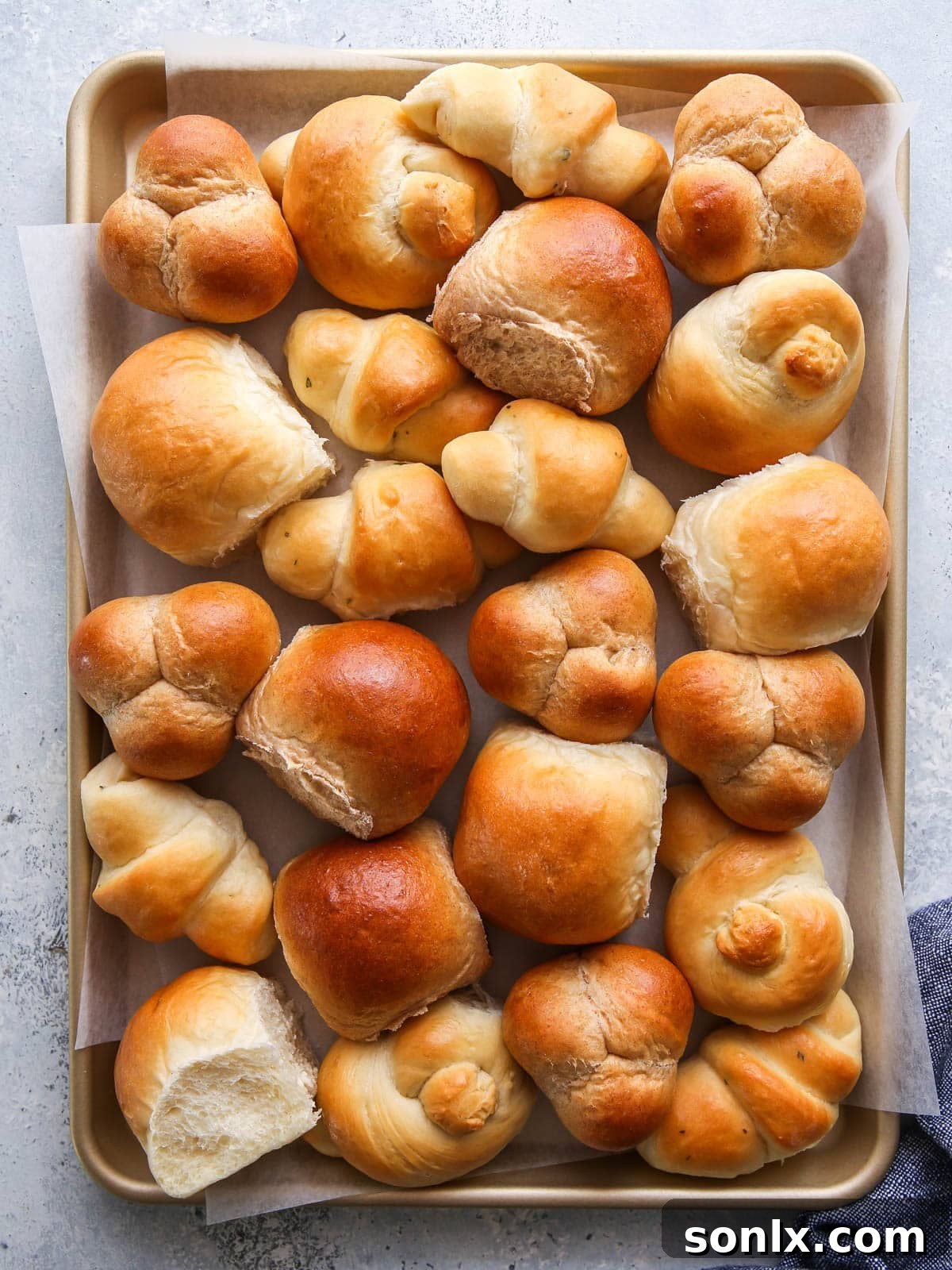
Elevate your baking skills and impress your guests with beautifully crafted dinner rolls! While the classic round dinner roll is always a beloved staple, learning to shape a variety of styles can transform a simple meal into an extraordinary culinary experience. In this comprehensive guide, we’ll walk you through how to master four distinct and delightful dinner roll shapes: the timeless traditional round, the charming cloverleaf, the elegant crescent, and the fun knotted roll. Whether you’re a seasoned baker or just starting, these techniques will add a touch of artistry to your homemade bread. You can use your go-to roll recipe, or feel free to utilize my highly recommended soft, buttery roll recipe for a truly exceptional foundation.
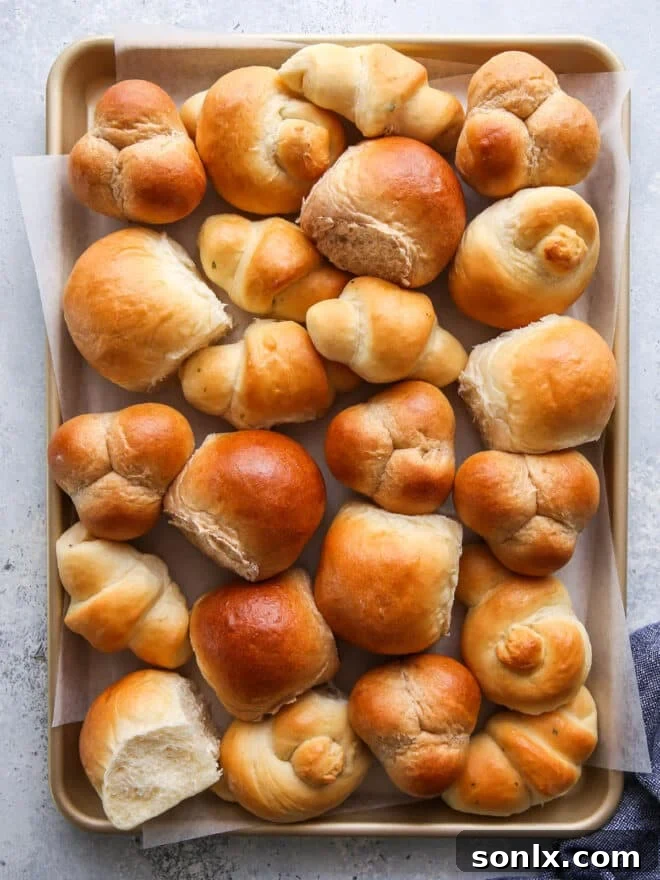
There’s a unique satisfaction in pulling a tray of golden-brown, homemade dinner rolls from the oven. While their aroma alone is enough to entice, imagine the delight when those rolls come in various appealing forms! Beyond their aesthetic appeal, different shapes can subtly alter the texture and eating experience of your rolls. Mastering these shaping techniques is a fantastic way to level up your baking game and add a professional touch to your table. Let’s delve into the art of shaping, transforming simple dough into works of edible art.
Why Master Dinner Roll Shapes?
Beyond the simple beauty they add to your dinner table, shaping your rolls offers several benefits. Firstly, it elevates the dining experience, making any meal feel a little more special. Guests are often delighted by the variety and visual appeal of different roll styles. Secondly, certain shapes can contribute to a better eating experience; for instance, cloverleaf rolls offer pull-apart segments, while crescent rolls provide a lovely flaky texture. Thirdly, it allows for creative expression in the kitchen, turning a basic dough into a canvas for your culinary artistry. Finally, the process of shaping can be incredibly meditative and rewarding, deepening your connection to the baking process.
The Essential Steps to Shaping Perfect Dinner Rolls
Achieving beautifully shaped dinner rolls follows a straightforward process. By focusing on these key stages, you’ll set yourself up for baking success, no matter which design you choose.
- Begin with a High-Quality Roll Recipe: The foundation of any great roll is a well-balanced and flavorful dough. Ensure your recipe yields a pliable, elastic dough perfect for shaping.
- Ensure Even Portioning of Dough: Consistency in size is crucial for both visual appeal and uniform baking. Accurately dividing your dough will prevent some rolls from over-baking while others remain undercooked.
- Select and Execute Your Desired Shape: This is where the fun begins! We’ll explore detailed instructions for traditional round, cloverleaf, crescent, and knotted rolls.
- Bake to Golden Perfection and Enjoy: Once shaped and proofed, bake your rolls until they’re golden brown and wonderfully aromatic. They’re sure to be a delightful addition to any meal.
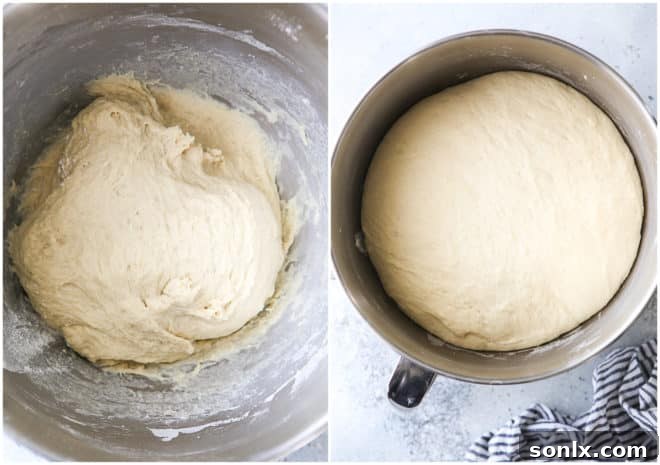
1. Start with an Exceptional Roll Recipe
This guide is designed to complement my Ultimate Dinner Roll Recipe, which offers my personal favorite dough formula. It’s renowned for producing the most incredibly soft, tender, and richly buttery rolls you can imagine. In that comprehensive guide, you’ll also discover various flavor variations, advanced baking tips, and much more to perfect your rolls.
However, if you have a cherished family recipe or another trusted dough formula you prefer, feel absolutely free to use it! The shaping techniques described here are versatile and can be applied to most yeast-based roll doughs. Once you’ve chosen your recipe, proceed with preparing and proofing your dough according to its specific instructions. A well-prepared dough is essential for successful and beautiful shaping.
Baking Tip: Accelerating Dough Rise
If you’re baking with yeast during the cooler autumn and winter months, or if your kitchen generally runs cold, you might notice your dough rising slower than expected. Lower temperatures can significantly impede yeast activity. To help your dough achieve a quicker, more consistent rise, consider these warmer suggestions:
- Using Your Oven: Briefly preheat your oven to its absolute lowest setting for just a few minutes, then turn it off completely. Place your covered dough on the center rack and close the oven door. The residual warmth provides a perfect environment for proofing.
- The Microwave Method: Heat 1 cup of water in your microwave for about 2 minutes, creating a steamy, warm interior. Remove the water, then place your covered dough into the microwave and close the door. Do not turn the microwave on with the dough inside!
- Alternative Warm Spots: Get creative with other sources of gentle heat. I’ve had great success letting dough rise on top of a warm oven (while it’s in use for something else), on a running dryer machine, or even positioning a chair with the covered dough over a heater vent.
Explore More Baking Tips »
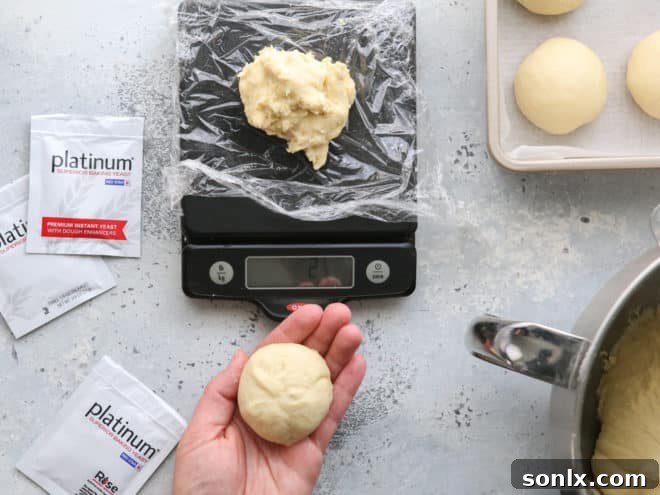
2. Precision in Portioning: Ensuring Uniform Rolls
No matter which beautiful shape you intend to create, the first crucial step is always to divide your dough into consistently sized portions. This attention to detail isn’t just about aesthetics; it’s fundamental for ensuring that all your rolls bake evenly, achieving that perfect golden crust and tender interior simultaneously. Rolls of varying sizes will cook at different rates, potentially leading to some being overdone while others are still undercooked.
- Weigh Your Dough: For unparalleled accuracy, weigh your entire batch of dough using a digital kitchen scale. This is the gold standard for consistent results.
- Calculate Individual Portion Weight: Once you have the total dough weight, divide that number by the total quantity of rolls your recipe yields. For example, if my standard dinner roll recipe makes 12 rolls, each portion typically weighs around 2 ounces.
- Divide and Adjust: Use a bench scraper to divide the dough into the calculated number of pieces. Continuously use your kitchen scale to fine-tune the weight of each individual piece, adding or removing small bits of dough until every portion matches the target weight precisely.
With your dough perfectly portioned, you are now ready to unleash your creativity and shape your rolls!
3. Explore Diverse Dinner Roll Shapes
While the world of bread shaping offers countless possibilities, we’re going to focus on four beloved and relatively easy-to-master dinner roll styles. Each shape brings its own charm and character to the table. Let’s start with a true classic: the traditional round roll, a shape that never fails to please.
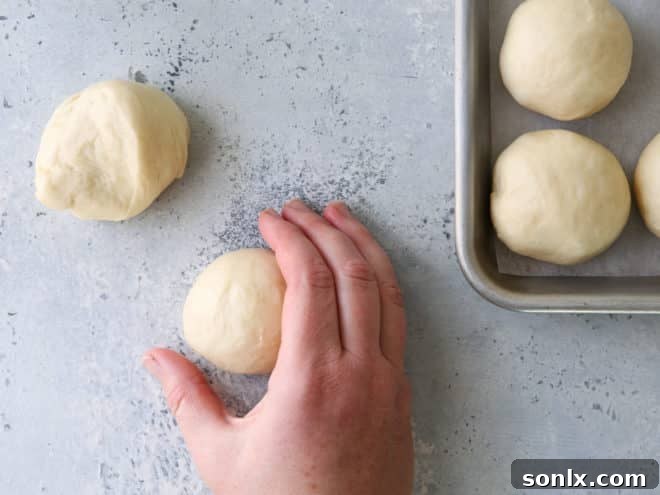
How to Shape Classic Round Dinner Rolls
The traditional round roll is a staple for a reason – it’s simple, elegant, and perfectly sized for any meal. Mastering this basic shape is a fundamental skill that underpins many other bread-shaping techniques. The goal is a smooth, taut surface on top and a neatly pinched seam at the bottom, which contributes to a beautiful rise and an even crumb.
- The Stretch and Pinch Method: Take one portioned piece of dough in one hand. With the fingers of your other hand, gently pull and stretch the edges of the dough from underneath, bringing them up and over the top, towards the center. Continue this motion, gathering the dough into a ball and pinching all the seams firmly together at the bottom. This process creates surface tension, resulting in a smooth top.
- The Counter Roll for Smoothness: Place the dough ball, pinched side-down, onto a clean, unfloured work surface. Cup your hand loosely over the dough, ensuring the edge of your palm is firmly on the counter. In a swift, circular motion, sweep your hand around the dough. This gentle friction against the counter will quickly round and smooth the dough into a perfect, uniform ball. This usually takes only a few quick seconds.
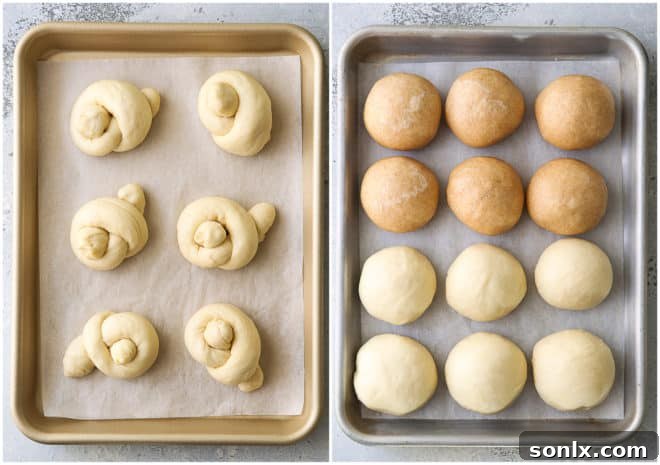
- Arrangement for Baking: Carefully place your shaped round rolls into a 9×13-inch baking pan or a quarter sheet pan lined with parchment paper, leaving a little space between each roll for them to expand during their final rise.
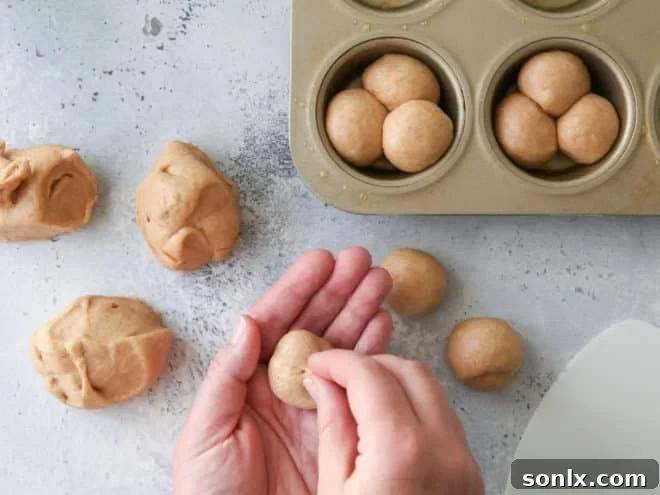
Crafting Charming Cloverleaf Rolls
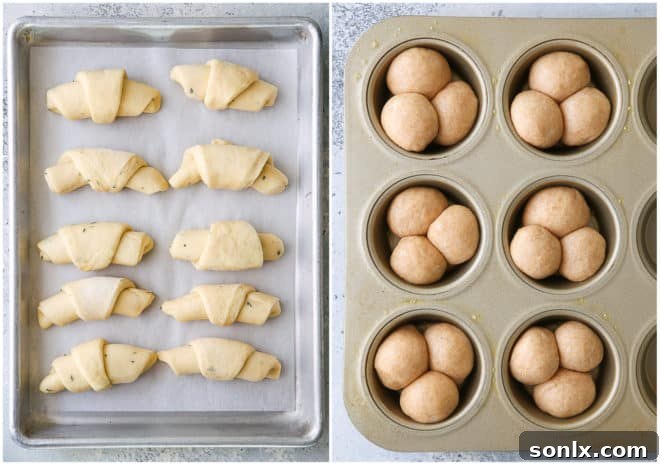
Cloverleaf rolls are a delightful, pull-apart option, perfect for sharing and adding a touch of rustic elegance to your bread basket. Their distinctive three-lobed shape comes from placing three smaller dough balls into each muffin tin cavity. This method ensures each roll is soft and fluffy, tearing away easily for individual servings.
- Divide Each Portion: Begin with your evenly portioned dough balls. Using a bench scraper or a sharp knife, divide each of these larger portions into three smaller, roughly equal pieces. The key is to keep these smaller pieces consistent in size so they bake uniformly.
- Shape and Smooth Small Rounds: Take each of the three smaller portions and shape them into miniature round balls. Use the same “stretch, pinch, and roll” method described for traditional round rolls (above). Focus on creating smooth, taut surfaces with neatly pinched bottoms.
- Arrange in Muffin Pans: Lightly grease a standard muffin pan. Place three of these small, smooth dough balls into each cup of the prepared muffin pan. As they rise and bake, they will merge beautifully to form the characteristic cloverleaf pattern.
Creating Elegant Crescent Rolls
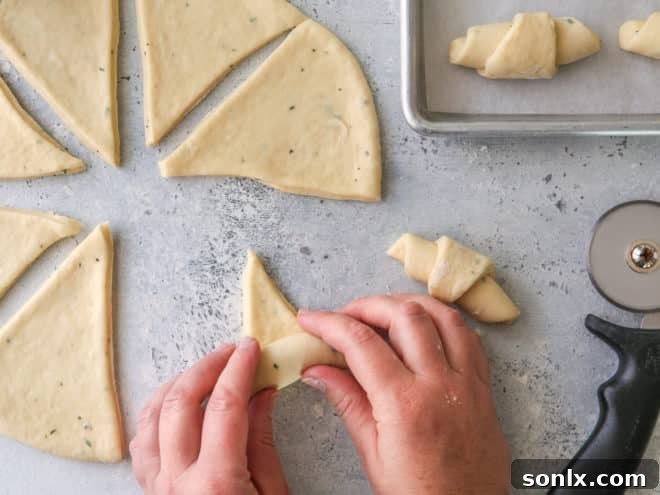
Crescent rolls, with their distinctive curved shape and often flaky layers, are a truly elegant addition to any meal. This method deviates from individual dough portions, instead relying on rolling out a larger piece of dough and cutting it into triangles before rolling. This gives them their characteristic airy, layered texture and iconic shape.
- Roll Out the Dough: Instead of dividing your entire dough into individual portions, split the dough in half. On a lightly floured surface, roll out each half into a large circle, aiming for a thickness of approximately ½ inch. Strive for an even thickness across the entire circle.
- Slice into Triangles and Roll: Using a pizza cutter or a sharp knife, cut each large dough circle into 6 equal triangular pieces, much like slicing a pie. Starting from the widest end of each triangle, gently roll the dough upwards towards the pointed tip. Ensure the pointed end is tucked securely underneath the roll to prevent it from unfurling during proofing and baking.
- Arrange and Curve: Place the rolled crescent shapes onto a regular baking sheet lined with parchment paper. If desired, gently curve the ends of each roll inwards to accentuate the classic crescent moon shape. Leave adequate space between each for expansion.
Tying Delightful Knotted Rolls
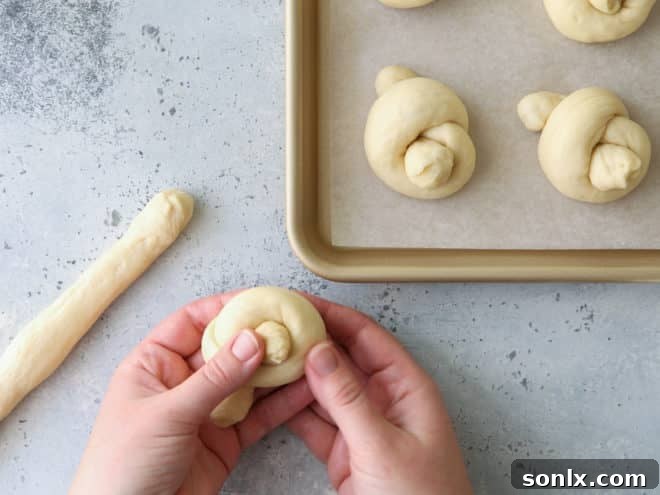
Knotted rolls are a fun and visually interesting alternative, offering a rustic yet sophisticated appearance. While they might look intricate, tying a dough knot is surprisingly simple and creates a pleasing texture that’s perfect for soaking up gravies or butter. Their unique shape also allows for more crispy edges, a texture many find irresistible.
- Form into a Rope: Take one of your evenly portioned dough balls. Gently roll and stretch it on a lightly floured surface into a rope-like shape, aiming for a length of about 6-8 inches. If your dough resists stretching and seems to snap back, cover it loosely with plastic wrap and let it rest for 5-10 minutes. This allows the gluten to relax, making it easier to stretch without tearing.
- Tie a Simple Knot: Using both hands, carefully form the dough rope into a simple overhand knot. You can either leave the ends exposed or, for a neater look, tuck them slightly underneath the roll. Don’t worry if your first few knots aren’t perfect; practice makes perfect!
- Arrange for Baking: Place your beautifully tied knotted rolls onto a regular baking sheet lined with parchment paper. Ensure there’s enough space between each knot for them to rise without touching too much, allowing their unique shape to develop fully.
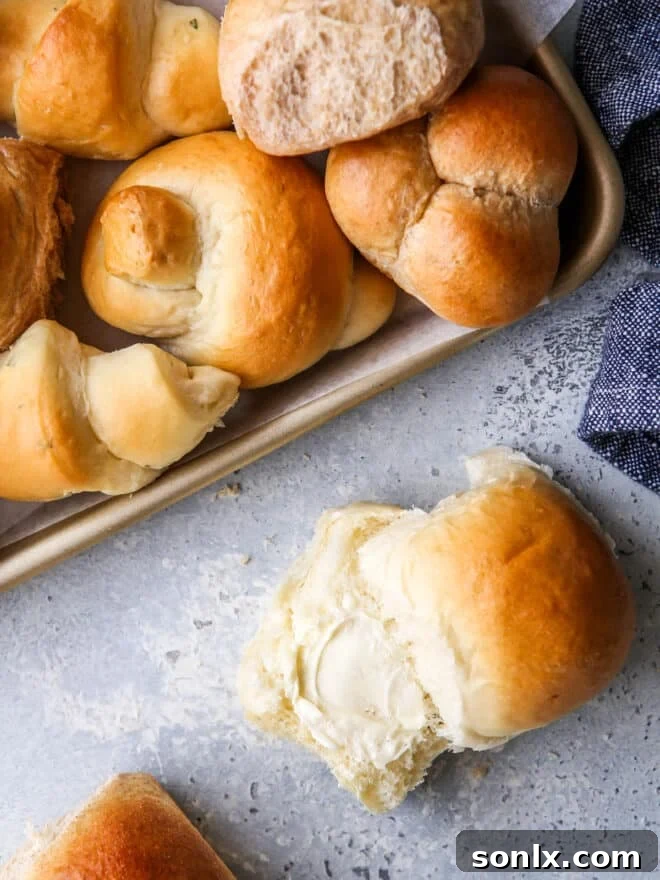
Now that your rolls are beautifully shaped, the final steps are to allow them to rise one more time (the “second proof”) and then bake them to golden perfection! This last rise is crucial for light, airy rolls. For my full, detailed dinner roll recipe, along with extensive tips for baking the best, most tender rolls, be sure to consult my Ultimate Dinner Roll Guide.
Mastering Your Dough: Advanced Shaping Tips & Techniques
Beyond the basic steps, a few expert tips can make all the difference in achieving consistently perfect and visually stunning dinner rolls. These insights will help you handle your dough with confidence and finesse, ensuring a delightful outcome every time.
- Keep Dough Covered: Always cover any portions of dough you’re not actively working with a clean kitchen towel or a sheet of plastic wrap. This prevents the dough from drying out and forming a crust, which can make it difficult to shape and lead to tough spots in the final product.
- The Value of a Kitchen Scale: While not strictly mandatory for every recipe, using a kitchen scale is an absolute game-changer. It ensures each dinner roll is precisely the same size, guaranteeing they bake evenly and look uniformly professional. This small investment can significantly improve your baking consistency.
- Strategic Flour Usage: Lightly flour your hands and your work surface only as needed if the dough is particularly sticky. Resist the urge to over-flour, as too much extra flour can dry out your dough and make the rolls dense. Often, a slightly tacky, unfloured surface provides just the right amount of grip to help create tension and shape the dough effectively.
- Handle with a Gentle Touch: When shaping, always use a gentle hand. You’ve worked hard to develop beautiful air pockets during the rising process; handling the dough too roughly can deflate these bubbles, resulting in less airy and heavier rolls. Think of it as gently coaxing the dough into shape rather than forcing it.
- Embrace Practice for Perfection: Don’t be discouraged if your first few attempts at shaping don’t look exactly like the pictures. Bread shaping is a skill that improves with practice! The more rolls you make, the more intuitive the process will become, and the more confident you’ll feel. Each roll is a learning opportunity.
Beyond the Basics: More Inspiring Roll Recipes
If you’re eager to explore more delicious variations and expand your roll-baking repertoire, here are some other fantastic recipes to try. Each offers a unique flavor profile and experience, building on the fundamental skills you’ve just learned.
- Easy No-Knead Fairy Crescent Rolls
- Soft White Dinner Rolls
- Honey Whole Wheat Dinner Rolls
- Garlic and Herb Crescent Rolls
- Potato Dinner Rolls
Disclosure: This post was first published in November 2021 in partnership with Red Star Yeast. All opinions are my own, as always. Thank you for supporting partnerships with brands I believe in.