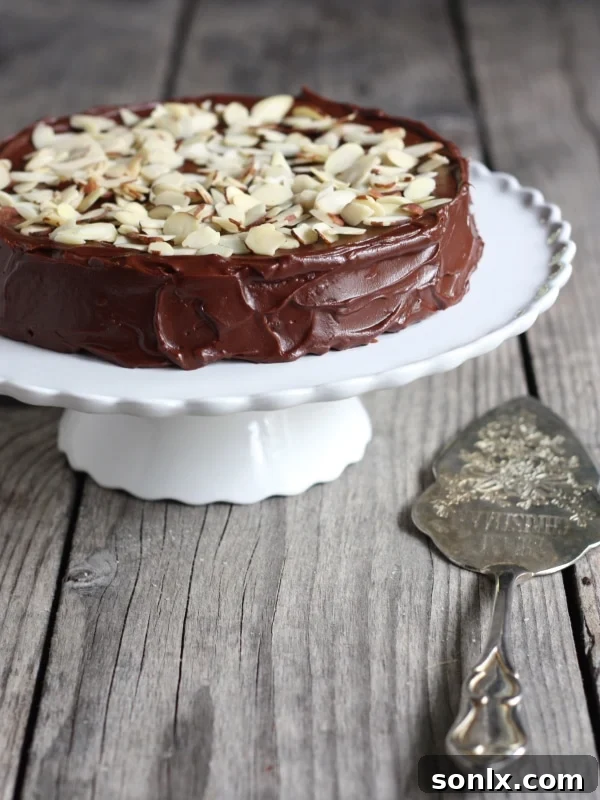
Julia Child’s Decadent Chocolate Almond Cake: A Timeless Indulgence
Prepare to discover your new favorite dessert: Julia Child’s Chocolate Almond Cake. This culinary masterpiece is an ode to richness and decadence, promising an unforgettable experience with every bite. Its signature lies in a perfectly undercooked center, creating a luscious, fudgy texture that will have you craving more long after the last crumb is gone.
Finding Comfort and Joy in the Kitchen
After a rejuvenating two-week vacation, there’s a unique pleasure in returning home and settling back into familiar rhythms. The simple rituals – Monday grocery shopping, Thursday laundry, Friday pizza night – provide a comforting anchor. But for a passionate baker and cook, nothing quite compares to the joy of stepping back into the kitchen. The familiar scent of spices, the hum of the oven, the meditative process of creating something delicious from scratch – it all feels like a warm embrace after time away. It was this desire for comforting familiarity and indulgent creation that led me back to a beloved classic.
For weeks leading up to this, my blog had been a platform for delving into more analytical topics, from the intricate world of sugar and its substitutes to the practical art of home canning. While these informative posts are valuable, I felt a strong urge to share something purely, unadulteratedly beautiful and utterly delicious. Something that speaks to the soul and offers an escape into pure culinary delight. This chocolate cake, a true indulgence, was the perfect answer.
The Magic of Julia Child: Mastering a Classic
This isn’t just any chocolate cake; it’s Julia Child’s celebrated chocolate almond cake, a recipe pulled directly from her legendary cookbook, Mastering the Art of French Cooking. If you were ever to commit to baking only one chocolate cake for the rest of your life, this might very well be the one. It eschews the elaborate, multi-layered constructions, complicated fillings, and intricate decorations often associated with celebratory cakes. And the remarkable truth is, it needs none of that. Its perfection lies in its elegant simplicity and profound flavor profile.
Julia Child, with her characteristic no-nonsense approach and profound understanding of French cuisine, revolutionized home cooking. Her recipes, while seemingly sophisticated, were always presented with clarity and a focus on fundamental techniques, empowering generations of cooks. This chocolate almond cake is a prime example of her genius: a seemingly simple dessert that delivers immense satisfaction through precise measurements and thoughtful execution. The combination of rich chocolate and subtle almond creates a depth of flavor that is both comforting and sophisticated.
My Slight Adaptation: A More Generous Frosting
In presenting this recipe, I’ve largely adhered to Julia Child’s original instructions, preserving its authentic essence. However, I did make one minor, yet significant, adjustment: I doubled the quantity of the chocolate butter frosting. I found that the original frosting recipe barely sufficed to cover half the cake, and a cake this magnificent deserves a generous blanket of its velvety companion. The doubled recipe ensures ample frosting to lavishly coat the entire cake, delivering that perfect balance of intense chocolate cake and smooth, buttery icing. The recipe provided below reflects this modification, but for those who prefer a more restrained frosting layer, feel free to halve the icing recipe.
Baking Tip: Mastering the Art of Folding Ingredients
“Folding” is a crucial, gentle technique used in baking to combine delicate mixtures, such as whipped egg whites or whipped cream, into a thicker batter without deflating the air that has been painstakingly incorporated. This method is vital for achieving light and airy textures in cakes, soufflés, and mousses. Here’s a breakdown of how to execute it perfectly:
- **Initiate with Lightening the Batter:** Begin by adding approximately one-third of your lighter mixture (e.g., whipped egg whites) to the denser batter. This initial addition helps to loosen the thicker batter, making it easier to incorporate the remaining lighter mixture without overworking it.
- **The Essential “Cut and Fold” Motion:** Using a rubber spatula, cut straight down through the mixture to the bottom of the bowl. Once at the bottom, scoop the mixture from the bottom upwards and fold it over on top of itself. This motion brings the heavier batter from the bottom to the top, allowing it to mix with the lighter addition.
- **Rotate and Repeat:** After each cut and fold, rotate the bowl a quarter turn. This ensures that the entire batter is evenly incorporated, preventing pockets of unmixed ingredients. Repeat the cut-and-fold motion until the initial portion of the lighter ingredients is just combined.
- **Incorporate in Batches:** Continue folding in the remaining lighter mixture in two or three smaller batches. This piecewise addition prevents the delicate mixture from becoming overwhelmed and deflated by the heavier batter. Always fold just until no streaks of the lighter mixture are visible, being careful not to overmix, which can lead to a dense cake.
Here’s a quick video demonstration if you need a visual guide to perfect this technique!
Chocolate Almond Cake
Pin Recipe
Leave a Review
Ingredients
For the cake:
- 4 ounces semisweet or bittersweet chocolate, chopped (113 grams)
- 2 tablespoons rum or coffee
- ½ cup unsalted butter, at room temperature (113 grams)
- ⅔ cup + 1 tablespoon granulated sugar, divided (132 grams)
- 3 large eggs, separated
- Pinch of salt
- ⅓ cup almond flour/meal (35 grams)
- ¼ teaspoon almond extract
- ½ cup cake flour, sifted (57 grams)
For the icing:
- 4 ounces semisweet or bittersweet chocolate, chopped (113 grams)
- ¼ cup rum or coffee (60 ml)
- ¾ cup unsalted butter, at room temperature (170 grams)
- Slivered almonds for garnish
Instructions
To make the cake:
- Preheat oven to 350°F (175°C). Butter and flour an 8-inch round cake pan thoroughly and line the bottom with parchment paper for easy release.
- In a small heatproof bowl, combine the chopped chocolate with the coffee or rum. Place the bowl over a saucepan of simmering water (a double boiler setup), ensuring the bottom of the bowl does not touch the water. Stir gently as the chocolate melts until it is smooth and fully combined. Remove from heat and set aside to cool slightly.
- In the bowl of a stand mixer fitted with a paddle attachment, beat the softened unsalted butter and ⅔ cup of granulated sugar together on medium speed until the mixture is pale and creamy, light in color, and fluffy. This can take about 3-5 minutes. Add the 3 egg yolks one at a time, beating well after each addition until the mixture is thick and emulsified. Incorporate the cooled melted chocolate, mixing until just combined. Stir in the almond extract and almond flour/meal, mixing until the ingredients are fully integrated into the batter. Scrape down the sides of the bowl as needed.
- In a separate clean bowl of the stand mixer, fitted with a whisk attachment, whip the 3 egg whites and a pinch of salt on high speed until they become foamy. Gradually add the remaining 1 tablespoon of granulated sugar, continuing to whip until stiff, glossy peaks form. The egg whites should hold their shape when the whisk is lifted.
- Gently lighten the chocolate batter by adding about ¼ of the whipped egg whites and folding them in until just combined. This step helps to temper the heavier batter. Then, add the remaining whipped egg whites in 3 additions, alternating with the sifted cake flour. Using the folding technique described above, gently incorporate these ingredients. It’s crucial to fold only until the last streaks of egg white disappear to maintain the cake’s light texture; do not overmix.
- Pour the delicately prepared batter into your buttered, floured, and parchment-lined 8-inch cake pan. Bake in the preheated oven for approximately 25 minutes. The cake is done when the edges are set and firm, but the center still retains a slight jiggle when the pan is gently bumped. This indicates the perfect fudgy texture.
- Allow the cake to cool in the pan for about 10 minutes before running a thin knife around the edges to loosen it. Invert the cake onto a wire rack to cool completely. Ensuring the cake is fully cooled before frosting is key to preventing the icing from melting.
To make the icing (doubled recipe):
- In a small heatproof bowl, combine the chopped chocolate and coffee or rum. Place the bowl over a saucepan of simmering water (a double boiler). Stir as the chocolate melts until it is smooth and completely incorporated. Remove from heat.
- While the chocolate mixture is still warm, add the ¾ cup of unsalted butter, one tablespoon at a time. Use a whisk to vigorously beat the butter into the chocolate. Continue whisking until the icing is completely smooth and emulsified.
- Allow the icing to cool to a spreadable consistency. This is critical for easy application. Stir the icing every 5 minutes or so to help it cool evenly and achieve the right texture. Depending on your kitchen’s temperature, this process should take approximately 15-20 minutes. It should be firm enough to hold its shape but soft enough to spread easily.
- Once the cake is fully cooled and the icing is at the right consistency, spoon the rich chocolate icing generously on top of the cake. Use an offset spatula or the back of a spoon to spread it evenly, covering the entire top surface. For a final flourish, garnish the cake with delicate slivered almonds, adding both visual appeal and a complementary crunch.
Notes
Serving Suggestions and Variations
This magnificent Chocolate Almond Cake is a showstopper on its own, but a few thoughtful accompaniments can elevate the experience even further. A dusting of high-quality cocoa powder or a sprinkling of confectioners’ sugar adds a simple yet elegant finish. For a touch of contrast, consider serving slices with a dollop of freshly whipped cream, a scoop of vanilla bean ice cream, or a vibrant berry compote. The tartness of raspberries or blackberries beautifully cuts through the cake’s richness, creating a delightful balance of flavors.
While Julia Child’s original recipe is perfect as is, adventurous bakers might explore subtle variations. For instance, instead of rum, a good quality brandy or orange liqueur (like Grand Marnier) could be used to infuse a different aromatic note. You could also experiment with a combination of dark and milk chocolate for a slightly sweeter, less intense flavor profile. For an extra textural element, consider adding a thin layer of toasted, chopped hazelnuts or pecans to the top of the frosting before serving. The key is to maintain the integrity of the cake’s fudgy heart while gently exploring complementary flavors.
Why This Cake Endures: The Legacy of a Classic
Julia Child’s Chocolate Almond Cake isn’t just a dessert; it’s a testament to the enduring power of classic French baking. Its appeal lies in its straightforward elegance and the sheer depth of its flavor. In a world often chasing the next viral food trend, this cake reminds us of the profound satisfaction found in a perfectly executed, timeless recipe. The fudgy interior, the rich chocolate, the subtle nutty undertones from the almond flour – each component plays a vital role in creating a harmonious whole. It’s a cake that satisfies both the simplest craving for chocolate and the sophisticated palate’s desire for an unforgettable culinary experience.
Baking this cake is more than just following instructions; it’s an act of culinary history, a connection to a legend who taught us that with a little patience and a lot of butter, anyone can master the art of French cooking. Whether you’re an experienced baker or a novice taking on a classic for the first time, this Chocolate Almond Cake promises a rewarding journey and a truly delicious destination.