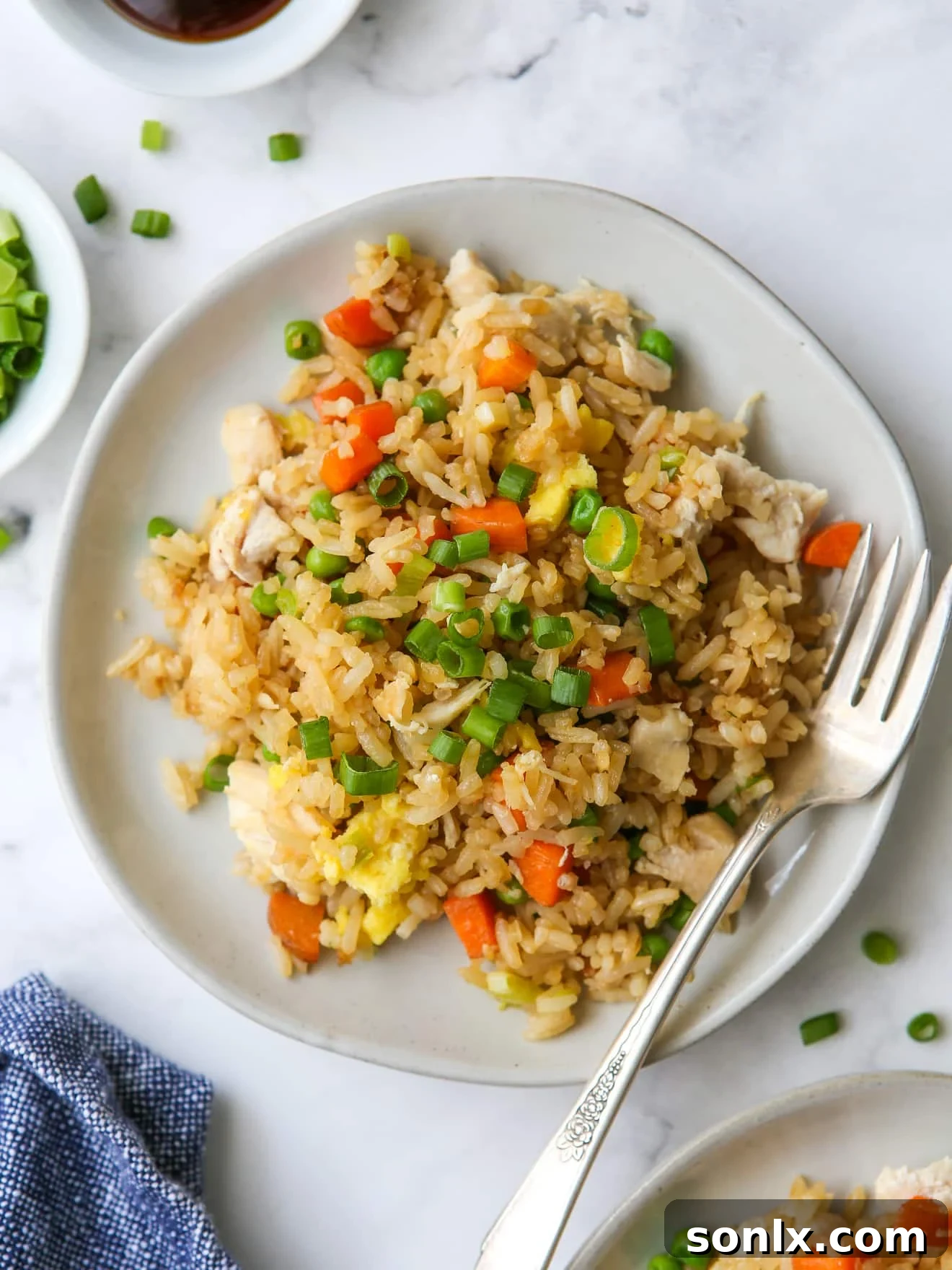
Chicken fried rice, a quintessential comfort food, offers a perfect blend of fluffy rice, tender chicken, an assortment of crisp vegetables, and savory scrambled eggs. This classic dish is not just incredibly satisfying and delicious; it’s also remarkably easy to prepare at home in under 30 minutes, making it an ideal choice for busy weeknights.
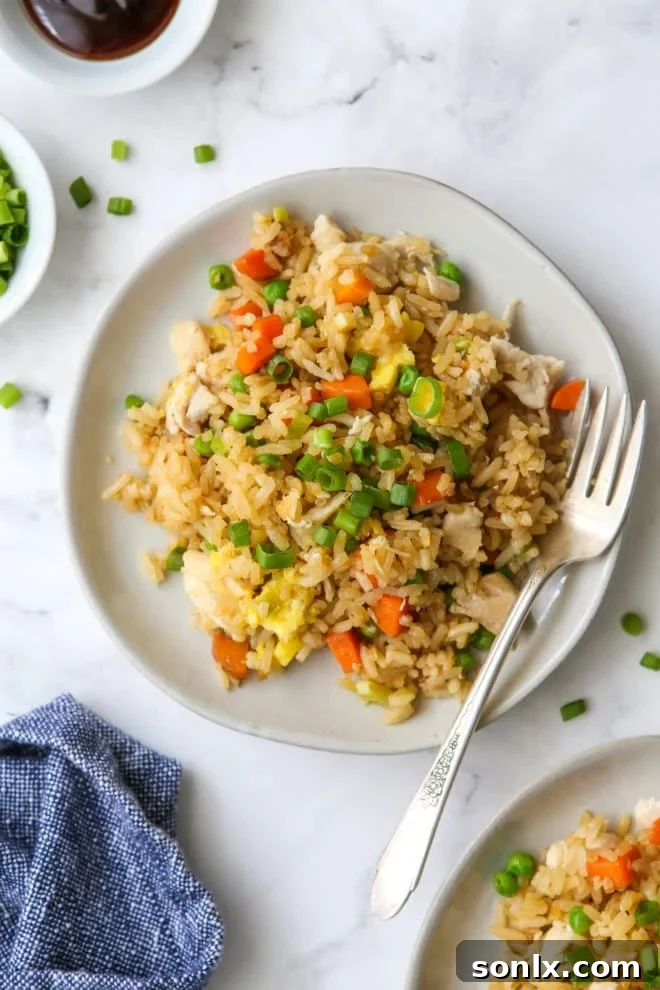
Fried rice truly is the ultimate weeknight hero. Its rapid preparation, endless versatility, and incredible ability to transform leftovers into a fresh, exciting meal make it a staple in countless households. More than just a convenience, it’s a dish that consistently brings smiles to the table. Everyone loves the rich, savory flavors and satisfying textures that come together in a bowl of perfectly executed fried rice.
This chicken fried rice recipe holds a special place in our home. My children genuinely cheer whenever it’s on the menu, and I love how it allows me to creatively use up whatever fresh produce and proteins I have on hand in the fridge. The big, bold flavors are a hit with the whole family, and the ease of preparation is a lifesaver on hectic evenings. Join us as we uncover the secrets to crafting the best homemade chicken fried rice – a dish that will quickly become a favorite in your culinary repertoire!
Table of Contents
- The Allure of Homemade Chicken Fried Rice
- Unlocking the Secrets to Restaurant-Quality Fried Rice at Home
- Essential Ingredients for Your Perfect Chicken Fried Rice
- Step-by-Step Guide: Mastering Chicken Fried Rice in Minutes
- Endless Possibilities: Creative Variations for Your Fried Rice
- Pro Tips for Your Best Fried Rice Ever
- Your Go-To Chicken Fried Rice Recipe
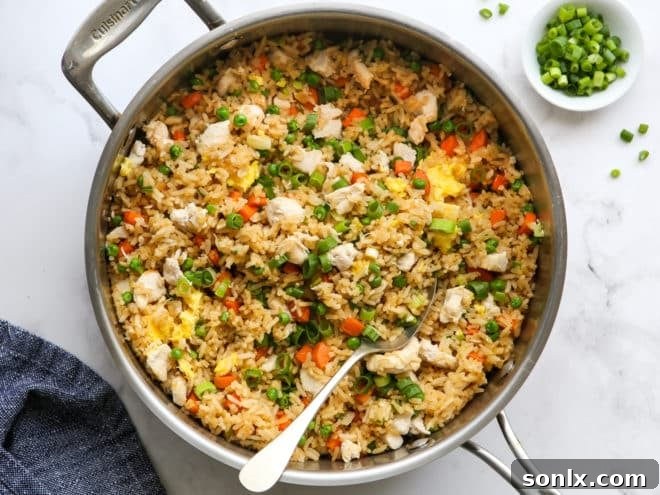
The Allure of Homemade Chicken Fried Rice
There’s something uniquely comforting about a steaming plate of chicken fried rice. It’s more than just a meal; it’s a culinary experience that blends textures and flavors into a harmonious whole. While takeout is convenient, making chicken fried rice at home allows for unparalleled customization, freshness, and control over ingredients. You can ensure every component is cooked to perfection, seasoned to your liking, and tailored to suit any dietary preference or craving.
Beyond the taste, homemade fried rice offers several compelling benefits. It’s often more cost-effective than ordering out, using simple pantry staples and ingredients you might already have. It’s also a fantastic way to minimize food waste by repurposing leftover rice and forgotten vegetables from the back of your fridge. Furthermore, when you cook at home, you dictate the oil, salt, and sauce content, making it a healthier option for your family. The satisfaction of creating a restaurant-quality dish from scratch in your own kitchen is an unbeatable feeling.
Unlocking the Secrets to Restaurant-Quality Fried Rice at Home
For years, I wondered why my homemade fried rice, though tasty, never quite matched the simple yet exquisite flavor of my favorite Asian restaurant versions. After much experimentation, I finally cracked the code, and I’m thrilled to share these transformative tips with you. These aren’t just minor adjustments; they are fundamental techniques that elevate your fried rice from good to truly superb.
The Golden Rule: Don’t Overcrowd Your Pan
This is perhaps the most crucial secret. When too many ingredients are crammed into a skillet or wok, they don’t fry; they steam. Steaming leads to limp vegetables, soggy rice, and bland, grayish protein. To achieve those desirable slightly crisp edges and perfectly sautéed textures, you must cook ingredients in stages. This ensures each component gets direct contact with the hot surface, allowing it to brown beautifully and develop its full flavor potential. Patience and working in batches will reward you with superior results.
Build Flavor with Every Step: Seasoning as You Go
Just as important as cooking in stages is seasoning each ingredient as you add it to the pan. Don’t wait until the very end to dump in all the salt and sauces. By seasoning your chicken as it browns, your eggs as they scramble, and your vegetables as they soften, you infuse flavor directly into each component. This layering approach creates a much deeper, more complex, and well-rounded taste profile for the entire dish, preventing any single ingredient from tasting flat or unseasoned.
Beyond Soy Sauce: The Trio of Asian Flavors
While soy sauce is undeniably a cornerstone of fried rice, relying solely on it can lead to a one-dimensional taste. The true magic happens when you introduce additional layers of umami and depth. Sesame oil, with its distinctive nutty aroma, adds a crucial fragrant element that immediately signals “fried rice.” Oyster sauce, a thick, dark condiment, contributes a wonderful savory-sweetness and a rich mouthfeel, rounding out the Asian flavor profile beautifully. Using this powerful trio—soy sauce, sesame oil, and oyster sauce—creates a complex, balanced, and truly authentic taste that will transport your taste buds.
While this recipe might not adhere to every single traditional technique of authentic Chinese fried rice, it delivers a universally loved flavor profile that is absolutely superb and worthy of a regular spot in your meal rotation. For those interested in a deeper dive into authentic Chinese fried rice methods, I highly recommend exploring resources like Taste Asian Food’s educational post for further culinary enlightenment.
Essential Ingredients for Your Perfect Chicken Fried Rice
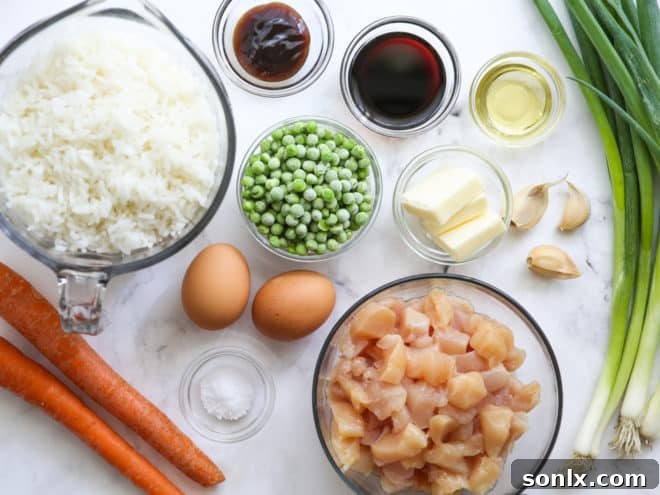
Gathering your ingredients before you begin cooking, known as “mise en place,” is crucial for a smooth and swift fried rice preparation. Here’s a breakdown of what you’ll need and why each component is vital for the best flavor and texture:
The Foundation: Quality Rice Matters
- Cooked Long-Grain Rice (cold, day-old recommended): This is the star of the show. Using cold, leftover rice is non-negotiable for fried rice. Freshly cooked, warm rice contains too much moisture, which leads to a sticky, mushy texture. Cold rice, on the other hand, is drier and separates easily, allowing for those perfectly distinct, slightly crispy grains when fried. Long-grain varieties like jasmine or basmati work best, as they don’t clump as much as short-grain rice. You can use either white or brown rice based on your preference.
Protein Power: Succulent Chicken and Versatile Alternatives
- Boneless Chicken Breast or Thighs: Chicken provides a lean, tender, and flavorful protein base. Both breast and thigh meat work wonderfully; thighs tend to stay moister due to their higher fat content. Ensure it’s chopped into small, uniform ½-inch pieces for even cooking and easy integration into the rice.
- Eggs: Eggs add a wonderful richness, color, and fluffy texture to the dish. They are quickly scrambled and incorporated, becoming little pockets of savory goodness throughout the rice.
Vibrant Veggies: Freshness and Crunch
- Carrots: Finely diced carrots add a touch of sweetness, vibrant color, and a pleasant crunch.
- Peas (frozen, no thawing needed): Frozen peas are a convenient addition, bringing a pop of green and a mild, sweet flavor. There’s no need to thaw them; they will cook quickly in the hot pan.
- Green Onions (scallions): These provide a fresh, pungent, and slightly oniony flavor. Divided into white/light green parts for cooking and bright green tops for garnish, they add both flavor depth and visual appeal.
- Garlic: Minced garlic is essential for building an aromatic base, contributing a foundational savory flavor that is characteristic of good fried rice.
The Flavor Architects: Sauces for Depth and Umami
- Salted Butter: While not traditional in all Asian stir-fries, butter adds a luxurious richness and helps achieve a beautiful browning on the ingredients. Using it in combination with sesame oil provides the best of both worlds – depth and aromatic notes.
- Sesame Oil: This is a non-negotiable ingredient. Toasted sesame oil, in particular, delivers a distinct, nutty aroma that instantly elevates the dish and is crucial for that authentic Asian flavor profile.
- Soy Sauce: The primary seasoning, soy sauce provides saltiness, umami, and color. Use a good quality regular or low-sodium soy sauce.
- Oyster Sauce: This thick, savory-sweet sauce is a game-changer. It adds incredible depth, a hint of sweetness, and a glossy sheen to the rice, creating a complex flavor that sets homemade fried rice apart.
- Salt: Used for seasoning individual components as they cook, enhancing their natural flavors before the final sauces are added.
Step-by-Step Guide: Mastering Chicken Fried Rice in Minutes
While this recipe involves several hands-on steps, the entire process is incredibly quick once you start cooking, taking only about 15-20 minutes. The key to success is thorough preparation, so have all your ingredients ready and chopped before you even turn on the stove.
Preparation is Key: The “Mise en Place” Principle
- Have all your ingredients ready: Since the cooking process moves very quickly, it is crucial to have everything chopped, measured, and placed within arm’s reach. This includes chopping chicken, whisking eggs, dicing carrots, slicing scallions, mincing garlic, and preparing your sauces. This streamlined approach prevents frantic searching and ensures a smooth cooking experience.
Cooking in Stages: The Art of the Stir-Fry
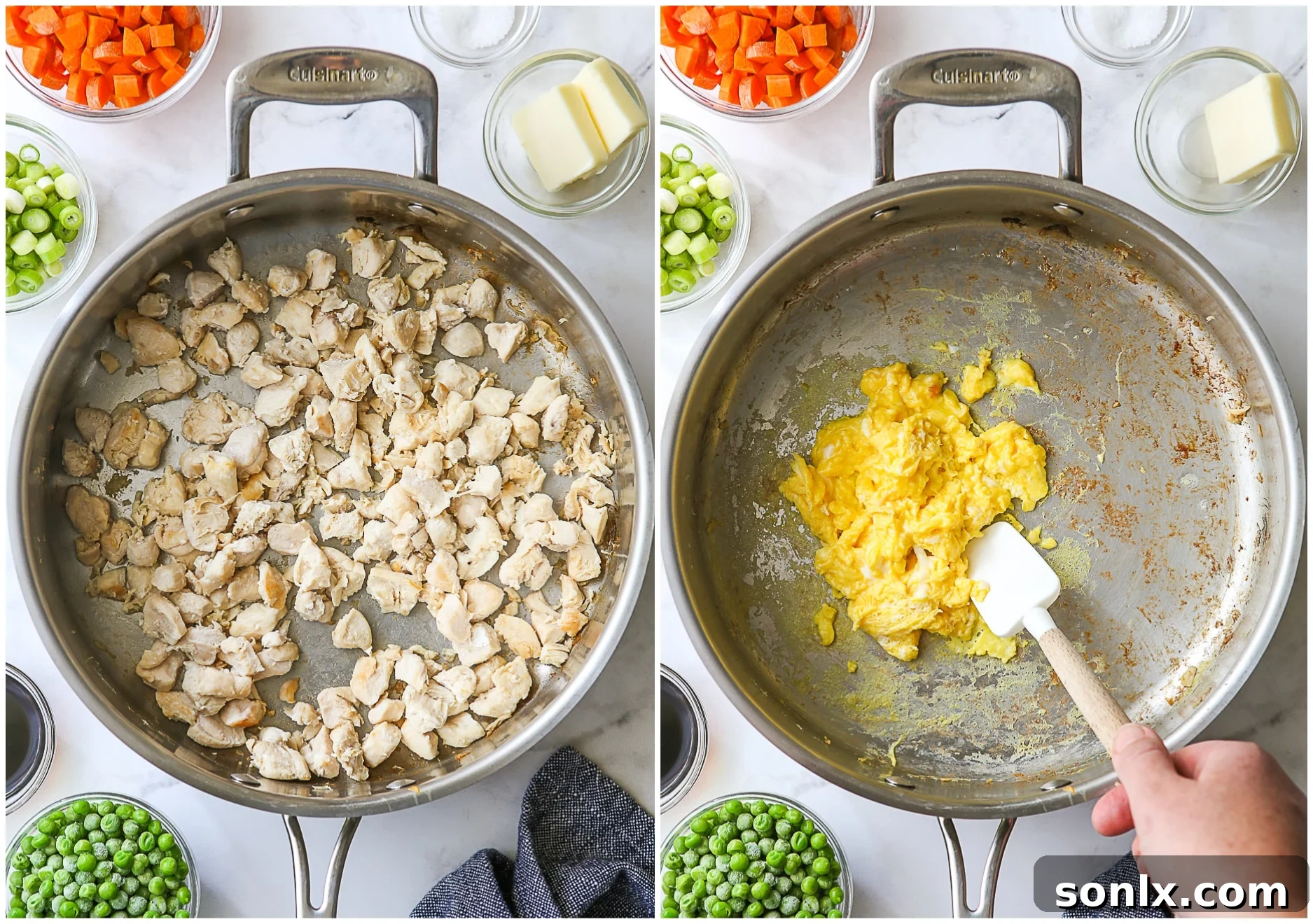
- Brown chicken, scramble eggs, and cook veggies, all separately: This staged cooking method is my preferred way to prevent overcrowding the pan, which leads to steamed rather than fried ingredients. It also allows you to properly season each component, building layers of flavor.

- First, melt 1 tablespoon of butter in a large skillet or wok over medium-high heat. Add your chopped chicken and season generously with salt. Cook, stirring occasionally, until the chicken is beautifully browned and no longer pink inside. Remove the chicken from the pan and set it aside.
- Next, add ½ tablespoon of butter to the same pan. Pour in the whisked eggs and season with a pinch of salt. Stir frequently as the eggs cook, creating soft, fluffy scrambled eggs. Once cooked, remove them from the pan and set aside with the chicken.
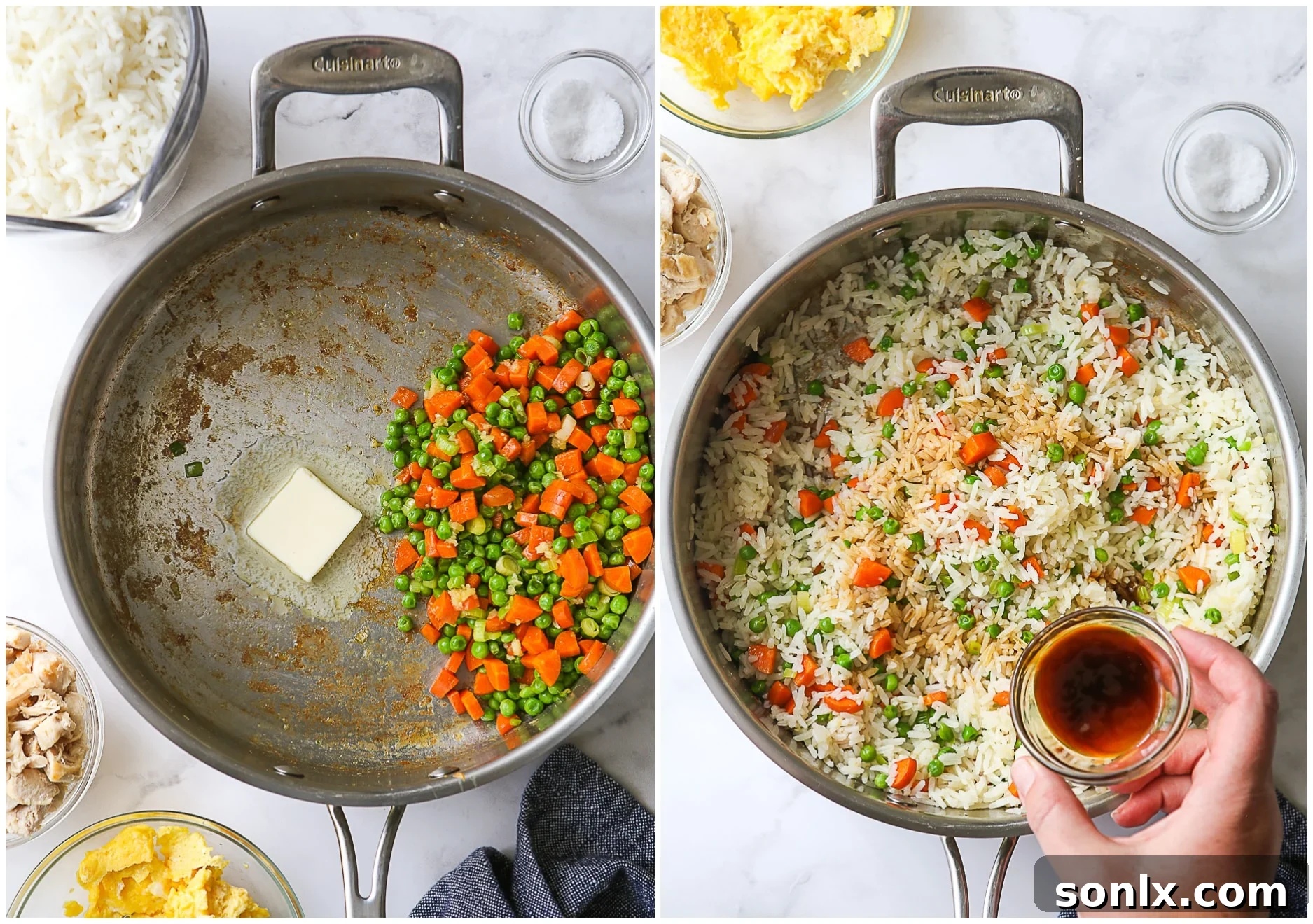
- Finally, add another ½ tablespoon of butter and the sesame oil to the pan. Add the diced carrots, frozen peas, and the white and light green parts of the scallions. Season with salt. Cook for a few minutes, stirring occasionally, until the carrots begin to soften. Add the minced garlic and cook for about 1 minute more until fragrant, being careful not to burn the garlic.
- Add cold rice: Once the vegetables are tender-crisp, add the remaining tablespoon of butter to the pan and increase the heat to high. Introduce the cold rice, breaking up any clumps with a fork. Toss the rice vigorously in the hot butter and vegetable mixture, stirring almost constantly to ensure it heats up quickly and evenly, typically in about 2 minutes. For crispier rice, allow it to rest undisturbed for short intervals (about 30 seconds) between stirs to develop a slight crust.
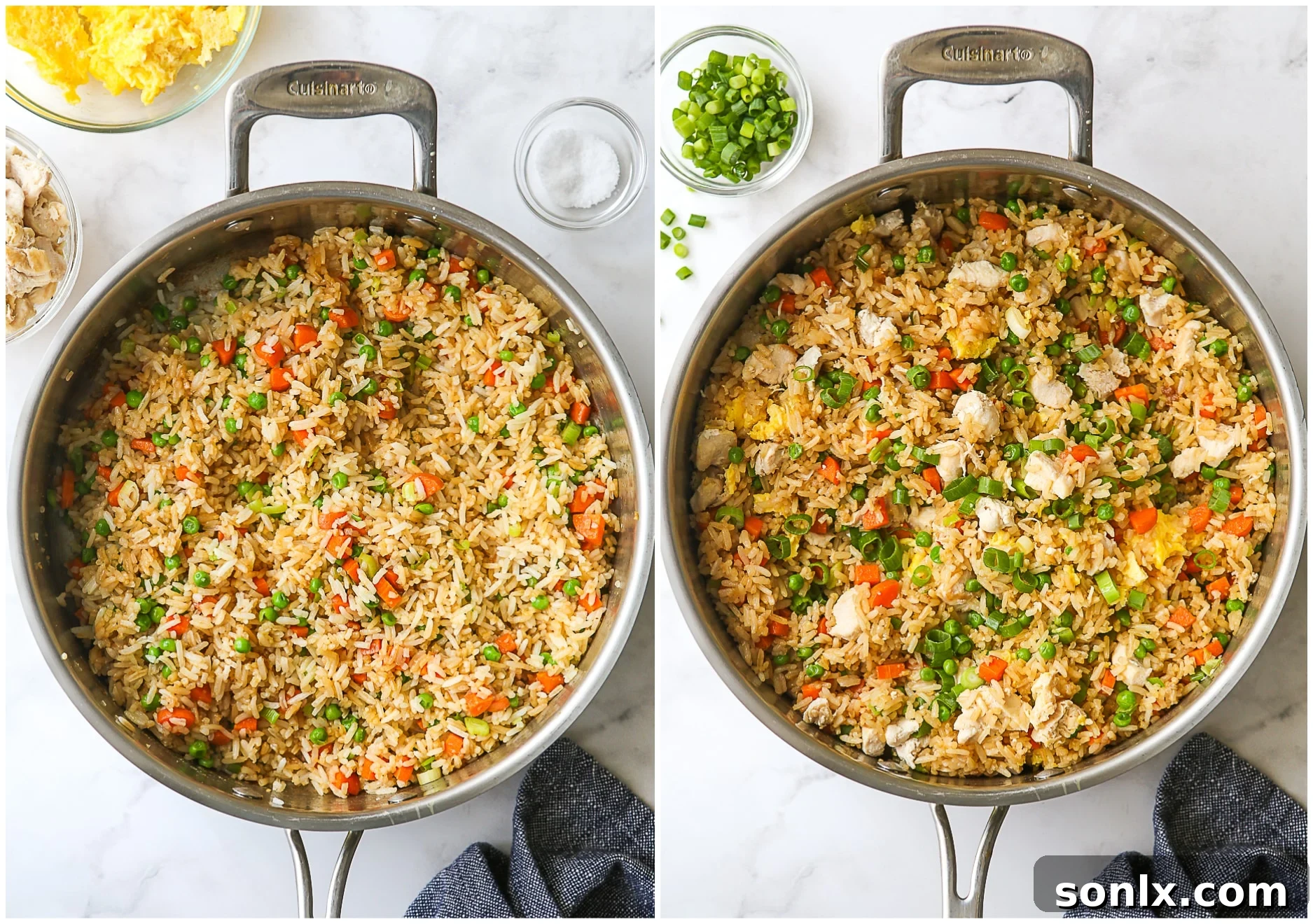
- Add sauces and return everything to the pan: In a small bowl, whisk together the soy sauce and oyster sauce. Pour this savory mixture evenly over the hot rice. Stir quickly and thoroughly until the rice is uniformly coated and the sauce is absorbed. Immediately return the cooked chicken and scrambled eggs to the pan. Add the bright green tops of the scallions. Stir everything together for about a minute, ensuring all ingredients are well combined and heated through.
- Serve immediately: Fried rice is best enjoyed fresh off the wok, when the ingredients are at their peak of texture and flavor. Scoop generous portions onto plates and savor your homemade masterpiece!
Endless Possibilities: Creative Variations for Your Fried Rice
One of the greatest joys of making fried rice is its incredible adaptability. This recipe serves as a fantastic base, but don’t hesitate to get creative and customize it to your taste or what you have on hand.
Protein Swaps
Easily adapt this recipe by swapping out the chicken or adding other proteins:
- Make it vegetarian: Simply omit the chicken entirely for a delightful vegetable fried rice. You can also boost the protein by adding pan-fried tofu or tempeh. Cut tofu into cubes, press out excess water, and fry until golden and crispy before adding to the rice.
- Shrimp Fried Rice: Replace chicken with 1 lb of peeled and deveined shrimp. Cook the shrimp quickly until pink and opaque, then remove and set aside as you would the chicken and eggs.
- Beef or Pork Fried Rice: Thinly sliced beef (like sirloin or flank steak) or pork (tenderloin or shoulder) can be stir-fried until browned and tender. Marinating the meat for 15-20 minutes beforehand with a little soy sauce and cornstarch can enhance its tenderness and flavor.
Vegetable Enhancements
Beyond carrots and peas, almost any dice-able vegetable can be incorporated. Aim for about 2 cups of additional vegetables to maintain balance:
- Green beans, edamame, or broccoli florets: Add these sturdy vegetables along with the carrots to allow them enough time to soften.
- Zucchini, corn, or bell peppers: These cook faster, so add them a few minutes after the carrots or alongside the garlic to prevent overcooking.
- Mushrooms: Sliced mushrooms add an earthy umami flavor. Sauté them separately or with the other vegetables until tender.
- Asparagus: Cut into 1-inch pieces, asparagus adds a fresh, slightly bitter note and a crisp texture.
Flavor Boosters & Global Twists
Elevate the flavor profile with these exciting additions:
- Sweetness and Tang: Diced pineapple or mango added towards the end of cooking can introduce a burst of tropical sweetness, creating a Hawaiian-style fried rice.
- Fresh Herbs: Fresh Thai basil or cilantro stirred in just before serving adds a wonderful aromatic freshness.
- Heat: For a spicy kick, add finely diced jalapeno or other chile peppers along with the garlic. A drizzle of chili oil or a dollop of chili crisp on top before serving provides a fantastic spicy, crunchy topping.
- Ginger: A teaspoon of grated fresh ginger added with the garlic will enhance the aromatic foundation.
- Curry Powder: A pinch of curry powder can transform your fried rice into a uniquely flavored dish with a warm, earthy spice.
Pro Tips for Your Best Fried Rice Ever
Achieving truly excellent fried rice consistently comes down to a few key techniques and considerations. Keep these expert tips in mind to ensure every batch is a winner.
Rice Perfection
- Yield reminder: Generally, 1 cup of dried rice will yield approximately 3 cups of cooked rice. For this recipe, 3-4 cups of cooked rice works perfectly. If you’re cooking rice specifically for fried rice, consider my post on how to make perfect steamed rice, then let it cool completely.
- The importance of cold rice: I cannot stress this enough – always use cold, day-old rice. Warm or freshly cooked rice is too moist and will turn your fried rice into a sticky, unappetizing mush. If you don’t have leftovers, cook your rice at least 2 hours ahead of time and refrigerate it uncovered (or spread thin on a tray) to dry it out. Fluff it with a fork before adding to the pan to break up any clumps.
Equipment Matters
- Don’t skip the sesame oil: Toasted sesame oil is a powerhouse of flavor and absolutely worth investing in if you don’t already have it. Its distinctive nutty aroma is a signature of Asian cuisine and provides unparalleled depth to your fried rice.
- Wok vs. skillet: If you own a wok, this is its moment to shine! A wok’s unique shape allows for excellent heat distribution and provides ample surface area to toss and stir ingredients rapidly without overcrowding. This leads to quick, even cooking and beautiful caramelization. If you don’t have a wok, a large, heavy-bottomed skillet (like cast iron or stainless steel) with high sides will work well; just be mindful of cooking in smaller batches if necessary.
Storage and Reheating Hacks
- Optimal storage: Leftover fried rice stores wonderfully in an airtight container in the refrigerator for up to 3-4 days.
- Reheating for freshness: To reheat, add a splash of water (about a tablespoon per serving) to the fried rice before microwaving. The steam from the water will help rehydrate the rice, preventing it from drying out and ensuring it maintains a pleasant texture. You can also reheat it in a skillet over medium heat with a tiny bit of oil, stirring occasionally, until warmed through.
Your Go-To Chicken Fried Rice Recipe
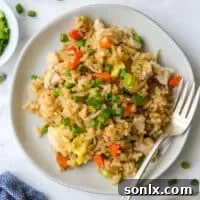
Rating: 5 from 1 review
Chicken Fried Rice
Servings: 6 servings
Prep Time: 10 mins
Cook Time: 20 mins
Total Time: 30 mins
Ingredients
- 3 tablespoons salted butter, divided
- 1 lb boneless skinless chicken breast, chopped into ½-inch pieces
- Salt, as needed
- 2 large eggs, whisked
- 1 tablespoon sesame oil
- 2 medium carrots, chopped in ¼-inch pieces
- ½ cup peas (frozen work fine, do not thaw)
- 3 scallions, sliced and divided
- 3 cloves garlic, minced
- 3-4 cups cooked long-grained rice, cold, remove any clumps with a fork
- 3 tablespoons soy sauce
- 1 tablespoon oyster sauce
Instructions
- Melt 1 tablespoon of butter in a large skillet or wok. Add chicken and season generously with salt. Cook until browned and no longer pink. Remove from pan and set aside.
- Melt ½ tablespoon of butter in the pan and add whisked eggs. Season with salt. Stir frequently until soft scrambled. Remove from pan and set aside.
- Melt ½ tablespoon of butter in pan and add sesame oil. Add carrots, peas and the white and light green bottoms of the scallions. Season with salt. Cook for a few minutes until carrots begin to soften. Add garlic and cook for about 1 minute more.
- Add remaining tablespoon of butter to pan and increase heat. Add cold rice and toss in the butter. Stir almost constantly to ensure it heats up quickly in about 2 minutes. If you like crispier rice, let it rest a bit before stirring.
- Whisk together soy sauce and oyster sauce and pour over rice. Stir until evenly incorporated. Return chicken and scrambled eggs to the pan and stir for a minute until heated through. Stir in the bright green tops of the scallions.
- Serve immediately.
Notes
- Variations: Use other protein like shrimp, tofu, beef or pork instead of chicken. Or leave out completely for a vegetarian option. Use any dice-able vegetable you like, but aim for no more than about 2 cups.
- Storage and reheating: Fried rice will keep in the fridge for several days. Add a splash of water and reheat in the microwave.
- Sesame oil, soy sauce and oyster sauce are recommended for better Asian flavor than just using soy sauce alone. Don’t skip! You can find these ingredients in all well-stocked grocery stores (at least in the US).
Calories: 344kcal, Carbohydrates: 35g, Protein: 23g, Fat: 12g, Saturated Fat: 5g, Trans Fat: 1g, Cholesterol: 118mg, Sodium: 760mg, Potassium: 476mg, Fiber: 2g, Sugar: 2g, Vitamin A: 3826IU, Vitamin C: 9mg, Calcium: 44mg, Iron: 1mg
Cuisine: Asian
Course: Main Course
Author: Annalise Sandberg
This recipe was originally published in 2021 in partnership with Go Bold With Butter.
Final Thoughts on Your Fried Rice Journey
You now have all the tools and knowledge to create a truly delicious and satisfying chicken fried rice right in your own kitchen. This recipe is not just about following steps; it’s about understanding the principles behind a great stir-fry – the importance of high heat, careful layering of flavors, and quality ingredients. Don’t be afraid to make it your own, experimenting with different vegetables, proteins, and even a touch of heat to suit your family’s preferences.
Whether you’re looking for a quick weeknight meal, a way to use up leftovers, or simply craving that comforting taste, homemade chicken fried rice is an excellent choice. Enjoy the process, savor the amazing aromas filling your kitchen, and most importantly, delight in every bite of your perfectly crafted, flavorful masterpiece. Happy cooking!