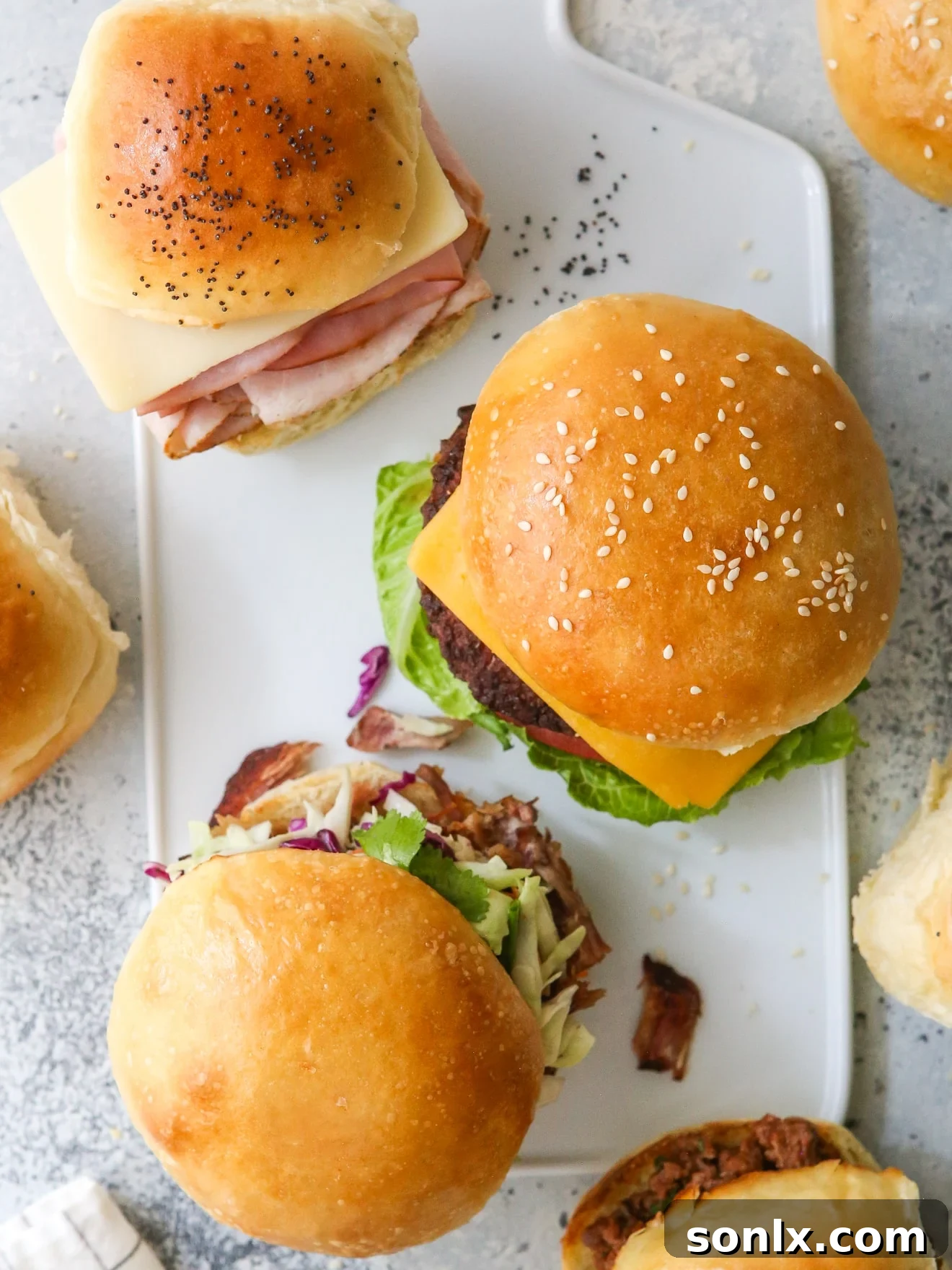
Elevate your culinary creations with the undeniable charm of homemade bread! Forget bland, store-bought options and discover the joy of baking your own incredibly soft, rich, and flavorful brioche buns. This comprehensive guide provides a single, versatile recipe that transforms into perfect sandwich rolls, classic burger buns, or delightful slider buns, making every meal an unforgettable experience. Whether you’re planning a summer barbecue, a cozy family dinner, or simply looking to impress your guests, these homemade brioche buns are guaranteed to be a game-changer.
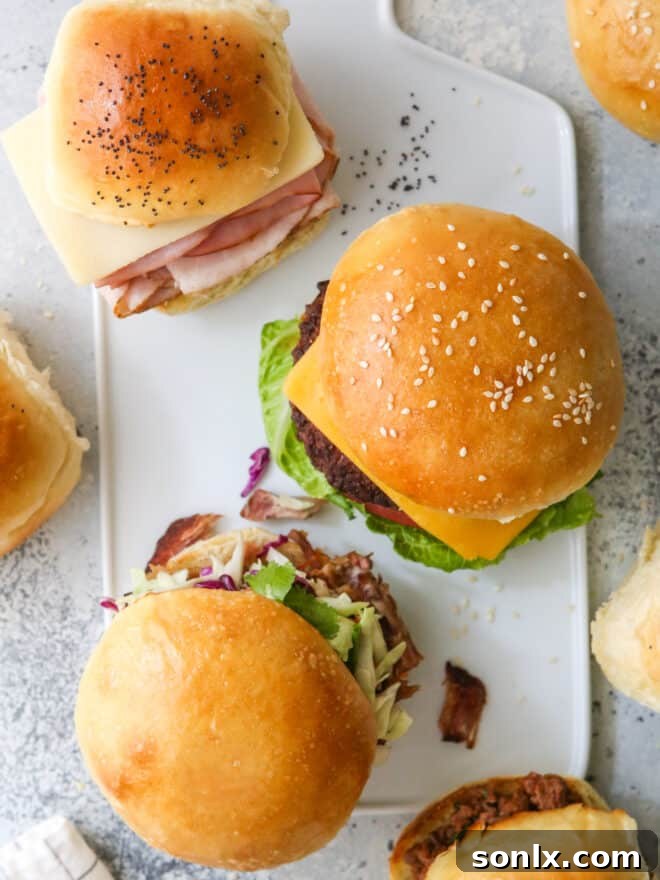
There’s a unique satisfaction that comes from serving bread you’ve baked yourself. While supermarket buns often fall short in texture and taste, our brioche bun recipe delivers a tender, airy crumb and a buttery flavor that complements any filling. These aren’t just good; they’re outstanding – so good, in fact, that they might just steal the show from whatever deliciousness you pile inside. Imagine biting into a juicy burger cradled by a pillowy, slightly sweet bun, or savoring a delicate cold cut sandwich nestled in a freshly baked roll. The difference is truly remarkable, and once you try homemade, you’ll never look back.
This recipe is perfect for any occasion. From hearty hamburgers to succulent pulled pork sliders or elegant cold cut sandwiches, every creation deserves to begin with a superior foundation. Our brioche buns provide that perfect balance of structure and softness, ensuring your fillings are held securely while offering an incredibly enjoyable eating experience. It’s time to upgrade your home kitchen and become the master of magnificent homemade bread!
More homemade recipes to explore: Expand your baking repertoire with our whole wheat brioche burger buns, cheesy herb burger buns, and classic homemade hot dog buns for even more delicious possibilities.
Table of Contents
- The Ultimate Versatile Bun Recipe
- Essential Ingredients for Perfect Brioche Buns
- Step-by-Step Guide to Making Homemade Brioche Buns
- Mastering the Brioche Dough
- Crafting Larger Burger Buns
- Baking Smaller Sandwich Rolls
- Make-Ahead Strategies for Fresh Buns Anytime
- Frequently Asked Questions: Homemade Buns
- Explore More Homemade Bun Recipes
- Get the Detailed Recipe
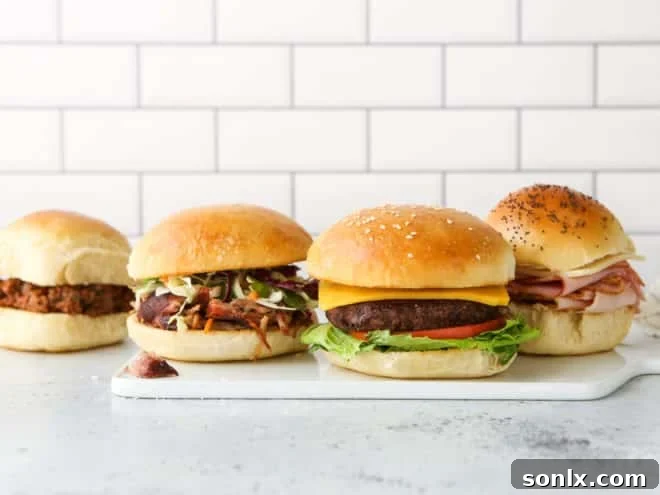
The Ultimate Versatile Bun Recipe
Imagine having just one amazing recipe in your baking arsenal that can create a multitude of delicious bread options. This brioche bun recipe is precisely that! Its incredible versatility means you can easily adapt it to suit any meal, from a casual weeknight dinner to a festive gathering. Whether your craving calls for grand, fluffy burger buns, charming mini slider rolls, or classic soft sandwich rolls, this recipe has you covered. The inherent richness and tender texture of brioche make it an ideal base for nearly any filling, ensuring a delightful experience with every bite.
Specifically, you can effortlessly bake larger buns, perfect for those quarter-pound patties, substantial pulled pork sandwiches, or generous chicken cutlets. Alternatively, you can shape smaller rolls that are ideal for elegant cold cut sandwiches, satisfying sloppy joes, or crowd-pleasing burger sliders. The choice is yours, and the options are genuinely boundless. I’ve laid out comprehensive, step-by-step instructions below to guide you through each variation, ensuring your baking success, regardless of the desired size or shape. This adaptability not only saves you time by not needing multiple recipes but also guarantees consistent quality and flavor across all your homemade bread.
Essential Ingredients for Perfect Brioche Buns
Crafting truly exceptional brioche buns begins with understanding the role each ingredient plays. This recipe relies on a combination of common pantry staples and specific choices that contribute to the signature richness, softness, and structure of these beloved buns. Pay close attention to the quality of your ingredients, as they directly impact the final flavor and texture.
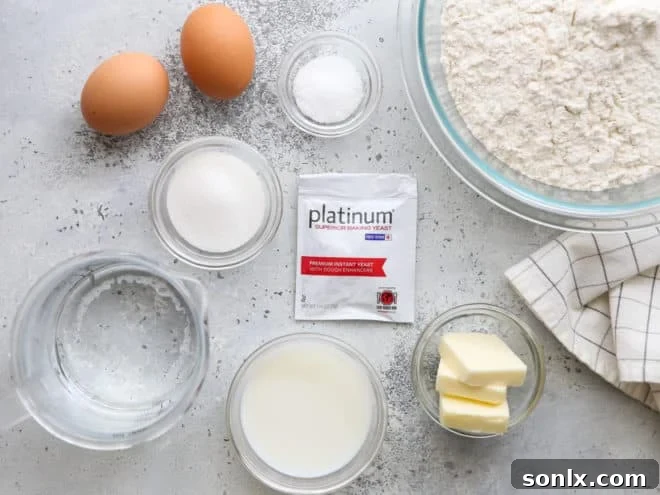
- Milk, Butter, Sugar, and Eggs: These are the superstars of brioche. Milk adds moisture and tenderness, while rich unsalted butter contributes an incredible depth of flavor and a melt-in-your-mouth texture. Granulated sugar provides a subtle sweetness that balances the richness and also feeds the yeast, aiding in a beautiful rise. Eggs are crucial for the characteristic golden color, added richness, and a beautifully tender crumb that makes brioche so distinct from other breads.
- Bread Flour: For yeasted bread recipes like this, bread flour is highly recommended. It boasts a higher protein content compared to all-purpose flour, which means it develops more gluten. This increased gluten power is what allows your dough to rise higher, creating a more open, chewy yet tender texture, and providing the necessary structure to support your delicious fillings. While all-purpose flour can work in a pinch, bread flour truly elevates the results.
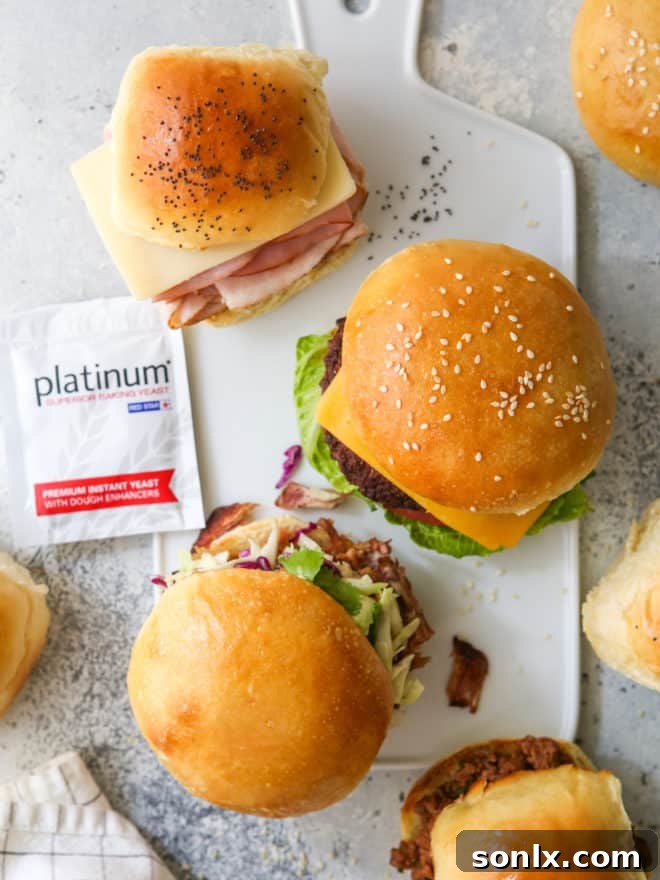
- Active-Dry Yeast or Instant Yeast: Both types of yeast will work perfectly for this recipe. Active-dry yeast often requires a brief activation period in warm liquid, while instant yeast can typically be mixed directly with the dry ingredients. If using instant yeast, you might find the dough rises a bit faster. For consistently excellent results, I often recommend a high-quality option like Red Star Platinum Yeast, known for its reliable performance.
- Salt: Don’t underestimate the power of salt! It’s not just for seasoning; salt is vital for enhancing the overall flavor of your buns and also plays a critical role in controlling yeast activity, ensuring a steady and well-structured rise. Without it, your buns would taste flat and the dough could over-proof too quickly.
- Sesame Seeds or Poppy Seeds (Optional Toppings): These seeds offer a delightful textural contrast and a subtle nutty flavor, adding a classic finish to your burger or sandwich buns. They are entirely optional but highly encouraged for that authentic bakery-style appeal.
Step-by-Step Guide to Making Homemade Brioche Buns
Creating homemade brioche buns might seem daunting, but with this detailed guide, you’ll find the process straightforward and incredibly rewarding. We’ll start by preparing the foundational brioche dough, then move on to shaping and baking your perfect buns.
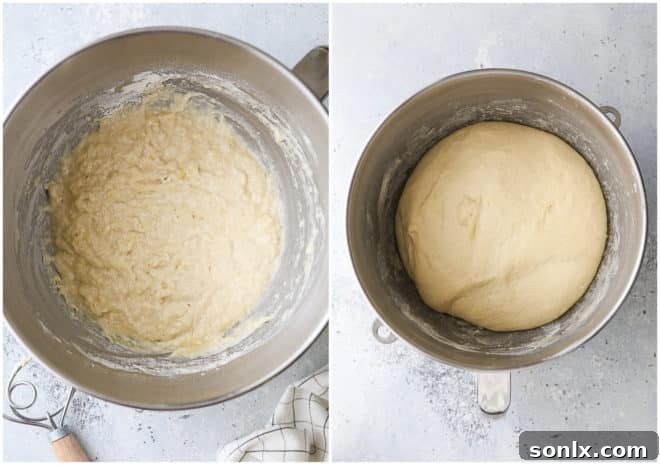
Mastering the Brioche Dough
The heart of any great bun is its dough. For these brioche buns or rolls, we’ll create a rich, elastic dough that is a pleasure to work with. You can achieve this using a stand mixer with a dough hook, which simplifies the kneading process, or if you prefer a more hands-on approach, a large mixing bowl and your own two hands will work beautifully.
- Warm the Liquids and Butter: In a small saucepan, combine the milk, water, and unsalted butter. Gently warm this mixture over medium-low heat until the butter has fully melted and the liquid reaches a temperature between 120-130°F (49-54°C). This temperature is crucial: it’s warm enough to activate the yeast effectively but not so hot as to kill it. An instant-read thermometer is your best friend here for accuracy.
- Combine Dry Ingredients: In the bowl of your stand mixer (or a large mixing bowl for hand kneading), whisk together about 2½ cups of the bread flour, the yeast, granulated sugar, and salt. This ensures all the dry components are evenly distributed before liquid is added.
- Incorporate Liquids and Eggs: Pour the warmed milk mixture and the beaten eggs into your dry ingredients. Mix on low speed (or stir by hand) until just combined, forming a very wet and shaggy dough. Don’t worry if it looks too wet at this stage; this is normal for brioche.
- Gradual Flour Addition and Kneading: Begin kneading the dough. If using a stand mixer, attach the dough hook and knead on medium-low speed. If kneading by hand, turn the dough out onto a lightly floured surface. Gradually add the remaining bread flour, about two tablespoons at a time, allowing each addition to be fully incorporated into the dough before adding more. Continue kneading until the dough mostly clears the sides of the bowl (or becomes less sticky and more manageable by hand) and is only slightly tacky to the touch. The exact amount of flour can vary depending on humidity and other factors, so trust the feel of the dough more than the precise measurement. Knead for a total of 5-7 minutes until the dough is smooth, elastic, and passes the “windowpane test” (stretching a small piece of dough thin enough to see light through it without tearing).
- First Rise (Proofing): Lightly grease a clean bowl with a little oil or cooking spray. Transfer the kneaded dough to the bowl, turning it once to coat the entire surface. Cover the bowl tightly with plastic wrap to prevent a skin from forming. Place the covered bowl in a warm, draft-free spot and let the dough rise until it has doubled in size. This typically takes about 1 hour, but it could be shorter or longer depending on the ambient temperature.
With your dough now beautifully risen and prepped, you’re ready for the exciting part: shaping it into perfect buns or rolls!
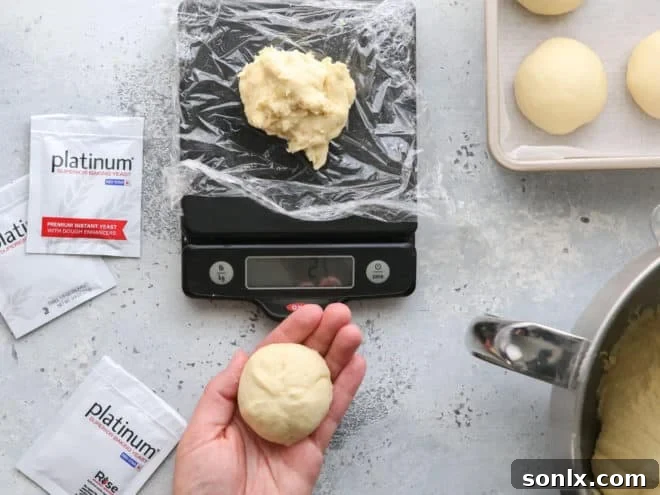
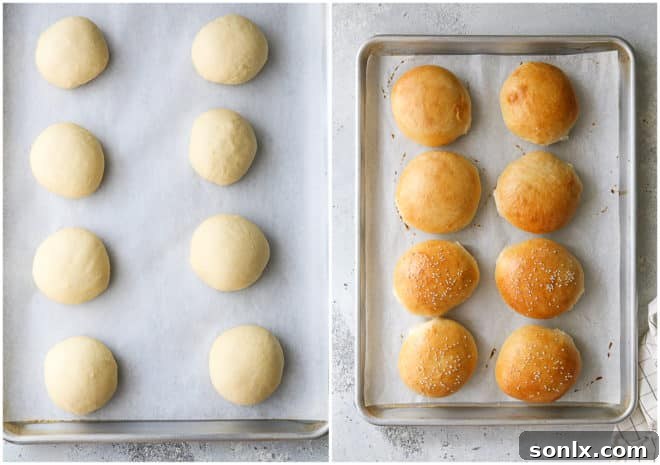
Crafting Larger Burger Buns
If your goal is to create substantial, bakery-quality hamburger buns that perfectly cradle your favorite patties, follow these specific instructions for shaping and baking:
- Divide the Dough Evenly: Gently punch down the risen dough to release the air. Transfer it to a lightly floured surface. For large burger buns, divide the dough into 8 equal pieces. For maximum consistency in size and baking, I highly recommend using a kitchen scale. Weigh the entire dough and then divide that total by 8 to get the target weight for each piece.
- Shape into Smooth Balls: Take each portion of dough and shape it into a tight, smooth ball. The key is to create surface tension on the outside of the ball. A helpful technique involves cupping your hand over the dough on a clean, unfloured surface and moving it in small, quick circles, allowing the dough to grip the counter and tighten into a perfect sphere. This video from King Arthur Baking offers an excellent visual guide to mastering this professional shaping technique.
- Second Rise (Proofing): Arrange the shaped dough balls on a large baking sheet lined with parchment paper, ensuring they are spaced far enough apart to expand without touching too much during their rise. Lightly spray a piece of plastic wrap with non-stick cooking spray and loosely cover the buns. Let them rise in a warm place for another 30-45 minutes, or until they have nearly doubled in size. During this rise, if you want flatter, wider burger buns rather than taller ones, very gently pat the tops of the buns down occasionally with a light hand. Be extremely careful not to deflate them!
- Bake to Golden Perfection: While the buns are on their second rise, preheat your oven to 400°F (200°C). Just before baking, gently brush the tops of the risen buns with an egg wash (one beaten egg mixed with a tablespoon of water) to give them a beautiful, shiny, golden-brown crust. If desired, sprinkle with sesame seeds for that classic burger bun look and taste. Bake for approximately 10-12 minutes, or until they are richly golden brown and sound hollow when tapped on the bottom. Remove from the oven and cool completely on a wire rack before slicing and serving.
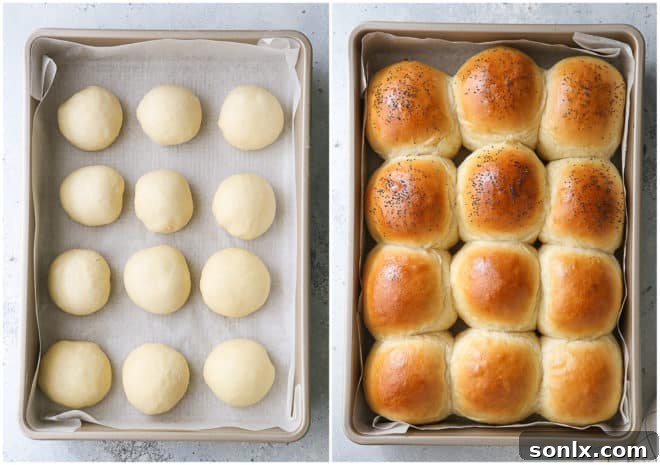
Baking Smaller Sandwich Rolls
This incredibly adaptable brioche recipe also excels at producing smaller, tender rolls, perfect for mini burger sliders, deli sandwiches, or as delightful dinner rolls. Here’s how to adjust the shaping and baking process for these charming smaller versions:
- Divide the Dough into Smaller Portions: After punching down your dough, divide it into 12 equal pieces. Again, using a kitchen scale will help ensure uniform size, which is especially beneficial when baking multiple rolls together, as it ensures they bake evenly.
- Shape into Smaller Balls: Just like with the larger buns, shape each of the 12 pieces into a smooth, tight ball. The goal is to create good surface tension. If you need a refresher on the technique, this video tutorial is an excellent resource for achieving perfectly round rolls.
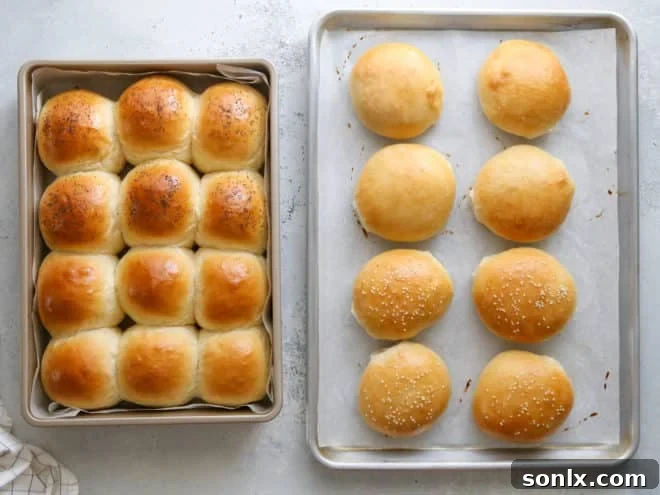
- Second Rise in a Baking Pan: For these smaller rolls, we’ll opt for a different proofing method. Arrange the shaped balls snugly in a 9×13-inch baking pan that has been lined with parchment paper. The close proximity of the rolls in the pan will encourage them to rise upwards and stick together slightly, resulting in soft, pull-apart rolls – a truly delightful presentation. Cover the pan loosely with plastic wrap (lightly greased with cooking spray on the underside) and let them rise in a warm place until they have doubled in size, which should take about 30-45 minutes.
- Bake the Rolls: Preheat your oven to 400°F (200°C) during the last few minutes of the second rise. Before baking, brush the tops of the rolls with the egg wash to achieve a beautiful shine and golden crust. If you wish, sprinkle with poppy seeds or sesame seeds. Place the pan in the preheated oven and bake for approximately 15-18 minutes, or until the tops are deeply golden brown. These smaller buns, especially when baked close together, often require a slightly longer baking time than individual, larger buns to ensure they are cooked through and golden on all sides. Allow them to cool slightly in the pan before transferring to a wire rack to cool completely.
Note: If you prefer the individual, flatter appearance of burger buns but in a mini size (like for sliders), you can bake the 12 rolls on a large parchment-lined sheet pan instead of a 9×13-inch pan. Make sure to space them out more generously. As they rise, gently pat the tops down occasionally to encourage them to spread wider rather than rising too tall, achieving that classic slider bun shape.
Make-Ahead Strategies for Fresh Buns Anytime
One of the best features of this brioche bun recipe is its flexibility for make-ahead preparation. Whether you’re planning a party and want to get a head start, or simply want fresh-baked buns on demand, these methods ensure delicious results without last-minute stress. Planning ahead can make baking a truly enjoyable and less rushed experience.
- Overnight Dough Rise in the Fridge: This method is excellent for developing deeper flavors and fitting baking into a busy schedule. After preparing and kneading the dough as instructed, place it in a lightly greased bowl, cover tightly with plastic wrap, and refrigerate overnight (for 8-12 hours). The cold temperature will significantly slow down the yeast activity, allowing for a long, slow fermentation. The next morning, remove the dough from the fridge, let it sit at room temperature for about 30 minutes to an hour to take the chill off, then portion, shape into rolls, allow them to rise as usual, and bake. This results in incredibly flavorful buns.
- Overnight Rise for Shaped Rolls in the Fridge: If you prefer to have the shaping done in advance, you can do that too. After dividing and shaping your buns or rolls and placing them in their prepared baking pan, cover the pan tightly with plastic wrap. Place the entire pan in the refrigerator overnight. The next morning, take the pan out of the fridge and allow the rolls to come to room temperature and complete their final rise for 1 to 1½ hours, or until visibly doubled. Once adequately risen, proceed with brushing and baking.
- Freezing Shaped Rolls for up to 2 Months: For ultimate convenience, you can freeze shaped, unbaked rolls. After shaping the buns or rolls, place them on a parchment-lined baking sheet, ensuring they are not touching. Cover with plastic wrap and freeze for about 1 hour until firm. Once frozen, transfer the solid rolls to a heavy-duty freezer-safe ziplock bag or airtight container. They can be stored in the freezer for up to 2 months. When you’re ready to bake, transfer the frozen rolls to a prepared baking pan and thaw at room temperature for several hours (4-6 hours, or even overnight in the fridge and then an hour at room temp) until completely thawed and risen. Then, brush with egg wash and bake as directed.
- Freezing Baked Rolls for up to 1 Month: If you have leftover buns or want to prepare a large batch, you can freeze them after baking. Bake the buns or rolls as usual and let them cool completely on a wire rack. Once cooled, wrap them tightly in aluminum foil, then place the foil-wrapped buns into a large freezer-safe ziplock bag. They will keep well in the freezer for up to 1 month. To serve, simply remove the desired number of buns from the bag and foil, and warm them in a preheated 350°F (175°C) oven for 20-25 minutes, or until heated through and soft again.
Frequently Asked Questions: Homemade Buns
Here are answers to some common questions that arise when making homemade brioche buns, helping you troubleshoot and achieve the best possible results.
Both active-dry yeast and instant yeast (often labeled as quick-rise or rapid-rise) are suitable for this brioche bun recipe. If you opt for instant yeast, you might notice a slightly faster rise, potentially cutting the proofing time in half, but the final quality and texture of the buns will be very similar. This recipe has been developed and tested specifically with these types of commercial dry yeasts and has not been tested with fresh yeast.
No, for this particular recipe, you do not need to pre-dissolve or “proof” the yeast in warm water before adding it to the dry ingredients. This method, which I learned from Red Star Yeast, is a wonderful time-saver! As long as you are confident that your yeast is fresh and has not expired, simply combining all the dry ingredients with the liquids heated to the specified 120-130°F (which is warmer than the “warm water” typically used for proofing) is sufficient to activate the yeast effectively. The warmth of the liquid provides the perfect environment for the yeast to begin working immediately.
While you can use all-purpose flour if it’s the only option available, I strongly recommend using bread flour for the best possible results. Bread flour contains a higher protein content, which translates to superior gluten development. This increased gluten strength is crucial for achieving the characteristic airy rise, tender crumb, and overall excellent texture that makes these homemade buns so exceptional. Using all-purpose flour may result in a slightly less chewy and potentially denser bun.
The precise amount of flour required for bread dough can vary due to several environmental factors, such as the humidity in your kitchen, the brand of flour used, and even the size of your eggs. This is why a range of 3 – 3½ cups is given. The key is to pay attention to the dough’s consistency rather than strictly adhering to the exact measurement. You’ve added enough flour when the dough forms a cohesive mass, largely clears the sides of the mixing bowl (if using a stand mixer), and is still very soft and slightly tacky to the touch, but manageable without excessive stickiness. Be cautious not to add too much flour, as this can lead to tough, dense, and dry rolls. A slightly sticky dough yields a much softer, fluffier bun.
While a stand mixer with a dough hook offers undeniable convenience for kneading rich doughs like brioche, hand-kneading is absolutely possible and can be a very therapeutic process. To knead by hand, turn the shaggy dough out onto a lightly floured surface. Using the heel of your hand, push the dough away from you, then fold it back over itself. Rotate the dough slightly and repeat the push-fold-rotate motion. Continue this process, adding small amounts of flour only as needed to prevent excessive sticking, until the dough becomes smooth, elastic, and springy, typically taking 10-15 minutes. For a visual demonstration, this tutorial on hand-kneading bread is very helpful.
Explore More Homemade Bun Recipes
If you’ve enjoyed making these versatile brioche buns, you’ll be thrilled to discover other fantastic homemade bread recipes that can further elevate your meals. Each recipe offers a unique twist, perfect for different flavors and occasions, ensuring your table is always adorned with fresh, delicious baked goods.
Get the Detailed Recipe
Ready to bake the best homemade sandwich rolls, burger, or slider buns you’ve ever tasted? Here’s the complete recipe, carefully detailed for your success.

Homemade Sandwich, Slider and Burger Buns
Pin Recipe
Leave a Review
Ingredients
- ¼ cup (57 grams) milk
- ¾ cup (170 grams) water
- 3 tablespoons (42 grams) unsalted butter
- 3-3 ½ cups (360-420 grams) bread flour
- 2 ¼ teaspoons (7 grams) Red Star Platinum Yeast
- 2 tablespoons (25 grams) granulated sugar
- 1 ½ teaspoon salt
- 2 large eggs, beaten
- 1 large egg, beaten with 2 tablespoons water, for egg wash
- Sesame seeds or poppy seeds, optional
Equipment
Instructions
-
In a small saucepan, combine the milk, water, and butter. Warm over medium-low heat until the butter is melted and the mixture reaches 120-130°F (49-54°C). Allow it to cool for about 5 minutes if it gets too hot, ensuring it stays within the ideal temperature range for yeast activation.
-
In the bowl of a stand mixer fitted with a dough hook (or a large bowl for hand mixing), combine 2½ cups of the bread flour, the yeast, granulated sugar, and salt. Pour the warmed milk mixture and the beaten eggs into the dry ingredients. Mix on low speed until all ingredients are well incorporated and a very wet dough forms.
-
Continue mixing on medium-low speed (or kneading by hand). Add the remaining bread flour, 2 tablespoons at a time, allowing each addition to be fully absorbed before adding more. Stop adding flour when the dough nearly clears the sides of the bowl and is just slightly sticky to the touch. It’s okay if it still adheres to your fingers a bit. Knead for an additional 5-7 minutes until the dough is smooth, elastic, and feels supple.
-
Lightly grease a clean bowl. Place the dough in the bowl, turning once to coat, then cover with plastic wrap. Place in a warm, draft-free area and let it rise until it has doubled in size, which typically takes about 1 hour.
-
Gently punch down the risen dough to release the air, then let it rest for a few minutes. Transfer the dough to a lightly floured surface. Divide the dough into 8 equal pieces for larger burger buns, or 12 equal pieces for smaller sandwich or slider rolls. Shape each piece into a smooth, tight ball, creating surface tension.
-
For larger buns: Place the 8 shaped dough balls on a parchment-lined baking sheet, spaced apart. For smaller rolls: Place the 12 shaped dough balls in a parchment-lined 9×13-inch baking pan. Spray a piece of plastic wrap with non-stick cooking spray and loosely cover the buns/rolls. Return them to a warm place and allow them to rise for another 30-45 minutes, until nearly doubled in size.
-
While the buns/rolls are on their second rise, preheat your oven to 400°F (200°C). Once risen, gently brush the tops of the buns/rolls with the prepared egg wash. If desired, sprinkle with sesame seeds or poppy seeds for an added flourish.
-
Bake until golden brown. For larger buns, this typically takes about 10-12 minutes. For smaller rolls baked in a pan, it may take slightly longer, around 15-18 minutes, to ensure they are fully cooked through. Once baked, transfer the buns/rolls to a wire rack to cool completely before slicing and serving.
Video
For a visual guide on the dough preparation and shaping techniques, you can refer to the embedded video for “Homemade Sandwich and Burger Buns”.
Notes
- This recipe yields 8 larger burger buns or 12 smaller sandwich rolls. The nutritional information provided below is calculated for 8 burger buns.
This recipe was originally published in June 2021 and was sponsored by Red Star Yeast. All opinions expressed are my own, as always. Thank you for supporting partnerships with brands I genuinely believe in and use.