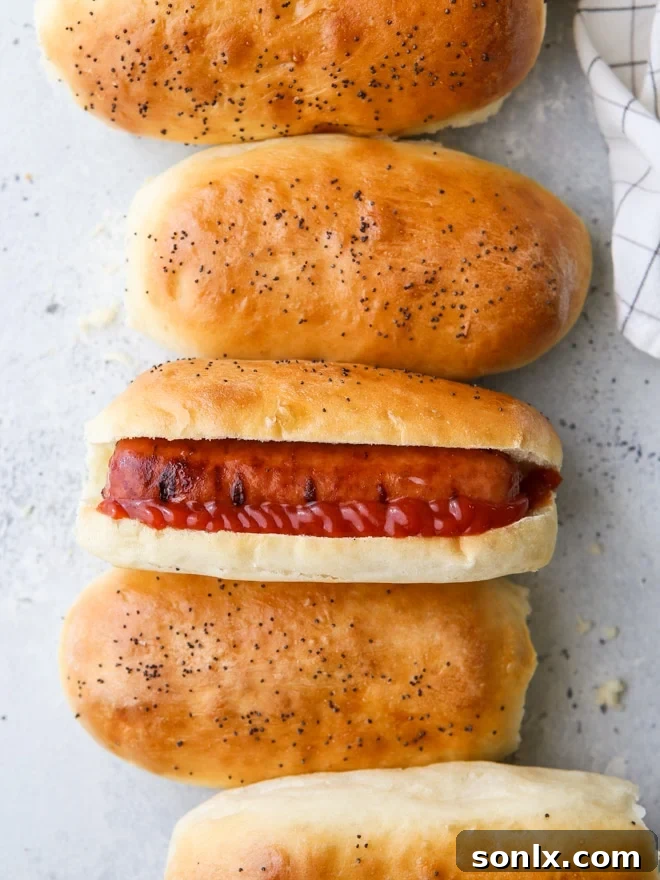
Tired of those bland, store-bought hot dog buns that crumble at the first bite or offer little in the way of flavor? It’s time to elevate your grilling experience with truly exceptional homemade hot dog buns. Imagine a bun so incredibly soft, subtly sweet, and wonderfully tender that it perfectly cradles your favorite hot dog or brat. This isn’t just a dream; it’s an achievable reality with our foolproof recipe. And trust us, once you try these, there’ll be no going back to the supermarket variety.
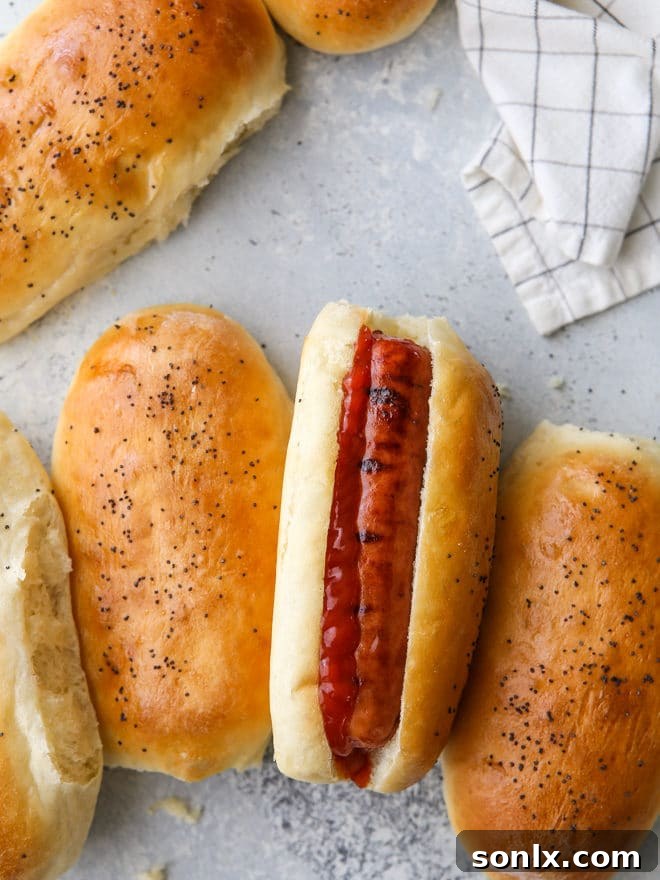
For many, hot dogs and brats are synonymous with summer gatherings, backyard barbecues, and festive cookouts. They’re a classic for a reason – quick, versatile, and universally loved. But often, the bun itself is an afterthought, a mere vessel for the star of the show. We believe the bun deserves its moment in the spotlight, enhancing every bite rather than merely containing it. This recipe is a slight adaptation from my beloved homemade burger buns, a testament to how effortlessly this dough transitions from burgers to hot dogs, delivering that same irresistible softness and rich flavor.
Why Homemade Hot Dog Buns Are a Game-Changer
Making your own hot dog buns might seem like an extra step, but the rewards are immense. Here’s why you should ditch the plastic bag and embrace the joy of baking your own:
- Unparalleled Flavor and Texture: Store-bought buns often lack character. They can be dry, too airy, or strangely chewy. Homemade buns, however, boast a delicate richness from milk, butter, and eggs, paired with a pillowy-soft crumb and a slight chewiness that perfectly complements a juicy hot dog. They don’t fall apart and absorb toppings beautifully.
- Freshness You Can Taste: There’s nothing quite like bread baked fresh that day. The aroma alone is intoxicating, and the taste is vibrant and clean, free from the preservatives and artificial flavors found in commercial options.
- Customization at Your Fingertips: Want a touch of sweetness? A savory herb infusion? A sprinkle of poppy seeds or sesame seeds? With homemade buns, you’re the master baker. You can tailor them exactly to your preference, creating a unique experience every time.
- A Sense of Accomplishment: There’s immense satisfaction in serving something you’ve created from scratch. Your guests will be impressed, and you’ll feel a well-deserved sense of pride.
- Cost-Effective: While requiring a bit of time, the ingredients for homemade buns are inexpensive, often making them more economical than purchasing specialty buns, especially if you need a larger quantity for a party.
If you’ve ever baked a loaf of bread or tackled another yeasted dough recipe, you already possess the skills needed for these buns. And if you haven’t, this recipe is an excellent, forgiving place to start your baking journey!
Key Ingredients for Perfectly Soft Hot Dog Buns
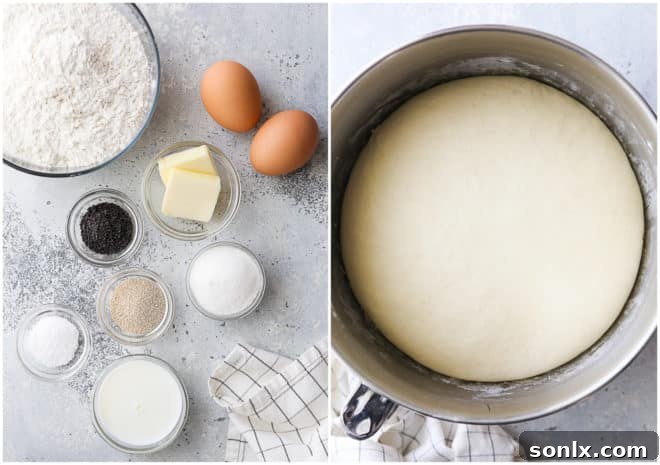
The secret to incredible homemade hot dog buns lies in a few simple, high-quality ingredients. Gather these essentials, and you’re well on your way to baking perfection:
- Bread Flour: This is our flour of choice because of its higher protein content. More protein means more gluten, which translates to a chewier texture and a stronger structure, helping your buns hold their shape and preventing them from becoming too dense.
- Whole Milk: Don’t skimp here! Whole milk adds richness and fat, contributing to a wonderfully tender crumb and a beautiful golden-brown crust. It also helps with the overall flavor profile.
- Water: Used in conjunction with milk to achieve the ideal hydration for the dough.
- Unsalted Butter: Another crucial fat component, butter provides incredible flavor and ensures a supremely soft texture. Using unsalted butter gives you control over the overall salt content of your recipe.
- Active Dry Yeast: The leavening agent that makes our buns light and fluffy. Active dry yeast needs to be activated in warm liquid (also known as proofing) before being added to the rest of the ingredients.
- Granulated Sugar: A small amount of sugar serves multiple purposes: it feeds the yeast, encouraging it to activate and produce carbon dioxide (which creates those lovely air pockets), aids in browning the crust, and adds a subtle sweetness that balances the savory elements of your hot dog.
- Salt: Essential for flavor, salt also plays a vital role in controlling yeast activity and strengthening the gluten structure in the dough.
- Large Eggs: Eggs contribute to the buns’ richness, color, and tenderness. They also add a slight binding quality to the dough. Make sure your eggs are at room temperature for optimal mixing.
- Poppy Seeds (Optional, for topping): These tiny seeds add a classic aesthetic and a delicate nutty crunch, elevating the visual appeal and adding a slight textural contrast.
Before you begin, ensure your eggs, milk, and butter are at room temperature (or slightly warmed as specified in the instructions). This allows them to incorporate more easily into the dough and promotes consistent yeast activity.
Step-by-Step Guide to Baking Irresistible Hot Dog Buns
Don’t be daunted by working with yeast dough. This process is straightforward and incredibly rewarding. Follow these steps for perfectly baked hot dog buns every time:
1. Prepare the Dough
- Warm the Liquids: In a small saucepan, gently warm the whole milk, water, and butter over medium-low heat until the butter is just melted. The mixture should be warm, not hot. Crucially, let it cool slightly to a temperature between 120-130°F (49-54°C). This temperature range is perfect for activating active dry yeast without killing it. Use a thermometer for accuracy.
- Combine Dry Ingredients: In the bowl of a stand mixer fitted with a dough hook attachment (or a large mixing bowl if kneading by hand), combine 2 cups of the bread flour, active dry yeast, granulated sugar, and salt. Whisk them together briefly to ensure they are evenly distributed.
- Mix Wet into Dry: Pour the warm milk mixture into the dry ingredients, followed by the lightly beaten eggs. Mix on low speed until everything is just combined and a shaggy dough forms.
- Add Remaining Flour and Knead: Gradually add the remaining bread flour, ¼ cup at a time, mixing on medium-low speed. Continue adding flour until the dough mostly pulls away from the sides of the bowl, but still feels sticky to the touch and adheres slightly to the bottom. The dough should be soft, pliable, and elastic, not dry or stiff.
- Develop Gluten: Increase the mixer speed to medium and knead for about 5-7 minutes. If kneading by hand, knead on a lightly floured surface for 8-10 minutes. The dough should become smooth, elastic, and pass the “windowpane test” (you can stretch a small piece thin enough to see light through it without tearing).
2. First Rise (Bulk Fermentation)
- Prepare for Rising: Lightly grease a large bowl with cooking spray or a little oil. Transfer the kneaded dough to the greased bowl, turning it once to coat all sides. This prevents a crust from forming.
- Cover and Rise: Cover the bowl tightly with plastic wrap or a clean kitchen towel. Place the dough in a warm, draft-free place until it has doubled in size. This typically takes about 1 hour, but can vary depending on your kitchen temperature. A slightly warm oven (turned off, with the light on) is an ideal spot.
- Punch Down: Once doubled, gently “punch down” the dough to release the accumulated gases. This helps to redistribute the yeast and gluten, resulting in a finer crumb. Briefly knead the dough a few times in the bowl.
- Rest the Dough: Cover the dough again with plastic wrap and let it rest for about 10 minutes. This relaxes the gluten, making the dough easier to handle and shape.
3. Portion and Shape the Buns
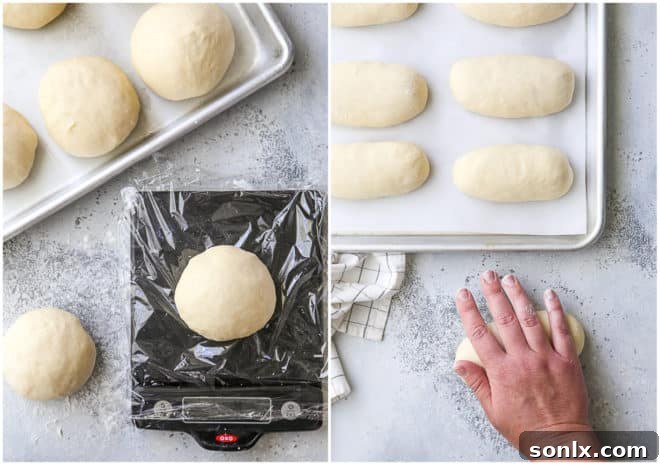
- Divide the Dough: Turn the rested dough out onto a lightly floured surface. Using a digital kitchen scale is highly recommended for accuracy; divide the dough into 10 equal pieces (each piece should weigh approximately 65-70 grams). This ensures uniform baking and bun size.
- Form into Balls: Gently gather each piece of dough into a smooth ball. Do this by tucking the edges under and pinching them together at the bottom to create surface tension on top.
- Roll into Logs: On your lightly floured surface, take each dough ball and roll it into an oblong log, roughly 4.5 to 5 inches long. Aim for a consistent thickness throughout the log. This length is perfect for a standard hot dog.
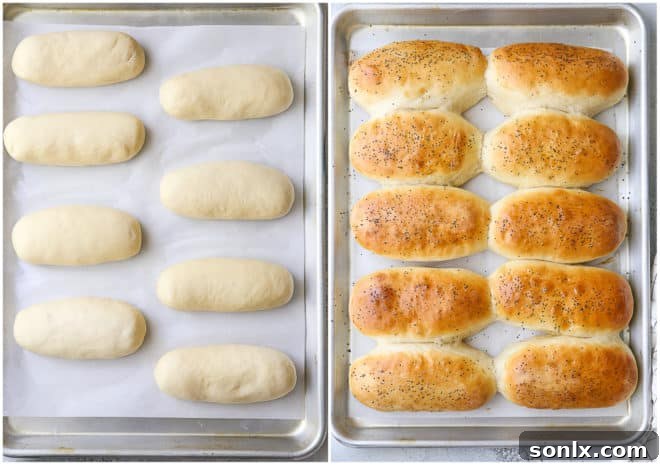
- Arrange on Baking Sheet: Line a large baking sheet with parchment paper. Place the shaped buns onto the prepared sheet, leaving about 1.5 to 2 inches between each bun to allow for expansion during the second rise and baking.
- Slightly Flatten (Optional but Recommended): Gently pat the tops of the shaped buns to flatten them slightly. This helps them maintain a more traditional hot dog bun shape during baking, preventing them from puffing up too much in the center.
4. Second Rise (Proofing)
- Cover and Rise Again: Loosely cover the shaped buns on the baking sheet with greased plastic wrap (grease the side facing the dough to prevent sticking) or a light, clean kitchen towel.
- Proof: Let the buns rise in a warm, draft-free place for another 30-45 minutes, or until they look noticeably puffed and have nearly doubled in size. To check if they’re ready, gently poke a bun with a floured finger; if the indentation springs back slowly and partially, they’re perfectly proofed. If it springs back immediately, they need more time. If it collapses, they’re over-proofed.
- Preheat Oven: While the buns are on their second rise, preheat your oven to 400°F (200°C). This ensures the oven is at the correct temperature when the buns are ready to bake.
5. Egg Wash and Bake
- Prepare Egg Wash: In a small bowl, whisk together 1 large egg with 1 tablespoon of water until well combined.
- Brush and Sprinkle: Gently brush the tops and sides of the risen buns with the egg wash. Be careful not to deflate them. If using, sprinkle generously with poppy seeds.
- Bake: Bake the hot dog buns in the preheated oven for 10-15 minutes, or until they are beautifully golden brown on top and cooked through. The exact time may vary slightly depending on your oven.
- Cool: Once baked, transfer the buns to a wire rack to cool completely. Cooling is crucial to set the crumb and prevent sogginess.
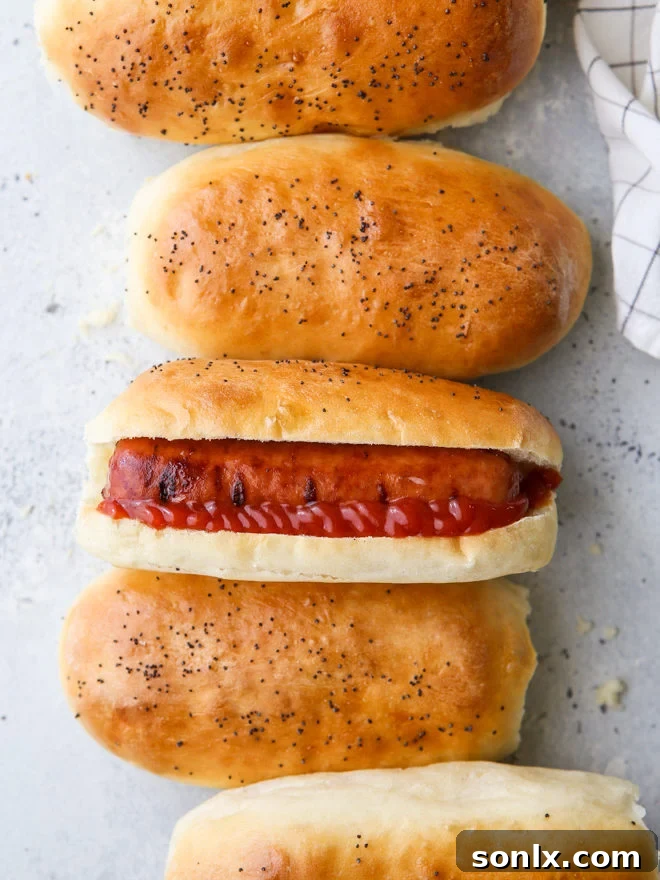
Now, all that’s left is to load them up with your favorite grilled hot dogs, brats, or sausages and an array of delicious toppings! Enjoy the incredible difference homemade makes.
Expert Tips for Hot Dog Bun Perfection
Achieving bakery-quality hot dog buns is easier than you think, especially with these insider tips:
- Yeast Savvy: This recipe calls for active dry yeast, which requires proofing in warm liquid. If you prefer to use instant yeast, you can reduce the amount slightly to 1¾ teaspoons and mix it directly with the dry ingredients, skipping the initial proofing step with the warm milk mixture.
- Flour Fluctuations: The exact amount of flour needed can vary. Factors like humidity in your kitchen, the brand of flour, and even how you measure it (always spoon flour into your measuring cup and level it off, rather than scooping directly) can affect dough consistency. Always add flour gradually until the dough starts to clear the sides of the bowl but remains sticky at the bottom. The goal is a soft, slightly sticky dough – leaning towards slightly wetter rather than too dry will always result in softer buns.
- All-Purpose Flour Alternative: While bread flour is recommended for its high protein content and superior chew, you can use all-purpose flour in a pinch. However, you might need to add slightly more, potentially up to ½ cup extra, to achieve the right consistency, as all-purpose flour has less protein.
- Don’t Fear the Funky: Baking is an art, not a science, and sometimes your buns might emerge with charmingly unique shapes. Don’t worry if they’re not perfectly uniform; they will still taste absolutely delicious!
- Room Temperature Ingredients: For optimal yeast activity and a smoothly combined dough, ensure your eggs, milk, and butter are at room temperature. This helps them emulsify better with the other ingredients.
- Avoid Over-Kneading: While gluten development is key, over-kneading can make the dough tough and the resulting buns dense. Keep an eye on the dough; once it’s smooth and elastic, you’re good to go.
- Consistent Proofing: A warm, draft-free environment is crucial for consistent rising. Avoid sudden temperature changes.
- Cool Completely: Resist the urge to slice into your hot, fresh buns immediately. They continue to cook and set as they cool. Cutting them too soon can result in a gummy texture.
Make-Ahead and Storage Solutions
These homemade hot dog buns are at their absolute best the day they’re baked, offering peak freshness and softness. However, careful planning and storage allow you to enjoy them later without significant compromise:
- Storing Unbaked Buns (Refrigerator): For baking ahead, you can shape the buns and arrange them on a parchment-lined baking sheet. Cover them tightly with greased plastic wrap and refrigerate for up to 12-18 hours. The cold temperature will significantly slow down the yeast activity. When ready to bake, remove them from the fridge and let them come to room temperature and complete their second rise (this might take 1-2 hours) before proceeding with the egg wash and baking.
- Storing Baked Buns (Room Temperature): Once baked and completely cooled, store the buns in an airtight container or a large zip-top bag at room temperature for up to 3 days.
- Freezing Baked Buns: For longer storage, homemade hot dog buns freeze beautifully. Once completely cooled, wrap individual buns tightly in plastic wrap, then place them in a freezer-safe bag or container. They can be frozen for 1-2 months. To use, thaw at room temperature for several hours or gently warm them in a low oven (around 300°F/150°C) for a few minutes until soft and warm, making them taste just as good as fresh.
Frequently Asked Questions About Homemade Hot Dog Buns
Here are some common questions you might have when making your own hot dog buns:
Q: Can I make these without a stand mixer?
A: Absolutely! You can knead the dough by hand. It will take a bit longer, typically 8-10 minutes of vigorous kneading, until the dough is smooth and elastic. It’s a great arm workout!
Q: How do I know if my yeast is still good?
A: To test your active dry yeast, combine it with a pinch of sugar and about ½ cup of the warm (105-115°F / 40-46°C) milk/water mixture from the recipe. Let it sit for 5-10 minutes. If the mixture becomes foamy and bubbly, your yeast is active and ready to go. If not, it’s best to get new yeast.
Q: My buns turned out dense. What went wrong?
A: Density can be caused by several factors: too much flour (making the dough too stiff), under-kneading (not enough gluten development), under-proofing (not enough rise time), or even baking at too low a temperature.
Q: My buns spread out too much and are flat. Why?
A: This often happens if the dough is too wet (too little flour), over-proofed (the gluten structure weakens), or not shaped tightly enough to create surface tension. Ensure you’re not adding too much liquid and that your shaping technique creates a smooth, taut surface.
Q: Can I add different toppings besides poppy seeds?
A: Yes! Sesame seeds are another classic choice. You could also experiment with everything bagel seasoning, dried minced garlic, or a sprinkle of grated Parmesan cheese for a savory twist. Add them after the egg wash for best adhesion.
More Delicious Homemade Bread and Buns to Try
Once you master these hot dog buns, you’ll be eager to explore more homemade bread options. Expand your baking repertoire with these fantastic recipes:
- Homemade Burger Buns
- Whole Wheat Burger Buns
- Cheesy Herb Burger Buns
- Garlic Knots (recipe idea)
- Soft Dinner Rolls (recipe idea)
The Ultimate Homemade Hot Dog Buns Recipe

Homemade Hot Dog Buns
Soft and flavorful homemade hot dog buns, much better than store-bought!
Servings: 10 buns
Prep Time: 30 mins
Cook Time: 10 mins
Rise Time: 1 hr 30 mins
Total Time: 2 hrs 10 mins
Print Recipe | Pin Recipe | Leave a Review
Ingredients
- ¼ cup whole milk (60 ml)
- 1 cup water (237 ml)
- 2 tablespoons unsalted butter (28 grams)
- About 3-4 cups bread flour (420 grams, amount you’ll need will vary)
- 2 ¼ teaspoons active dry yeast (1 envelope, 7 grams)
- 2 tablespoons granulated sugar (25 grams)
- 1 ½ teaspoon salt
- 2 large eggs , lightly beaten
- 1 large egg + 1 teaspoon water , for egg wash
- Poppy seeds , for sprinkling (optional)
Instructions
- In a small saucepan set over medium-low heat, warm the milk, water, and butter until butter is melted. Set aside to cool slightly to 120-130°F (49-54°C).
- In the bowl of a stand mixer fitted with a dough hook, combine 2 cups of the flour, yeast, sugar, and salt. Add the warm milk mixture, followed by the eggs, and mix until combined.
- With the mixer on medium-low speed, continue to add more flour ¼ cup at a time until the dough clears most of the bowl but is still sticky to the touch. Continue to knead dough on medium speed until smooth and elastic, a few minutes more (about 5-7 minutes).
- Place dough in a greased bowl and cover with plastic wrap. Let rise in a warm place until doubled, about 1 hour.
- Gently punch down dough and knead a few times to release air. Cover with plastic wrap to keep from drying out and let rest for about 10 minutes.
- Divide the dough into 10 equal pieces (use a kitchen scale for accuracy). Roll each piece into an oblong log about 4.5 to 5 inches long. Place on a sheet pan lined with parchment paper, leaving space between buns. Gently pat the tops of the buns to flatten slightly. Let rise until doubled again, about 30-45 minutes. Meanwhile, preheat oven to 400°F (200°C).
- Brush rolls with egg wash (1 egg + 1 teaspoon water) and sprinkle with poppy seeds, if desired. Let bake until golden brown, about 10-15 minutes.
- Buns are best the day they are baked but will keep in an airtight container at room temperature for up to 3 days. For longer storage, freeze baked and cooled buns for 1-2 months.
Nutrition Information (per bun)
Calories: 219kcal, Carbohydrates: 36g, Protein: 8g, Fat: 5g, Saturated Fat: 2g, Cholesterol: 56mg, Sodium: 374mg, Potassium: 96mg, Fiber: 2g, Sugar: 3g, Vitamin A: 151IU, Calcium: 21mg, Iron: 1mg
Cuisine: American
Course: Side Dish
Author: Annalise Sandberg
We encourage you to try this recipe! Leave a rating and review below, or take a photo and tag it on Instagram @completelydelicious with #completelydelicious. Your feedback means the world to us!