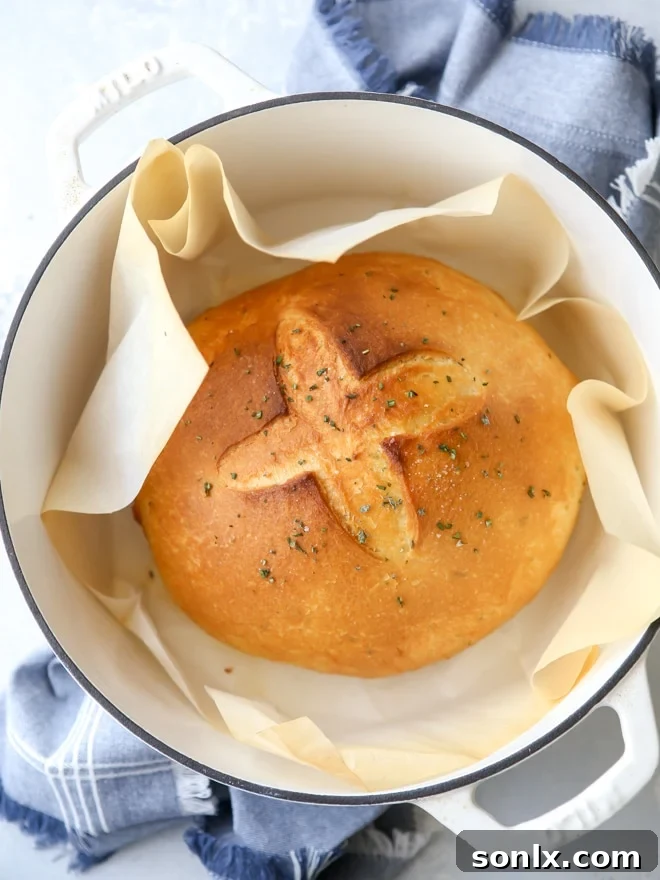
Rustic Herb Dutch Oven Bread: A Masterpiece of Crust and Crumb
There’s something uniquely satisfying about a loaf of homemade bread, especially one that boasts a gloriously crisp crust and a tender, airy interior. This rustic herb bread, baked to perfection in a Dutch oven, delivers exactly that. Infused with aromatic fresh herbs, each slice offers a delightful crunch followed by a soft, flavorful bite – an experience that transforms a simple meal into a culinary event.
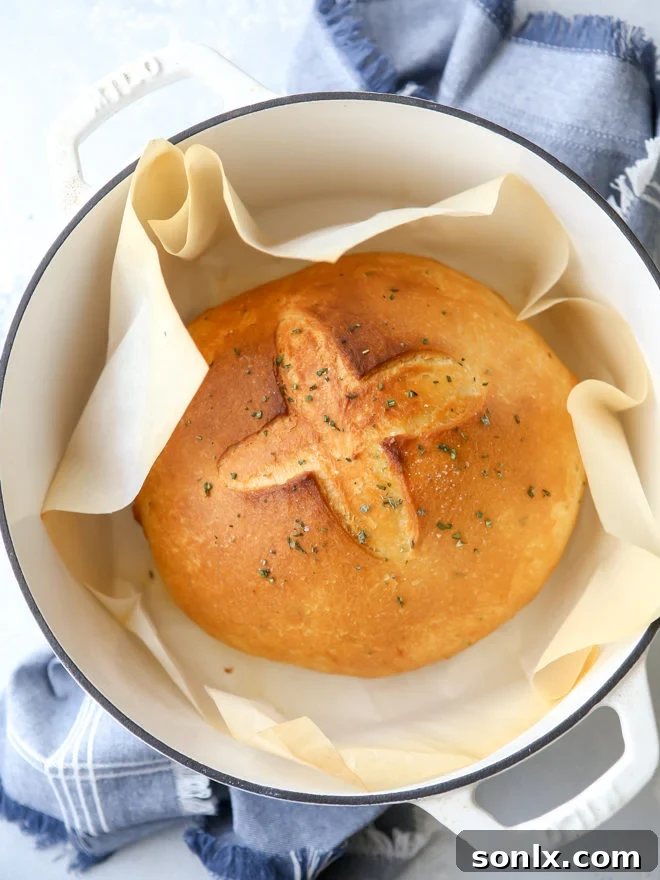
For many, the thought of baking with yeast can be intimidating. I remember those early days on this site when the idea filled me with trepidation! However, inspired by brilliant bakers like Joy the Baker and The Pioneer Woman, I mustered the courage to try this very recipe. The success was immediate and profound, transforming my fear into a passion. Over the years, this Dutch oven herb bread has become a beloved staple in my kitchen, particularly during the cozy autumn and winter months, when the scent of baking bread fills the home with warmth and comfort.
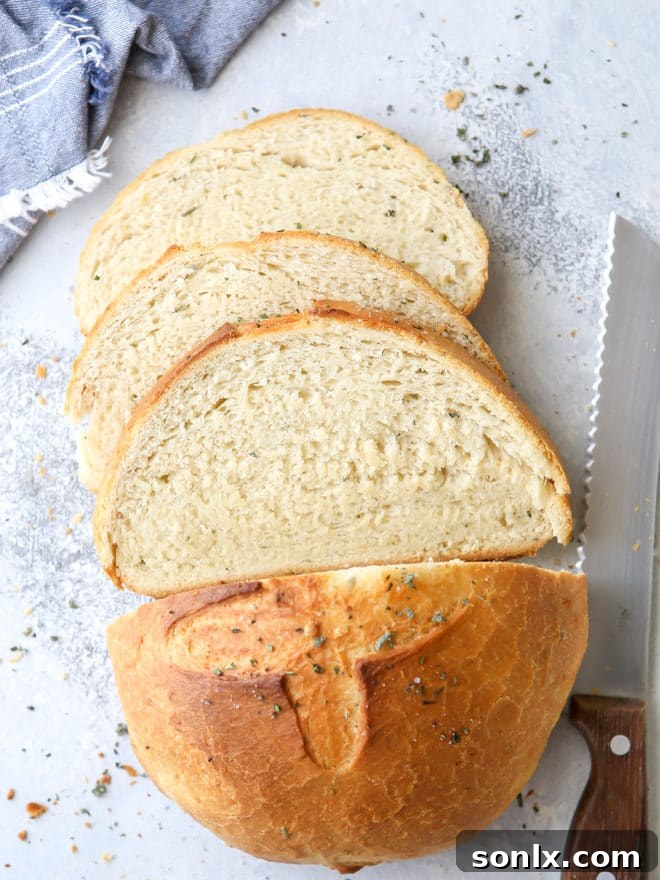
The beauty of this recipe lies in its elegant simplicity. With just a handful of quality ingredients – bread flour, water, yeast, butter, salt, and fresh herbs – it effortlessly comes together, yielding a bread that is unparalleled in flavor and texture. The secret to its incredible crispy exterior and soft, tender crumb? The magic of a heavy cast iron Dutch oven. This essential piece of kitchen equipment traps moisture and distributes heat evenly, mimicking a professional steam oven, which is key to achieving that coveted golden, crackly crust.
The Magic of Baking Bread in a Dutch Oven
If you’re wondering how to achieve that artisanal, bakery-quality crust at home, the answer often lies in your Dutch oven. This humble yet powerful pot creates an ideal environment for bread baking, essentially transforming your home oven into a professional steam injection oven. When the dough is placed into a preheated Dutch oven, the trapped steam instantly envelops the loaf. This steam prevents the crust from forming too quickly, allowing the dough to expand to its maximum potential (known as “oven spring”). The result is a lighter, airier crumb and a thin, incredibly crispy crust that crackles with every bite.
Furthermore, cast iron is renowned for its exceptional heat retention and even heat distribution. This means your bread bakes consistently from all sides, leading to a uniformly golden-brown crust and a perfectly cooked interior. Whether you use an enameled or bare cast iron Dutch oven, its heavy lid and thick walls are your allies in achieving bread-bbaking perfection. For this recipe, a 5 to 6-quart Dutch oven is typically ideal, providing enough space for the loaf to rise without touching the sides.
Crafting Flavor: The Right Herbs and Essential Ingredients
The soul of this rustic loaf lies in its fresh herb infusion. Choosing the right herbs elevates the bread from good to truly extraordinary.
The Art of Herb Selection
- Rosemary: With its distinct piney, slightly peppery flavor, rosemary is a robust herb that stands up beautifully in bread. It pairs wonderfully with savory dishes.
- Thyme: Earthy and subtly floral, thyme offers a more delicate aromatic profile that complements the bread without overpowering it.
- Sage: Warm, pungent, and slightly peppery, sage adds a sophisticated depth of flavor, especially when paired with roasted meats or autumnal soups.
While I often use a combination of rosemary, thyme, and sage for a classic “herbes de Provence” feel, feel free to experiment! Other fantastic options include fresh oregano, marjoram, or even snipped chives and dill for a brighter, fresher note. Always opt for fresh herbs over dried in this recipe, as they provide a much more vibrant and aromatic flavor that truly shines through in the finished loaf.
Unpacking the Essentials: Understanding Your Ingredients
baking tip:What is bread flour?
Bread flour is the cornerstone of a truly exceptional yeast bread. Its higher protein content (typically 12-14% compared to all-purpose flour’s 10-12%) is crucial for developing strong gluten networks. More gluten means a more elastic dough, capable of trapping the carbon dioxide gases produced by the yeast during fermentation and baking. This leads to a superior rise and a characteristic chewy, airy texture that is highly desirable in rustic loaves.
While you can substitute all-purpose flour in a pinch, be aware that the results won’t be quite the same. The loaf might be slightly less chewy and may not rise as dramatically. For the best possible outcome, investing in a bag of quality bread flour is highly recommended for any aspiring bread baker.
- Active Dry Yeast: The Living Leavener: This microscopic organism is responsible for the bread’s rise and much of its complex flavor. Activating it in warm water (around 105-115°F or 40-46°C) ensures it’s alive and ready to work. Look for a foamy layer to confirm activation.
- Unsalted Butter: Richness and Tenderness: Butter contributes a wonderful richness to the dough, enhancing its flavor and contributing to a tender crumb. Melting it with the herbs allows their flavors to infuse beautifully into the fat, spreading evenly throughout the bread.
- Coarse Salt: More Than Just Flavor: Salt is vital for bread baking. It not only seasons the dough but also regulates yeast activity, preventing it from working too quickly. Additionally, salt strengthens the gluten structure, which is important for the dough’s elasticity and overall texture. Sprinkling coarse salt on top before baking adds a pleasing textural contrast and burst of flavor.
- Warm Water: Hydration Hero: The water’s temperature is critical for activating the yeast. Too hot, and you kill the yeast; too cold, and it won’t activate properly. The ideal temperature range helps the yeast thrive.
- Olive Oil: The Final Touch: A drizzle of olive oil before baking contributes to a beautiful golden crust, adds a subtle fruity note, and helps achieve that desirable rustic appearance.

★★★★☆
Dutch Oven Rustic Herb Loaf
Pin Recipe
Leave a Review
Ingredients
- 1 cup warm water (250 ml)
- 2 ¼ teaspoons active dry yeast (1 envelope)
- ½ cup unsalted butter (113 grams)
- 1 heaping tablespoon fresh herbs, chopped (I used rosemary, thyme, and sage)
- 2 teaspoons coarse salt, plus more for sprinkling
- 3 – 4 cups bread flour, as needed (567 grams)
- Olive oil
Instructions
-
Combine warm water and yeast in a small bowl. Let it sit for 5 minutes until the yeast is foamy and active. This step is crucial to ensure your yeast is alive and ready to leaven the bread.
-
Melt the unsalted butter in a small saucepan over low heat. Once melted, remove it from the heat and stir in your fresh chopped herbs. Allow this mixture to cool slightly to avoid killing the yeast when combined.
-
In the bowl of a stand mixer equipped with a dough hook, combine 2 cups of the bread flour and the 2 teaspoons of coarse salt. Pour in the activated yeast mixture and the cooled herb butter mixture. Mix on low speed until the ingredients just come together to form a shaggy dough. Gradually add the remaining bread flour, ¼ cup at a time, continuing to mix until the dough pulls away cleanly from the sides of the bowl and is only slightly sticky to the touch. You may not need all 4 cups of flour; the exact amount can vary depending on humidity and flour type.
-
Increase the mixer speed to medium-low and knead the dough for about 5 minutes, or until it becomes smooth, elastic, and supple. If kneading by hand, this process will take approximately 10-12 minutes, requiring a bit more effort. The dough should spring back when lightly poked.
-
Lightly oil a large bowl. Transfer the kneaded dough to the oiled bowl, turning once to coat. Cover the bowl tightly with plastic wrap or a clean kitchen towel. Place it in a warm, draft-free spot and let it rise until it has visibly doubled in size, which typically takes about 1 hour. This first rise, or bulk fermentation, develops much of the bread’s flavor.
-
About 30 minutes before the first rise is complete, preheat your oven to 450 degrees F (230 degrees C). Place your empty cast iron Dutch oven (with its lid) inside the oven as it preheats. This crucial step ensures the Dutch oven is scorching hot, creating the perfect environment for a crispy crust. Prepare your Dutch oven by lining it with parchment paper or greasing it thoroughly with olive oil once it’s removed from the hot oven.
-
Once the dough has doubled, gently punch it down to release the air. Transfer it to a lightly floured surface and knead it a few times by hand to form a smooth, round ball. Carefully transfer the shaped dough into the preheated Dutch oven (use caution as the pot is very hot). Using a sharp knife or a bread lame, cut a fairly deep “X” or other desired pattern into the top of the dough. Drizzle a little olive oil over the top and sprinkle with additional coarse salt and a few more fresh herbs for extra flavor and visual appeal.
-
Cover the Dutch oven with its hot lid and let the dough rise for an additional 30 minutes. This short second rise allows the dough to relax and achieve a final expansion before baking.
-
Bake the bread in the preheated oven, with the lid on the Dutch oven, for 30 minutes. This creates a steamy environment essential for maximum oven spring and a tender crumb. After 30 minutes, carefully remove the lid and continue baking for another 15-30 minutes, or until the loaf is deeply golden brown and sounds hollow when tapped on the bottom. The internal temperature should register around 200-210°F (93-99°C).
-
Carefully remove the loaf from the Dutch oven and transfer it to a wire rack. Allow it to cool completely before slicing. This step is critical; slicing hot bread can lead to a gummy texture, as the internal structure is still setting. Patience will be rewarded with a perfect crust and crumb.
Notes
- While you can substitute all-purpose flour for bread flour, I highly recommend using bread flour if possible. Its higher protein content yields a significantly lighter and chewier texture.
- For a deeper garlic flavor, consider adding 1-2 cloves of minced fresh garlic along with the herbs to the melted butter.
- Experiment with different fresh herb combinations! Thyme and oregano, or even a touch of finely chopped chives, can offer delicious variations.
Adapted from Joy the Baker.
Carbohydrates: 54g,
Protein: 10g,
Fat: 9g,
Saturated Fat: 5g,
Cholesterol: 20mg,
Sodium: 391mg,
Potassium: 94mg,
Fiber: 2g,
Sugar: 1g,
Vitamin A: 236IU,
Calcium: 13mg,
Iron: 1mg
Serving Your Rustic Herb Loaf: Beyond the Slice
Once your glorious Dutch oven herb bread has cooled, the possibilities for enjoyment are endless. Its robust flavor and satisfying texture make it incredibly versatile.
Classic Pairings to Savor
- Soups and Stews: There’s nothing quite like dipping a thick slice of this herb bread into a hearty bowl of lentil soup, a rich minestrone, or a comforting beef stew. The crust holds up beautifully, soaking up every drop of flavor.
- Cheese Boards and Charcuterie: The earthy notes of the herbs perfectly complement a variety of cheeses, from sharp cheddar to creamy brie. Arrange slices alongside cured meats, olives, and fruit for an impressive appetizer.
- Simple Delights: Sometimes, the best way to enjoy this bread is with just a drizzle of high-quality extra virgin olive oil and a sprinkle of balsamic vinegar, or simply slathered with softened butter.
- Sandwiches: Elevate your everyday sandwich by using slices of this flavorful bread. It’s particularly fantastic with roasted chicken, turkey, or grilled vegetables.
Creative Variations to Explore
While the classic herb combination is divine, feel free to unleash your creativity and customize your loaf:
- Cheesy Herb Bread: Fold ½ to 1 cup of grated Parmesan, Gruyere, or sharp cheddar cheese into the dough during the last few minutes of kneading for an extra savory kick.
- Garlic Lover’s Dream: Increase the garlic flavor by adding a tablespoon of minced roasted garlic to the melted butter and herbs, or even sprinkle some garlic powder into the dry ingredients.
- Mediterranean Twist: Incorporate ½ cup of chopped sun-dried tomatoes (oil-packed, drained) and ¼ cup of pitted, chopped Kalamata olives into the dough.
- Spicy Kick: For those who like a bit of heat, a pinch of red pepper flakes can be added to the herb-butter mixture.
Tips for Success and Storing Your Homemade Bread
Baking bread is a journey, and with a few insights, you can navigate common challenges and ensure every loaf is a triumph.
Troubleshooting Common Bread Baking Challenges
- Dense Bread: If your bread turns out dense, it could be due to several factors:
- Too Much Flour: Adding excessive flour can make the dough stiff and heavy, inhibiting rise. Always aim for a dough that is slightly sticky but manageable.
- Not Enough Rise: Insufficient proofing time means the yeast hasn’t produced enough gas to create an airy structure. Ensure your rising environment is warm and draft-free.
- Dead Yeast: If your yeast doesn’t foam when activated, it’s likely no longer viable. Always check yeast freshness and water temperature.
- Crust Too Pale/Too Dark:
- Pale Crust: Your oven might not be hot enough, or the loaf was removed too early. Ensure your oven is fully preheated and consider baking uncovered for an extra few minutes.
- Burnt Crust: The oven might be too hot, or it baked uncovered for too long. Adjust oven temperature as needed, and consider placing a baking sheet on the rack below the Dutch oven if the bottom browns too quickly.
- Loaf Sticks to Dutch Oven: Ensure you generously line with parchment paper or thoroughly grease the Dutch oven, especially if it’s not well-seasoned or enameled.
Storing Your Rustic Loaf for Maximum Freshness
Freshly baked bread is best enjoyed on the day it’s made, but proper storage can extend its life:
- Room Temperature: Once completely cooled, wrap the loaf tightly in plastic wrap, or store it in a paper bag inside a plastic bag to maintain a balance of crustiness and softness. It will keep well for 2-3 days.
- Freezing: For longer storage, slice the cooled loaf and place slices in an airtight freezer bag or container. This allows you to pull out individual slices as needed. It will keep for up to 3 months. Thaw at room temperature or toast directly from frozen.
There’s an undeniable satisfaction that comes from pulling a warm, aromatic loaf of herb bread from your own oven. This Dutch oven method, refined over countless batches, offers a foolproof path to achieving professional-level results at home. It’s more than just a recipe; it’s an invitation to experience the joy of baking, the aroma of fresh herbs, and the delight of sharing truly exceptional bread with loved ones. So, gather your ingredients, embrace the process, and prepare to be amazed by your very own Rustic Herb Dutch Oven Bread!
This recipe was originally published November 2012.