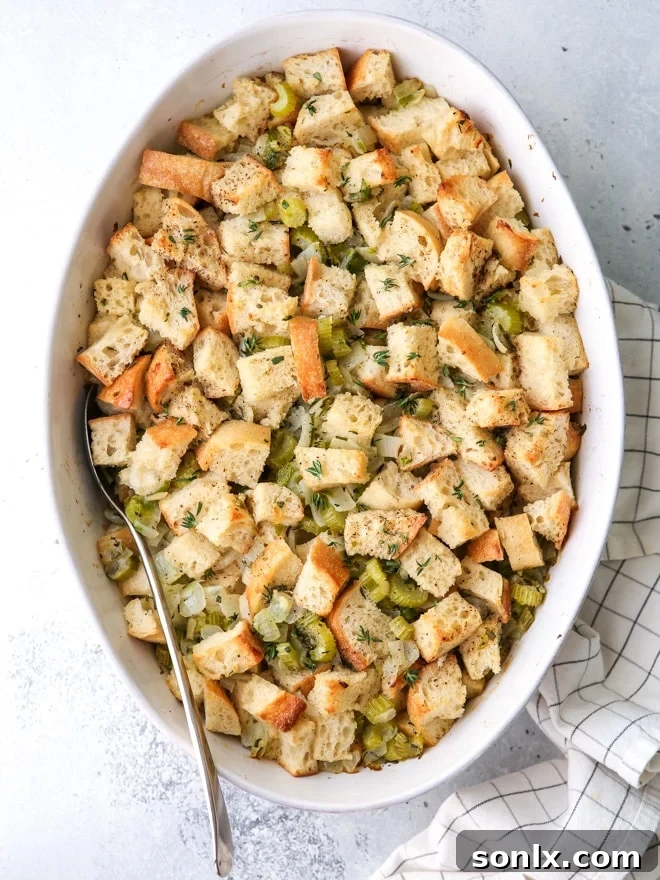
Easy Classic Stuffing: The Ultimate Traditional Recipe for Any Occasion
This timeless stuffing recipe brings together simple, high-quality ingredients like crusty artisan bread and a medley of fresh herbs, requiring only a few minutes of hands-on preparation. It’s the quintessential cozy and utterly delicious side dish, perfect for Thanksgiving, Christmas, or any festive gathering throughout the year.
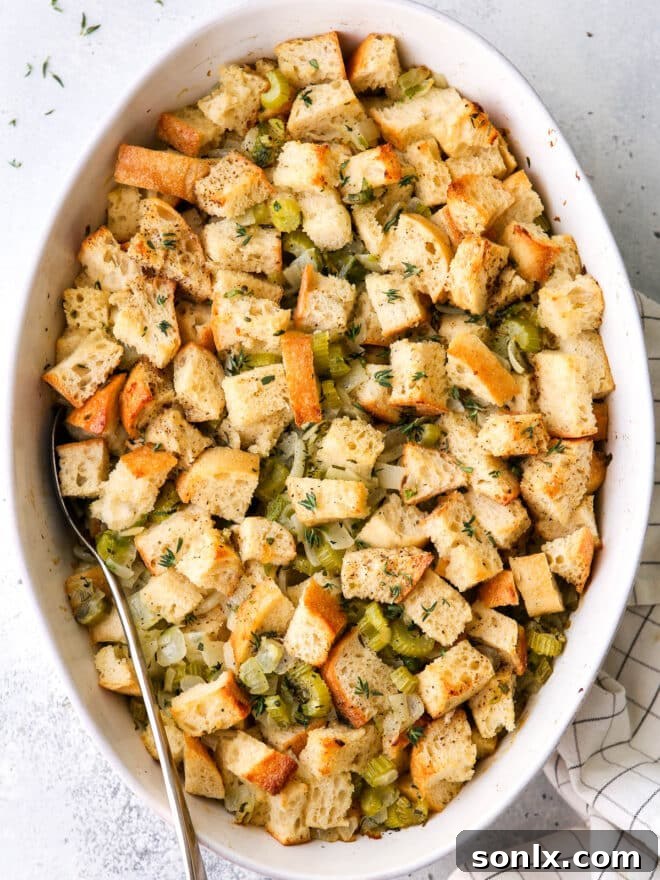
Often perceived as the unsung hero of many holiday tables, stuffing quietly holds a place of honor, sometimes even overshadowing the main course. Who can truly resist spooning generous heaps of this aromatic, savory goodness onto their plate, ready to be smothered in rich homemade gravy? For many, Thanksgiving simply wouldn’t be complete without its comforting presence. While elaborate, loaded-up stuffing recipes certainly have their appeal, there’s an undeniable charm and satisfaction in a simple, uncomplicated, traditional stuffing that has stood the test of time.
This recipe focuses on the core elements that make classic stuffing truly spectacular: perfectly seasoned bread, tender vegetables, and fragrant fresh herbs, all bound together with a savory broth. It’s a dish that evokes warmth, nostalgia, and the joyous spirit of holiday celebrations, proving that sometimes, the simplest recipes are indeed the very best.
Why This Is The Best Classic Stuffing Recipe
In a world full of complex culinary creations, sometimes the most cherished dishes are those that honor tradition and simplicity. This classic stuffing recipe exemplifies this philosophy, offering a perfect balance of flavor, texture, and ease of preparation. Here’s why this particular recipe stands out as the absolute best for your holiday table or any special occasion:
- Simple, High-Quality Ingredients Make All the Difference: The foundation of any exceptional dish lies in its ingredients. This recipe champions quality over quantity, using fresh, wholesome components like artisan bread and vibrant fresh herbs. These simple ingredients, when chosen with care, contribute immense depth of flavor, creating a stuffing that tastes authentically homemade and utterly satisfying. You’ll notice the difference that fresh herbs and good bread make from the very first bite.
- It’s a Cinch to Put Together, Either Just Before Serving or in Advance: Holiday cooking can be stressful, but this stuffing recipe is designed to ease your burden. Its straightforward steps make it incredibly easy to assemble, even amidst the chaos of a busy kitchen. Furthermore, its flexibility allows for significant make-ahead preparation, freeing up valuable time on the big day. Whether you prefer to bake it fresh or prep it days in advance, the delicious results are guaranteed.
- This Stuffing Has Such Great Buttery Herb Flavor: The combination of generous butter and a symphony of fresh herbs creates an incredibly rich and aromatic flavor profile. Each spoonful is infused with the warm, earthy notes of sage, thyme, and rosemary, perfectly complemented by the savory sweetness of sautéed onions and celery. This harmonious blend of flavors is what defines classic stuffing and keeps everyone coming back for more.
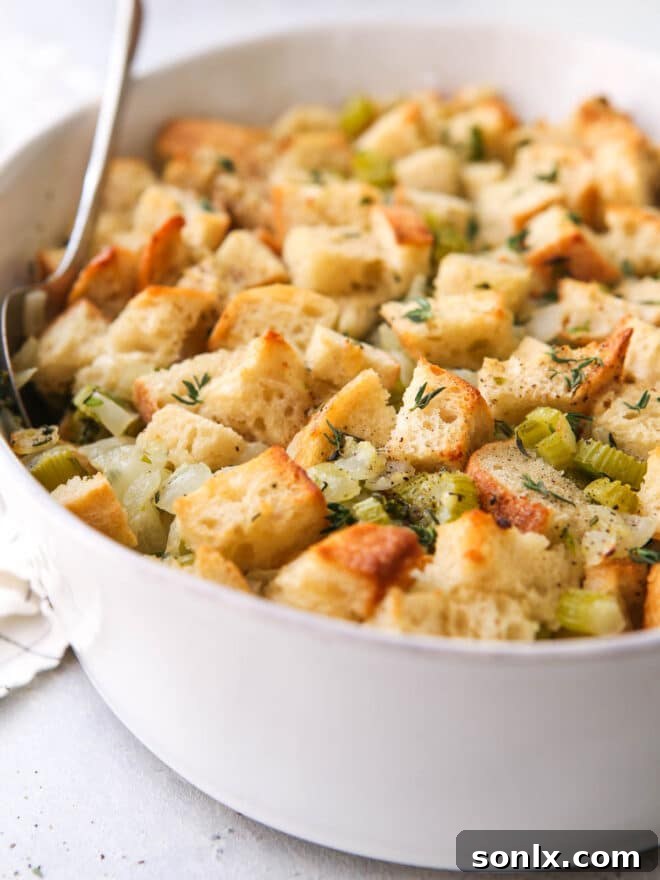
- It’s Crispy at the Edges and Soft Inside: Texture is paramount in a truly great stuffing. This recipe achieves that coveted contrast: a wonderfully golden, slightly crispy crust that gives way to a moist, tender, and incredibly flavorful interior. The baked bread cubes soak up all the delicious broth and butter, ensuring a perfectly soft core, while the uncovered baking period creates those irresistible browned edges.
- Goes Great With All Types of Main Dishes: While stuffing is often synonymous with turkey, its versatile flavor profile makes it an excellent accompaniment to a wide array of main courses. Whether you’re serving roasted chicken, ham, pork loin, or even a vegetarian roast, this classic stuffing recipe will complement and enhance your meal, making it a beloved addition to any dinner spread, not just holidays.
Table of Contents
- Why this is the best classic stuffing recipe
- Ingredients you’ll need
- How to make this classic stuffing
- Use this recipe as starting point
- Recipe FAQs
- More side dishes
- Get the recipe
Key Ingredients for the Perfect Classic Stuffing
Crafting the perfect homemade stuffing doesn’t require a long list of exotic ingredients. Instead, it relies on a handful of foundational components that, when combined, create a symphony of classic flavors. Here’s a detailed look at everything you’ll need for this traditional stuffing recipe, ensuring a delicious outcome every time (the full recipe details are at the end of this article):
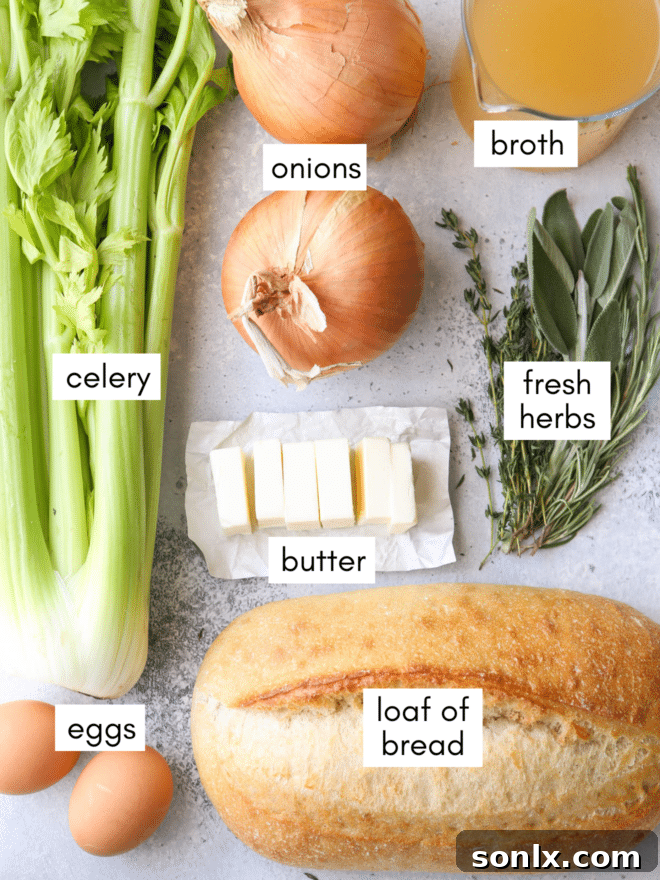
- Artisan Bread: The cornerstone of any great stuffing. While some recipes call for stale bread, using a good quality, slightly firm artisan loaf allows you to control the drying process and ensures superior flavor and texture. Choose varieties like sourdough, French bread, or a rustic country loaf. The robust structure of artisan bread holds up beautifully, absorbing the liquids without becoming mushy. Avoid overly soft or sweet breads unless you’re aiming for a different flavor profile.
- Butter: This is a non-negotiable ingredient, and for very good reason! Butter is essential for sautéing the vegetables, infusing the entire dish with a rich, savory depth and a luxurious mouthfeel. It also contributes significantly to the golden-brown crust and overall coziness of the stuffing. Don’t skimp on the butter; it’s a key player in the classic flavor.
- Onions and Celery: These aromatic vegetables form the traditional “mirepoix” base for stuffing. When sautéed in butter, they become sweet, tender, and incredibly fragrant, providing a savory foundation that elevates all the other flavors. Use plenty of both for a balanced, rich taste and a pleasant textural element.
- Fresh Herbs: This is where the magic truly happens. While dried herbs can be used in a pinch, fresh herbs are vastly superior for their vibrant aroma and intense flavor. Look for a “poultry herb blend” at your grocery store, which typically includes fresh rosemary, thyme, and sage – the classic trio for holiday stuffing. These herbs impart an earthy, aromatic quality that is synonymous with traditional holiday dishes. Chop them finely to distribute their flavors evenly.
- Broth/Stock: The liquid component that moistens the bread and infuses the stuffing with additional savory notes. You can use turkey, chicken, or vegetable broth, depending on your dietary preferences and what you have on hand. Homemade broth will always offer the richest flavor, but good quality store-bought broth works perfectly well.
- Eggs: Eggs play a crucial role in binding the stuffing together, providing structure and richness. They help to create that desired moist yet cohesive texture, preventing the stuffing from becoming too crumbly. Lightly whisk them before adding to ensure they are evenly distributed throughout the bread mixture.
- Salt and Black Pepper: Basic seasonings that are vital for enhancing all the other flavors. Season generously, tasting as you go, to ensure the stuffing is perfectly balanced. Freshly ground black pepper offers a more potent and aromatic punch than pre-ground varieties.
How to Make This Classic Stuffing: Step-by-Step Guide
Making delicious homemade stuffing is surprisingly simple, and following these steps will ensure a perfectly moist, flavorful, and beautifully textured side dish. Get ready to create a holiday favorite with ease!
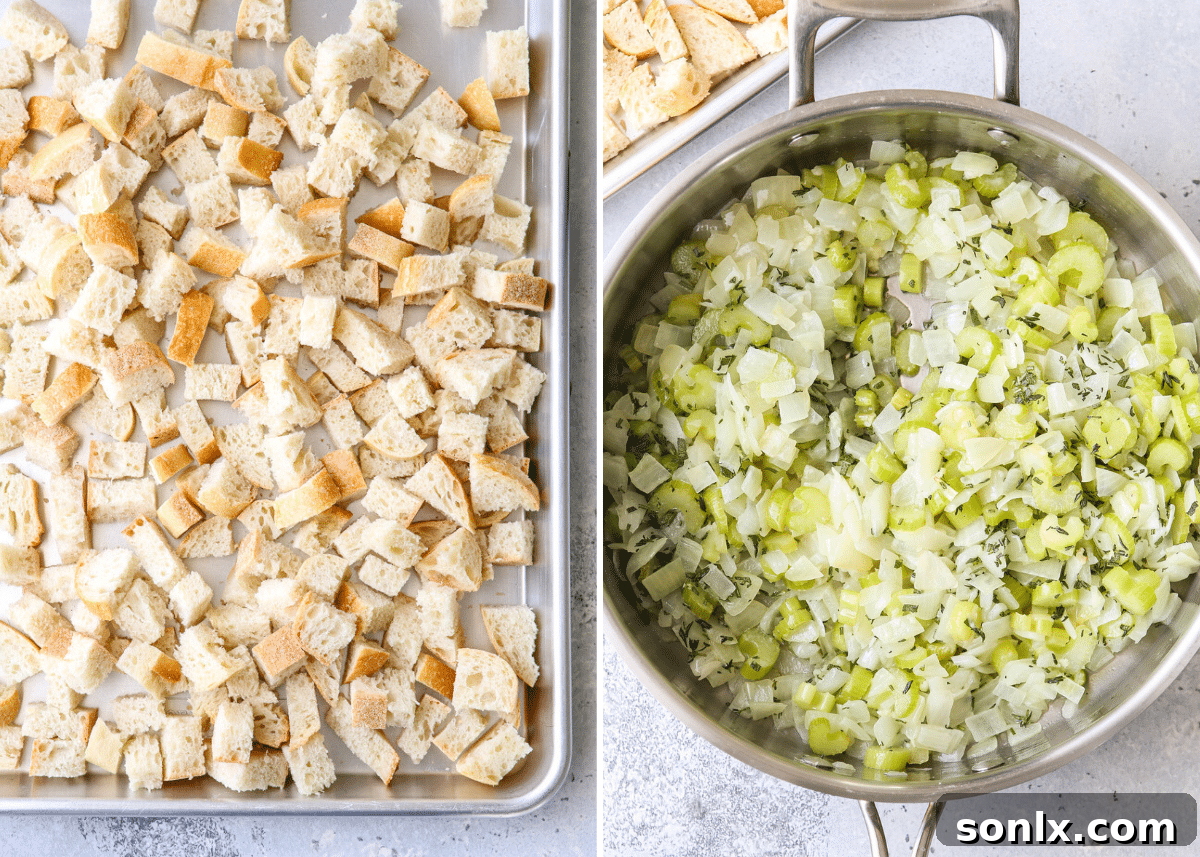
- Prepare and Toast the Bread: The first crucial step is to cut your artisan bread into uniform ½-inch cubes. This ensures even drying and baking. Spread the cubes out evenly on a large baking sheet. Toast them in a 225°F (107°C) oven for about 30 minutes, or until they are thoroughly dried out and slightly firm. Alternatively, you can leave the cubed bread uncovered on the counter overnight to achieve the same result. The goal is to dry them out, not to toast them deeply, so they can absorb the broth without becoming soggy.

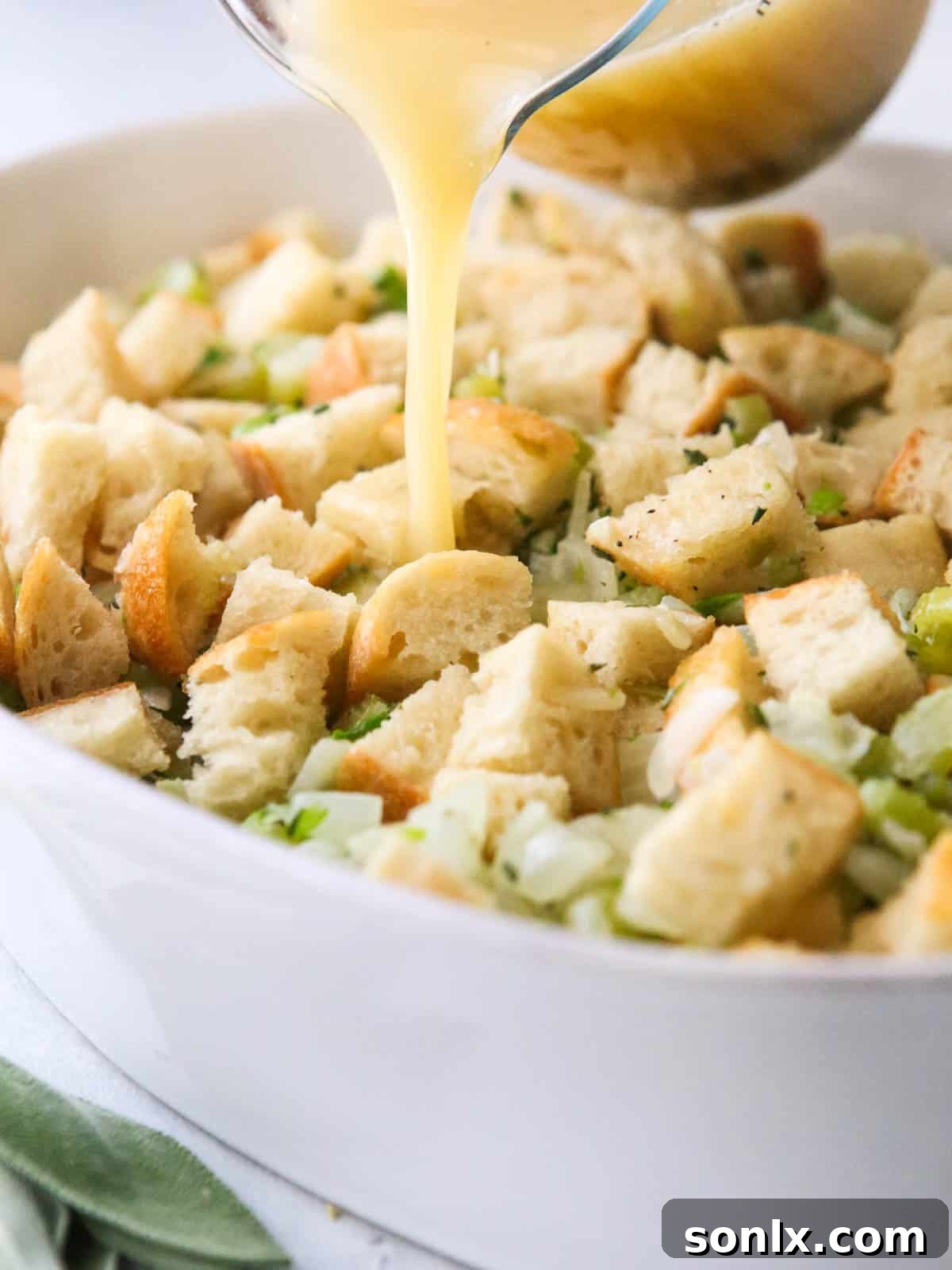
- Sauté the Vegetables and Herbs: In a large skillet, melt the butter over medium heat. Add the chopped onions and celery, along with a pinch of salt and pepper. Cook them until they are soft, tender, and translucent, which usually takes about 5-7 minutes. Once softened, add the minced garlic and your fresh chopped herbs (rosemary, thyme, sage). Sauté for just 1 minute more, until the herbs become wonderfully fragrant. Be careful not to burn the garlic.
- Combine Ingredients: Transfer the dried bread cubes and the sautéed vegetable and herb mixture into a very large mixing bowl. Toss them gently to combine, ensuring the aromatics are evenly distributed throughout the bread. Then, transfer this mixture into a greased 9×13 inch baking dish or casserole.
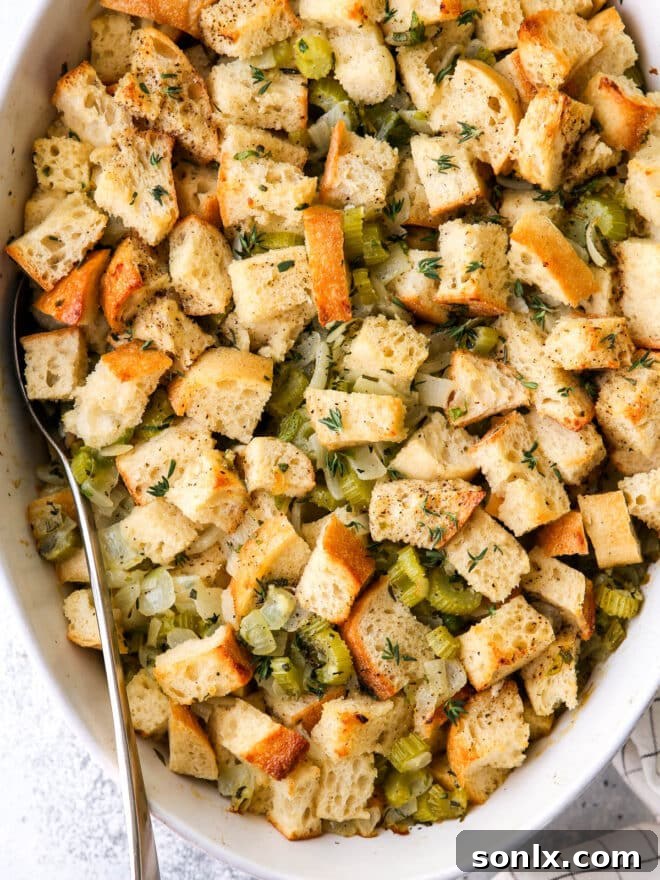
- Moisten with Broth and Eggs: In a separate bowl, whisk together the turkey, chicken, or vegetable broth with the large eggs. This liquid mixture is what will bind and moisten your stuffing. Slowly and evenly pour the broth-egg mixture over the bread and vegetable mixture in the baking dish. It’s important to moisten all of the bread cubes as much as possible. You can gently press the bread down into the liquid with the back of a spoon or spatula to help it absorb the liquid uniformly.
- Bake to Perfection: Cover the baking dish tightly with aluminum foil. Bake in a preheated 375°F (190°C) oven for 30 minutes. The foil helps to steam the stuffing, ensuring a moist interior. After 30 minutes, remove the foil and continue baking for another 15-20 minutes, or until the top is beautifully golden brown and crispy at the edges. This uncovered baking period creates that irresistible textural contrast.
Customize Your Stuffing: Use This Recipe as a Starting Point
While this classic stuffing recipe is perfect in its traditional form, it also serves as an excellent foundation for customization. If you prefer your stuffing loaded with extra flavors and textures, you’re in luck! Feel free to use this recipe as a creative jumping-off point to craft the stuffing of your dreams. Here are some fantastic ideas to inspire your culinary adventures:
- Experiment with Different Breads: The type of bread significantly impacts the final taste and texture. Instead of a basic artisan loaf, consider sourdough bread for a tangy depth, brioche for a richer, slightly sweeter profile, cornbread for a distinct southern flair, or even challah for a soft, buttery crumb. Each offers a unique character.
- Add Protein for Heartiness: For a more substantial and flavorful stuffing, incorporate cooked meats. Add up to 1/2 pound of fully cooked sausage (like Italian sausage or sage sausage), crispy crumbled bacon, or diced ham. Sauté the sausage or bacon until browned before adding it to the vegetable mixture, rendering some of its fat to cook the aromatics for extra flavor.
- Introduce More Vegetables: Expand the vegetable base beyond just onions and celery. Sauté sliced mushrooms (cremini or shiitake) for an earthy umami boost, add thinly sliced leeks for a milder onion flavor, or fold in roasted butternut squash cubes for sweetness and a vibrant color. Roasted bell peppers or parsnips can also add delicious complexity.
- Incorporate Fruits for Sweet-Savory Notes: A touch of sweetness can beautifully complement the savory herbs. Add 1/2 to 1 cup of dried fruits like tart dried cherries or cranberries for a pop of color and chewiness. Fresh diced apples (like Granny Smith or Honeycrisp) also work wonderfully, adding a subtle sweetness and crisp texture.
- Boost Texture with Nuts: For an added layer of crunch and nutty flavor, mix in up to 1/2 cup of toasted nuts. Pecans, walnuts, or sliced almonds are excellent choices. Toast them lightly beforehand to enhance their flavor and aroma before adding them to the bread mixture.
Classic Stuffing Recipe FAQs
Holidays like Thanksgiving and Christmas are notoriously busy, and preparing as much food in advance as possible is a lifesaver. This classic stuffing is an ideal candidate for make-ahead preparation, as it keeps well and reheats beautifully. You have two excellent options for making it ahead:
Option 1 (Assemble & Bake Later): Prepare the stuffing exactly as directed, but stop before the baking step. Cover the casserole dish tightly with aluminum foil and refrigerate for up to 48 hours. When ready to bake, add an extra 10-15 minutes to the covered baking time to account for the chilled temperature. Then, proceed with the uncovered baking until golden.
Option 2 (Bake & Reheat): Bake the stuffing completely as directed in the recipe. Allow it to cool entirely before covering it tightly and storing it in the refrigerator for up to 3 days. To reheat, bake the covered stuffing at 350°F (175°C) until it’s thoroughly warmed through, typically about 30 minutes. If you desire those delightful crispy edges, remove the foil for the last 5-10 minutes of reheating.
Leftover stuffing should be treated with care to maintain its freshness and safety. Once cooled, transfer any remaining stuffing to an airtight container and store it in the refrigerator. It will keep well for up to 3 days. For reheating individual portions, the microwave works perfectly. If you have a larger amount, you can reheat it in the oven using the “Bake & Reheat” instructions provided in the make-ahead section above.
Absolutely! This simple classic stuffing recipe is designed to be highly adaptable. It provides a robust and delicious base that welcomes various modifications. Feel free to use this as a culinary canvas to create a stuffing that perfectly suits your taste. For detailed suggestions on different types of bread, additional vegetables, proteins, fruits, and nuts you can incorporate, please refer to my suggestions for substitutions and variations above in the “Use this recipe as a starting point” section.
More Delicious Holiday Side Dishes
No holiday feast is complete without a spectacular spread of side dishes to complement the main course. If you’re planning a festive meal, these additional recipes will round out your table beautifully, offering a variety of flavors and textures that pair wonderfully with this classic stuffing.
Easy Classic Stuffing Recipe
Easy Classic Stuffing
Pin Recipe
Leave a Review
Ingredients
- 1 lb loaf of artisan bread
- ½ cup unsalted butter
- 1 large onion , chopped
- 4 ribs celery , chopped
- 2 garlic cloves , minced
- 1 teaspoon coarse salt
- ½ teaspoon freshly ground black pepper
- 1 heaping teaspoon fresh chopped rosemary
- 1 heaping teaspoon fresh chopped thyme
- 1 heaping teaspoon fresh chopped sage
- 2 cups turkey, chicken, or vegetable broth
- 2 large eggs
Equipment
Instructions
-
Cut your chosen artisan bread into ½-inch cubes. Spread the cubes out evenly on a large sheet pan. Toast in a preheated 225°F (107°C) oven for 30 minutes, or until the bread cubes are thoroughly dried out. Alternatively, you can leave the cubed bread out uncovered overnight to dry out naturally. This step is essential for the bread to absorb the liquid without becoming soggy.
-
Melt the unsalted butter in a large skillet over medium heat. Add the chopped onions and celery. Season with a generous pinch of salt and freshly ground black pepper. Cook, stirring occasionally, until the vegetables have softened and become translucent, which typically takes about 5 minutes. They should be tender and fragrant.
-
Add the minced garlic and all the fresh chopped herbs (rosemary, thyme, and sage) to the skillet with the softened vegetables. Cook for just 1 minute more, stirring constantly, until the garlic is fragrant and the herbs release their aromas. Be careful not to burn the garlic.
-
In a large mixing bowl, combine the toasted bread cubes and the sautéed vegetable-herb mixture. Toss gently until all the ingredients are well incorporated. Then, transfer this entire mixture into a greased 9×13 inch baking pan or casserole dish, spreading it out evenly.
-
In a separate bowl, whisk together the turkey, chicken, or vegetable broth with the two large eggs until well combined. Slowly pour this liquid mixture over the bread mixture in the baking dish. Take your time to pour it evenly, ensuring that all the cubed bread gets adequately moistened. You can gently press the bread down with the back of a spoon to help it soak up the liquid uniformly.
-
Cover the baking dish tightly with aluminum foil. Bake in the preheated 375°F (190°C) oven for 30 minutes. After 30 minutes, remove the foil and continue to bake for another 15-20 minutes, or until the top of the stuffing is beautifully golden brown and crispy at the edges. Serve hot and enjoy!
Notes
- To make ahead: This stuffing is perfect for preparing in advance.
1) Assemble & Bake Later: Prepare the stuffing as directed without baking. Cover tightly and refrigerate for up to 48 hours. When baking from cold, add an extra 10-15 minutes to the initial covered bake time.
2) Bake & Reheat: Bake the stuffing completely as directed, then cool it completely. Cover and store in the fridge for up to 3 days. To reheat, bake covered at 350°F (175°C) until warmed through, about 30 minutes. For crispy edges, remove the foil for the last 5-10 minutes. - See the “Use this recipe as a starting point” section above for suggestions on delicious flavor variations, ingredient additions, and substitutions to customize your stuffing.