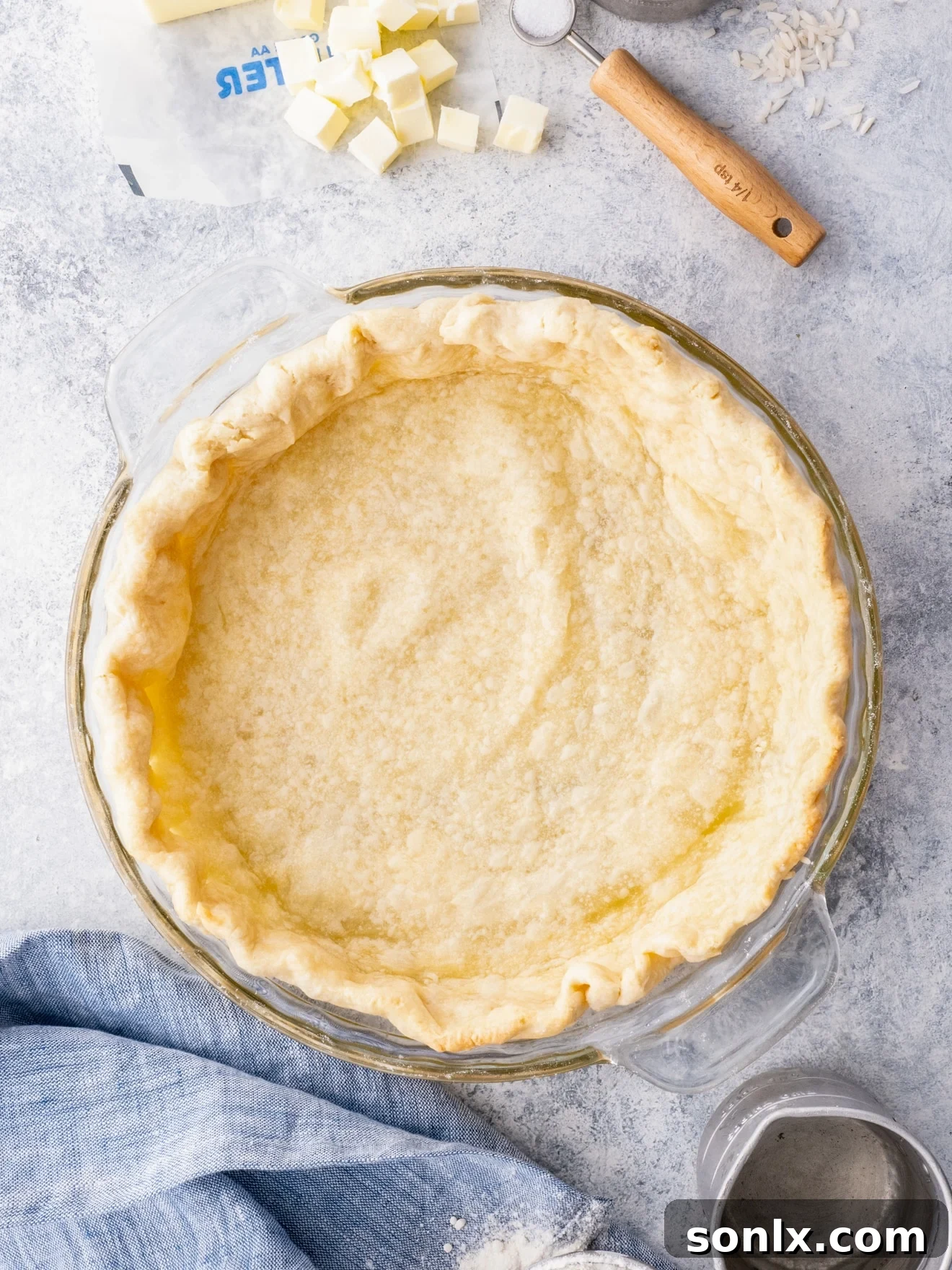
Achieving a perfectly crisp, beautifully shaped pie crust is the foundation of many beloved desserts and savory dishes. Yet, for many home bakers, the thought of blind baking can be daunting, often leading to shrunken sides, soggy bottoms, or uneven textures. But what if there was a simple, foolproof method to ensure a flawless crust every single time? Learn from common baking mistakes and follow this comprehensive guide to master the art of blind baking, guaranteeing no shrinking and requiring no specialized tools.
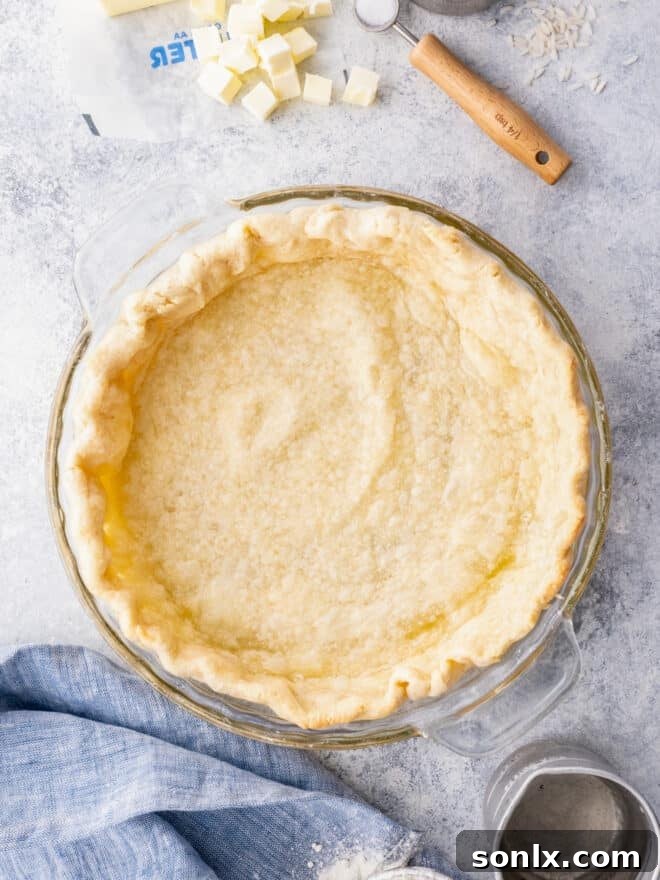
Throughout my baking journey, I’ve encountered countless mishaps – from sunken cakes to burnt cookies. However, few things are as disheartening as pulling a sad, shrunken, and slumped pie crust from the oven after hours of effort. Early in my hobby, I tried numerous blind baking tutorials that simply didn’t deliver on their promises. Through extensive trial and error, coupled with a deep dive into baking science, I’ve refined a method that consistently yields spectacular results.
This isn’t just another set of instructions; it’s a carefully tested process designed to eliminate common frustrations. By understanding the principles behind each step and applying these practical tips and tricks, you’ll confidently create pie crusts that are perfectly golden, maintain their shape, and provide the ideal base for any filling. Say goodbye to soggy bottoms and misshapen edges, and prepare to elevate your pie-making skills to a professional level.
Follow these precise steps, embrace the wisdom gleaned from years of baking, and I guarantee you’ll achieve perfect blind-baked pie crusts, every single time.
Table of Contents
- Understanding Blind-Baking and Par-Baking: What Do They Mean?
- Why Blind Bake? The Science Behind a Perfect Crust
- Essential Tools and Ingredients for Blind Baking
- How to Blind Bake Pie Crust: A Step-by-Step Guide
- Step 1: Prepare Your Pie Crust
- Step 2: The Critical Chill – Freeze Your Pie Crust
- Step 3: Fill with Pie Weights for Stability
- Step 4: Bake to Perfection – Fully or Partially
- Pro Tips for Blind Baking Success
- Troubleshooting Common Blind Baking Issues
- Frequently Asked Questions About Blind Baking
- Delicious Pie Recipes That Use Blind-Baked Crusts
“Thanks so much! I did make this crust and it’s the first time I ever made a pie crust without shrinkage 🙂 I love this method.” — reader Patricia
Understanding Blind-Baking and Par-Baking: What Do They Mean?
Before diving into the steps, it’s crucial to understand the terminology. While often used interchangeably, “blind baking” and “par-baking” refer to distinct processes, each serving a specific purpose in pie preparation.
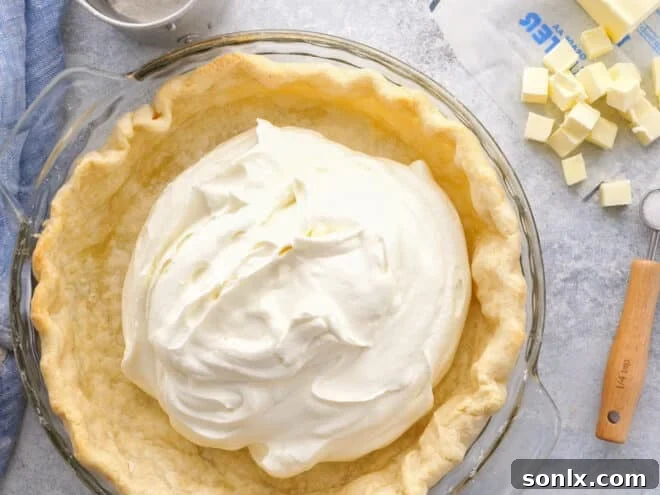
Blind Baking (Full Bake): This refers to baking a pie crust completely on its own, without any filling. The goal is to achieve a fully cooked, golden-brown crust that is ready to hold a no-bake filling. This method is essential for recipes where the filling does not require any oven time, or for fillings that are simply poured into a pre-baked shell.
Examples of pies that require a completely blind-baked crust include:
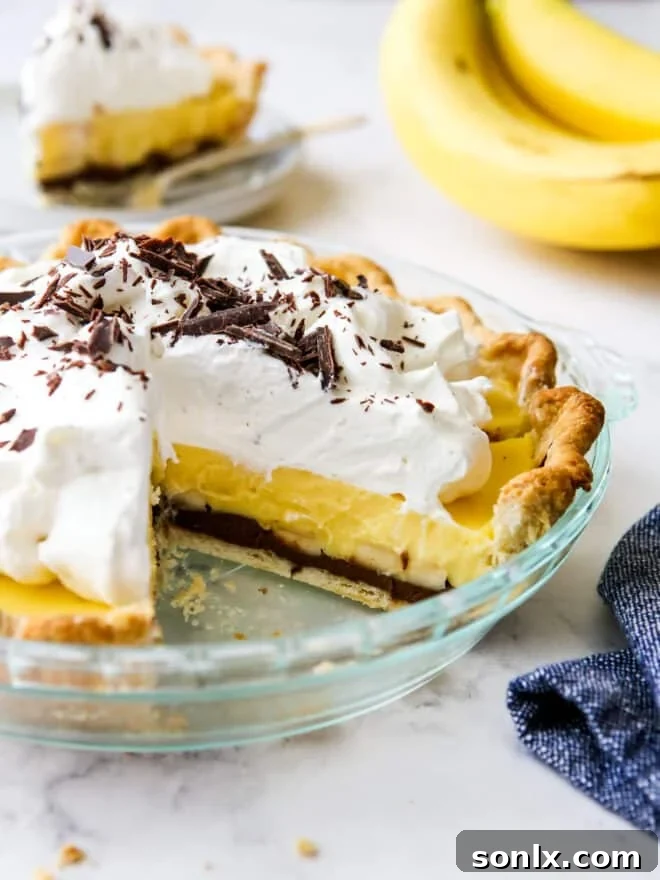
- Cream pies (e.g., Banana Cream Pie, Coconut Cream Pie)
- French Silk Pie
- Ice Cream Pies
- Chocolate Mousse Pies
Par-Baking (Partial Bake): Also known as partial blind-baking, this method involves baking the pie shell only partially before adding a liquid or runny filling. The crust is then returned to the oven with the filling to finish baking. The primary reason for par-baking is to prevent a “soggy bottom” – a common issue with pies that have moist fillings. By giving the crust a head start, it creates a protective barrier against the moisture from the filling.
Examples of pies that benefit from a par-baked crust include:
- Custard pies (e.g., Buttermilk Pie, Chess Pie)
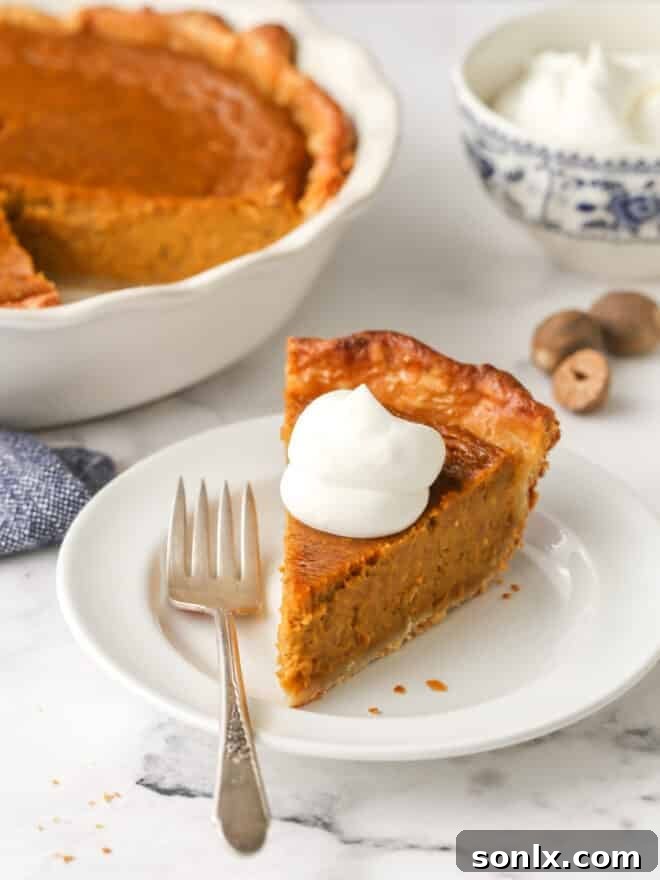
- Pumpkin Pie
- Pecan Pie
- Lemon Meringue Pie
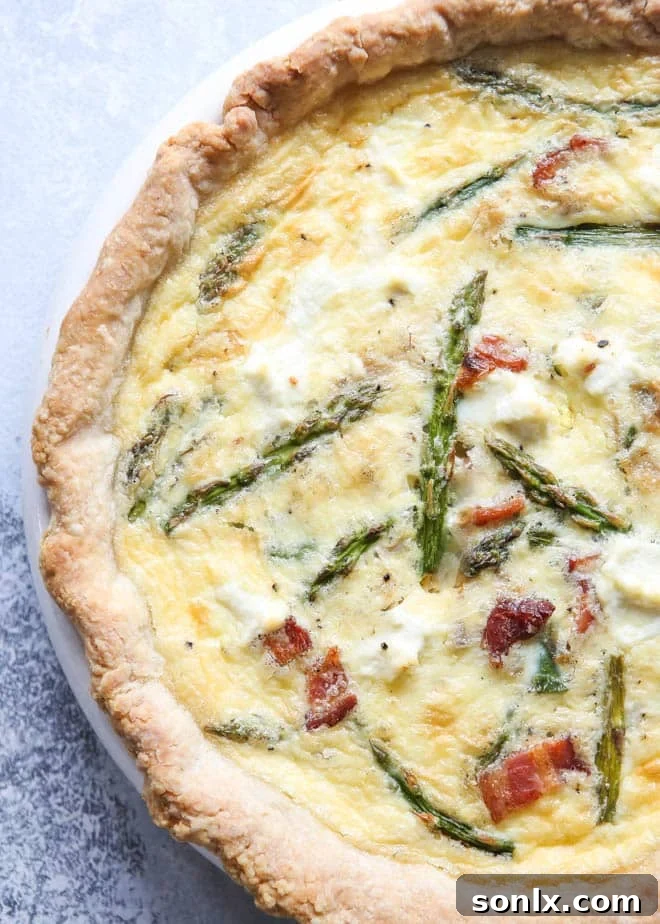
- Quiche
- Fruit pies with very juicy fillings (e.g., Rhubarb Pie, Berry Pies)
Why Blind Bake? The Science Behind a Perfect Crust
Blind baking isn’t just a suggestion; it’s often a necessity for certain pie recipes. Understanding *why* we blind bake helps to appreciate the importance of each step and prevents common pitfalls.
The main reasons to blind bake are:
- Preventing a Soggy Bottom: This is arguably the most crucial reason. Many pie fillings, especially those with high moisture content like custards or juicy fruits, can seep into an unbaked crust, turning it into a gummy, unappetizing layer. Blind baking creates a partially or fully cooked barrier that resists moisture absorption, ensuring a crisp, flaky base.
- Ensuring Even Baking: Pie crusts often take longer to cook through than their fillings. If you bake them together from raw, the filling might be perfectly set while the crust remains pale and undercooked, particularly on the bottom. Blind baking ensures the crust is thoroughly baked and golden, contributing to better flavor and texture.
- Maintaining Shape: Without a filling to support its structure, an unbaked pie crust can easily slump down the sides of the pie plate as the butter melts and the gluten relaxes in the oven. Blind baking with pie weights helps to stabilize the crust, setting its shape before the filling is added.
- Pre-cooking for No-Bake Fillings: For fillings that don’t require any baking (like many cream or mousse fillings), the crust must be fully cooked and cooled before the filling is added. Blind baking provides this essential step.
In essence, blind baking gives your pie crust the best possible chance to shine, providing the structural integrity and textural contrast needed for a truly exceptional pie.
Essential Tools and Ingredients for Blind Baking
Before you begin, gather these simple items. You likely have most of them already in your kitchen, proving that delicious results don’t require expensive gadgets!
- Your Favorite Pie Dough: Whether homemade or store-bought, ensure it’s well-chilled.
- Pie Dish or Pie Plate: Standard 9-inch (23 cm) pie dishes work best. Glass, ceramic, or metal are all suitable.
- Rolling Pin: To roll out your dough to an even thickness.
- Sharp Knife or Pastry Wheel: For trimming edges.
- Aluminum Foil or Parchment Paper: To line the crust before adding weights. Foil is often preferred for its moldability.
- Pie Weights: These are critical for preventing shrinkage and puffing. You can use:
- Ceramic Pie Weights: Specifically designed for this purpose, reusable.
- Dried Beans or Rice: An economical and highly effective alternative. Keep a dedicated batch for baking, as they shouldn’t be cooked for consumption after being baked multiple times.
- Baking Sheet (Optional but Recommended): Placing your pie dish on a baking sheet makes it easier to transfer in and out of the oven and catches any potential spills.
- Fork: For “docking” the crust (pricking holes).
Having these tools ready will streamline your blind baking process and contribute to your success.
How to Blind Bake Pie Crust: A Step-by-Step Guide
Blind baking is surprisingly straightforward when you adhere to these four crucial steps. Each stage plays a vital role in preventing common issues and ensuring a perfectly crisp, beautifully shaped crust. We’ll explore each step in detail below, providing the ‘why’ behind the ‘what’ to empower your baking.
- Prepare Your Pie Dough: Roll it out, transfer to the dish, and crimp the edges.
- Freeze for Firmness: A quick freeze solidifies the butter, helping the crust hold its shape.
- Add Baking Weights: These exert even pressure, preventing shrinking and slumping.
- Bake Until Set: Precise baking times ensure the crust is cooked through, either partially or fully.
Step 1: Prepare Your Pie Crust
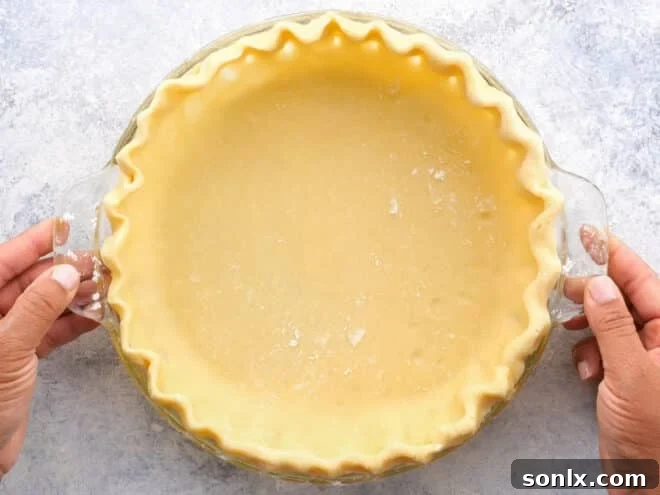
The journey to a perfect blind-baked crust begins with a well-made pie dough. While you’re welcome to use any pie crust recipe you prefer, I highly recommend exploring my go-to flaky pie crust recipe or my flavorful buttermilk pie crust variation. For those seeking efficiency, learn how to make pie crust quickly in a food processor!
If convenience is your priority, these same instructions can be followed with a quality store-bought pie crust. The key is to handle the dough gently but efficiently to keep it cold.
First, lightly flour your work surface and rolling pin. Roll your chilled pie dough evenly to about 1/8-inch thickness, ensuring it’s large enough to extend beyond the edges of your pie dish. Carefully transfer the rolled dough into your pie dish or pie plate. Trim any excess dough, leaving about a 1/2-inch overhang. Then, crimp the edges as desired, creating a decorative and functional border that will help hold the crust’s shape.
Step 2: The Critical Chill – Freeze Your Pie Crust
This step is non-negotiable for preventing shrinkage and achieving a crisp texture. Once your pie crust is prepared in the pie dish with its edges crimped, place it in the freezer for a minimum of 30 minutes. The colder the crust, the better it will perform in the oven.
Why is freezing so important? Pie dough relies on cold butter (or fat) for flakiness. When the pie crust goes into a hot oven, the butter begins to melt. If the butter melts too quickly before the gluten in the flour has a chance to set, the crust will lose its structure and slump down the sides of the pan. Freezing solidifies the butter, giving it more resistance to the oven’s heat. This prolonged chill ensures the crust holds its shape beautifully as it bakes, creating those coveted layers and preventing those frustrating shrunken sides.
Make-ahead tip: You can freeze the prepared pie crust in the pie dish for up to 1 month. Simply ensure it’s tightly double-wrapped with plastic wrap to prevent freezer burn and absorption of freezer odors. This is an excellent strategy for holiday baking or meal prep!
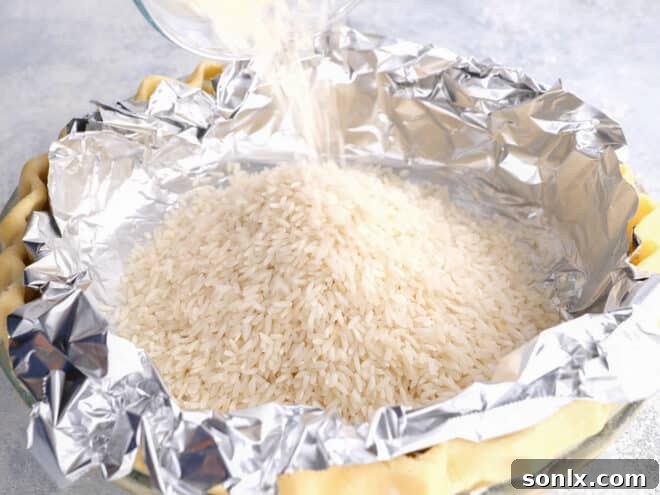
Step 3: Fill with Pie Weights for Stability
This step is absolutely critical and should not be skipped! If you don’t fill the crust with pie weights, there’s nothing to counteract the forces that cause the dough to shrink and slump as it bakes. Without weights, the crust will inevitably pull away from the sides of the pan or become misshapen, ruining its aesthetic and functionality.
You have a couple of excellent options for pie weights:
- Dedicated Pie Weights: You can purchase ceramic pie weights specifically designed for this purpose. They are reusable and conduct heat well.
- Dried Rice or Beans: My preferred choice! These are both incredibly cheap and easy to find, making them accessible to everyone. They conform perfectly to the shape of the crust and provide excellent weight distribution. Store a dedicated batch for baking, as they will dry out further in the oven and shouldn’t be cooked for eating afterwards.
How to apply the weights:
- Take a sheet of aluminum foil (or crinkled parchment paper). Grease one side lightly with non-stick cooking spray. The greased side should face down onto the pie crust.
- Gently press the foil or parchment paper into the frozen pie crust, ensuring it’s flush with the entire surface of the crust, extending all the way up the sides and covering the crimped edges. This prevents the edges from over-browning too quickly and protects the crust from direct contact with the weights. Use more than one sheet if necessary to completely cover the crust.
- Next, fill the lined crust all the way to the very top with your chosen pie weights. This is crucial! Filling the weights to the brim ensures that the crust has no room to shrink or move during baking. If you only partially fill the crust, the part above the weights will likely slump down, resulting in uneven sides.
The weights will provide the necessary pressure to hold the crust’s shape against the sides of the dish, ensuring a perfectly formed shell.
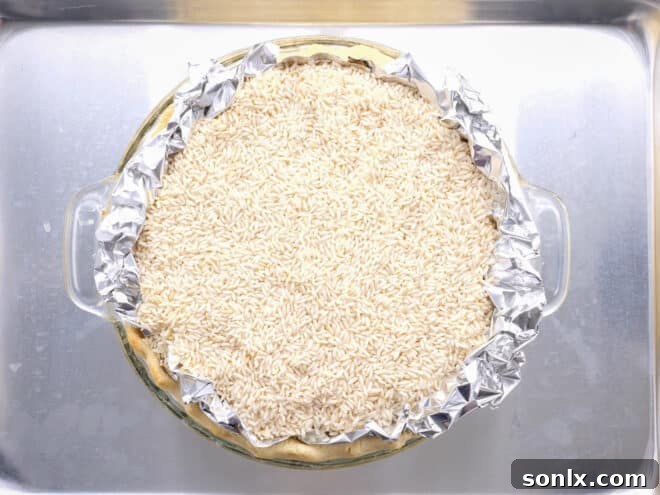
Step 4: Bake to Perfection – Fully or Partially
With your crust prepared and weighted, it’s time to bake. Preheat your oven to 425°F (220°C). Place the prepared pie dish, preferably on a baking sheet, into the hot oven. The baking sheet helps with even heat distribution and makes it easier to handle.
Bake for approximately 20-25 minutes. During this initial bake, you should observe the edges of the crust starting to turn golden brown and appear fully baked. The high temperature rapidly sets the crust’s structure, preventing shrinkage.
(Many other tutorials I’ve encountered suggest baking for only 10-15 minutes. However, in my extensive experience, this is rarely sufficient. A shorter baking time often means the sides of the crust haven’t fully set, leading to potential shrinking or slumping once the weights are removed. Give it the full 20-25 minutes for optimal results.)
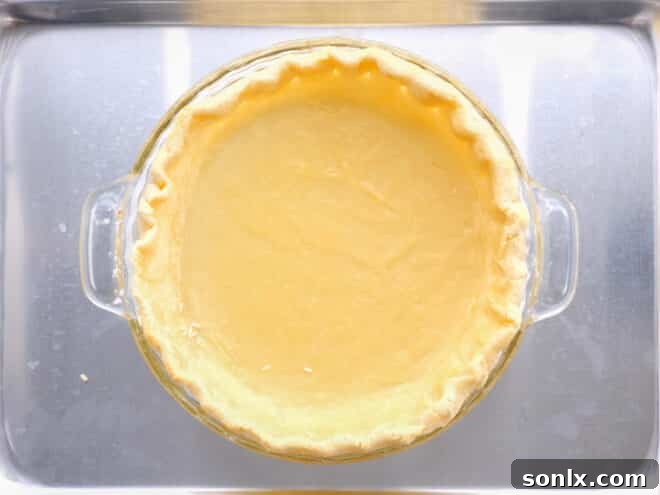
After the initial bake, carefully remove the pie from the oven. Use the edges of the foil or parchment paper to gently lift the hot pie weights out of the crust. Transfer the weights to a heat-safe bowl or plate to cool completely before storing them for future use.
Now, determine if your recipe calls for a partially or fully baked crust:
- If you only need a partially baked crust: The crust is now ready for your filling! Add your desired filling mixture immediately and bake the pie according to your recipe’s instructions. The partial bake has created that essential barrier against a soggy bottom.
- If you need a fully baked crust: This step ensures a crisp, golden bottom. Using a fork, gently dock (prick holes) the bottom of the pie crust. This allows steam to escape and prevents the bottom from puffing up. Return the crust to the oven (still at 425°F or 220°C) and bake for an additional 5-10 minutes. The bottom of the crust should appear golden brown, firm, and dry. If it puffs up slightly, don’t worry – simply push it back down with the back of a spoon as soon as it comes out of the oven, while it’s still hot and pliable.
Once your crust is baked to the desired level, allow it to cool completely on a wire rack before filling. This prevents condensation and keeps the crust as crisp as possible.
Pro Tips for Blind Baking Success
Beyond the core steps, these expert tips will help you perfect your blind baking technique and avoid common pitfalls, ensuring consistently excellent results every time you bake a pie.
- Store and Reuse Your Weights: Don’t throw away your dried rice or beans! They are perfectly reusable as pie weights. Once they’ve cooled completely, store them in an airtight container for your next pie project. I’ve used the same batch of rice for many years. If you’ve invested in ceramic pie weights, clean and dry them thoroughly before storing.
- Foil vs. Parchment Paper for Lining: While both can be used, I generally prefer aluminum foil for lining the pie crust. Foil is more pliable and can be molded tightly to the contours of the crust, ensuring it’s completely flush against the sides and covering the crimped edges. This prevents the edges from burning prematurely. If you opt for parchment paper, crumple it into a tight ball first, then smooth it out. This makes it softer and easier to press into the pie dish without tearing, allowing it to conform better.
- Watch the Edges to Prevent Burning: Sometimes, even with careful lining, the delicate crimped edges of a pie crust can brown too quickly. If you notice the edges are darkening excessively during the initial bake, ensure they are well covered by the foil. During the second baking phase (after removing the foil and weights for a full bake), you can create a foil pie shield to protect the edges, or purchase a reusable silicone pie shield.
- Never Skip a Step: Each step in this guide has a purpose, rooted in baking science. If you’re tempted to skip the freezing time or decide pie weights aren’t really necessary, resist the urge! These seemingly small details are crucial for guaranteeing a no-shrink, perfectly crisp crust. The extra few minutes are well worth the success.
- Achieve a Golden, Shiny Crust with Egg Wash: For a beautifully golden and slightly shiny finish on your crust edges, brush them with an egg wash before baking. An egg wash is simply 1 whisked egg combined with 1 tablespoon of water. Apply it gently to the exposed crimped edges after the crust is in the pie dish, just before freezing.
- De-puff While Still Hot: If, after the second baking, the bottom of your fully blind-baked crust puffs up slightly (a common occurrence from trapped steam), don’t despair. As soon as you remove it from the oven, while it’s still hot and pliable, gently press it back down with the back of a spoon. It will typically settle into place. If you wait until it cools, it will set in its puffed-up state.
- Don’t Stress Over Minor Imperfections: Even experienced bakers sometimes find their crusts slumping slightly in one spot or baking a little unevenly. It’s perfectly okay! Once your delicious filling is added and your beautiful pie is complete, these minor imperfections will be far less noticeable, and truthfully, no one will care as they enjoy a slice of your homemade masterpiece.
- Storage and Make-Ahead Instructions: A completely blind-baked pie crust is a fantastic make-ahead component. Once fully cooled, it can be stored at room temperature for up to 3 days. For longer storage, wrap it tightly in plastic wrap and then foil, and freeze for up to 1 month. Thaw in the refrigerator overnight before filling and baking (if par-baked) or just before filling (if fully baked).
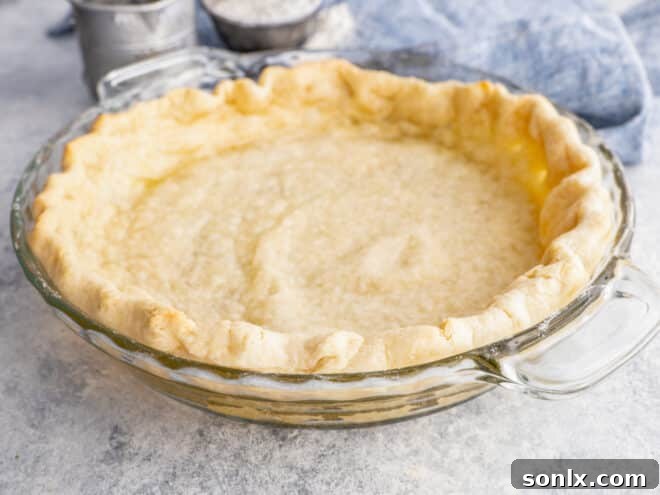
Troubleshooting Common Blind Baking Issues
Even with the best instructions, baking can sometimes present unexpected challenges. Here are solutions to the most common problems encountered during blind baking:
- Shrunken Sides: This is the most frequent complaint. It’s almost always due to the crust not being sufficiently chilled/frozen or not having enough pie weights. Ensure your crust is frozen solid for at least 30 minutes before baking, and fill the weights all the way to the top edge of the crust to provide maximum support. Overworking the dough can also develop too much gluten, causing it to shrink.
- Soggy Bottom: If you’re par-baking and still getting a soggy bottom, it could be that your initial bake wasn’t long enough, or the filling was added before the crust had a chance to cool slightly. Ensure the first bake is truly golden at the edges, and for very wet fillings, consider a full blind bake if the recipe allows. Brushing the par-baked crust with a thin layer of egg white before adding the filling can also create an extra moisture barrier.
- Crust Puffing Up (during full bake): This happens when steam gets trapped under the crust. Docking the bottom of the crust with a fork before the second bake (when weights are removed) helps steam escape. If it still puffs, simply press it down with a spoon immediately after removing it from the oven.
- Burnt Edges: If your beautiful crimped edges are browning too quickly or burning, it means they are exposed to too much direct heat. Ensure your foil or parchment paper covers the entire edge. For the second bake, a pie shield is your best friend.
- Pale Crust: If your crust isn’t golden brown, it might not be baked long enough or your oven temperature is too low. Ensure your oven is accurately preheated to 425°F (220°C) and allow the full recommended baking time, even adding a few extra minutes if necessary, especially for a fully baked crust.
Patience and observation are key in baking. Don’t be afraid to adjust slightly based on your oven’s unique characteristics.
Frequently Asked Questions About Blind Baking
Here are answers to some of the most common questions bakers have about blind baking pie crusts:
- Can I blind bake a gluten-free pie crust?
Yes, you can! The principles remain the same: chilling, using weights, and proper baking times. Gluten-free crusts can sometimes be more delicate, so handle them carefully and ensure they are well-chilled. - Do I need to prick holes (dock) the crust for blind baking?
You should dock the crust with a fork only if you are doing a *full* blind bake and have removed the pie weights. Docking prevents the bottom of the crust from puffing up. For the initial bake with weights, docking isn’t necessary as the weights provide enough pressure. For a *partial* blind bake, you typically don’t dock, as the filling will hold the crust down. - Can I use a glass pie plate for blind baking?
Yes, glass pie plates work wonderfully for blind baking. They conduct heat evenly and allow you to see the browning of the bottom crust, which is very helpful. - How do I store a blind-baked pie crust?
Once completely cooled, a fully blind-baked crust can be stored at room temperature for up to 3 days, or wrapped tightly and frozen for up to 1 month. - My crust still shrunk! What went wrong?
The most common culprits are insufficient chilling/freezing of the dough and not enough pie weights filling the crust completely to the top. Also, overworking the dough can cause gluten to develop too much, leading to shrinkage. Ensure your dough is always very cold and relaxed. - Is it okay if my pie weights touch the edges of the crust?
Yes, in fact, they should! You want the weights to fill the entire crust, right up to the crimped edges. This ensures the edges are supported and don’t slump down during baking. The foil or parchment paper protects the crust from direct contact.
By addressing these common queries, you can bake with greater confidence and achieve outstanding results.
Delicious Pie Recipes That Use Blind-Baked Crusts
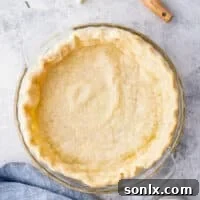
Now that you’ve mastered the art of blind baking, it’s time to put your skills to delicious use! Here are some fantastic recipes that utilize a perfectly pre-baked crust, proving just how versatile and essential this technique is in the world of baking. Prepare to impress with these mouth-watering creations!
How to Blind Bake Pie Crust
1
pie crust
15
30
30
1 15
Pin Recipe
Leave a Review
Ingredients
- 1 prepared pie crust
- 1 pie dish or pan
- Foil
- Pie weights or dried beans/rice
Instructions
-
Roll pie crust out on a lightly floured surface, transfer it to a pie dish, and crimp edges as desired.
-
Place prepared pie crust in the freezer for at least 30 minutes. You can also freeze the pie crust up to 1 month, just make sure it is tightly double-wrapped with plastic wrap.
-
Grease a sheet of aluminum foil with non-stick cooking spray and press it into the frozen pie crust, covering the crimped edges (use more than one sheet of foil if necessary).
-
Fill the foil-lined crust all the way to the top with either pie weights or dried beans or rice.
-
Place prepared crust on a sheet pan and bake at 425°F for about 20-25 minutes. The edges of the crust should appear completely baked and very lightly browned.
-
Use the edges of the foil to lift the weights out of the pie. Transfer to a large bowl to cool, then store weights or beans/rice.
If you need a partially blind baked crust (usually for pies with a more runny filling):
-
Add your filling immediately and bake the pie according to the recipe instructions.
If you need a fully blind baked pie crust (usually for pies with a no-bake creamy filling):
-
Dock the bottom of the pie crust with a fork to prevent it from puffing up, and bake the crust for 5-10 minutes more until the bottom of the crust is set and appears dry. (If the bottom of the crust puffs up, just simply push it back down with the back of a spoon.)
-
A completely baked pie crust can be stored at room temperature for up to 3 days, or in the freezer for up to 1 month.
Video
American
Dessert
Annalise Sandberg
Have you tried this recipe?
I’d love to hear about it! Leave a rating and review below, or take a photo and tag it on Instagram @completelydelicious with #completelydelicious.
This tutorial was originally published November 2016 and updated for clarity and comprehensiveness.