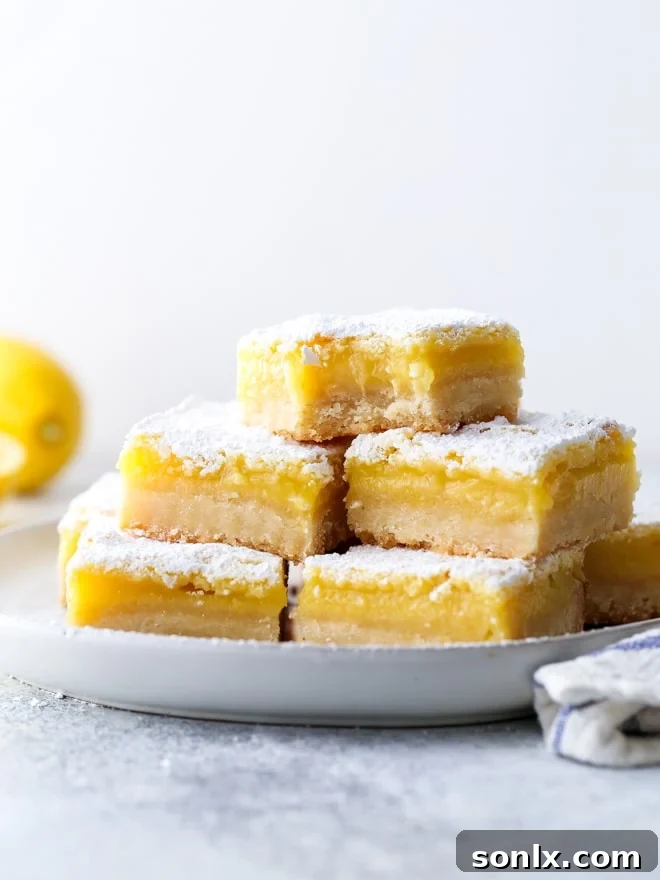
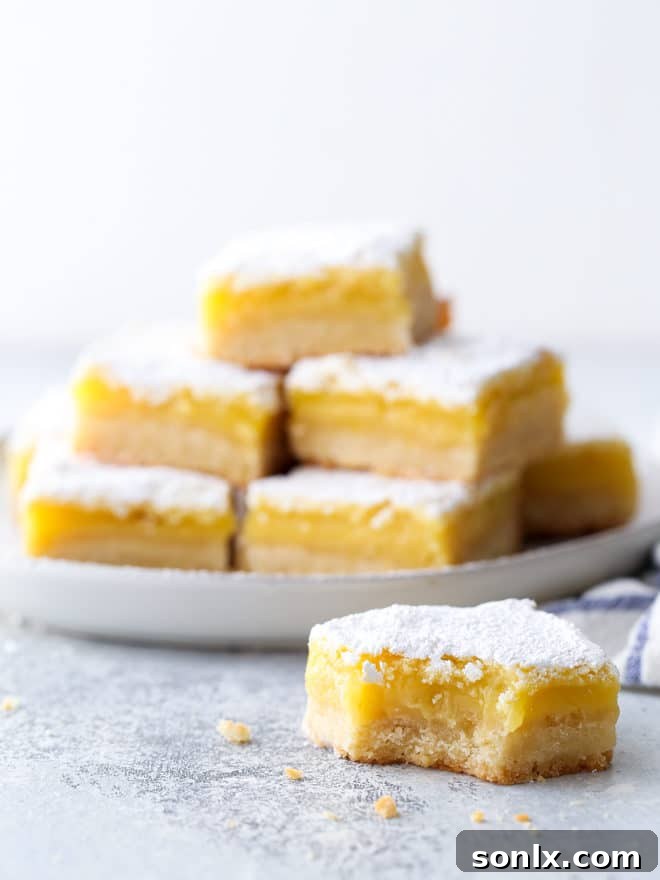
Prepare to fall deeply in love with these classic, irresistibly easy lemon bars. They are a true confectionary masterpiece, boasting a rich, buttery shortbread crust that melts in your mouth, a vibrant and perfectly tart lemon filling that awakens your senses, and a delicate finish of powdered sugar. More than just a dessert, these delightful treats offer a burst of sunshine and are always a guaranteed crowd-pleaser for any gathering or simple indulgence.
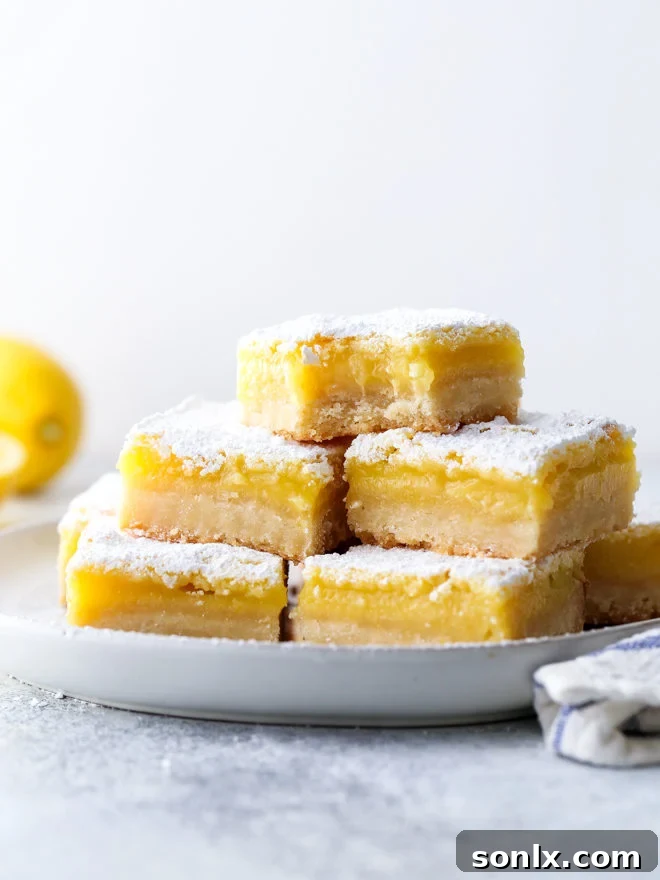
As the days grow longer and the first hints of spring emerge, my cravings inevitably turn to bright, zesty flavors. There’s an undeniable allure to lemon desserts, their refreshing tang perfectly complementing the season’s fresh energy. It was during one such moment of intense craving for that quintessential lemony goodness that I realized a surprising oversight in my culinary repertoire: a truly classic, foolproof lemon bar recipe. This glaring gap simply had to be filled, and so began my quest to create the perfect rendition.
After a series of delightful (and undeniably delicious!) experiments, meticulous testing, and careful adjustments to achieve the ideal balance of textures and flavors, I am thrilled to share what I firmly believe is the ultimate lemon bar recipe. These bars are a testament to simple elegance, featuring a remarkably tender, golden, and buttery shortbread crust that provides a comforting, slightly crumbly foundation. The true star, however, is the filling: a silky smooth, intensely tart, and utterly luscious lemon custard that is both rich and wonderfully refreshing. They strike a harmonious balance between decadent sweetness and vibrant acidity, proving that truly exquisite desserts don’t have to be overly complicated. Get ready to bake a batch of lemon bars that will undoubtedly earn a permanent spot in your recipe collection and become your go-to whenever citrus cravings strike!
Table of Contents
- Why This Recipe Stands Out: The Best Lemon Bars
- Essential Ingredients for Perfect Lemon Bars
- Step-by-Step Guide to Making Flawless Lemon Bars
- Expert Tips for Baking Flawless Lemon Bars
- Storage and Serving Suggestions
- Troubleshooting Common Lemon Bar Issues
- Other Delightful Lemon Desserts You’ll Love
- The Ultimate Lemon Bars Recipe
Why This Recipe Stands Out: The Best Lemon Bars
What elevates these lemon bars above the rest? It’s a thoughtful combination of carefully selected ingredients and precise techniques that culminate in a truly superior dessert experience. Here’s why this recipe will become your new favorite:
- Unrivaled Flavor Balance: The filling delivers a bright, intensely tangy citrus punch that is expertly balanced with just the right amount of sweetness. This careful equilibrium ensures the bars are neither overly sour nor cloyingly sweet, hitting that perfect refreshing note.
- Irresistible Buttery Shortbread Crust: Our crust is far more than a mere base; it’s an integral part of the sensory journey. Made with generous amounts of real unsalted butter, it bakes into a rich, tender, and slightly crumbly foundation that practically melts in your mouth, providing a delightful textural contrast to the smooth filling.
- Silky Smooth, Custard-Like Filling: The lemon filling is remarkably smooth and creamy, achieving that coveted custard-like consistency that sets beautifully. When sliced, it holds its shape impeccably, showcasing its luscious texture without being rubbery or runny.
- Accessible Elegance: Despite their gourmet appearance and sophisticated taste, these lemon bars are surprisingly straightforward to prepare. The instructions are clear and concise, making them an accessible baking project even for those new to the kitchen, promising stunning results every time.
- Consistently Crowd-Pleasing: Whether presented at a family gathering, a festive potluck, a casual brunch, or simply enjoyed as an afternoon treat, these lemon bars consistently earn rave reviews. Their universal appeal means they disappear quickly, leaving everyone craving another slice.
Essential Ingredients for Perfect Lemon Bars
The foundation of truly exceptional lemon bars lies in the quality of your ingredients. Each component plays a vital role in achieving that perfect balance of flavor and texture. Here’s a detailed look at what you’ll need and why each element is crucial:
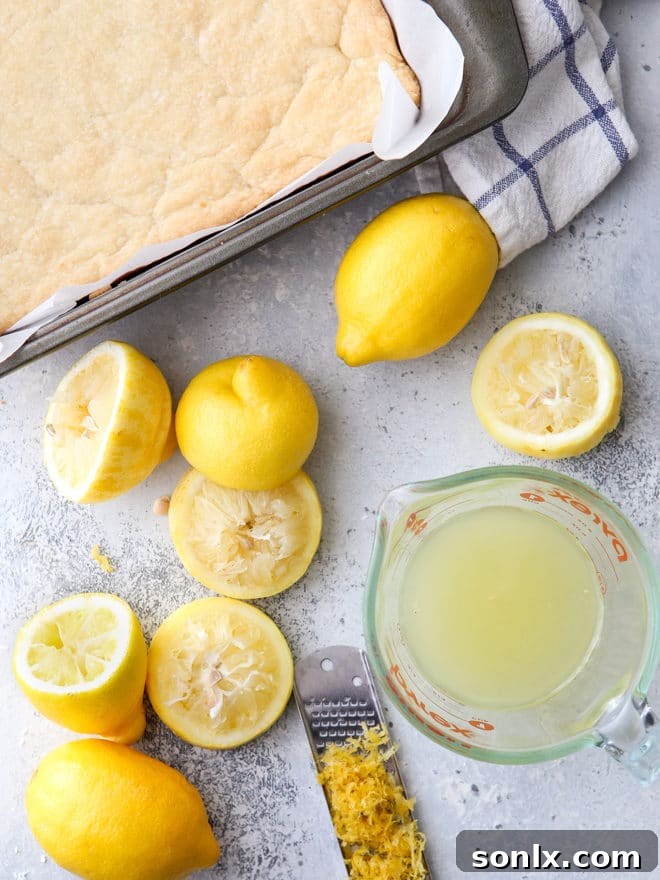
- Freshly Squeezed Lemon Juice and Lemon Zest: This is arguably the most critical component, and absolutely non-negotiable! Bottled lemon juice, while convenient, simply cannot replicate the vibrant, complex, and authentic tartness of fresh lemons. The zest, containing concentrated essential oils, further intensifies the lemon flavor without adding excessive liquid. Always opt for fresh lemons, preferably organic, for the most aromatic and flavorful results.
- Unsalted Butter (Softened): For the shortbread crust, unsalted butter is paramount as it allows you to meticulously control the overall salt content of the recipe. Ensuring the butter is softened to room temperature is key; this state allows it to cream beautifully with sugar, incorporating air and contributing to the crust’s light, tender, and crumbly texture.
- Granulated Sugar: Featured prominently in both the crust and the filling, granulated sugar serves multiple essential functions. In the filling, it perfectly balances the intense tartness of the lemon juice, creating a harmonious sweet-and-sour profile. In the crust, it contributes to its structure, crispness, and delicious tender crumb.
- Large Eggs: These are the structural backbone of the lemon filling. Eggs act as the primary emulsifier and thickening agent, transforming the liquid mixture into a rich, silky, and beautifully set lemon custard. For optimal incorporation and a smoother filling, ensure your eggs are at room temperature before mixing.
- All-Purpose Flour: This versatile ingredient is used in both layers. In the crust, it provides the essential structure and texture for a classic shortbread. In the filling, a small amount of flour helps to stabilize the lemon curd, preventing it from becoming too runny and ensuring it sets up perfectly without being overly firm.
- Coarse Salt: A small but mighty ingredient, salt plays a crucial role in enhancing and balancing all the other flavors. In the crust, it cuts through the sweetness and richness of the butter, elevating the overall taste.
- Powdered/Confectioners’ Sugar: The elegant finishing touch! A delicate dusting of powdered sugar over the cooled bars adds a beautiful, sophisticated aesthetic and a whisper of extra sweetness. It melts delightfully on the tongue, providing a lovely textural and flavor contrast to the bright, tart filling.
Step-by-Step Guide to Making Flawless Lemon Bars
Crafting these delectable lemon bars is a surprisingly straightforward process, divided into two distinct yet complementary stages: preparing the rich shortbread crust and then the luscious, tart filling. Follow these detailed steps for guaranteed perfect results every single time:
- Preparing the Buttery Shortbread Crust:
- Preheat and Prepare Pan: Begin by preheating your oven to 350°F (175°C). Line a 9-inch square baking pan with parchment paper, ensuring you leave a generous overhang on all sides. This “parchment sling” is a brilliant trick that will allow you to easily lift the entire slab of baked bars out of the pan, making cooling and slicing incredibly simple.
- Cream Butter and Sugar: In a medium-sized mixing bowl, using an electric mixer (either hand-held or stand mixer), beat the softened unsalted butter with the granulated sugar. Beat on medium-high speed for 2-3 minutes, or until the mixture becomes visibly light, fluffy, and creamy, ensuring the sugar is fully incorporated.
- Add Dry Ingredients: Gradually add the all-purpose flour and coarse salt to the creamed butter and sugar mixture. Mix on low speed until the ingredients just come together to form a cohesive dough. Be very careful not to overmix at this stage, as overworking the flour can lead to a tough crust.
- Press into Pan: Transfer the dough into your prepared baking pan. Using your fingers, the back of a spoon, or a flat-bottomed glass, press the dough evenly into the bottom of the pan. Aim for a smooth, compact, and uniform layer to ensure even baking.
- Par-Bake the Crust: Bake the pressed crust in the preheated oven for 15-20 minutes, or until its edges just begin to turn a light golden brown. This crucial step, known as par-baking, ensures the crust is fully cooked and helps prevent it from becoming soggy once the moist lemon filling is added.
- Cool Partially: Remove the par-baked crust from the oven and allow it to cool in the pan for approximately 15 minutes. This brief cooling period is important before the filling is added.
- Crafting the Tart Lemon Filling:
- Whisk Filling Ingredients: While the crust is cooling, in a separate medium bowl, whisk together the large eggs, granulated sugar, freshly squeezed lemon juice, vibrant lemon zest, and the remaining all-purpose flour. Whisk vigorously until the mixture is completely smooth, well combined, and free of any lumps.
- Pour Over Crust: Carefully pour this luscious lemon filling mixture evenly over the slightly cooled, par-baked shortbread crust in the pan.
- Bake the Filling: Return the pan to the preheated oven and bake for an additional 30-35 minutes. The filling is ready when the edges appear set and firm, and a gentle jiggle of the pan shows that the center no longer wobbles. It should feel firm but still have a slight tender give. It’s important to avoid overbaking, as this can result in a rubbery texture.
- Cooling, Finishing, and Serving:
- Cool Completely: Once baked, remove the lemon bars from the oven and allow them to cool completely to room temperature while still in the pan. This cooling period is absolutely critical for the filling to fully set up and achieve its optimal, firm yet silky texture. For even firmer bars and the cleanest, easiest slicing, I highly recommend chilling them in the refrigerator for at least 2-3 hours, or even overnight.
- Dust with Powdered Sugar: Just before serving, using a fine mesh strainer or a powdered sugar duster, evenly sprinkle a generous layer of powdered sugar over the cooled bars. This adds a beautiful aesthetic and a delicate touch of sweetness that melts delightfully on the tongue, creating a lovely contrast with the tart filling.
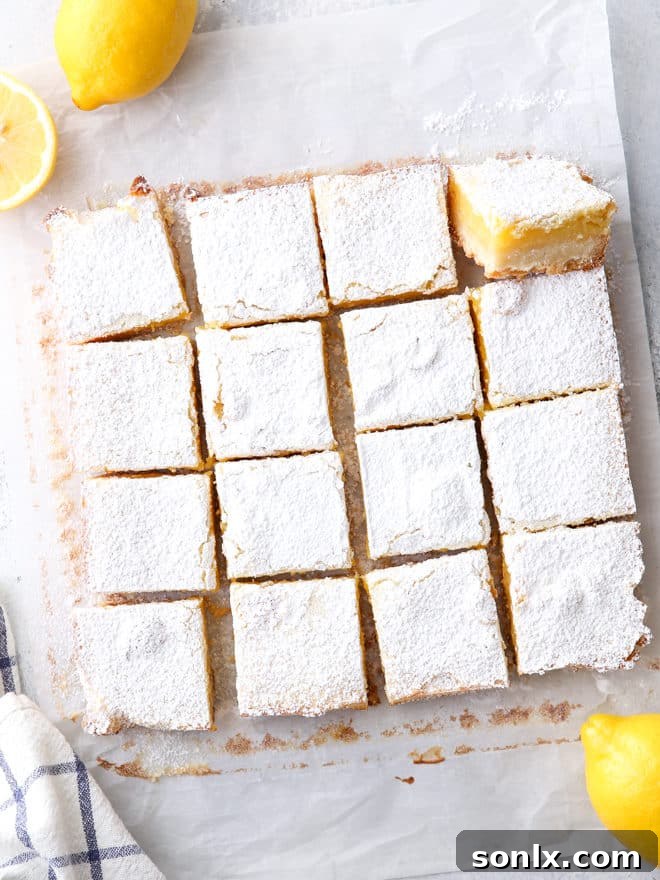
- Slice and Serve: Using the parchment paper overhang, carefully lift the entire slab of lemon bars out of the pan and transfer it to a clean cutting board. For the absolute cleanest slices, use a very sharp, thin knife, wiping the blade clean with a damp cloth in between each cut. This technique prevents the filling from sticking to the knife and ensures every bar looks picture-perfect. Serve and enjoy!
Expert Tips for Baking Flawless Lemon Bars
Achieving bakery-quality lemon bars at home is entirely within reach, even for the home baker. A few insider tips and careful attention to detail can make all the difference in turning a good batch into an absolutely perfect one:
- Select the Optimal Pan Size: While a larger 9×13-inch pan can be used if you prefer thinner bars, I wholeheartedly recommend sticking to a 9-inch square baking pan for this specific recipe. This size yields beautifully thicker, more substantial bars with an ideal ratio of buttery crust to luscious filling, ensuring a more satisfying and indulgent bite with every square.
- Harness the Power of Parchment Paper: This simple trick is a true game-changer for effortless baking and impeccable presentation. Always line your baking pan with parchment paper (or greased foil), ensuring you leave a generous overhang on all sides. This creates a convenient “sling” that allows you to easily lift the entire baked slab of lemon bars out of the pan once cooled. This prevents sticking, eliminates the struggle of cutting directly in the pan, and makes cooling, slicing, and serving an incredibly easy and mess-free process.
- Embrace Par-Baking the Crust: This preliminary baking step for the shortbread crust, before the lemon filling is added, is absolutely crucial. Known as par-baking or blind baking, this technique ensures the crust is fully cooked through and develops a beautiful light golden hue and crisp texture. It acts as a protective barrier, preventing the crust from becoming soggy once the moist lemon filling is poured over it. Skipping this step often leads to a less-than-ideal, undercooked base.
- Prioritize Fresh Lemon Juice: There is simply no substitute for freshly squeezed lemon juice when it comes to lemon bars. Bottled lemon juice, even “not from concentrate” varieties, lacks the vibrant, complex, and aromatic flavor profile that fresh lemons provide. The authentic, bright, and tangy taste of fresh citrus is the very essence of a spectacular lemon bar. Similarly, the zest from fresh lemons adds a significant boost of concentrated citrus aroma and flavor that cannot be achieved otherwise.
- Patience During Cooling is Paramount: This is perhaps the most critical tip for perfectly set and neatly sliced lemon bars. Allow the bars to cool completely to room temperature while still in the pan before you even consider slicing them. The filling needs ample time to fully set and firm up, transforming from a warm liquid into that desired silky custard. For the absolute cleanest, most professional-looking slices, I highly recommend chilling the bars in the refrigerator for several hours, ideally 3-4 hours, or even better, overnight. Cold bars slice infinitely more cleanly and easily, yielding those enviable sharp edges.
- Avoid Overbaking the Filling: While the filling needs to be set, it’s important not to overbake it. Keep a close eye on the bars during the final baking stage. The filling should appear set around the edges with only a very slight, almost imperceptible jiggle in the very center. Overbaking can lead to a tougher, rubbery, or grainy texture, detracting from the luxurious silkiness you’re aiming for.
Storage and Serving Suggestions
Proper storage is essential to maintain the freshness, texture, and vibrant flavor of your homemade lemon bars. Here’s how to best store them and some delightful ways to serve them:
The Best Way to Store Lemon Bars:
For optimal freshness and to preserve their delicate texture, lemon bars should always be stored in the refrigerator. Once completely cooled and sliced, place them in an airtight container. To prevent them from sticking together, arrange them in a single layer or place small pieces of parchment paper between multiple layers. Stored this way, they will remain wonderfully fresh and delightful for up to 5 days. Chilling not only extends their shelf life but also helps maintain their firm, sliceable texture, which is often preferred for lemon bars.
Can You Freeze Lemon Bars? Absolutely!
Lemon bars are excellent candidates for freezing, making them a perfect make-ahead dessert or a way to enjoy a taste of summer long after baking. To freeze, ensure the bars are completely cooled to room temperature. You can wrap individual bars or small batches tightly in plastic wrap, then place them in a freezer-safe airtight container or a heavy-duty freezer bag. They can be stored in the freezer for up to 3 months without compromising their quality. When you’re ready to indulge, simply defrost them in the refrigerator overnight before serving. A fresh dusting of powdered sugar after thawing can rejuvenate their appearance.
Serving Your Lemon Bars:
While delicious straight from the refrigerator, many people find that lemon bars are best enjoyed when they are slightly cooler than room temperature, allowing their flavors to truly shine. A final, elegant dusting of powdered sugar just before serving adds a beautiful, professional touch and a hint of extra delicate sweetness. These bars are incredibly versatile, making them a perfect dessert for brunches, afternoon tea parties, summer picnics, potlucks, or simply as a refreshing and bright treat to brighten any ordinary day. For an extra flourish, consider serving them with a few fresh berries (like raspberries or blueberries) or a small dollop of whipped cream.
Troubleshooting Common Lemon Bar Issues
Even the most seasoned bakers can occasionally encounter minor setbacks. Here are solutions to some common problems you might face when making lemon bars, ensuring your next batch is flawless:
- Soggy Crust: This is a frequent complaint, usually resulting from insufficient par-baking. If your crust isn’t baked long enough, or if the lemon filling is poured onto a crust that hasn’t cooled sufficiently, moisture can seep in. Always ensure your crust is baked until lightly golden and allowed to cool for at least 15 minutes before adding the filling.
- Runny Filling: If your lemon filling fails to set up properly, it’s most often due to underbaking or an imbalance in the ratio of eggs or flour. Ensure you bake the bars until the center is firm to the touch and no longer wobbles when the pan is gently jiggled. Double-check your measurements for eggs and flour, as they are crucial for the filling’s structure and thickening.
- Filling Cracks: Cracks on the surface of your lemon filling can occur from either overbaking (which dries out the custard) or if the bars cool down too rapidly. To mitigate this, bake the filling only until it’s just set, and allow the bars to cool slowly and gradually at room temperature before transferring them to the refrigerator.
- Uneven or Messy Slices: The secret to perfectly neat, clean-cut lemon bars lies in thorough cooling. Always cool your bars completely, preferably chilling them in the refrigerator for several hours or overnight, before attempting to slice. For the sharpest edges, use a very hot, thin-bladed knife (run under hot water and wiped dry) and wipe the blade clean between each cut to prevent the filling from dragging.
Other Delightful Lemon Desserts You’ll Love
If you’ve fallen for the enchanting charm and zesty appeal of these lemon bars, you’ll be thrilled to explore more delicious citrus-inspired creations from our extensive collection. Each recipe offers a unique way to celebrate the bright and refreshing flavor of lemon:
The Ultimate Lemon Bars Recipe
This meticulously detailed recipe ensures you can create perfect, bakery-worthy lemon bars in your own kitchen every single time. Follow the precise measurements and instructions carefully for a truly delightful and unforgettable result.
Classic Lemon Bars
Yields: 16 bars
Prep time: 20 minutes
Cook time: 50 minutes
Total time: 1 hour 10 minutes
These classic lemon bars boast a rich and buttery shortbread crust, a perfectly tart and silky smooth lemon filling, and a delicate dusting of powdered sugar on top. They are an absolute crowd-favorite and the epitome of a refreshing dessert!
Ingredients
For the Crust:
- 1 cup (226 grams) unsalted butter, softened to room temperature
- ½ cup (100 grams) granulated sugar
- 2 cups (240 grams) all-purpose flour
- ½ teaspoon coarse salt
For the Filling:
- 4 large eggs
- 1 ½ cup (300 grams) granulated sugar
- ⅔ cup (190 ml) freshly squeezed lemon juice (from 2-3 average-sized lemons)
- Zest of 2 large lemons
- ½ cup (60 grams) all-purpose flour
- Powdered sugar, for dusting (optional, but highly recommended)
Instructions
To make the crust:
- Preheat your oven to 350°F (175°C). Line a 9-inch square baking pan with parchment paper or greased foil, ensuring there’s a generous overhang on all sides to create lifting tabs.
- In a medium mixing bowl, using an electric mixer, beat the softened unsalted butter and granulated sugar together on high speed until the mixture is light, fluffy, and creamy, which typically takes 2-3 minutes.
- Add the all-purpose flour and coarse salt to the butter mixture. Mix on low speed just until the dough comes together and forms a cohesive, crumbly mass. Avoid overmixing.
- Press the dough evenly and firmly into the bottom of the prepared baking pan. Use your fingers or the back of a flat spoon to create a smooth and compact layer.
- Bake the crust in the preheated oven for 15-20 minutes, or until it just begins to turn a light golden brown around the edges. This par-baking step is essential for a crisp crust.
- Remove the par-baked crust from the oven and let it cool in the pan for about 15 minutes while you prepare the filling.
To make the filling:
- In a separate mixing bowl, whisk together the large eggs, granulated sugar, freshly squeezed lemon juice, lemon zest, and the remaining ½ cup of all-purpose flour until the mixture is completely smooth and thoroughly combined. Ensure there are no lumps of flour.
- Carefully pour the prepared lemon filling mixture evenly over the slightly cooled, par-baked crust in the pan.
- Return the pan to the preheated oven and bake for an additional 30-35 minutes. The filling is done when the edges are set and firm, and the center shows no significant wobble when the pan is gently jiggled. Be cautious not to overbake.
- Once baked, remove the lemon bars from the oven. Let them cool completely to room temperature in the pan for at least 15 minutes. Then, using the parchment paper overhang, carefully lift the entire slab of bars out of the pan and transfer it to a wire rack to cool completely. For the firmest texture and easiest, cleanest slicing, chilling the bars in the refrigerator for several hours or overnight is highly recommended.
- When completely cooled, dust the top of the bars generously with powdered sugar using a fine mesh strainer. Slice the bars into 16 even squares (or your desired size) using a sharp knife, wiping the blade clean with a damp cloth between each cut for neat edges, and then serve immediately.
Notes
This classic lemon bar recipe has been meticulously adapted from established preparations by culinary experts found on All Recipes and Ina Garten, combining the best techniques and ratios for an exceptional result.
Nutrition Information (per serving)
(Estimated values based on 16 servings)
- Calories: 292 kcal
- Carbohydrates: 41 g
- Protein: 4 g
- Fat: 13 g
- Saturated Fat: 8 g
- Cholesterol: 83 mg
- Sodium: 95 mg
- Potassium: 54 mg
- Fiber: 1 g
- Sugar: 25 g
- Vitamin A: 431 IU
- Vitamin C: 4 mg
- Calcium: 14 mg
- Iron: 1 mg
Recipe Details
Cuisine: American
Course: Dessert
Author: Annalise Sandberg